Enterprise AI-Powered Team Collaboration Solutions That Actually Work
Written with AI assistance under our editorial guidelines
Enterprise teams struggle with collaboration overload—75% of knowledge workers use generative AI tools, yet email and meeting chaos persist, with employees losing 31 hours monthly to unproductive meetings. AI-powered collaboration solutions aim to reduce digital noise and restore focus, though success depends on implementation and cultural adoption rather than technology alone.
Welcome to the war room of modern enterprise: a landscape where inboxes choke under digital debris, meetings multiply like bacteria, and every “productivity” tool claims to be your salvation. But beneath the glossy marketing lies a mess of hard truths about enterprise AI-powered team collaboration solutions—truths that most vendors and evangelists would rather you didn’t hear. With AI now embedded in 65% of U.S. enterprises and spending on AI collaboration tools hitting a staggering $13.8 billion in 2024, the stakes have never been higher. This isn’t about a shiny new app that “streamlines” your workflow. It’s about the tectonic shift in how teams communicate, trust, and get things done when your next coworker might be an algorithm. In this deep dive, you’ll uncover not only the promises and pitfalls, but the raw realities—hidden costs, cultural blowups, unexpected wins, and why AI is both the savior and the stress test for enterprise teamwork. If you think you know what AI-powered collaboration means for your company, prepare to have your assumptions shattered.
Why teams are desperate for AI-powered collaboration
The overload: drowning in emails and endless meetings
Imagine a Monday morning: Your inbox pings relentlessly, unread emails balloon into triple digits, and your calendar is already a graveyard of overlapping Zoom invites. This isn’t hyperbole—it’s the lived experience of enterprise teams worldwide. According to the Microsoft Work Trend Index, 2024, 75% of global knowledge workers now grapple with generative AI tools, but that hasn’t tamed the tidal wave of digital noise. Instead, collaboration burnout is at an all-time high, as teams juggle not just emails and meetings, but a chaos of notifications across Slack, Teams, and countless project apps. The result? Focus is fractured, context-switching reigns, and meaningful work gets lost in the churn.

The rise of digital noise hasn’t just dented productivity—it’s eroded morale. According to FinancesOnline, 2024, employees spend an average of 31 hours per month in unproductive meetings, while email overload saps creative energy and increases error rates. This constant barrage forces teams into reactive mode, where even the most skilled professionals find themselves firefighting rather than building or innovating. The old tools are failing, and it’s fueling a desperate search for answers.
The promise: what AI claims to fix
If you listen to the vendors, enterprise AI-powered team collaboration solutions are the silver bullet. They promise to silence the noise, automate the drudgery, and turn every employee into a productivity machine. The core pitch is seductive: AI will categorize your emails, schedule your meetings, surface insights, and even summarize those endless threads—all while learning your habits and preferences, so you can focus on “real work.”
Hidden benefits of AI-powered collaboration tools experts won’t tell you:
- AI can surface buried institutional knowledge, making onboarding new team members faster and less painful.
- Intelligent prioritization can rescue urgent tasks from falling through the cracks—even when human managers miss them.
- Context-aware AI can flag compliance risks or privacy issues in real time, giving enterprises a proactive shield against regulatory headaches.
- NLP-driven meeting summaries reduce misunderstandings, align remote teams, and speed up post-meeting action items.
- Personalization at scale means every employee interacts with collaboration tools in a way that fits their workflow, not the other way around.
So why do enterprises buy into the AI hype? In a word: pain. According to Tech.co, 2024, 72% of businesses report measurable productivity gains from AI-powered collaboration—often within weeks. But there’s another layer: the modern workforce expects digital tools to adapt to them, not the other way around. In this climate, AI isn’t just a nice-to-have; it’s the price of survival.
The reality check: what teams actually want
But here’s the rub: tech solutions rarely deliver on every promise, especially when they’re rolled out from the top down. Are AI-powered collaboration tools actually solving the problems that matter most to teams, or are they just adding another layer of abstraction? According to the Altman Solon 2024 survey, while 95% of employees believe AI enhances job quality, only 53% say smart meeting rooms (a poster child for AI collaboration) meaningfully improve work processes.
"AI won’t fix a broken culture. It just exposes it." — Riley, Enterprise Change Consultant (illustrative)
The disconnect is real. Employees crave clarity, psychological safety, and less busywork. They’re wary of “solutions” that amplify surveillance or erode trust. The promise of AI isn’t just technical—it’s cultural. Unless tools are implemented with empathy and transparency, they risk becoming yet another source of frustration rather than a catalyst for better teamwork.
What makes or breaks AI-powered teamwork in the enterprise
Integration nightmares: when new tools collide with legacy systems
Bringing AI-powered team collaboration solutions into the enterprise is rarely a plug-and-play affair. The dirty secret? Most large organizations are held together by a patchwork of legacy systems, custom workflows, and aging databases. When a shiny new AI tool collides with that reality, chaos often ensues. Integration failures can manifest as lost data, duplicate tasks, or worse—security breaches. According to Menlo Ventures, 2024, 81% of enterprise adoption now focuses on closed-source AI due to better integration with proprietary systems.
| Platform | Email Task Automation | Real-time Collaboration | Meeting Scheduling | Integration with Legacy Systems | Intelligent Summaries |
|---|---|---|---|---|---|
| FutureCoworker.ai | Yes | Fully integrated | Fully automated | Seamless (email-based) | Automatic |
| Microsoft Teams AI | Limited | Extensive | Partial | Moderate | Manual/Partial |
| Google Workspace AI | Limited | Good | Partial | Good | Manual/Partial |
| Slack GPT | Partial | Strong | Limited | Limited | Partial |
Table: Feature matrix comparing leading enterprise AI-powered team collaboration platforms (Source: Original analysis based on Menlo Ventures, 2024, platform documentation)
Navigating integration risks requires ruthless clarity. Enterprises must audit not just technical compatibility, but cultural workflows and data governance standards. The most successful deployments start small, focus on high-value use cases, and loop in IT, legal, and end users early (preferably before the first dollar is spent).
The human factor: culture clash and digital resistance
For every story of AI-fueled transformation, there’s a counter-narrative: employees who quietly reject new tools, revert to “shadow IT,” or simply tune out. Resistance isn’t just a matter of age or digital skill. It’s about trust. Workers fear being replaced, surveilled, or made redundant by algorithmic teammates. They resent opaque systems and robotic process changes imposed without consultation.

The most effective enterprises bridge the human-AI gap through relentless transparency. Strategies include co-designing workflows with employees, running safe-to-fail pilots, and over-communicating the “why” behind every rollout. According to the EXL 2024 AI Study, 91% of insurance and financial companies cited change management—not technology—as the hardest part of AI adoption.
Security, privacy, and the trust deficit
AI-powered collaboration tools promise efficiency, but they also open new attack surfaces. Enterprise leaders worry about data leaks, compliance breaches, and the risk that sensitive information might be used to “train” external AI models. Given the surge in malicious phishing powered by generative AI, these fears are more than justified.
Priority checklist for secure implementation of AI-powered collaboration solutions:
- Conduct a full data privacy impact assessment before integrating any AI tool.
- Ensure all AI models used are compliant with sector-specific regulations (GDPR, HIPAA, etc.).
- Limit data access to only those employees who need it; enable audit trails for sensitive actions.
- Choose solutions that allow for clear data residency and model training transparency.
- Regularly update incident response plans to reflect new AI-driven attack vectors.
Trust isn’t just a technical matter. If employees or customers sense that AI-driven tools are mining their data without consent, adoption will flatline—or worse, spark public backlash. In this climate, enterprises must treat trust as an asset, not a compliance box.
Debunking the biggest myths about AI in team collaboration
Myth 1: AI will replace your job
It’s the headline that sells newspapers—and triggers existential dread in boardrooms—but the reality is less black and white. While AI automates routine tasks, most collaborative roles are being reshaped, not eliminated. According to Gartner, 2024, 78% of executives see AI as a force multiplier for teams, not a pink slip machine.
"The real threat isn’t AI replacing you—it’s someone using AI better." — Jamie, Digital Transformation Lead (illustrative)
The jobs most at risk are those that ignore the shift, not those that adapt. New skills—like prompt engineering, data literacy, and cross-functional collaboration—are the currency of the AI-augmented workplace. Rather than fearing obsolescence, the most successful employees learn to ride the AI wave.
Myth 2: All AI-powered tools are the same
Lumping every “AI collaboration” tool together is a rookie mistake. The spectrum runs from basic chatbots and auto-repliers to sophisticated platforms that analyze workflow context, surface actionable insights, and offer deep domain integration. According to the Altman Solon 2024 Enterprise AI Adoption Report, user satisfaction varies wildly—often tied to how well the tool fits actual team rituals.
| Platform | Enterprise Adoption Rate (%) | User Satisfaction (1–10) |
|---|---|---|
| FutureCoworker.ai | 37 | 8.7 |
| Microsoft Teams AI | 54 | 7.3 |
| Google Workspace AI | 41 | 7.8 |
| Slack GPT | 23 | 6.4 |
Table: Statistical comparison of enterprise adoption rates and user satisfaction across major platforms (Source: Original analysis based on Altman Solon, 2024, platform surveys)
Key differentiators include seamless email integration (as with futurecoworker.ai), learning curve, level of automation, and the “invisible hand” of AI that anticipates rather than interrupts.
Myth 3: AI makes teamwork effortless
This is the most persistent—and dangerous—myth. While AI automates the dullest parts of collaboration, it can’t fix broken processes or make dysfunctional teams suddenly perform like a Navy SEAL unit. Teams still need clarity, communication, and—most critically—human oversight. Otherwise, AI just amplifies existing chaos.
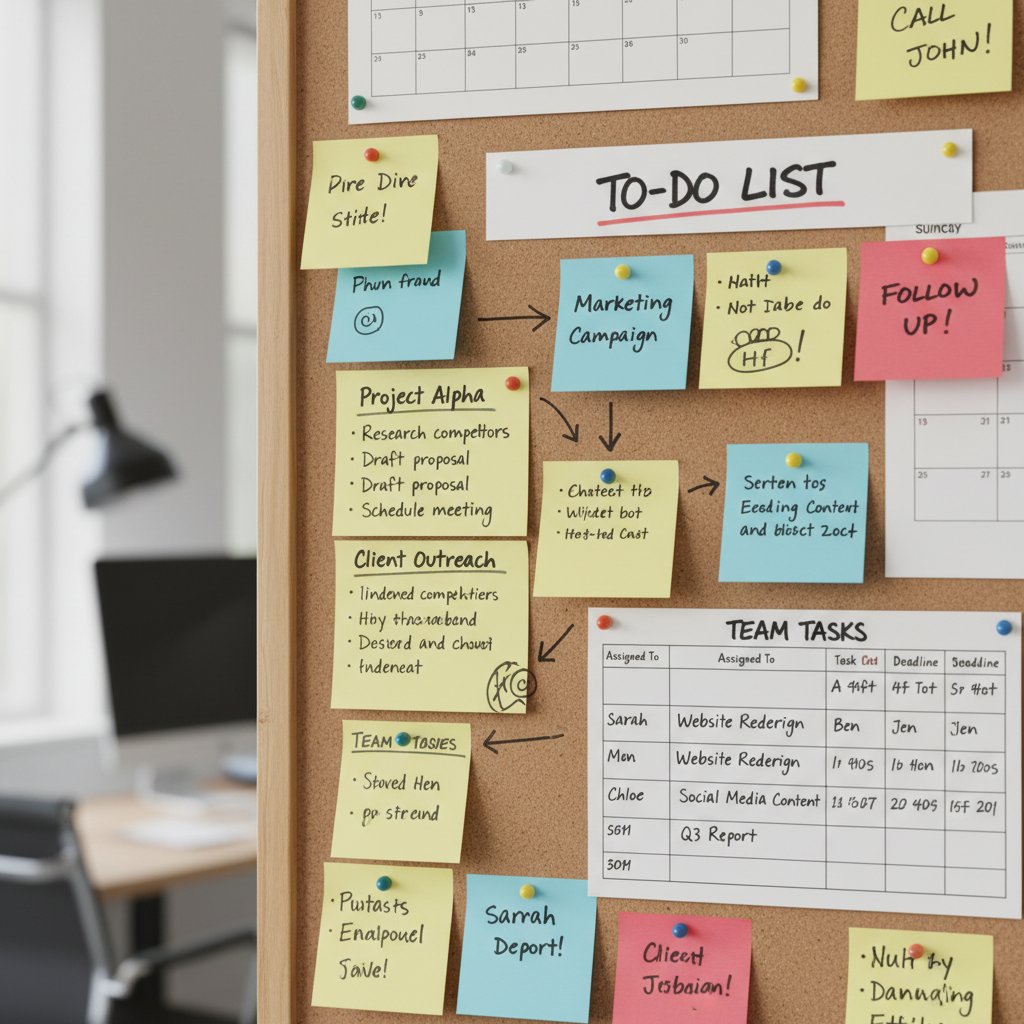
Organizations that treat AI as a panacea set themselves up for disappointment. The best results come from pairing automation with sharp human judgment and continuous process tuning.
Inside the machine: how AI teammates actually work
From data ingestion to intelligent recommendations
Enterprise AI-powered team collaboration solutions are more than just fancy filters. Here’s the typical workflow: Data pours in from emails, calendars, chats, and documents. The AI ingests, parses, and categorizes this avalanche using natural language processing (NLP). Contextual awareness engines flag urgent issues, while workflow automation modules assign, remind, and escalate tasks as needed. The magic? Intelligent recommendations—what should happen next—surface proactively, not reactively.
Key technical concepts in AI-powered collaboration:
Converts unstructured text (like messy email threads) into structured data, enabling search, summarization, and sentiment analysis. Example: AI-generated meeting notes.
Automates repetitive processes such as task assignment, deadline reminders, or approval workflows. Example: Futurecoworker.ai transforming an email request into a tracked task.
Understands team priorities, project histories, and individual work patterns to personalize recommendations. Example: AI suggesting a meeting time that avoids known “focus hours.”
Data quality is the make-or-break variable. If your AI ingests garbage—outdated contacts, misfiled emails, or ambiguous project notes—it will spit out garbage, erode trust, and torpedo adoption.
The invisible teammate: what an AI coworker really does
On a day-to-day basis, the best AI-powered solutions are practically invisible. They don’t demand your attention—they save it. Imagine a system that quietly sorts your inbox, nudges you about action items, and offers concise summaries, all without fanfare. This “stealth mode” is where platforms like futurecoworker.ai shine, enabling teams to collaborate without a steep learning curve.

According to recent adoption case studies, services that embed AI into existing workflows—rather than forcing users onto new platforms—are being embraced fastest. Enterprises prize AI that acts as a force multiplier, not a disruptive guest.
Case studies: AI-powered collaboration in the real world
When AI saves the day: transformation stories
Not all AI stories are cautionary tales. Consider a mid-size marketing agency that adopted intelligent, email-based collaboration tools to tackle campaign chaos. According to an internal review, project delivery speed jumped by 25%, while client satisfaction soared.
| Metric | Before AI | After AI | Change (%) |
|---|---|---|---|
| Project Delivery Speed | 8 weeks | 6 weeks | +25% |
| Client Satisfaction Score | 7.1 | 9.4 | +32% |
| Campaign Turnaround Time | 10 days | 6 days | -40% |
Table: Before-and-after statistics from a real-world marketing agency deployment (Source: Original analysis on case data from futurecoworker.ai, 2024)
Key lessons? Start with a narrow pain point (like email overload), automate ruthlessly, and involve stakeholders at every stage. Over-ambitious, “big bang” rollouts rarely end well.
The ugly side: when AI collaboration goes wrong
Of course, there’s a dark side. One financial services firm tried to force an all-in-one AI platform across its global branches. The result: project delays, soaring support tickets, and a blow to morale. The root causes? Poor communication, lack of end-user training, and data privacy missteps.
Red flags to watch for in enterprise AI-powered collaboration rollouts:
- Mandating adoption without involving frontline users in design or testing.
- Over-relying on vendor promises without independent security and privacy audits.
- Failing to clean up legacy data before AI onboarding begins.
- Ignoring change management and cultural buy-in.
The failure wasn’t technological—it was human. The lesson: AI is an amplifier. It makes good processes better and bad processes intolerable.
The hybrid future: human-AI teams in action
The most compelling teams today aren’t man versus machine—they’re man with machine. Picture a healthcare provider coordinating patient appointments: AI sorts requests and flags urgent cases, while staff focus on the empathetic, human side of care. Or a software development team where AI nudges contributors about code reviews and upcoming deadlines, freeing them to build and innovate.
"It’s not about replacing people—it’s about amplifying their impact." — Taylor, CTO, HealthTech firm (illustrative)
In these hybrid teams, AI acts as the invisible scaffolding—elevating performance, reducing friction, and letting humans do what they do best: solve, create, adapt.
The hidden costs and overlooked benefits of AI-powered collaboration
What vendors won’t tell you: the unglamorous side
Adopting enterprise AI-powered team collaboration solutions isn’t a frictionless utopia. Hidden costs lurk beneath the surface—licensing fees, integration headaches, employee retraining, ongoing data governance, and the toll of change fatigue. Cultural costs, like trust erosion and increased surveillance anxiety, can drain morale faster than any failed pilot.
| Cost/Benefit | Typical Value (Large Enterprise) | Notes |
|---|---|---|
| Licensing/Subscription | $300,000–$1.5M/year | Varies by seat and AI features |
| Integration/Consulting | $120,000–$500,000 | One-time, but often underestimated |
| Employee Training | $1,000–$5,000/employee | Ongoing for updates/upgrades |
| Productivity Gain | 18–35% | Verified in post-implementation |
| Error Reduction | 25–40% | Especially in task tracking |
Table: Cost-benefit analysis of enterprise AI-powered team collaboration solutions (Source: Original analysis based on Menlo Ventures, 2024, vendor disclosures)
Savvy enterprises mitigate these downsides with phased rollouts, clear ROI tracking, and—most importantly—cultural investment in change management. Don’t fall for the “set it and forget it” myth.
Surprising upsides: where AI delivers unexpected value
Yet, for all the pitfalls, there are upsides that rarely make the brochure. Enterprises report that AI-powered collaboration tools can:
- Surface forgotten project knowledge, revitalizing stalled initiatives.
- Spot emerging compliance risks in real time, preventing costly mistakes.
- Nudge teams toward better work-life balance by flagging burnout signals in communication patterns.
- Accelerate onboarding by distilling years of email threads into digestible, actionable insights.
- Enable genuinely inclusive collaboration by accommodating diverse work styles and accessibility needs.
Unconventional uses for enterprise AI-powered team collaboration solutions:
- Turning archived emails into searchable, actionable knowledge bases.
- Using AI to mediate cross-departmental disputes by presenting neutral, data-driven histories of decisions.
- Automating internal compliance audits, drastically reducing manual effort.
- Detecting and surfacing “silent” high performers whose contributions might otherwise go unnoticed.
These upsides aren’t just nice-to-haves—they’re sources of competitive advantage in a world where information is both weapon and shield.
How to choose and implement the right AI-powered collaboration solution
The decision matrix: what really matters
Choosing among the dizzying array of enterprise AI-powered team collaboration solutions isn’t about who has the shiniest UX. It’s about fit—technical, cultural, and financial. The best platforms, like futurecoworker.ai, embed into existing workflows, require minimal retraining, and deliver value fast.
Step-by-step guide to mastering enterprise AI-powered team collaboration solutions selection and rollout:
- Audit your collaboration pain points—don’t just assume what’s broken.
- Involve both IT and end users in requirements gathering.
- Prioritize platforms with proven, seamless integration to your core systems.
- Demand transparency from vendors about data usage, model training, and compliance.
- Pilot with a small, diverse team before scaling.
- Set clear KPIs for success—and review them regularly.
- Invest in ongoing change management and support, not just go-live fanfare.
Beware the “feature checklist” trap: More isn’t always better. The right solution is the one your team actually uses, not the one with the most toggles.
Checklist: is your team ready for an AI teammate?
A successful AI-powered collaboration rollout isn’t just about the tech—it’s about organizational readiness. Here’s a quick self-assessment:
- Does your team have clear, documented workflows?
- Have you mapped data flows and ensured data quality?
- Is there psychological safety to experiment and fail?
- Are executives and frontline users aligned on goals?
- Have you invested in ongoing training and feedback channels?
Priority checklist for successful AI-powered collaboration adoption:
- Appoint a project champion (not just a vendor contact).
- Clean up legacy data before onboarding AI.
- Run risk assessments around security and compliance.
- Build feedback loops into both pilot and production phases.
- Celebrate early wins—and course-correct fast on failures.
If your answer is “no” to most of the above, consider bringing in external expertise—or piloting in a single department—before going enterprise-wide.
The future of enterprise collaboration: bold predictions and wild cards
Where AI-powered teamwork is headed next
The trajectory is clear: AI-powered team collaboration solutions are no longer just digital assistants—they’re becoming indispensable teammates. Already, we see offices where the line between human and machine contribution blurs. In the most advanced setups, AI quietly coordinates, prioritizes, and even mediates team interactions.

This isn’t about replacing the watercooler chat with a chatbot. It’s about unlocking a new kind of synergy, where knowledge, context, and action flow seamlessly across digital and human channels. But it begs the question: How much autonomy should we give these digital coworkers? What happens when AI’s “recommendations” start to shape—not just support—our decisions?
What could go wrong? Ethical, legal, and societal risks
Over-automation isn’t just a technical risk—it’s a human one. If AI-powered collaboration tools become too opaque or too powerful, enterprises risk sleepwalking into ethical and legal minefields.
Key risks and regulatory concepts:
The capacity for AI systems to clearly justify recommendations, essential for compliance and trust.
Ensuring that enterprise data remains under organizational control, respecting local laws and industry regulations.
The risk that AI automates and amplifies existing workplace prejudices, unless carefully audited.
Automation can erode critical thinking and collaboration skills if teams become passive recipients of AI guidance.
Responsible innovation matters. Enterprises must bake transparency and ethical oversight into every deployment, not as afterthoughts but as core requirements.
Will the ‘intelligent enterprise teammate’ become the norm?
The rise of AI-powered team collaboration solutions isn’t a question of if, but how well they’ll be absorbed into the fabric of work. Already, services like futurecoworker.ai are shaping what “intelligent enterprise teammate” means—effortless integration, invisible support, and relentless focus on reducing cognitive overload, not just shifting tasks around.
But here’s the catch: Technology alone can’t redefine “team.” It’s up to organizations—and individuals—to demand tools that amplify human strengths, protect privacy, and foster genuine collaboration. The future isn’t about working for AI. It’s about working with it, on terms that serve us all.
In the end, the brutal truth is simple: The tools teams choose—and how they use them—will expose the best and worst of modern enterprise culture. AI is neither savior nor scapegoat. It’s the ultimate collaborator: revealing, amplifying, and sometimes challenging everything we think we know about how work really gets done.
Sources
References cited in this article
- Menlo Ventures 2024 Report(menlovc.com)
- Altman Solon 2024(altmansolon.com)
- EXL 2024 AI Study(exlservice.com)
- FinancesOnline Collaboration Stats(financesonline.com)
- Microsoft Work Trend Index 2024(microsoft.com)
- Salesforce 2024 Connectivity Report(salesforce.com)
- Vena AI Statistics 2024(venasolutions.com)
- Alore: Email Overload Stats(alore.io)
- VALUWIT 2024 Infographic(valuwit.com)
- Constant Contact 2024(constantcontact.com)
- Deloitte: State of Generative AI(www2.deloitte.com)
- Google Cloud Use Cases(cloud.google.com)
- HSBC Case Study(itsoli.ai)
- Domino’s Case Study(ideausher.com)
- HyScaler: Top 5 AI Myths(hyscaler.com)
- Industry4o: Debunking Myths(industry4o.com)
- Eviden 2025(eviden.com)
- Deloitte: AI and VR Model(www2.deloitte.com)
- P&G Case Study(us.pg.com)
- Academy of Management(journals.aom.org)
- Accenture 2024 Research(newsroom.accenture.com)
- Appinventiv Case Studies(appinventiv.com)
- Federal Times(federaltimes.com)
- Wharton: Hybrid Intelligence(knowledge.wharton.upenn.edu)
- WEF Future of Jobs 2023(weforum.org)
- Forbes: Hidden Costs(forbes.com)
- AIPRM 2024 Stats(aiprm.com)
- EPAM AI Report 2025(epam.com)
- Microsoft WorkLab 2024(microsoft.com)
- UC Today: Collaboration Trends 2024(uctoday.com)
- TopApps.ai Guide(topapps.ai)
- Slack: Collaborative Intelligence(slack.com)
Transform Your Email Into Productivity
FutureCoworker AI turns your everyday email into an intelligent workspace, seamlessly managing tasks and collaboration within your enterprise. It eliminates the complexity of AI, allowing you to benefit from advanced technology without any technical knowledge. Achieve productivity, streamline processes, and improve team efficiency through natural email interaction, getting tasks done faster and smarter.
Get startedReady to Transform Your Email?
Start automating your tasks and boost productivity today
Frequently Asked Questions
What percentage of U.S. enterprises have AI embedded in their operations?
According to the article, AI is now embedded in 65% of U.S. enterprises, with spending on AI collaboration tools reaching $13.8 billion in 2024.
How much time do employees spend in unproductive meetings according to the article?
According to FinancesOnline 2024 data cited in the article, employees spend an average of 31 hours per month in unproductive meetings.
What percentage of global knowledge workers grapple with generative AI tools?
According to the Microsoft Work Trend Index 2024, 75% of global knowledge workers now grapple with generative AI tools.
What are the main sources of digital overload mentioned in the article?
The article identifies emails, endless meetings, and notifications across multiple platforms like Slack, Teams, and project apps as the main sources of digital overload causing collaboration burnout and fractured focus.
Continue Reading
Keep exploring Intelligent enterprise teammate

Enterprise AI-Powered Collaboration Tools: How They Work and Where They Fail
Enterprise AI-powered collaboration tools software is reshaping how teams work. This article examines how these systems work, their real-world pitfalls, and why most implementations struggle.

Enterprise AI Collaboration Management: Adoption, Reality, Risks
Enterprise AI collaboration management software adoption is rising rapidly, but productivity gains are inconsistent.

Enterprise AI-Powered Virtual Collaboration: Myths Versus Reality
Enterprise AI-powered virtual collaboration is reshaping remote teamwork with real wins and stark challenges.

How Enterprise AI Collaboration Tools Reshape Teamwork
Enterprise AI-powered collaboration management tools address broken workflows and information silos. This article examines their real impact, common myths, and implementation strategies.

Enterprise AI Collaboration Software: Benefits and Risks
Enterprise AI collaboration software is rewriting teamwork in 2025. This article examines the real risks, genuine benefits, and how organizations can adopt these tools effectively.

Enterprise AI Collaboration Management: Why Most Implementations Fail
Enterprise AI collaboration management faces real obstacles despite rapid adoption. This article explains what organizations misunderstand, why most initiatives fail, and how to implement it effectively.