


Enterprise AI-Powered Task Management, Minus the Hype and Hazards
Written with AI assistance under our editorial guidelines
Enterprise AI-powered task management has grown rapidly, with 71% of large organizations now embedding generative AI in critical business functions. However, the reality involves significant friction and complexity. While these systems promise to automate tedious workflows and handle sensitive processes, implementation remains messy, and organizations often overestimate how seamlessly AI integrates into existing operations.
Welcome to the reality distortion field that is enterprise AI-powered task management. Beyond the glossy pitch decks and feverish keynote promises, a new era is taking shape—one where algorithmic teammates handle your most tedious grunt work and your most sensitive workflows, sometimes with dazzling precision, sometimes with chilling opacity. In the past year alone, enterprise investment in AI-powered task automation has skyrocketed, with 71% of large organizations now embedding generative AI in at least one critical business function, according to recent McKinsey data. Yet, beneath the surface, leaders and teams are wrestling with uncomfortable truths: Are we trading complexity for clarity, or just swapping old bottlenecks for new, digital ones? Is the AI “copilot” revolution just a bubble, or the beginning of a deeper transformation in how we work? In this deep dive, we’ll slice through the hype, expose the risks, and arm you with the actionable insights that separate AI window-dressers from true enterprise trailblazers.
Why enterprise AI-powered task management is more than a buzzword
Beyond the hype: the real state of AI in enterprise workflow
Enterprise AI-powered task management isn’t just the latest buzzword—it's becoming ground zero for a radical shift in workplace culture and expectations. Picture a bustling office, humans racing deadlines, a luminous AI presence weaving unseen through the chaos. This technology is no longer just an IT experiment. In 2024, McKinsey reported a leap from 65% to 71% in enterprises using generative AI for at least one business function, outpacing even the most optimistic forecasts. But what’s rarely discussed is the friction: Change, as any leader will tell you, is never plug-and-play, even with the flashiest AI tools.

Beneath the surface of all the marketing noise lies a starker reality. AI rollouts are messy. Teams overestimate how seamlessly “intelligent” algorithms fit existing workflows. As Priya, a senior product manager at a global consultancy, bluntly puts it:
"Most companies overestimate the plug-and-play nature of AI—real change is messy."
The ambition? Enterprises are betting on AI to automate not just emails or simple to-dos, but sprawling, multi-step workflows—from precision scheduling to auto-escalation of risks. Enterprises are no longer asking if AI belongs in the heart of their operations but how much risk, disruption, and ambiguity they're willing to stomach in the process.
The pain points driving AI adoption in enterprise environments
Why are boardrooms obsessed with enterprise AI-powered task management? The answer is as old as modern business itself: overload, burnout, and error. Corporate inboxes have become graveyards for missed deadlines, overlooked action items, and double-booked meetings. According to Zenhub’s 2023 industry survey, AI task managers have slashed repetitive admin work by 20% or more, but the complex stuff—the decisions, the exceptions—still demands human oversight.
| Metric | Before AI (2023) | After AI (2024-2025) |
|---|---|---|
| Average productivity (tasks completed per week) | 100 | 127 |
| Error rate (missed deadlines, overlooked tasks) | 11% | 4% |
| Team satisfaction (survey score, /10) | 6.2 | 8.1 |
Table 1: Impact of enterprise AI-powered task management on productivity, error rates, and satisfaction (Source: Original analysis based on Zenhub Blog, 2023, McKinsey, 2024).
Pressure on leaders is only intensifying. Hybrid work, tighter budgets, and the relentless demand to “do more with less” have forced decision-makers to seek automation not just as a competitive edge, but as a survival strategy. Enter services like futurecoworker.ai, which transform the lowly email inbox into a command center—turning threads into trackable tasks and chaos into orchestrated action. The result? A new breed of digital coworker that doesn’t sleep, complain, or call in sick.
What users really want from AI-powered task management
Let’s be honest—users don’t crave another black-box bot running wild with their to-do lists. What they want is transparency, reliability, and real collaboration. They want AI that not only automates but amplifies team coordination, surfaces hidden knowledge, and actually reduces the cognitive load, not just shuffles it around.
Hidden benefits of enterprise AI-powered task management experts won't tell you:
- Reduces invisible labor by surfacing and tracking “shadow tasks” that would fall through the cracks.
- Uncovers team knowledge buried in endless email threads.
- Streamlines onboarding by summarizing historical decisions and workflows.
- Democratizes access to insights—no more gatekeeping by a single project manager.
- Flags burnout risks by analyzing workload patterns discreetly.
- Enables continuous improvement through real-time task analytics.
- Facilitates compliance by auto-logging key decisions and actions.
Yet, beneath the surface, fears and misconceptions fester. Many worry about job security, data privacy, and the specter of “algorithmic management” dictating daily priorities. The tension between desire for ease and fear of loss is the silent undercurrent shaping every enterprise AI deployment.
7 myths about enterprise AI-powered task management (and the harsh reality)
Myth 1: AI will replace managers
The myth that AI will boot managers out of the boardroom is persistent—and dead wrong. It’s rooted in the fear that decision-making is just a matter of rules and efficiency, ripe for automation. But as any battle-tested leader knows, management is about judgment, context, and navigating the gray areas no algorithm truly grasps.
What’s changing is the manager’s toolkit. AI takes on the repetitive, low-value reporting and follow-ups, freeing human leaders to focus on coaching, strategy, and the messy business of motivating people. As Jordan, a chief transformation officer at a global logistics firm, succinctly observed:
"AI doesn’t replace leadership—it makes human judgment more critical." — Jordan, Chief Transformation Officer, Global Logistics Firm
Myth 2: Anyone can just “turn on” AI and see results
Here’s another fairytale: That you can just flick a switch, roll out an AI-driven task manager, and watch the productivity graph soar. Reality is less generous. Technical hurdles abound—data silos, outdated workflows, and “dirty” data can torpedo even the best AI. But cultural resistance is the true nemesis. Without buy-in or cross-team alignment, the best tool becomes shelfware.
Step-by-step guide to mastering enterprise AI-powered task management:
- Assess organizational needs: Map current pain points and clarify desired outcomes.
- Clean and structure data: Invest in data hygiene before automation begins.
- Select the right tool: Prioritize usability, integration, and transparency.
- Pilot in a controlled setting: Test on a single team or workflow.
- Train and onboard users: Focus on hands-on education and clear documentation.
- Gather feedback and adapt: Iterate based on real user experience.
- Scale selectively: Expand only when adoption and ROI are proven.
- Conduct post-launch review: Regularly audit outcomes and refine processes.
Tech alone is never enough. As McKinsey’s 2024 analysis shows, organizational change management is as crucial as the underlying algorithms. AI’s value shows up only when people actually trust and use it.
Myth 3: AI-powered task managers are only for tech giants
Once, only Silicon Valley titans had the resources—or appetite—to deploy enterprise AI-powered task management. No longer. In 2024, Menlo Ventures reported a surge in adoption among mid-sized and even traditional firms, driven by user-friendly tools and SaaS models. Platforms like futurecoworker.ai are lowering the technical barrier, embedding advanced AI in familiar environments like email.
| Feature | Large Enterprise | Mid-sized Firm | SMB |
|---|---|---|---|
| Email task automation | Yes | Yes | Limited |
| Real-time collaboration | Fully integrated | Partial | Minimal |
| Ease of use | Moderate | High | High |
| Data privacy & compliance tools | Advanced | Moderate | Basic |
| Custom workflow integration | Extensive | Selective | Minimal |
Table 2: Feature matrix comparing enterprise AI-powered task management solutions by company size. Source: Original analysis based on Menlo Ventures 2024.
Myth 4: Data privacy is guaranteed
Here’s the harsh reality: No matter how sophisticated the AI, data privacy is never “set and forget.” Recent incidents highlight the risks when sensitive information is processed or stored improperly, especially across borders or through third-party vendors. Regulatory compliance (GDPR, CCPA, and others) is a moving target, and leaders who treat privacy as box-checking court disaster.
Risk mitigation starts with transparent vendor audits, robust encryption, and employee education. Alex, a compliance officer at a Fortune 500, underscored the new imperative:
"No AI is better than its data handling—leaders must demand transparency." — Alex, Compliance Officer, Fortune 500 firm
Inside the machine: how enterprise AI-powered task management actually works
The anatomy of an AI-powered task manager
An enterprise AI-powered task manager isn’t magic—it’s a complex tapestry of technologies. At its core are natural language processing (NLP) engines that decode unstructured messages, sophisticated automation routines that assign, track, and escalate tasks, and APIs that integrate with email, calendars, and legacy platforms.

What’s truly radical about new solutions like futurecoworker.ai is their focus on email-based interfaces. Rather than forcing users onto yet another dashboard, the AI slots itself directly into the familiar inbox—breaking the biggest adoption barrier in enterprise tech: user inertia.
Breaking down the neural net: what happens behind the scenes
So, what’s happening under the hood when you assign a task to your AI coworker? First, NLP algorithms parse the language, extract intent, and identify relevant details (due dates, priorities, dependencies). Next, workflow automation triggers task creation, reminders, and status updates—sometimes even escalating blockers or suggesting next actions based on historical patterns.
Essential terms in enterprise AI-powered task management:
- Natural Language Processing (NLP): The AI’s ability to understand and generate human language, making email-based collaboration seamless.
- Workflow automation: Scripts and algorithms that translate tasks, deadlines, and dependencies into automated actions.
- Prompt engineering: The craft of designing messages or instructions that maximize AI accuracy and minimize misunderstandings.
- Hallucination: When an AI invents information or makes decisions based on faulty data—a critical risk in enterprise settings.
Nuance and ambiguity are persistent challenges. No AI yet “understands” context like a human does, and error correction often needs human intervention. Precision rises with better data, but even the most advanced neural nets still get tripped up by edge cases and messy real-world language.
The invisible teammate: balancing automation and human oversight
Here’s the tension at the heart of enterprise AI-powered task management: The more you automate, the more you risk ceding control to opaque algorithms. Trust is built not by removing humans from the loop, but by designing clear escalation paths and transparent audits.
Best practices for oversight include layered permissions, manual override options, and regular error audits. Without these, enterprises risk “black-box” decisions that undermine user confidence and open the door to costly mistakes.
Red flags to watch out for when deploying AI-powered task managers:
- Decisions made without explainable logic or audit trails.
- Unexplainable errors that recur without root cause analysis.
- Privilege escalation or data leaks due to poor integration.
- Over-dependence on AI-generated summaries without cross-checks.
- Failure to update models as workflows evolve.
- Lack of transparency in vendor data handling and storage.
The human factor: how AI-powered task management is reshaping work culture
Collaboration, creativity, and the new power dynamics
Injecting AI into the bloodstream of enterprise collaboration does more than shift process—it rewrites power dynamics. Teams now interact both with each other and an algorithmic presence, blending human creativity with machine precision. Communication norms shift: Some tasks vanish from view, others bubble up thanks to AI’s pattern recognition. But there’s a risk—so-called “shadow work” emerges: invisible tasks necessary to make AI systems function smoothly, such as curating data or fixing misunderstandings.

Emotional labor and the rise of the digital coworker
The promise: AI eliminates mundane busywork. The reality: While drudgery fades, new forms of stress and emotional labor appear. Employees must now manage relationships not just with human colleagues but with digital ones—interpreting algorithmic “intent,” negotiating with chatbots, and sometimes working around AI blind spots.
AI can both relieve and exacerbate workplace anxieties. Some find freedom in automation; others feel alienated by the lack of human “messiness.” As Sam, a project coordinator at a marketing agency, confessed:
"The AI takes care of the grunt work, but sometimes I miss the human messiness." — Sam, Project Coordinator, Marketing Agency
Ethics, bias, and accountability in AI-driven workplaces
Handing off tasks to an algorithm raises thorny ethical dilemmas. What if the AI’s recommendations are biased? Who’s responsible when things go wrong? Enterprises must grapple with new concepts:
Key ethical concepts in enterprise AI-powered task management:
- Algorithmic bias: When historical data or flawed assumptions bake discrimination into AI outputs.
- Explainability: The degree to which decisions made by AI can be understood and audited by humans.
- Digital accountability: The ability to trace, review, and, if necessary, override AI actions.
Responsible AI deployment now demands regular bias audits, transparent documentation, and a clear chain of accountability—from developer to end user.
From chaos to clarity: real-world case studies of AI-powered task management
The global consulting firm: streamlining cross-border projects
Before AI, a global consultancy battled timezone chaos, email overload, and project drift. Status updates lagged. Deliverables slipped. After implementing enterprise AI-powered task management, teams used email-based AI to auto-extract tasks from threads, trigger reminders, and escalate blockers in real-time.
| Month | Key Milestone | Measurable Outcome |
|---|---|---|
| Month 1 | Pilot launch | 15% reduction in missed deadlines |
| Month 3 | Firmwide rollout | 30% increase in task completion rate |
| Month 6 | Error audit | 60% drop in manual reporting errors |
| Month 12 | Process optimization | 23% boost in client satisfaction |
Table 3: Timeline of AI-powered task management implementation and outcomes (Source: Original analysis based on McKinsey, 2024).
The logistics company: conquering complexity at scale
A leading logistics firm faced classic pain points: sprawling supply chains, fragmented communication, and “firefighting” culture. AI-powered task management allowed them to triage requests, predict bottlenecks, and automate status updates. Lessons learned? Automation didn’t solve everything—human oversight was critical to catch exceptions.
Priority checklist for successful enterprise AI-powered task management implementation:
- Map critical workflows before automating anything.
- Invest in cross-system data integration early.
- Assign “AI champions” from business, not just IT.
- Run scenario-based pilots to test edge cases.
- Set up redundant escalation paths for urgent issues.
- Document failures and corrections for transparency.
- Monitor for workload imbalances post-automation.
- Schedule regular stakeholder review sessions.
- Audit data privacy and compliance quarterly.
- Celebrate quick wins to reinforce adoption.
The mid-sized nonprofit: leveling the playing field
Nonprofits often lack deep pockets or tech staff, but face relentless pressure for transparency and efficiency. A mid-sized nonprofit adopted an email-based AI teammate, which summarized funder updates, tracked grant deadlines, and flagged compliance risks—all from the inbox. The cultural impact? Less time on admin, more on mission, and a surprising increase in staff morale as “busywork” vanished.
Controversies and contradictions: the dark side of enterprise AI-powered task management
When AI gets it wrong: accountability and disaster recovery
Even the best AI stumbles. A major enterprise nearly missed a regulatory deadline when their task manager misclassified a compliance email as routine. Disaster was averted by a vigilant team lead, but the incident triggered a full protocol review. High-stakes environments now demand robust detection and correction mechanisms.
Top 7 most common AI-powered task management failures (and what to do next):
- Misclassification of critical emails or tasks—require escalation review.
- Forgotten follow-ups on high-priority items—implement manual overrides.
- Unintentional data leaks via integrations—run regular privacy audits.
- Overzealous automation causing communication gaps—build redundancy.
- Biased task prioritization—conduct regular bias checks.
- “Hallucinated” task creation—tighten input validation.
- Failure to log or track decisions—enforce audit trails.
The myth of neutrality: bias, discrimination, and “hallucinations”
AI’s claim to “objectivity” is a myth. Numerous studies have found bias in task assignment and prioritization, especially when trained on incomplete or unrepresentative data. These errors carry real legal, reputational, and ethical risks.
| Platform | Error Rate (%) | Bias Mitigation Tools | Transparency Score (/10) |
|---|---|---|---|
| Platform A | 4.2 | Advanced | 8 |
| Platform B | 6.1 | Moderate | 7 |
| Platform C | 9.7 | Basic | 5 |
Table 4: Comparison of error rates and mitigation strategies for major AI task management platforms. Source: Original analysis based on Ecosystm Insights Report, 2024.
Over-automation: when less is more
In the rush to automate, some enterprises fall into the trap of “automation for automation’s sake” — layering AI on every process, losing sight of what truly needs a human touch. Smart leaders know when to pull back. Resilience comes from balance, not blind faith in algorithms.
Timeline of enterprise AI-powered task management evolution:
- Manual task tracking in spreadsheets.
- Simple workflow automation tools.
- Standalone AI chatbots for email triage.
- Integrated AI-powered task managers.
- Full-stack AI “copilots” for project orchestration.
- Email-native AI teammates.
- Agentic AI handling multi-step, complex tasks.
- Continuous, adaptive learning systems.
Choosing the right AI-powered task management solution for your enterprise
Key criteria for evaluating AI task management platforms
Choosing a platform is about more than features—it's about culture, integration, and trust. Must-haves include seamless integration, transparency (can you audit decisions?), responsive support, and realistic pricing. Red flags? Opaque vendor policies, limited customization, or poor track records on data privacy.
| Tool | Integration (Email/Calendar/ERP) | Support | Transparency | Cost (USD/month/user) |
|---|---|---|---|---|
| Tool A | Full | 24/7 | High | $30 |
| Tool B | Partial | 9-5 | Moderate | $15 |
| Tool C | Email only | High | $10 |
Table 5: Feature comparison of top enterprise AI-powered task management tools. Source: Original analysis based on Zenhub Blog, 2023.
All-in-one platforms may appeal to IT, but email-based AI coworkers like futurecoworker.ai often win hearts and minds by meeting users where they already work. Consider your real adoption barriers before you buy.
Checklist: are you ready for enterprise AI-powered task management?
Success isn’t just about the tool—it’s about your readiness.
Self-assessment checklist for enterprise AI task management readiness:
- Do you have clearly defined pain points and goals?
- Is your data structured and accessible?
- Is leadership committed to change management?
- Are teams open to new workflows?
- Do you have a culture of experimentation (pilots, feedback)?
- Is there a plan for privacy and compliance?
- Can you allocate “AI champions” across teams?
- Are escalation paths and manual overrides in place?
- Will you invest in ongoing training?
- Is there a clear ROI measurement plan?
Your answers will steer your strategy: Double down where you’re strong; shore up weaknesses before rollout.
The hidden costs (and unexpected returns) of AI task management
The biggest hidden costs? Training, change management, and—above all—data cleaning. It’s easy to underestimate how much prep work is required before AI delivers real value. But the upside is equally surprising: Early adopters report not just time saved, but new forms of insight, faster onboarding, and even improved compliance.
Unconventional uses for enterprise AI-powered task management:
- Accelerating employee onboarding with AI-generated process summaries.
- Automated compliance reporting for audits.
- Continuous monitoring of team health and workflow balance.
- Institutional memory—summarizing past project threads for quick reference.
- Integrating customer feedback loops into task workflows.
- Real-time escalation of operational risks flagged by AI.
Best practices for implementing AI-powered task management at scale
Start small, scale fast: the pilot-to-enterprise playbook
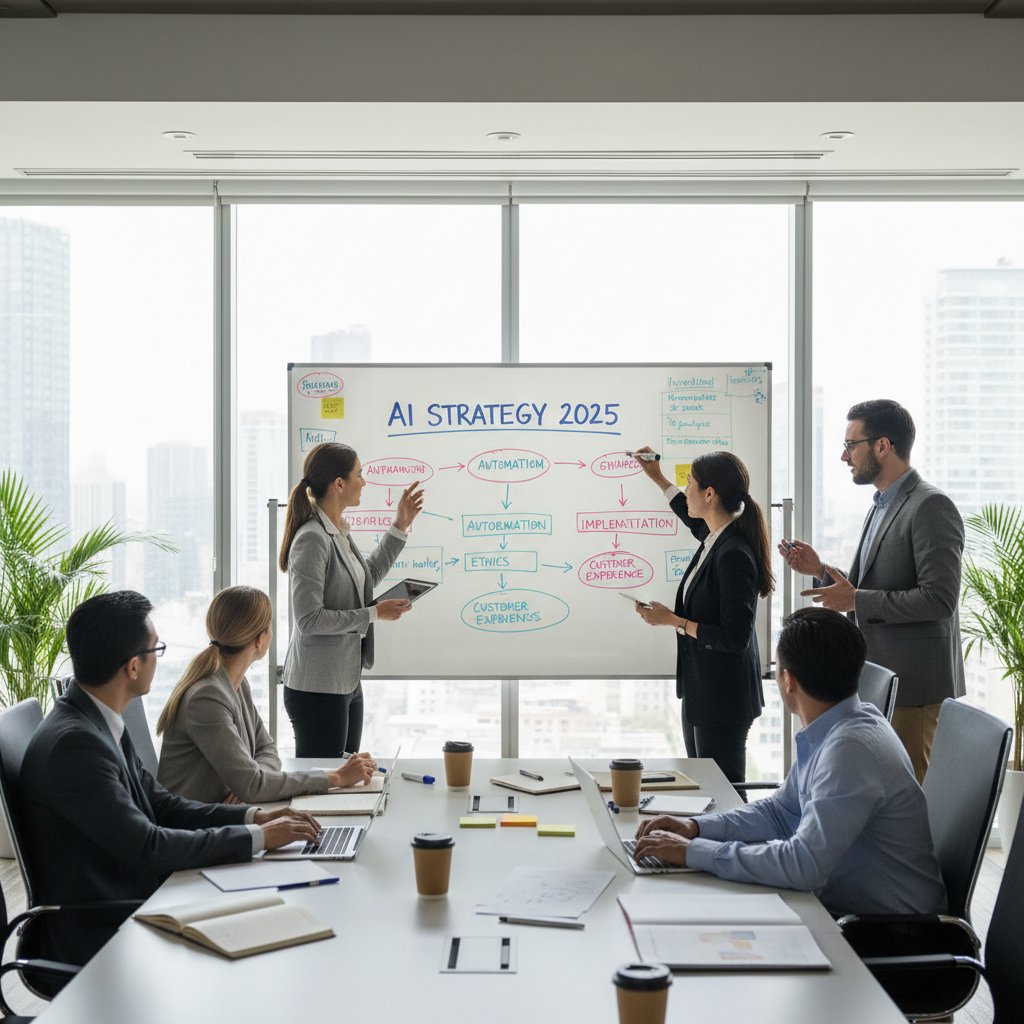
Want to avoid the graveyard of failed AI rollouts? Start with a pilot. Focus on a single workflow or department, track real outcomes, and iterate relentlessly. Feedback loops—both human and algorithmic—are the key to learning and improvement.
Change management for AI skeptics
Resistance isn’t a bug; it’s a feature of any real change. Common sources include fear of job loss, data privacy anxieties, or plain old inertia. Smart leaders address skepticism head-on, using transparency, open communication, and shared wins to build trust.
"Skepticism isn’t a hurdle—it’s a sign your team cares." — Morgan, Change Leadership Consultant
Measuring success: KPIs and continuous improvement
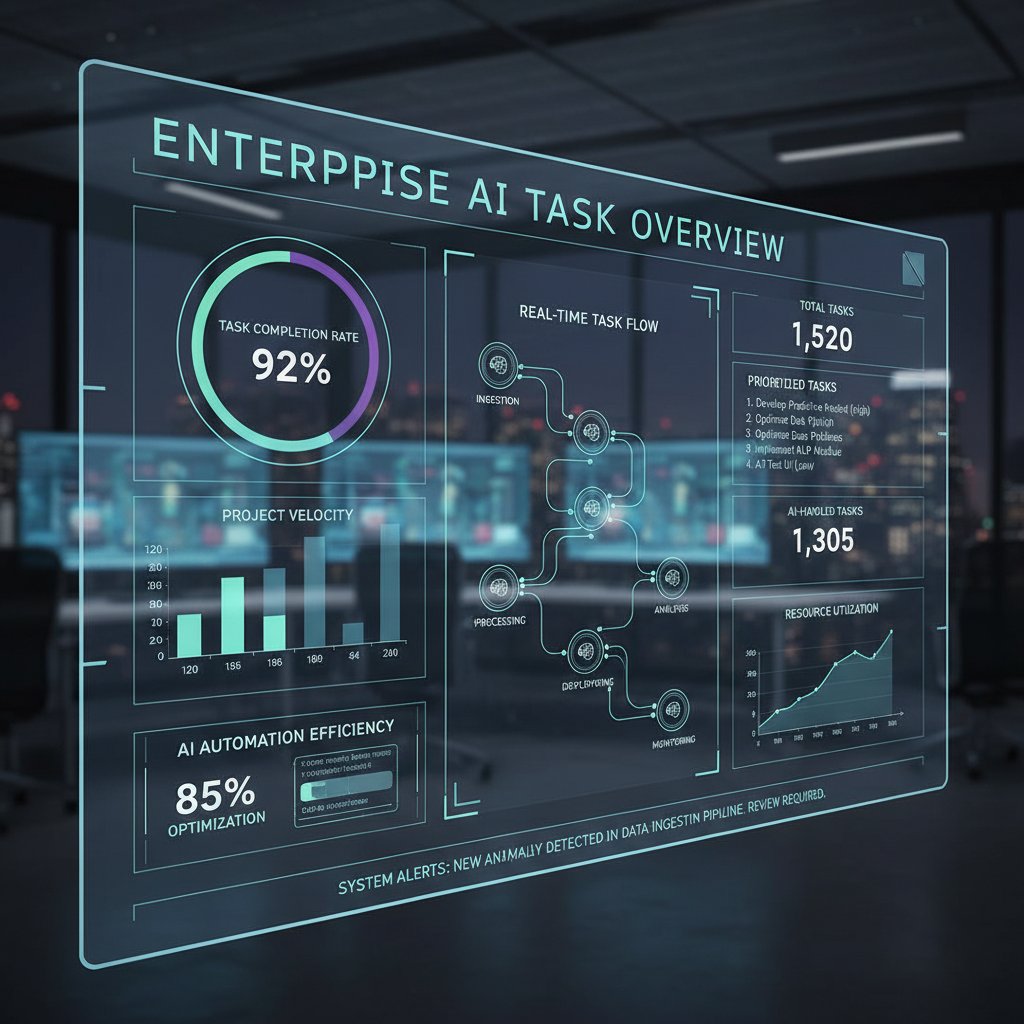
What does success look like? Key metrics include adoption rate, tasks completed per week, reduction in errors, and user satisfaction. But don’t stop at launch—commit to continuous review, using both quantitative KPIs and qualitative feedback to refine your approach.
The future of work: where AI-powered task management is headed next
The convergence of AI, automation, and human creativity
Next-gen tools do more than automate—they amplify human skills. Multimodal AI teammates blend voice, text, and even emotion detection. The most visionary solutions don’t replace creativity; they augment it, letting teams focus on what matters.

How to prepare your enterprise for what’s coming
Future-proofing starts now. Here are seven high-impact actions to take:
- Map all mission-critical workflows.
- Audit and clean your operational data.
- Invest in cross-training teams for hybrid human-AI collaboration.
- Build partnerships with transparent, ethical AI vendors.
- Implement continuous bias and privacy audits.
- Pilot new tools early and iterate often.
- Develop a culture of candid feedback and quick course correction.
Complacency is the enemy. The cost of waiting? Watching your more agile competitors lap you—twice.
The big question: can you trust your next teammate to be artificial?
AI-powered collaboration is not just a technical challenge—it’s a trust experiment. Real partnership between humans and AI requires a mindset shift: Treat the AI as a tool, yes, but also as a teammate—one you train, audit, and occasionally overrule. Services like futurecoworker.ai are at the forefront, shaping what “trustworthy” AI looks like in the trenches of real enterprise workflows.
Conclusion: the brutal reality—and radical promise—of enterprise AI-powered task management
Key takeaways for enterprise leaders
Here’s the unvarnished truth: Implementing enterprise AI-powered task management is messy, risky, and occasionally humbling. But for organizations willing to confront the brutal realities, the upside is transformative.
5 brutal truths about enterprise AI-powered task management:
- Hype is easy—change is hard.
- AI amplifies judgment, it doesn’t replace it.
- Data quality and privacy are existential issues, not afterthoughts.
- Automation reveals new forms of invisible work.
- The boldest leaders are those who act, audit, and adapt relentlessly.
Incremental progress beats waiting for perfection. Bold, informed action will separate the AI leaders from the laggards. Don’t just chase the future—shape it.
Call to action: are you ready to lead the AI-powered revolution?
The stakes have never been higher. In the next two to three years, organizations that master enterprise AI-powered task management will define the new standard for efficiency, resilience, and innovation. The journey starts by asking the hard questions, piloting ruthlessly, and building trust—between humans and their algorithmic teammates.
Ready to take the leap? Start with a pilot, audit your workflows, and tap into the expertise of proven platforms like futurecoworker.ai. The future of work isn’t waiting—and your next teammate may not even need a desk.

Sources
References cited in this article
- Menlo Ventures 2024(menlovc.com)
- McKinsey: The State of AI(mckinsey.com)
- Ecosystm Insights Report(blog.ecosystm.io)
- Zenhub Blog(blog.zenhub.com)
- Web Summit 2024(news.remote-first.institute)
- Olive Technologies(olive.app)
- Ayanza(ayanza.com)
- Deloitte: State of Generative AI(www2.deloitte.com)
- Aiimi(aiimi.com)
- IBM Global AI Adoption Index 2023(newsroom.ibm.com)
- Hypersense Software(hypersense-software.com)
- TechTarget(techtarget.com)
- BCG(bcg.com)
- Skim AI(skimai.com)
- Forbes(forbes.com)
- Microsoft WorkLab(microsoft.com)
- Accenture Research(newsroom.accenture.com)
- Bain & Company(bain.com)
- Sofigate 2023(sofigate.com)
- TechTarget 2024(techtarget.com)
- Forbes 2024(forbes.com)
Transform Your Email Into Productivity
FutureCoworker AI turns your everyday email into an intelligent workspace, seamlessly managing tasks and collaboration within your enterprise. It eliminates the complexity of AI, allowing you to benefit from advanced technology without any technical knowledge. Achieve productivity, streamline processes, and improve team efficiency through natural email interaction, getting tasks done faster and smarter.
Get startedReady to Transform Your Email?
Start automating your tasks and boost productivity today
Frequently Asked Questions
What percentage of large organizations are currently using generative AI in their business functions?
According to McKinsey data cited in the article, 71% of large organizations are now embedding generative AI in at least one critical business function, representing a significant leap from 65% in previous reporting.
What is the main challenge enterprises face when implementing AI-powered task management?
The article highlights that enterprises overestimate the plug-and-play nature of AI implementations, with real change being messy and complex rather than seamless, as noted by Priya, a senior product manager at a global consultancy.
What types of tasks are enterprises looking to automate with AI beyond simple ones?
Enterprises are ambitious about using AI to automate sprawling, multi-step workflows including precision scheduling and auto-escalation of risks, not just simple tasks like emails or basic to-dos.
What is the core question leaders are grappling with regarding enterprise AI adoption?
Leaders are wrestling with whether they are trading complexity for clarity or simply swapping old bottlenecks for new digital ones, and whether the AI 'copilot' revolution is a bubble or the beginning of a deeper transformation in how work gets done.
Continue Reading
Keep exploring Intelligent enterprise teammate

Enterprise AI Task Management Software: Real Costs and Benefits
Enterprise AI task management software is transforming how teams collaborate and manage work. This article examines the real costs, benefits, and strategic implications for businesses.

Enterprise AI Task Management: How AI Reshapes Workplace Operations
Enterprise AI task management spending surged to $13.8 billion in 2024. This article examines how AI reshapes workplace productivity, integration challenges, and genuine operational wins.

AI-Driven Enterprise Task Management’s Hidden Risks and Rewards
Discover insights about AI-driven enterprise task management

Enterprise AI-Enabled Task Automation’s Hidden Costs and Wins
Discover insights about enterprise AI-enabled task automation

Enterprise AI-Powered Management Platforms: Hype, Risk, Reward
Discover insights about enterprise AI-powered management platforms

AI Enterprise Task Management: What Actually Improves Team Productivity
AI enterprise task management solutions promise to reduce chaos, but results vary widely. This article examines what works, common pitfalls, and how to implement them effectively.