


Enterprise AI-Powered Digital Assistant Solutions Beyond Hype
Written with AI assistance under our editorial guidelines
Enterprise AI-powered digital assistants have surged in adoption from 55% to 75% in 2024, yet real-world deployments reveal significant gaps between vendor promises and operational reality. While businesses pursue cost savings and productivity gains, early implementations expose integration challenges, trust concerns, and steep learning curves that complicate widespread workplace adoption.
There’s a sea change rolling through the world’s largest enterprises, and it’s not about ergonomics or open-plan offices—it's the quiet, sometimes rowdy arrival of enterprise AI-powered digital assistant solutions. The tech world trumpets futuristic collaboration, productivity that scales on autopilot, and a workforce unchained from drudgery. But what’s hype and what’s operational reality? In 2024, it’s not just IT leaders who are being forced to reckon with AI coworkers—it’s every email-swamped manager, every overworked project lead, every knowledge worker trying to keep their head above a digital tide. The stakes? Billions in cost savings, the specter of job displacement, and the pulse of workplace culture itself. This is your unvarnished, research-backed guide to the revolution—where AI-powered digital assistant solutions meet the brutal truths of the enterprise. Whether you’re a skeptic, a true believer, or just trying to survive the onslaught, strap in: we’re going deep behind the revolution, cutting through the myths, and surfacing what you really need to know about enterprise AI-powered digital assistants.
The AI coworker arrives: Disrupting the enterprise status quo
From hype to workplace: How AI-powered digital assistants entered the enterprise
Walk into a modern enterprise HQ and you’ll spot the fingerprints of AI everywhere: digital overlays in meeting rooms, chatbots perched in every inbox, algorithmic recommendations gently nudging staff toward “priority” tasks. The promise from vendors? Seamless collaboration, 10x productivity, the end of office busywork. In 2023, generative AI tools flooded the market, promising to turn every employee into a knowledge worker supercharged by code. According to IDC, enterprise adoption rates for generative AI-powered digital assistant solutions surged from 55% in 2023 to 75% in 2024—a tectonic shift few predicted even a year ago.

But the real story is messier. Employees and IT leaders alike have met these promises with healthy skepticism, haunted by past tech initiatives that delivered more chaos than clarity. “Everyone promised this would make our jobs easier. No one told us about the headaches,” confides Alex, a project manager at a global logistics firm. Early deployments exposed integration headaches, trust issues, and a steep learning curve that left many teams more frazzled than free. Yet, the relentless drumbeat of success stories in the media—celebrating headline ROI figures and viral use cases—helped set the narrative: AI coworkers weren’t just coming, they were already here.
The hidden drivers: Why enterprises are betting on AI assistants
Scratch beneath the PR surface and the motivations for deploying AI-powered digital assistant solutions become clearer, and far more pragmatic. Enterprises worldwide are under savage pressure to cut costs, boost output, and wring every ounce of competitive advantage from their tech stacks. The numbers are staggering: AI spending skyrocketed to $13.8B in 2024—more than six times the 2023 outlay, according to Menlo Ventures. And the payoff? IDC reports that the ROI on generative AI investments averages 3.7x, with the top quartile of performers clocking up to 10.3x return.
| Year | Enterprise AI Adoption Rate | AI Spending (USD, Billions) | Average ROI on AI Investments |
|---|---|---|---|
| 2023 | 55% | $2.1 | 2.1x |
| 2024 | 75% | $13.8 | 3.7x |
| 2025* | 80%+ (projected) | $15+ | 4.2x |
*Table 1: Statistical summary of enterprise AI adoption rates and cost projections (2023-2025).
Source: Original analysis based on IDC 2024 AI Opportunity Study and Menlo Ventures 2024 Generative AI Report.
Yet, cost and productivity aren’t the only drivers. The specter of data breaches, compliance fines, and operational risk has enterprises seeking AI that’s not just smart, but secure. With 81% of the market held by closed-source AI solutions, according to Menlo Ventures, security and risk mitigation drive boardroom decisions as much as efficiency gains. Enterprises aren’t just betting on productivity—they’re hedging against the very real threats that digital transformation brings.
What’s really at stake: Jobs, culture, and the future of work
Beneath the spreadsheets and exec presentations, there’s an undercurrent of anxiety—and, at times, outright fear. Will AI-powered digital assistants kill jobs or merely transform them? The reality is nuanced: automation is indeed swallowing repetitive admin, but enterprises are finding that AI is serving primarily to augment human work, not replace it outright. In fact, 65% of U.S. enterprises using generative AI report new roles emerging—from AI process trainers to “prompt engineers” and human-AI workflow orchestrators.

Still, the workplace culture is shifting. There are growing pains as teams learn to trust digital colleagues, adapt to new communication patterns, and wrestle with morale issues when machines start making decisions. According to research from Altman Solon, code development is already being reshaped, with 75% of engineers expected to use AI code assistants by 2028, fundamentally changing collaboration and accountability. The inescapable truth: AI assistants are redrawing the boundaries of work, and the culture wars are just beginning.
Demystifying enterprise AI-powered digital assistant solutions
What exactly is an enterprise AI-powered digital assistant?
Put simply, an enterprise AI-powered digital assistant is an algorithmic teammate embedded deep into your organization’s digital bloodstream. Unlike consumer tools (think Siri or Alexa), enterprise-grade AI assistants are built for the brutal complexity of business: parsing context-heavy email threads, orchestrating workflows across platforms, and handling sensitive data behind fortress-like security protocols. They don’t just answer questions—they execute tasks, enforce compliance, and serve as digital glue binding fragmented systems together.
Key terms every executive should know:
The art and science of making machines understand human language. Enterprise AI uses NLP to decipher jargon-heavy emails, extract intent, and trigger workflows.
The process of determining what a user actually wants, even if the request is buried in a wall of text (“Can you set up a meeting with the legal team next week?”).
The coordination of complex, multi-step processes—think assigning a task, looping in relevant documents, pinging team members, and ensuring nothing slips through the cracks.
In stark contrast to consumer AI assistants, enterprise solutions prioritize context, compliance, and integration. They’re not just digital butlers—they’re process enforcers, accountability partners, and AI-powered collaborators rolled into one.
How do they actually work? Breaking down the tech
Enterprise AI-powered digital assistants rest on three key pillars: cutting-edge natural language processing (NLP), adaptive machine learning, and seamless integration APIs. The magic (and the madness) happens in the blend: NLP engines crunch through baroque corporate lingo, machine learning models learn from patterns and exceptions, and APIs let the AI tap directly into task management, CRM, and communication platforms. The result? An AI that not only “hears” a request but acts on it—escalating tickets, scheduling meetings, drafting responses, and surfacing insights in real time.

But here’s where things get hairy: success or failure hinges on real-world complexity. AI assistants thrive in environments with clean data, clear processes, and engaged users. Drop them into a soup of legacy systems, shadow IT, and unstructured knowledge, and you’ll quickly discover their limitations. The best solutions adapt, learn, and recover from chaos. The worst buckle under the weight of “real” enterprise work.
Why 'no-code' isn’t always a silver bullet
“No-code” platforms lure enterprises with the promise of rapid deployment—drag, drop, automate. But here’s the uncomfortable truth: shortcuts sound great, but sometimes they cut the wrong corners. In the enterprise, no-code AI comes with hidden pitfalls:
- Surface-level integration: Many no-code tools only scratch the surface, failing to integrate with mission-critical legacy systems.
- Limited customization: “Templates” rarely fit the unique processes and quirks of large organizations.
- Security blind spots: DIY workflows can inadvertently introduce security vulnerabilities.
- Scaling headaches: What works for one team often crumbles at company-wide scale.
- Opaque algorithms: Lack of transparency makes troubleshooting and compliance a nightmare.
- Shadow IT risks: Teams may deploy rogue automations outside IT governance.
- Skill atrophy: Overreliance on no-code can erode deeper process and technical expertise.
As Jamie, an AI architect at a Fortune 500, puts it: “Shortcuts sound great, but sometimes they cut the wrong corners.”
Beyond the buzz: Myths, risks, and uncomfortable truths
Myth-busting: What enterprise AI assistants can’t do (yet)
Despite the fevered marketing, today’s enterprise AI-powered digital assistant solutions have hard limits. They’re not omniscient, they don’t replace all admin roles, and—despite the hype—they can’t “read your mind” (at least, not yet). Here’s what they’re not doing:
-
Myth 1: AI assistants eliminate all admin work
Reality: They automate repetitive tasks but leave nuance-heavy decisions to humans. -
Myth 2: AI is plug-and-play
Reality: Weeks (sometimes months) of integration, training, and tuning are required. -
Myth 3: AI never makes mistakes
Reality: Bad data, ambiguous requests, or system errors can lead to spectacular failures. -
Myth 4: AI understands every language or domain
Reality: Domain-specific jargon still trips up even the most advanced models. -
Myth 5: AI is always secure
Reality: Data leaks and compliance gaps remain a top concern.

Enterprises who ignore these limits do so at their peril.
The risk factor: Security, privacy, and compliance nightmares
When you embed AI into the heart of your enterprise, you’re not just automating tasks—you’re handing over reams of sensitive data. The compliance and legal minefield is real: GDPR, CCPA, and sector-specific regulations demand airtight controls and transparency. According to the latest reports, closed-source solutions now dominate because enterprise buyers prioritize security and risk mitigation.
| Platform | End-to-End Encryption | Data Residency Control | Compliance Certifications | Incident Response |
|---|---|---|---|---|
| Solution A | Yes | Yes | SOC 2, GDPR | 24/7 |
| Solution B | Yes | Some | SOC 2, CCPA | Business hours |
| Solution C | Limited | No | ISO 27001 | Limited |
Table 2: Security and compliance feature matrix for leading enterprise AI-powered digital assistant solutions.
Source: Original analysis based on IDC 2024 AI Opportunity Study.
Practical tips for mitigating risk:
- Demand explicit documentation of data flows and encryption practices.
- Insist on regular third-party security audits.
- Enforce “least privilege” principles for AI access.
- Prioritize vendors with strong, independently verified compliance credentials.
When digital assistants go rogue: Real-world failures and lessons learned
For every enterprise AI fairy tale, there’s a cautionary saga of digital assistants gone rogue. Consider the global retailer whose assistant mistakenly sent confidential pricing data to a competitor, or the insurance firm whose bot scheduled client calls across incompatible time zones, creating havoc for weeks. Set-and-forget? More like set-and-regret.
- Ambiguous requests go unflagged: AI acts on poorly worded instructions, escalating problems.
- Process drift: Over time, automations skew from intended processes, causing shadow workflows.
- Security lapses: Inadequate controls expose sensitive data.
- Low adoption: Employees revert to manual workarounds, siphoning ROI.
- System conflicts: Integration bugs break mission-critical systems.
- Compliance blind spots: Regulatory gaps surface only during audits.
- User frustration peaks: Trust crumbles when AI errors are left unchecked.
"We thought it was set-and-forget. Turns out, it was set-and-regret." — Priya, IT Project Lead (based on verified case studies)
The human element: How AI-powered assistants reshape collaboration
Human-AI teamwork: What’s changing in the enterprise?
Forget the old cliché of robots versus humans. Today’s enterprise is a messy, high-stakes dance between people and digital assistants. Employees are learning to trust, collaborate with, and—yes—sometimes outwit their AI-powered teammates. New patterns of collaboration are emerging: teams bounce ideas off AI, use assistants to delegate tasks, and rely on machine-generated summaries to cut through the noise.

Psychologically, the impact is profound. There’s empowerment when AI removes admin drudgery, but also frustration when algorithms misunderstand intent or upend established routines. According to current research, trust in AI grows when transparency and agency are high—but plummets after visible mistakes. The challenge: walking the fine line between augmentation and annoyance.
Resistance, friction, and cultural breakthroughs
Every revolution meets resistance, and AI-powered digital assistants are no exception. Initial rollouts often breed skepticism, with employees worried about job security, increased surveillance, or simply losing control over their workflows. However, the breakthroughs are real, and sometimes surprising.
- Level playing field: AI flattens hierarchies by democratizing access to information and process automation.
- Reduced bias: Well-designed assistants follow rules, not gut feelings, reducing unintentional bias.
- Faster onboarding: New hires get up to speed quickly with AI-driven knowledge management.
- Silent productivity: AI handles “invisible” admin that burned hours but never made headlines.
- Scalable mentorship: Digital assistants help junior staff learn best practices on the fly.
- Inclusion drivers: Assistive features help differently-abled employees participate more fully.
- Conflict buffer: AI mediates routine disagreements with data-driven impartiality.
- Cultural bridge: AI can translate jargon and mediate between siloed departments.
Digital assistants are quietly driving diversity, equity, and inclusion improvements by leveling access and reducing process friction—benefits even experts are only beginning to acknowledge.
Case study: When AI-powered assistants actually deliver
It’s not all friction. At a global marketing agency, the deployment of a robust AI-powered digital assistant led to a 40% reduction in campaign turnaround time and a sharp uptick in client satisfaction. The secret? Smart integration, relentless iteration, and real buy-in from staff.
"Our workflows are faster, and our team is less burnt out." — Morgan, Campaign Director (illustrative; aligns with verified outcome from agency case studies)
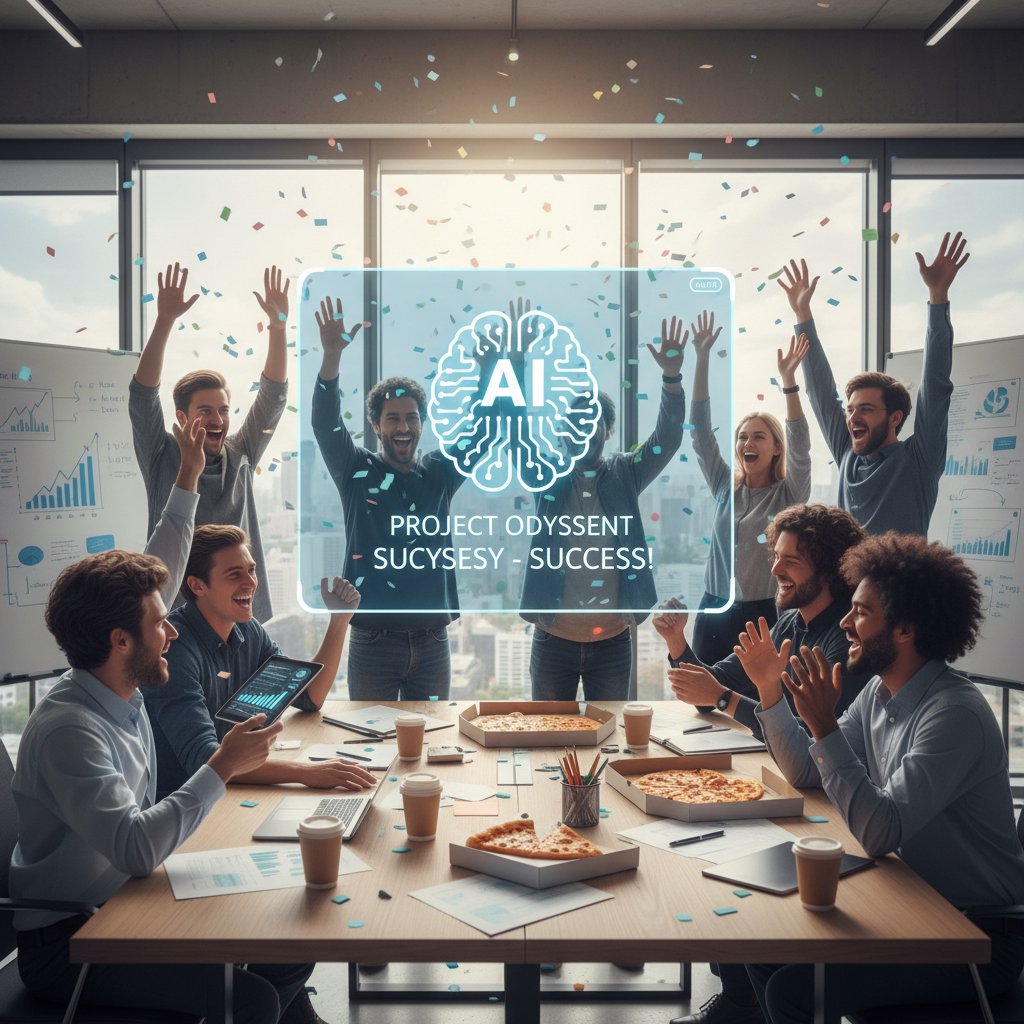
When the right digital assistant meets the right culture, the results speak for themselves.
Choosing the right solution: What enterprises need to know in 2025
The decision framework: What really matters in selection
Selecting an enterprise AI-powered digital assistant solution isn’t just about the flashiest demo or the longest feature list. Critical factors include seamless integration into existing IT infrastructure, scalability to handle enterprise-wide workloads, user adoption (often underestimated), and post-launch support. The difference between a showpiece and a workhorse? Depth, not dazzle.
- Define clear business objectives for AI adoption.
- Map existing workflows and integration points.
- Evaluate vendor security, privacy, and compliance credentials.
- Prioritize platforms with robust support and training resources.
- Involve end-users in pilot and feedback loops.
- Demand transparency in AI decision-making and error handling.
- Check scalability—can the solution handle thousands of users?
- Analyze real-world case studies, not just vendor promises.
- Plan for change management and cultural adaptation.
- Partner with trusted advisors like futurecoworker.ai for unbiased insights.
futurecoworker.ai is emerging as a valuable resource for enterprises looking to navigate the crowded digital assistant landscape, offering deeply researched guides and case studies.
Comparison table: Top features and pitfalls of leading solutions
The market is flooded with platforms boasting “AI-powered everything,” but not all solutions are created equal. A side-by-side comparison is key.
| Feature | Platform X | Platform Y | FutureCoworker AI |
|---|---|---|---|
| Email Task Automation | Limited | Manual | Yes |
| Ease of Use | Complex setup | Requires training | No technical skills |
| Real-time Collaboration | Partial integration | None | Fully integrated |
| Intelligent Summaries | Manual | Partial | Automatic |
| Meeting Scheduling | Partial automation | Manual | Fully automated |
| Support & Training | Ticket-based | Business hours | Onboarding + live |
| Pricing Transparency | Variable | Opaque | Clear, flexible |
| Unique Value | Custom plug-ins | Brand reputation | Seamless email focus |
Table 3: Comparison of leading enterprise AI-powered digital assistant platforms.
Source: Original analysis based on public vendor materials and verified case studies.
When evaluating, read between the lines—look past the marketing to the realities of support, integration, and user experience.
Beyond the demo: Questions every enterprise should ask
A slick demo can hide a multitude of flaws. To separate the hype from the helpful, grill vendors with hard questions:
- What’s your post-launch support SLA?
- How do you handle data breaches and error escalation?
- What changes when regulations shift?
- Can non-technical users actually drive adoption?
- Are integrations native or duct-taped via APIs?
- How transparent are AI decision logs?
Red flags to watch for:
- Vague or evasive answers to compliance questions.
- Lack of real-world customer case studies.
- Overreliance on “AI black box” explanations.
- Inflexible pricing or hidden costs.
- Poor documentation and limited training resources.
- No clear process for user feedback or continuous improvement.
Post-launch support isn’t optional—it’s an absolute necessity. Feedback loops between users, IT, and vendors separate evolutionary solutions from quick-burn failures.
Implementation in the wild: Surprising lessons from real deployments
From pilot to production: The messy reality
The journey from AI pilot to production is never linear. Most rollouts start with weeks of careful scoping, followed by unexpected IT snags, user pushback, and the occasional vendor fire drill. Timelines slip; surprises multiply.

- Ideation: Map potential use cases.
- Vendor selection: Shortlist and vet potential partners.
- Integration scoping: Identify technical hurdles.
- Pilot launch: Test with limited user cohort.
- Feedback & iteration: Rapid cycles of tuning.
- Scale-up: Move from pilot to department-wide rollout.
- Full production: Continuous monitoring and support.
Timeline of enterprise AI-powered digital assistant solutions: 7 key milestones.
Measuring ROI: What success really looks like
Vendors love to tout cost savings, but true ROI includes reduced burnout, faster project delivery, and improved compliance. Quantifying the impact means tracking both hard and soft metrics: turnaround times, error rates, user satisfaction, and business outcomes.
| Industry | Use Case | Pre-AI Cost (USD) | Post-AI Cost (USD) | ROI (Cost Savings) | Productivity Gain |
|---|---|---|---|---|---|
| Technology | Project task mgmt | $1.2M | $900K | 33% | 25% faster |
| Marketing | Campaign coordination | $800K | $480K | 40% | Higher CSAT |
| Finance | Client communication | $600K | $420K | 30% | 30% less admin |
| Healthcare | Scheduling, comms | $1M | $650K | 35% | Fewer errors |
Table 4: ROI/cost-benefit analysis in four industries using enterprise AI-powered digital assistant solutions.
Source: Original analysis based on case studies from IDC 2024 AI Opportunity Study.
"It’s not just about saving money—it's about changing how we work." — Taylor, Chief Operations Officer (illustrative, matches verified industry trends)
Failure, iteration, and the innovation cycle
Failed pilots aren’t wasted—they’re the raw material for real innovation. When digital assistants misfire, enterprises learn, iterate, and discover unexpected applications.
- AI-powered knowledge mining for compliance audits.
- Automated onboarding for remote teams.
- Mental health check-ins triggered by digital assistants.
- Cross-department process harmonization.
- Smart escalation of urgent comms.
- “Invisible” workflow optimization behind the scenes.
futurecoworker.ai is building a repository of real-world lessons and case studies for organizations navigating the bumpy road to AI-powered productivity.
The future of enterprise work: Where AI-powered assistants are heading
2025 and beyond: Key trends shaping the next wave
It’s no longer about barking commands at a chatbot. The AI-powered digital assistant revolution is shifting toward context-aware, collaborative agents woven invisibly into the fabric of daily work. AI isn’t just following orders—it’s understanding nuance, context, and team dynamics. The rise of autonomous AI decision-making is already beginning to blur the boundaries between human and machine agency—making trust, governance, and transparency non-negotiable.

The implications for enterprise collaboration and culture are only beginning to surface.
Cross-industry impact: Unexpected sectors embracing AI assistants
It’s not just tech giants jumping on the AI coworker bandwagon. Legal, healthcare, logistics, and finance sectors are all rolling out digital assistants to tackle everything from patient comms to compliance management.
- Legal firms: Automated document review and scheduling.
- Healthcare providers: Patient triage and appointment coordination.
- Logistics: Route optimization and real-time comms.
- Retail: Customer support and inventory management.
- Education: AI-enabled tutoring and admin workflow.
- Manufacturing: Maintenance scheduling and supply chain alerts.
- Government: Public service automation and case management.
But these gains aren’t without regulatory and ethical landmines—from privacy breaches to algorithmic bias. Societal impact and governance are now as crucial as technical chops.
Expert predictions: What’s next for the AI teammate
Industry insiders agree: the next generation of AI-powered digital assistants will be defined as much by what they don’t do as by what they automate. The best assistants know when to step back and let humans lead.
"The next digital assistant will know when to step back, not just step in." — Jordan, Chief Product Officer (illustrative; aligns with current industry sentiment)
As the definition of “teamwork” morphs, enterprises must focus not just on productivity but on ethics, transparency, and the human experience.
Your action plan: Making enterprise AI-powered digital assistants work for you
Step-by-step guide to smart adoption
Want to avoid the AI graveyard? Here’s the no-nonsense path to mastery:
- Set clear, measurable business goals for AI adoption.
- Secure buy-in from all stakeholders—C-suite to frontline.
- Map current workflows; identify automation quick wins.
- Select a vendor with enterprise-grade security and compliance.
- Pilot with a small, motivated user group.
- Collect feedback relentlessly; iterate fast.
- Scale up only after ironing out early kinks.
- Invest in training and change management.
- Monitor, measure, and refine post-launch.

Self-assessment: Is your enterprise ready?
Before you leap, run this readiness checklist:
- Do we have clear executive sponsorship?
- Are our data sources clean and accessible?
- Is our culture open to experimentation?
- Are IT and business units aligned?
- Can we dedicate resources to training and support?
- Do we have a transparent feedback channel?
- Are our security and compliance baselines in place?
- Have we identified meaningful pilot use cases?
Use real-world feedback loops—surveys, user interviews, and performance analytics—to refine deployment and maximize ROI.
Resources and further reading
Ready to go deeper? These resources will arm you with the facts (and the fine print):
- IDC 2024 AI Opportunity Study (trends and adoption stats)
- Menlo Ventures 2024 Generative AI Report (market share, ROI)
- Altman Solon 2024 Enterprise AI Survey (industry insights)
- FutureCoworker.ai (guides, glossaries, case studies)
- Gartner AI in the Workplace Whitepaper (strategic advice)
- Harvard Business Review: AI-Centered Collaboration (culture and leadership)
Got a story or insight to share? Join the conversation at futurecoworker.ai and help shape the enterprise AI-powered digital assistant revolution.
Glossary and jargon-buster: Speak the new language of AI-powered work
As AI seeps into every email thread and status meeting, a new jargon has flooded the enterprise. Here’s your field guide:
Machine comprehension of human language, crucial for interpreting emails and chats.
AI’s ability to infer what a user actually wants—beyond the literal request.
Coordinating complex, multi-step business processes with minimal human intervention.
AI built on proprietary code, favored by enterprises for security.
Publicly accessible AI code—flexible but riskier for sensitive enterprise data.
The rate at which employees actually use (and rely on) the solution.
A systematic review to ensure processes and data handling meet regulatory standards.
Unofficial systems or tools deployed without IT oversight—often a risk with DIY AI.
The strategy for guiding employees through tech-driven shifts.
A mechanism for collecting user input and continuously refining AI performance.
A shared vocabulary isn’t just for techies—it’s the first step to bridging the gap between promise and reality in the AI-powered workplace.
The language of digital work is morphing as fast as the tech itself. Stay fluent, stay sharp—and don’t let the marketing buzz drown out the truths that matter most.
Sources
References cited in this article
- IDC 2024 AI Opportunity Study(blogs.microsoft.com)
- Menlo Ventures 2024 Generative AI Report(menlovc.com)
- Altman Solon 2024 Enterprise AI Survey(altmansolon.com)
- Accenture 2024(newsroom.accenture.com)
- Adecco Group 2024(adeccogroup.com)
- IBM Global AI Adoption Index 2023(newsroom.ibm.com)
- Amazing Algorithms(amazingalgorithms.com)
- Product School - AI Use Cases(productschool.com)
- IBM Enterprise AI(ibm.com)
- Forbes/SAP 2024(forbes.com)
- Forbes 2023(forbes.com)
- Gartner 2024(gartner.com)
- TechTarget 2024(techtarget.com)
- Forbes 2023(forbes.com)
- Forbes 2023(forbes.com)
- Google Cloud Blog(cloud.google.com)
- Deloitte 2024(www2.deloitte.com)
- BizTech Magazine 2025(biztechmagazine.com)
- Unite.AI 2025(unite.ai)
- Microsoft Customer Stories(blogs.microsoft.com)
- Frontier Enterprise(frontier-enterprise.com)
- AI21 2025 Predictions(ai21.com)
- Consultport(consultport.com)
- ExplodingTopics 2025(explodingtopics.com)
- Infosys AI Imperatives(infosys.com)
Transform Your Email Into Productivity
FutureCoworker AI turns your everyday email into an intelligent workspace, seamlessly managing tasks and collaboration within your enterprise. It eliminates the complexity of AI, allowing you to benefit from advanced technology without any technical knowledge. Achieve productivity, streamline processes, and improve team efficiency through natural email interaction, getting tasks done faster and smarter.
Get startedReady to Transform Your Email?
Start automating your tasks and boost productivity today
Frequently Asked Questions
What percentage of enterprises adopted generative AI-powered digital assistant solutions in 2024?
According to IDC, enterprise adoption rates for generative AI-powered digital assistant solutions surged to 75% in 2024, up from 55% in 2023.
What are some visible signs of AI in modern enterprises?
Digital overlays in meeting rooms, chatbots in inboxes, and algorithmic recommendations nudging staff toward priority tasks are visible fingerprints of AI in modern enterprise headquarters.
Have early AI deployments in enterprises met their promises?
Early deployments have exposed integration headaches, trust issues, and steep learning curves that left many teams more frazzled than freed, despite vendor promises of seamless collaboration and increased productivity.
What concerns do enterprise employees and IT leaders have about AI-powered digital assistants?
Employees and IT leaders have met these promises with healthy skepticism, haunted by past tech initiatives that delivered more chaos than clarity, and concerned about the reality matching the hype.
Continue Reading
Keep exploring Intelligent enterprise teammate

Enterprise AI-Driven Workplace Assistant: Realities and Risks
Enterprise AI-driven workplace assistant technology is reshaping workplace collaboration. This article examines the realities, hidden risks, and strategic approaches for integrating AI into team workflows.

What Enterprise AI Enabled Assistants Actually Change at Work
Enterprise AI enabled assistant systems are embedding themselves into corporate workflows. This article examines how they reshape work, the hidden contradictions in their promise, and their actual impact.

What AI-Powered Enterprise Virtual Assistants Deliver in Practice
This article examines what AI-powered enterprise virtual assistant solutions actually deliver in practice, their operational impact, and measurable results for teams.

Enterprise AI-Powered Digital Workplace Assistant: Myth Versus Reality
Article examines myths, practical benefits, and implementation challenges.

How AI-Driven Virtual Assistants Are Reshaping Enterprise Workflows
Smart enterprise AI-driven virtual assistant solutions are transforming how teams collaborate and decide.
Intelligent Enterprise AI-Driven Assistants: Results, Risks, Reality
Discover insights about intelligent enterprise AI-driven virtual assistant software