Enterprise AI-Powered Management Platforms: Hype, Risk, Reward
Written with AI assistance under our editorial guidelines
Enterprise AI-powered management platforms use machine learning to learn from patterns and adapt to new inputs, moving beyond preset rules to surface insights automatically. While 42% of large organizations now adopt these systems, significant gaps persist between vendor marketing promises and actual outcomes, with organizations facing risks around job displacement, process disruption, and algorithmic bias alongside potential efficiency gains.
If you had to sum up the buzz around enterprise AI-powered management platforms in one word, it might just be “relentless.” Boardrooms are haunted by visions of glowing dashboards, “intelligent teammates,” and workflows that run themselves. Vendors toss around terms like “hyperautomation” and “copilot” with religious zeal. But strip away the marketing gloss, and what’s left? As organizations pour billions into smart platforms promising to make work frictionless, the gap between hype and reality has never been more relevant—or more controversial. This is not just another tech trend. It’s a cultural fault line, upending roles, rewriting processes, and forcing teams to confront their own limitations and biases. With enterprise AI adoption soaring—42% of large organizations now use AI according to IBM’s 2024 research—the stakes couldn’t be higher. This deep-dive rips through the jargon, exposes the risks, and reveals what really happens when your next “coworker” is an algorithm that never sleeps and never forgets. Welcome to the new reality of enterprise AI-powered management platforms. Let’s separate the facts from the fantasy.
What are enterprise AI-powered management platforms—really?
Cutting through the buzzwords
It’s a familiar scene: a group of decision-makers staring glassy-eyed at a vendor deck, bombarded with phrases like “predictive orchestration” and “AI-augmented synergy.” The problem? These words often mean everything and nothing at once. The AI management platform space is drowning in jargon, and that confusion is costing enterprises real money—and missed opportunities.

Executives want clarity, but instead get a word salad that muddies the waters. Gartner’s surveys regularly show that “AI-powered” is the most overused and misunderstood phrase in B2B software. According to recent research by Deloitte, decision-makers find it hard to distinguish between genuinely intelligent systems and regular workflow automation tools dressed up with a fresh coat of AI paint.
Core terms, demystified:
- AI-powered: Software that doesn’t just follow preset rules but learns from patterns, adapts to new inputs, and surfaces insights you didn’t ask for. Think of it as a colleague who can anticipate what you need before you finish the sentence.
- Management platform: A centralized digital workspace that orchestrates projects, tasks, communication, and analytics—essentially, mission control for your enterprise operations.
- Automation: Turning routine tasks over to machines, so people can focus on the work that matters. In context, it’s like having a diligent intern who never forgets, never sleeps, and never gets bored.
- Workflow orchestration: The art (and science) of making sure the right work gets to the right person or bot at the right time, with minimal friction.
What sets the new breed of platforms apart is their ability to connect previously siloed data, make sense of semi-structured chaos (think: your email inbox or Slack history), and surface actionable insights—all in near real time.
How AI platforms evolved from legacy software
The road to today’s intelligent management platforms is littered with the bones of clunky legacy tools. Remember the era of on-premise project management suites that took months to deploy and years to master? Back then, the best you could hope for was color-coded Gantt charts and endless status update meetings.
But as business needs evolved, so did the technology. The 2010s brought SaaS platforms like Asana and Trello, which prioritized usability but lacked deep intelligence. Fast forward to the 2020s, and the game changed: machine learning, natural language processing (NLP), and generative AI crashed the party. Suddenly, platforms could summarize long email threads, prioritize tasks, and even draft project plans based on your historical data.
| Year | Key Enterprise Management Tool | Innovation Milestone | AI Integration Point |
|---|---|---|---|
| 1990 | Microsoft Project | Gantt charts, resource tracking | None |
| 2000 | Primavera, SAP PM | Comprehensive project suites | Early automation (macros) |
| 2010 | Asana, Trello | SaaS usability revolution | Basic APIs, workflow rules |
| 2018 | Monday.com, Jira Cloud | Collaboration-first tools | Light ML for suggestions |
| 2022 | Notion, ClickUp | Unified workspaces | NLP-based search, summaries |
| 2024 | FutureCoworker AI, MS Copilot | Email-driven, AI copilots | Generative AI, adaptive workflows |
Table 1: The evolution of enterprise management tools and inflection points in AI adoption. Source: Original analysis based on IBM, Accenture, and Menlo Ventures reports.
The promise versus the practical reality
If you believe every vendor pitch, adopting an enterprise AI-powered management platform is a silver bullet: instant productivity, zero errors, and team harmony. But as anyone who’s survived a major software rollout can tell you, the reality is messier.
"It sounded like magic, but the reality was messier." — Morgan, Industry Analyst
Demo videos gloss over the gnarly details: integrations that break, users who resist change, and workflows that don’t fit into neat algorithmic boxes. According to Accenture’s 2024 research, even organizations with “fully AI-led processes” encountered a rocky transition, with productivity gains kicking in only after months of retraining and tweaking. The lesson? The tech is powerful, but it’s no substitute for thoughtful process design—or good old human patience.
The human cost and cultural shift: Are teams ready for AI coworkers?
The emotional rollercoaster of AI adoption
Introducing an AI coworker isn’t just a technical upgrade—it’s an emotional event. Employees run the gamut: excitement about less drudgery, fear of being replaced, and deep skepticism about whether the new system “gets” their work. According to Deloitte, 2024, resistance often spikes not because of the technology itself, but because of the cultural aftershocks it sends through teams.

Change management efforts often focus on technical onboarding, but neglect the human side. Real talk: Even the slickest AI won’t win over a team that feels blindsided or replaced. As McKinsey research highlights, the most successful rollouts prioritize transparency, feedback loops, and co-creation—not just top-down mandates.
AI as a collaborator, not a replacement
Progressive platforms like Intelligent enterprise teammate and futurecoworker.ai frame themselves not as threats, but as helpful sidekicks. They automate the grunt work—sorting emails, scheduling, generating meeting notes—so humans can focus on creative, high-value tasks.
Hidden benefits of AI-powered management platforms (that experts won’t tell you):
- They unearth hidden skills: AI can surface subject matter experts based on digital footprints, revealing talents that managers might overlook.
- They reduce administrative fatigue: No more death-by-email or agonizing over follow-ups—AI handles the tedium.
- They level the playing field: Biases in task assignment and recognition decrease when AI evaluates contributions based on real data, not office politics.
- They make onboarding smoother: AI copilots can nudge new hires, answer FAQs, and ensure nobody gets left behind.
- They enable proactive support: From flagging burnout risks to recommending resources, an “AI teammate” watches out for the team as a whole.
These platforms aren’t here to steal jobs—they’re here to redistribute the cognitive load, freeing up humans for what machines can’t (yet) do: empathize, innovate, and read between lines.
Can AI really understand your workflow?
The dirty secret is, no AI—no matter how advanced—fully “gets” the nuance of your day-to-day workflow or company culture. AI learns from patterns, not from watercooler chat or subtle office dynamics.
"The platform nailed our analytics, but missed our inside jokes." — Jamie, Product Manager
This gap can lead to friction: automated reminders that feel tone-deaf, or workflow suggestions that clash with long-standing team rituals. According to a 2024 Accenture study, bridging this gap requires more than training data—it demands ongoing dialogue between humans and machines, as well as customization that lets teams tweak the AI’s “voice” to match their way of working.
Organizations that succeed are those that treat AI as a flexible collaborator, not a rigid taskmaster—and that invest in change champions who can translate between the logic of algorithms and the logic of human teams.
Breaking down the tech: How do AI-powered platforms actually work?
The anatomy of an AI-powered management platform
Beneath the hood, enterprise AI-powered management platforms are intricate machines built from several core components:
- Data ingestion: Pulling from emails, chat logs, calendars, and business apps to create a unified view.
- Natural language processing (NLP): Turning human language into actionable data, so the platform can “read” emails, summarize threads, or extract tasks from meeting notes.
- Workflow automation: Routing tasks, escalating blockers, and automating routine approvals—so humans don’t have to babysit every step.
- Analytics and dashboards: Surfacing insights, predicting bottlenecks, and recommending optimizations based on historical and real-time patterns.

This orchestration is where the magic (and complexity) happens. Unlike basic automation, true AI-powered platforms don’t just follow rules—they adapt, learn, and occasionally surprise you with insights you didn’t think to ask for.
What sets enterprise solutions apart from basic AI tools
Not all AI is created equal. Consumer tools (think: smart email replies, basic chatbots) are lightweight, quick to deploy, and often siloed. Enterprise platforms, by contrast, are built for heavy lifting: integrating with dozens of systems, scaling to thousands of users, and providing robust governance.
| Feature | Enterprise AI-powered platform | Traditional PM tool | Basic AI chatbot |
|---|---|---|---|
| Predictive analytics | Yes | Limited | No |
| Workflow automation | Advanced, adaptive | Rule-based | None/minimal |
| Integration | Deep, multi-system | Shallow, point-to-point | Siloed |
| Data security | Enterprise-grade, compliant | Varies | Basic, limited |
| User customization | High, role-based | Limited | Almost none |
| AI copilots | Yes (context-aware) | Absent | Very basic |
Table 2: Comparing enterprise AI-powered management platforms with legacy project management tools and basic chatbots. Source: Original analysis based on product documentation and Gartner Magic Quadrant reports, 2024.
The integration puzzle: Connecting with legacy systems
Even the smartest AI platform is useless if it can’t talk to your existing tools. But integration is a minefield—technically and politically. Old databases, homegrown apps, and entrenched manual processes are roadblocks that require grit (and often, a little office diplomacy) to overcome.
- Map your data: Inventory what systems you use, where data lives, and who owns it.
- Clean and prep: Scrub your data for duplicates and inconsistencies—AI is only as smart as the data you feed it.
- Select integration points: Decide which workflows should be automated first based on impact, not just ease.
- Pilot and test: Roll out to a small group, gather feedback, and iterate before scaling up.
- Train users: Don’t assume your team will “just get it.” Invest in hands-on training and create a support network of super-users.
Mastering integration isn’t optional—it’s the difference between an AI platform that empowers your team and one that gathers dust.
The myths and misconceptions: Separating fact from fiction
Mythbusting: Will AI-powered platforms replace your job?
Let’s get this out of the way: The existential dread that “AI will take my job” is real—but often misplaced. According to IBM’s 2024 survey, roles most vulnerable to automation are those overloaded with repetitive, rules-based tasks. But for most knowledge workers, AI platforms act as amplifiers, not replacements.
"AI didn’t take my job—it made it less soul-crushing." — Riley, HR Specialist
The real shift? Jobs get redefined, not eliminated. People stop drowning in admin work and start focusing on strategic, creative challenges. The biggest winners are teams that embrace the change and learn to “manage the machines.”
Automation is always better—except when it isn’t
Automation can be intoxicating, but it’s not a panacea. Sometimes, automating a workflow creates more problems than it solves—loss of nuance, robotic communications, or critical mistakes slipping through the cracks.
Red flags to watch out for when automating enterprise workflows:
- Loss of context: Automated emails that ignore the subtleties of client relationships.
- Over-reliance on templates: When every response starts to look (and sound) the same, authenticity suffers.
- Blind spots in data: If your AI only sees what’s in the CRM, it misses crucial backchannel conversations or unstructured feedback.
- Broken escalation loops: No system is perfect. When automation fails, who’s accountable?
The best platforms allow for “human-in-the-loop” oversight and make it easy to override or customize automation when needed.
AI-powered does not mean zero maintenance
AI is often marketed as “set-it-and-forget-it.” That’s a myth. These systems require ongoing care: monitoring for model drift (when algorithms start making weird decisions because the world changed); regular retraining; and upskilling staff to ensure humans stay in the driver’s seat.
Key definitions:
- Model drift: When an AI’s predictions lose accuracy because business conditions or data patterns have changed. Left unchecked, it turns a helpful copilot into a liability.
- Human-in-the-loop: A design principle that keeps people involved in decision-making, especially for edge cases or high-stakes calls.
- Upskilling: Continuous training to ensure staff can interpret, question, and guide AI-driven decisions. It’s not about coding—just learning to think critically alongside the machine.
Real-world case studies: Successes, failures, and lessons learned
When it works: Stories of AI-driven transformation
Consider a global tech company that rolled out an AI-powered management platform to wrangle its sprawling email threads, project tasks, and meeting schedules. Within six months, the team reported a 25% boost in project delivery speeds—attributed not to the platform itself, but to the way it “unleashed” new ways of working.

Unexpected benefits emerged: morale improved as admin burdens melted away, and cross-functional teams began collaborating more freely. According to Accenture’s 2024 report, such outcomes are typical when platforms are rolled out with transparency, feedback, and a strong support network.
When it fails: Cautionary tales and what went wrong
Not all stories have a happy ending. In one infamous case, a financial services firm attempted a rapid, top-down rollout of an AI platform—with zero input from end users. Result: chaos. Employees reverted to shadow IT, client response times tanked, and the platform was quietly shelved a year later.
| Pitfall | Real-world Consequence | How to Avoid |
|---|---|---|
| Lack of user input | System abandonment | Co-design with teams |
| Underestimating integration | Data silos, broken workflows | Map and test integrations |
| Insufficient training | Low adoption, costly errors | Invest in hands-on learning |
| Over-automation | Loss of nuance, client frustration | Keep humans in the loop |
Table 3: Common pitfalls in AI management platform rollouts and strategies for avoidance. Source: Original analysis based on Deloitte and Accenture case studies, 2024.
What you can learn from others’ mistakes
Organizations that learn—quickly and honestly—from failure tend to bounce back stronger. Here’s a priority checklist distilled from real-world rollouts:
- Involve end users early: Solicit feedback and co-create workflows.
- Start small, then scale: Pilot with a team before going enterprise-wide.
- Build integration bridges: Prioritize seamless data flow between systems.
- Invest in training: Humans need as much support as the platform.
- Monitor and adapt: Track KPIs, gather feedback, and iterate in real time.
Treating AI as a journey—not a switch you flip—sets up your team for success.
The numbers game: What the latest data really shows
Adoption rates, ROI, and market trends
The hard numbers confirm what the headlines only hint at: AI-powered management platforms are moving from experiment to essential infrastructure. According to IBM, 2024, 42% of large enterprises now use AI in management operations. Generative AI tools, in particular, have exploded—from 55% adoption in 2023 to 75% in 2024 (IDC/Microsoft).
| Metric | 2023 Value | 2024 Value | Source/Notes |
|---|---|---|---|
| AI adoption (large enterprise) | 38% | 42% | IBM Global AI Index, Jan 2024 |
| Generative AI adoption | 55% | 75% | IDC/Microsoft, Q2 2024 |
| Total AI spend (global) | $2.3B | $13.8B | Menlo Ventures, 2024 |
| Fully AI-led processes | 9% | 16% | Accenture AI Report, 2024 |
| Avg. revenue boost (AI orgs) | 1.5x | 2.5x | Accenture AI Report, 2024 |
| Productivity gain | 1.7x | 2.4x | Accenture AI Report, 2024 |
Table 4: Statistical summary of enterprise AI-powered management platform adoption, ROI, and satisfaction in 2025. Source: Original analysis based on IBM, IDC, Accenture, and Menlo Ventures, all 2024.
Cost-benefit analysis: Is it worth the investment?
The up-front costs—licensing, integration, training—are significant, but the returns can be dramatic. According to Accenture, companies with AI-led management processes post 2.5 times higher revenue growth and 2.4 times greater productivity than those clinging to legacy tools. But beware hidden costs: ongoing maintenance, change management, and periodic retraining are non-negotiable line items.
Organizations justify the spend by tying results to strategic goals—faster project delivery, more satisfied clients, and a measurable drop in admin overhead. The winning pitch to stakeholders? Concrete stats layered atop credible case studies.
Who’s winning—and who’s lagging behind?
Financial services, tech, and media lead the AI-powered platform charge, thanks to high data volumes and clear ROI. Healthcare and manufacturing are catching up, but regulatory and integration challenges create drag. Small and mid-sized companies lag behind large enterprises, mostly due to resource constraints—not lack of ambition.

The divide is widening: Those who embrace AI-powered management platforms are accelerating; those who hesitate risk falling permanently behind.
Choosing the right platform: What matters now
Non-negotiables and dealbreakers in 2025
Must-have features in 2025 go well beyond the basics. Look for platforms offering:
- True end-to-end automation (not just task tracking)
- Context-aware AI copilots
- Seamless integration with existing tools (email, chat, business apps)
- Enterprise-grade security and compliance
- Customizable dashboards and workflows
- Transparent, auditable decision logic
Unconventional uses for enterprise AI-powered management platforms:
- Crisis management: Orchestrating rapid response plans in times of upheaval.
- Cross-departmental collaboration: Breaking silos by connecting teams with shared data.
- On-the-fly learning: AI that nudges employees with context-specific micro-learning in the flow of work.
Beware platforms with opaque algorithms, poor integration, or a “one-size-fits-all” mentality.
How to evaluate platforms—beyond the marketing slides
Don’t buy the hype. Prioritize hands-on trials, real user feedback, and evidence of scalability. Check security credentials and demand proof of successful integrations in organizations similar to yours.
- Hands-on trial: Get your hands dirty—don’t rely on demos.
- Seek real user stories: Demand references and case studies.
- Score scalability: Consider future growth, not just today’s needs.
- Check integration logs: Ask for evidence of live integrations.
- Solicit independent reviews: Lean on unbiased communities and analysts.
Timeline of enterprise AI-powered management platform evolution:
- Rule-based automation (2010-2015): Workflow rules, basic triggers
- SaaS collaboration (2016-2019): Cloud-native, API-first design
- ML-augmented (2020-2022): Early NLP, recommendations
- Generative AI copilots (2023-2024): Summaries, proactive guidance
- Seamless, adaptive AI teammates (2025 and beyond): Proactive orchestration, cultural sensitivity
Role of services like futurecoworker.ai in the decision process
Independent resources like futurecoworker.ai provide unbiased guidance, community-driven reviews, and ongoing support. These services help organizations cut through the noise, benchmark platforms, and avoid common pitfalls.
User-driven communities and independent analysts are now shaping buying decisions more than vendor marketing ever could. Engaging with real users—online and offline—remains the most reliable way to find the best-fit platform for your organization’s culture and complexity.
Implementation: Turning big ideas into daily workflow
Getting buy-in from the people who matter
Winning hearts and minds is just as important as ticking the technical boxes. Top-down edicts often fail; grassroots advocacy, championed by respected team members, wins the day. According to Deloitte, the most effective strategy is a blend—executive sponsorship, plus “change agents” embedded throughout the org.

Training, onboarding, and continuous improvement
The best onboarding experiences combine hands-on workshops, contextual digital learning, and peer-to-peer mentoring. Non-technical staff need extra support—think clear guides, live Q&As, and accessible help desks.
- Kickoff: Launch with a clear “why,” not just a technical how-to.
- Pilot: Test features with a small group, gather feedback, and refine.
- Rollout: Expand to the broader team, provide ongoing training.
- Optimize: Regularly review usage data, iterate workflows, and surface “power users.”
- Evolve: Adapt the platform as your business changes—keep learning alive.
Measuring success and adapting on the fly
Tracking progress is more than tallying logins. Smart organizations set clear KPIs: project delivery times, employee satisfaction, error rates, and time saved. Real-time dashboards, pulse surveys, and structured retrospectives ensure you course-correct before small issues become crises.
And when things go off-script? Resilience is key. Keep communication open, iterate quickly, and remember: it’s a marathon, not a sprint.
Risks, challenges, and how to avoid disaster
Data privacy, compliance, and ethical landmines
Deploying an AI-powered management platform means navigating a minefield of regulations—GDPR, CCPA, industry-specific rules—and wrestling with emergent ethical dilemmas (bias, explainability, and fairness). According to Deloitte, 2024, transparent algorithms and regular third-party audits are now standard practice among leading enterprises.
Practical steps: Map your data flows, perform privacy impact assessments, demand transparency from vendors, and schedule regular compliance reviews.
The hidden costs no one wants to talk about
Beyond licensing, there’s the ongoing grind: patching integrations when APIs change, retraining models as data drifts, and handling pushback from employees wary of “the robot overlords.” Budget for unexpected costs—system outages, rapid scaling, or new regulatory demands—and build in slack for troubleshooting.
Planning for the unexpected is what separates resilient organizations from those caught flat-footed by the next disruption.
Resilience in the age of intelligent teammates
The best organizations build resilience into their DNA: they stay nimble, invest in continuous learning, and treat every platform update as both a disruption and an opportunity.
"If you’re not evolving with the tech, you’re falling behind." — Alex, CTO
Resilience isn’t just about weathering outages—it’s about fostering a culture where experimentation is safe, feedback is rewarded, and adaptation is the norm.
The future of work: Where are AI-powered management platforms taking us?
The rise of the intelligent enterprise teammate
Today’s platforms are more than tools—they’re becoming proactive, almost-human collaborators that anticipate needs, nudge teams, and surface insights before you even ask. The line between “platform” and “teammate” is blurring fast.

These “intelligent teammates” don’t just execute orders; they learn from context, adapt to changing workflows, and provide feedback in the moment. They’re not perfect—but they’re getting closer with every update.
From automation to augmentation: The new workplace paradigm
We’re moving from rote automation to genuine augmentation. Instead of replacing humans, AI-powered management platforms amplify what people do best: critical thinking, creativity, and relationship-building. Platforms like Intelligent enterprise teammate and others are defining this new paradigm, where humans and machines co-create value.
What to watch for in the next wave
Trends to track: deeper integration between AI and human workflows, context-aware nudging, and platforms that learn not just from data, but from organizational culture itself. Organizations preparing now—by building adaptable teams and open data ecosystems—are setting themselves up to thrive as the next wave of enterprise AI arrives.
Quick reference: Tools, checklists, and resources
Self-assessment: Is your organization ready?
Before you leap into a new platform, assess your readiness. Do you have clean, accessible data? Are your teams open to change and empowered to experiment? Is leadership aligned on goals and risk appetite?
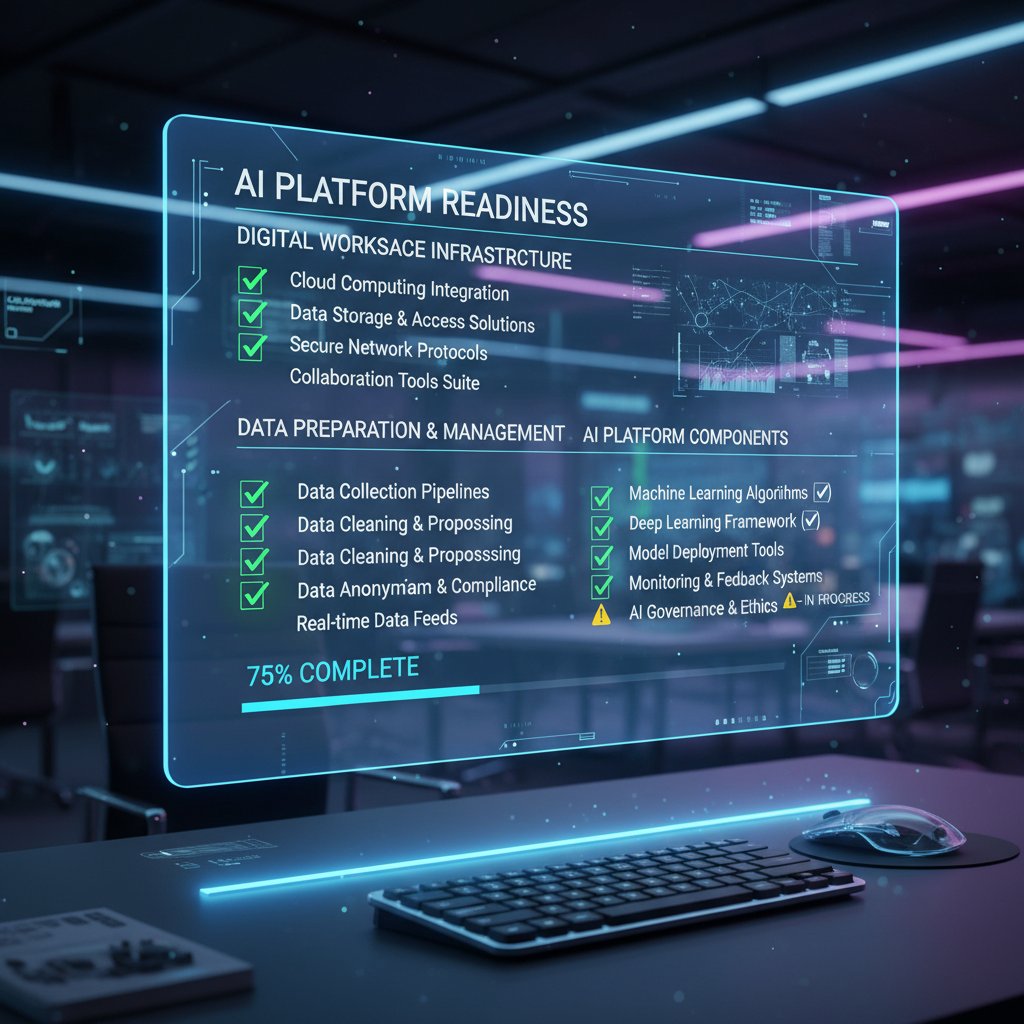
If you’re not sure, start by piloting with a single team, gathering feedback, and building from there.
Glossary: Speak the language of AI-powered management
AI-powered
Software that adapts, learns, and predicts—going beyond simple automation to offer contextually relevant insights.
Management platform
A digital workspace centralizing tasks, communication, and analytics—mission control for enterprise operations.
Automation
Delegating repetitive tasks to machines, freeing up humans for high-value work.
Workflow orchestration
Automatically routing work to the right person or system, minimizing manual intervention.
Model drift
When an AI’s output degrades because the business context or data has changed.
Human-in-the-loop
Ensuring people oversee and can override important decisions made by AI.
Upskilling
Empowering staff to work alongside and question AI, even without coding skills.
Further reading and community resources
For credible studies, join industry forums, or get expert support, turn to:
- IBM Global AI Adoption Index, 2024
- Accenture AI Research, 2024
- Menlo Ventures: State of Generative AI in the Enterprise, 2024
- Deloitte State of Generative AI in Enterprise, 2024
- User-driven communities and resources at futurecoworker.ai for ongoing guidance and peer support in adopting AI-powered management platforms.
Conclusion
Enterprise AI-powered management platforms are no longer a futuristic vision—they are the battleground where productivity, culture, and technology collide every single day. As the data shows, teams leveraging these platforms aren’t just surviving—they’re thriving, posting revenue and productivity gains that would’ve sounded like science fiction five years ago. But the journey isn’t about the tech alone. It’s about people: their fears, ambitions, and capacity to adapt when the rules of work are rewritten in real time. Embracing AI as a teammate—rather than a threat—unlocks new levels of agility and resilience, provided organizations stay honest about the risks and relentless in their pursuit of value. The truth behind the hype? It’s up to you, your team, and the choices you make at this crossroads. Don’t get left behind: dig deeper, demand proof, and make every platform decision count—because in the age of intelligent teammates, standing still is the only real risk.
Sources
References cited in this article
- Skim AI(skimai.com)
- Menlo Ventures(menlovc.com)
- Accenture(newsroom.accenture.com)
- IBM(newsroom.ibm.com)
- Deloitte(www2.deloitte.com)
- LeewayHertz(leewayhertz.com)
- Personal.AI(personal.ai)
- QSoft Vietnam(qsoftvietnam.com)
- TechTarget(techtarget.com)
- McKinsey(mckinsey.com)
- Wholesale Investor(wholesaleinvestor.com)
- Forbes(forbes.com)
- Frontiers in AI(frontiersin.org)
- Harvard Business Review(hbr.org)
- MOSTLY AI(mostly.ai)
- SoftKraft(softkraft.co)
- Predictive Analytics Today(predictiveanalyticstoday.com)
- Sofigate(sofigate.com)
- Oracle(oracle.com)
- Generative AI Enterprise(generativeaienterprise.ai)
- Forbes(forbes.com)
- Medium(medium.com)
- VentionTeams(ventionteams.com)
- AI Infrastructure Alliance(ai-infrastructure.org)
- Dashworks(dashworks.ai)
- SuperAnnotate(superannotate.com)
- Enterprise Knowledge(enterprise-knowledge.com)
- Forbes(forbes.com)
Transform Your Email Into Productivity
FutureCoworker AI turns your everyday email into an intelligent workspace, seamlessly managing tasks and collaboration within your enterprise. It eliminates the complexity of AI, allowing you to benefit from advanced technology without any technical knowledge. Achieve productivity, streamline processes, and improve team efficiency through natural email interaction, getting tasks done faster and smarter.
Get startedReady to Transform Your Email?
Start automating your tasks and boost productivity today
Frequently Asked Questions
What percentage of large organizations are currently using AI according to the article?
According to IBM's 2024 research cited in the article, 42% of large organizations now use AI.
What is the main problem with how enterprise AI platforms are marketed?
The article states that vendors use confusing jargon like 'predictive orchestration' and 'AI-augmented synergy' that often mean everything and nothing at once, causing decision-makers to struggle distinguishing between genuinely intelligent systems and regular workflow automation tools dressed up with AI terminology.
What does 'AI-powered' actually mean according to this article?
The article defines 'AI-powered' as software that doesn't just follow preset rules but learns from patterns, adapts to new inputs, and surfaces insights you didn't ask for—functioning like a colleague who can anticipate your needs.
What is a management platform in the context of enterprise AI?
According to the article, a management platform is a centralized digital workspace that orchestrates projects, tasks, communication, and analytics—essentially serving as mission control for enterprise operations.
Continue Reading
Keep exploring Intelligent enterprise teammate

Enterprise AI-Powered Collaboration Platforms: Promise Versus Reality
Enterprise AI-powered collaboration platforms promise frictionless teamwork but present real risks. This article examines what actually works, what fails, and the realities behind vendor claims.

Enterprise AI-Powered Task Management: Separating Reality From Hype
Enterprise AI-powered task management is transforming workflow automation. This article examines the real capabilities, genuine risks, and practical implementation strategies beyond marketing claims.

Enterprise AI-Powered Enterprise Solutions: What Actually Works
Enterprise AI-powered enterprise solutions carry real rewards alongside significant risks. This article examines what research shows about adoption, where implementations fail, and where genuine wins emerge.

Enterprise AI Productivity Platforms: What Delivers and What Fails
Enterprise AI productivity platforms reshape workflows across industries. This article examines their real impact, hidden costs, and which implementations actually deliver measurable returns.

AI Enterprise Management: Failures, Strategies, and Real Wins
AI enterprise management is reshaping enterprise operations in 2025. This article examines the real failures, working strategies, and measurable wins driving intelligent business transformation.

Enterprise AI Process Optimization That Works, Not Just Hypes
Discover insights about enterprise AI process optimization