Enterprise AI-Powered Productivity Tools: Teammate or Threat?
Written with AI assistance under our editorial guidelines
Enterprise AI-powered productivity tools promise to solve fragmentation and tool fatigue affecting 60% of workers, but they introduce hidden costs including cultural disruption, employee surveillance concerns, and unexpected workflow changes. Success depends on thoughtful implementation beyond vendor promises and careful attention to human impact alongside automation benefits.
Welcome to the new front line of enterprise productivity. Forget everything you think you know about AI-powered workflow tools—because the truth is more tangled, more disruptive, and far more human than the hype suggests. In boardrooms and breakrooms from San Francisco to Singapore, executives and employees alike are quietly grappling with the seismic impact of enterprise AI-powered productivity management tools. These digital teammates promise a revolution: automation without the headaches, collaboration without the chaos, and insights without the noise. But as the AI gold rush accelerates, a different reality is surfacing—one packed with hidden costs, cultural earthquakes, and opportunities no glossy vendor pitch will ever admit. This article rips the curtain back. Armed with hard data, case studies, and the real experiences of teams on the ground, we’ll expose the seven truths no one dares to tell about AI productivity management. If you want to know what’s really happening behind the dashboards, and how to future-proof your business (and sanity), read on.
Why enterprise AI-powered productivity management tools are rewriting the rules
The broken promise of traditional productivity tools
For years, the enterprise world suffered under the weight of legacy project management platforms. You remember the drill: fragmented tools, endless multi-tab hell, and recurring status meetings that felt more like confessionals than collaboration. As noted by a recent Microsoft WorkLab report, 2024, tool fatigue plagues 60% of enterprise workers, many of whom now juggle six or more disconnected apps every day.
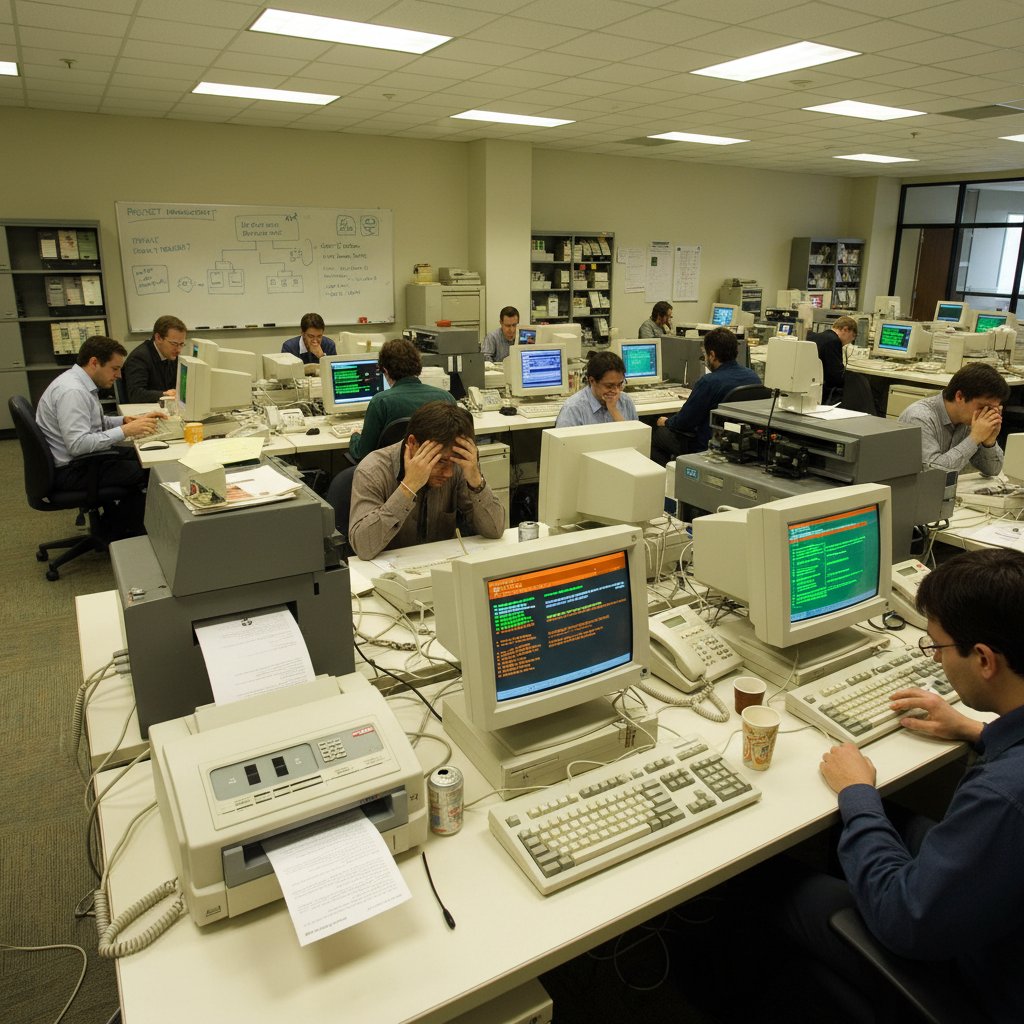
"Most traditional tools are just digital band-aids for deeper process wounds." — Jordan, Enterprise Transformation Lead
This patchwork approach comes at a steep price. According to IBM, 2024, the hidden costs of legacy platforms include lost productivity, duplicated effort, and a creeping sense of digital burnout. The price isn’t just measured in dollars, but in missed opportunities, frustrated talent, and the slow erosion of organizational morale. As enterprises scramble to maintain “efficiency” with yesterday’s tools, the real casualties are flexibility, focus, and innovative potential.
How AI is changing the definition of 'teamwork'
The rise of AI-powered productivity tools has rewritten the playbook for collaboration. No longer are teams bound by static task lists and rigid workflows. Instead, AI-infused platforms—like those highlighted in Grand View Research, 2024—can automate meeting summaries, detect bottlenecks in real time, and even predict project risks before they explode.
- Hidden benefits of AI-powered productivity tools experts won't tell you:
- Surface unspoken team bottlenecks by analyzing communication and workflow patterns.
- Automate mind-numbing status updates, freeing teams for strategy and creative problem-solving.
- Flag hidden workload imbalances to prevent burnout before it happens.
- Enable real-time “digital twins” that capture and share expert knowledge across silos.
- Foster transparency by tracking decision trails, making accountability explicit.

It’s not all utopian. The emergence of an “AI teammate” also shifts power dynamics. With algorithms surfacing who’s contributing—and who’s not—enterprise politics get a new twist. Transparency increases, but so does scrutiny. According to Personal.ai, 2024, organizations deploying AI for knowledge management report a measurable spike in innovation, but also in unease among employees who feel every keystroke might be assessed.
Are enterprises ready for their first AI coworker?
Enterprises are caught between deep skepticism and unbridled excitement. Decision-makers want the ROI promises—reduced workload, smarter collaboration—but fear change fatigue and AI’s unpredictable consequences.
- Step-by-step guide to preparing your team for an AI-powered productivity tool:
- Audit current workflows to identify pain points and inefficiencies.
- Map out which processes can be safely automated or augmented.
- Set realistic expectations with stakeholders—no “magic bullet” thinking.
- Pilot with a small, diverse team to gather feedback before a wider rollout.
- Invest in change management, training, and open communication channels.
- Regularly review data privacy and governance policies.
- Measure and communicate early wins and lessons learned.
Early adopters have stories that run the gamut. Some, like IBM’s rollout of Watson Assistant, slashed service interaction times by 30% and saved millions (IBM, 2023). Others stumbled—facing employee backlash or “islands of intelligence” where new tools failed to connect with existing systems. As Microsoft WorkLab found, 85% of Gen Z employees already use unsanctioned AI at work, boosting personal productivity but complicating enterprise governance.
Inside the machine: What makes an AI-powered productivity tool truly 'intelligent'?
Beyond buzzwords: Decoding the tech
Every vendor claims “AI”—but behind the marketing spin, capabilities wildly diverge. AI can mean anything from basic rule-based automation to advanced self-learning systems. Recent research from Skim AI, 2024 underscores that while AI adoption is booming (37.3% annual growth in enterprises), many deployments amount to little more than “fancy macros.”
Definition list of key technical terms:
- Natural language processing (NLP): The technology that allows AI to “read” and understand human text and speech, enabling features like email summarization and intent detection.
- Predictive analytics: Algorithms that sift historical data to forecast likely outcomes, such as missed deadlines or team bottlenecks.
- Workflow orchestration: Automated sequencing of complex, multi-step tasks, ensuring processes move forward without manual intervention.
Spotting genuine innovation? Look for tools that combine these elements seamlessly, offer transparency into automated decisions, and adapt over time. If a solution feels like a black box or can’t explain its recommendations, chances are it’s more vaporware than visionary.
The anatomy of an intelligent enterprise teammate
At the heart of every reputable AI productivity platform are three components: input sources (emails, chats, project data), decision engines (AI models that analyze context and priorities), and action layers (actual execution, like task assignment or meeting scheduling).
| Tool Name | Integration Breadth | Usability | Automation Depth | Transparency |
|---|---|---|---|---|
| FutureCoworker.ai | Email, Calendar, Docs | High | Advanced | High |
| Atlassian Confluence (AI) | Docs, Chat, Project Mgmt | Medium | Moderate | Medium |
| IBM Watson Assistant | Service, Knowledge Base | Medium | Deep | High |
| BuddiesHR | HR Platforms | High | Moderate | Medium |
| Hypothetical XYZ | Limited | Low | Low | Low |
Table 1: Comparative feature matrix of leading AI-powered productivity tools. Source: Original analysis based on IBM, 2023, Personal.ai, 2024.

The email revolution: Why inbox-first AI is winning hearts (and budgets)
Email: the one tool every business can’t quit. As AI rushes into the enterprise, inbox-first platforms like futurecoworker.ai are quietly outflanking more complex, stand-alone systems. Why? Because they meet employees where they live—no new logins, no learning curve, no tool sprawl.
"Email is the last untapped battleground for enterprise automation." — Priya, Digital Transformation Consultant
Adoption rates for email-based AI coworkers are surging, according to Microsoft WorkLab, 2024, with user satisfaction anchored in simplicity and immediate ROI. Teams report faster task turnarounds, less digital noise, and a sense of regained control—without the overhead of yet another app.
Myths, misconceptions, and hard truths about AI-powered productivity
Myth-busting: What AI-powered tools can and can’t do
Misconceptions abound. The biggest? That AI will effortlessly replace human roles or that every “AI-powered” tool is plug-and-play. The data say otherwise. According to IBM, 2023, AI augments—rather than replaces—roles, allowing employees to focus on creativity and decision-making, not rote tasks.
- Red flags to watch out for when choosing an AI productivity tool:
- Lack of transparency in how AI decisions are made.
- Overpromised, underdelivered integrations with core systems.
- Vague or evasive data privacy policies.
- No clear plan for updates, maintenance, or user support.
- One-size-fits-all pricing that ignores enterprise complexity.
Implementing AI is also rarely seamless. Integration headaches, user resistance, and “shadow AI” (unsanctioned tools used by employees) are the norm, not the exception. As Microsoft WorkLab found, islands of automation often emerge, fracturing collaboration instead of enhancing it.
The hidden costs of AI: What no one wants to talk about
Vendors love touting quick ROI—but the real journey involves far more than licensing fees. According to Grand View Research, 2024, hidden costs include onboarding, change management, user training, and ongoing process adaptation.
| Cost Category | Traditional Tools | AI-powered Tools | Notes |
|---|---|---|---|
| Licensing | $$ | $$$ | AI tools often premium |
| Onboarding/Training | $ | $$ | AI requires more upskilling |
| Integration | $ | $$ | Customization needed |
| Time-to-Value | Months | Weeks | AI delivers faster ROI |
| Hidden Fees | Medium | High | Data migration, support |
Table 2: Cost-benefit breakdown of traditional vs. AI-powered productivity tools. Source: Grand View Research, 2024.
Risk mitigation starts with brutal honesty: scope your implementation, demand transparency on costs, and plan for continuous feedback. Regularly audit both quantitative (time saved, errors reduced) and qualitative (employee sentiment, adaptability) outcomes.
From hype to heartbreak: When AI-powered productivity goes wrong
When AI implementation fails, the fallout is ugly—think stressed project managers, dashboard chaos, and mounting skepticism. One anonymized case from a global retailer saw an AI rollout tank morale and productivity when integration failed, resulting in duplicated tasks and lost accountability.

The upside? Every high-profile failure produces lessons: over-automating core processes without input leads to rebellion; neglecting change management guarantees shadow IT. The only path forward is post-mortem transparency and a willingness to iterate—one workflow, one insight at a time.
Beyond the buzz: Real-world impact of AI-powered productivity management
Enterprise case studies: The good, the bad, the transformative
Consider a global logistics company that used AI to streamline task handoffs—cutting delivery delays by 21%, according to Digital Adoption, 2024. In sharp contrast, a financial services firm overloaded its teams with dashboards, resulting in data paralysis and employee backlash, as detailed in MarketResearchFuture, 2024. Meanwhile, a non-profit coordinating projects across three continents used AI-powered scheduling to unite teams and improve grant compliance—proof that the technology isn’t just for big business.

The bottom line? Results are as varied as the organizations themselves. Success depends on alignment with real workflow needs, not just digital ambition.
Cross-industry comparisons: Who’s getting it right?
Adoption patterns are all over the map. Tech and marketing firms were first to embrace AI-powered productivity management, leveraging rapid iteration and digital-native staff. Healthcare and manufacturing, in contrast, are catching up, slowed by regulatory complexity and legacy systems.
| Year | Tech Sector | Finance | Marketing | Healthcare | Manufacturing |
|---|---|---|---|---|---|
| 2018 | Emerging | Nascent | Nascent | Minimal | Minimal |
| 2020 | Rapid | Emerging | Rapid | Nascent | Nascent |
| 2023 | Mainstream | Rapid | Mainstream | Emerging | Emerging |
| 2024 | Ubiquitous | Mainstream | Ubiquitous | Emerging | Emerging |
Table 3: Timeline of AI-powered productivity tool adoption by industry. Source: Original analysis based on MarketResearchFuture, 2024, Digital Adoption, 2024.
What can laggards learn? Prioritize integration, invest in change management, and don’t fall for vendor hype—focus on real needs first.
Productivity unleashed: Unexpected benefits of AI teammates
Beyond the obvious gains, AI-powered teammates bring subtle, culture-shifting rewards. According to Personal.ai, 2024, companies report improvements in morale, creativity, and work-life balance as routine burdens dissolve.
- Unconventional uses for enterprise AI-powered productivity management tools:
- Curating internal knowledge bases from everyday communication.
- Conducting wellness check-ins by spotting signs of overload in written tone.
- Detecting bias in task allocation and meeting participation.
- Facilitating cross-timezone collaboration through smart scheduling.
- Automating compliance documentation for regulated industries.
By redefining what “productive” actually means—less about hours logged, more about outcomes and well-being—AI is catalyzing a new culture of meaningful work.
Controversies and ethical dilemmas: Who’s really in control?
Surveillance or empowerment? The double-edged sword of AI oversight
AI’s watchful eye brings both empowerment and discomfort. It can surface hidden brilliance, but also amplify anxieties about constant surveillance. According to Microsoft WorkLab, 2024, employees are almost evenly split—some value transparency, others fear overreach.
"AI sees everything—sometimes more than we want." — Alex, Head of People Analytics
The trick is balance: ethical deployment requires clear boundaries, opt-outs, and digital trust. Organizations must be transparent about what’s monitored, why, and how data is used.
Bias, transparency, and the politics of automation
Algorithmic bias isn’t just a tech glitch—it’s a cultural and ethical crisis. If unchecked, biased AI can reinforce workplace inequalities, not solve them.
Definition list of key terms:
- Explainable AI: AI systems designed to make their decisions understandable to humans, reducing “black box” fears.
- Algorithmic transparency: Full disclosure of how AI makes its choices, including data sources and weighting.
- Ethical AI: Frameworks ensuring AI aligns with organizational and societal values, not just efficiency goals.
Many industries are adopting standards like the AI Ethics Guidelines by the European Commission, requiring ongoing audits and open disclosure of automated decisions.
Job security and the future of work: Are we building teammates or replacements?
Workforce anxiety is real. While AI augments most jobs, some tasks vanish—and leadership owes teams honesty, not platitudes.
- Priority checklist for balancing automation and human value:
- Invest in upskilling so employees can shift into value-adding roles.
- Redesign roles to maximize collaboration between humans and AI.
- Ensure open, regular communication about automation plans.
- Monitor employee sentiment with proactive feedback loops.
- Reward adaptability, not just compliance.

The new social contract? AI as copilot, not overlord. But it’s on leaders to make it real.
The practical guide: How to choose and deploy the right AI-powered productivity tool
Assessing your enterprise’s readiness for AI
Before chasing the latest AI darling, enterprises must ask tough questions:
- What are our workflow pain points and opportunities?
- Who owns data governance and privacy?
- Is leadership truly willing to embrace change?
- Do we have the bandwidth for onboarding and cultural adaptation?
Checklist: Are you ready for an AI-powered productivity revolution?
- Clear map of manual and repetitive tasks
- Strong data governance policies in place
- Committed executive sponsorship
- Willingness to run pilots and learn from failure
- Openness to redesigning roles and workflows
Rushing in without buy-in or prep is a recipe for headaches, not transformation.
Feature checklist: What matters and what’s just hype?
Cut through the noise with ruthless scrutiny. Must-haves? Seamless integration, transparency, robust automation, real-time collaboration, and intuitive UX.
| Feature | Must-Have | Nice-to-Have | Hype-Only |
|---|---|---|---|
| Workflow automation | ✔️ | ||
| Natural language search | ✔️ | ||
| Real-time analytics | ✔️ | ||
| Emotional sentiment analysis | ✔️ | ||
| Predictive scheduling | ✔️ | ||
| “AI-powered” branding | ✔️ |
Table 4: Feature comparison matrix for AI-powered productivity tools. Source: Original analysis based on Grand View Research, 2024, Microsoft WorkLab, 2024.
Use a practical scorecard, not promises, to judge contenders.
Implementation: Avoiding disaster and driving adoption
Most rollout failures stem from skipping the basics: lack of pilot testing, poor communication, no feedback mechanisms. Avoid disaster with a deliberate, phased approach:
- Pilot with a small, representative team.
- Gather direct feedback and iterate.
- Conduct phased rollouts with dedicated support.
- Maintain transparent, two-way communication.
- Monitor outcomes, not just usage stats.
- Encourage champions and share early wins.
Generalist services like futurecoworker.ai can help non-technical teams get started—integrating directly into email and reducing the intimidation factor of AI adoption.
The future is now: Trends and predictions for AI in enterprise productivity
Emerging trends: What’s coming for AI-powered teammates
Multi-modal AI—combining text, voice, and images—now enables richer, more intuitive interactions. Voice-first interfaces are gaining traction, especially in distributed teams. And the biggest shift? Automation is moving “invisible,” humming in the background, surfacing only when needed.

This move toward seamless, almost ambient AI promises less disruption and more flow—if organizations resist the urge to micromanage every click.
Will AI ever fully replace the human teammate? Spoiler: It’s complicated.
The limits are real. AI can parse data, flag risks, and automate drudgery—but it can’t replicate human intuition, empathy, or creative leaps.
"AI is the new intern, not the new boss." — Morgan, Chief Strategy Officer
The next five years will see AI cemented as an essential copilot, but never the sole pilot. According to MarketResearchFuture, 2024, most organizations report that AI enhances—not replaces—human potential.
How to future-proof your enterprise (and your career) in the age of AI
Adaptation is the only certainty. Ongoing upskilling, cross-disciplinary collaboration, and ethical leadership are the new table stakes.
- Timeline of enterprise AI-powered productivity management tools evolution:
- 2015: First wave of basic automation (scheduling, reminders)
- 2018: Emergence of AI-driven analytics in project management
- 2020: Integration of NLP and knowledge management
- 2023: Rise of email-first AI teammates and cross-platform orchestration
- Present: Move toward multi-modal, transparent, “invisible” AI
Continuous learning, paired with a culture of experimentation and digital trust, is the best insurance against disruption.
Conclusion: Rethinking productivity in the era of intelligent teammates
In the end, the uncomfortable truth about enterprise AI-powered productivity management tools is simple: technology alone won’t save you. The platforms are powerful, the algorithms dazzling, but transformation only happens when culture, leadership, and people evolve in lockstep. Chasing every new trend is a distraction unless it’s anchored in clarity of purpose and a willingness to rethink what productivity really means for your enterprise.

So, where do you stand? Are you building a workplace where AI is just another monitoring tool, or a true collaborator that unleashes your team’s creative firepower? The choice isn’t binary. The best results come from honest assessment, relentless iteration, and a refusal to accept easy answers. That’s the real—if sometimes brutal—opportunity of the AI-powered era.
Sources
References cited in this article
- MarketResearchFuture(marketresearchfuture.com)
- Microsoft WorkLab(microsoft.com)
- Personal.ai(personal.ai)
- Skim AI(skimai.com)
- Menlo Ventures(menlovc.com)
- Accenture(newsroom.accenture.com)
- McKinsey(psico-smart.com)
- Forbes(forbes.com)
- Nutshell(nutshell.com)
- Digital Adoption(digital-adoption.com)
- Mayple(mayple.com)
- Trimbox(trimbox.io)
- OECD(oecdecoscope.blog)
- IBM(ibm.com)
- Forbes(forbes.com)
- NN/g(nngroup.com)
- Brookings(brookings.edu)
- CEPR(cepr.org)
- PwC(springworks.in)
- Deloitte(www2.deloitte.com)
- Asana(propeller.com)
- Go-Globe(go-globe.com)
- IJSRM(ijsrm.net)
- Microsoft Blog(blogs.microsoft.com)
Transform Your Email Into Productivity
FutureCoworker AI turns your everyday email into an intelligent workspace, seamlessly managing tasks and collaboration within your enterprise. It eliminates the complexity of AI, allowing you to benefit from advanced technology without any technical knowledge. Achieve productivity, streamline processes, and improve team efficiency through natural email interaction, getting tasks done faster and smarter.
Get startedReady to Transform Your Email?
Start automating your tasks and boost productivity today
Frequently Asked Questions
What percentage of enterprise workers experience tool fatigue according to the article?
According to a Microsoft WorkLab report cited in the article, 60% of enterprise workers experience tool fatigue, with many juggling six or more disconnected apps every day.
What are the main problems with traditional productivity tools mentioned in the article?
Traditional productivity tools suffer from fragmentation, endless multi-tab management, recurring status meetings, and hidden costs including lost productivity, duplicated effort, and digital burnout that erode organizational morale and flexibility.
What does the article promise to reveal about AI productivity management tools?
The article promises to expose seven truths about AI productivity management tools, including their hidden costs, cultural impacts, and real experiences from teams on the ground, rather than relying on vendor marketing claims.
Are AI-powered productivity tools presented as purely beneficial in this article?
No, the article suggests a more complex reality—while these tools promise automation and collaboration benefits, it warns of hidden costs, cultural disruptions, and challenges that typical marketing pitches don't acknowledge.
Continue Reading
Keep exploring Intelligent enterprise teammate

How AI-Powered Enterprise Productivity Management Software Is Reshaping Teams
Enterprise spending on AI productivity tools reached $13.8B in 2024. This article examines how AI-powered enterprise productivity management software is reshaping team collaboration and the real challenges organizations face.

What AI Enterprise Productivity Suites Actually Deliver
An AI enterprise productivity suite promises efficiency gains, but the reality is more nuanced. This article examines what these tools actually deliver and their workplace risks.

AI-Driven Enterprise Productivity Tools That Help (not Replace) You
Discover insights about AI-driven enterprise productivity tools software

Enterprise AI-Powered Productivity Assistant Platforms: Reality Vs. Hype
Enterprise AI-powered productivity assistant platforms promise seamless collaboration, but integration challenges and data privacy risks often go unmentioned.

Enterprise AI Productivity Assistant: From Inbox Chaos to Real ROI
Discover insights about enterprise AI productivity assistant

AI Powered Enterprise Tools: Seven Truths About the Workplace Shift
AI powered enterprise tools are rewriting workplace productivity. This article explains seven truths about enterprise AI adoption, from the risks to the real gains.