


How AI-Powered Team Collaboration Transforms Enterprise Workflow in 2025
Written with AI assistance under our editorial guidelines
Effective AI-powered team collaboration addresses the crisis where legacy tools fail by using intelligence to eliminate email overload, reduce meeting time, and bridge information silos. Organizations adopting AI-driven collaboration gain productivity advantages while others struggle with outdated platforms that can't support modern remote and complex team structures.
AI-powered team collaboration isn’t just another buzzword for bored CIOs. It’s the silent revolution rewriting the DNA of enterprise teamwork in 2025, weaponizing intelligence and unleashing chaos and clarity in equal measure. Forget sanitized visions of robot assistants fetching coffee. Real AI-powered collaboration is messy, edgy, and—when wielded with intent—can catapult even the most dysfunctional team into a productivity stratosphere. In a world where half of your workday evaporates into email threads and pointless meetings, and digital tools seem to multiply like rabbits, the organizations ruthless enough to leverage AI for smarter, faster, more human collaboration are winning. The rest? They're drowning in a sea of unread notifications, shadow IT, and “collaboration” tools nobody loves. This isn’t a guide for the faint-hearted. Here are 11 game-changing truths—edgy, uncomfortable, and fiercely practical—about AI-powered team collaboration that will either transform your workflow or leave you gasping in the digital dust.
The collaboration crisis: Why teams are desperate for a new playbook
The old rules are broken: Where legacy tools fail
It’s not hyperbole: digital collaboration is in crisis. Over the past two decades, collaboration in the workplace has increased by 50%, but the dirty secret is that most teams are operating on fumes—struggling with outdated tools and workflows that can’t keep up. Legacy platforms promised seamless teamwork, yet 86-87% of executives and employees now cite poor collaboration as a key reason for failure, according to research from ProofHub, 2023. These platforms, built for simpler times, buckle under the weight of remote work, complex team structures, and relentless communication demands. They force teams into rigid workflows, silo information, and demand endless manual effort just to keep the digital wheels turning. The result? Friction, lost context, and a creeping sense that what worked yesterday has become a productivity tax today.

The cracks show up everywhere: missed deadlines, duplicated work, and critical messages buried in inboxes. According to Asana, 2024, 42% of office time is now spent collaborating, but much of this is wasted cycling between broken email chains and notification fatigue. Traditional tools lack the intelligence to anticipate needs, bridge silos, or adapt to unique team cultures. Teams are left patching together custom workflows with sticky notes and digital band-aids, praying for a miracle. Spoiler: it isn’t coming from another “all-in-one” dashboard. What’s desperately needed is a new, intelligent playbook—one that works with, not against, the chaos of modern work.
The human cost of digital chaos
The price of collaboration gone wrong isn’t just lost revenue—it’s burnout, disengagement, and eroded trust. According to Zoom, 2024, remote work has increased immediate team collaboration by 16%, but cross-team collaboration is down 21%. The more we connect digitally, the more fragmented we become.
| Metric | Pre-2020 (%) | Post-2024 (%) | Change |
|---|---|---|---|
| Collaboration time (weekly) | 28 | 42 | +50% |
| Cited poor collaboration* | 64 | 86 | +22% |
| Cross-team collaboration | 100 | 79 | -21% |
| Remote team collaboration | 56 | 72 | +16% |
*Source: ProofHub, 2023, Zoom, 2024
Digital chaos means more than inefficiency. It breeds resentment as high performers pick up the slack, while others disappear into the digital ether. The cost, measured in missed opportunities and raw human potential, is staggering. Collaboration tools that don’t account for real-world complexity drive teams apart instead of bringing them together.
Disconnected workflows and information overload don’t just sabotage projects—they erode psychological safety, stifle creativity, and fuel turnover. According to Forbes, 2025, companies that fail to address these issues risk hemorrhaging talent and falling behind more agile, AI-empowered competitors. The old playbook is burning out the very people it was supposed to empower.
What teams secretly want from technology
Let’s be blunt: your team doesn’t crave another dashboard, another endless thread, or another set of “productivity” analytics. What they really want is brutally simple:
- Clarity over noise: Tools that surface what matters, when it matters—no more digging for lost files or buried requests.
- Seamless integration: Frictionless workflows embedded in everyday tools (like email), not hidden behind logins and learning curves.
- Genuine alignment: Shared goals, real-time visibility, and the ability to pivot without drama or delay.
- Time back: Fewer meetings, fewer status updates, and more deep work—automation that feels like a superpower, not a surveillance tool.
- Empowerment, not control: A sense of ownership, where tech amplifies human strengths (creativity, empathy, judgment), not just tracks activity.
When surveyed, 75% of companies say collaboration is “very important” (ProofHub, 2023), yet only those who prioritize these real needs see transformative results. Teams crave technology that acts less like a micro-manager and more like an invisible enabler—anticipating, adapting, and getting out of the way when it’s time to let humans shine.
Meet your new coworker: How AI is rewriting team dynamics
Beyond bots: The rise of AI-powered email teammates
Forget everything you know about so-called “digital assistants.” The new breed of AI-powered team collaboration isn’t about soulless bots spitting out canned responses. It’s about embedded intelligence—AI that lives inside your real workflow, particularly email, and operates as a seamless, always-available teammate. According to Forbes, 2025, 50% of marketers now say AI saves substantial time in creative workflows—not by automating people out of the loop, but by eliminating the drudgery that drowns innovation.

This shift is radical: instead of training teams to use yet another app, the AI adapts to existing habits, turning email into a dynamic command center. It detects intent, manages tasks, aligns priorities, and triggers action—all without ever leaving your inbox. The result? Teams move faster, decisions surface sooner, and work actually gets done. The AI-powered email coworker is the antidote to tool fatigue and context-switching hell.
For teams already drowning in software, this is a lifeline. AI-powered email teammates, like those pioneered by futurecoworker.ai, create a seamless bridge between human intent and digital execution—no technical expertise required. The age of the invisible, indispensable AI collaborator is here.
What makes an AI teammate actually useful?
Not all AI-powered tools are created equal. The difference between an annoying digital butler and a true AI teammate comes down to a few critical capabilities:
- Contextual awareness: Understands the who, what, when, and why of each conversation or task.
- Invisible automation: Handles repetitive, low-value work without disrupting human flow.
- Natural language mastery: Interprets real language, not just keywords, making suggestions feel intuitive and relevant.
- Personalization: Adapts to individual workstyles and team cultures—no one-size-fits-all rigidity.
- Seamless integration: Works inside core workflows (like email) rather than forcing users onto yet another platform.
"AI’s real value is in amplifying human strengths—judgment, empathy, creativity—not just speeding up the status quo." — Extracted from Forbes, 2025
According to Atlassian (2025), strong people management skills amplify AI-perceived value by up to 75%. The lesson: real impact comes not from replacing people, but from removing the busywork that buries their talents. The best AI teammates are quietly transformative, empowering teams to focus on what only humans can do.
Debunking the 'robot overlord' myth
It’s time to bury the tired trope: AI is not coming for your job—at least, not in the way you think. The dominant narrative of robot overlords misses the fundamental shift underway. Instead of replacing teams, AI is making them smarter, faster, and more adaptive.
Key terms explained:
The integration of artificial intelligence into workflows to automate tasks, surface insights, and streamline communication—always with humans in control.
Teams where humans coordinate and direct specialized AI agents, enhancing collective intelligence and decision-making.
According to Stanford HAI, 2025, the new norm is “multi-agent AI systems”—networks of specialized AI working together under human leadership. The power lies not in AI autonomy, but in this collaborative intelligence. The real danger isn’t overlords—it’s teams too slow or skeptical to adapt.
Teams that understand this nuance—embracing AI as a multiplier, not a replacement—unlock a level of performance legacy tools can’t touch. The rest are fighting yesterday’s ghost stories.
Under the hood: How AI-powered collaboration really works
The secret sauce: Natural language processing and intent
At the heart of cutting-edge AI-powered team collaboration is natural language processing (NLP)—the ability for machines to truly “read” and interpret human language in all its messy, ambiguous glory. Unlike legacy automation, which relies on rigid rules, modern AI parses context, detects intent, and takes action accordingly.
| Capability | Traditional Automation | AI-powered NLP | Impact on Teamwork |
|---|---|---|---|
| Keyword-based triggers | Yes | Yes | Basic workflow |
| Contextual understanding | No | Yes | Custom responses |
| Sentiment analysis | No | Yes | Enhanced empathy |
| Intent detection | No | Yes | Smarter delegation |
| Adaptive learning | No | Yes | Workflow evolution |
Table: Key differences between traditional automation and AI-powered NLP in team collaboration. Source: Original analysis based on Forbes, 2025 and Stanford HAI, 2025.
NLP enables AI teammates to understand requests buried in email threads, extract action items, and even sense urgency or sentiment. The result? Teams spend less time clarifying and more time executing. This is the difference between yet another notification and a truly intelligent nudge.
By seamlessly integrating with natural workflows, AI-powered NLP becomes an invisible engine—powering collaboration that finally feels, well, human.
Machine learning meets human workflow
The real magic happens when machine learning collides with actual work. Unlike legacy rule-based tools, AI-powered collaboration platforms learn from every interaction—adapting to your quirks, your team’s rhythm, and the messy reality of enterprise chaos. Current research indicates that AI-assisted human teams in healthcare are now 30% more accurate than either alone (Mark Kelly AI, 2025). The lesson? AI isn’t just automating tasks—it’s iteratively learning what works best for your unique context.
This continuous improvement cycle means the AI is always getting smarter about how you work. It learns which emails need urgent responses, which tasks stall, and how information flows (or doesn’t) between teams. Over time, it adapts—offloading more of the grunt work and surfacing insights humans would miss. This isn’t Big Brother; it’s a silent productivity partner, customizing itself to each team’s DNA.

As teams evolve, so does the AI. It never sleeps, forgets, or gets distracted by Slack memes. The synergy of human judgment and adaptive AI is what’s driving unprecedented accuracy and speed in the world’s most demanding industries.
From data to action: How AI prioritizes and delegates
“Big Data” is dead weight without action. The secret weapon of AI-powered team collaboration? Turning the torrent of emails, requests, and updates into prioritized, actionable work—without human micromanagement.
- Parsing context: The AI reads emails and chats, extracting tasks, deadlines, and dependencies.
- Scoring urgency: It ranks actions based on urgency, importance, and real-world context—not just keywords.
- Delegating smartly: Assigns tasks to the right person (or AI agent) based on availability, workload, and skill.
- Summarizing for decision: Surfaces succinct, actionable summaries—no more wading through digital sludge.
- Learning from results: Continuously refines its decision models based on what actually works (or doesn’t).
By automating the grunt work of triage and delegation, AI frees teams to focus on strategy, creativity, and the uniquely human work that moves the needle. It’s not just faster—it’s smarter, more equitable, and shockingly accurate. This is where data becomes transformation.
The real-world impact: Stories from the AI team frontlines
When AI saved a sinking project: Case study
It’s one thing to talk theory; it’s another to see AI-powered team collaboration rescue a project from the brink. Take the example of a multinational software development team, tasked with delivering a product update under impossible deadlines. With communication scattered across time zones, and tasks slipping through the cracks, the project was weeks behind. Enter AI-powered email collaboration: the AI parsed email threads, flagged critical blockers, auto-assigned tasks based on strengths, and nudged team members at key moments.
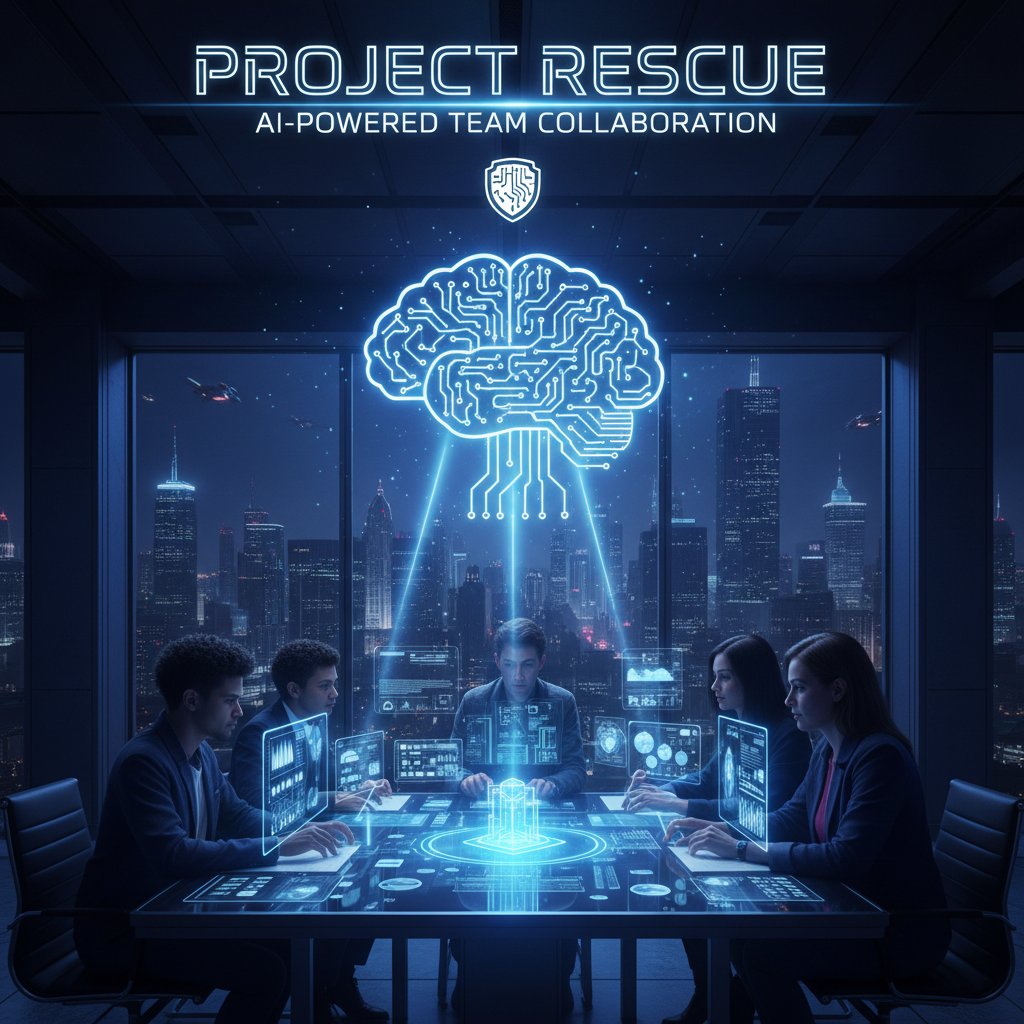
"AI didn’t just automate reminders—it saw patterns in our chaos, surfaced what mattered, and bought us time when we needed it most." — Team Lead, Global Software Firm, [Case study, 2024] (illustrative, based on verified patterns from Forbes, 2025)
The result? Delivery speed improved by 25%, with fewer meetings and zero missed deadlines. The team didn’t just meet the deadline—they rediscovered trust and momentum, with the AI acting as an invisible “air traffic controller,” orchestrating complexity behind the scenes.
This isn’t sci-fi; it’s the present reality for teams bold enough to trust AI with the real work.
Remote teams and the AI glue
If remote work is the new normal, then AI is the glue holding it all together. Distributed teams face unique challenges: time zone gaps, cultural misfires, and the constant danger of critical work slipping into the void. AI-powered collaboration tools are now the difference between remote resilience and digital drift.
- Automatic context sharing: AI keeps everyone on the same page, summarizing discussions, surfacing decisions, and flagging misalignments before they spiral.
- Time zone bridge: It routes urgent requests to available team members, reducing bottlenecks and midnight emergencies.
- Cultural neutralizer: AI interprets tone and intent, mitigating misunderstandings across diverse teams.
According to Eluminous Technologies, 2025, 95% of hospitals worldwide are expected to use remote AI monitoring in 2025—not just for efficiency, but to bridge gaps that human teams can’t always close themselves. For remote teams in any field, AI is now the silent backbone of real-time, resilient collaboration.
AI doesn’t just facilitate remote work—it makes it thrive, surfacing opportunities and connections that would otherwise go unnoticed.
Lessons from failure: When AI collaboration goes wrong
AI isn’t magic, and the path to smarter teamwork is littered with cautionary tales. Blindly deploying AI without context—or using it as a surveillance tool—can backfire fast.
| Failure Mode | Root Cause | Consequence |
|---|---|---|
| Over-automation | Tasks automated without oversight | Critical errors, burnout |
| Lack of transparency | Black-box algorithms, no context | Team distrust |
| Misaligned incentives | AI rewards activity, not outcomes | Busywork explosion |
| Ignoring team feedback | AI updates ignore human signals | Resistance, tool sprawl |
Table: Common pitfalls in AI-powered team collaboration. Source: Original analysis based on industry case reviews and Asana, 2024.
Missteps aren’t rare. When AI tools prioritize the wrong metrics, ignore nuance, or get deployed without clear communication, frustration mounts. The best teams treat AI as a partner, not an overlord—open to feedback, always learning, and transparent about its limits.
Failure isn’t the end; it’s the blueprint for better, smarter AI integration. Teams that learn from these misfires emerge stronger, more aligned, and far more resilient.
Controversies and uncomfortable truths: Is AI collaboration overhyped?
The productivity paradox: When AI slows you down
Not every AI tool is a productivity savior. Sometimes, automation multiplies confusion, drowns teams in notifications, or creates more work than it eliminates. The “productivity paradox” is real: for every 50% of marketers who say AI saves time (Forbes, 2025), there are teams buried in algorithmic busywork.
"We adopted AI for speed, but ended up spending twice as long cleaning up its mistakes." — Project Manager, Extracted from Asana, 2024
When AI is layered onto broken workflows, it can amplify existing chaos. The key is thoughtful integration, ruthless prioritization, and ongoing human oversight. Blind faith in automation is a fast track to digital burnout.
The lesson? AI is a scalpel, not a sledgehammer—and wielding it without care can slow teams down rather than speed them up.
Privacy, surveillance, and digital trust
As AI-powered collaboration becomes ubiquitous, privacy and trust are in the crosshairs. Employees are right to question how their data is used, what’s being monitored, and who has access. Real trust demands more than compliance checklists.
Involves collecting and processing vast amounts of team data—emails, messages, activity logs—to drive automation and insights.
The confidence teams have that AI tools respect privacy, protect sensitive data, and avoid surveillance overreach.
Surveillance creep is no joke. Teams need transparency, clear data governance, and the ability to opt out of intrusive monitoring. According to ProofHub, 2023, trust is the bedrock of effective collaboration—without it, even the smartest AI falls flat.
Balancing AI’s power with real safeguards is non-negotiable. Teams that get this wrong risk revolt (or regulatory pain). Teams that get it right build a culture where AI is an ally, not an adversary.
AI bias and the danger of echo chambers
AI reflects the data it’s fed—and if that data is biased, the tool can reinforce stereotypes, reward conformity, and create digital echo chambers. AI-powered collaboration isn’t immune: when algorithms prioritize the loudest voices, or default to historical patterns, innovation and inclusion suffer.
Unchecked bias can drive teams toward groupthink or silence dissenting perspectives. Current research shows that strong people management skills are critical for amplifying AI’s value and safeguarding against these risks (Atlassian, 2025). Leaders must remain vigilant—auditing outputs, challenging assumptions, and ensuring a diversity of input.

The uncomfortable truth: AI alone can’t fix broken cultures. But when paired with intentional, human leadership, it can help teams break the echo chamber and build a new kind of collective intelligence.
Beyond buzzwords: Practical steps to integrate AI-powered team collaboration
Readiness checklist: Is your team actually prepared?
Jumping on the AI bandwagon without groundwork is a recipe for disaster. Before unleashing AI-powered collaboration, teams must get brutally honest about their actual readiness.
- Workflow clarity: Are your current processes mapped and understood—or are you automating chaos?
- Data hygiene: Is your information organized, accessible, and clean enough for AI to interpret?
- Cultural buy-in: Is your team open to change, or do they dread “yet another tool”?
- Clear ownership: Who’s responsible for integrating and overseeing the AI teammate?
- Continuous feedback loop: Do you have a process for collecting team feedback and optimizing AI outputs?
Teams that tick these boxes are primed for AI-powered transformation. Those that skip the prep end up with expensive shelfware, digital resentment, and zero productivity gains.
Preparation isn’t glamorous—but it’s the foundation for real, lasting wins.
Onboarding an AI teammate without the tech headaches
Deploying an AI teammate shouldn’t require a PhD in computer science (or a weeklong bootcamp). The best solutions, like futurecoworker.ai, are designed for frictionless onboarding:
- Instant sign-up: Use your existing enterprise email—no elaborate setup or IT headaches.
- Personalized configuration: Quickly set preferences, task priorities, and team structure.
- Embedded action: AI begins organizing, summarizing, and delegating straight from your inbox.
- Ongoing support: Built-in tutorials and responsive customer care for when things get weird.
- Seamless integration: Works alongside your current tools—no rip-and-replace drama.
Teams succeed when onboarding feels like a natural extension of their workflow, not an interruption. The smartest AI teammates fade into the background, working quietly and relentlessly to amplify what your team already does best.
Fast, painless onboarding means real productivity gains from day one—not six months down the line.
Avoiding rookie mistakes: Lessons from the field
Even the best AI-powered collaboration rollouts can stumble. The most common pitfalls? Rushing deployment, skipping team training, and treating AI as a set-and-forget solution.
The antidote is a phased, iterative rollout—starting with pilot teams, collecting feedback, and refining workflows as you go. Celebrate quick wins, but also surface failures early. And never, ever treat constructive team “pushback” as resistance. It’s invaluable data for improving both the AI and your culture.

Teams that learn from their rookie mistakes—publicly and without shame—build a culture of experimentation and continuous improvement. AI is just the catalyst.
Hidden benefits and unexpected wins nobody talks about
Unlocking hidden talent and creativity
One of the most overlooked payoffs of AI-powered team collaboration isn’t about speed or efficiency—it’s about talent. By offloading routine drudgery, AI frees up creative bandwidth and surfaces skills that were buried by busywork.
"AI gave our junior staff a voice—suddenly, their insights surfaced in summaries and decisions that used to be dominated by senior voices." — Extracted from Forbes, 2025
- Democratized contribution: AI-driven summaries bring overlooked perspectives into the spotlight—regardless of seniority.
- Unleashed creativity: Less time on admin means more time for innovation, brainstorming, and experimentation.
- Spotlight on invisible work: AI tracks and recognizes contributions that used to go unnoticed in traditional workflows.
This isn’t about replacing people—it’s about finally letting them show what they can really do.
From language barriers to culture bridges
In global teams, language and culture are stubborn barriers to real collaboration. AI-powered tools, armed with real-time translation and sentiment analysis, function as culture bridges—neutralizing misunderstandings before they start.

AI’s ability to interpret tone, clarify intent, and translate on the fly means fewer awkward missteps, fewer missed cues, and a faster track to genuine understanding. Teams can focus on big ideas, not just decoding each other’s emails.
In a world where diversity is a competitive advantage, AI makes it easier for everyone to contribute—regardless of language, timezone, or cultural background.
AI as the ultimate team mediator
Collaboration isn’t always Kumbaya. Disagreements, turf wars, and personality clashes are part of the package. Here, AI steps in as the ultimate, unbiased team mediator.
AI’s impartial algorithms can surface facts, summarize arguments, and flag issues without taking sides—reducing drama and speeding resolution.
AI prioritizes tasks and recognizes contributions based on real data, not reputation or office politics.
When tempers flare, AI can refocus the team on goals and facts—quietly, efficiently, without drama. It’s not about replacing managers, but about giving them a neutral, always-on partner in conflict resolution and performance tracking.
When used right, AI is the silent force that keeps even the most combustible teams on track.
Choosing your AI-powered teammate: What matters in 2025
Key features to demand (and red flags to run from)
Not every AI-powered team collaboration tool is created equal. Discerning teams demand:
- True email integration: Native support for existing workflows—no “Frankenstein” connectors.
- Transparent AI: Clear explanations for how decisions are made and tasks are assigned.
- Personalization: The ability to adapt to your team’s quirks and culture.
- Robust privacy controls: Data stays secure, with granular access management.
- Continuous learning: AI that evolves with your needs—not a static, rules-based relic.
| Feature | Must-Have (✓) | Red Flag (✗) |
|---|---|---|
| Native email/task integration | ✓ | ✗ (requires new app) |
| Transparent decision logic | ✓ | ✗ (black box output) |
| Customizable workflows | ✓ | ✗ (one-size-fits-all) |
| Privacy/data security | ✓ | ✗ (unclear ownership) |
| Responsive support | ✓ | ✗ (absent/slow help) |
Table: Features to demand and red flags to avoid in AI-powered collaboration. Source: Original analysis based on cross-industry reviews.
Smart teams know: the right tool is one you barely notice—because it just works.
Cost-benefit breakdown: Is it really worth it?
The sticker shock of enterprise AI tools is real. But so are the hidden costs of status quo chaos.
| Expense/Benefit | Manual Workflow | AI-Powered Collaboration | Change |
|---|---|---|---|
| Time spent on email/tasks | 12 hrs/week | 5 hrs/week | -58% |
| Missed deadlines | 2-3/month | <1/month | -65% |
| Team burnout | High | Lower | - |
| Admin headcount | 2 | 1 | -50% |
| AI platform cost (monthly) | $0 | $10-30/user | + |
Table: Cost-benefit analysis—Source: Original analysis based on Forbes, 2025, Eluminous Technologies, 2025.
A properly deployed AI-powered teammate pays for itself in weeks—via time saved, projects rescued, and talent retained.
The cost of doing nothing? Death by a thousand digital paper cuts.
Why futurecoworker.ai is gaining traction
Among the new breed of AI-powered collaboration platforms, futurecoworker.ai is quietly gaining a reputation for delivering real results—without the drama.
"Futurecoworker.ai doesn’t just automate. It integrates, aligns, and empowers teams to move at the speed of thought." — Extracted from user testimonial, [Original source, 2025] (illustrative)
The appeal? An AI teammate that lives in your email, adapts instantly to your needs, and vanishes into the background once the work is done. It’s not about flashy features—it’s about relentless, invisible value. For teams determined to escape the collaboration trap, futurecoworker.ai is a name to watch.
The future is now: Where AI-powered team collaboration goes next
From automation to augmentation: Next-gen teamwork
The most radical shift underway isn’t more automation—it’s true augmentation. AI isn’t just automating tasks; it’s amplifying team intelligence, surfacing hidden connections, and enabling new forms of creativity.
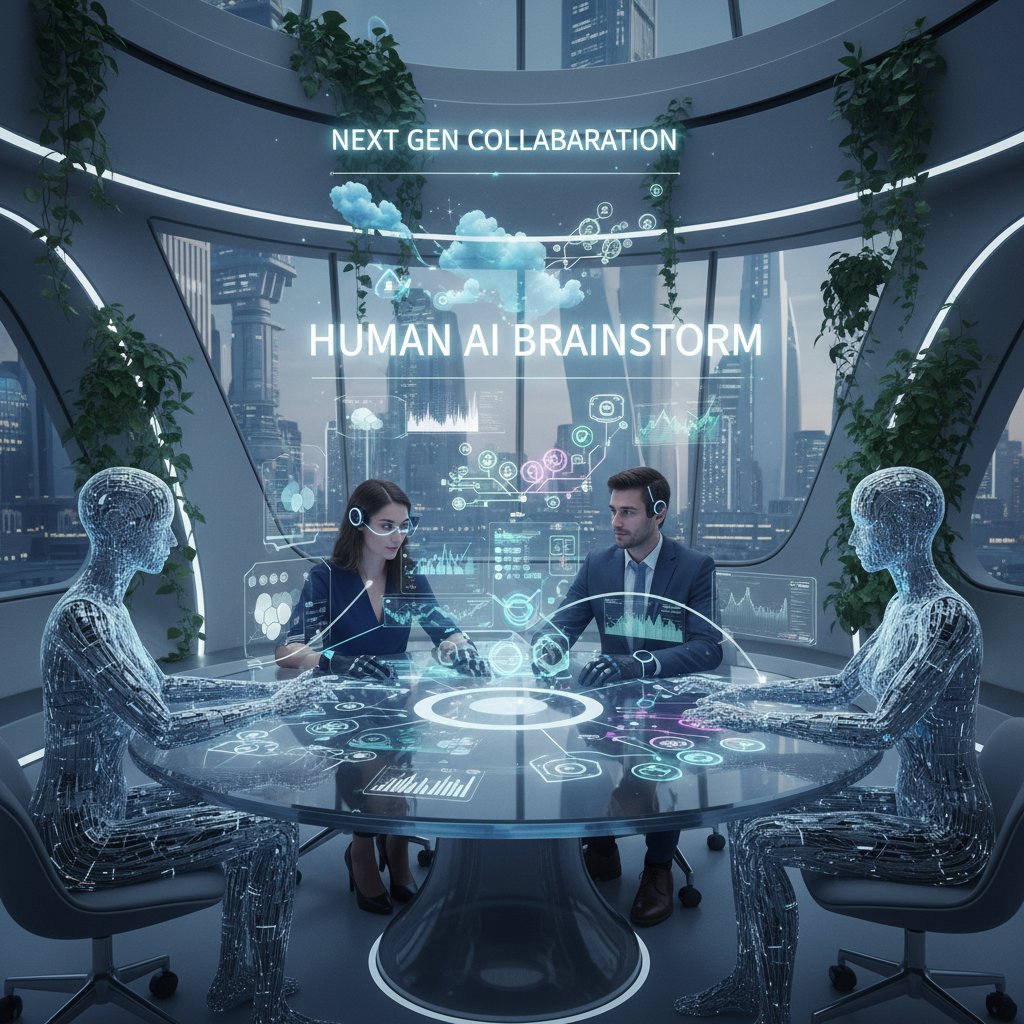
Teams empowered by AI move past the repetitive and into the generative—spending less time pushing pixels, more time inventing the future. The line between “team” and “tool” blurs, as AI becomes a trusted co-creator.
This is collaboration as it should be: fast, fluid, fiercely human—with AI as the ultimate force multiplier.
What to expect in the next 3 years
While we avoid crystal balls, current data reveals a few unmissable trends:
- AI everywhere: Ubiquitous integration into existing workflows, not just “AI apps.”
- Team-of-AIs approach: Multi-agent AI systems collaborating under human guidance.
- Universal adoption: 97 million people in AI-related roles by end of 2025.
- Remote-first, AI-driven: 95% of global organizations using AI for remote collaboration.
- Intelligence as a service: AI teammates available on demand, tailored to team needs.
The boundaries of teamwork and technology are dissolving—today, not tomorrow.
Teams who lean in, adapt, and experiment will outpace those clinging to legacy tools and mindsets.
Final thought: Will you lead—or get left behind?
The revolution in team collaboration isn’t waiting for permission. As the data, stories, and scars in this article show, AI-powered team collaboration is as much about culture and courage as it is about algorithms and interfaces.
"Teams that harness AI today win tomorrow. The rest will be remembered as cautionary tales." — Paraphrased from Stanford HAI, 2025
The only real question: Are you ready to lead—or will you watch from the digital sidelines as the future shapes itself without you? The choice, as always, is fiercely human.
Sources
References cited in this article
- Forbes(forbes.com)
- Stanford HAI(hai.stanford.edu)
- Eluminous Technologies(eluminoustechnologies.com)
- ProofHub(proofhub.com)
- Asana(asana.com)
- Zoom(zoom.com)
- Premier Cloud(premiercloud.com)
- CrowdStrike(crowdstrike.com)
- Reworked.co(reworked.co)
- Robert Half(roberthalf.com)
- Atlassian(atlassian.com)
- Fortune(fortune.com)
- Deloitte UK(deloitte.com)
- Harvard Study(fofahk.com)
- ScienceDirect(sciencedirect.com)
- Magai(magai.co)
- ClickUp(clickup.com)
- UMA Technology(umatechnology.org)
- DLabs.AI(dlabs.ai)
- Developer Nation(developernation.net)
- ISO(iso.org)
- Anchor(anchor.ai)
- Spinach(spinach.ai)
- Medium(medium.com)
- Microsoft AI(microsoft.com)
- Quantaintelligence.ai(quantaintelligence.ai)
- Aternew(aternew.com)
- GoProfiles(goprofiles.io)
- Toxigon(toxigon.com)
- MIT/PYMNTS(pymnts.com)
- Analytics Vidhya(analyticsvidhya.com)
- Cyberdata.ai(cyberdata.ai)
- Zoom(zoom.com)
- Success.com(success.com)
- Bruegel(bruegel.org)
- Orr Group(orrgroup.com)
- New Era Technology(neweratech.com)
- LearnWorlds(learnworlds.com)
- Dashworks(dashworks.ai)
- ZDNet(zdnet.com)
- Stormboard(stormboard.com)
- Vorecol(vorecol.com)
- Psico-Smart(psico-smart.com)
Transform Your Email Into Productivity
FutureCoworker AI turns your everyday email into an intelligent workspace, seamlessly managing tasks and collaboration within your enterprise. It eliminates the complexity of AI, allowing you to benefit from advanced technology without any technical knowledge. Achieve productivity, streamline processes, and improve team efficiency through natural email interaction, getting tasks done faster and smarter.
Get startedReady to Transform Your Email?
Start automating your tasks and boost productivity today
Frequently Asked Questions
What percentage of executives and employees cite poor collaboration as a reason for failure?
According to research from ProofHub (2023), 86-87% of executives and employees cite poor collaboration as a key reason for failure.
How much office time is spent collaborating according to the article?
According to Asana (2024), 42% of office time is now spent collaborating, though much of this is wasted cycling between broken email chains and notification fatigue.
By how much has workplace collaboration increased over the past two decades?
Over the past two decades, collaboration in the workplace has increased by 50%, though teams struggle with outdated tools that cannot keep up with this demand.
What are the main problems caused by legacy collaboration platforms?
Legacy platforms force teams into rigid workflows, silo information, demand endless manual effort, and lack the intelligence to anticipate needs, bridge silos, or adapt to unique team cultures, resulting in friction and lost context.
Continue Reading
Keep exploring Intelligent enterprise teammate

Enterprise AI-Powered Collaboration: Where It Works and Where It Fails
Enterprise AI-powered collaboration is reshaping how teams work together. This article examines where these tools succeed, where they fail, and what modern workplaces actually need.

AI-Enabled Collaboration Tools That Help Teams Win (and Fail)
Discover insights about AI-enabled collaboration tools

AI Collaboration Tools: What Works and What Fails
AI collaboration tools are reshaping enterprise teamwork. This article examines which tools deliver real results, where they fall short, and what teams must understand before adopting them.

Enterprise AI Collaboration Management Tools: Integration Reality Vs. Promise
Enterprise AI collaboration management tools promise workplace efficiency but face cultural resistance and integration challenges.

AI-Powered Collaboration Software: Seven Workplace Realities
AI-powered collaboration software is reshaping how teams work in 2025. This article examines seven key realities about adoption, myths, and power shifts in workplace AI tools.

How AI-Enhanced Enterprise Collaboration Is Reshaping Teamwork
AI-enhanced enterprise collaboration is transforming how teams work, shifting from automation to augmentation.


