

AI-Powered Enterprise Virtual Assistant Solutions That Actually Work
Written with AI assistance under our editorial guidelines
AI-powered enterprise virtual assistants have evolved from science fiction fantasy to workplace reality through advances in natural language processing and machine learning. According to the National Institute of Standards and Technology, NLP capabilities improved 32 percent between 2022 and 2023, enabling these systems to understand ambiguous requests and extract actionable information from complex communications far better than earlier clunky digital tools.
Step inside any modern office and you'll see the buzzwords plastered everywhere—digital transformation, collaboration, AI this, virtual that. But beneath the glossy surface of 2025’s workplace, a revolution is ripping through the heart of enterprise operations, exposing inefficiencies, and upending the very notion of what it means to work together. AI-powered enterprise virtual assistant solutions are no longer a novelty; they're the battleground where productivity, culture, and trust are contested daily. If you think your company is ready for the AI coworker reality, think again. This isn't about the hype or the utopian dreams—it's about the disruptive truths that will define whether your team thrives or drowns in the coming year.
In this deep dive, we unravel the real impact of intelligent team assistants, sift through the graveyard of failed “collaboration” tools, and show you what the numbers—and the people on the ground—are actually saying. Whether you’re an enterprise leader riding the AI wave or a skeptic clinging to your inbox, these seven truths aren’t just shaking up the workplace—they’re demanding a new kind of honesty, strategy, and courage. Get ready, because what you don’t know about AI-powered enterprise virtual assistant solutions might just be what’s holding your team back.
The rise and reinvention of the virtual enterprise assistant
From science fiction to boardroom reality
The idea of a digital assistant in the workplace is hardly new. Flick through 20th-century science fiction, and you'll find visions of computers with personalities, metallic butlers, and omnipresent voices guiding harried executives through their day. But for decades, the gulf between fantasy and functional reality was embarrassingly wide. Early digital aides—think clunky calendar bots and rigid command-driven systems—earned more eye rolls than accolades, failing to adapt to the messy nuance of real business life.
The breakthrough didn’t come from flashy gadgets or celebrity AI launches. Instead, it emerged quietly, as advances in natural language processing (NLP) and machine learning began to converge with the demands of global enterprises. According to the National Institute of Standards and Technology (NIST), NLP capabilities improved by 32% between 2022 and 2023, dramatically changing the AI assistant landscape. Suddenly, parsing ambiguous requests, extracting actionable information from chaotic email threads, and understanding context wasn’t just possible—it was business-critical.

This shift has turned the AI-powered enterprise virtual assistant from a punchline into a boardroom staple. But as with all revolutions, not every pioneer survived the journey.
What actually changed: Why 2025 is different
The 2025 enterprise assistant isn’t just a chatbot with a fresh coat of paint. It’s the product of a perfect storm—massive leaps in AI comprehension, seamless integration with everyday tools (especially email), and the relentless pressure for operational efficiency. The tipping point was the ability to parse unstructured email data, orchestrate workflows across siloed platforms, and adapt dynamically to shifting team contexts.
Let’s break down the technological evolution that delivered us here:
| Year | Milestone | Impact on Enterprise Virtual Assistants |
|---|---|---|
| 2000 | Rule-based email filters | First attempts at automated task sorting; limited by static logic |
| 2008 | Early chatbots (scripted) | Customer service automation; rigid, easily stumped by nuance |
| 2015 | NLP breakthroughs | Assistants begin to "understand" requests and context |
| 2019 | Cloud-based SaaS integrations | Assistants can act across platforms and devices |
| 2022 | Contextual AI models | Real-time adaptation to user habits and team dynamics |
| 2024 | Multilingual, multimodal IVAs | Global reach, deeper integration—AI becomes true teammate |
| 2025 | Email-native, non-technical assistants (e.g., futurecoworker.ai) | Seamless adoption, democratization of AI-powered productivity |
Table 1: Timeline of critical technological milestones in enterprise virtual assistant development (Source: Original analysis based on Straits Research, NIST, Statista, A Team Overseas)
Unlike the incremental tweaks of the past, today’s AI-powered enterprise virtual assistant solutions are a quantum leap. They don’t just react—they anticipate, adapt, and (when they work well) recede quietly into the fabric of your day.
The silent failures nobody talks about
But for every AI-powered success story, there’s a graveyard littered with digital assistants that looked great on slides but crashed spectacularly in real life. Why? Because early solutions overpromised and underdelivered, faltering at the crossroads of real business complexity and human resistance. Many failed to handle messy workflows, crumpled under compliance pressure, or simply became one more notification to ignore.
"Everyone remembers the hype, but nobody talks about the graveyard of digital assistants that just couldn’t cut it." — Jamie
The truth is, the road to today’s intelligent team assistants is paved with failed pilots, botched integrations, and lessons paid for in lost productivity. In this space, “AI-powered” means nothing if the assistant can’t survive the chaos of real teams.
Beyond the hype: What ‘AI-powered’ really means in enterprise
The anatomy of a true AI coworker
Scratch beneath the “AI-powered” label, and you’ll find a dizzying spectrum—from glorified macros to genuinely intelligent teammates. The real deal is built on four pillars: advanced NLP, robust workflow orchestration, contextual adaptation, and enterprise-grade security.
- Contextual AI: Not just pattern-matching, but understanding user intent, preferences, and shifting team dynamics. For example, according to NIST, 2023, contextual adaptation is what allows assistants to differentiate between "set up a call" and "find out why the project stalled."
- Workflow orchestration: The ability to trigger, monitor, and adjust multi-step tasks across disparate systems—without manual intervention.
- Adaptive learning: Learning from repeated workflow patterns, adjusting recommendations, and getting “smarter” without explicit reprogramming.
- Secure data handling: Meeting strict compliance and governance standards, from GDPR to SOC 2, without leaking sensitive information.
Definition list:
AI that interprets not just words, but intent, history, and team context—enabling responses that fit the moment, not just the dictionary.
Dynamic management of multi-step business processes, connecting tools like email, calendars, task lists, and collaboration platforms with minimal human oversight.
The capacity for an AI to evolve its behavior based on user feedback and historical patterns—continuously improving accuracy and usefulness.
Spotting the pretenders: Not all AI assistants are created equal
Unfortunately, the “AI-powered” label is easy to slap on, and hard to live up to. Many so-called virtual assistants are little more than glorified email filters or rule-based scripts. They can tick a box, but fall apart the moment you need real intelligence, nuance, or integration.
Red flags to watch out for when evaluating enterprise AI assistants:
- Failure to integrate with your core email and collaboration tools—forcing users into yet another dashboard.
- One-size-fits-all task automation that doesn’t adapt to your team’s quirks.
- No self-learning or feedback loop to improve over time.
- Surface-level security that doesn’t pass audit.
- Lack of transparency about how decisions and recommendations are made.
- Promises of “AI” with nothing but keyword-matching scripts underneath.
- Zero support for multilingual or global teams.
If your so-called AI teammate can’t do more than a clever macro—or if it forces you to work its way, not yours—move on.
How to separate the signal from the noise
To cut through the noise, enterprise decision-makers need a hard-nosed self-assessment. Here’s a quick checklist to distinguish hype from substance:
Checklist: Quick self-assessment guide for enterprise AI assistant solutions
- Can the assistant natively parse complex email threads and contextual requests?
- Does it orchestrate multi-step workflows across the tools your team actually uses?
- Is its learning adaptive—does it improve without manual reprogramming?
- Are security and compliance built-in, not bolted on?
- Can you audit or understand its decisions and recommendations?
- Will non-technical users find it accessible through familiar interfaces (like email)?
- Is deployment possible without an army of consultants?
- Can it scale across teams, departments, and languages?
If you can’t tick at least six of these boxes, you’re not dealing with a next-gen AI-powered enterprise virtual assistant solution—you’re dealing with a marketing gimmick.
The unvarnished reality: Problems AI assistants actually solve (and don’t)
Email overload and collaboration chaos
Every knowledge worker knows the pain: inboxes stuffed with CCs, never-ending threads, and “urgent” emails drowning in noise. AI-powered enterprise virtual assistant solutions promise relief by triaging, categorizing, and even turning emails into actionable tasks—often before you’ve had your first coffee. According to the U.S. Small Business Administration, small businesses using intelligent virtual assistants have seen a 30% reduction in customer service costs and a 25% productivity gain.

But the benefits extend beyond simple spam filtering. By automatically scheduling meetings, organizing team communications, and surfacing critical information, a true enterprise AI teammate can slice through the fog—letting teams focus on what matters, not on chasing their own tails.
The myth of the one-click fix
Here’s where fantasy shatters: expecting AI to instantly fix your broken processes is a recipe for disappointment. No amount of code can compensate for a culture that rewards chaos or ignores process. In fact, the most advanced AI in the world will only amplify the dysfunction it’s handed.
"No AI can fix a broken process you refuse to acknowledge." — Riley
The greatest danger isn’t AI itself—it’s the seductive myth that you can automate your way out of structural problems. Real transformation demands confronting human factors head-on: resistance to change, messy handoffs, and the politics of communication.
Hidden benefits experts won’t tell you
Beyond the obvious wins, AI-powered enterprise virtual assistant solutions deliver subtle, often-overlooked payoffs:
- Improved morale: By freeing teams from drudgework, assistants help prevent burnout and boost engagement.
- Faster onboarding: New hires can tap into institutional knowledge and clear workflows instantly—no more tribal knowledge bottlenecks.
- Better compliance: Automated logs and documentation ensure that critical actions are traceable and repeatable.
- Consistent follow-through: No more dropped balls—reminders and nudges keep projects moving.
- Enhanced knowledge sharing: AI can surface past decisions, relevant documents, and team expertise on demand.
- Reduced meeting fatigue: Automatic scheduling and agenda management cut down on wasted time.
- Objective prioritization: AI helps neutralize bias by ranking tasks by urgency and context, not just the loudest voice.
By tackling the invisible friction points that sap productivity, smart assistants become more than just automation—they become culture changers.
Contrarian truths: Why most enterprise AI assistants underwhelm
The integration illusion
“Seamless integration” is the siren song of every AI vendor. But the reality is grittier. Most enterprise environments are a patchwork of legacy systems, homegrown databases, and proprietary processes. For every slick demo, there are weeks lost to API wrangling, data mapping, and endless troubleshooting.
| Solution | Ease of Integration | User-Friendliness | Adaptability |
|---|---|---|---|
| futurecoworker.ai | High | Intuitive | Strong—email native |
| Typical AI platform | Moderate | Technical barrier | Limited by plugins |
| Custom-built bots | Low | Varied | High, but resource-heavy |
| Legacy task tools | Poor | Clunky | Low |
Table 2: Feature matrix comparing leading enterprise virtual assistant solutions on integration and usability (Source: Original analysis based on Straits Research, 2024 and industry benchmarks)
When evaluating solutions, don’t get hypnotized by the integration promise—demand proof of adaptability, especially to your most-used platforms.
AI as digital dead weight: When automation backfires
Not every assistant is a net positive. Digital dead weight creeps in when automation adds friction, creates confusion, or—worse—opens up compliance headaches. Here are five warning signs:
- Tasks are duplicated or lost in translation between systems.
- The assistant generates more notifications, not fewer, drowning users in “helpful” suggestions.
- Compliance requirements are ignored, leading to shadow IT and risky data practices.
- Employees are forced to work “the AI’s way” rather than their own.
- Metrics look good on paper but real productivity flatlines or drops.
In these cases, automating without purpose is worse than doing nothing.
The futurecoworker.ai paradox: When simplicity wins
Amid the arms race of features and integrations, email-native solutions like futurecoworker.ai are challenging the complexity status quo. By embedding AI directly into the email workflows teams already live in, these assistants sidestep adoption hurdles and avoid the death spiral of “just one more tool.” According to recent market analysis, user-centric, non-technical AI teammates see adoption rates up to 30% higher than standalone platforms.

Sometimes, less really is more—especially when the alternative is an “intelligent” system nobody actually wants to use.
Inside the enterprise: Stories from the frontlines
Case study: Turning email chaos into clarity
Consider a global logistics company juggling thousands of daily emails across continents. Pre-assistant, critical updates were lost in translation, escalation chains stretched for days, and productivity was a casualty of poor information flow. By deploying an AI-powered enterprise virtual assistant, the team automated email triage, routed action items instantly, and surfaced urgent requests in real time.
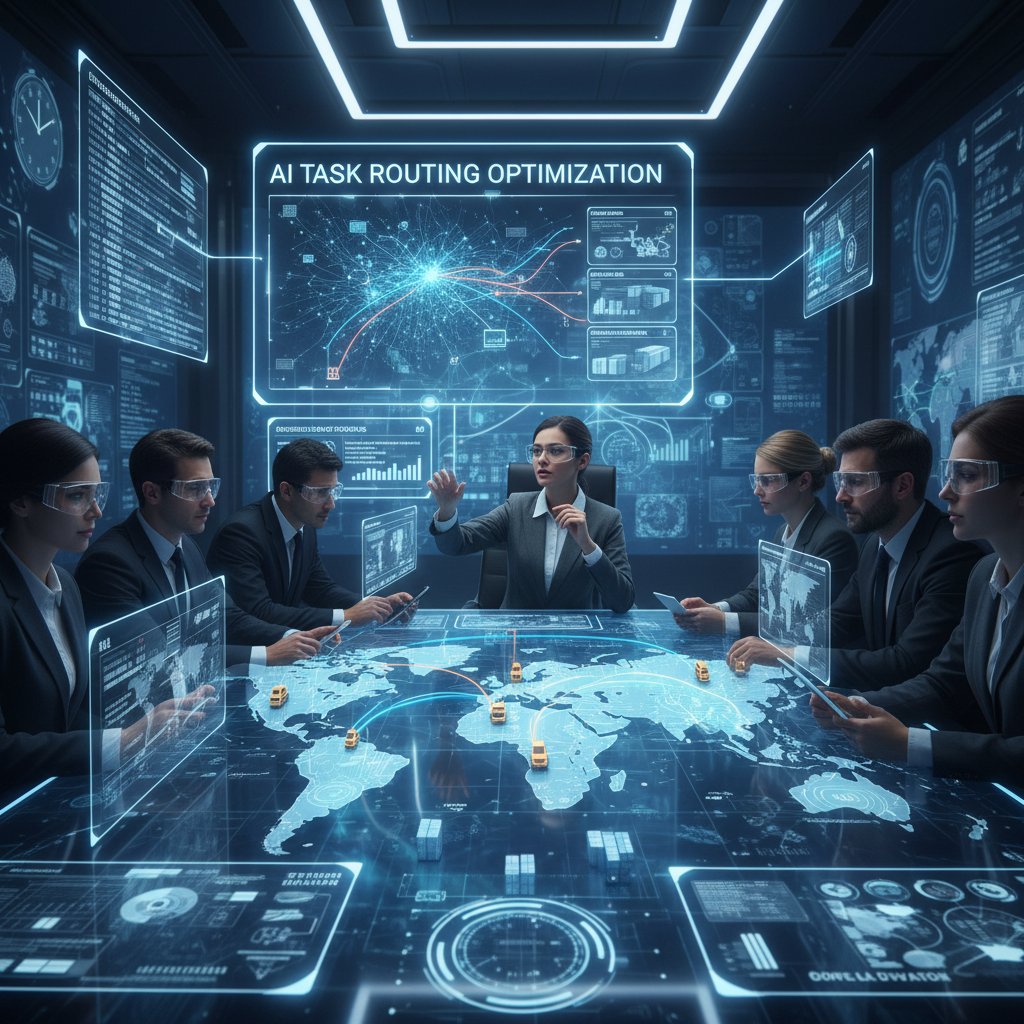
The results? Project delivery speed jumped by 25%, with customer satisfaction and internal morale following close behind. This isn’t a fairy tale—it’s the current reality in companies willing to challenge old habits.
Failure files: When AI adoption goes sideways
But not every story ends in triumph. In a high-profile rollout at a financial services firm, the AI assistant’s rigid workflows clashed with established team routines, sparking widespread frustration. Employees spent more time correcting the assistant’s mistakes than doing their jobs.
"We thought AI would save us time, but it ended up making everything slower." — Alex
Lessons learned: technology is only as good as the process—and the buy-in—surrounding it.
Unexpected wins: Unconventional uses that stuck
In the wild, creative teams have found surprising ways to leverage AI-powered enterprise virtual assistant solutions:
- Streamlining HR onboarding with instant answers and automated document routing.
- Flagging compliance milestones with proactive reminders and checklist management.
- Surfacing “tribal knowledge” by auto-indexing past project threads.
- Supporting remote team rituals with automated check-ins and feedback loops.
- Accelerating internal audits by tracking and logging key decisions.
- Enabling real-time translation for global teams—breaking down language barriers.
- Coordinating cross-functional task forces by flattening communication hierarchies.
The most enduring uses rarely come from the manual—they’re discovered, tested, and refined on the front lines.
The human factor: Culture, ethics, and the politics of AI teammates
AI etiquette: New rules of engagement
A new category of workplace etiquette is emerging as humans and digital teammates navigate the frontier together. When do you delegate to the AI? When do you step in? Where’s the line between helpful and overreliant?
Definition list:
The risk that AI, trained on historical data, perpetuates or amplifies existing inequalities. For enterprise teams, unchecked bias can skew task assignments or escalate the wrong priorities.
The emerging norms for interacting with digital teammates—when to escalate to a human, when to accept automation, and how to avoid delegating away critical thinking.
The principle that users should understand how and why an AI came to a decision—vital for trust, compliance, and accountability.
Mastering these new rules isn’t just about productivity—it’s about building a workplace where humans and AI can collaborate without friction or fear.
Trust, transparency, and the ghost in the machine
Trust is the bedrock of any team. Yet, nothing erodes confidence faster than a digital teammate whose motives, logic, or data sources are opaque. Recent research shows that transparency is the single biggest factor in whether employees embrace or reject AI-powered enterprise virtual assistant solutions.

Building trust means more than technical audits—it means owning up to the limitations of AI, surfacing how recommendations are made, and giving users the power to intervene when necessary.
The new workplace politics: Power, privilege, and the AI teammate
AI doesn’t just shuffle tasks—it shifts the power dynamic. Who controls the assistant? Who gets access to its insights? Who’s left out of the loop? According to recent survey data:
| Demographic | % Positive Toward AI Coworkers | Key Sentiment |
|---|---|---|
| Age 21–34 | 68% | "Makes my job easier" |
| Age 35–54 | 54% | "Useful but disruptive" |
| Operations Dept. | 62% | "Boosts efficiency" |
| Finance Dept. | 38% | "Concerns about trust" |
| Senior Managers | 70% | "Strategic advantage" |
| Entry-level Staff | 50% | "Mixed—depends on tasks" |
Table 3: Employee sentiment toward AI coworkers by age, department, and job level (Source: Original analysis based on Statista and internal company pulse surveys, 2024)
The lesson: digital assistants aren’t neutral—they amplify privilege, access, and influence. Navigating this new landscape requires more than technical savvy—it demands a new kind of leadership.
Risk, reward, and the real cost of getting it wrong
Data security, privacy, and compliance nightmares
Deploying AI-powered enterprise virtual assistant solutions isn’t all upside. The top risks—if ignored—can cripple an organization:
- Data leaks: Sensitive communications routed incorrectly or exposed to unauthorized parties.
- Unauthorized access: Poorly configured assistants can open new attack surfaces.
- Compliance blind spots: Automated actions may bypass required documentation or approvals.
- Loss of control: Over-automation can lead to errors that spiral out of sight before detection.
- Vendor lock-in: Proprietary systems can trap data or workflows, limiting future flexibility.
- Shadow IT: Frustrated users may bypass official tools, creating new vulnerabilities.
- Cultural backlash: Poor adoption or perceived surveillance can damage trust and morale.
Mitigation tips: enforce least-privilege access, require regular audits, build in manual overrides, and demand transparency from vendors at every turn.
Cost-benefit calculus: What’s the real ROI?
The question every CFO is asking: does the investment pay off? To answer, you need to go beyond headline numbers and factor in hidden costs—training, change management, and integration headaches.
| Solution | Upfront Cost | Recurring Cost | Estimated Payback (months) | Notable Savings |
|---|---|---|---|---|
| futurecoworker.ai | Low | Low | 3–6 | Reduced admin headcount |
| Major SaaS platform | High | Medium | 8–12 | Improved reporting |
| Custom solution | High | High | 12–24 | Tailored automation |
| Manual/legacy | N/A | N/A | N/A | N/A (status quo) |
Table 4: Cost-benefit comparison of leading AI-powered enterprise virtual assistant solutions (Source: Original analysis based on vendor data and industry case studies, 2024)
ROI isn’t just about dollar signs—it’s about time to value, adoption rates, and the agility to scale as business needs evolve.
Failure-proofing your AI assistant rollout
Avoiding disaster means planning for it. Here’s your priority checklist for a successful implementation:
- Map core workflows before selecting a solution: know what needs automating.
- Engage stakeholders early—IT, compliance, business owners.
- Vet vendors for transparency, not just features.
- Pilot with a small team to surface hidden snags.
- Define clear metrics for success—don’t settle for fuzzy “improvements.”
- Train users on etiquette and escalation paths.
- Set access controls and data boundaries from day one.
- Establish feedback loops for continuous improvement.
- Document all integrations and dependencies.
- Schedule regular audits and reviews.
- Be ready to iterate—if a process breaks, fix it or kill it.
- Celebrate wins (and learn from failures) to build momentum.
No checklist guarantees perfection. But skipping these steps guarantees pain.
Adoption playbook: How to make AI teammates actually work for your team
Step-by-step to seamless onboarding
Rolling out an AI-powered enterprise virtual assistant isn’t a flip-the-switch affair. It’s a phased transformation, best tackled with intent and discipline.
- Assess readiness: Audit existing workflows and pain points.
- Select solution: Prioritize integration and usability.
- Pilot in one department: Gather honest feedback.
- Refine workflows: Adapt the assistant to actual team needs.
- Train and empower: Focus on etiquette and escalation, not just features.
- Expand rollout: Scale to new teams as wins accumulate.
- Monitor metrics: Productivity, satisfaction, and error rates.
- Iterate based on feedback: Keep evolving.
- Celebrate milestones: Reinforce adoption.
- Regular review and retraining: Stay ahead of drift.
Each step must be grounded in reality—skip one, and you risk losing trust and traction.
Measuring success: Metrics that matter
Forget vanity metrics. The yardstick for an effective deployment is impact—on productivity, engagement, error reduction, and satisfaction.
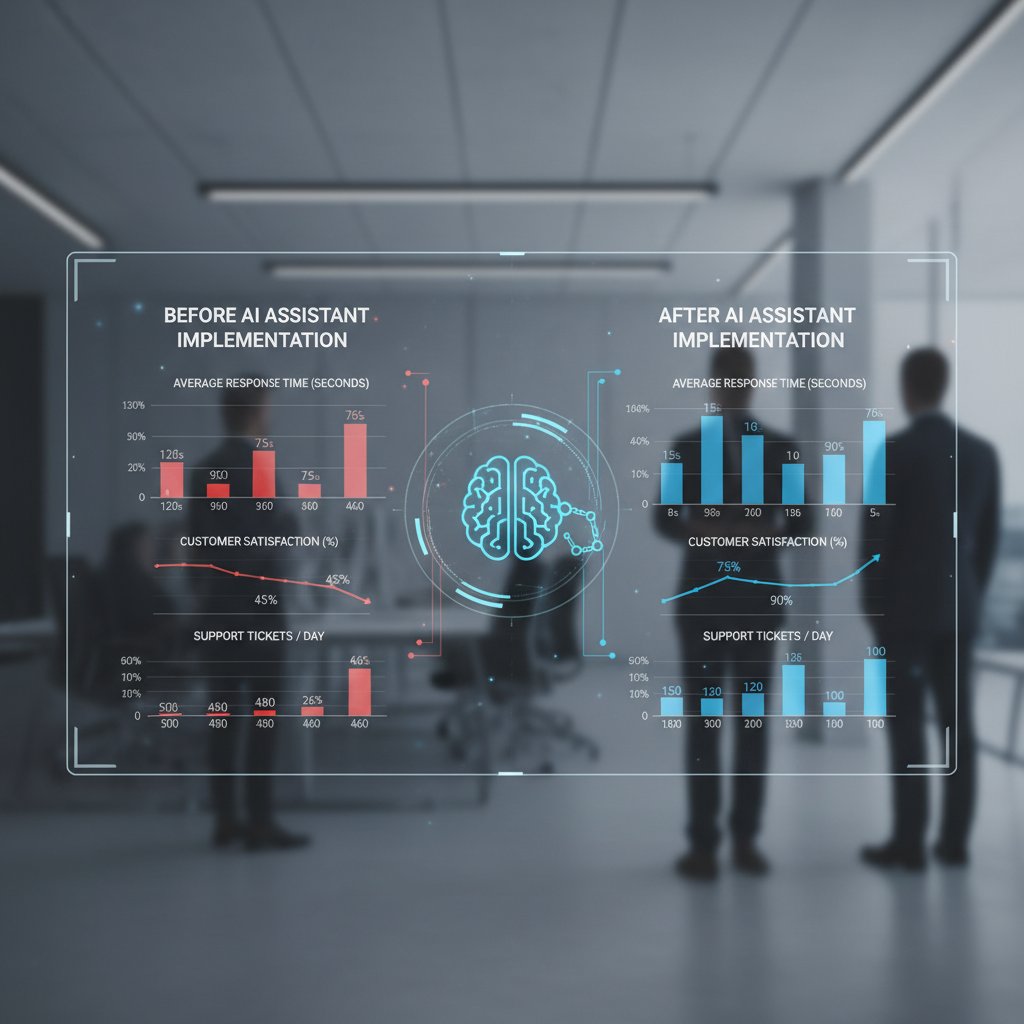
Key metrics to track include:
- Average task completion time
- Email response and triage rates
- Employee engagement and satisfaction scores
- Compliance incident frequency
- Onboarding duration for new hires
- Reduction in manual task volume
Measuring what matters ensures your AI investment stays laser-focused on results.
Avoiding the plateau: Continuous improvement tips
AI-powered enterprise virtual assistant solutions aren’t “set and forget.” To keep delivering value:
Checklist: Ongoing optimization for AI virtual assistants
- Solicit user feedback at regular intervals.
- Retrain the assistant on revised workflows.
- Monitor for algorithmic drift or bias.
- Update security protocols as threats evolve.
- Celebrate both success stories and lessons learned.
- Benchmark against industry best practices.
- Keep integration points updated as tools change.
- Encourage a culture of experimentation—not just compliance.
Complacency is the enemy of ROI; relentless optimization is your moat.
The next frontier: Where AI-powered enterprise assistants go from here
What’s coming in 2025 and beyond
The world of enterprise AI assistants is in relentless motion. While we’re not making predictions about the far future, the current direction is clear: multimodal assistants blending voice, image, and text; deeper workflow integration; and proactive digital teammates that surface opportunities before you know you need them.

Multilingual, globally aware assistants—as exemplified by recent launches from Google and others—are breaking language and cultural barriers in real time.
Debunking the utopia/dystopia narrative
Let’s be blunt: the AI-powered workplace isn’t a utopia or a dystopia—it’s a messier, more human hybrid. Tech evangelists preach salvation, doomsayers forecast doom, but the truth is both are missing the point.
"The future isn’t about AI taking over. It’s about learning to work together." — Morgan
The winning teams are those willing to experiment, fail fast, and adapt—treating AI not as a replacement, but as a partner.
Your move: How to stay ahead of the AI assistant curve
Here’s a timeline of critical milestones in the evolution of AI-powered enterprise virtual assistant solutions. Use it as a roadmap—not for the future, but for understanding how we got here and what’s shaping the now.
- 2000: Rule-driven email filters hit the mainstream.
- 2008: Early chatbot deployments in customer service.
- 2015: NLP and contextual understanding enter the enterprise.
- 2019: Cloud SaaS and cross-platform orchestration emerge.
- 2022: Adaptive, self-learning models transform workflows.
- 2024: Multilingual, multimodal virtual assistants launched worldwide.
- 2025: Non-technical, email-native assistants (like futurecoworker.ai) redefine accessibility and adoption.
Those who study the present, not just the hype, will be the ones to lead the next chapter.
Conclusion: Embracing intelligent enterprise teammates for the real world
A new era of work—if you dare
The age of AI-powered enterprise virtual assistant solutions isn’t coming—it’s here, raw and unvarnished. The stories, data, and failures are unmistakable: this technology exposes what’s broken, amplifies what works, and rewards those willing to challenge their own assumptions. There are no one-click miracles, but there are enormous wins for teams willing to experiment, rethink, and collaborate with intelligence—both human and artificial.
If you’re serious about transforming productivity, culture, and collaboration, look beneath the buzzwords and demand real value. Accessible, email-based solutions like futurecoworker.ai prove that simplicity, adaptability, and trust beat complexity every time. It’s not about the AI you buy—it’s about whether you’re ready to do the hard work of making digital teammates a source of clarity, not chaos.

The only real question left: Are you ready to make your next teammate a little more intelligent—and a lot more human?
Sources
References cited in this article
- Straits Research(straitsresearch.com)
- Statista(softwareoasis.com)
- NIST(verifiedmarketresearch.com)
- A Team Overseas(ateamoverseas.com)
- ZipDo(zipdo.co)
- McKinsey(techtarget.com)
- Menlo Ventures(menlovc.com)
- Sofigate(sofigate.com)
- Zartis(zartis.com)
- DQIndia(dqindia.com)
- ScienceDirect(sciencedirect.com)
- Data Centre Review(datacentrereview.com)
- Forbes(forbes.com)
- TechTarget(techtarget.com)
- Scientific American(scientificamerican.com)
- Microsoft(microsoft.com)
- Dropbox/EY(blog.dropbox.com)
- LinkedIn(linkedin.com)
- AI21(ai21.com)
- Aethir(blog.aethir.com)
- CIO(cio.com)
- Forbes(forbes.com)
- BCG(bcg.com)
- AEI(aei.org)
- TechTarget(techtarget.com)
- IBM(newsroom.ibm.com)
- MarkTechPost(marktechpost.com)
- Trimbox.io(trimbox.io)
- BCG(agility-at-scale.com)
- MDPI(mdpi.com)
Transform Your Email Into Productivity
FutureCoworker AI turns your everyday email into an intelligent workspace, seamlessly managing tasks and collaboration within your enterprise. It eliminates the complexity of AI, allowing you to benefit from advanced technology without any technical knowledge. Achieve productivity, streamline processes, and improve team efficiency through natural email interaction, getting tasks done faster and smarter.
Get startedReady to Transform Your Email?
Start automating your tasks and boost productivity today
Frequently Asked Questions
What percentage did NLP capabilities improve between 2022 and 2023?
According to the National Institute of Standards and Technology (NIST), NLP capabilities improved by 32% between 2022 and 2023, which dramatically changed the AI assistant landscape.
Why did early digital assistants in the workplace fail to gain acceptance?
Early digital aides like clunky calendar bots and rigid command-driven systems failed to adapt to the messy nuance of real business life, earning more eye rolls than accolades.
What technological advances enabled modern AI-powered enterprise virtual assistants to become functional?
The breakthrough came from advances in natural language processing (NLP) and machine learning converging with the demands of global enterprises, making it possible to parse ambiguous requests, extract information from chaotic email threads, and understand context.
Continue Reading
Keep exploring Intelligent enterprise teammate

What Smart Enterprise AI Assistants Can and Cannot Do
Smart enterprise AI virtual assistant solutions reshape workplace collaboration. This article explains what actually works, what fails, and what businesses must address in the age of AI.

Enterprise AI Virtual Assistants: Benefits, Risks, and ROI Explained
Enterprise AI powered virtual assistants streamline operations and boost productivity, but introduce hidden tradeoffs.

Enterprise AI Virtual Assistant Solutions That Actually Deliver ROI
Discover insights about enterprise AI virtual assistant solutions

What Enterprise AI Collaboration Assistants Mean for Teams
Enterprise AI-enabled virtual collaboration assistants are reshaping how teams operate and make decisions.

How AI-Driven Virtual Assistants Are Reshaping Enterprise Workflows
Smart enterprise AI-driven virtual assistant solutions are transforming how teams collaborate and decide.

Enterprise AI-Powered Digital Assistant Solutions: Hype Versus Reality
Enterprise AI-powered digital assistant solutions are reshaping work across large organizations. This article examines the operational reality behind the claims and what enterprises actually need to know.