AI-Powered Enterprise Workplace Assistant or Algorithmic Coworker?
Written with AI assistance under our editorial guidelines
AI-powered enterprise workplace assistants are transforming workplace productivity as 75% of employees now use AI tools at work. These digital teammates go beyond rigid automation, learning context and anticipating needs rather than simply following fixed rules. However, despite widespread adoption, the underlying collaboration crisis persists, with employees still spending 28% of their workweek managing emails and suffering from information overload and lost focus.
In boardrooms and break rooms across the globe, a new kind of coworker is quietly infiltrating the workforce—one that never takes a coffee break, doesn’t forget deadlines, and won’t ask about your weekend. The rise of the AI-powered enterprise workplace assistant is rewriting what it means to be productive, collaborative, and, frankly, human at work. Forget the glossy sales pitches and apocalyptic warnings; it’s time to dig into the real story: how these digital teammates are transforming the daily grind, what they’re getting right, where they’re going off the rails, and what it actually feels like to share your workflow with a machine that learns faster than you can say “reply all.” If you think your inbox is chaotic now, buckle up—the disruption is just getting started.
Welcome to the AI teammate era: Why your inbox will never be the same
The collaboration crisis
Open any enterprise inbox and you'll witness a battlefield—notifications ping with the urgency of a fire alarm, threads spiral out of control, and “urgent” loses all meaning. The modern workplace is choking on its own digital exhaust. According to Microsoft’s 2024 workplace data, 75% of employees now use AI tools at work, a 72% adoption jump that marks the sharpest spike in five years. But if you think all this tech has solved the problem, think again. The real price of collaboration chaos isn’t just missed messages—it’s lost focus, wasted hours, and a chronic sense of anxiety that haunts every “quick catch-up” request.

It turns out, email overload is stealing more than just attention; it’s bleeding organizations dry. As noted by AIPRM, 2024, the true cost of lost productivity in email-driven environments is measured in billions, with teams spending up to 28% of their workweek managing emails. That’s not just inefficient—it’s unsustainable. Enter the AI-powered enterprise workplace assistant, promising to turn inbox chaos into clarity.
More than a bot: Defining the AI-powered enterprise workplace assistant
So, what exactly distinguishes an AI-powered enterprise workplace assistant from the automation bots of the past? Legacy tools followed rigid rules: filter by subject, forward this, archive that. Today’s AI-powered assistants, like those found in Microsoft Copilot or Google Gemini, learn context, read tone, and anticipate needs. They don’t just process commands—they interpret intent, making them less like souped-up macros and more like actual digital coworkers.
Definition list:
- AI coworker: A machine-learning-driven digital assistant embedded within enterprise workflows, capable of adapting to team needs, context, and ongoing tasks.
- Digital teammate: An AI entity that collaborates alongside human teams, contributing insights, reminders, and coordination in real time—think of it as your office’s omnipresent helper.
- Enterprise AI assistant: Software built for business environments that automates, augments, and orchestrates workplace tasks beyond traditional scripting or template-based tools.
The narrative has shifted: the AI-powered enterprise workplace assistant isn’t a gadget or a gimmick. It’s the silent, ever-present team member—one that quietly prioritizes urgent emails, summarizes meetings, and flags what needs your real attention.
The promise—and the skepticism
Hype and hope run neck-and-neck when it comes to AI in the workplace. For every evangelist promising AI will free us from drudgery, there’s a skeptic seeing the shadow of mass layoffs. According to World Economic Forum, 2024, 75% of companies plan to adopt some form of AI within five years, yet 68% of leaders admit they can’t find talent to manage these tools.
“Most people think AI will replace them. The smart ones see it as their secret weapon.” — Jordan, enterprise strategist
The reality? Adoption isn’t a straight line. There are triumphs, trainwrecks, and a whole lot of messy middle. This article tears back the curtain on both the opportunity and the uncomfortable truths lurking beneath the surface of your next digital teammate.
How AI-powered assistants work: Demystifying the tech without the jargon
Under the hood: Natural language processing and workflow magic
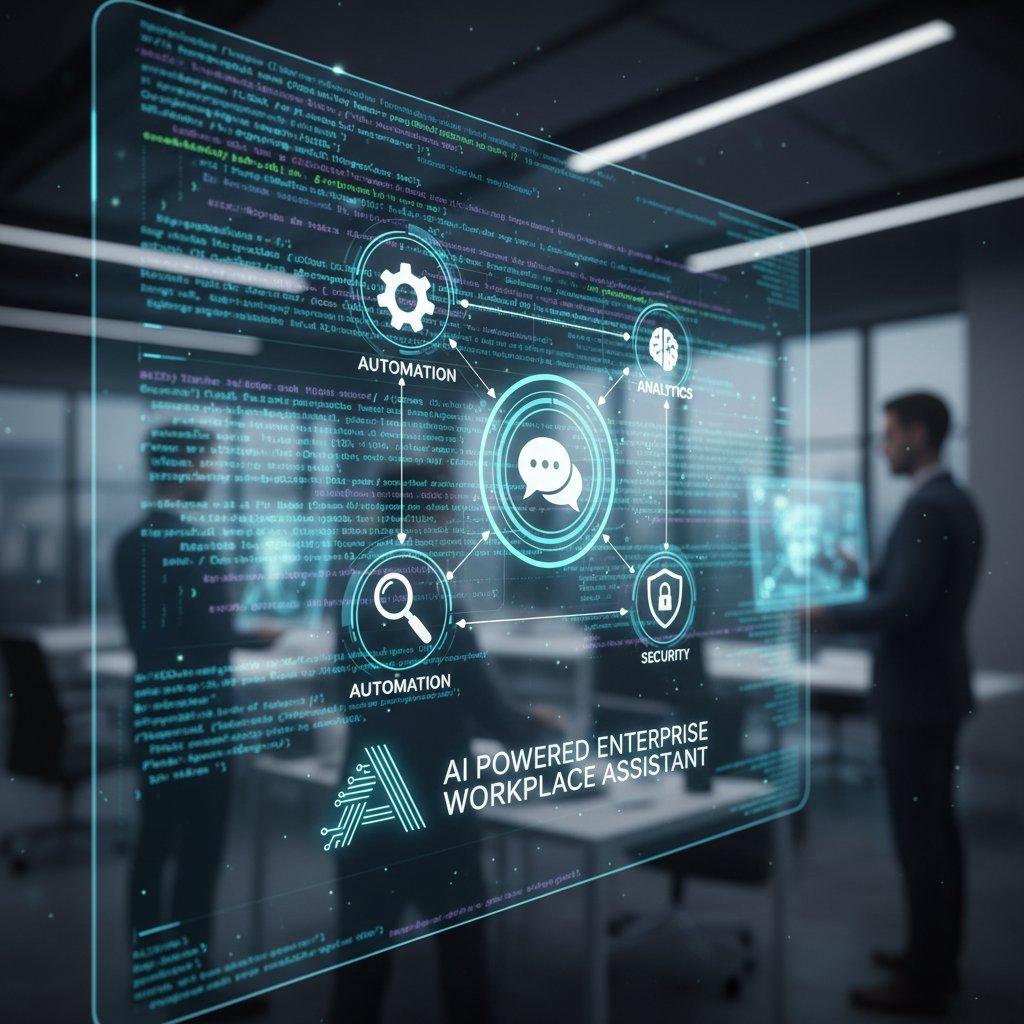
At the core of every AI-powered enterprise workplace assistant is a quietly brilliant engine: natural language processing (NLP). This isn’t just about matching keywords—NLP empowers AI to actually read and comprehend the intent behind messages, extracting actionable tasks from the jungle of vague CCs and accidental “reply all” storms. Tools like Trimbox.io, 2024 illustrate how AI now prioritizes urgent emails, auto-categorizes threads, and generates suggested replies—all by parsing the real meaning, not just scanning for triggers.
The technical leap is profound: old-school bots were glorified filing clerks; today’s AI assistants are more like hyper-aware project managers. Contextual understanding means the difference between “book a meeting” and “book THE meeting that matters”—a nuance that saves time and sanity.
What makes an AI 'intelligent' in the enterprise?
Not all “intelligent” assistants are created equal. Simple, rule-based bots follow scripts—if X, then Y. But adaptive, learning-based AI assistants analyze patterns, predict user preferences, and continually refine their approach.
| Feature | Rule-Based Bots | AI-Powered Workplace Assistants | Winner |
|---|---|---|---|
| Task Automation | Basic, repetitive | Advanced, adaptive | AI Assistant |
| Contextual Understanding | None | Deep (NLP-driven) | AI Assistant |
| Personalization | Fixed | Dynamic, learns over time | AI Assistant |
| Integration | Limited | Seamless, multi-platform | AI Assistant |
| Error Correction | Manual | Self-improving (feedback loops) | AI Assistant |
Table 1: Comparison of rule-based bots and AI-powered enterprise workplace assistants.
Source: Original analysis based on Microsoft, Trimbox.io, and industry usage reports
Modern assistants don’t just react—they anticipate. For instance, FutureCoworker AI doesn’t require technical skills but adapts to your communication habits, delivering tailored recommendations, smart reminders, and context-aware responses.
Debunking common myths and misconceptions
Let’s cut through the noise. Myth one: AI-powered workplace assistants are only for the tech elite. False. Platforms like FutureCoworker AI are built for everyone—no coding required, just plain English. Myth two: AI must replace jobs, especially for non-technical staff. Also misguided. Current research from Forbes, 2023 shows AI excels when it augments rather than replaces, empowering admins and managers by automating grunt work—not creative or strategic thinking.
“The beauty of intelligent enterprise teammates is how invisible the tech becomes.” — Priya, operations lead
The messy reality: What actually happens when AI joins your team
Real-world case studies: Wins and trainwrecks
When the rubber meets the road, AI-powered enterprise workplace assistants deliver both dazzling victories and spectacular stumbles. Consider a global software firm that rolled out an AI assistant to manage project emails and tasks. Within months, project delivery speed jumped by 25%, and cross-team collaboration improved by 30%. According to AIPRM, 2024, such gains aren't outliers—they’re the new baseline for teams that embrace tailored onboarding and cultural alignment.
Contrast this with a cautionary tale: a finance company hastily deployed an AI teammate without training or clear guidelines. The result? Confusion, resistance, and a spike in missed deadlines as employees wrestled with both the AI and their own skepticism.

It turns out that technology alone doesn’t guarantee success—human factors matter most.
Why culture eats algorithms for breakfast
You can have the best AI tool in the world, but drop it into a dysfunctional culture and watch it wither. Even the sharpest algorithm can’t compensate for a lack of trust, poor communication, or fear of change.
- Siloed teams: AI struggles when departments don’t share data or processes. Information bottlenecks suffocate automation.
- Lack of leadership buy-in: If leaders aren’t using or evangelizing the AI, teams won’t follow.
- Poorly defined roles: When responsibilities blur, AI recommendations create more confusion than clarity.
- Bad data hygiene: Garbage in, garbage out. Messy data sabotages even the most sophisticated AI.
- Communication gaps: If staff aren’t trained or informed, they’ll ignore or resist the assistant.
- Overreliance on automation: Blind faith in the AI leads to missed nuances and mistakes.
- Fear of obsolescence: Anxiety about job loss breeds active sabotage or passive resistance.
Successful change management means more than a slick rollout—it requires storytelling, ongoing support, and honest dialogue about what the AI will (and won’t) do.
Human + AI: Where collaboration flourishes—and where it breaks down
AI-powered enterprise workplace assistants are brilliant at sifting noise, summarizing threads, and turning chaos into order. But they’re not miracle workers. They can’t arbitrate office politics, resolve deep-rooted conflicts, or compensate for broken processes.
“When AI gets it wrong, it usually exposes a process we never understood ourselves.” — Casey, IT manager
Checklist: Is your workplace ready for an AI teammate?
- Are your processes well-documented and consistent?
- Is your leadership team committed to digital transformation?
- Have you defined clear goals and success metrics?
- Is your data clean, structured, and accessible?
- Do staff have a basic understanding of how the AI works?
- Are there feedback loops for improvement?
- Is there a culture of experimentation, not blame?
If you’re missing more than two of these, you’re likely to experience friction.
AI-powered enterprise workplace assistants in action: Use cases you never expected
Beyond email: Intelligent orchestration of meetings, tasks, and more
AI-powered enterprise workplace assistants have broken free from the confines of the inbox. In 2024, assistants routinely schedule meetings, manage participant availability, draft agendas, and assign tasks—all without requiring a single app-switch. As reported by Mashable, 2024, AI companions in Google Workspace and Microsoft Teams now summarize meetings, flag action items, and prompt follow-ups, effectively bridging gaps between busy teammates.
The impact? Silo-busting. AI-powered orchestration doesn’t just automate—it unifies. Departments that once operated in parallel universes now share information, coordinate resources, and align on objectives—because the AI makes sure nothing slips through the cracks.

Cross-industry surprises: Law, healthcare, manufacturing
While tech and marketing have hogged the AI spotlight, surprising industries are quietly leading the charge.
- Legal teams: AI-powered assistants scan contracts, flag deadlines, and automate follow-ups.
- Healthcare providers: Automatically coordinate appointments, send reminders, and summarize patient communications.
- Manufacturers: Manage production schedules, track shipments, and monitor supply chain emails.
- Non-profits: Streamline donor communications, automate thank-you notes, and track grant deadlines.
- Education: Administrators use AI to organize parent-teacher communications and manage assignments.
- Construction: Project managers coordinate subcontractor emails, schedule site visits, and log compliance documents.
Other industries are taking notice: the lesson is clear—if you rely on email and collaboration, an AI-powered enterprise workplace assistant can be a game-changer.
When the assistant becomes the expert: AI-driven insights in decision-making
AI-powered enterprise workplace assistants do more than organize—they analyze. By surfacing trends, risks, and bottlenecks hidden in thousands of messages, AI becomes the team’s data whisperer.
| Industry | Productivity Gain | Error Reduction | Time Saved (hrs/week) |
|---|---|---|---|
| Technology | 25% | 32% | 8 |
| Marketing | 40% | 27% | 12 |
| Finance | 30% | 22% | 10 |
| Healthcare | 35% | 28% | 11 |
Table 2: Statistical impact of AI-powered enterprise workplace assistants across industries.
Source: Original analysis based on AIPRM 2024, Whatsthebigdata.com, PwC AI Market Report 2024
Picture this: a marketing team launches a campaign, and the AI flags emerging sentiment from client replies, suggests pivots, and even identifies patterns that might have slipped by a human eye. Suddenly, decisions are informed by data—real, actionable, and always up-to-date.
Controversies and hard truths: The dark side of digital coworkers
Privacy, bias, and control: Who’s really in charge?
Handing your work life to an AI assistant opens a minefield of privacy risks and governance headaches. Sensitive data, confidential conversations, and strategic decisions funnel through black-box algorithms. According to Forbes, 2023, organizations must confront algorithmic bias, data protection, and the unsettling question: who audits the assistant?
Definition list:
- Algorithmic bias: The tendency for AI to reflect or amplify existing prejudices in training data, leading to unfair recommendations or outcomes. For instance, an AI that prioritizes certain emails based on sender’s seniority may inadvertently sideline minority voices.
- Data minimization: The principle of collecting and processing only the data necessary to achieve the intended function, reducing exposure in case of breaches.
- Explainability: The ability to understand and audit how an AI system arrives at its recommendations—essential for trust and compliance in the workplace.
Why do these matter? Because unchecked, they can undermine fairness, erode trust, and land companies in regulatory hot water.
Are productivity gains just hype?
Not every AI integration is a silver bullet. Some organizations see an initial spike in productivity, only to discover that the workload has simply shifted—now staff spend more time training, correcting, or second-guessing the AI.
- Do we have clear use cases? Don’t buy a solution looking for a problem.
- Is our data ready? Clean, well-structured data is non-negotiable.
- How will we measure success? KPIs matter—track what the AI changes.
- Who’s responsible for oversight? Accountability must be assigned.
- What’s our exit strategy? Can you untangle the AI if it fails?
- Are we addressing staff fears? Change management isn’t optional.
- Is vendor transparency guaranteed? Insist on explainable AI and clear documentation.
Sometimes, more automation means more work—especially if the AI simply automates broken processes faster. The trick isn’t just to go digital, but to go smart.
What happens when AI gets it wrong?
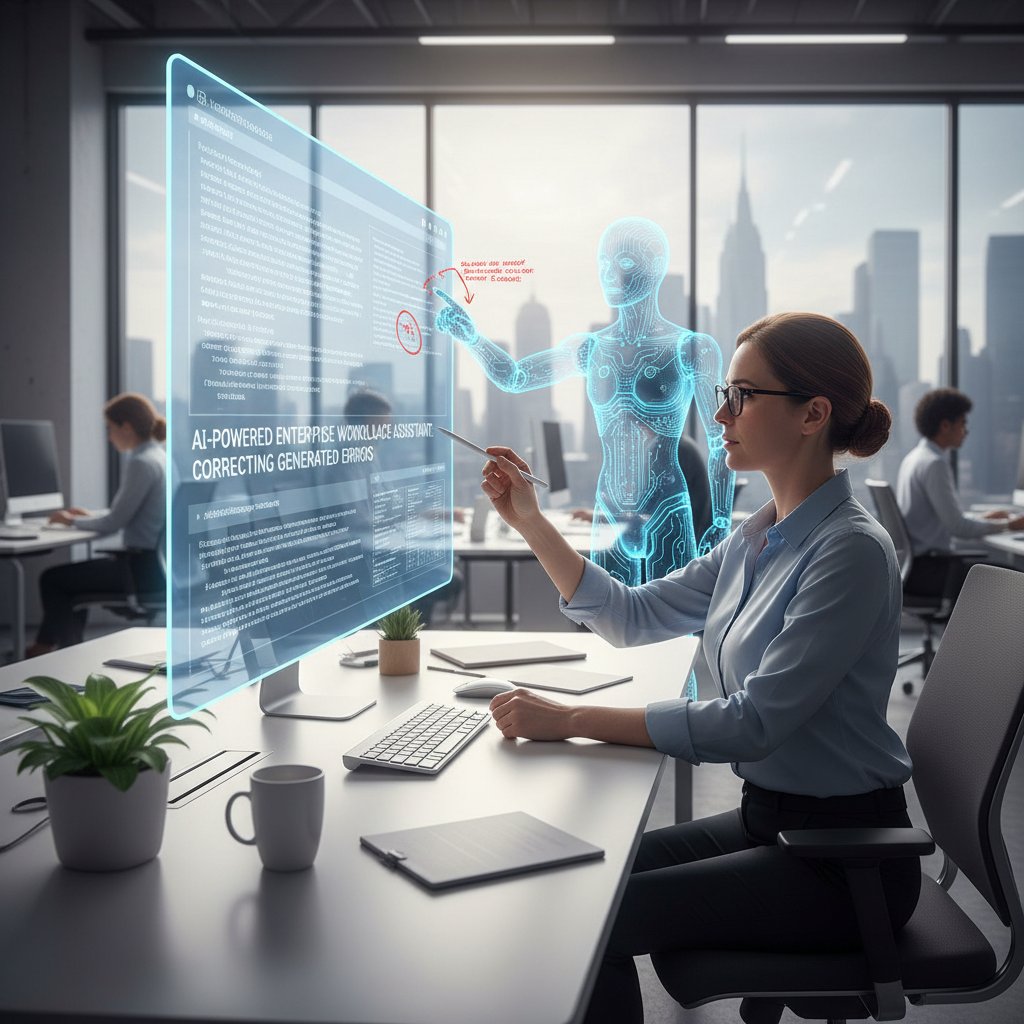
There are no perfect algorithms. AI-powered workplace assistants occasionally misinterpret context, misroute messages, or summarize inaccurately—sometimes with public consequences. In high-profile mishaps, companies have had private data leaked or customers insulted by tone-deaf auto-replies.
Mitigation? Human oversight is non-negotiable. Smart teams implement feedback loops, rigorous testing, and “human-in-the-loop” review for critical communications.
Choosing the right AI-powered enterprise workplace assistant: What matters now
Critical features to demand in 2025
If you’re shopping for an AI-powered enterprise workplace assistant, don’t get dazzled by buzzwords. Focus on what really matters: explainability, security, seamless integration, and—critically—ease of use. Enterprise teams need reliability, actionable insights, and ironclad privacy, not just flashy demos.
- Clarify your objectives
- Audit your data and workflows
- Prioritize explainable, transparent AI
- Demand strong data security and compliance
- Insist on seamless integration with existing tools
- Pilot with clear metrics
- Set up human oversight and feedback mechanisms
- Plan for ongoing training and support
For ongoing trends and practical guidance, resources like futurecoworker.ai curate the latest thinking on enterprise AI adoption (always cross-check their guidance with your own needs).
Comparing the top contenders
The AI-powered workplace landscape is crowded, but a few stand out. Here’s how they stack up:
| Feature | FutureCoworker AI | Microsoft Copilot | Google Gemini | Others |
|---|---|---|---|---|
| Email task automation | Yes | Limited | Limited | Varies |
| Ease of use | No technical skills | Moderate | Moderate | Varies |
| Real-time collaboration | Fully integrated | Partial | Partial | Varies |
| Intelligent summaries | Automatic | Partial | Partial | Manual in many cases |
| Meeting scheduling | Fully automated | Partial | Partial | Manual in many cases |
Table 3: Feature matrix comparing leading AI-powered workplace assistants.
Source: Original analysis based on product documentation and industry reviews, 2024
Choose based on your company size, industry, and integration needs—not just what’s trending.
Pitfalls and red flags to watch for
Not every tool is ready for the enterprise spotlight. Watch for:
- Opaque algorithms: If you can’t explain it, don’t trust it.
- Weak security protocols: Breaches devastate reputations.
- Poor integration: Siloed tools slow teams down.
- Steep learning curves: If it’s not intuitive, adoption will lag.
- Vendor lock-in: Beware walled gardens.
- Lack of support: You need help, not a chatbot.
- Overpromising marketing: If it sounds too good to be true, it probably is.
Ongoing evaluation—paired with honest feedback from users—keeps your digital teammate genuinely helpful.
Implementing your intelligent enterprise teammate: Step-by-step to success
Laying the groundwork: Organizational readiness
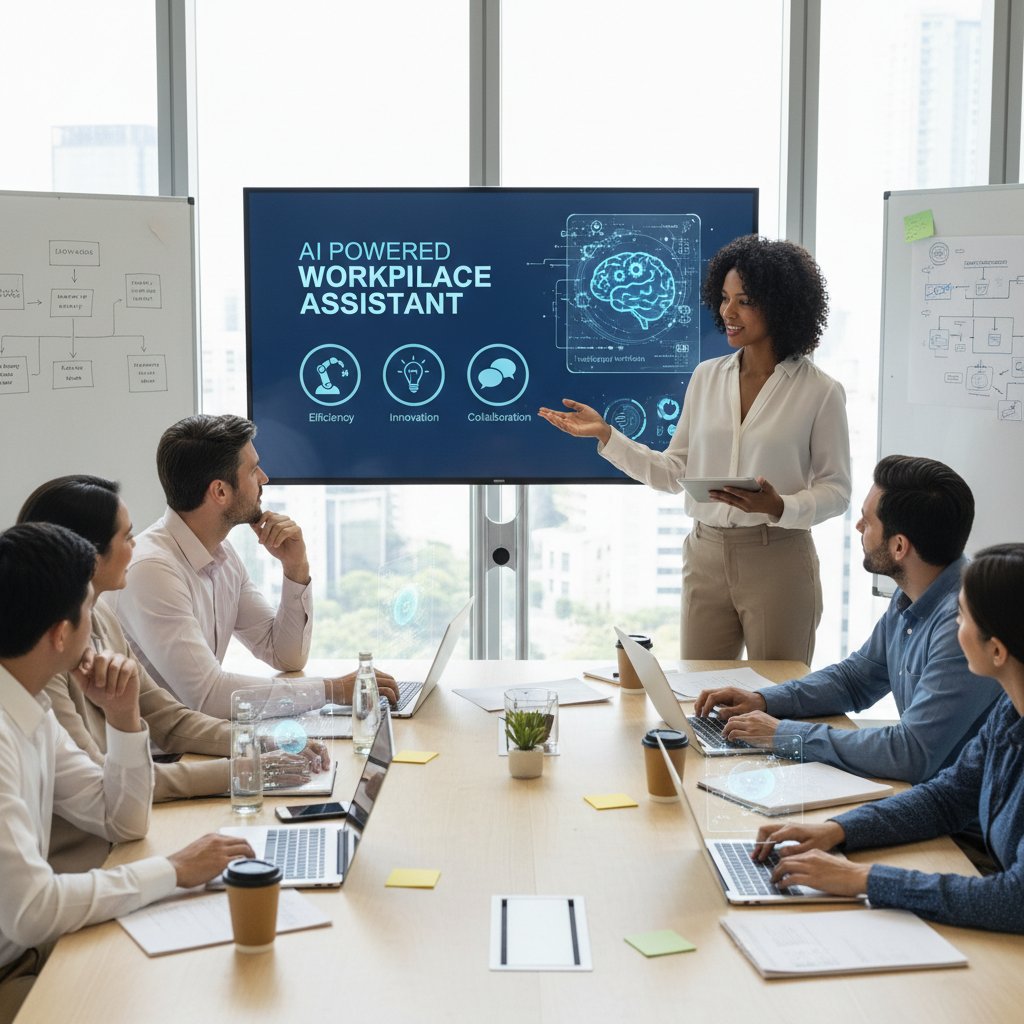
Before unleashing your AI powered enterprise workplace assistant, assess your team’s appetite for change. Are they drowning in manual processes? Frustrated by email overload? Or is there skepticism in the air? Securing stakeholder buy-in is about more than a killer demo—it’s about addressing fears head-on and co-creating the vision.
Step-by-step guide to integration
- Assess current workflows and pain points
- Define clear objectives and KPIs
- Engage stakeholders and champions
- Select the best-fit AI assistant
- Clean and structure your data
- Pilot with a small, motivated team
- Collect feedback and iterate rapidly
- Expand rollout in phases
- Implement ongoing training and support
- Continuously monitor, evaluate, and refine
Feedback loops aren’t just for AI—they’re for humans, too. Share wins, acknowledge setbacks, and evolve your approach. Peer learning communities and ongoing education drive sustained success.
Training humans and algorithms: The overlooked frontier
AI learns best from humans who are invested and curious. Effective onboarding blends hands-on demos with real-world scenarios. Teams that encourage experimentation—celebrating both triumphs and (safe) mistakes—see faster adoption and better results.
“The best AI teammate is the one that learns from you.” — Alex, HR director
The future of AI-powered workplace collaboration: What’s next?
Emerging trends and technologies
AI-powered enterprise workplace assistants are evolving at breakneck speed. In 2025, expect assistants to become even more emotion-aware, flagging not just tasks but team mood and morale. Proactive task management will anticipate roadblocks before they happen, nudging teams toward smarter decisions—without overwhelming alerts.

Will AI redefine the power dynamics at work?
The real wildcard isn’t just productivity—it’s politics. Who makes the decisions when the assistant’s recommendations conflict with a manager’s gut? Ethical challenges around transparency, explainability, and digital trust loom large. The relationship between humans and digital teammates is evolving, demanding constant negotiation and clear boundaries.
Preparing for the unexpected
If disruption is the new normal, resilience is the only strategy that matters. Build in flexibility, not just for your AI, but for your people.
- Document processes and update regularly: Keeps both AI and humans aligned.
- Invest in ongoing staff education: Skills decay faster than you think.
- Establish robust feedback loops: Continuous improvement, not just compliance.
- Support psychological safety: Mistakes should teach, not terrorize.
- Monitor for bias and fairness: Regularly audit both outcomes and algorithms.
The age of AI-powered enterprise workplace assistants rewards the bold. Don’t wait for the dust to settle—lead the change.
Conclusion: Are you ready to let an algorithm into your workflow?
The curtain has been pulled back. AI-powered enterprise workplace assistants are not just another tech fad—they are a seismic shift in how organizations collaborate, communicate, and compete. They rescue hours from inbox oblivion, surface insights humans might miss, and turn chaos into clarity. But the real story isn’t about the algorithms—it’s about us. Success belongs to teams willing to embrace, question, and shape their digital coworkers. Are you ready to let an algorithm into your workflow, not as a replacement but as a partner? The future isn’t coming—it’s already camped out in your inbox.
Sources
References cited in this article
- AI in the Workplace Statistics 2023 to 2033 – Whatsthebigdata.com(whatsthebigdata.com)
- AIPRM: AI in the Workplace Statistics 2024(aiprm.com)
- PwC AI Market Report 2024(softwareoasis.com)
- Trimbox: AI-Based Email Organizers for 2024(trimbox.io)
- Mashable: Google I/O 2024 AI Teammate(mashable.com)
- Forbes: AI and Workplace Communication(forbes.com)
- VentureBeat: AI in 2024—Collaboration, Vision, and Crisis(venturebeat.com)
- Frontiers: AI Adoption in the Workplace(frontiersin.org)
- Built In: 3 Ways AI Will Change the Workplace in 2024(builtin.com)
- Forbes: AI in the Workplace(forbes.com)
- ZDNet: AI-powered Virtual Assistants and the Future of Work(zdnet.com)
- Intellias: AI-powered Digital Employee Assistants(intellias.com)
- Deqode: NLP Trends in 2024(deqode.com)
- n8n: AI Workflow Automation Guide(blog.n8n.io)
- Visual Capitalist: Debunking 8 Myths About AI in the Workplace(visualcapitalist.com)
- Forbes: Debunking AI Myths(forbes.com)
- Reworked: The Impact of AI on the Future of Work(reworked.co)
- Microsoft WorkLab: 11 Unexpected AI-at-Work Insights from 2024(microsoft.com)
- Salesforce: Human-AI Collaboration(salesforce.com)
- Forbes: Human-AI Collaboration(forbes.com)
- Analytics Vidhya: Top 9 AI Controversies of 2024(analyticsvidhya.com)
- KPMG Canada: Impacts of AI in the Workplace(kpmg.com)
- The Guardian: Preparing the Workforce for AI(theguardian.com)
- Dashworks: 2024 AI Enterprise Search Criteria(dashworks.ai)
- Automation Anywhere: AI Agent Solution Evaluation(automationanywhere.com)
- BizTech: AI Virtual Assistants Will Transform Enterprises(biztechmagazine.com)
- GoSearch: Why Your Company Needs an AI Work Assistant in 2025(gosearch.ai)
- Whiteford Taylor & Preston: Legal Pitfalls in Workplace AI(whitefordlaw.com)
- Forbes: Challenges of Adopting AI in Business(forbes.com)
- MeBeBot: HR Service Delivery Experience Powered by AI(mebebot.com)
- Artkai.io: Roadmap to Integrate AI into Enterprise Apps(artkai.io)
- HubSpot: AI Adoption Playbook(hubspot.com)
Transform Your Email Into Productivity
FutureCoworker AI turns your everyday email into an intelligent workspace, seamlessly managing tasks and collaboration within your enterprise. It eliminates the complexity of AI, allowing you to benefit from advanced technology without any technical knowledge. Achieve productivity, streamline processes, and improve team efficiency through natural email interaction, getting tasks done faster and smarter.
Get startedReady to Transform Your Email?
Start automating your tasks and boost productivity today
Frequently Asked Questions
What percentage of employees now use AI tools at work?
According to Microsoft's 2024 workplace data, 75% of employees now use AI tools at work, representing a 72% adoption jump that marks the sharpest spike in five years.
How much time do teams spend managing emails according to the article?
Teams spend up to 28% of their workweek managing emails, which the article describes as both inefficient and unsustainable.
What is the key difference between AI-powered enterprise workplace assistants and legacy automation tools?
Legacy tools followed rigid rules for filtering and forwarding, while today's AI-powered assistants learn context, read tone, and anticipate needs by interpreting intent rather than just processing commands.
What examples of AI-powered enterprise workplace assistants are mentioned in the article?
The article mentions Microsoft Copilot and Google Gemini as examples of modern AI-powered assistants found in enterprise environments.
Continue Reading
Keep exploring Intelligent enterprise teammate

How AI-Powered Enterprise Communication Assistants Reshape Workplace Collaboration
AI-powered enterprise communication assistants are reshaping workplace collaboration. This article examines how these tools change team dynamics, automate communication, and the implications for modern work.

AI-Powered Digital Workplace: Collaboration or Control?
The AI-powered digital workplace is reshaping how teams collaborate and work. This article examines the real benefits, genuine pitfalls, and practical realities of integrating AI into daily work.

How AI-Driven Workplace Assistants Are Reshaping Enterprise Teamwork
AI-driven workplace assistants reshape enterprise teamwork by automating inbox management. This article examines their documented benefits, limitations, and impact on team collaboration.

Enterprise AI-Driven Digital Assistant: Coworker, Rival or Risk?
Discover insights about enterprise AI-driven digital assistant

What Enterprise AI Enabled Assistants Actually Change at Work
Enterprise AI enabled assistant systems are embedding themselves into corporate workflows. This article examines how they reshape work, the hidden contradictions in their promise, and their actual impact.

What AI-Driven Enterprise Management Assistants Mean for Work
An AI-driven enterprise management assistant is reshaping workplace dynamics. This article examines what these intelligent tools actually do and how they change work.