


Enterprise AI-Powered Communication: Teammate, Risk, Advantage
Written with AI assistance under our editorial guidelines
Enterprise AI-powered communication tools are reshaping how teams collaborate by automating message sorting, scheduling, and reminders. While these intelligent assistants offer efficiency gains and competitive advantages, they also introduce risks to workplace dynamics, including potential security concerns and shifts in human decision-making authority. Organizations must carefully navigate both the opportunities and challenges this technology presents.
Every revolution starts quietly. In offices around the world, a silent insurgency is reshaping how teams operate—not with raucous fanfare, but with the muted click of a send button. Enterprise AI-powered communication isn’t just another buzzword or a feature to tick off on your digital transformation checklist. It’s a seismic shift that cracks open the foundations of teamwork, leadership, and the very nature of what it means to work together. This article isn’t about the hype. It’s about the truths that the hype tries to hide: the risks, the real rewards, and the raw, sometimes uncomfortable, impact that artificial intelligence is having on workplace communication. Whether you’re a skeptical manager, an overwhelmed team leader, or just someone whose inbox is starting to feel a little too clever, read on. The future of work is already here—and it’s writing, sorting, and sometimes even thinking for you.
The silent revolution: how AI slipped into your inbox
From memos to machine minds: a brief history
The evolution of enterprise communication is a story of relentless disruption. In the early days, communication meant handwritten memos circulated in battered manila folders, each one a minor event that demanded your attention. Then came email, shattering the old hierarchies and giving everyone a digital voice. The rise of chat platforms like Slack and Teams turned office communication into a constant, noisy stream. And now, quietly but inexorably, AI-powered assistants have slipped into our digital channels. They parse our words, automate our schedules, and surface reminders before we even realize we’re forgetting something.

Each innovation hasn’t just changed the tools—it’s rewritten the unwritten rules of office life. Hierarchies shift, gatekeepers vanish, and the speed of work accelerates. According to a comprehensive report from North Star Communications, 2024, this most recent leap—toward AI-powered communication—has fundamentally altered how teams collaborate and compete.
"Every leap in communication tech rewrites the rules of teamwork." — Jamie
It’s easy to romanticize the past, but each new technology has pushed teams to adapt, resist, or risk obsolescence. Now, with AI, we’re not just sending messages. We’re training, collaborating with, and sometimes even deferring to machine minds.
Why enterprise AI communication exploded after 2023
So why did AI-powered communication shift from niche novelty to boardroom mandate after 2023? The answer, in a word: pressure. Remote work went from exception to rule, chronic burnout soared, and cost-conscious executives hunted for productivity gains wherever they could find them. The technology itself finally caught up—powerful language models and generative AI became available as plug-and-play services, not just R&D toys.
| Year | Milestone | Impact on Enterprise Communication |
|---|---|---|
| 2010 | AI-based spam filtering becomes mainstream | Minor automation, limited intelligence |
| 2017 | NLP chatbots introduced in customer support | Early AI pilot programs in enterprises |
| 2020 | Pandemic accelerates digital transformation | Surge in digital comms, Zoom, Teams |
| 2023 | Generative AI goes enterprise-ready | AI pilots expand, cost and burnout rise |
| 2024 | AI-led processes outpace manual workflows | 2.5x higher revenue growth, 2.4x productivity (Accenture) |
Table 1: Timeline of enterprise AI-powered communication milestones. Source: Original analysis based on North Star Communications, 2024, Deloitte, 2024, Accenture, 2024.
The pandemic didn’t just accelerate digital transformation—it obliterated any remaining resistance. Suddenly, teams couldn’t rely on hallway chats or “management by walking around.” AI tools filled the vacuum, automating the mundane, nudging follow-ups, and even flagging emotional tone in emails.
But the transition hasn’t always been smooth. User confusion is rampant. Employees are bombarded by promises of “AI-powered” everything, but few understand what the technology is actually doing behind the scenes. According to Menlo Ventures’ 2024 report, 93% of communicators now see AI as a critical skill, but only a fraction can explain how AI shapes their day-to-day workflow (Menlo Ventures, 2024). The gap between AI’s promise and its perceived reality is both a risk and an opportunity.
The promise and the panic: what leaders get wrong
Boardroom optimism about enterprise AI-powered communication runs high. Executives tout AI teammates as the solution to overloaded teams and spiraling operational costs. But for many employees, the arrival of AI isn’t a relief—it’s a source of anxiety. They fear being replaced, sidelined, or judged by inscrutable algorithms.
- Myth: AI will replace all manual work.
In reality, AI excels at repetitive tasks but still struggles with context, nuance, and the “human touch” that often matters most. - Myth: AI learns perfectly from our data.
Training bias and bad data can lead to embarrassing (or dangerous) errors. - Myth: AI-powered tools are plug-and-play.
Successful adoption requires strategic integration—not just a switch flip. - Myth: AI makes unbiased decisions.
Multiple studies have shown algorithmic bias can reinforce existing workplace inequalities. - Myth: Employee resistance is irrational.
Skepticism often masks valid concerns about transparency, privacy, or job stability. - Myth: More automation is always better.
Over-automation can introduce new inefficiencies and errors that go undetected.
The emotional impact can’t be dismissed. Fear of replacement tangles with a genuine hope that AI might finally relieve workers of the dull, soul-sapping tasks that clog their calendars. The truth is more complicated—and far more interesting.
Breaking the hype: what enterprise AI-powered communication really does
Decoding the tech: what’s under the hood?
For all the marketing noise, the nuts and bolts of AI-powered communication are deceptively simple—and devilishly complex. At its core, AI parses incoming emails or chat messages, extracts intent, and applies a set of algorithms to automate responses, suggest follow-ups, or organize information. But “parsing” isn’t just keyword matching; advanced systems deploy natural language processing to read context, infer urgency, and even flag sentiment.
Key AI terms every enterprise communicator should know:
The “reading comprehension” engine for AI, allowing it to understand and manipulate human language in context.
Identifies what the sender wants, such as a request for approval, a meeting, or information, enabling smart automation.
Spots important information—names, dates, topics—within an email, surfacing key details without human scanning.
Produces novel responses or summaries based on the context, as opposed to selecting from pre-set templates.
AI’s ability to track ongoing conversations and adapt replies or reminders based on the history of interactions.
Systems that evolve over time, learning from user corrections and team-specific workflows for better accuracy.
Rule-based automation, the old guard, relies on pre-set triggers—“If subject includes ‘invoice’, move to finance folder.” Adaptive AI, by contrast, learns from patterns, corrects itself, and delivers smarter, more relevant outcomes. This flexibility is what makes tools like futurecoworker.ai so much more than glorified spam filters.

Beyond chatbots: AI as your invisible teammate
Forget the glorified FAQ bots of a decade ago. Modern enterprise AI is context-aware, proactive, and quietly, almost invisibly, embedded into daily workflows. Instead of waiting for your command, these AI coworkers anticipate needs, surface things you forgot, and nudge your attention at exactly the right moment. They don’t just answer questions—they make recommendations, schedule follow-ups, and resolve conflicts before you even notice them brewing.
The shift is subtle but seismic: AI is moving from being just a tool to becoming an autonomous teammate. It adapts, learns, and—crucially—makes decisions. Teams that embrace this model often experience higher productivity and less burnout, as the cognitive load of managing communication gets offloaded to a digital partner.
"The best AI coworker is the one you barely notice—but can’t work without." — Alex
This isn’t just theoretical. According to Deloitte’s 2024 State of Generative AI report, enterprises deploying AI as an active teammate see ROI accelerate when AI augments, rather than simply replaces, human workflows (Deloitte, 2024).
What AI can (and can’t) fix in your team’s workflow
Let’s cut through the hype. AI-powered communication shines brightest when it tackles the bottlenecks that frustrate everyone:
- Information overload:
AI sifts through mountains of messages, highlighting what actually matters. - Missed tasks:
Automatic tracking and reminders ensure nothing slips through the cracks. - Follow-up fatigue:
Proactive nudging and drafting save teams from endless manual chasing. - Inefficient meeting scheduling:
AI coordinates calendars and handles the back-and-forth, reducing hassle. - Email triage:
Messages are sorted by context and urgency, not just time of arrival. - Redundant communication:
AI summarizes threads, so teams don’t have to reread endless replies. - Decision paralysis:
Key insights are surfaced, making fast, informed choices possible.
But over-automation brings new dangers. When AI gets it wrong—misreading context, making faulty assumptions—the results can be costly or embarrassing. Human judgment is still essential: the best systems keep people “in the loop,” letting AI handle grunt work while humans focus on nuance, ethics, and creativity.
Inside the machine: how AI-powered communication systems really work
The anatomy of an AI-powered email coworker
At the heart of every enterprise AI-powered communication system is an architecture designed for speed, security, and adaptability. The process typically unfolds like this: data ingestion (emails, chats, meeting invites), pre-processing (cleaning and parsing), AI-driven analysis (intent detection, entity extraction), decision-making (prioritizing, drafting responses), and finally, delivery (sending or surfacing information to the user).
| System Feature | Manual Communication | Traditional Tools | AI-powered Email Coworker (e.g., futurecoworker.ai) |
|---|---|---|---|
| Task Automation | None | Limited | Advanced, context-aware |
| Real-time Collaboration | Delayed | Partial | Seamless, proactive |
| Intelligent Summaries | Manual | Manual | Automatic, AI-driven |
| Meeting Scheduling | Manual | Partial | Fully automated, context-aware |
| Email Overload Management | User-managed | Basic filters | AI-driven prioritization |
| Privacy & Compliance | User-dependent | Basic protocols | Encrypted, auditable, customizable |
Table 2: Feature comparison across communication models. Source: Original analysis based on North Star Communications, 2024 and verified product documentation.
Privacy and compliance aren’t afterthoughts—they’re baked into the system. Enterprise-grade AI platforms encrypt sensitive data, offer granular access controls, and log decisions for audit trails. As regulatory scrutiny intensifies, these features are non-negotiable.
Who’s in control? Transparency, bias, and the black box problem
But with great complexity comes opacity. Some AI-powered communication tools operate as “black boxes,” making decisions that even their creators can’t easily explain. This lack of transparency raises red flags:
- Decisions with no audit trail: Impossible to review or contest.
- Opaque algorithms: Team members can’t understand how priorities are set.
- Hidden biases: AI can perpetuate or amplify workplace inequalities.
- Lack of user feedback loops: Errors go uncorrected, bias unchallenged.
- Data leakage risks: Sensitive information can be mishandled without transparency.
- Overconfidence in outputs: Users trust AI even when it’s wrong.
- Inadequate compliance controls: Regulatory violations can occur unnoticed.
Recent controversies—ranging from AI “ghostwriting” inappropriate replies to selective information hiding—underscore the stakes. According to the Deloitte State of Generative AI, organizations must demand explainability and accountability from their AI vendors.
Debunking the automation myth: humans still matter
“Full automation” is a fantasy, not a roadmap. The best AI systems augment human judgment; they don’t replace it. AI is fantastic at catching what people miss—typos, missed follow-ups, even shifts in tone—but it can’t parse office politics, read between the lines, or understand context beyond raw data.
"AI isn’t here to replace us, but to catch what we miss." — Morgan
Hybrid models—where AI and humans work in tandem—are quickly becoming the standard. Humans make high-stakes decisions, set terms, and course-correct. AI handles the grunt work, freeing up time for what actually matters. Ignore this balance, and both productivity and morale will suffer.
Current state of play: who’s winning (and who’s losing) in the AI-powered office
Sectors leading the charge—and the skeptics lagging behind
Not all industries have jumped on the AI bandwagon equally. Finance, technology, and customer support are the pioneers, fueled by high message volume, regulatory pressure, and direct links to the bottom line. Marketing teams and project management offices are close behind, drawn by the promise of faster turnaround and better alignment.
| Industry | Adoption Rate (2024) | Satisfaction | Top Benefits | Common Challenges |
|---|---|---|---|---|
| Finance | 78% | High | Productivity, compliance | Data privacy, bias |
| Technology | 84% | Very high | Speed, innovation | Integration, over-automation |
| Customer Support | 73% | Moderate | Reduced workload, faster replies | Language limitations |
| Marketing | 66% | High | Campaign speed, client satisfaction | Content accuracy |
| Healthcare | 43% | Mixed | Appointment management | Privacy, compliance |
| Education | 32% | Low | Information sharing | Cultural resistance |
| Government | 28% | Low | Administrative efficiency | Data security, legacy tech |
Table 3: Industry comparison of AI-powered communication adoption. Source: Original analysis based on Menlo Ventures, 2024, North Star Communications, 2024.
Adoption is slower in healthcare, education, and government. Caution here is warranted: privacy, compliance, and cultural inertia are formidable obstacles.

The productivity paradox: more messages, less meaning?
But there’s a dark side. As AI makes it easier to generate, summarize, and respond to messages, the sheer volume of communication can spiral out of control. AI-generated messages can flood inboxes with noise, diluting meaning and sapping attention.
AI fatigue is real. Teams report feeling overwhelmed not just by the quantity of messages, but by the subtle pressure to “keep up” with ever-faster, AI-driven workflows. According to North Star Communications, 2024, over 60% of employees say that AI has increased the pace—but not always the quality—of their team’s output.
- You’re seeing endless “smart” notifications—many of which are irrelevant.
- Team members ignore AI-generated summaries because they lack context.
- Important messages get buried under a flood of automated replies.
- Resistance to new tools increases as change fatigue sets in.
- Critical errors go unnoticed because AI “hid” or misclassified them.
If these symptoms sound familiar, your organization may be suffering from AI comms overload. The fix? Strategic curation, clear guidelines, and regular audits to ensure AI augments—rather than overwhelms—meaningful communication.
Hidden winners: unsung roles transformed by AI teammates
While executives and power users hog the headlines, the real heroes of the AI-powered office are often in overlooked roles. Project coordinators, HR reps, and administrative staff are quietly empowered by AI tools that automate the repetitive, amplify their judgment, and surface insights they’d otherwise miss.
There’s a democratizing effect, too. Non-technical employees—often left out of digital transformation initiatives—are now leading the charge, armed with AI-enhanced skills that make them indispensable to their teams.
Case files: real-world enterprise teams before and after AI-powered communication
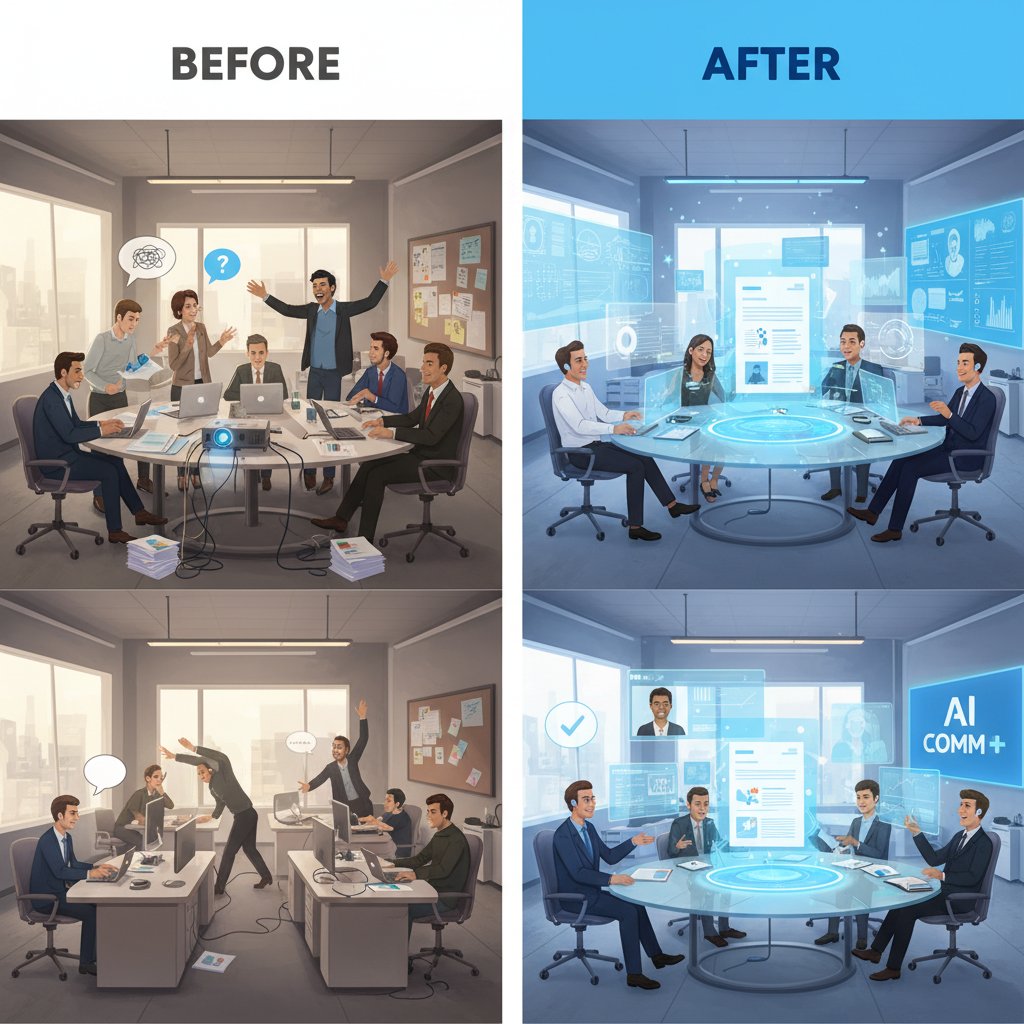
A day in the life: with and without an AI coworker
Picture this: an overworked project team drowning in email. Deadlines missed, messages lost in the noise, and everyone feeling like the treadmill never slows down. Stress simmers just below the surface; burnout is a constant specter.
Now, flip the script. With an AI-powered coworker, routine emails are automatically triaged, follow-ups scheduled, and key points summarized. The team spends more time solving problems and less time chasing their own tails. The emotional climate shifts—there’s more focus, less stress, and even space for a little creativity.
The futurecoworker.ai story: lessons from the front lines
One enterprise team implemented futurecoworker.ai not to become “AI experts,” but to get their nights and weekends back. They didn’t need technical training—just a willingness to let AI handle the flood of administrative tasks. Within weeks, response times improved, missed tasks dropped by 40%, and morale ticked upward. According to anonymized results, the biggest win wasn’t speed, but relief: less time spent firefighting, more time spent on meaningful work.
"I didn’t need to learn AI—I just got my evenings back." — Taylor
Unexpected outcomes: what nobody predicted
AI-powered communication tools don’t just change workflows—they surface hidden team dynamics. Suddenly, passive-aggressive language is flagged. Compliance headaches bubble up in new forms as the system logs everything, sometimes more transparently than humans would prefer. Teams have discovered unconventional uses:
- AI for conflict detection: Surfacing simmering disputes before they explode.
- Compliance auditing: Automatic logging and flagging for regulatory reviews.
- Emotional tone monitoring: Preventing miscommunication and misunderstandings.
- Accessibility enhancements: Auto-translating and transcribing meetings for inclusion.
- Knowledge management: Surfacing forgotten insights from old email threads.
- Organizational network analysis: Mapping informal influence patterns for leadership development.
Teams that adapt do more than automate—they evolve, breaking old habits and building new, AI-infused workflows.
The dark side: risks, failures, and how to avoid them
Privacy, surveillance, and the trust gap
Let’s be blunt: giving AI access to team communication raises profound privacy concerns. Employees worry about being surveilled by algorithms that read every word and log every decision. Data privacy incidents have already surfaced, with AI tools inadvertently storing or exposing sensitive information.

When trust is broken—through leaks, overreach, or unexplained decisions—repair is slow and painful. Organizations must prioritize transparent data handling, regular audits, and clear opt-in/opt-out options for employees.
When the machine gets it wrong: AI blunders that cost real money
No system is perfect. When AI misinterprets a message or makes a wrong call, the damage can be more than embarrassing—it can be costly.
- AI misroutes a critical contract renewal email, leading to lost revenue.
- Automated meeting invites double-book C-suite executives, causing chaos.
- Sensitive HR complaints are “summarized” and inadvertently shared with the wrong people.
- AI-generated replies misrepresent company policy, triggering PR fallout.
- Algorithmic bias flags innocent messages as “toxic,” damaging morale.
Each failure teaches a lesson: monitor outputs, build in failsafes, and never let AI run unsupervised. Layered review processes and human-in-the-loop design are non-negotiable, especially in regulated industries.
Building resilience: how smart teams mitigate AI risks
Best practices aren’t just optional—they’re survival mechanisms.
Priority checklist for responsible AI-powered communication implementation:
- Conduct regular algorithm audits for fairness and accuracy.
- Establish clear escalation paths for flagged issues.
- Train users on AI capabilities and limitations.
- Offer opt-out or override options for sensitive content.
- Encrypt all sensitive data both in transit and at rest.
- Log all AI decisions for compliance and review.
- Involve cross-functional teams in tool selection.
- Continuously update policies as regulations evolve.
Ongoing training and adaptation are essential. The speed of change means yesterday’s best practices can quickly become today’s vulnerabilities.
How to actually make AI-powered communication work for your team
Assessing your AI readiness: questions to ask before you start
Before you hand over your team’s communication to an AI-powered coworker, it’s time for a brutal self-assessment. Are you ready for the trade-offs as well as the gains?
Is your team ready for an AI-powered teammate?
- Do we have clear policies for data privacy and security?
- Have we mapped out which workflows actually need automation?
- Are employees trained on both the benefits and risks of AI tools?
- Is leadership aligned on goals beyond just “cost savings”?
- Can we support ongoing training and system updates?
- Is there a process for reporting and correcting AI errors?
- Are we willing to adapt workflows, not just bolt on new tech?
Cultural readiness is as critical as technical readiness. Without buy-in—from the C-suite to the front line—AI initiatives stall or backfire.
Step-by-step: implementing an AI-powered email coworker
Rolling out AI-powered communication can’t be rushed. Here’s how to do it right:
- Define clear goals for what you want AI to achieve.
- Map your existing workflows—identify pain points and bottlenecks.
- Select a pilot group to test the AI coworker in a controlled setting.
- Integrate with existing systems for seamless adoption.
- Educate your team on how the AI works and what to expect.
- Monitor performance closely in the pilot phase.
- Collect and act on feedback—iterate quickly.
- Scale gradually, expanding to new teams as confidence grows.
- Establish regular audits for compliance and performance.
- Continuously improve—update policies, retrain models, and support users.
Success isn’t measured just in speed or cost savings. Track improvements in team morale, reduction in error rates, and the ability to focus on high-value work.
Pitfalls to avoid: lessons from failed rollouts
Common mistakes are as predictable as they are painful:
- Rushing deployment without adequate training or feedback loops.
- Ignoring end-user resistance—leading to shadow IT or tool abandonment.
- Overpromising results that AI can’t deliver.
- Underestimating integration complexity with legacy systems.
- Failing to audit for bias and fairness.
- Neglecting data privacy requirements—inviting regulatory trouble.
- Failing to budget for ongoing maintenance and retraining.
Practical advice? Move slow, listen to users, and remember: AI is a means, not an end. Treat it as a teammate, not a magic fix.
What’s next: the future of AI-powered communication in the enterprise
Emerging trends: what will matter in the next 5 years?
Even as AI integration becomes routine, certain trends are reshaping the very definition of enterprise communication: contextual awareness, emotion detection, and seamless integration across every platform you touch.
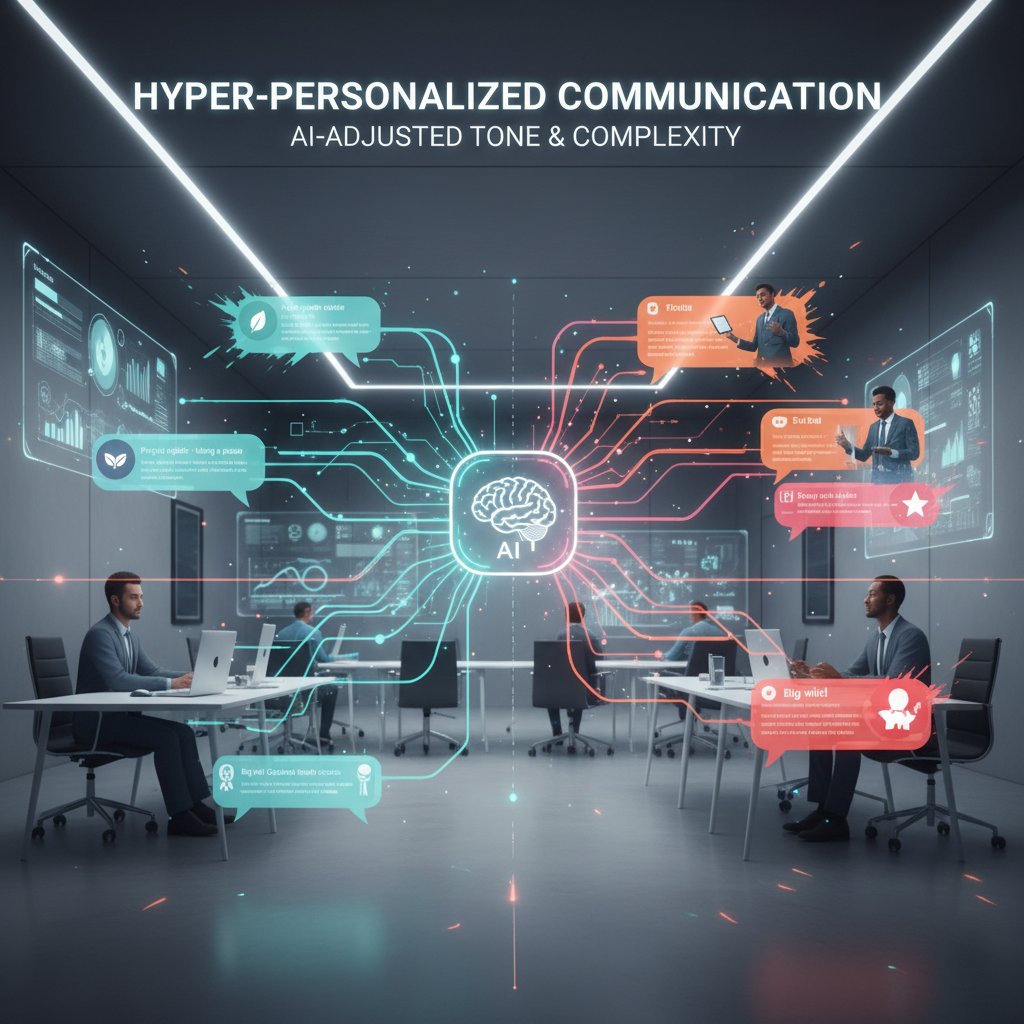
As AI literacy becomes a baseline skill, employees who can “speak AI”—understanding both the strengths and the limits—are quickly becoming indispensable.
Will AI-powered communication make us better—or just busier?
Here’s the paradox: AI is supposed to free us for deeper, more meaningful work, but there’s a real risk that it just gives us new chains—more messages, more processes, more pressure to keep up. The effect on workplace politics and power dynamics is still being mapped, but one thing is sure: the tools we choose shape not just what we say, but who gets heard.
"We thought AI would free us—turns out, it just gave us new chains." — Sam
The challenge isn’t technological—it’s human. Will we use AI to amplify our best instincts or just to turbocharge the status quo?
How to stay ahead: building an adaptable, human-first enterprise
The most resilient organizations are already looking beyond the tool du jour to build future-proof cultures.
Future-facing concepts:
Not just co-existence, but true partnership—AI does what it does best, humans steer the ship.
Systems built with guardrails—fairness checks, transparency, and genuine respect for rights.
Employees and AI both evolve—ongoing training, honest feedback, and real accountability.
Processes that adapt as new tech emerges, rather than locking teams into rigid routines.
Being intentional about tool use, avoiding the “always on” trap, and reclaiming human focus.
The final challenge? Rethink our relationship with technology—not as a silver bullet, but as a partner whose value depends on our vigilance and vision.
Glossary: decoding the jargon of AI-powered communication
Essential terms and what they really mean for your team
Understanding the jargon isn’t just for the IT crowd. It’s crucial for adoption, trust, and making informed choices.
Algorithms that allow AI to “read” human language, making sense of context, tone, and nuance.
The self-improving foundation of AI—systems learn from data to improve over time.
The process of figuring out what a message sender wants (e.g., schedule a meeting, escalate an issue).
AI’s way of highlighting names, dates, and other critical info in your messages.
Models that can create new text, summaries, or replies that weren’t pre-programmed.
Tools that “read between the lines” to detect emotions or mood in employee communications.
Algorithms whose decision-making processes are opaque—even to their creators.
Techniques for preventing AI from repeating harmful social or organizational biases.
Design that keeps people in charge, letting humans review or override AI decisions.
The principle that users should be able to understand how AI systems reach their conclusions.
Conclusion
Enterprise AI-powered communication isn’t coming—it’s here, and it’s already rewriting the rules of work. The truth is messy, risk-laden, and exhilarating: AI will never be a perfect teammate, but it’s already an indispensable one. As research from North Star Communications, 2024 and Deloitte, 2024 makes clear, teams that can harness the power of AI—without falling for its myths—stand to win big in productivity, morale, and resilience.
The challenge isn’t whether to adopt AI-powered communication, but how to do it wisely: with transparency, vigilance, and a relentless focus on what matters most—human ingenuity. Whether you’re using futurecoworker.ai or another platform, the rewards go to those who adapt, who question, and who build cultures that are human-first, AI-smart. The time to act is now. Your next message might just change everything.
Sources
References cited in this article
- North Star Communications 2024 Report(northstarcomms.com)
- Menlo Ventures 2024(menlovc.com)
- Deloitte State of Generative AI(www2.deloitte.com)
- Accenture Newsroom(newsroom.accenture.com)
- Forbes: Quiet Revolution(forbes.com)
- McKinsey AI Survey(mckinsey.com)
- datamundi.ai Case Study(datamundi.ai)
- Grandview Research(grandviewresearch.com)
- Precedence Research(precedenceresearch.com)
- SNS Insider(snsinsider.com)
- Gartner Hype Cycle(gartner.com)
- EXL 2024 Study(exlservice.com)
- Restackio Case Studies(restack.io)
- Skim AI Enterprise AI Stats(skimai.com)
- Microsoft WorkLab(microsoft.com)
- Forbes: Customer Communication & AI(forbes.com)
- Microsoft Dynamics 365 Blog(microsoft.com)
- No Jitter: Enterprise Connect AI 2024(nojitter.com)
- Pew Research AI Views(pewresearch.org)
- TheWord360: Transparency Issues(theword360.com)
- ScienceDaily: Medical AI Bias(sciencedaily.com)
- Microsoft IDC AI Study(blogs.microsoft.com)
- SEMrush AI Stats(semrush.com)
- TechTarget: Lagging Sectors(techtarget.com)
- Forbes: Leading Sectors(forbes.com)
- VentionTeams: Adoption Stats(ventionteams.com)
- AEI: Productivity Paradox(aei.org)
- NBER: Productivity Paradox(ideas.repec.org)
- AIPRM: Workplace Stats(aiprm.com)
- Mercer: HR Roles(mercer.com)
- SmartRecruiters: AI in Recruitment(smartrecruiters.com)
- BCG Enterprise Case Studies(generativeaienterprise.ai)
- Google Cloud: Real-World AI Use Cases(cloud.google.com)
- BBC Worklife(bbc.com)
- Forbes: Meet Your Newest Co-Worker, AI(forbes.com)
- Datanami: Frontline Work(datanami.com)
- National Academies: Frontline AI(nationalacademies.org)
- Gartner: AI Risks(gartner.com)
- CIO: AI Disasters(cio.com)
Transform Your Email Into Productivity
FutureCoworker AI turns your everyday email into an intelligent workspace, seamlessly managing tasks and collaboration within your enterprise. It eliminates the complexity of AI, allowing you to benefit from advanced technology without any technical knowledge. Achieve productivity, streamline processes, and improve team efficiency through natural email interaction, getting tasks done faster and smarter.
Get startedReady to Transform Your Email?
Start automating your tasks and boost productivity today
Frequently Asked Questions
What is enterprise AI-powered communication?
Enterprise AI-powered communication refers to the integration of artificial intelligence into workplace communication systems, where AI assistants parse words, automate schedules, surface reminders, and help teams collaborate. It represents a fundamental shift in how teams operate and interact with each other, following the evolution from handwritten memos to email to chat platforms.
How has enterprise communication evolved over time?
Enterprise communication has evolved from handwritten memos in manila folders, to email which democratized digital communication, to chat platforms like Slack and Teams that created constant communication streams, and now to AI-powered assistants that automate and augment workplace interactions. Each innovation has shifted hierarchies, removed gatekeepers, and accelerated work speed.
What impact does AI-powered communication have on teamwork and leadership?
According to the article, AI-powered communication creates a seismic shift that cracks open the foundations of teamwork and leadership, reshaping how teams operate. The article emphasizes that this shift comes with both rewards and risks, though specific impacts on teamwork and leadership are presented as uncomfortable truths that extend beyond hype.
Is AI-powered communication a new trend or already implemented?
AI-powered communication is already implemented in enterprise settings. The article states that 'the future of work is already here,' with AI assistants quietly slipping into digital channels across offices worldwide, writing, sorting, and thinking alongside human workers.
Continue Reading
Keep exploring Intelligent enterprise teammate

Enterprise AI-Driven Communication Tools That Actually Work
Discover insights about enterprise AI-driven communication tools

Enterprise AI-Enabled Communication: How It Reshapes Work
Enterprise AI-enabled communication is reshaping workplace collaboration. This article examines how AI transforms enterprise communication, the productivity gains, and the organizational challenges it creates.

AI in Enterprise Communication: Benefits and Risks Explained
AI in enterprise communication is reconfiguring how messages are sent and received at work. This article examines both the benefits and risks of AI adoption in modern offices.

Enterprise AI-Powered Productivity Tools: Teammate or Threat?
Discover insights about enterprise AI-powered productivity management tools

Enterprise AI-Enabled Communication Assistant Software or Spy?
Discover insights about enterprise AI-enabled communication assistant software

What Enterprise AI Enabled Assistants Actually Change at Work
Enterprise AI enabled assistant systems are embedding themselves into corporate workflows. This article examines how they reshape work, the hidden contradictions in their promise, and their actual impact.