


Enterprise AI-Enabled Collaboration Management Without the Hype
Written with AI assistance under our editorial guidelines
Artificial intelligence is fundamentally transforming enterprise collaboration by moving beyond outdated email and calendar systems to create AI teammates that actively manage workflow. While traditional tools created chaos through endless meetings and scattered information, AI-enabled collaboration now addresses the core inefficiencies that plagued 91% of enterprises, though implementation requires navigating cultural shifts and genuine risks alongside productivity gains.
In 2025, the myth of the lone genius at work is finally running out of road. Instead, we’re neck-deep in a new reality: collaboration is the true engine of enterprise productivity, and artificial intelligence is now co-piloting the ship. The phrase “enterprise AI-enabled collaboration management” doesn’t exactly roll off the tongue, but it’s the seismic force shaking up boardrooms, emails, and Slack channels worldwide. Gone are the days when teaming up meant nothing more than endless reply-alls or clogging up calendars with meetings nobody wanted. Today, AI is not just a tool—it’s a teammate. This isn’t the future that sci-fi threatened; it’s the messy, electrifying present. But the story is far from a clean sweep of utopian efficiency. There are brutal truths, raw risks, stunning wins, and culture shocks that even the savviest teams never saw coming. If your team’s still stuck in email hell or you’re wondering what “AI-powered collaboration” actually means for your day-to-day grind, you’re in the right place. This is the unfiltered guide to what’s breaking, what’s working, and what you need to know before the next AI-generated meeting summary lands in your inbox.
The rise and stumbles of enterprise collaboration: from email hell to AI teammates
Why old-school collaboration broke down
Anyone who’s worked in a big organization knows the pain: endless email threads, half-baked calendar invites, project management apps multiplying like rabbits, and a creeping sense that no one’s really in control. Legacy collaboration tools, once lauded as productivity boosters, have too often become chaos engines. The friction of switching between platforms, hunting for attachments, and reconciling conflicting information has quietly eroded morale and wasted untold hours.

The hidden costs of these old systems aren’t just about wasted minutes—they’re about lost focus and missed opportunities. According to research from EXL (2024), over 91% of enterprises reported using some form of AI, largely because traditional tools simply couldn’t keep up with the speed and complexity of modern work. Teams found themselves drowning in digital noise, and the promise of “smart” collaboration tools often fell flat, offering automation that turned out to be little more than fancy auto-responses or inflexible templates.
"It felt like drowning in emails—until we tried something radical."
— Jamie, Enterprise Project Lead
For years, vendors pushed “collaboration platforms” as the antidote, but the core problem—fragmented workflows and information overload—remained stubbornly unsolved. The result? Burnout rose, and trust in digital transformation wavered.
How AI-enabled collaboration tools emerged
The breakthrough came not from adding more bells and whistles, but from a shift in philosophy: what if software could understand context, anticipate needs, and actually support decision-making? Artificial intelligence entered the scene, promising more than just automation—it offered true augmentation. Early AI-enabled tools started with modest goals: suggest meeting times, surface relevant files, summarize conversations. But as cloud computing matured, and natural language processing became more sophisticated, the possibilities exploded.
Early adopters rushed in, some dazzled by hype, others burned by half-baked implementations. There were spectacular wins—like insurers slashing underwriting time with AI-driven collaboration—but also ugly letdowns, as infrastructure and skill gaps exposed the limits of even the flashiest tools. According to Menlo Ventures (2024), enterprise spending on AI-powered collaboration surged to $13.8 billion, a sixfold increase over the prior year, showing both the appetite and the growing pains of adoption.
| Year | Tech Milestone | Impact on Collaboration |
|---|---|---|
| 2010 | Widespread adoption of cloud email | Remote team communication explodes |
| 2015 | Real-time messaging (Slack, Teams) | Faster, more informal collaboration |
| 2018 | Early “smart” automations | Basic scheduling and reminders |
| 2021 | AI-powered email parsing | Automated task extraction begins |
| 2024 | Integrated AI teammates | Context-aware, proactive decision support |
Table 1: Timeline of enterprise collaboration management evolution. Source: Original analysis based on EXL 2024, Menlo Ventures 2024, and industry reports.
As promising as AI-enabled collaboration was, legacy enterprise cultures weren’t always ready to embrace it. Resistance emerged, especially where “AI teammates” threatened established routines or blurred traditional boundaries of authority. For many, the arrival of AI was as much a cultural reckoning as a technical one.
What is an AI-enabled enterprise teammate—beyond the buzzwords
Defining the new digital coworker
“AI teammate.” “Digital coworker.” “Collaboration management AI.” The jargon is thick, but the reality can be surprisingly practical. In the enterprise world, an AI-enabled teammate is software that acts as an active participant in workflows: parsing emails, assigning tasks, summarizing discussions, and even nudging teams when deadlines loom. Unlike old-school bots or canned scripts, these tools learn from context—who’s involved, what’s urgent, and how your team actually works.
An intelligent software agent embedded in daily workflows, capable of parsing communications, managing tasks, and making context-aware recommendations. Example: FutureCoworker AI, which integrates with enterprise email to streamline collaboration.
The orchestration of tasks, communications, and resources to achieve team objectives. Modern iterations leverage AI to automate repetitive work and enhance decision-making.
A non-human team member—powered by AI—that interacts with humans through natural channels like email or chat, often “blending in” with regular team activity.
The distinction between an AI teammate and a basic chatbot is crucial. Chatbots answer queries; AI teammates proactively manage, prioritize, and even negotiate competing demands. Unlike workflow bots, which rigidly execute sequences, an AI teammate adapts to context and learns from feedback.

How AI collaboration management works today
At its core, modern AI collaboration management hinges on several technical feats: advanced natural language processing (NLP) to parse intent, contextual awareness to understand relationships and priorities, and autonomous task orchestration to keep work moving. The AI doesn’t just “read” your emails; it interprets them, assigns appropriate actions, and updates project status—all within the familiar space of your inbox.
AI fits seamlessly into the collaboration stack, connecting tools like email, calendars, and project trackers. But it doesn’t replace everything: nuanced negotiation, creative brainstorming, and sensitive conversations still belong to humans. As Priya, a product manager at a global tech firm, said:
"The best AI teammates disappear into your workflow, not your inbox."
— Priya, Product Manager
Integration isn’t always smooth sailing. Many teams encounter hiccups with data silos, conflicting app ecosystems, or gaps in AI training data. Workarounds include robust onboarding, pilot phases, and, crucially, a willingness to adapt processes—not just plug in new tech.
Debunking the top myths about AI-enabled enterprise collaboration
Myth 1: AI takes over jobs
The specter of automation-induced job loss still looms large in workplace debates. But reality paints a more complex picture: AI-enabled collaboration management is about augmentation, not wholesale replacement. According to McKinsey (2024), enterprises report higher productivity and job satisfaction when AI takes over drudge work—freeing humans for strategic and creative tasks.
What’s often overlooked is the emergence of new roles—AI trainers, collaboration architects, oversight specialists—that didn’t exist before. The real risk isn’t mass layoffs; it’s failing to reskill and adapt. The insurance sector, for example, now relies on AI-driven collaboration to streamline underwriting, cut errors, and boost revenue, not cut headcount.
- Hidden benefits of AI-enabled collaboration management experts won’t tell you:
- Enhanced inclusion: AI teammates can surface quieter voices by tracking participation across threads, leveling the playing field.
- Bias reduction: Properly trained AI can flag or neutralize patterns of bias in task assignment or meeting scheduling.
- Creative liberation: By automating routine sorting, teams can spend more time strategizing, inventing, and solving high-value problems.
- Real-time learning: AI teammates adapt to team quirks, improving over time without the fatigue that plagues human coworkers.
- Improved well-being: Reducing digital drudgery translates into less burnout and greater job satisfaction, as corroborated by EXL’s 2024 enterprise study.
Myth 2: Only tech giants can afford AI teammates
The democratization of AI has been one of the most disruptive forces in enterprise tech. Thanks to cloud-based platforms and services like futurecoworker.ai, even mid-sized firms and startups can access AI-powered collaboration without breaking the bank or hiring a battalion of data scientists. According to Menlo Ventures (2024), spending on these tools has increased sixfold, and cloud-driven solutions now dominate the market, holding over 45% market share.
The real driver of ROI isn’t just the size of the IT budget—it’s a willingness to reimagine processes. Cost structures typically scale with usage or team size, and the entry points for non-technical teams are expanding rapidly, with intuitive onboarding and low-code integrations.
| Company Size | % Using AI Collaboration (2025) | Typical Entry Point | Cost Structure |
|---|---|---|---|
| Large (1000+) | 94% | Enterprise platform rollouts | Subscription/per user |
| Mid-size (100–999) | 78% | Email or project integration | Per team/project |
| Small (<100) | 49% | Cloud-based email add-ons | Freemium/monthly |
Table 2: AI adoption in enterprise collaboration—2025 snapshot. Source: Original analysis based on Menlo Ventures 2024, EXL 2024.
Myth 3: AI teammates can’t be trusted with sensitive data
Data privacy and security remain the third rail of enterprise AI adoption. Skepticism isn’t unfounded; compliance failures can sink companies. But the state of the art in AI-enabled collaboration management is robust: end-to-end encryption, granular access controls, and audit trails are non-negotiable features. Security spending rose 15% in 2025, driven largely by the need to safeguard collaboration data (McKinsey, 2024).
"We grilled our vendor on privacy—and still signed."
— Sam, IT Director
Trust is earned through transparency and rigorous auditing. Leading vendors support regular third-party assessments, and teams are learning to scrutinize AI decisions as closely as those of human colleagues. The ability to audit, intervene, and “explain” AI actions is now table stakes.
Inside the black box: how enterprise AI-enabled collaboration really works
The anatomy of an intelligent enterprise teammate
Strip away the marketing, and a truly intelligent AI teammate is a fusion of several core technologies:
- Natural Language Processing (NLP): Parses intent and meaning from emails, chats, and documents—distinguishing “FYI” from “urgent.”
- Context Awareness: Recognizes who is involved, project priorities, and organizational nuance.
- Task Orchestration: Assigns, tracks, and reassigns work, nudging humans only when necessary.
- Continuous Learning: Adapts to team habits, feedback, and emerging workflows.
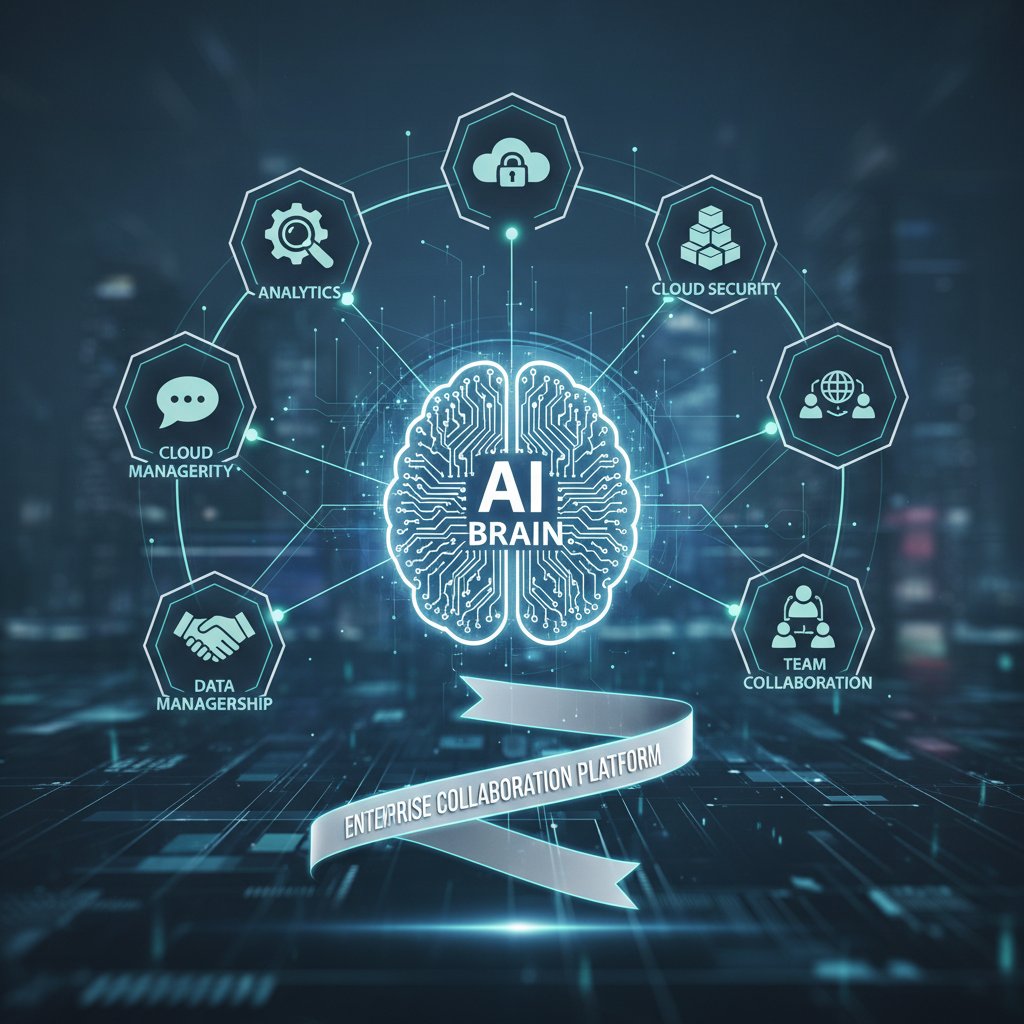
The system “learns” through reinforcement: positive feedback on accurate summaries, course corrections when it misreads tone, and ongoing exposure to evolving team patterns. The more it’s used, the smarter—and subtler—it becomes.
AI in the trenches: real-world workflow examples
Consider a finance team using AI-enabled collaboration management. Each morning, the AI parses a flood of overnight emails, extracts actionable requests, and auto-assigns them to the right analyst. It flags regulatory changes, collates supporting documents, and generates digestible summaries for management. The result? Faster client response, fewer errors, and a measurable uptick in revenue per employee, as seen in case studies from EXL (2024).
In healthcare, AI teammates coordinate appointments, send automated reminders, and assemble patient communication histories—improving patient satisfaction and reducing administrative errors by 35%. Creative industries leverage AI to manage campaign workflows, freeing humans for ideation and execution.
- Step-by-step guide to mastering enterprise AI-enabled collaboration management:
- Onboard your AI teammate (connect email, set preferences).
- Train the system with real workflows and feedback.
- Integrate with project trackers, calendars, and chat tools.
- Monitor AI recommendations and fine-tune as needed.
- Establish regular audits and feedback loops for continuous improvement.
Even so, hiccups occur: AI may misinterpret sarcasm, struggle with ambiguous requests, or stumble when onboarding diverse teams. Recovery strategies include robust “undo” features, fallback to human review, and ongoing team training.
The human side: culture shocks, power shifts, and new collaboration etiquette
When AI joins the team: first reactions and resistance
The day an AI teammate logs into your workflow is rarely quiet. Initial reactions often range from skepticism (“Is this just another bot?”) to outright resistance (“I don’t want a robot reading my email!”). Generational divides can emerge—digital natives are quick to embrace AI, while more experienced team members may fear loss of autonomy or privacy.

Yet, as the dust settles, curiosity replaces fear. Teams begin to appreciate the relief from mundane sorting, and the more transparent the AI’s actions, the faster trust builds. Open debates around an AI-powered dashboard become opportunities to reimagine what collaboration means.
New rules for working with digital coworkers
A new etiquette is emerging for working alongside AI teammates—one that blends accountability with digital trust.
The evolving norms governing interactions with digital coworkers. Includes acknowledging AI contributions, providing feedback, and intervening when necessary.
Agreed-upon rules for delegating tasks, responding to AI nudges, and escalating exceptions to human review.
Confidence in the AI’s ability to handle tasks securely and transparently, established through audits and clear feedback loops.
Human judgment still trumps AI suggestions in edge cases—ambiguity, ethical dilemmas, or when intuition matters. But the default is shifting: teams now expect a digital coworker to handle the grunt work and only escalate when human insight is truly needed.
- Red flags to watch out for when delegating to AI teammates:
- Overreliance on automated decisions without human review.
- Lack of transparency around how tasks are assigned or priorities set.
- Insufficient feedback channels for correcting errors.
- Inconsistent application of privacy or compliance controls.
- Failure to audit outcomes regularly against business objectives.
Power dynamics and transparency in AI-managed work
AI teammates don’t just change workloads—they shift power. When an algorithm assigns tasks or surfaces insights, it can upend traditional hierarchies and decision-making. Sometimes, this catalyzes better collaboration and more meritocratic outcomes; other times, it breeds suspicion.
Transparency is the antidote. Teams must be able to “see” why the AI made a decision and challenge it if necessary. Strategies for balancing automation with accountability include regular review meetings, transparent logs of AI actions, and the ability for any team member to intervene or override.
Under the hood: risks, pitfalls, and the unvarnished reality of AI-enabled collaboration
What can go wrong (and how to spot it early)
No technology, however sophisticated, is immune to failure. AI-enabled collaboration management can break down in subtle—and spectacular—ways.
Common failure modes include:
- Bias: If training data is skewed, so are decisions—leading to unfair task distribution or missed talent.
- Hallucinations: AI sometimes “invents” facts or misinterprets context, sowing confusion.
- Workflow breakdowns: Integrations can fail or data silos can cut off vital information.

The cost of over-trusting automation is steep, as illustrated by high-profile workflow snafus where critical emails were missed or sensitive information mishandled. Early detection relies on continuous monitoring and human-in-the-loop design.
- Priority checklist for AI-enabled collaboration management implementation:
- Audit training data for bias and completeness.
- Establish clear escalation paths for ambiguous cases.
- Regularly review automated decisions and outcomes.
- Provide robust “undo” and override options.
- Train all users on AI limitations and best practices.
Mitigating risks: best practices from the field
Leading enterprises have distilled a handful of best practices for successful, risk-mitigated AI collaboration:
- Robust onboarding and ongoing training for all users—not just IT.
- Human-in-the-loop oversight for critical decisions.
- Feedback loops that let teams “teach” the AI and flag errors quickly.
- Transparent reporting of AI actions and decisions.
- Periodic third-party audits of AI security and compliance.
| Cost Factor | Hidden Cost | Measurable ROI |
|---|---|---|
| Training time | Initial user ramp-up delays | Reduced manual sorting time |
| Integration complexity | IT resource drain | Faster project turnaround |
| Security audits | Compliance overhead | Fewer data breaches, fines |
| Change management | Resistance, morale impacts | Higher productivity, lower burnout |
Table 3: Hidden costs vs. measurable ROI in AI-enabled collaboration. Source: Original analysis based on McKinsey 2024, EXL 2024.
Services like futurecoworker.ai play a key role in risk mitigation, offering plug-and-play AI that’s pre-audited and continuously updated, reducing the burden on internal teams.
Proven wins: case studies and the ROI of intelligent enterprise teammates
Who’s getting it right: surprising success stories
One mid-sized marketing agency faced the usual headaches: overflowing inboxes, missed deadlines, and constant miscommunication. After introducing an AI-powered teammate to handle email task parsing and scheduling, turnaround time on campaigns dropped by 40%, and client satisfaction soared. According to their operations manager, the difference wasn’t just speed—it was sanity.

"We didn’t just get faster—we got saner."
— Lee, Operations Manager
Before-and-after metrics paint a stark picture: project delivery speed improved by 25% for software teams; response rates jumped by 30% in finance after AI-enabled collaboration management took over routine communication.
Lessons from failures and near-misses
Not all stories end well. A global consulting firm rushed to roll out an AI-driven collaboration tool without adequately training staff or auditing workflows. The result? Automated misassignments, growing mistrust, and a costly rollback. Key takeaways include the need for gradual onboarding, transparency, and honest feedback.
- Unconventional uses for AI-enabled collaboration management:
- Onboarding new hires faster through automated knowledge briefings.
- Tracking and surfacing “hidden” expertise within sprawling organizations.
- Real-time crisis response via automated information triage.
- Cross-department collaboration by serving as a “neutral” facilitator.
- Sentiment analysis to flag burnout or team friction before it escalates.
How to choose and implement the right AI teammate for your enterprise
Critical evaluation: what really matters in a solution
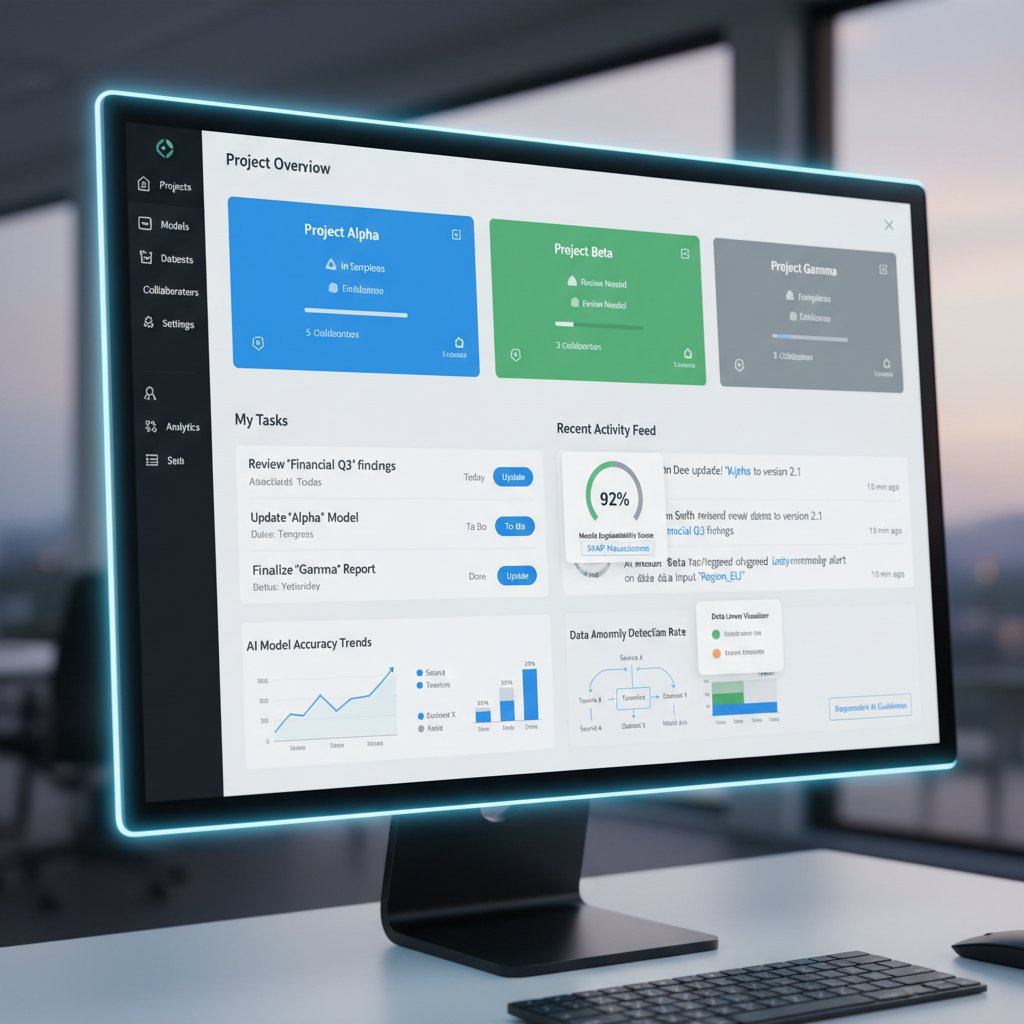
Choosing an AI-enabled collaboration tool is about more than ticking boxes. Must-have features include end-to-end encryption, context-aware task parsing, and seamless integration with existing tools. Red flags are black-box algorithms, opaque decision-making, or poor support.
Customization is vital—one size rarely fits all. Look for vendors that provide robust onboarding, documentation, and ongoing support. User control and transparency should be front and center.
Implementation: steps, checklists, and real-world advice
Implementing AI teammates in the enterprise demands a structured approach:
- Secure buy-in from leadership and frontline teams.
- Run a pilot program in a contained environment.
- Gather feedback, iterate, and address resistance.
- Scale cautiously, with regular check-ins and audits.
- Establish metrics for success—productivity, satisfaction, error rates.
| Year | Major Milestone | Enterprise Impact |
|---|---|---|
| 2010 | Cloud email adoption | Broader, faster communication |
| 2015 | Real-time chat | Informal, rapid responsiveness |
| 2018 | Early automation | Basic task delegation |
| 2021 | NLP in email | Smarter sorting, context awareness |
| 2024 | Integrated AI teammates | Seamless, proactive collaboration |
Table 4: Timeline of enterprise AI-enabled collaboration management evolution. Source: Original analysis based on EXL 2024, Menlo Ventures 2024.
Ongoing management means continuous improvement: regular training, honest feedback, and leveraging platforms like futurecoworker.ai to keep the AI aligned with organizational needs.
Self-assessment: is your organization ready?
Before diving into AI-enabled collaboration, ask the hard questions:
- Is your digital infrastructure modern and unified?
- Are team members open to change and willing to learn?
- Do you have clear processes for feedback and error correction?
- Are privacy and compliance controls robust and enforced?
Checklist: Is your organization ready for AI-enabled collaboration?
- Unified digital workspace and toolset
- Leadership buy-in and change management plan
- Training resources for all users
- Transparent feedback and escalation channels
- Security/compliance frameworks in place
If any box is unchecked, address gaps through targeted training, process updates, or pilot programs before scaling up.
The future of enterprise AI-enabled collaboration management: what’s next?
Emerging trends and the next five years
Contextual awareness, emotion recognition, and genuine autonomy are redefining what’s possible with AI teammates. Regulatory and ethical frameworks are maturing, driving a new standard for trust and transparency. Enterprises are moving from experimenting with AI in silos to making it a core part of their collaboration DNA.

To future-proof your strategy, stay agile: invest in upskilling, keep feedback loops strong, and demand transparency from your vendors.
Final thoughts: will AI teammates make us better collaborators?
The jury’s still out on whether AI-enabled collaboration will cure all that ails enterprise teamwork. There are open questions—about agency, connection, and the very nature of work—that only time and experience can answer. What’s certain is the tension between efficiency and human connection isn’t going away.
"The future isn’t about replacing people—it’s about amplifying what only humans can do."
— Morgan, Organizational Psychologist
If you want your enterprise to thrive, don’t wait for some perfect day when the tech is “ready.” Reflect, experiment, and lead the change. The AI teammate revolution is here and the only way out is through.
Sources
References cited in this article
- EXL 2024 Enterprise AI Study(exlservice.com)
- Zoomtopia 2023(kurmi-software.com)
- Menlo Ventures 2024(menlovc.com)
- McKinsey 2024(mckinsey.com)
- Mordor Intelligence(mordorintelligence.com)
- Credence Research(credenceresearch.com)
- SNS Insider(snsinsider.com)
- McKinsey/QuantumBlack(mckinsey.com)
- TechTarget(techtarget.com)
- Mashable(mashable.com)
- Illinois Gies College of Business(giesbusiness.illinois.edu)
- Tech.co(allwork.space)
- Google Cloud(cloud.google.com)
- PwC AI Jobs Barometer 2024(pwc.com)
- Forbes(forbes.com)
- Great Place to Work(greatplacetowork.com)
- Accenture 2024(newsroom.accenture.com)
- IBM AI Governance(ibm.com)
- Red Hat 2024(redhat.com)
- Scribd: Anatomy of ERP Design 2024(scribd.com)
- Propeller: AI as Teammate(propeller.com)
- Forbes 2024(forbes.com)
- MDPI(mdpi.com)
- World Economic Forum(weforum.org)
- Tandfonline: AI Etiquette(tandfonline.com)
- Microsoft: Chat Etiquette(microsoft.com)
- Emily Post: AI Etiquette(emilypost.com)
- Forbes 2024(forbes.com)
- Capgemini 2024(capgemini.com)
- IBM: AI Risks(ibm.com)
- Oxford AI Safety(ox.ac.uk)
- McKinsey 2024(mckinsey.com)
- McKinsey 2023(businesswire.com)
- BCG 2024(generativeaienterprise.ai)
- Appinventiv Case Studies(appinventiv.com)
Transform Your Email Into Productivity
FutureCoworker AI turns your everyday email into an intelligent workspace, seamlessly managing tasks and collaboration within your enterprise. It eliminates the complexity of AI, allowing you to benefit from advanced technology without any technical knowledge. Achieve productivity, streamline processes, and improve team efficiency through natural email interaction, getting tasks done faster and smarter.
Get startedReady to Transform Your Email?
Start automating your tasks and boost productivity today
Frequently Asked Questions
What does 'enterprise AI-enabled collaboration management' actually mean?
It refers to using artificial intelligence as a teammate within enterprise collaboration systems to improve productivity and reduce friction from traditional tools like email, calendars, and multiple project management platforms. Rather than just offering automation like auto-responses or templates, AI actively co-pilots collaboration by helping teams work more efficiently.
Why did traditional collaboration tools fail in enterprises?
Legacy collaboration tools created chaos through endless email threads, conflicting information across platforms, frequent app-switching, and automation that provided only basic features. According to EXL's 2024 research, over 91% of enterprises adopted AI because traditional tools couldn't keep pace with modern work's speed and complexity.
Is AI-enabled collaboration just about efficiency, or are there other impacts?
The article indicates there are both stunning wins and brutal truths, including raw risks and culture shocks that teams didn't anticipate. It's not a clean sweep of utopian efficiency—the impact extends beyond productivity to organizational culture and requires careful navigation.
What specific problems does AI address in team collaboration?
AI helps teams escape 'email hell' by reducing digital noise, automating meeting summaries, and providing smarter coordination across platforms. It aims to restore focus and surface missed opportunities that were previously buried in chaotic communication channels.
Continue Reading
Keep exploring Intelligent enterprise teammate

Enterprise AI-Powered Collaboration Platforms: Promise Versus Reality
Enterprise AI-powered collaboration platforms promise frictionless teamwork but present real risks. This article examines what actually works, what fails, and the realities behind vendor claims.

How Enterprise AI Collaboration Tools Reshape Teamwork
Enterprise AI-powered collaboration management tools address broken workflows and information silos. This article examines their real impact, common myths, and implementation strategies.

Enterprise AI-Powered Collaboration: Where It Works and Where It Fails
Enterprise AI-powered collaboration is reshaping how teams work together. This article examines where these tools succeed, where they fail, and what modern workplaces actually need.

AI-Driven Enterprise Collaboration: Separating Hype From Reality
AI-driven enterprise collaboration tools promise efficiency but often fall short. This article examines the myths, real obstacles, and concrete advantages of AI collaboration in practice.

Enterprise Collaboration Software Ai: Risks and Benefits Beyond the Hype
Enterprise collaboration software AI spending surged to $13.8 billion in 2024. This article examines the real risks, benefits, and deployment strategies beyond vendor hype.

Enterprise AI Collaboration Management: Adoption, Reality, Risks
Enterprise AI collaboration management software adoption is rising rapidly, but productivity gains are inconsistent.