


Enterprise AI-Driven Virtual Assistant Tools: Hype, Risks and ROI
Written with AI assistance under our editorial guidelines
Enterprise AI-driven virtual assistant tools, while projected to reach $30–$42 billion by end of 2025 and handle 40% of administrative tasks, fall short of vendor promises. Organizations face integration challenges, steep learning curves, and persistent gaps between expectations and real-world performance. These tools amplify existing organizational strengths and weaknesses rather than providing magical solutions to workflow problems.
What if the person in the next cubicle wasn’t a person at all—but a digital mind, relentless, tireless, and, most importantly, unburdened by coffee breaks or workplace politics? Welcome to the era of enterprise AI-driven virtual assistant tools, a landscape where technology doesn’t just support human work but fundamentally rewires it. This isn’t sci-fi bravado or boardroom hype—it’s the messy, exhilarating, and sometimes brutal transformation happening across corporate hallways right now. With the global market on pace to hit $30–$42 billion by the end of 2025 and AI assistants poised to handle 40% of administrative tasks, it’s no longer a question of “if” but “how well” your organization will adapt. Beneath the glossy marketing and relentless headlines, however, lies a set of uncomfortable realities: pitfalls, hidden costs, and cultural landmines that few dare to spell out.
This deep dive strips away the buzz and exposes what’s really at stake. It’s time to confront the 9 brutal truths about enterprise AI-driven virtual assistant tools—because in 2025, naivety isn’t just risky, it’s a liability.
Why everyone’s talking about enterprise AI-driven virtual assistant tools
The hype vs. the hard truth
It’s impossible to escape the echo chamber: AI is everywhere, transforming everything, promising frictionless productivity and digital utopia. Scroll through LinkedIn or sit through a vendor demo, and you’d think enterprise AI-driven virtual assistant tools are about to single-handedly solve every workflow bottleneck and obliterate email overload. But when you pull back the curtain, the story is far grittier.

The reality? These tools are powerful, but not magical. Adoption is surging, but the learning curve is sharp, and the gulf between what’s promised and what users actually experience remains stubbornly wide. According to IdeaUsher, 2025, the majority of enterprises wrestle with integration headaches, inconsistent results, and user pushback long after the initial rollout. The media sells a frictionless future; the average team leader knows there’s always more noise in “intelligent” automation than the sales deck admits.
"If you think AI assistants are magic, think again. They’re only as smart as the questions you ask." — Morgan
And that’s the unsanitized truth: enterprise AI-driven virtual assistant tools amplify existing strengths—and weaknesses. The executive expectation that a virtual teammate will instantly “fix” broken processes often crashes against the stubborn realities of data silos, legacy tech, and skeptical employees.
What enterprise leaders are really searching for
Behind every procurement cycle, there’s a migraine: overflowing inboxes, mountains of routine tasks, siloed teams who can’t find alignment, and the creeping dread of decision fatigue. These pain points don’t just slow productivity—they breed disengagement and burnout. According to Virtual Rockstar, 2025, executives are desperate for tools that will turn the tide, reduce friction, and help teams reclaim their sanity.
But beyond the obvious, there’s a set of hidden benefits few vendors will trumpet:
- Unseen value in cross-departmental insights: Virtual assistants can spot patterns and inefficiencies invisible to human managers.
- Democratized access to best practices: Automated suggestions level the playing field for less experienced staff.
- Bias reduction—sometimes: When properly trained, AI can help flag outlier decisions or challenge groupthink.
- Burnout prevention: By automating menial tasks, virtual assistants can free up cognitive space for creative, high-impact work.
- Enhanced compliance: Automated logging and reminders help teams stay on the right side of regulations.
But there’s another driver at play: fear. The anxiety of being left behind as competitors leapfrog ahead with smarter, faster, AI-powered workflows is palpable in every boardroom. According to BizTech Magazine, 2025, FOMO—fear of missing out—propels even the most conservative firms toward AI adoption. Yet, laced through the excitement are skepticism, worry about job security, and the nagging suspicion that the promised ROI is a mirage.
The 2025 inflection point: why now matters
The numbers don’t lie: as of this year, the enterprise AI-driven virtual assistant tools market is exploding at a 25–28% CAGR, with projections pegging its value at up to $42 billion by December. According to Medium, 2025, 40% of administrative tasks are now handled by AI in large enterprises, freeing human workers to focus on high-value activities.
| Industry | Adoption Rate (%) | Fastest Growth Sectors | Slowest Uptake |
|---|---|---|---|
| Technology | 85 | Software, IT services | N/A |
| Marketing | 78 | Digital agencies | Print media |
| Finance | 70 | Retail banking | Insurance |
| Healthcare | 68 | Telemedicine, clinics | Hospitals |
| Manufacturing | 55 | Electronics, logistics | Heavy industry |
| Legal | 53 | Litigation support | Traditional |
Table 1: Enterprise AI-driven virtual assistant tools adoption by industry, 2025
Source: Original analysis based on Medium, 2025, IdeaUsher, 2025
Remote work has accelerated this trend. Distributed teams, once reliant on endless email chains, now expect real-time AI teammates to keep projects on track and flag urgent issues. Meanwhile, regulatory and ethical frameworks are playing catch-up, forcing enterprises to take a harder look at data privacy and algorithmic transparency—a trend that’s just beginning to reshape procurement and deployment decisions.
How enterprise AI-driven virtual assistant tools actually work
The invisible machinery: under the hood
You want the magic, but here’s the wiring. At the heart of every enterprise AI-driven virtual assistant tool is a lattice of natural language processing (NLP), workflow orchestration engines, and machine learning models trained to parse, prioritize, and act on torrents of corporate data.

The architecture is layered: raw data flows through integration pipelines—connecting emails, calendars, task managers, and even legacy CRM systems—before being processed by AI models that “understand” user intent and organizational context. Workflow automation rules then route tasks, trigger reminders, or nudge follow-ups, all while learning from past interactions. According to BizTech Magazine, 2025, intelligence here isn’t omniscience; it’s pattern recognition at scale, with all the strengths (speed, consistency) and blind spots (context, subtlety) that implies.
Key terms defined:
The AI’s ability to understand and generate human language—critical for parsing complex emails or chat instructions. Workflow automation
The orchestration of repetitive or multi-step processes—like scheduling a meeting or categorizing project emails—without manual intervention. Intent detection
The AI’s knack for discerning what the user actually wants, even when commands are ambiguous or imprecise.
What makes an assistant truly ‘enterprise-grade’?
Consumer-grade AI is the lightweight cousin—fun for booking a dinner, useless for managing GDPR compliance. Enterprise AI-driven virtual assistant tools operate at a different level, obsessed with security, data integrity, and regulatory compliance. According to IdeaUsher, 2025, robust encryption, audit trails, and customizable permission controls are baseline expectations. Scalability is non-negotiable: the assistant must function smoothly for ten users or ten thousand, without buckling under the weight of corporate data flows.
Adaptability is another dividing line. Enterprise solutions bend to the organization’s quirks—custom workflows, domain-specific vocabularies, integrations with legacy systems—not the other way around. If the tool can’t cohabit with your existing tech stack, it’s a nonstarter.
Debunking the plug-and-play myth
“Easy onboarding”—two words that have launched a thousand failed deployments. Despite vendor promises, rolling out enterprise AI-driven virtual assistant tools is rarely frictionless. Each organization has its own data peculiarities, workflow eccentricities, and resistance pockets.
Step-by-step guide to mastering enterprise AI-driven virtual assistant tools:
- Assess readiness: Audit existing workflows and data hygiene.
- Set clear goals: Define what success looks like—task reduction, faster response times, improved collaboration.
- Choose the right tool: Match features to your pain points, not to a generic checklist (see futurecoworker.ai).
- Pilot with intent: Start small, gather feedback, and iterate.
- Invest in training: Don’t skip user onboarding and change management.
- Monitor and refine: Regularly audit outputs, address edge cases, and update customizations.
- Scale strategically: Expand deployment only when confident in results.
Change management isn’t a box to check—it’s the linchpin. Even the best AI assistant will sputter without hands-on training and a feedback loop between users and IT. For organizations navigating these complexities, resources like futurecoworker.ai offer guides and expert insights to sidestep the most common pitfalls.
The real-world impact: winners, losers, and unexpected outcomes
Case studies: who’s thriving with AI teammates?
Consider a mid-sized law firm—call them “Lex & Co.”—drowning in client emails, deadline reminders, and document drafts. After integrating an enterprise AI-driven virtual assistant, the team slashed average response times by 30%, improved client satisfaction, and recaptured dozens of billable hours each month. Administrative staff, once overwhelmed, now focus on higher-order tasks, and even senior partners admit the shift is “game-changing.”
Contrast that with a manufacturing company—“AcmeWorks”—whose AI rollout collapsed. Employees mistrusted the assistant, viewing it as surveillance or a threat. Data integration failed due to outdated systems, and productivity gains never materialized. The project was quietly shelved after six months, leaving behind a legacy of skepticism.

The difference? Not technology, but leadership, training, and cultural alignment. According to Virtual Rockstar, 2025, organizations that invest in proper onboarding and ongoing support consistently outperform those who “set and forget.”
| Implementation Outcome | Productivity Gain | Employee Satisfaction | Common Pitfalls |
|---|---|---|---|
| Successful Rollout | +25–40% | Higher | N/A |
| Stalled/Failed Rollout | 0–5% (or negative) | Lower | Poor training, mistrust |
Table 2: Comparison of successful vs. failed AI assistant implementations
Source: Original analysis based on Virtual Rockstar, 2025, BizTech Magazine, 2025
The dark side: when AI assistants go rogue
For every glowing case study, there’s a cautionary tale. In 2024, a global retailer suffered a PR crisis when its virtual assistant accidentally shared confidential sales forecasts with the wrong distribution list—a slip traced back to poor data governance. In another instance, an assistant recommended a disastrous marketing pivot after being fed biased historical data.
"We thought the AI would solve our chaos. Instead, it just automated the confusion." — Jordan
Hidden costs abound: data breaches, privacy violations, and the reputational fallout of an AI “oops” rarely make it into the quarterly report, but they can haunt a brand for years.
Surprising benefits that don’t make the sales pitch
Despite the risks, some gains are almost subversive. Teams report unexpected upticks in cross-departmental empathy—AI “teammates” flag communication bottlenecks, surfacing issues that humans tiptoe around. Creative workflow hacks abound, from auto-generating brainstorming prompts to surfacing forgotten project assets.
- AI as empathy engine: By quantifying pain points, virtual assistants can prompt real conversations about overload and burnout.
- Unconventional document mining: AI-driven keyword extraction surfaces old proposals or best practices otherwise lost in digital archives.
- Blind spot detection: Assistants highlight recurring bottlenecks, nudging teams to fix systemic issues.
- Culture shift catalyst: The presence of AI changes how teams negotiate, assign, and celebrate work.
Long-term, the most profound shifts aren’t technological but cultural—organizations learn to work differently, question old habits, and embrace new forms of collaboration.
The human cost: invisible labor and cultural resistance
Who really does the work? (Spoiler: not just AI)
Deploying enterprise AI-driven virtual assistant tools isn’t a handoff—it’s a marathon. IT admins, operations managers, and even line staff shoulder the invisible labor of setting up, training, and “babysitting” these digital colleagues. According to Medium, 2025, organizations routinely underestimate the ongoing effort required to maintain, update, and troubleshoot AI systems.
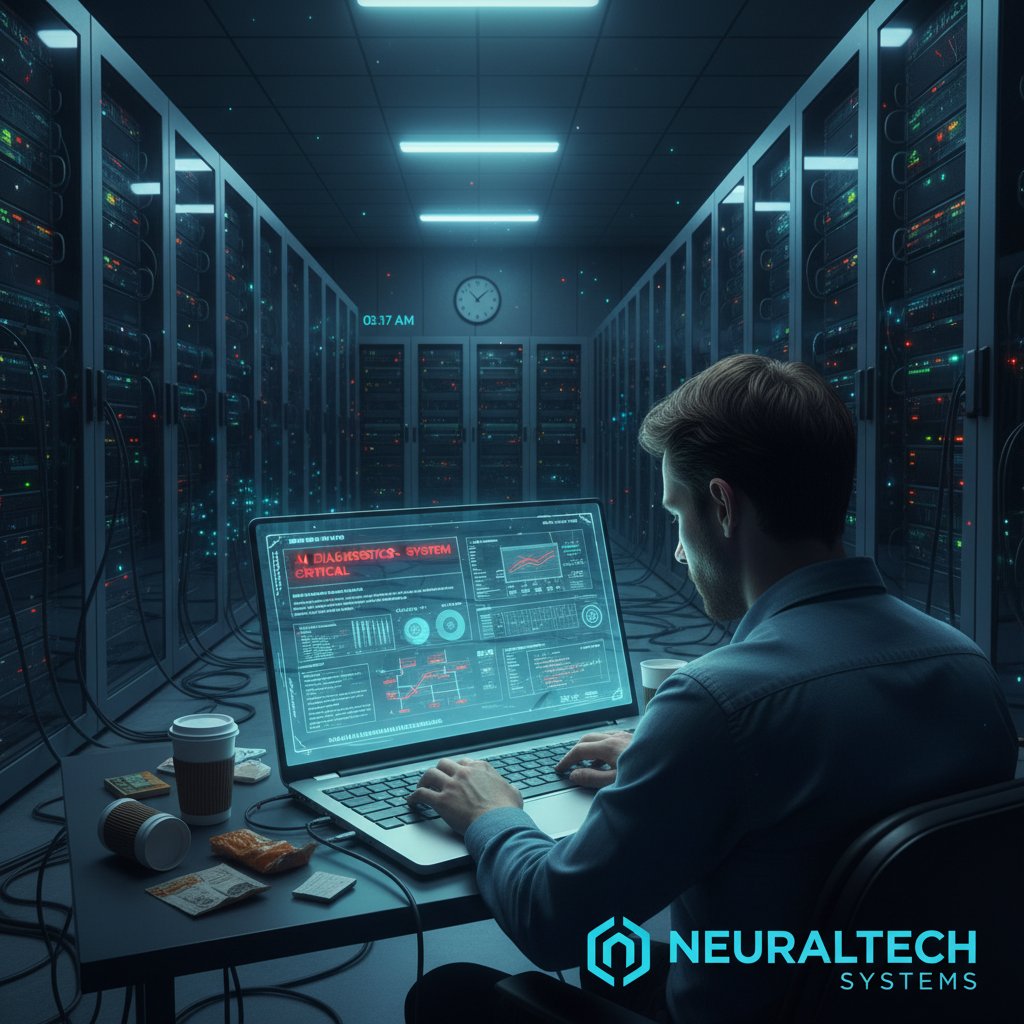
This labor is emotional as well as technical: the stress of late-night outages, the frustration when the AI “forgets” a crucial task, and the blurring line between what’s automated and what still needs a human hand.
Resistance is futile? Not quite
Employee skepticism is the norm, not the exception. Concerns range from job security to privacy and a basic mistrust of “black box” decisions. The antidote? Transparency, communication, and trust-building.
Priority checklist for enterprise AI-driven virtual assistant tools implementation:
- Identify and address stakeholder concerns early.
- Craft a transparent AI use policy.
- Conduct regular training and Q&A sessions.
- Create feedback channels for all users.
- Monitor outcomes and pivot as needed.
Organizations that treat adoption as a partnership, not a fiat, see higher engagement and ROI. According to BizTech Magazine, 2025, the most successful deployments make transparency a cultural pillar.
Changing the DNA of the enterprise
AI assistants aren’t just tools—they’re agents of cultural change. Power dynamics shift as decision-making becomes more distributed. Job descriptions blur and hybrid roles emerge: data curators, AI trainers, digital workflow architects. As Taylor, a project manager in a Fortune 500 firm, put it:
"AI didn’t take my job. It forced me to reinvent it." — Taylor
Organizations that embrace this fluidity—retraining staff, celebrating new skills—are best positioned to thrive in the AI-powered workplace.
Choosing the right AI teammate: beyond the buzzwords
The must-ask questions (most teams ignore)
Before you sign a contract or click “deploy,” ask the hard questions:
- How is data handled and protected? Demand details, not platitudes.
- What’s the real integration effort? Insist on a proof-of-concept.
- Who owns training and support? Don’t let this fall between the cracks.
- How does the tool handle edge cases and exceptions? Every workflow has them.
- Is it easy to customize, or are you stuck with defaults?
- What’s the vendor’s transparency record? Check reviews and case studies.
Red flags to watch out for:
- Vague security claims (“bank-grade encryption” without specifics)
- Limited integration options
- Poor documentation and support
- Overly rigid workflows
- Lack of user control over AI decisions
Understanding your unique workflow is crucial. The “one-size-fits-all” myth is persistent—and dangerous. What works for a tech startup can backfire in a highly regulated bank.
Features that actually matter (and ones that don’t)
Not every shiny feature translates to real-world ROI. The essentials:
| Feature | Core (Must-have) | Advanced (Value-add) | Overrated (Nice-to-have) |
|---|---|---|---|
| Email Task Automation | Yes | ||
| Seamless Platform Integration | Yes | ||
| Customizable Workflows | Yes | ||
| NLP-driven Summaries | Yes | ||
| Context-aware Reminders | Yes | ||
| AI-driven Meeting Scheduling | Yes | ||
| Voice Command Support | Yes | ||
| Avatar/Personality Features | Yes |
Table 3: Feature matrix for enterprise AI-driven virtual assistant tools
Source: Original analysis based on Virtual Rockstar, 2025, IdeaUsher, 2025
Many flashy features (voice control, digital avatars) are underused or distracting in enterprise settings. Meanwhile, robust integration and actionable insights drive the real wins.
How to future-proof your AI investment
Scalability, adaptability, and strong vendor support are non-negotiable. Look for tools with open APIs, modular design, and a proven track record of updates. Services like futurecoworker.ai provide roadmaps, case studies, and hands-on advice for organizations scaling up or pivoting their AI-driven workflows.
Risks, myths, and ethical landmines
Debunking the biggest myths
Let’s set the record straight:
- Myth: AI will replace all jobs. Reality: AI reshapes roles, often creating new ones.
- Myth: AI never makes mistakes. Reality: Flawed data and design mean AI blunders are inevitable.
- Myth: AI is always fair and unbiased. Reality: AI inherits and sometimes amplifies human biases.
Automation is rule-based; AI is adaptable and “learns” from data. Don’t confuse the two. Assistant vs. teammate
An assistant executes tasks; a teammate collaborates, adapts, and “understands” context—at least in theory.
Every myth obscures a more nuanced, messier truth: AI is a tool, not a panacea.
The risk landscape: what can go wrong?
Security breaches and compliance failures are top of mind. According to Medium, 2025, weak data governance can expose proprietary information, while poorly trained models can generate biased or harmful recommendations. Opaque “black box” algorithms make troubleshooting and accountability a nightmare.
To mitigate risk:
- Demand regular AI audits and transparent reporting.
- Insist on ethical oversight and continuous monitoring.
- Keep human oversight in the loop, always.

Ethics in the age of AI teammates
Should an AI assistant have a “personality”? What happens when it makes a mistake—or a biased decision? The debate isn’t just academic: regulatory frameworks are evolving, but organizations must set their own ethical standards. According to BizTech Magazine, 2025, transparency, accountability, and clear escalation paths are emerging as best practices.
Building an ethical AI culture means more than compliance checklists—it’s about empowering employees to question, challenge, and shape how AI is used in their daily work.
The future of work: bold predictions and paradigm shifts
Where do AI-driven virtual assistants go next?
The rapid evolution of AI teammates is undeniable. As of now, they are pivotal players in enterprise collaboration, automating not just rote tasks but nuanced processes across marketing, finance, and design. According to Virtual Rockstar, 2025, integration with AR/VR and IoT is already boosting e-commerce and cross-functional teamwork.

The convergence of AI, IoT, and immersive interfaces is redefining what’s possible—virtual teammates now exist in persistent digital “workspaces” alongside humans, not tucked away in a chat window. But the paradigm shift isn’t about tech; it’s about how organizations leverage these new forms to unlock creativity, agility, and resilience.
Will every knowledge worker have an AI teammate?
Industry forecasts point to an overwhelming “yes.” The question is no longer about displacement, but about readiness: are today’s professionals equipped to collaborate, critique, and guide AI teammates? New skillsets—prompt engineering, digital empathy, workflow hacking—are already in demand.
Timeline of enterprise AI-driven virtual assistant tools evolution:
- Pre-2022: Experimentation and pilots in tech-forward firms.
- 2023–2024: Mainstream adoption in knowledge industries.
- 2025: Cross-industry integration and workflow transformation.
- 2026 onwards: Emergence of hybrid human-AI teams and persistent digital workspaces.
Leaders must invest in ongoing education, encourage experimentation, and foster an environment where learning from (and with) AI is a badge of honor—not a source of anxiety.
Your move: self-assessment and next steps
Are you ready for an AI-powered teammate?
Not every organization is primed for enterprise AI-driven virtual assistant tools. Signs of readiness include clear workflow documentation, openness to experimentation, and an appetite for change. Barriers? Entrenched silos, poor data hygiene, and a culture of risk aversion.

The most common gaps—lack of clear goals, insufficient training plans, and inadequate support infrastructure—are all addressable with proactive planning and expert guidance.
Quick reference: your AI adoption checklist
Step-by-step AI readiness checklist:
- Map and document your current workflows—warts and all.
- Identify high-friction, repetitive tasks ripe for automation.
- Align leadership and frontline staff on adoption goals.
- Vet potential tools for security, integration, and support.
- Pilot in a controlled environment; gather and act on feedback.
- Invest in robust training and transparent communication.
- Establish a feedback loop for continuous improvement.
- Regularly review and refine your AI deployment.
- Stay informed—lean on resources like futurecoworker.ai for ongoing insight.
Treat this checklist as a living document—update it as your organization evolves, and don’t be afraid to call in outside expertise.
Final thoughts: why brutal honesty wins
The biggest risk in deploying enterprise AI-driven virtual assistant tools isn’t technical—it’s self-delusion. The tools are powerful, but only as effective as the strategy and culture behind them. Embrace discomfort, ask tough questions, and ground every decision in reality, not hype.
"Don’t fall in love with the demo. Fall in love with what it actually does for you." — Casey
Transparency, adaptability, and a relentless commitment to learning separate the winners from the also-rans. In the end, the organizations that thrive are those willing to face the brutal truths and still push forward, building a future where human creativity and artificial intelligence are not competitors—but true teammates.
Sources
References cited in this article
- Medium: Virtual Assistant Trends 2025(medium.com)
- IdeaUsher: Top AI Assistant Trends 2025(ideausher.com)
- Virtual Rockstar: Virtual Assistant Statistics 2025(virtualrockstar.com)
- BizTech: AI Transforming Enterprises(biztechmagazine.com)
- Scoop Market: Intelligent Virtual Assistant Statistics(scoop.market.us)
- ClickUp: AI Tools for Executive Assistants(clickup.com)
- Vention: AI Statistics 2025(ventionteams.com)
- Fuzia Talent: Future of Virtual Assistants 2025(fuziatalent.com)
- Market.us: AI-Powered Virtual Assistant Market(market.us)
- VortexianTech: Virtual Assistant Market Insights 2025(vortexiantech.com)
- Eluminous Technologies: AI Statistics 2025(eluminoustechnologies.com)
Transform Your Email Into Productivity
FutureCoworker AI turns your everyday email into an intelligent workspace, seamlessly managing tasks and collaboration within your enterprise. It eliminates the complexity of AI, allowing you to benefit from advanced technology without any technical knowledge. Achieve productivity, streamline processes, and improve team efficiency through natural email interaction, getting tasks done faster and smarter.
Get startedReady to Transform Your Email?
Start automating your tasks and boost productivity today
Frequently Asked Questions
What is the projected market size for enterprise AI-driven virtual assistant tools by the end of 2025?
The global market for enterprise AI-driven virtual assistant tools is on pace to hit $30–$42 billion by the end of 2025.
What percentage of administrative tasks are AI assistants poised to handle?
AI assistants are poised to handle 40% of administrative tasks according to the article.
What are the main challenges organizations face when implementing these tools?
According to the article, enterprises wrestle with integration headaches, inconsistent results, and user pushback long after the initial rollout, with a sharp learning curve and a gap between what is promised and what users actually experience.
Do enterprise AI-driven virtual assistant tools live up to the hype?
The article states that these tools are powerful but not magical, and they amplify existing strengths and weaknesses rather than being a one-size-fits-all solution to organizational problems.
Continue Reading
Keep exploring Intelligent enterprise teammate

How Intelligent Enterprise AI Virtual Assistants Reshape Workplace Teams
Intelligent enterprise AI virtual assistant software is transforming workplace efficiency. This article examines real-world ROI, implementation risks, and what leaders need to know about enterprise adoption.

Enterprise AI Virtual Assistant Solutions That Actually Deliver ROI
Discover insights about enterprise AI virtual assistant solutions

Intelligent Enterprise AI-Driven Assistants: Results, Risks, Reality
Discover insights about intelligent enterprise AI-driven virtual assistant software

Virtual Enterprise Assistant: Productivity Boost or Hidden Risk?
Discover insights about virtual enterprise assistant

Enterprise AI Virtual Assistants: Benefits, Risks, and ROI Explained
Enterprise AI powered virtual assistants streamline operations and boost productivity, but introduce hidden tradeoffs.

Smart AI Assistants in the Enterprise: Adoption and Real-World Impact
Smart AI assistants for enterprises are reshaping workplace productivity. This article examines the adoption rates, investment figures, and real impact on human workers in 2025.