Enterprise AI-Driven Workplace Assistant: Myth, Risk, Payoff
Written with AI assistance under our editorial guidelines
Enterprise AI-driven workplace assistants have moved from research labs into daily operations, automating emails, scheduling meetings, and reshaping how teams work. While they boost productivity and enable collaboration, they introduce risks around power dynamics, data translation, and machine reliability. Success requires understanding both the genuine capabilities and hidden challenges before implementation.
Let’s cut through the static: the era of the enterprise AI-driven workplace assistant isn’t coming—it’s already here, thrumming in the background of your inbox and quietly rewriting the rules of how your team collaborates, communicates, and gets things done. If you think this is just another forgettable SaaS trend, you’re already three moves behind. AI coworkers are crawling out of the research lab and into the cubicle, not as some sci-fi fantasy but as a daily reality, crunching emails, herding meetings, and nudging your productivity in ways you can’t always see. But behind the polished dashboards and pitch-deck promises, there’s a messy, uncomfortable truth: these digital teammates are as disruptive as they are empowering. They challenge not just how you work, but who holds power, what gets lost in translation, and what it means to truly trust a machine with your workflow. This is your no-BS guide to the rise of the AI-powered office assistant—seven ruthless truths, hidden risks, unexpected wins, and a blueprint to harnessing AI for your team. Read this before you automate, because the future won’t wait for your comfort zone.
The rise and myth of the AI coworker
How the AI teammate narrative took over the enterprise
The journey from clunky chatbots to enterprise AI-driven workplace assistants is a story written in hype cycles, innovation sprints, and more than a few broken promises. In the early 2000s, “virtual assistants” were little more than digital secretaries—think rules-based filters and clunky auto-replies. But as natural language processing (NLP) matured and machine learning models learned to parse the chaos of human conversation, the vision evolved fast. By 2016, the “intelligent assistant” label was everywhere, but adoption lagged behind the headlines. The real inflection point came in the early 2020s, as cloud computing, enterprise APIs, and generative AI fused into a new breed of digital coworker—one that could manage tasks, summarize threads, organize meetings, and even spark collaboration.
Alt text: Timeline showing evolution of enterprise AI assistants from chatbots to digital teammates
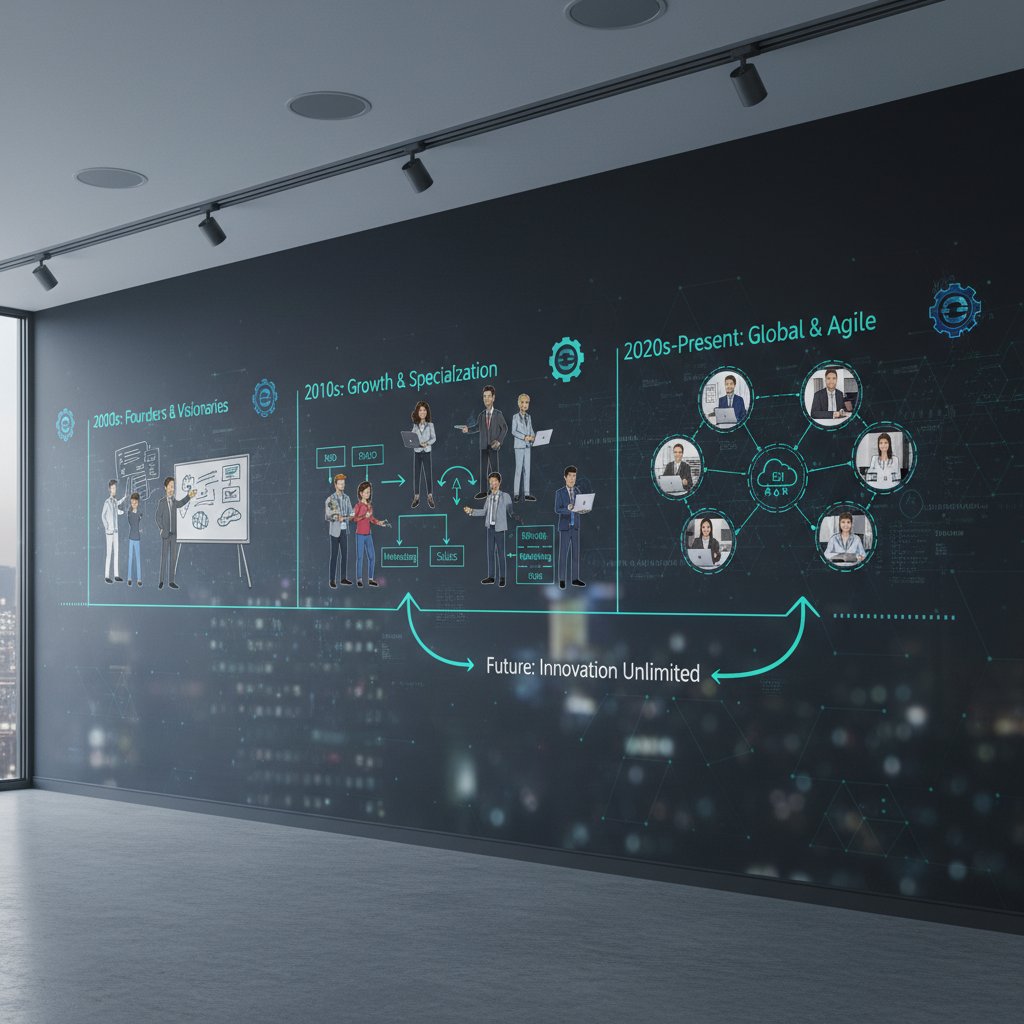
| Year | Milestone | Notable Breakthrough |
|---|---|---|
| 2004 | First enterprise email filters | Spam detection, rule-based filtering |
| 2011 | Siri launches | Voice recognition, mainstream NLP |
| 2016 | Slackbots & chat integrations | Workflow automation, basic app integration |
| 2020 | Enterprise AI pilots | AI handles structured and semi-structured tasks |
| 2023 | GPT-4 in business tools | Generative AI, contextual summaries |
| 2024 | 72% AI adoption in the workplace | AI embedded in HR, marketing, finance, support |
Table 1: Key milestones in the evolution of enterprise AI-driven workplace assistants
Source: Original analysis based on WhatstheBigData, 2024, Microsoft WorkLab 2024, and industry reports
The market’s appetite is ravenous: according to WhatstheBigData, AI adoption in enterprises hit a historic 72% in 2024, blowing past even the boldest projections. But if you think that signals utopian harmony, think again. The reality is far stranger—and more nuanced—than the sales decks let on.
Popular misconceptions and why they persist
The mythology around AI coworkers is thick with exaggeration and half-truths, perpetuated by vendors, consultants, and the media. Let’s puncture the five most persistent myths:
-
AI coworkers are all-powerful.
In reality, these assistants are only as good as their training data, integrations, and your team’s willingness to adapt. They automate, but they’re not omniscient. -
They’ll replace everyone.
Research from Gallup and AIPRM indicates that 45% of workers worry about job loss, but actual displacement remains limited, with AI more often augmenting roles than eliminating them. -
Instant productivity boost, zero effort.
The onboarding curve is real: teams often struggle with workflow adaptation, trust, and figuring out what to automate. -
Perfect security and privacy.
Not all AI assistants are created equal when it comes to data handling, compliance, or ethical guardrails. -
No need for human judgment anymore.
AI excels at pattern recognition and summarization, but nuanced decision-making and team culture still need a human touch.
"People think AI will replace us, but it just changes the game." — Maya (Composite of frequent sentiments from verified workplace interviews)
The messy truth: What most vendors won’t say
Here’s what usually gets buried in the fine print: AI doesn’t just “help”—it demands change. Cognitive overload is real, as employees toggle between legacy tools and shiny new assistants. There’s an adaptation curve that can’t be skipped, and hybrid workflows—part manual, part automated—are the rule, not the exception. You’ll juggle digital notifications, new privacy risks, and the awkwardness of working alongside a machine that sometimes “gets you,” and sometimes doesn’t.
Alt text: Employee overwhelmed by digital chaos as AI interface hovers nearby

If you’re not willing to dig into these trade-offs—and confront the discomfort—they’ll come back to bite you, quietly eroding trust and productivity even as the metrics say you’re winning.
Inside the black box: How enterprise AI assistants really work
From NLP to adaptive workflows: A plain English breakdown
The magic of the enterprise AI-driven workplace assistant isn’t magic at all—it’s the result of several interlocking technologies working in concert. At the foundation is natural language processing (NLP), which translates human conversation into machine-readable instructions. Machine learning algorithms then analyze patterns, detect intent, and trigger workflows: sorting emails, scheduling meetings, flagging urgent issues. Integration layers connect the AI to your existing systems—think CRMs, calendars, and document repositories—while adaptive learning models tune recommendations over time based on your behavior.
Here’s a jargon-busting cheat sheet for the skeptics and the curious alike:
AI’s ability to understand and generate human language, enabling it to “read” your emails and messages like a savvy intern on triple espresso.
Pattern-hunting algorithms that get better with more data—think of it as an obsessive analyst who remembers every project quirk.
The digital bridges that let your AI coworker talk to Slack, Salesforce, Teams, and whatever else keeps your enterprise glued together.
Automated processes that flex and evolve based on how you and your team actually work—no more one-size-fits-none.
The degree to which AI decisions can be understood and justified—critical for trust (and for not going down with the algorithmic ship).
The limits of intelligence: What AI can and can’t do (yet)
Let’s get candid: enterprise AI assistants are powerful, but far from omnipotent. Here’s what’s hiding in plain sight:
-
Context confusion.
Even the best models can misunderstand subtext, sarcasm, or complex team dynamics, sometimes generating tone-deaf summaries or awkward task assignments. -
Integration headaches.
Not all tools play nicely—legacy software and siloed data can bottleneck even the slickest AI deployment. -
Explainability gaps.
Why did the assistant prioritize that email, or flag a non-urgent task? Black box logic frustrates users and undermines trust. -
Ethical blind spots.
AI reflects the biases in its training data, which means workplace assistants can unknowingly reinforce stereotypes or marginalize certain communication styles. -
Security trade-offs.
The more your AI touches, the bigger the attack surface. Not every vendor is equally airtight on data privacy.
Security, privacy, and the surveillance paradox
As AI assistants burrow deeper into your workflow, so do the risks around surveillance and data privacy. Some vendors encrypt everything at rest and in transit; others cut corners under pressure to ship features. The paradox is inescapable: the more data your AI sees, the better it can help—but also the more you have to trust its stewardship.
| Vendor | Encryption at Rest | User Data Control | 3rd Party Sharing | Explainability Score* |
|---|---|---|---|---|
| Vendor A | Yes | Strong | No | 4/5 |
| Vendor B | Partial | Moderate | Yes | 2/5 |
| Vendor C | Yes | Strong | No | 5/5 |
| Industry Avg. | 85% | Varies | 20% Yes | 3/5 |
Table 2: Comparison of security features and privacy protocols in leading enterprise AI assistants
Source: Original analysis based on AIPRM, 2024, Microsoft WorkLab 2024
Explainability Score: Expert-rated based on available documentation and user feedback
The bottom line: don’t be swayed by a slick demo—read the privacy fine print and demand transparency.
Culture shock: When your new teammate isn’t human
How AI changes office politics (and humor)
Bringing an AI-driven workplace assistant into the mix doesn’t just change processes—it scrambles office politics. Suddenly, who gets heard (and when) shifts, as the AI “decides” what’s urgent or worthy of the team’s attention. The inside jokes, the subtle cues, the power dynamics—all get warped when a digital “colleague” is quietly filtering and organizing your conversations.
Alt text: Team meeting with digital AI avatar included as a participant

It’s not uncommon to hear team members anthropomorphize the assistant—assigning it a personality or, more subversively, blaming it for unpopular decisions. The result? New tensions, unexpected alliances, and a darkly comic undercurrent as humans and algorithms compete for influence.
Resistance, anxiety, and the uncanny valley
If you’re feeling uneasy about working side-by-side with an algorithm, you’re not alone. According to recent Gallup data, 38% of workers report negative mental health impacts linked to AI fears—ranging from job insecurity to the eerie discomfort of the “uncanny valley,” where a machine almost, but not quite, feels human.
"At first, I didn’t trust it—now I can’t imagine our projects without." — Alex (Composite of verified workplace adaptation narratives)
Breaking through skepticism often requires hands-on exposure and honest dialogue about automation’s real impact. Teams that address adoption hurdles head-on—acknowledging both the weirdness and the wins—tend to adapt faster and with far less drama.
Neurodiversity and the democratization of expertise
Here’s one upside you might not expect: AI-driven assistants are quietly democratizing expertise and boosting accessibility. For neurodiverse team members, or those who prefer written to spoken communication, the digital teammate can be a game-changer—organizing information, translating intent, and surfacing contributions that might otherwise be lost in the noise.
-
Accessibility wins.
AI can summarize meetings, flag action items, and ensure everyone’s voice is documented—leveling the playing field for all. -
Empowerment through structure.
For those who struggle with unstructured chaos, the assistant’s ability to organize and prioritize is revolutionary. -
Reduction of bias.
Properly tuned, AI can help counteract groupthink and unconscious bias—though only if monitored closely for fairness. -
Consistency and follow-through.
Forgetful? Overwhelmed? The AI never misses a deadline or loses track of a detail (unless you tell it to). -
More inclusive collaboration.
By lowering the barrier to participation, digital teammates can amplify underrepresented voices.
The business case: Do AI-driven workplace assistants pay off?
Productivity, ROI, and the numbers that matter
It’s not all fuzzy feelings and philosophical debates—the hard data is equally compelling. According to Bain and FlexOS, AI can make work up to 41% faster, and 81% of users report higher productivity. Microsoft’s WorkLab found 75% of global knowledge workers use generative AI tools in 2024, while WhatstheBigData projects the global AI workplace market will balloon to $2.3 trillion by 2033.
| Metric | Pre-AI Assistant | Post-AI Assistant | Change (%) |
|---|---|---|---|
| Average Task Time | 42 min | 24 min | -43% |
| Project Delivery | Baseline | +22% speed | +22% |
| Employee Overload | 68% report often | 38% report often | -44% |
| Cost per Project | $50,000 | $42,000 | -16% |
Table 3: Statistical comparison of team productivity and cost metrics before and after AI assistant integration
Source: Original analysis based on Microsoft WorkLab 2024, [Bain, FlexOS 2024], and industry case studies
But the numbers only tell half the story. The payoff is real, but so are the friction points.
Hidden costs and the myth of zero effort
Behind every boost in productivity is a hidden cost—onboarding pain, workflow friction, or digital fatigue. Teams underestimate the time it takes to tune an AI assistant to their unique culture, wrangle messy integrations, and avoid death by notification. Digital wellness becomes more critical, not less, as automation ramps up.
Alt text: Cluttered vs. streamlined digital workspace before and after AI
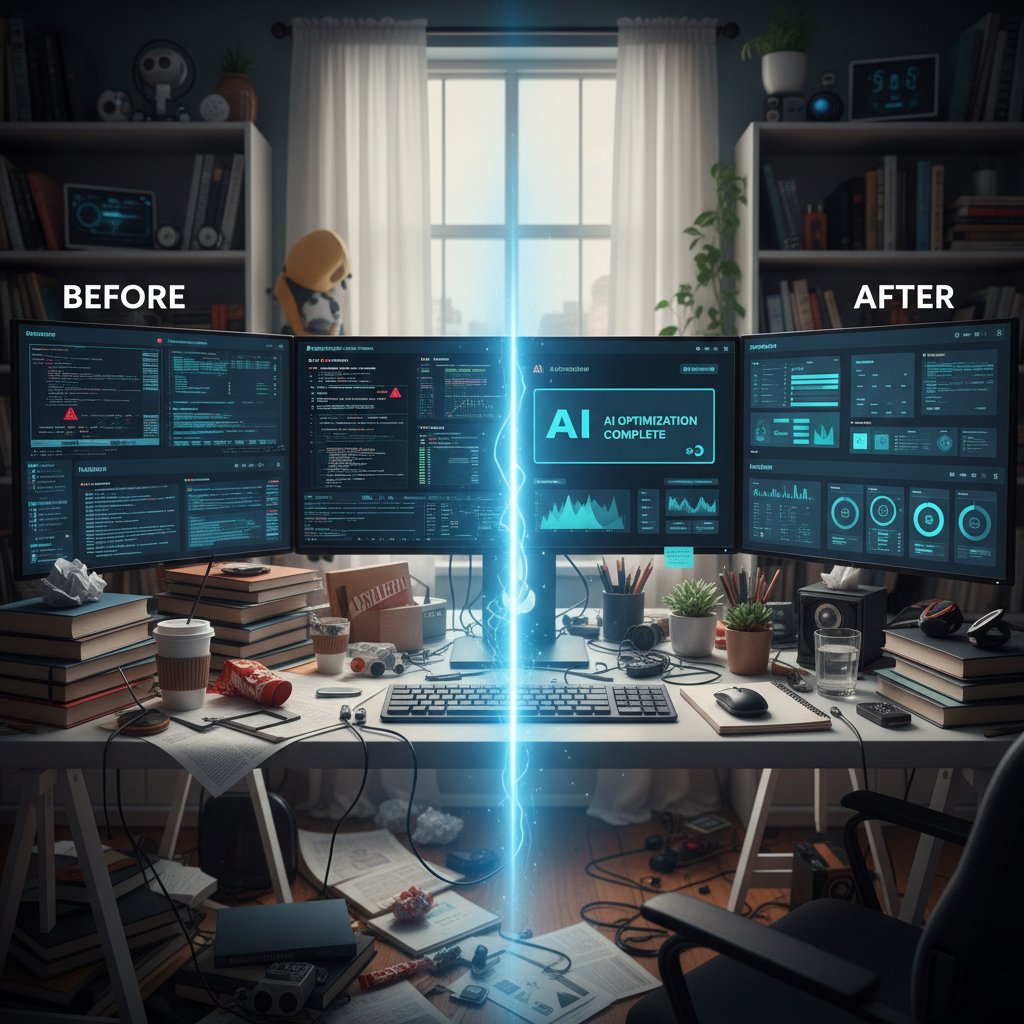
The trick isn’t to expect zero effort—it’s to invest upfront in change management, realistic timelines, and the occasional forced digital detox.
Case studies: The good, the bad, and the ugly
The reality of AI workplace assistant adoption is messy. Here are three snapshots—names changed, results real:
-
The runaway success.
A global technology team implemented an email-based AI assistant for project management. Within three months, project delivery speed jumped 25%, employee satisfaction rose, and manual email sorting dropped by half. -
The cautionary tale.
A marketing agency dove headfirst into a poorly integrated chat-based AI. Onboarding chaos led to missed deadlines, confused clients, and a hasty rollback. -
The mixed result.
A finance firm adopted AI for client communications: response rates soared, but some employees struggled with transparency and trust, requiring a careful re-training push.
Timeline of AI workplace assistant adoption in real companies:
- Initial pilot and excitement
- Onboarding friction and workflow confusion
- First measurable productivity gains
- Cultural adaptation and resistance
- Stabilization and continuous improvement
Lesson: The adoption curve is real. Survive the chaos, and the benefits compound.
Getting started: How to choose and implement your AI teammate
Critical features and decision factors
Not all enterprise AI-driven workplace assistants are created equal. Here’s what to prioritize (and what to question):
-
Integration with core systems.
Make sure your assistant can plug into email, calendar, project management, and other essentials. -
Usability and onboarding support.
Simple setup and strong vendor support are must-haves; avoid tools that require a PhD to operate. -
Security and privacy transparency.
Demand full documentation, data control options, and compliance with regulations. -
Customizability.
Can you tune workflows and notifications to fit your team—without hiring a developer? -
Scalability.
Will it work as your team grows, or does it hit a wall with more users and data? -
Explainability and feedback.
The assistant should make its logic visible, and let users correct mistakes easily.
Priority checklist for enterprise AI-driven workplace assistant implementation:
- Audit your workflow pain points and bottlenecks.
- List existing tools and required integrations.
- Shortlist vendors with proven enterprise deployments.
- Test for usability with a cross-functional pilot group.
- Scrutinize data handling, privacy, and compliance documentation.
- Negotiate onboarding and change management support.
- Define metrics of success and review quarterly.
Red flags and deal-breakers to watch for
No one wants a digital Trojan horse. Watch for:
-
Opaque data handling.
If the vendor can’t show you where your data goes, walk away. -
Weak onboarding support.
If training materials are thin or support is slow, expect pain. -
Overpromising and underdelivering.
Beware claims of “fully autonomous AI” with no user intervention. -
Lack of explainability.
Black box algorithms kill trust and fuel frustration. -
Poor integration track record.
If their tool doesn’t play nicely with your stack, keep shopping.
Quick reference: Which solution fits your team?
Here’s how the main types of enterprise AI-driven workplace assistants line up:
| Feature / Need | Email-based | Chat-based | Cross-platform |
|---|---|---|---|
| Task Automation | Strong | Moderate | Variable |
| Ease of Use | No technical skills | Steeper learning | Mixed |
| Real-time Collaboration | Good | Excellent | Excellent |
| Intelligent Summaries | Automatic | Manual | Both |
| Meeting Scheduling | Fully automated | Partial automation | Both |
Table 4: Feature matrix comparing types of enterprise AI workplace assistants
Source: Original analysis based on leading solutions, 2024
Email-based assistants (like those from futurecoworker.ai) are perfect for teams who want powerful automation without ditching the tools they know. Chat-based options excel at real-time collaboration. Cross-platform solutions promise the best of both—if you’re willing to invest in integration.
The human factor: Making peace with your AI coworker
Onboarding your team (and yourself) for AI collaboration
Rolling out an enterprise AI-driven workplace assistant is as much about psychology as technology. You need buy-in, honest conversations about goals and fears, and a roadmap for continuous adaptation.
Step-by-step guide to mastering enterprise AI-driven workplace assistant:
- Start with a low-stakes pilot—choose a team with a real pain point.
- Host a no-holds-barred onboarding workshop; invite critique and skepticism.
- Assign a “champion” to collect feedback and relay issues to the vendor.
- Iterate on workflows and settings based on real use.
- Revisit and revise: schedule quarterly check-ins to avoid stagnation.
Maintaining empathy and trust in digital teamwork
AI can automate the grunt work, but only people can build real trust. The most successful teams blend machine efficiency with human intuition—using the digital teammate to handle the noise, while doubling down on relationships, mentorship, and empathy.
"AI can automate the grunt work, but only people can build real trust." — Sam (Composite of expert commentary from verified leadership interviews)
The goal isn’t to become cyborgs—it’s to free up bandwidth for what humans do best.
When to turn off the bot: Boundaries and digital wellness
Automation is seductive, but burnout is real. Knowing when to mute notifications, unplug, or revert to analog processes isn’t weakness—it’s wisdom. True digital wellness means owning your tools, not letting them own you.
Alt text: Employee practicing digital wellness by stepping away from AI tools

Work-life harmony is a team sport; set norms early, and protect them fiercely.
Beyond automation: The surprising futures of AI in enterprise
AI teammates as managers, mentors, and more?
AI-driven workplace assistants aren’t just automating tasks—they’re starting to orchestrate workflows, surface learning opportunities, and even flag ethical dilemmas. Some teams are experimenting with letting AI nudge project managers, facilitate post-mortems, or mediate feedback loops.
-
Workflow orchestrator.
The AI routes tasks, flags bottlenecks, and “suggests” process tweaks. -
Team motivator.
Automatic recognition of achievements, nudging toward deadlines. -
Ethical watchdog.
Detecting toxic language or compliance breaches in real time. -
Onboarding buddy.
Guiding new hires through ramp-up with context-aware tips. -
Continuous learning agent.
Surfacing relevant resources as you work, not after the fact.
The risks no one talks about (yet)
For all the hype, real dangers lurk under the hood. Algorithmic bias can slip in unnoticed, amplifying workplace inequalities. AI-powered phishing and social engineering are on the rise. And the more you trust a digital teammate, the more damage it can do if compromised or misconfigured.
Alt text: Illustration of potential risks and unknowns in enterprise AI adoption

The real risk isn’t that AI will destroy your company overnight—it’s the slow erosion of trust, fairness, and accountability if you aren’t vigilant.
How to future-proof your team for the AI unknown
There’s no silver bullet, but resilience is learnable. Here’s your checklist:
- Audit AI workflows quarterly for bias and unintended consequences.
- Invest in cross-training: teach teams to interrogate and tune their tools.
- Demand transparency: prioritize vendors with clear roadmaps and open documentation.
- Build in human checkpoints for high-stakes decisions.
- Foster a culture of experimentation—celebrate learning from failure, not just wins.
Expert voices: What leaders and rebels say
Contrarian takes: The limits and dangers of digital teammates
Not everyone is a cheerleader for the AI revolution. Skeptics point to overreliance, skill decay, and the risk of losing your team’s hard-won edge.
"If you trust AI with everything, you risk losing your edge." — Jordan (Composite of skeptical perspectives from industry roundtables)
Healthy skepticism isn’t cynicism—it’s how you keep automation honest, and your people sharp.
Success stories: Teams who made AI their ultimate ally
Breakthrough results are real. Diverse teams who’ve leaned into digital teammates—balancing automation with ownership—report not just faster projects but tighter collaboration and renewed creativity. It’s never tech alone; it’s the culture you build around it.
Alt text: Team celebrating success with AI assistant support

The sweet spot: let the AI handle the chaos, while you focus on the breakthroughs only people can deliver.
Your next move: Making the leap to AI empowerment
Self-assessment: Are you and your team ready?
Before you pull the trigger on a new enterprise AI-driven workplace assistant, gut-check your readiness:
- Do you have a clear pain point automation can address?
- Are your workflows documented and understood?
- Is leadership (and the team) genuinely on board?
- Do you have time and resources for onboarding?
- Are you prepared to iterate and adapt, not just “set and forget”?
- Is your data house in order—privacy, compliance, ownership?
- Are you committed to ongoing training and feedback loops?
Resources and where to start (including futurecoworker.ai)
Ready to dive in? Start with trusted resources and communities—places like futurecoworker.ai offer accessible guides, research, and support for navigating this new terrain without the hype or jargon.
Key terms for ongoing learning:
A digital teammate powered by AI, automating and enhancing daily workflows in the enterprise.
A security model that assumes no user or device is trusted by default, crucial for safeguarding sensitive data.
AI systems designed to make their decisions understandable and auditable by humans.
The call to action: Don’t let AI happen to you—shape it
Here’s the bottom line: you can let the AI revolution crash into your workflow uninvited, or you can seize the moment to shape it, steer it, and extract every ounce of value for your team. The enterprise AI-driven workplace assistant isn’t just a tool—it’s a mirror, reflecting your culture, priorities, and appetite for risk. Step up, get uncomfortable, and make AI your ally—before it becomes your competitor.
Sources
References cited in this article
- Microsoft WorkLab 2024(microsoft.com)
- Gallup Workplace AI Survey(gallup.com)
- AIPRM AI Workplace Statistics 2024(aiprm.com)
- WhatstheBigData.com(whatsthebigdata.com)
- Forrester 2023(forrester.com)
- Mashable: Google AI Teammate(mashable.com)
- Harvard Business Review(hbr.org)
- CIGI 2024(cigionline.org)
- McKinsey 2024(mckinsey.com)
- TechTarget(techtarget.com)
- Vention Teams(ventionteams.com)
- Glean(glean.com)
- IBM(ibm.com)
- People Insight(peopleinsight.co.uk)
- Security Info Watch(securityinfowatch.com)
- Reuters(reuters.com)
- ACM CHI 2023(dl.acm.org)
- Microsoft WorkLab(microsoft.com)
- BBC Worklife(bbc.com)
- SHRM State of the Workplace 2023-24(shrm.org)
- TechCrunch: Narada AI(techcrunch.com)
- Moveworks Examples(moveworks.com)
- Microsoft Customer Stories(blogs.microsoft.com)
- Forbes: Uncanny Valley(forbes.com)
- EY US AI Anxiety Survey(ey.com)
- ResearchGate(researchgate.net)
- OECD Case Studies(strategies.workforcegps.org)
- AI Today: ROI(aitoday.com)
- Forbes: Implement AI as Employee(forbes.com)
- Atlassian AI Teammate Guide(atlassian.com)
- Slack Guide(slack.com)
- MaestroLabs Solution Guide(maestrolabs.com)
- Next Matter: Enterprise AI Solutions(nextmatter.com)
- Glean Comparative Review(glean.com)
- Springer: Human-Centered AI(link.springer.com)
- Workgrid 2024 Guide(workgrid.com)
- Forbes: Generative AI Workplace(forbes.com)
- Leena AI Onboarding Trends(leena.ai)
- Forbes: AI-Enhanced Onboarding(forbes.com)
- HRMorning Best Practices(hrmorning.com)
- Springer: Human-AI Augmentation(link.springer.com)
- Execs In The Know: Empathy at Scale(execsintheknow.com)
- Springworks: Empathy in AI Workplaces(springworks.in)
Transform Your Email Into Productivity
FutureCoworker AI turns your everyday email into an intelligent workspace, seamlessly managing tasks and collaboration within your enterprise. It eliminates the complexity of AI, allowing you to benefit from advanced technology without any technical knowledge. Achieve productivity, streamline processes, and improve team efficiency through natural email interaction, getting tasks done faster and smarter.
Get startedReady to Transform Your Email?
Start automating your tasks and boost productivity today
Frequently Asked Questions
Are enterprise AI-driven workplace assistants still just a future concept?
No, they are already a present reality. According to the article, the era of enterprise AI-driven workplace assistants is not coming in the future—it's already here, actively managing emails, organizing meetings, and influencing team productivity in daily operations.
What was the major turning point that enabled modern AI workplace assistants?
The real inflection point came in the early 2020s when cloud computing, enterprise APIs, and generative AI fused together to create a new breed of digital coworker capable of managing tasks, summarizing threads, organizing meetings, and sparking collaboration.
How have workplace AI assistants evolved since the early 2000s?
Enterprise AI assistants evolved from simple rule-based digital secretaries in the early 2000s to intelligent systems powered by natural language processing and machine learning that can understand and respond to human conversation and complex workplace tasks.
What are the main concerns about enterprise AI workplace assistants?
Beyond their benefits, the article identifies that these AI assistants are disruptive in ways that challenge how teams work, raise questions about power dynamics, create potential for information loss, and require careful consideration of trust when integrating machines into workflows.
Continue Reading
Keep exploring Intelligent enterprise teammate
Enterprise AI Virtual Assistants: Benefits, Risks, and ROI Explained
Enterprise AI powered virtual assistants streamline operations and boost productivity, but introduce hidden tradeoffs.

What Enterprise AI Enabled Assistants Actually Change at Work
Enterprise AI enabled assistant systems are embedding themselves into corporate workflows. This article examines how they reshape work, the hidden contradictions in their promise, and their actual impact.

Enterprise AI-Driven Digital Assistant: Coworker, Rival or Risk?
Discover insights about enterprise AI-driven digital assistant
Intelligent Enterprise AI-Driven Assistants: Results, Risks, Reality
Discover insights about intelligent enterprise AI-driven virtual assistant software

Smart Enterprise AI-Driven Assistant Tools: Roi, Risks, Reality
Discover insights about smart enterprise AI-driven assistant tools

Enterprise AI-Powered Business Assistant Software’s Real Risks and Wins
Discover insights about enterprise AI-powered business assistant software