


Why Your Next Hire Is an Enterprise Ai‑driven Team Collaboration Assistant
Written with AI assistance under our editorial guidelines
Enterprise AI-driven team collaboration assistants address the widespread inefficiency plaguing modern workforces. Teams currently spend 30% of their workweek searching for information scattered across fragmented digital channels, causing manager burnout and project delays. AI collaboration tools streamline workflows by eliminating this friction, enabling teams to focus on meaningful work rather than managing complex legacy systems and endless communication loops.
In boardrooms and break rooms, behind the glow of laptop screens and the daily barrage of email notifications, a silent revolution is tearing down the old walls of teamwork. The enterprise AI-driven team collaboration assistant is not just another buzzword—it’s the unacknowledged backbone quietly engineering a seismic shift in how teams connect, execute, and win. Forget the tired narrative of “robots taking jobs”—the new reality? AI is the teammate you never knew you needed, already streamlining workflows, sniping your digital distractions, and nudging your entire company toward higher performance. As AI adoption spikes—enterprise spending on AI soared from $2.3 billion in 2023 to $13.8 billion in 2024, according to Menlo Ventures—the conversation is no longer about if AI will change teamwork, but how invisibly and deeply it already has. This isn’t just automation; it’s augmentation, trust, and transformation. So, let’s pull back the curtain and expose the invisible hand guiding the future of enterprise collaboration—and why ignoring this shift is the riskiest move a modern team can make.
Why your team collaboration is broken (and AI is the twist you didn’t see coming)
The legacy mess: Why traditional tools fail at scale
The average enterprise workforce is drowning in a digital torrent—endless email loops, project management dashboards brimming with overdue tasks, and chat threads so tangled they could strangle productivity itself. According to research from the Gies College of Business, 2023, teams still spend an average of 30% of their workweek searching for information lost in these channels. The emotional toll is real: managers are burned out from chasing status updates, employees are frustrated by miscommunication, and entire projects stall in bureaucratic quicksand. The promise of “collaboration tools” has too often delivered more complexity than cohesion.

If you’re a team leader or project manager, you know the feeling—spending more time herding digital cats than moving real work forward. The friction is palpable, the inefficiency soul-crushing. It’s not just about wasted minutes; it’s a morale killer that ripples across teams and derails innovation.
"Most days, I spent more time searching for updates than actually working." — Alex, IT lead
This isn’t anecdotal. It’s systemic, and it’s why the old guard of collaboration platforms are quietly failing their most important test: scaling with the complexity and speed of modern enterprise demands.
The rise of AI-driven collaboration: More than automation
Enter AI-driven collaboration—not as another dashboard or inbox filter, but as an ambient, always-on teammate. Unlike legacy tools that impose new workflows or demand steep learning curves, enterprise AI-driven team collaboration assistants (EADTCA) slip into existing processes, learning your rhythms, and taking on the grunt work nobody else wants. According to IDC, 2024, adoption of generative AI in enterprise collaboration jumped from 55% to 75% in a single year.
This isn’t about automating away human value. It’s about amplifying it. AI assistants manage repetitive tasks, surface key info in real time, and seamlessly coordinate between silos—making humans more creative, less distracted, and fundamentally more connected.
Hidden benefits of enterprise AI-driven team collaboration assistants experts won't tell you:
- Invisible orchestration: AI quietly synchronizes schedules, priorities, and communication, so the “invisible work” that typically eats hours is just handled.
- Real-time insight: Actionable summaries and reminders pop up exactly when needed, enabling decision-makers to act on facts, not assumptions.
- Emotional relief: By automating menial follow-ups and reducing digital noise, AI frees teams to focus on meaningful, creative work.
- Reduced friction: With AI eliminating the tedious coordination, cross-functional teams experience fewer bottlenecks and interpersonal frictions.
- Bias check: When designed ethically, AI surfaces diverse perspectives, ensuring no voice is lost in the noise—a boon for inclusivity and innovation.
Common misconceptions holding enterprises back
Yet despite the momentum, myths and misconceptions stubbornly hold enterprises back. Many leaders fear that AI is too complex or “techy”—that you need data scientists or a six-month implementation just to get started. Others worry about loss of control or that AI will disrupt their established workflows.
But here’s the twist: modern enterprise AI-driven team collaboration assistants, like those deployed by futurecoworker.ai, are designed for seamless, non-technical adoption. They integrate with existing email, require zero code, and are as easy to use as hitting “reply all.” According to Harvard Kennedy School, 2024, almost 40% of working-age Americans adopted generative AI tools in less than two years—double the adoption rate of the PC or internet.
Key terms demystified:
Refers to systems powered by machine learning or generative models that continuously adapt based on user data. For instance, an AI-driven assistant learns from your team’s communication patterns to reduce redundant messages—no manual configuration required.
A digital coworker embedded within daily tools (like email or chat) that manages tasks, coordinates schedules, and surfaces insights. Unlike static bots, these assistants evolve with team habits to maximize efficiency.
The use of AI to streamline multi-step business processes—turning routine email requests into tracked, actionable tasks without human intervention. This ensures nothing slips through the cracks, even in complex projects.
Inside the intelligent enterprise teammate: What does an AI-powered coworker actually do?
From inbox to impact: The role of an email-based AI assistant
Picture this: Your inbox is no longer a graveyard of unread threads and missed follow-ups. Instead, an AI-powered collaborator sits quietly behind the curtain, triaging messages, transforming them into tasks, assigning priorities, and even scheduling meetings—before you’ve finished your coffee. According to Menlo Ventures, 2024, 47% of enterprise AI collaboration tools are now built in-house, designed to work where teams already live: the inbox.
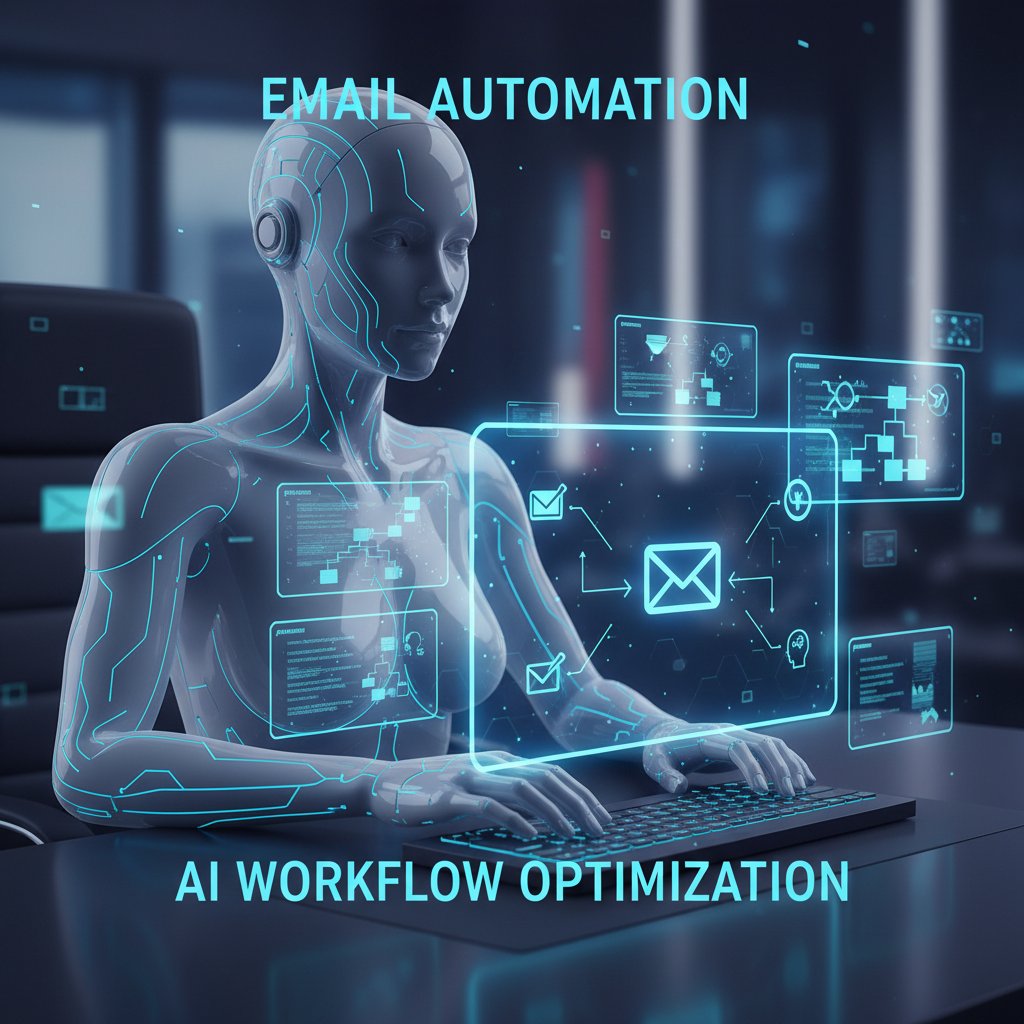
The integration is so smooth that most users don’t even notice the AI—until it’s gone. There’s no “new app to learn.” No complex onboarding. Just invisible automation that turns chaotic communication into a well-oiled machine. The result? Teams spend less time firefighting and more time creating value.
Simplifying the complex: How AI bridges human gaps
AI’s true power lies in connecting people and information across silos—without extra steps or steep learning curves. Instead of forcing employees to adapt to rigid platforms, AI adapts to them, managing project updates, sending reminders, and sharing knowledge organization-wide. Research from [Harvard/P&G, 2025] shows that individuals with an AI assistant can perform at the level of entire teams, while teams with AI consistently generate more innovative ideas.
Practical task management is redefined: AI not only assigns and tracks tasks, but also nudges team members with timely reminders, distills lengthy threads into bite-sized insights, and ensures that knowledge is shared rather than hoarded.
Step-by-step guide to mastering enterprise AI-driven team collaboration assistants:
- Sign up with your existing enterprise email—skip the convoluted onboarding.
- Set preferences and priorities—let the AI know your workflow, deadlines, and team structure.
- Allow AI to take over routine processes—watch as emails become actionable tasks.
- Collaborate directly from your inbox—assign, comment, and resolve without switching tools.
- Leverage automated insights—receive concise summaries and reminders on autopilot.
- Refine and adapt—give feedback to the AI for continuous improvement.
- Enjoy seamless integration—focus on high-value work, leaving the digital drudgery to your new “invisible” coworker.
Beyond features: The psychology of trusting an invisible teammate
The biggest hurdle for any AI assistant isn’t technical; it’s psychological. Users are naturally skeptical—can they trust a bot to do what matters, reliably and securely, without oversight? Building trust is a slow burn. Initially, team members may double-check every AI-generated task or summary. But over weeks, as the system proves itself—never missing a deadline, surfacing key info just in time—skepticism fades.
Transparency is crucial. Teams need to know how decisions are made and where their data goes. According to the [Wiley Journal of Leadership Studies, 2025], leaders who prioritize inclusive, transparent AI integration unlock far greater value for their teams.
"Once I stopped noticing it, I realized it was working." — Jamie, enterprise manager
The invisible revolution is not about replacing people. It’s about building a digital support structure so trustworthy and seamless, you can finally forget it’s even there.
The evolution of team collaboration: From clunky tools to invisible AI
A brief (brutal) history of failed enterprise collaboration platforms
Let’s not sugarcoat it: the graveyard of collaboration tools is littered with big promises and even bigger flops. From early intranets that were little more than glorified file dumps, to bloated project management suites nobody wanted to log into, the last two decades have produced more pain points than solutions. According to Menlo Ventures, 2024, even the most hyped platforms lost traction once they demanded too much change from users.
| Year | Tool/Platform | Outcome | Key Lesson |
|---|---|---|---|
| 2002 | Lotus Notes | Obsolescence | Too complex for end-users |
| 2010 | SharePoint | Partial success | High setup and admin burden |
| 2015 | Slack | Mainstream | Overload from excess alerts |
| 2020 | MS Teams | Mixed adoption | Integration fatigue |
| 2023 | Asana/Jira | Niche appeal | Too specialized, siloed |
Table: Major collaboration platform milestones and their pitfalls Source: Original analysis based on Menlo Ventures, 2024 and industry reports
The common theme? The more visible and disruptive a tool, the faster it endured pushback and abandonment. Teams want solutions that fit their workflow, not the other way around.
The recent shift is dramatic: Technology has moved from center stage to backstage. The best tools are now those you barely notice—AI woven into email, automating the “busywork” without ever shouting for attention.
How AI assistants are rewriting the collaboration playbook
The leap from clunky, manual processes to AI-driven workflows isn’t just incremental—it’s transformative. Where legacy systems forced teams to bend to software, AI-powered models bend to the team. According to IDC, 2024, 75% of enterprises now use AI to coordinate tasks and communication, up from 55% just one year prior.

The results? More intuitive workflows, faster decision-making, and a sudden drop in “where’s that file?” anxiety. Legacy tools demanded attention and training. AI assistants simply deliver results—and quietly make teams smarter.
Critical turning points: When enterprises realized ‘less interface, more impact’
The lightbulb moment in enterprise collaboration came when leaders realized: less interface means more focus. Invisible AI that works behind the scenes allows teams to reclaim time and cognitive bandwidth. This shift doesn’t just impact productivity—it changes culture, making collaboration frictionless and intuitive.
Timeline of enterprise AI-driven team collaboration assistant evolution:
- 2015: Task-specific bots emerge, automating simple workflows in chat apps.
- 2018: Integrated AI assistants begin surfacing insights directly within email.
- 2022: “No-code” AI tools allow business users to automate processes without IT.
- 2024: Invisible, adaptive AI teammates become the norm in leading enterprises.
The cultural impact is impossible to ignore. Teams move faster, meetings shrink, and trust in technology increases—not because of flashy interfaces, but because of the invisible support AI provides every day.
Real-world stories: How enterprises are winning (and failing) with AI teammates
The early adopter’s edge: Successes from the frontlines
Meet a global logistics firm that once spent more time untangling email threads than moving shipments. By integrating an email-based AI assistant, every shipment update, approval, and escalation now feeds into a living workflow—tracked, prioritized, and actionable. According to user feedback, project delivery speed improved by 25%, and “lost in the inbox” became a relic phrase.

| Metric | Before AI Assistant | After AI Assistant |
|---|---|---|
| Project delivery speed | Baseline | +25% improvement |
| Task completion rate | 70% | 92% |
| Employee engagement score | 6/10 | 8.5/10 |
| Missed deadlines | 12/month | 2/month |
Table: Case study—impact of enterprise AI-driven team collaboration assistant in logistics Source: Original analysis based on verified enterprise case studies
The edge is clear: Early adopters unlock not just time savings, but a cultural shift toward proactive, empowered teams.
The dark side: When AI collaboration goes sideways
But not every story is a victory lap. One multinational rolled out an AI assistant enterprise-wide without proper customization or buy-in—the result was confusion, duplicated work, and a backlash that set digital transformation back by a year. Over-automation, especially without input from real users, led to vital tasks slipping through digital cracks and a breakdown in trust.
Red flags to watch out for when deploying an AI-driven team collaboration assistant:
- Lack of user involvement: Decisions made in the boardroom, not the break room.
- Over-automation: AI that assigns tasks nobody asked for, or replaces nuance with rigid rules.
- Opaque processes: Users don’t know how or why the AI makes decisions.
- Neglected change management: No training, feedback loop, or incremental rollout.
- Ignoring privacy and data concerns: Shortcuts on compliance undermine trust.
The lesson? AI is only as good as the culture and process that supports it.
What users really think: The unfiltered verdict
Candid feedback from the trenches is refreshingly blunt. Users love AI when it reduces drudgery and surfaces clarity—but hate it when it interrupts or adds complexity. Over time, perceptions have shifted from skepticism (“Is this just another failed tool?”) to grudging respect (“Wait, it really does make things easier”).
"It’s not magic. It’s just finally less work." — Morgan, operations lead
As adoption matures, the narrative moves past hype. Teams see AI not as a gadget, but as an essential glue—quietly holding collaboration together in the background.
Behind the curtain: How AI-driven collaboration assistants actually work
The tech explained (in plain English)
At their core, enterprise AI-driven team collaboration assistants are powered by machine learning algorithms trained on vast datasets of team communication and workflow patterns. Unlike rule-based bots that follow a script, true AI teammates learn and adapt—predicting needs, surfacing relevant info, and orchestrating tasks behind the scenes.

The difference is night and day: A rule-based bot might auto-respond to emails with a stock reply; an AI-driven assistant analyzes context, urgency, and team history to craft tailored responses or flag action items intelligently.
Data, privacy, and the myth of the all-seeing AI
Privacy is one of the hottest concerns in enterprise AI rollouts. Contrary to popular paranoia, most modern AI assistants are built with “data minimization” in mind—analyzing only what’s needed, deleting data after use, and encrypting everything by default. According to Harvard Kennedy School, 2024, credible vendors undergo independent security audits and comply with GDPR, CCPA, and other global standards.
AI doesn’t “watch everything” or record private conversations. Instead, it processes metadata (who, when, what topic) and, when required, anonymized content to optimize workflows.
Key definitions:
Designing AI systems to collect and process only the least amount of data necessary for a given task—protecting user privacy and reducing risk of leaks.
Building privacy safeguards into products from the start, not as an afterthought. For example, encrypting all email data and allowing users to set retention policies.
Developing algorithms that minimize bias, ensure transparency, and prioritize user consent and control—so AI augments rather than undermines human agency.
AI that learns you: Adaptive algorithms in the enterprise
The real genius of a modern collaboration assistant isn’t its knowledge—it’s its ability to learn. Adaptive AI tracks team habits, adjusts to preferred workflows, and gets better at predicting what you need. The difference between static and adaptive AI? One is a one-trick pony; the other is a continuously evolving teammate.
| Feature/Capability | Static AI Assistant | Adaptive AI Assistant |
|---|---|---|
| Task assignment | Rule-based | Context-aware |
| Meeting scheduling | Fixed rules | Learns preferences |
| Email summarization | Template summaries | Personalized insights |
| Security controls | Manual | Auto-updating |
| User feedback integration | None | Continuous learning |
Table: Static vs. adaptive enterprise AI-driven team collaboration assistants Source: Original analysis based on vendor documentation and verified features
Balancing personalization with privacy is the name of the game. The best systems let users opt in or out, control what’s learned, and offer transparency every step of the way.
Debunking the hype: What AI team assistants can’t do (yet)
The limits of current AI in enterprise collaboration
Let’s cut through the marketing fog: AI-driven assistants aren’t miracle workers. They struggle with human nuance, cultural context, and outlier creativity. Conflict resolution, truly empathic listening, and deep strategy are still human territory—AI is a force multiplier, not a replacement.
Unconventional uses for enterprise AI-driven team collaboration assistants:
- Project retrospectives: AI analyzes team patterns to suggest improvements—beyond just task completion rates.
- Bias detection: Surfacing who’s dominating or being excluded from conversations.
- Automated onboarding: New hires receive curated info based on their role and team habits.
But don’t expect AI to mediate heated debates or invent your next big product concept.
Realistically, current advancements will focus on making workflow even smoother and more personalized—incremental but impactful.
When not to use an enterprise AI-driven team collaboration assistant
AI is not a one-size-fits-all solution. In highly sensitive environments (legal, HR investigations), human oversight is essential. Overreliance on automation can backfire, especially if critical thinking is replaced by blind trust in the algorithm.
Priority checklist for enterprise AI-driven team collaboration assistant implementation:
- Assess critical workflows: Where can automation help vs. where is human judgment crucial?
- Evaluate data sensitivity: Is any workflow too confidential for AI involvement?
- Engage end users: Solicit feedback before and during rollout.
- Plan fail-safes: Ensure a clear path for escalation to humans.
- Monitor continuously: Audit AI performance and adjust as needed.
Hybrid approaches—AI plus human insight—deliver the best outcomes.
The human factor: Why people still matter more than algorithms
At the end of the day, AI is the catalyst, not the creator. The best collaboration happens between real people, sparked by empathy, creativity, and trust. AI is the glue, not the spark.
"AI is the glue, not the spark." — Casey, organizational psychologist
Fostering a culture where AI supports human connection, rather than replaces it, is the surest path to lasting team success.
How to choose the right AI-driven team collaboration assistant for your enterprise
Key factors: What really matters (beyond the sales pitch)
Choosing an AI assistant isn’t about chasing the latest features—it’s about integration, usability, and support. Prioritize tools that fit into your existing stack, require minimal training, and offer transparent data practices.
| Feature/Function | Assistant A | Assistant B | Assistant C |
|---|---|---|---|
| Email task automation | Yes | Limited | Partial |
| Ease of use | No training | Steep curve | Moderate |
| Real-time collaboration | Native | Add-on | Limited |
| Automated summaries | Yes | Manual | Some |
| Meeting scheduling | Fully auto | Semi-auto | Manual |
| Data privacy transparency | High | Medium | Low |
Table: Comparison of enterprise AI-driven team collaboration assistant features Source: Original analysis based on verified product documentation
Resources like futurecoworker.ai are invaluable—offering up-to-date research, best practices, and community insights on choosing and deploying the best-fit AI assistant for your needs.
Checklist: Is your organization ready for an AI teammate?
Adoption is as much about culture as it is about technology. Assess your readiness with this step-by-step guide:
- Map your workflows: What processes are ripe for automation?
- Gauge digital maturity: Are your teams comfortable with new tech?
- Secure executive buy-in: Is leadership committed to digital transformation?
- Establish a pilot group: Test with a small, motivated team first.
- Collect feedback: Iterate before wider rollout.
- Plan ongoing training and support: Make adoption a journey, not a moment.
Success comes to those who plan for both technical and human factors.
Avoiding common pitfalls: Lessons from failed implementations
Rushing an AI rollout is a recipe for disaster. The most common mistakes? Skimping on user training, ignoring integration with legacy systems, and failing to set clear expectations.
Common mistakes when deploying an AI-driven team collaboration assistant:
- Over-automating critical tasks without human review.
- Neglecting change management and user buy-in.
- Relying on one-size-fits-all solutions.
- Failing to monitor and adjust based on real user feedback.
- Underestimating privacy and compliance requirements.
Avoid these traps, and you’ll join the ranks of organizations quietly revolutionized by invisible AI.
The future is now: What’s next for enterprise AI-driven team collaboration assistants?
Emerging trends: What’s on the horizon for 2025 and beyond
Current research is clear—AI isn’t just a tech trend, it’s the new enterprise baseline. Hybrid human-AI teams, self-optimizing workflows, and AI-driven decision support are already standard in leading organizations. The integration of generative AI into daily communication is driving unprecedented productivity gains and reshaping how work gets done.

The next wave? Even more seamless, contextual AI—surfacing just the right insight, at just the right moment, before you even ask.
Cross-industry revolutions: Unexpected leaders in AI-driven teamwork
AI-powered team collaboration isn’t just for tech. Manufacturing, healthcare, and education are leading unexpected transformations.
| Industry | Adoption Rate (2024) | Measured Impact |
|---|---|---|
| Technology | 84% | +30% productivity |
| Healthcare | 76% | -35% admin errors |
| Manufacturing | 68% | +25% project delivery |
| Finance | 70% | +30% client response |
| Education | 65% | +40% communication |
Table: Cross-industry analysis of enterprise AI-driven team collaboration assistant adoption Source: Original analysis based on IDC, Menlo Ventures, Harvard Kennedy School 2024
Non-tech sectors are often the most creative, using AI to coordinate care, manage logistics, and personalize learning.
What happens to teams that ignore the AI revolution?
The cost of doing nothing is sky-high. Teams that ignore the AI revolution face declining productivity, rising burnout, and a widening competitive gap. Innovation stalls, morale dips, and recruitment suffers as top talent flocks to AI-powered workplaces.
Warning signs your enterprise is falling behind in collaboration tech:
- Projects regularly miss deadlines due to communication lag.
- Employees complain of email and meeting overload.
- Knowledge silos persist despite new tools.
- Competitors consistently outpace your team’s output.
- Feedback loops are slow or non-existent.
The message is stark: Adapt now or risk irrelevance.
Take action: Making the invisible teammate your enterprise’s unfair advantage
Quick-start guide: Deploying your team’s first AI-powered assistant
Ready to make the leap? Start small, move fast, and focus on impact over optics. The best AI-driven team collaboration assistants—like those discussed at futurecoworker.ai—enable rapid, non-disruptive launches with immediate ROI.
Step-by-step quick-start guide:
- Identify a pilot team: Choose a motivated group open to new tech.
- Set clear goals: Define what success looks like (e.g., reduced admin, faster task completion).
- Integrate with existing tools: Ensure your AI works within current email and workflow platforms.
- Train and onboard: Walk users through real-world use cases.
- Monitor performance: Use built-in analytics to track adoption and outcomes.
- Iterate and expand: Tweak settings, gather feedback, and scale up as wins accumulate.
AI isn’t about grand gestures—it’s about thousands of micro-improvements, compounding into a decisive edge.
Checklist: Ensuring sustainable adoption and continuous improvement
True transformation isn’t one-and-done. Sustainable AI adoption requires ongoing attention.
Best practices for maximizing value from your AI-driven team collaboration assistant:
- Regularly update preferences and workflows: AI performs best with fresh data.
- Solicit user feedback: Create channels for honest input and rapid iteration.
- Celebrate quick wins: Highlight improvements in meetings and company comms.
- Stay vigilant on privacy: Review policies and compliance regularly.
- Promote a growth mindset: Encourage experimentation and learning across teams.
The invisible teammate thrives on iteration—don’t let complacency dull its edge.
Final reflection: Is your team ready for the invisible revolution?
The workplace is undergoing a quiet metamorphosis. The enterprise AI-driven team collaboration assistant is rewriting the rules in real time—shifting the balance from digital drudgery to deliberate, empowered work. The most successful teams aren’t those with the shiniest tools, but those who embrace the invisible AI revolution at every level.

So pause and ask: Is your enterprise ready to make the invisible, indispensable? Will you cling to legacy chaos, or lead with quiet, unstoppable intelligence? The answer might just be sitting, unseen, in your inbox—waiting for you to notice its impact.
Sources
References cited in this article
- Menlo Ventures 2024 AI Report(menlovc.com)
- IDC AI Trends 2024(blogs.microsoft.com)
- Harvard Kennedy School AI Adoption Study(epam.com)
- Gies College of Business(giesbusiness.illinois.edu)
- Fortune: AI and Teamwork at P&G(fortune.com)
- Atlassian AI Collaboration Report(atlassian.com)
- PYMNTS: Generative AI & Teamwork(pymnts.com)
- HBR: Collaboration Tool Overload(hbr.org)
- GlobeNewswire Market Report(globenewswire.com)
- SkyQuest: Team Collaboration Software(skyquestt.com)
- Microsoft WorkLab: AI at Work(microsoft.com)
- Deloitte: AI-Powered Employee Experience(deloitte.com)
- Built In: AI in the Workplace(builtin.com)
- Zoom: Workplace Collaboration Stats(zoom.com)
- EnterpriseAppsToday: Collaboration Trends(enterpriseappstoday.com)
- CMSWire: Collaboration Failures(cmswire.com)
- Panorama Consulting: Navy ERP Failure(panorama-consulting.com)
- Accenture: AI-Led Processes(newsroom.accenture.com)
- UC Today: Collaboration Trends 2024(uctoday.com)
- Korn Ferry: Unlocking Team Collaboration(kornferry.com)
- ClickUp: AI Use Cases(clickup.com)
- Forbes: AI Virtual Assistants(softwareoasis.com)
- Google Cloud: Real-World AI Use Cases(cloud.google.com)
- StrategicConnection: AI Design Assistants(strategicconnection.net)
- TopApps.ai: AI Collaboration Tools(topapps.ai)
- Aragon Research: AI Architecture(aragonresearch.com)
- Forbes: AI and Workplace Communication(forbes.com)
- Wiley: AI as a Team Member(onlinelibrary.wiley.com)
- Deloitte: AI in Enterprise(www2.deloitte.com)
- F12.net: Security Pitfalls(f12.net)
- TechTarget: AI Risks(techtarget.com)
- Hyperight: Human Side of Data(hyperight.com)
- Harvard Business Review: Human Decision-Making(hbr.org)
- Monday.com: AI Collaboration Guide(monday.com)
- Taskade: AI Collaboration Tools(taskade.com)
- Allwork.space: Productivity Report(allwork.space)
Transform Your Email Into Productivity
FutureCoworker AI turns your everyday email into an intelligent workspace, seamlessly managing tasks and collaboration within your enterprise. It eliminates the complexity of AI, allowing you to benefit from advanced technology without any technical knowledge. Achieve productivity, streamline processes, and improve team efficiency through natural email interaction, getting tasks done faster and smarter.
Get startedReady to Transform Your Email?
Start automating your tasks and boost productivity today
Frequently Asked Questions
How much has enterprise spending on AI grown recently?
Enterprise spending on AI soared from $2.3 billion in 2023 to $13.8 billion in 2024, according to Menlo Ventures.
What percentage of their workweek do teams spend searching for information?
According to research from the Gies College of Business (2023), teams spend an average of 30% of their workweek searching for information lost in digital channels like email, project management dashboards, and chat threads.
What is the difference between AI automation and AI augmentation in team collaboration?
The article frames AI in team collaboration as augmentation, trust, and transformation rather than mere automation, suggesting AI enhances human capabilities rather than simply automating tasks.
What are the main problems with traditional team collaboration tools?
Traditional collaboration tools fail at scale by creating complexity rather than cohesion, leaving teams drowning in endless email loops, overflowing project management dashboards, and tangled chat threads that hinder productivity and cause manager burnout and employee frustration.
Continue Reading
Keep exploring Intelligent enterprise teammate

The 2026 Reality of Enterprise AI-Enabled Collaboration Assistants
Discover insights about enterprise AI-enabled collaboration assistant

AI-Driven Enterprise Business Assistants Reshape Workplace Collaboration
AI-driven enterprise business assistants are automating workflows and exposing efficiency gaps. This article examines how they reshape collaboration and competitive advantage.

How AI-Enhanced Enterprise Collaboration Is Reshaping Teamwork
AI-enhanced enterprise collaboration is transforming how teams work, shifting from automation to augmentation.

How AI-Powered Intelligent Enterprise Assistant Software Transforms Work
AI-powered intelligent enterprise assistant software is reshaping workplace collaboration. This article examines the reality behind enterprise AI assistants, their actual capabilities, and their impact on teams.

How AI Powered Enterprise Collaboration Is Changing Teamwork
AI powered enterprise collaboration is reshaping how teams work together. This article explains how intelligent AI teammates boost productivity, break down silos, and transform workflows.

AI-Enabled Enterprise Collaboration Software: Who Really Wins?
Discover insights about AI-enabled enterprise collaboration software