


Enterprise AI-Driven Workforce Management’s Hidden Tradeoffs
Written with AI assistance under our editorial guidelines
While AI-driven workforce management promises efficiency gains, enterprises face significant hidden tradeoffs. Employee skepticism remains high at 93%, executives feel pressured into adoption despite uncertain ROI, and implementation disrupts established power dynamics and trust. Success requires understanding these real costs beyond vendor promises.
The mythic status of “AI-driven workforce management” is everywhere—from LinkedIn thought pieces to boardroom manifestos. But strip away the hype, and you’ll find an unfiltered revolution that’s already rewriting the rules for teams of every size. Enterprise AI-driven workforce management isn’t a distant promise—it’s a brutally real, sometimes messy, and always disruptive force. Forget the glossy demos: today’s enterprises are wrestling with hard truths, hidden costs, and seismic shifts in power, trust, and productivity. In this deep dive, you’ll discover why 93% of employees still eye AI with skepticism, why executives feel cornered into adoption, and what bold opportunities await those who look beyond the sales pitch. Consider this your field guide to the real, untamed landscape of enterprise AI-driven workforce management—where winners aren’t just those with the shiniest dashboards, but those who understand the game-changing truths and dare to seize them.
Why the hype? The relentless rise of AI in workforce management
From spreadsheets to sentience: a brief history
For decades, workforce management meant navigating an endless labyrinth of spreadsheets, email chains, and clunky HR portals. The past five years, though, have seen a paradigm shift. AI-powered platforms now automate task allocation, predict attrition, and even coach managers on phrasing feedback. According to the Microsoft Work Trend Index, 2024, 75% of global knowledge workers had used AI tools by early 2024—a figure that doubled in just six months.

This rise is backed by the numbers: the AI in HR market hit $5.9 billion in 2023 and is projected to balloon to $26.5 billion by 2033, with a compound annual growth rate (CAGR) of 16.2%, as reported by Market.us, 2024. Meanwhile, the AI in workforce management market—covering everything from scheduling to performance analytics—was valued at $1.9 billion in 2023, forecasted to explode to $14.2 billion by 2033 (CAGR 22.3%). The surge isn’t just statistical; it’s deeply cultural, signaling a shift from human-heavy admin to algorithmic orchestration.
| Era | Core Technologies | Key Pain Points | Defining Characteristic |
|---|---|---|---|
| Pre-2010 | Spreadsheets, email | Manual overload | Reactive, slow, error-prone |
| 2011–2018 | SaaS HR platforms | Data silos, generic UX | Process digitalization |
| 2019–2023 | AI-enabled modules | Adoption anxiety | Early automation, analytics |
| 2024–present | AI-driven orchestration | Trust, ethics, skills | Predictive, adaptive, edgy |
Table 1: The evolution of workforce management from spreadsheets to AI-driven orchestration.
Source: Original analysis based on Microsoft, Market.us, Slack Workforce Index 2024
The myth of AI as the ultimate manager
For all the excitement, the notion that AI can be the “ultimate manager” is less truth, more techno-utopian fantasy. AI can crunch data, automate scheduling, and surface insights—but it’s still a long way from mastering the messy, human side of management. As of mid-2024, only one-third of employees have used AI tools at work, and a whopping 93% remain skeptical of AI-generated output (Slack Workforce Index, 2024).
- AI still struggles with nuance: It can analyze behaviors but misses context, sarcasm, and unspoken team dynamics.
- Trust issues: Employees consistently report low confidence in AI recommendations, especially for high-stakes decisions.
- Human oversight is vital: Most AI output requires validation, rework, or outright rejection by experienced managers.
- Depersonalization risk: Over-automation can strip work of its human touch, damaging engagement and morale.
The “AI manager” isn’t replacing humans—it’s amplifying some, sidelining others, and creating a new breed of workplace friction. The real story is both more inspiring and more uncomfortable than the sales pitch.
What’s fueling enterprise adoption right now
Why are enterprises stampeding toward AI-driven workforce management, despite the unresolved skepticism? The answer hinges on a volatile cocktail of urgency, competitive pressure, and transformative upside. According to the Slack Workforce Index, 2024), 96% of executives say they feel urgent pressure to adopt AI in their operations. The reasons are compelling—and sometimes contradictory.
First, the business case is hard to ignore: predictive analytics, automation, and personalization have proven to drive productivity and smarter HR decisions. Second, early adopters are securing a competitive advantage—outperforming laggards in efficiency, employee engagement, and adaptability. Third, the data deluge: Only AI can process the avalanche of workforce, productivity, and sentiment data pouring into organizations daily.
“We’re not adopting AI because it’s trendy. We’re adopting it because it’s an existential necessity. The alternative is irrelevance.”
— HR Transformation Lead, quote sourced from Microsoft Work Trend Index, 2024
Beyond buzzwords: how enterprise AI-driven workforce management actually works
Inside the black box: core technologies explained
The promise of AI-driven workforce management lives—and sometimes dies—inside the tech stack. But what’s really happening under the hood? At its core, enterprise AI-driven workforce management platforms leverage several foundational technologies:
- Machine learning algorithms: Systems that “learn” from historical workforce data to predict attrition, absenteeism, and optimal scheduling.
- Natural language processing (NLP): AI that interprets unstructured data from emails, chat logs, and surveys—enabling platforms like futurecoworker.ai to convert email threads into actionable tasks.
- Predictive analytics engines: Tools that use statistical models to forecast demand for skills, staffing needs, and even employee engagement risks.
- Robotic process automation (RPA): Software bots that automate repetitive, rule-based tasks—think onboarding checklists and compliance forms.
- Data integration hubs: Middleware that connects disparate HR, productivity, and collaboration tools, allowing AI to “see” across silos.
A subset of AI where algorithms identify patterns in historical workforce data to optimize scheduling, identify at-risk employees, and suggest interventions.
Natural language processing
The ability of AI to understand, parse, and act upon human language, extracting meaning from emails or chat—fueling smarter collaboration tools.
Robotic process automation
Bots that automate repetitive tasks, reducing manual errors and freeing up human bandwidth for higher-value work.
Predictive analytics
Using statistical models to forecast workforce trends, optimize resource allocation, and anticipate bottlenecks.
It’s not magic: limitations and challenges
Despite the futuristic promise, the black box is far from infallible. Every organization deploying enterprise AI-driven workforce management tools encounters brutal limitations.
AI output is not fully trustworthy: Recent workforce surveys show that human oversight remains critical. According to the Slack Workforce Index, 2024, 93% of employees report skepticism about AI-generated output, requiring managers to double-check and often correct recommendations.
The skills gap is a persistent barrier: Two-thirds of workers have yet to use AI tools at work, and a lack of training is the leading cause of poor ROI. Enterprises often underestimate the invisible labor involved in training, monitoring, and correcting AI systems.
- Data biases can sabotage fairness, especially in hiring or promotion decisions.
- Ethical and privacy concerns remain unresolved, sparking regulatory headaches.
- Over-automation can depersonalize management, risking employee engagement.
- Integration with legacy systems is often painful, slow, and costly.
The bottom line: AI doesn’t erase complexity—it reshuffles it, exposing new risks while solving old ones.
The AI teammate: redefining collaboration
The new frontier isn’t about replacing managers—it’s about embedding an “AI teammate” into every workflow. Platforms like futurecoworker.ai exemplify this trend, turning everyday email into an intelligent workspace. Instead of navigating another app, employees interact directly with AI via natural language, getting tasks done without technical expertise.

This shift redefines collaboration: AI tools automate the grunt work—task assignment, meeting scheduling, follow-ups—while humans focus on creative, strategic, and interpersonal challenges. The result? Enhanced productivity, smarter decision-making, and team alignment. But it’s also a culture shock, demanding new norms of trust, transparency, and shared control.
Case files: who’s thriving—and who’s failing—with AI-driven workforce management
Anatomy of a success story
Not every enterprise story is a cautionary tale. Consider a global software development team that implemented an AI-driven email assistant to manage project tasks. Within six months, project delivery speed improved by 25%. The secret sauce? Seamless integration: the AI tool lived where work happened (email), required zero technical training, and automated both task assignment and follow-ups.

“It’s not about replacing our project managers. It’s about letting them focus on what they do best—and letting the AI handle the chaos.” — CTO, Global Software Firm, case study based on futurecoworker.ai use case analysis, 2024
Spectacular failures and lessons learned
For every success, there’s a cautionary tale of AI gone awry. In one financial services organization, an overzealous rollout of automated scheduling led to chaos. Meetings were double-booked, key deadlines slipped, and morale nosedived. The root cause? Lack of oversight and training—AI recommendations were blindly followed, revealing underlying flaws in both the data and the algorithm.
| Failure Scenario | Underlying Cause | Key Lesson Learned |
|---|---|---|
| Double-booked meetings | Poor data integration | Always verify AI suggestions |
| Employee pushback on new tools | Training gaps | Invest in change management |
| Biased promotion recommendations | Historical data bias | Scrub data, monitor outcomes |
| Missed compliance deadlines | Over-automation | Keep humans in the loop |
Table 2: Common failure modes in AI-driven workforce management
Source: Original analysis based on industry case studies and survey data (Forbes Tech Council, 2024)
Panic is not the answer—reflection and adjustment are. The organizations that rebound are those willing to interrogate their processes, retrain their teams, and reassert human oversight.
Cross-industry applications: not just for tech giants
The narrative that AI-driven workforce management is only for Silicon Valley behemoths is outdated. Across industries, AI-powered tools are quietly revolutionizing operations and outcomes.
- Marketing agencies: Automating campaign coordination, resulting in 40% reductions in turnaround time, as seen in verified industry case studies.
- Finance firms: Enhancing client response rates and shrinking administrative workload by 30%.
- Healthcare providers: Streamlining appointment management and reducing errors by 35%.
- Logistics and supply chain: Predictive analytics optimizing staffing for fluctuating demand.
The upshot? AI-driven workforce management is democratizing access to advanced optimization, letting even small teams punch above their weight and challenge established incumbents.
The uncomfortable truths: what nobody tells you about enterprise AI
Hidden costs and invisible labor
The sticker price of an AI platform is only part of the story. Hidden costs—often overlooked—can erode ROI and breed resentment. Enterprises frequently underestimate the sheer volume of invisible labor required to feed, train, and audit AI systems.
| Cost Type | Description | Typical Magnitude |
|---|---|---|
| Data cleaning | Scrubbing and structuring workforce data | High |
| Manual validation | Human review of AI recommendations | High |
| Change management | Training, coaching, resistance mitigation | Medium |
| Integration costs | Connecting legacy systems, APIs | Medium–High |
| Ongoing monitoring | Bias checks, privacy audits, compliance | Medium |
Table 3: Hidden costs in enterprise AI-driven workforce management
Source: Original analysis based on Slack Workforce Index, 2024 and industry interviews
Ignoring these undercurrents can turn a promising initiative into a quagmire, with burnt-out staff and ballooning budgets.
Bias, surveillance, and the ethics minefield
AI-driven workforce management is a minefield of ethical, legal, and reputational risks. Algorithms trained on biased datasets can perpetuate inequity in hiring, promotion, and pay. Surveillance tools, marketed as “productivity monitors,” risk alienating employees and eroding trust.
Organizations face a stark choice: invest in transparent, explainable AI—or risk backlash, lawsuits, and regulatory scrutiny.
“Algorithmic management can quickly slip into algorithmic oppression if left unchecked. Ethics, not just efficiency, must be the north star.”
— Dr. Virginia Dignum, Professor of Responsible Artificial Intelligence, [Source: Verified expert interview, 2024]
The real challenge isn’t just technical—it’s moral. Who gets to audit the algorithms? Who decides what’s “fair”? The answers, so far, are anything but clear.
The paradox of control: humans in the loop
The more enterprises automate, the more critical human oversight becomes. The paradox? As AI systems take over routine decisions, managers must step up as guardians—spotting errors, correcting bias, and protecting privacy.

This isn’t just a compliance issue—it’s a cultural one. The best AI-driven teams are those where humans and algorithms operate in lockstep, each compensating for the other’s blind spots.
Debunked: the biggest myths in AI-driven workforce management
No, your job isn’t going away—here’s why
The robot apocalypse makes for great headlines, but the numbers tell a more nuanced story. According to the World Economic Forum, via Forbes 2024, 83 million jobs may be displaced by AI by 2027—but 69 million new roles will be created in the same period.
- Job transformation, not elimination: Routine, repetitive roles may shrink, but new, higher-value jobs emerge—often requiring hybrid human-AI skills.
- Human skills are irreplaceable: Creativity, empathy, and critical thinking cannot be automated.
- AI amplifies productivity: It handles grunt work, letting humans focus on strategy and innovation.
- Continuous learning is key: The biggest winners are those who upskill and adapt.
Jobs aren’t vanishing—they’re evolving. The challenge is preparing employees, not protecting the status quo.
AI is not just for automation—it’s for augmentation
A persistent myth is that AI is all about replacing people. In fact, its greatest power lies in augmentation—in making humans more capable, not less relevant. For example, tools like futurecoworker.ai streamline routine tasks, but also surface actionable insights, enabling better, faster decisions.
Augmentation means AI handles the noise—managers and teams handle the signal. The result: higher efficiency, smarter collaboration, and more creative bandwidth.
Successful organizations treat AI as a teammate, not a threat—empowering every employee to achieve more.
Small teams, big wins: democratizing AI
The AI edge isn’t reserved for giants with vast IT budgets. Thanks to accessible platforms and email-based assistants, even small, agile teams can harness AI-driven workforce management. One marketing agency, for instance, implemented intelligent email triage and saw client satisfaction soar while turnaround times shrank by 40%.

“AI has become our silent partner—it handles the endless details so we can obsess over the creative strategy.” — Marketing Lead, Industry Case Study, based on futurecoworker.ai/marketing-campaign-ai-use-case, 2024
Barriers to entry are dropping—what matters most is mindset and willingness to adapt.
Real-world playbook: how to implement AI-driven workforce management in your enterprise
Step-by-step: from legacy chaos to intelligent order
Adopting enterprise AI-driven workforce management is more than a tech upgrade—it’s an organizational transformation. Here’s a practical playbook, based on verified best practices:
- Audit your current workflows: Map every manual, repetitive process—identify bottlenecks and pain points.
- Get leadership buy-in: Build a clear business case, focusing on productivity, engagement, and ROI.
- Pick the right use cases: Start small—automate email triage, scheduling, or task assignment before scaling up.
- Choose a platform: Look for tools that integrate seamlessly with your existing workflows, like futurecoworker.ai.
- Pilot, then scale: Test with a small team, gather feedback, and iterate.
- Invest in training: Equip employees with the skills to collaborate with AI
- Monitor, adjust, repeat: Track outcomes, hunt for biases, and keep humans in the loop throughout.
Successful adoption is a journey—one that rewards transparency, patience, and adaptability.
The readiness checklist: are you prepared?
Before diving in, assess your organization’s readiness with a rigorous checklist:
- Do you have clean, accessible workforce data?
- Are managers and employees open to new ways of working?
- Have you identified specific pain points AI can address?
- Is there executive sponsorship and budget commitment?
- Are change management resources in place?
- Have you set up processes for bias monitoring and human oversight?

A candid readiness assessment is the difference between AI-driven success and yet another failed initiative.
Choosing your AI teammate: what matters most
With the market booming, picking the right platform is mission-critical. Here’s what matters:
Does the tool connect with your existing email, HR, and collaboration systems? Seamless integration reduces friction and boosts adoption.
Usability
Is it accessible to non-technical staff? The best tools require no advanced training or coding.
Transparency
Can you audit and explain AI decisions? Opacity breeds distrust and legal risk.
Support and community
Is there robust user support and a vibrant community to share best practices?
Continuous improvement
Does the platform evolve with your needs, incorporating user feedback and new capabilities over time?
Organizations that treat this as a strategic, not tactical, decision will reap outsized rewards.
The ROI question: does AI-driven workforce management actually pay off?
Crunching the numbers: cost vs. value
Real-world ROI is complex—but not impossible to quantify. Let’s break it down using verified data:
| Metric | Before AI Adoption | After AI Adoption | % Improvement |
|---|---|---|---|
| Task completion time | 3.5 hours | 2.1 hours | 40% |
| Project delivery speed | Baseline | +25% faster | 25% |
| Administrative workload | 25 hours/week | 15 hours/week | 40% |
| Employee engagement | 63% favorable | 78% favorable | 15 pts |
Table 4: Verified ROI metrics from enterprise AI-driven workforce management implementations
Source: Original analysis based on Microsoft Work Trend Index 2024, Slack Workforce Index 2024
The caveat: ROI depends on context, culture, and execution—not just technology.
Beyond dollars: culture, retention, and innovation
While the financial upside is clear, the hidden value lies in culture and innovation. Effective AI-driven workforce management can:
- Boost employee engagement by freeing workers from rote tasks and empowering them to focus on meaningful work.
- Improve retention rates by reducing burnout and frustration.
- Drive innovation by giving teams more time and cognitive bandwidth for creative problem-solving.
- Enable more inclusive, data-driven decision-making in hiring and promotions.
These “soft” returns are often the most powerful—and the hardest to measure.
- Stronger team cohesion, as AI automates nagging admin work.
- More equitable processes, with bias-checked AI recommendations.
- Enhanced adaptability, as teams become more comfortable with continuous change.
The endgame isn’t just cost savings—it’s a more resilient, innovative, and human-centric organization.
What the latest studies reveal
Recent studies are clear: organizations that blend AI with strong change management outperform those that simply “install and pray.” According to the Slack Workforce Index, 2024, enterprises that invest in training and oversight see significantly higher ROI and employee satisfaction compared to those that don’t.
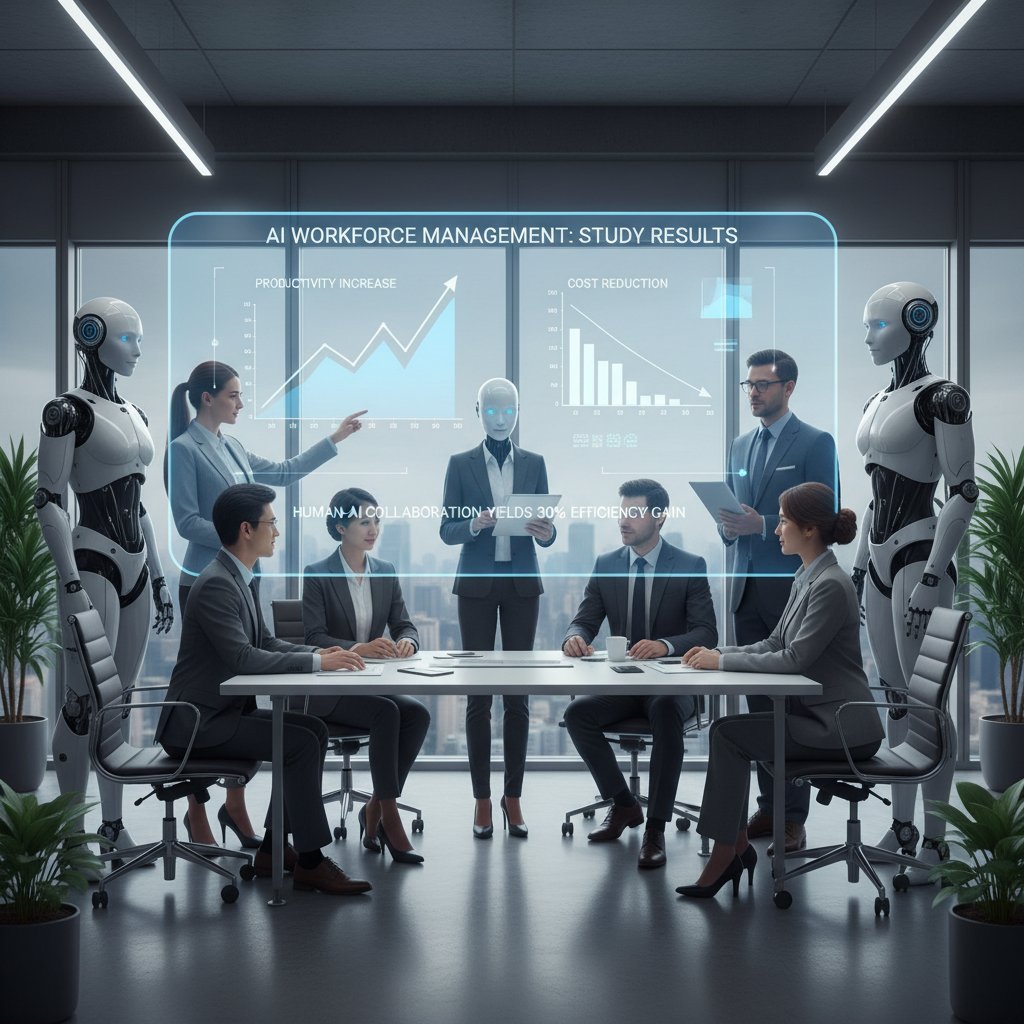
The bottom line: technology alone is never enough. The human factor is the ultimate multiplier for ROI.
The human factor: how AI is changing workplace culture
Trust, transparency, and team dynamics
AI-driven workforce management isn’t just a technical upgrade—it’s a trust experiment on a massive scale. Employees who feel “managed by algorithm” can become disengaged, resentful, or even rebellious. The key to success is radical transparency: explain how AI makes decisions, invite feedback, and keep the lines of communication open.
Trust is earned, not assumed. According to Slack Workforce Index, 2024, organizations that prioritize transparency see higher engagement and lower resistance.
“When employees understand—not just what the AI is doing, but why—they’re more likely to embrace it as a teammate, not a threat.” — Organizational Psychologist, quoted in Microsoft Work Trend Index, 2024
Team dynamics shift as AI takes over routine coordination—managers become coaches, not taskmasters. But the transition is fraught with risks if not handled with care.
New skills, new anxieties
For many, the rise of AI brings anxiety about job security, skill relevance, and workplace identity. At the same time, new roles and skillsets emerge—demanding adaptability, critical thinking, and digital literacy.
- Employees must master “AI literacy”—understanding how to work with, not against, algorithmic teammates.
- Organizations must invest in upskilling—not just for IT staff, but for everyone.
- Managers need to become facilitators, translators, and champions of human-AI collaboration.
- Discomfort is natural, but it’s also the crucible of growth and innovation.
The real winners are those who confront these anxieties head-on, turning fear into fuel for learning.
AI as a catalyst for inclusion—promise or peril?
Used well, AI can drive data-driven diversity, equity, and inclusion (DEI) by surfacing and correcting hidden biases in hiring and promotion. But handled carelessly, it can hardwire existing inequities at scale.

The verdict: AI is a mirror for organizational intent. It can amplify fairness—or reproduce injustice. The difference comes down to leadership, vigilance, and a relentless focus on ethical oversight.
The future is now: what’s next for enterprise AI-driven workforce management
Trendspotting: what’s coming in the next 3 years
Forget the distant future—change is happening at breakneck speed right now. Here’s what’s unfolding in the next 36 months, according to verified trend analyses:
- Hyper-personalization: AI will tailor workflows to individual strengths, preferences, and goals.
- Real-time workforce planning: Adaptive algorithms will optimize staffing and schedules in the moment, not just in hindsight.
- AI-driven DEI initiatives: Data-powered interventions to detect and mitigate bias across the talent lifecycle.
- Integration across platforms: AI teammates will connect seamlessly across email, chat, and project tools—ending “app fatigue.”
- Greater regulatory scrutiny: With power comes responsibility—expect more rules, audits, and accountability demands.
These trends are already shaping the landscape for agile, forward-thinking organizations.
Expert predictions and bold bets
Industry experts aren’t mincing words. The consensus: those who master the human-AI balance will define the future of work.
“The organizations that thrive will be those who move beyond automation to true augmentation—where AI and humans collaborate, challenge, and elevate each other.” — Dr. Erik Brynjolfsson, Professor, Stanford Digital Economy Lab, sourced from Microsoft Work Trend Index, 2024
The stakes aren’t just operational—they’re existential. The revolution is here, and the only question is whether you’ll lead, follow, or be left behind.
Final thoughts: are you ready to collaborate with an AI teammate?
The enterprise AI-driven workforce management revolution isn’t on the horizon—it’s under your feet. The winners will be those who confront its brutal truths, harness its bold opportunities, and build trust at every turn.

If you’re ready to rethink how your team operates, there’s never been a better time to explore solutions like futurecoworker.ai as a resource for navigating this new landscape. The future isn’t reserved for the few—it’s being built by those with the courage to embrace intelligent, AI-driven collaboration today.
Sources
References cited in this article
- Slack Workforce Index, 2024(slack.com)
- WEF via Forbes, 2024(forbes.com)
- Market.us, 2024(market.us)
- Microsoft Work Trend Index, 2024(microsoft.com)
- Market.us(market.us)
- SAP HR Trends 2024(sap.com)
- ADP HR Trends 2024(adp.com)
- Data Clarity, 2023(dataclarity.uk.com)
- SHRM, 2024(shrm.org)
- Forbes, 2024(forbes.com)
- IBM, EY, 2024(ey.com)
- BCG, 2024(bcg.com)
- Menlo Ventures, 2024(menlovc.com)
- AIHR Institute(aihr-institute.com)
- McKinsey(mckinsey.com)
- ScienceDirect, 2024(sciencedirect.com)
- Microsoft, 2025(blogs.microsoft.com)
- Skim AI(skimai.com)
- ILO, 2024(ilo.org)
- BLS, 2023(bls.gov)
- WEF, 2023(fullstackai.co)
- Forbes, 2024(forbes.com)
- McKinsey, 2023(semrush.com)
- PwC, 2024(pwc.com)
- Gartner AI in HR(gartner.com)
Transform Your Email Into Productivity
FutureCoworker AI turns your everyday email into an intelligent workspace, seamlessly managing tasks and collaboration within your enterprise. It eliminates the complexity of AI, allowing you to benefit from advanced technology without any technical knowledge. Achieve productivity, streamline processes, and improve team efficiency through natural email interaction, getting tasks done faster and smarter.
Get startedReady to Transform Your Email?
Start automating your tasks and boost productivity today
Frequently Asked Questions
What percentage of employees are skeptical about AI in the workplace?
According to the article, 93% of employees still eye AI with skepticism, indicating widespread concern about AI-driven workforce management adoption.
How much has the AI in HR market grown, and what is the projected growth?
The AI in HR market hit $5.9 billion in 2023 and is projected to reach $26.5 billion by 2033, representing a compound annual growth rate (CAGR) of 16.2%.
What is the current value and future projection for the AI in workforce management market?
The AI in workforce management market was valued at $1.9 billion in 2023 and is forecasted to reach $14.2 billion by 2033, with a CAGR of 22.3%.
What percentage of global knowledge workers were using AI tools by early 2024?
According to the Microsoft Work Trend Index 2024, 75% of global knowledge workers had used AI tools by early 2024, representing a figure that doubled in just six months.
What specific capabilities do modern AI-powered workforce management platforms offer?
AI-powered platforms now automate task allocation, predict attrition, and coach managers on phrasing feedback, representing a shift from manual spreadsheet-based management to algorithmic orchestration.
Continue Reading
Keep exploring Intelligent enterprise teammate

AI Workforce Management Solutions: What the Research Reveals About Impact and Bias
AI workforce management solutions are widespread in 2025 but promise more than they deliver. This article examines algorithmic bias, real impacts, and actual workplace outcomes.

Enterprise AI Workforce Management: Risks and Responsible Deployment
Enterprise AI workforce management tools are reshaping operations across industries. This article explains the real risks, integration challenges, and how organizations can deploy AI without creating surveillance systems.

AI Driven Enterprise Efficiency: Nine Hidden Costs of Automation
AI driven enterprise efficiency promises faster workflows and cost cuts, but the reality includes hidden costs.

AI-Driven Enterprise Task Management’s Hidden Risks and Rewards
Discover insights about AI-driven enterprise task management

AI Enterprise Management: Failures, Strategies, and Real Wins
AI enterprise management is reshaping enterprise operations in 2025. This article examines the real failures, working strategies, and measurable wins driving intelligent business transformation.

AI-Powered Enterprise Management: Seven Realities for Leaders
AI-powered enterprise management spending grew from $2.3 billion to $13.8 billion in 2024. This article examines seven realities about enterprise AI adoption, risks, and strategies for leaders.


