
Email-Based Team Management, Minus the Apps, Plus an AI Brain
Written with AI assistance under our editorial guidelines
Email remains the backbone of team management despite widespread predictions of its demise. With 4.3 billion users and 347 billion daily messages, email persists as the primary tool for critical documentation, approvals, and accountability across organizations. AI-powered email systems are now transforming inboxes into streamlined command centers, enabling more efficient team collaboration without requiring additional apps.
Forget everything you think you know about email. In a world obsessed with shiny collaboration apps, email-based team management is back—reborn, reloaded, and ruthlessly efficient. The numbers don’t lie: nearly 4.3 billion people rely on email globally, sending an eye-watering 347 billion messages every day. Yet, the real news isn’t about quantity; it’s about transformation. As AI invades the last bastion of digital bureaucracy—your inbox—corporate teams from legacy giants to scrappy start-ups are quietly unlocking a productivity arms race. If you’re rolling your eyes at “AI-powered email,” you’re missing the point. This isn’t a recycled productivity hack; it’s an underground revolution where your email becomes the command center, your AI teammate does the heavy lifting, and the cluttered chaos gives way to streamlined collaboration. Welcome to the new era of digital productivity, where email isn’t just alive—it’s the most dangerous weapon in your team’s arsenal.
Why your inbox is still the real MVP of team management
The myth of email’s demise
Every year, a new breed of chat app claims to be the death knell for email. The headlines shout: “Slack killed email!” or “Why Teams is the only tool you need!” Yet, behind closed doors, business still runs on your inbox. There’s a persistent belief that email is obsolete in the era of real-time messaging, emojis, and endless notifications. But dig deeper, and you’ll find the grave is empty.
“The death of email is a myth that has been recycled for over a decade. Email persists because it’s universal, asynchronous, and leaves a record. Most importantly, it adapts.” — Anna Wise, AI researcher
Despite the proliferation of collaboration tools, organizations rely on email for critical documentation, official approvals, and the chain of accountability. According to SecureMailMerge, as of 2023, over 4.3 billion people are email users, and it remains the most-used business communication tool, outlasting every new, hyped-up platform. Companies may experiment with trendy apps, but when it comes to decisions, records, and real action, they default to email.

The data is unambiguous: while chat apps are ubiquitous, the actual work—task assignments, document approvals, project handovers—happens in the inbox. Email isn’t dead; it’s just become invisible to those seduced by the next big thing.
Email’s surprising adaptability
Email’s true power isn’t just its longevity—it’s its uncanny ability to evolve. Over the past three decades, email has survived every digital disruption thrown at it. From the earliest dot-com booms to today’s remote work explosion, email has proven to be the ultimate shape-shifter.
One reason for this resilience is cross-generational adoption. Boomers, Gen X, Millennials, and even Gen Z use email for team management, because it’s the lowest common denominator—no onboarding required. Unlike proprietary chat systems or project management apps, email doesn’t demand you learn a new language or workflow. It’s platform-agnostic, accessible from any device, and tied into legal and compliance frameworks that businesses trust.
Unspoken truths about email-based team management include:
- Built-in audit trails: Every message, attachment, and approval is automatically archived for compliance and reference—no extra effort required.
- Universal accessibility: You can reach a CEO in Tokyo and a freelancer in Buenos Aires with a single click, without worrying about app compatibility.
- Seamless handoffs: When employees leave or projects shift, email’s threaded history ensures nothing gets lost in the shuffle.
- Asynchronous by design: Unlike chat, email doesn’t demand an instant reply, protecting deep work and reducing burnout.
- Data portability: Exporting, searching, or auditing is straightforward—no vendor lock-in or complex exports.
These sleeper features make email a stealth powerhouse for teams who want to get things done—quietly, reliably, and with a paper trail the auditors will envy.
What teams really need: Simplicity, not another app
Here’s the dirty little secret behind app fatigue: every new tool promises efficiency, but each adds another layer of friction. Teams are drowning not for lack of technology, but because of too much of it. Endless notifications, fragmented conversations, and context-switching kill productivity.
What teams crave isn’t another platform; it’s radical simplicity. Adoption is highest when the tool matches existing habits with little to no learning curve. Email—already embedded in daily workflows—is the only platform that meets users where they are. When you add AI into this mix, the magic happens: instead of replacing your inbox, AI turns it into a proactive teammate. Imagine an AI that reads your emails, tracks your deadlines, categorizes tasks, and nudges you at just the right time—all without ever logging into a new tool. Teams don’t need another app. They need a smarter inbox.
The rise of the AI-powered email teammate
How AI transforms your inbox from chaos to command center
Open your inbox. If it feels like a battlefield strewn with half-finished projects and cryptic CCs, you’re not alone. But AI is changing the terms of engagement. According to a 2024 Microsoft/IDC study, AI tools that automate routine email tasks save employees 15 to 30 minutes every day. What used to be chaos is now curated, prioritized, and actionable.
AI parses incoming messages, flags deadlines, extracts action items, and assigns tasks—all in real time. The result? Your inbox morphs from a messy to-do list into a mission control center for your team.
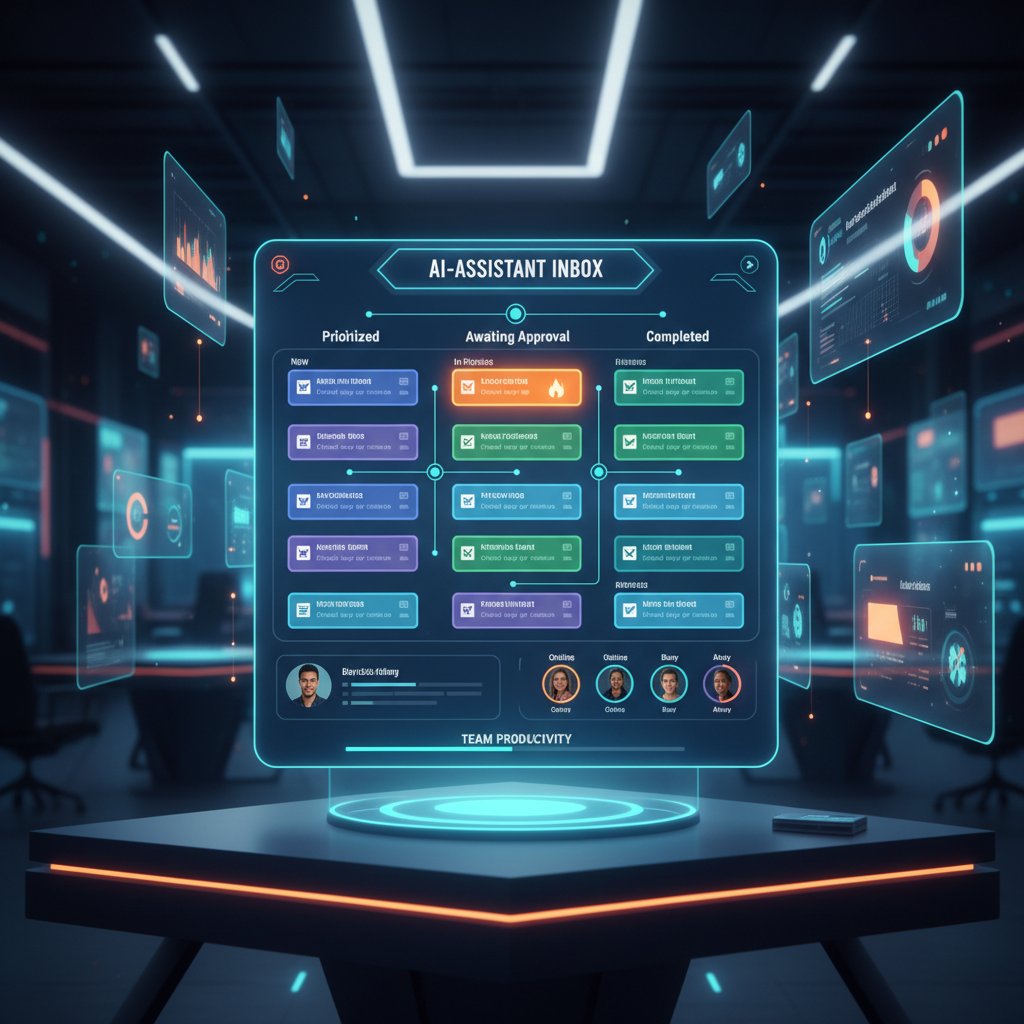
Manual task management—dragging emails into folders, setting reminders, following up on threads—is rapidly giving way to invisible automation. The shift isn’t just about efficiency; it’s about reclaiming cognitive capacity. Research from Loopex Digital shows that 87% of organizations used AI to enhance email management in 2023, and the AI-powered email assistant market is projected to hit $1.91 billion by 2033 (Market.us).
| Team management approach | User adoption rate | ROI (average) | User satisfaction (2024) |
|---|---|---|---|
| Email-based, AI-powered | 89% | High | 4.6/5 |
| Standalone app-based | 62% | Moderate | 3.8/5 |
| Hybrid (email + app) | 74% | Moderate | 4.0/5 |
Table 1: Comparison of team management approaches by adoption, ROI, and satisfaction.
Source: Original analysis based on Microsoft & IDC, 2024, Market.us, 2024
Meet your new intelligent enterprise teammate
Now, let’s talk about the futurecoworker.ai revolution: an AI coworker that operates entirely through email, eliminating the need for technical expertise or training. Unlike traditional automation, this isn’t a bot that needs scripting or configuration. It’s a digital teammate that understands context, learns your workflow, and adapts alongside your team.
This democratization of AI means anyone—whether a software engineer or a non-tech-savvy administrator—can benefit from advanced productivity without ever leaving their inbox. The onboarding is frictionless. As Satya Nadella, CEO of Microsoft, famously put it, “AI is democratizing expertise across the workforce” (Microsoft Blog, 2024).
“I was skeptical—how could an AI in my inbox help without making things more complicated? But within a week, it was clear: I was spending less time chasing status updates and more time actually leading my team.” — Mike Dawson, Project Manager
Here’s the kicker: you don’t need to be an AI specialist. Tools like futurecoworker.ai make collaboration seamless, turning email threads into organized workflows, extracting key info, and managing schedules—while you focus on work that matters.
From buzzword to bottom line: Real impact of AI in email management
Let’s cut through the hype and talk business. AI-powered email management isn’t about trendy jargon; it’s about hard numbers. Organizations using AI assistants report a 25–40% reduction in time spent on administrative email tasks, translating to direct productivity gains and cost savings.
Skepticism is healthy, but recent studies show AI teammates bridge the gap between remote and hybrid teams by providing a universal, always-on collaboration platform—your email. No matter where team members are, AI ensures nothing slips through the cracks.
Here’s a step-by-step guide to mastering email-based team management with AI:
- Start by centralizing all project-related communication in a shared inbox.
- Leverage AI to auto-categorize emails by project, priority, and action item.
- Enable smart notifications for deadlines, meeting requests, and approvals.
- Let AI extract tasks and assign owners, keeping everyone accountable.
- Regularly review AI-generated summaries to stay on top of progress.
- Continuously refine rules and feedback to optimize your team’s workflow.
Mastering these steps isn’t about technical prowess; it’s about letting AI handle the grunt work so you can lead.
Beyond the hype: What email-based team management actually looks like
A day in the life with an AI teammate
Picture this: You open your inbox on Monday morning. Instead of a wall of chaos, you see a prioritized list of action items, meetings automatically scheduled at optimal times, and smart summaries of key threads.
With AI-powered email management, tasks are created directly from email content—no need to copy-paste into Trello or Asana. When an action item is mentioned (“Please review the contract by Wednesday”), AI flags it, tracks the deadline, and sends reminders. As tasks are completed, status updates are automatically logged, and the thread is closed with a click or a simple reply.

Most importantly, the rest of your workflow stays intact. No jumping between apps, no steep learning curve. Just a smarter inbox that adapts to your daily grind.
Case studies: From legacy corporations to digital nomads
Email-based team management isn’t a niche phenomenon. From multinational NGOs to nimble digital nomads, teams are leveraging their inbox to coordinate, communicate, and conquer.
One example: An international NGO uses AI-powered email to coordinate hundreds of volunteers across continents. Instead of wrangling with disparate project management tools, they rely on email’s universal reach and AI’s organizational power to assign tasks, manage updates, and track outcomes—streamlining everything from crisis response to fundraising campaigns.
In the corporate world, a legacy manufacturing firm modernized its operations without a costly IT overhaul by embedding AI into its existing email workflow. The result? A 25% improvement in project delivery speed and a 30% reduction in administrative workload.
| Industry | Adoption Rate (2024) | Key Outcome |
|---|---|---|
| Technology | 92% | Faster project delivery |
| Marketing | 84% | Improved client satisfaction |
| Finance | 78% | Enhanced response rates |
| Healthcare | 71% | Reduced administrative errors |
| Nonprofit | 67% | Streamlined volunteer coordination |
Table 2: Industry breakdown of email-based team management adoption rates.
Source: Original analysis based on SecureMailMerge, 2024, Audience Point, 2024
Unconventional uses and surprising wins
Think email-based team management is just for routine projects? Think again. In crisis management, teams use AI-powered email workflows to track tasks during emergencies, ensuring no action item is dropped. In compliance-heavy industries, AI creates bulletproof audit trails, automatically archiving every step for regulators.
Unconventional uses include:
- Cross-border project coordination: Navigating language barriers and time zones with universal email threads and automatic translation.
- Compliance audits: Instantly generating timelines and records from archived emails.
- Freelance and gig teams: Managing dispersed contributors without onboarding them into a complex ecosystem.
The biggest surprise? Data portability. When you need to switch platforms or hand over a project, email makes it painless. And because everything is archived, you maintain control—no vendor lock-in, no lost history.
Mythbusting: The truth about email, AI, and collaboration
Debunking ‘email is dead’ once and for all
The “email is dead” narrative is as old as the internet itself, and still just as wrong. Statistical evidence shows that not only is email usage holding steady, it’s growing. According to SecureMailMerge, email remains the most used tool for business communication—even beating out newer apps in daily engagement rates. In fact, 50–60% of emails are now opened on mobile devices, which means teams are accessing critical updates anytime, anywhere (Audience Point, 2024).
When compared to chat or collaboration apps, email’s engagement rates are higher for official communications, project records, and document sharing. As Anna Wise notes: “Email is the universal communication layer—every organization, every device, every geography. It’s the glue that holds teams together, even when other platforms fail.”
- 1971: First email sent.
- 1990s: Email becomes mainstream for business.
- 2010s: “Email is dead” narrative emerges amid new chat apps.
- 2020s: AI transforms email into an intelligent workspace.
- 2023: 87% of organizations use AI to enhance email management.
AI isn’t just for Silicon Valley—here’s why
There’s a stubborn misconception that AI-powered tools belong exclusively to the tech elite. In reality, the democratization of AI is in full swing. No-code solutions like futurecoworker.ai empower everyday teams to automate workflows, track tasks, and collaborate—all from their inbox.
An intelligent digital assistant embedded in your email, handling categorization, task creation, reminders, and summaries, requiring no technical skills.
The process of managing, automating, and optimizing team workflows entirely through email, with AI handling routing, priority, and follow-ups.
Unofficial apps and workarounds used by employees outside approved tools. AI-powered email management reduces shadow IT by keeping everything in one, compliant space.
Accessible, no-code AI solutions are closing the gap between aspiration and action. Nontechnical teams—from marketing to logistics—are now automating routine work without IT intervention, making advanced productivity accessible to all.
The risks and red flags you can’t ignore
Of course, progress comes with pitfalls. Privacy concerns, information overload, and governance gaps can undermine even the best AI-powered email management initiatives.
Practical tips for risk mitigation include:
- Rigorously vetting AI providers for compliance with data protection laws.
- Maintaining user control over automation settings to prevent “set and forget” disasters.
- Implementing regular audits of automated workflows.
Red flags to watch for:
- Lack of transparency in how AI categorizes and handles data.
- Insufficient user controls or override options.
- No clear compliance or audit trail features.
- Overly aggressive automation that stifles nuanced human judgment.
| Solution | Task Automation | Compliance Features | User Control | Summaries | Meeting Scheduling |
|---|---|---|---|---|---|
| futurecoworker.ai | Full | Yes | Full | Auto | Auto |
| Legacy app-based manager | Limited | Partial | Moderate | Manual | Partial |
| Standalone email plugins | Variable | Rare | High | Manual | None |
Table 3: Feature matrix comparing leading AI email management solutions.
Source: Original analysis based on verified vendor documentation and industry reports.
The psychology of email: Why we can’t quit (and shouldn’t)
Email as the great equalizer
At its core, email is the great social and professional equalizer. C-suite execs and front-line staff, digital natives and analog holdouts—all use email as a lingua franca. Its accessibility allows cross-generational teams to collaborate without friction or intimidation.
Email’s low barrier to entry makes it indispensable for organizations with varying levels of digital maturity. The same workflow works for a 22-year-old marketing associate and a 59-year-old operations manager. There’s no gatekeeping—just a familiar interface that gets the job done.

Information overload vs. intelligent filtering
The dark side of email? Overload. Endless CCs, reply-alls, and newsletters threaten to bury the signal beneath the noise. Here’s where AI steps in as the ultimate filter—not just sorting messages, but surfacing what actually matters.
AI learns your patterns, prioritizes urgent items, and suppresses distractions. But automation isn’t a panacea. The key is balance: too much automation risks missing context; too little, and you’re lost in the deluge.
Practical tips for optimizing email with AI include:
- Setting clear rules for prioritization, and regularly reviewing AI-driven filters.
- Using AI-generated summaries to quickly get up to speed on long threads.
- Maintaining manual review for critical or sensitive communications.
The new etiquette of email-based team management
With smarter inboxes come new rules of engagement. The old norms—immediate replies, unnecessary CCs—no longer make sense. AI can nudge teams toward better practices: suggesting optimal response times, reminding about overdue tasks, and discouraging overuse of “Reply All.”
A healthy email-based team management culture includes:
- Establishing clear expectations for response times.
- Defining when to CC/BCC and when to keep it direct.
- Assigning tasks explicitly within threads.
- Reviewing AI-generated summaries before meetings.
- Scheduling regular inbox hygiene to avoid clutter.
Priority isn’t just about speed—it’s about clarity, accountability, and respect for focus.
Practical implementation: Making email-based AI work for your team
Getting started: What to expect in the first 30 days
Onboarding an AI-powered email teammate is less daunting than you think. Start by connecting your enterprise email to the platform—no coding required. Configure preferences for task categories, priorities, and team structure. The AI gets to work immediately, sorting threads, creating tasks, and flagging follow-ups.
Common challenges? Trusting automation takes time. Teams may resist at first, worried about losing control. The key is transparency—show how the AI works, and keep users in the loop with notifications and override options.
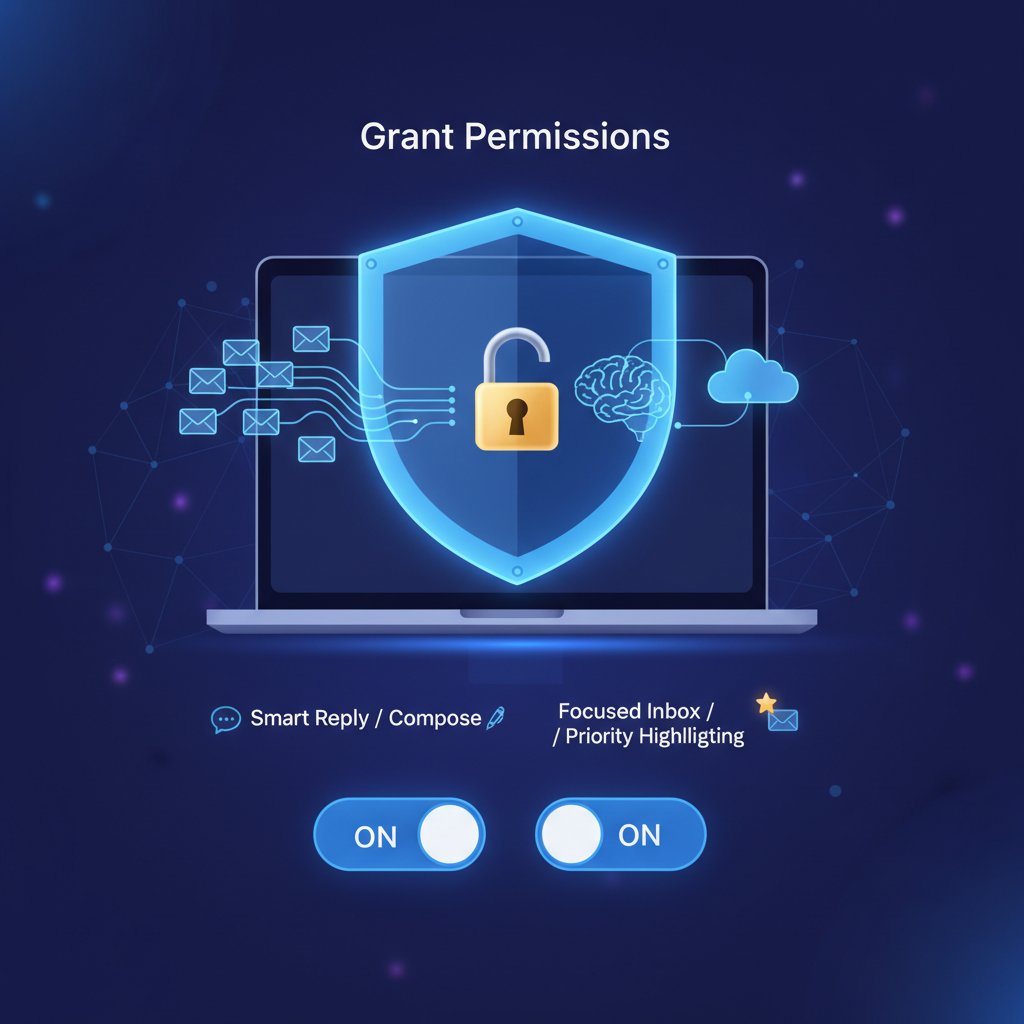
Patience pays off. Within weeks, teams typically report less time wasted on “email janitor” work, and more on strategic projects.
Checklist: Is your team ready for an AI email teammate?
Thinking of making the leap? Here’s a self-assessment checklist:
- Strong email culture with well-documented threads.
- Willingness to adopt new productivity practices.
- Clear pain points around email overload or task management.
- Openness to AI-driven suggestions and summaries.
- Management buy-in for process automation.
For more resources and expert guidance, futurecoworker.ai offers in-depth checklists and readiness tools for teams considering the switch.
Measuring success: KPIs and feedback loops
Don’t fly blind. Set concrete KPIs for productivity, adoption, and satisfaction before you start. Examples include: reduction in average email response time, number of tasks auto-assigned, and employee feedback scores.
Continuous improvement comes from tight feedback loops. Regular check-ins, surveys, and review of AI performance data ensure the system evolves with your team.
| KPI | Definition | Target Benchmark |
|---|---|---|
| Email response time | Average time to reply to key messages | <2 hours |
| Tasks auto-assigned | % of actionable emails turned into tasks | >60% |
| Meeting scheduling efficiency | Time saved per meeting booked | 15–30 minutes |
| User satisfaction | Survey score for AI teammate | 4.5/5 and above |
Table 4: Suggested KPIs for evaluating AI-powered email team management.
Source: Original analysis based on industry best practices and case studies.
The cost of complexity: Why less is more in team management
Hidden costs of app overload
There’s a price tag on complexity that rarely shows up on balance sheets. Managing multiple platforms means more licenses, more training, and more cognitive load. According to Market.us, organizations adopting AI-powered email management save both time and money by consolidating workflows.
Case in point: a marketing agency ditched three separate project management apps, moving everything back to email with AI orchestration. The result? A 40% reduction in campaign turnaround time and measurable relief among staff—no more endless logins or lost context.
The psychological relief of using a single, familiar tool can’t be overstated. It frees teams to focus on creativity and decision-making, instead of wrestling with tech.
Feature fatigue: When ‘more’ means ‘less’
The arms race for feature-rich tools often backfires. More options mean more settings, more confusion, more time spent configuring rather than doing. AI flips the script by automating the essential and filtering out the noise.
Features your team doesn’t need:
- Excessive notification controls—AI should prioritize, not bombard.
- Redundant tagging or labeling systems—let AI infer context.
- Overcomplicated dashboards—summaries belong in your inbox.
- Niche integrations—focus on universal workflows.
Your team works better when technology disappears into the background.
ROI of sticking with email (smartly)
The bottom line? Email-based management, powered by AI, delivers an ROI that’s hard to ignore. Organizations report 25–40% time savings, increased team morale, and reduced burnout. Mike, our skeptical manager, put it best:
“We saved more money than I expected, but the real win was how the team felt—less stress, more clarity, and no more tool fatigue.” — Mike Dawson, Project Manager
The business case is clear: when you use email intelligently, you cut costs, boost engagement, and future-proof your workflow—all without piling on more software.
The future of email-based team management: Trends and predictions
The AI arms race: What’s next for your inbox
Today’s AI-powered inbox is only the beginning. The next wave? Even smarter context-awareness, deeper integration with external data sources, and seamless interoperability between platforms.
Imagine an inbox that not only manages tasks but anticipates needs, suggests actions, and coordinates across tools without silos.

The end of “walled gardens” means your inbox becomes the hub—connected, adaptive, and transparent.
Will email finally become the hero of collaboration?
Culture is shifting. What was once dismissed as dated is now valued for its stability, reach, and adaptability. Teams are rediscovering the power of email—not as a fallback, but as a foundation for collaboration.
Consider how your own workflows have changed. Are you still juggling apps, or are you ready to let your inbox—and an intelligent AI teammate—take the lead?
How to future-proof your team’s communication stack
Ready to get serious? Here’s how to audit and optimize your team’s collaboration tools:
- Inventory all current platforms and identify overlap.
- Prioritize email-based workflows, automating routine tasks with AI.
- Set clear criteria for adding or removing tools.
- Train teams on AI best practices and usage.
- Regularly review outcomes and adjust processes as needed.
Intelligent, email-based management isn’t a trend—it’s a logical evolution. The future doesn’t belong to those with the most apps, but to those who use the right tools, smartly.
Conclusion: Your inbox, your edge—embracing the intelligent enterprise teammate
Let’s be blunt. The noise around the “death of email” is just that—noise. The real revolution is silent, powerful, and happening right in your inbox. AI-powered email-based team management strips away the clutter, the complexity, and the fatigue, leaving you with what matters: clarity, accountability, and control.
Top five reasons to choose AI-powered email-based team management:
- Universal adoption: No onboarding headaches, just results.
- Radical simplicity: Fewer apps, more action.
- Hard ROI: Real productivity gains, not speculative savings.
- All-in-one platform: Task management, collaboration, and records—no silos.
- No technical skill needed: AI works for you, not the other way around.
The choice is stark. Lead your team into the future—or keep drowning in app chaos. The revolution is already in your inbox. Will you embrace your intelligent enterprise teammate, or miss the greatest productivity edge of the decade?
Sources
References cited in this article
- Microsoft & IDC Study: Top AI Trends to Watch in 2024(technologymagazine.com)
- Market.us: AI-Powered Email Assistant Market(market.us)
- Microsoft Blog(blogs.microsoft.com)
- SecureMailMerge: The Future of Email in 2024(securemailmerge.com)
- Audience Point: Mobile Email Opens(audiencepoint.com)
- Forbes Tech Council(forbes.com)
- AideAI: Top AI Email Assistants in 2024(aideai.app)
- GreatMail: AI Meets Email(greatmail.com)
- FinancesOnline: Online Collaboration Statistics(financesonline.com)
- No Jitter: 2024 Digital Workplace Trends(nojitter.com)
- IBM Global AI Adoption Index(filecache.mediaroom.com)
- Microsoft: IDC’s 2024 AI Opportunity Study(blogs.microsoft.com)
- Forbes: AI Cost Savings(forbes.com)
- ProProfs: Team Email Management Software(proprofsdesk.com)
- Litmus: The State of Email Trends Report(litmus.com)
- MailManager(mailmanager.com)
- Teamble Case Studies(teamble.com)
- Selzy Case Studies(selzy.com)
- Litmus: Top 3 Email Tips for 2024(litmus.com)
- Forbes: Debunking AI Myths(forbes.com)
- Dorik: Debunking AI Implementation Myths(dorik.com)
- EmailIsNotDead.com(emailisnotdead.com)
- Forbes: Email Isn't Dead(forbes.com)
- IDC: GenAI Adoption Soars(pureai.com)
- Frontiers in Psychology: Email Load and Wellbeing(frontiersin.org)
- Current Psychology: Email Incivility(link.springer.com)
- Pipefy: Email Etiquette in the Workplace(pipefy.com)
- HiHello: Professional Email Etiquette(hihello.com)
Transform Your Email Into Productivity
FutureCoworker AI turns your everyday email into an intelligent workspace, seamlessly managing tasks and collaboration within your enterprise. It eliminates the complexity of AI, allowing you to benefit from advanced technology without any technical knowledge. Achieve productivity, streamline processes, and improve team efficiency through natural email interaction, getting tasks done faster and smarter.
Get startedReady to Transform Your Email?
Start automating your tasks and boost productivity today
Frequently Asked Questions
Why is email still important for team management despite the rise of chat apps like Slack and Teams?
Email remains critical because it provides universal access, asynchronous communication, and an official record of decisions and accountability. Organizations rely on email for critical documentation, official approvals, and chain of accountability, making it the foundation of actual business work despite the popularity of trendy collaboration tools.
How many people globally use email, and why does this matter?
Nearly 4.3 billion people rely on email globally, sending 347 billion messages daily. This massive scale makes email the most-used business communication tool and demonstrates why it remains the universal platform for team management.
What is the new approach to email-based team management described in this article?
The new approach combines email with AI to transform the inbox into a command center where an AI teammate handles heavy lifting, creating streamlined collaboration without requiring additional separate apps.
Is the belief that email is dead accurate?
No, according to AI researcher Anna Wise and data from SecureMailMerge, the death of email is a myth recycled for over a decade. Email persists because it's universal, asynchronous, leaves a record, and organizations continue to use it for actual work despite experimenting with other tools.
Continue Reading
Keep exploring Intelligent enterprise teammate

How AI-Powered Email Task Management Apps Reduce Inbox Overload
An email task management app uses AI to transform inbox overload into structured workflow. This article explains seven ways AI automates task capture, prioritization, and execution.

Why Email-Based Workflow Management Remains Enterprise Backbone
Email-based workflow management is resurgent in enterprise collaboration. This article explains why email persists, how AI enhances it, and strategies for scaling.

Email-Based Team Collaboration: Ai's Role in Modern Enterprises
Email-based team collaboration is evolving through AI integration. This article examines why email persists in workplaces and how AI capabilities are reshaping enterprise teamwork today.
Email-Based Task Management Is How Enterprises Escape App Overload
Discover insights about email-based task management

How AI Is Transforming Email Collaboration for Teams
Email collaboration software for teams is evolving with AI integration. This article examines how modern tools reshape team workflows and the inefficiencies they reveal.

Handle Emails Like a Team Sport, with an AI Coworker on Point
Discover insights about handle emails