


Email-Based Collaboration Meets AI Coworkers: the New Enterprise OS
Written with AI assistance under our editorial guidelines
Email remains the central hub of enterprise communication despite decades of predictions about its demise. Workers check email 77 times daily and receive 121 new messages, driven by its universal accessibility, legal accountability trail, and psychological comfort. AI and workflow automation are now evolving email-based collaboration rather than replacing it, reshaping how teams work.
Step into any modern enterprise and you’ll find a paradox humming beneath the surface: despite two decades of “collaboration tool” revolutions, email is still the nerve center of business life. The world talks a slick game about ditching the inbox for shiny chat apps and real-time dashboards, but most of us start and end our workdays by hitting refresh on Outlook or Gmail. It’s a digital habit that refuses to die. The truth is messier, more revealing—and way more consequential for the future of teamwork than most leaders care to admit. Email-based collaboration isn’t just clinging on; it’s mutating, fueled by AI, workflow hacks, and the relentless tide of “always on” demands. If you think you know email’s role in enterprise teamwork, buckle up. This is the inconvenient truth: email-based collaboration is evolving fast, and your workflow is about to change—whether you like it or not.
Why email won’t die: The stubborn backbone of enterprise life
The evolution nobody predicted
For decades, digital prophets have been busy writing obituaries for email. Every new wave of collaboration tech—instant messaging, project boards, social intranets—promised to finally put the inbox out of its misery. Yet here we are in 2025, still drowning in subject lines, attachments, and relentless reply-alls. According to Harvard Business Review, 2023, the average worker checks email roughly 77 times a day and receives a whopping 121 new emails daily. That’s not just digital inertia; it’s a testament to the deep roots email has in workplace culture. Email is the comfort food of enterprise communication—always there, familiar, and oddly reassuring even as it clogs your arteries.
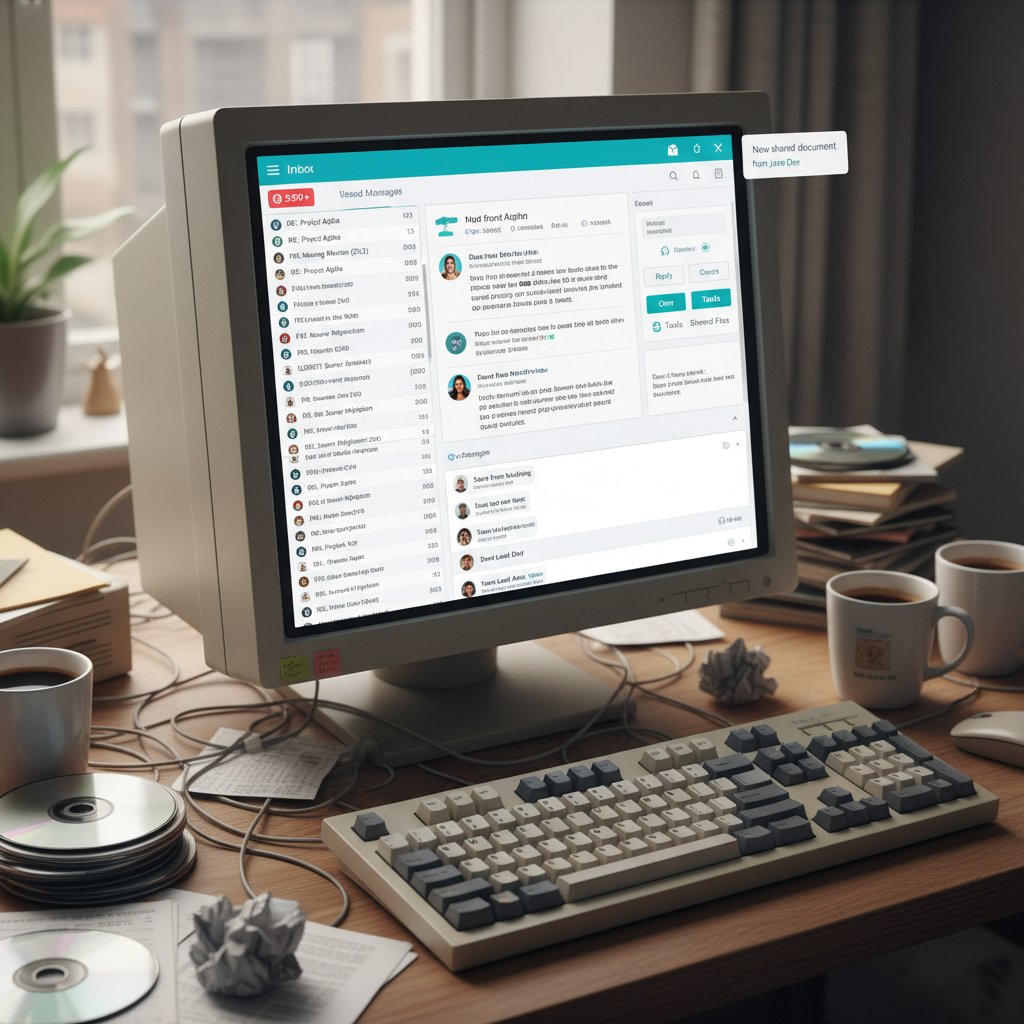
Workplace culture clings to email like a security blanket. It’s a paper trail, a failsafe, a way to “cover your ass” in a world that prizes plausible deniability. Even as teams flirt with Slack channels and video huddles, the real decisions and approvals often land back in the inbox, wrapped in legalese and cc’d to half the org chart. Change is slow not just because of legacy systems—though those are legion—but because the psychology of risk, trust, and accountability keeps pulling us back to the one channel everyone still checks.
Email’s secret power: Universality and context
Why does email outlast its supposed replacements? The answer is deceptively simple: universality. Every legitimate business on Earth has an email address. From Fortune 500 behemoths to scrappy startups, from legal to marketing to field ops, email is the lowest common denominator. It’s the lingua franca of enterprise, cutting across hierarchies and silos where trendy apps can’t reach.
| Feature | Slack | Teams | AI-powered tools | |
|---|---|---|---|---|
| Universal access | ✔ | ✖ | ✖ | ✖ |
| Asynchronous communication | ✔ | Partial | Partial | Depends |
| Attachment support | ✔ | Partial | Partial | ✔ |
| Workflow automation | Limited | Partial | Partial | ✔ |
| Context preservation | ✔ | ✖ | ✖ | ✔ |
| Security/audit trail | ✔ | Partial | Partial | ✔ |
Table: How email outperforms chat and AI tools on critical collaboration needs. Source: Original analysis based on Harvard Business Review, 2023, MarketSplash, 2023, Zoom, 2024.
Context is email’s other hidden weapon. Unlike the fleeting chatter in chat apps, email keeps the whole story—threaded conversations, timestamps, attachments, receipts. When your team is scattered across time zones or continents, asynchronicity is power. You don’t have to be online at 2 a.m. in Singapore just because HQ pings you from New York. As MarketSplash, 2023 notes, only 9% of employees rate their current collaboration tools as “highly effective,” yet 55% still use email for client communication. That’s not nostalgia; it’s survival.
The psychology of the ‘reply-all’ era
But let’s be honest: email is also a psychological minefield. The rise of email-based collaboration has bred a generation of professionals haunted by FOMO (fear of missing out) and the dread of the unread badge. The cognitive load is real, according to Entrepreneur, 2024, as knowledge workers juggle dozens of threads and the subtle politics of who gets cc’d.
"Email is both my lifeline and my prison." — Taylor
The hidden psychological costs of email-based collaboration:
- Perpetual anxiety: The constant ping of new messages creates a low-level hum of stress, making it hard to focus on real work.
- Decision paralysis: With everyone in the loop, nobody wants to take responsibility for action—leading to “consensus by inbox.”
- Emotional labor: Policing tone, formatting, and etiquette drains energy, especially for underrepresented groups who feel judged more harshly Harvard Business Review, 2023.
- FOMO and guilt: Fear of missing crucial information (or appearing out of the loop) keeps people glued to their inbox—even after hours.
- Boundary erosion: Without clear offline boundaries, email invades evenings, weekends, and private time, feeding burnout.
The rise of intelligent enterprise teammates: Meet your AI-powered coworker
From rules to reasoning: How AI interprets your inbox
Here’s the twist: while humans struggle to tame the chaos of email, AI-powered teammates are quietly learning to turn that chaos into order. Forget clunky rules-based filters of yesteryear—today’s AI leverages natural language processing (NLP) and intent detection to read not just the words, but the context and urgency behind every message. That’s why solutions like futurecoworker.ai are gaining traction with teams tired of drowning in messages.
Key terms:
The branch of AI that allows machines to read, understand, and generate human language with contextual awareness.
AI’s ability to infer what the sender and recipient actually want from an email—be it approval, information, or a task handoff.
The process of using AI to automatically categorize, assign, and track tasks derived from email threads, minimizing manual effort.
The AI doesn’t just file messages into folders—it orchestrates action. Services like futurecoworker.ai work behind the scenes, turning email threads into living workflows: assigning tasks, flagging urgent requests, nudging team members for follow-ups, and even scheduling meetings, all from within the inbox. It’s like having a hyper-efficient, never-tired admin who never loses context.
Automation without alienation: Keeping collaboration human
But let’s not kid ourselves—the rise of AI coworkers raises a thorny challenge: how do you automate without turning your workplace into a soulless machine? The answer lies in trust and transparency. According to real-world case studies, teams that thrive with AI-powered collaboration do so by designing processes that keep humans in the loop, ensuring that the technology augments rather than replaces judgment.
Real-life examples abound. At a global fintech firm, AI interprets incoming client emails, flags potential compliance issues, and routes requests to the right specialist instantly. Humans remain the decision-makers; the AI simply clears the noise and spotlights the real work. The result? Faster turnaround, fewer dropped balls, and a surprising uptick in team morale—because nobody’s stuck playing “inbox bouncer” anymore.

Case study: The enterprise that let AI handle its inbox
Consider the (anonymized) case of a healthcare provider that deployed an intelligent coworker to wrangle scheduling, patient follow-ups, and interdepartmental emails. Before AI, the team spent hours each week just triaging requests and following up on missed tasks. After deployment, the inbox became almost eerily calm.
| Metric | Before AI | After AI |
|---|---|---|
| Average response time (hrs) | 18 | 3 |
| Missed follow-ups (%) | 28 | 5 |
| Employee reported stress | High | Moderate |
| Patient satisfaction score | 6.2/10 | 8.4/10 |
Table: Productivity and wellbeing metrics before and after AI-powered collaboration. Source: Original analysis based on Zoom, 2024, MarketSplash, 2023.
"I didn’t realize how much mental space email was stealing until it was gone." — Alex
Myths, fears, and uncomfortable realities of email-based collaboration
Myth-busting: Is email-based collaboration obsolete?
The rumor mill loves to declare email obsolete, but the data doesn’t lie. Email accounts number 7.9 billion worldwide (ZDNet, 2023), and enterprise reliance is actually growing as AI makes inboxes smarter. The “email is dead” narrative misses the nuance—what’s dying isn’t email itself, but the old, manual way of working.
Common misconceptions about email and AI:
- “Email is for boomers.” In reality, Gen Z uses email for professional communication as much as any other cohort—try booking a legal contract via TikTok DMs.
- “AI will replace all jobs.” The most successful teams use AI to handle grunt work, not creative or relationship-driven tasks.
- “Email isn’t secure.” Modern protocols like end-to-end encryption, MFA, and AI-powered anomaly detection have raised the security bar.
- “Automation means loss of control.” Proper AI tools offer granular controls, audit trails, and human-in-the-loop options for peace of mind.
- “Chat = collaboration.” Synchronous chat tools cause their own headaches: interruptions, notification fatigue, and lost context.
Modern email security features are robust, but not infallible. As always, it’s user behavior—reusing passwords, failing to update software—that’s the Achilles’ heel, not the protocol itself. As Harvard Business Review, 2023 notes, the nuances of digital privacy are more relevant than ever.
The privacy paradox: Who’s reading your mail?
Let’s address the elephant in the room: AI that reads your email sounds like a privacy nightmare waiting to happen. But the reality is less sinister and more strategic. Enterprise-grade AI coworkers are built to respect confidentiality—processing messages within secure, encrypted environments, never leaking data outside pre-agreed boundaries. That said, due diligence is non-negotiable.
Enterprises maintain control through layered security: strict access controls, transparent audit logs, and ongoing compliance checks. IT leaders routinely review AI workflows to make sure sensitive data stays exactly where it should. And as regulations tighten, the best AI tools are evolving with them—baking in compliance from the code up.
Burnout and boundaries: The dark side of always-on collaboration
For all its power, email-based collaboration has a shadow side: endless accessibility breeds burnout. The “always on” culture, supercharged by AI and mobile notifications, dissolves the boundaries that once protected downtime. As MarketSplash, 2023 highlights, employees routinely cite email overload as a top driver of stress and disengagement.
| Era | Email’s Role | Work-life Boundary |
|---|---|---|
| 2000s | Emerging communication | Traditional office hours |
| 2010s | Ubiquitous collaboration | Blurred by smartphones |
| 2020s | AI-augmented inbox | 24/7 expectation |
Table: Timeline of work-life boundary evolution with email-based collaboration. Source: Original analysis based on Harvard Business Review, 2023.
"Collaboration is great—until it’s everywhere and nowhere." — Jordan
Inside the AI engine: How intelligent teammates actually work
Decoding the tech: NLP, intent, and beyond
Peel back the curtain and you’ll find some impressive tech at work. AI-powered email teammates aren’t reading your messages line-by-line like a human; they’re parsing structure, extracting meaning, and mapping intent through layers of machine learning models. NLP allows them to sift urgent requests from FYI clutter, while advanced workflow engines trigger actions—assigning tasks, scheduling meetings, or escalating issues.
AI systems tailored for group productivity, using NLP and data analytics to coordinate human teams in real time.
Scripted rules and macros that perform repetitive tasks without understanding language or intent.
The difference is subtle but profound: collaboration AI “understands” enough context to act intelligently—most of the time. But there are limits. AI struggles with sarcasm, ambiguous requests, and subtle workplace politics. The best systems flag uncertain cases for human review, rather than charging ahead with misplaced confidence.
Security, compliance, and the audit trail
Enterprises have good reason to worry about compliance; a rogue AI that misinterprets an email could cause a privacy breach or legal headache. That’s why leading platforms, including futurecoworker.ai, focus on transparent policy setup. Every action by the AI is logged, auditable, and reversible.
Practical steps for maintaining a transparent audit trail:
- Define access boundaries: Specify which inboxes and threads the AI can process.
- Set trigger conditions: List what actions the AI is allowed to take (e.g., auto-reply, assign, escalate).
- Monitor audit logs: Regularly review logs for unusual or unauthorized actions.
- Update policies: Adjust permissions as team structures and workflows evolve.
- Educate users: Train staff on how AI works and whom to notify if something goes wrong.
What AI misses: Edge cases and human nuance
AI isn’t magic. There are categories of tasks that even the smartest bots can’t handle—emotionally charged negotiations, ambiguous role assignments, or anything that requires reading between the lines. Human oversight remains critical, especially in industries where a single misstep can mean regulatory blowback or reputational damage.
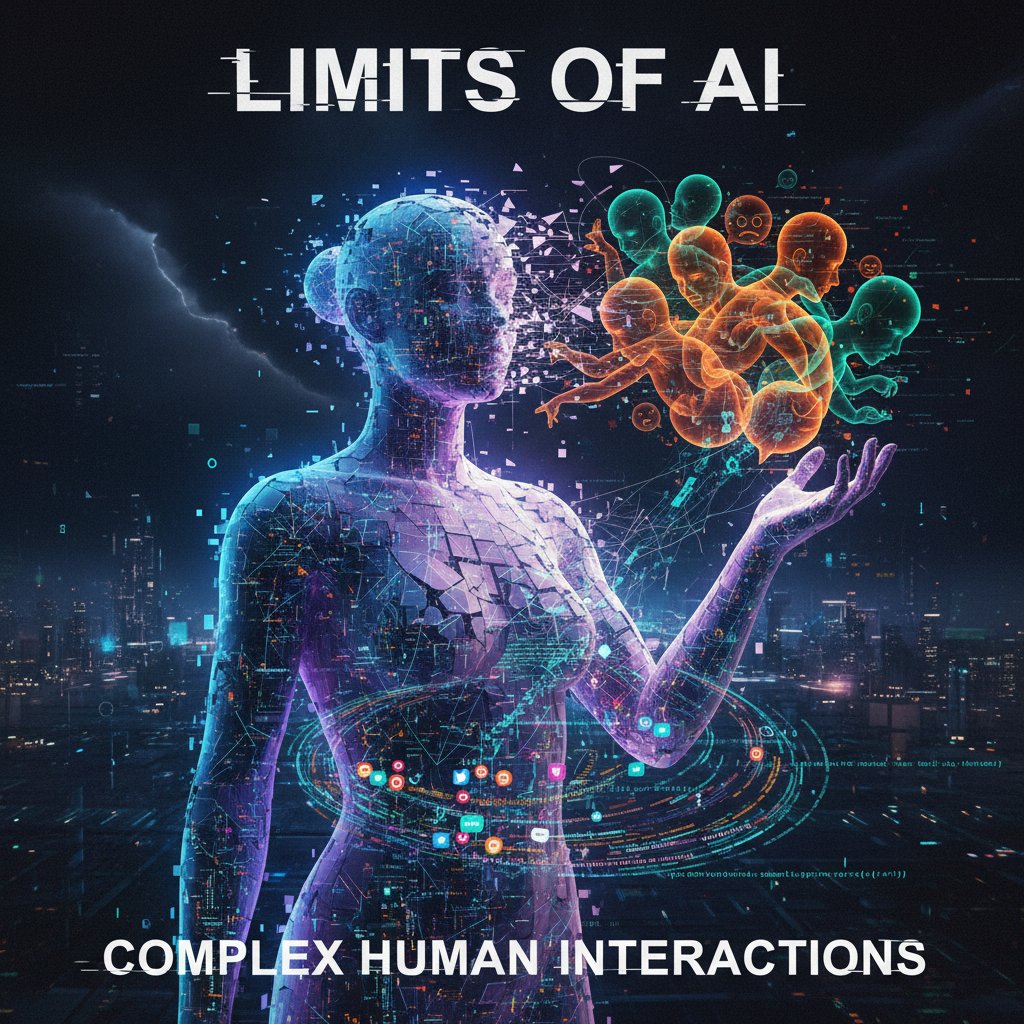
The best organizations treat AI as a first-pass filter, not the final arbiter. When edge cases arise—think sensitive HR disputes or nuanced client negotiations—the AI steps back and hands control to a human. That’s not a flaw; it’s a feature.
Email-based collaboration in the wild: Real-world wins and fails
Success stories: When email and AI click
In a leading marketing agency, implementing AI-powered email collaboration led to a 40% reduction in campaign turnaround time and a spike in client satisfaction. The secret? Automating tedious follow-ups and meeting reminders, freeing humans for creative strategy.
- Audit workflow: Mapped all routine email interactions.
- Deploy AI: Enabled AI teammate across client-facing teams.
- Monitor results: Tracked KPIs—response times, missed tasks, client feedback.
- Iterate process: Adjusted AI settings for edge cases and client preferences.
- Report outcomes: Documented increased productivity and qualitative feedback.
The business impact was clear: faster decision cycles, fewer administrative errors, and more time for high-value work.
Epic fails: Lessons from the trenches
Of course, not every story ends with a glowing testimonial. In a high-profile tech company, rushing into AI deployment without proper onboarding led to a string of misrouted emails and missed deadlines—a cautionary tale for would-be pioneers.
Red flags when rolling out AI email teammates:
- Insufficient training: Staff unaware of new workflows or override options.
- Poor data hygiene: AI misinterprets outdated or ambiguous templates.
- No escalation path: AI mishandles sensitive or complex issues.
- Blind trust in automation: Teams ignore warning signs, assuming AI “just works.”
- Lack of audit trail: Difficulty tracing errors when things go wrong.
Resources from futurecoworker.ai and similar platforms help organizations avoid these pitfalls through guided setup, change management tools, and continuous support.
Sector spotlight: How different industries weaponize email
Finance, healthcare, and creative sectors each bring unique twists to email-based collaboration. Finance firms prize audit trails and compliance, leveraging AI to flag anomalies and automate reporting. Healthcare providers use AI for scheduling and patient follow-up, where response time can mean the difference between life and death. Creative agencies exploit AI’s ability to organize sprawling feedback threads, keeping projects on track without stifling innovation.
| Industry | Key Email Collaboration Needs | Best-fit Features | Example Benefit |
|---|---|---|---|
| Finance | Compliance, audit, rapid response | AI anomaly detection, logging | 30% less admin overhead |
| Healthcare | Scheduling, confidentiality | Encrypted comms, auto triage | 35% fewer admin errors |
| Creative/Agency | Feedback loops, real-time updates | Thread summaries, reminders | 40% faster project delivery |
Table: Feature matrix—Email-based collaboration tools by industry. Source: Original analysis based on Zoom, 2024, MarketSplash, 2023.
Cross-industry lesson? The right mix of automation and human oversight is the real differentiator.
Practical playbook: Mastering email-based collaboration in 2025
Step-by-step adoption guide
Rolling out an AI-powered email workflow isn’t a switch you flip overnight. It’s a phased evolution that rewards careful planning and relentless iteration.
- Baseline assessment: Map your current email workflows, pain points, and collaboration gaps.
- Stakeholder buy-in: Involve leaders, IT, and frontline users early.
- Pilot deployment: Start with a small, motivated team.
- Monitor KPIs: Track response times, error rates, and user feedback.
- Iterate and scale: Refine AI settings, train staff, and gradually expand to more teams.
- Continuous improvement: Review outcomes quarterly and adjust as needed.
Smooth onboarding and change management are non-negotiable. Futurecoworker.ai and similar platforms offer templates, user guides, and real-time support to guide teams through each phase.
Best practices for sustainable collaboration
What separates organizations that thrive with email-based collaboration from those that flounder? A relentless focus on balance: leveraging automation for grunt work, while leaving space for human connection and creativity.
Hidden benefits of email-based collaboration experts won’t tell you:
- Institutional memory: Email threads create a living archive of decisions and context.
- Reduced siloing: Well-managed inboxes break down departmental walls by keeping stakeholders in the loop.
- Scalable onboarding: New hires get up to speed fast by reviewing key threads and automated task histories.
- Enhanced accountability: Audit trails make it clear who acted (or didn’t) on crucial requests.
- Agility: AI-powered email workflows adapt quickly to new projects or shifting priorities.
Measuring success isn’t just about inbox zero. Track qualitative feedback, team morale, and the velocity of meaningful work — not just message counts.
Securing your edge: Staying ahead of the curve
Future-proofing your email-based workflow is an ongoing process. Build a culture of experimentation, keep up with the latest compliance shifts, and invest in ongoing education. The organizations that win are those that treat collaboration as a living system, not a one-time fix.

Curate a resource bank—blogs, webinars, expert communities—to keep your team sharp and competitive.
The future of email-based collaboration: Disruption, convergence, or extinction?
Where AI-powered teammates are headed next
Intelligent collaboration is rapidly blurring the lines between email, chat, and workflow automation. AI coworkers are no longer confined to sorting messages—they’re weaving together data from calendars, databases, and content management systems, creating a seamless digital workspace.
The convergence is real: email threads trigger chat discussions, which auto-generate action items, which update project dashboards—all orchestrated by AI. The debate over “email vs. chat” is starting to look quaint.
"We’ll look back and laugh at how we used to argue about ‘email vs. chat.’" — Taylor
Will we ever escape the inbox?
Speculative fantasies about “inbox zero” or a post-email world remain just that—fantasy. The protocol’s resilience is unmatched. Even as AI automates more of your day, email persists as the foundation for official, accountable communication. It’s not going away; it’s getting smarter, more contextual, and more seamlessly connected to everything else.

Email’s adaptability is its survival trait—don’t bet against it.
Call to action: Rethink, reinvent, reclaim your workflow
If you’ve read this far, you know the stakes. The era of messy, manual email-based collaboration is ending—but what comes next is up to you. Will you let inertia dictate your team’s productivity, or seize the initiative to build something smarter?
To get started:
- Audit your current workflows: Identify where email bogs you down.
- Explore intelligent teammate solutions: Evaluate platforms like futurecoworker.ai for your needs.
- Pilot, measure, and iterate: Start small, learn fast, and scale what works.
- Invest in education: Empower your team to collaborate with both humans and machines.
- Revisit your boundaries: Use automation to protect—not erode—work-life balance.
The future of work isn’t waiting. It’s already in your inbox. Rethink, reinvent, reclaim.
Demystifying the jargon: The real meanings behind collaboration buzzwords
A field guide to email-based collaboration lingo
Tired of buzzwords masking real meaning? You’re not alone. Here’s what the jargon actually means in the wild.
AI technologies that actively coordinate people, tasks, and communications in group settings—think beyond basic automation, toward active digital “teammates.”
The use of digital systems (increasingly AI-driven) to take routine steps out of human hands—especially repetitive tasks like triaging emails or assigning follow-ups.
Interactions that don’t require everyone to be online at the same moment—email’s bread and butter, crucial for distributed teams.
The AI’s skill at understanding not just what was said, but the underlying relationships, priorities, and history driving a conversation.
These definitions matter because they separate hype from substance. If your “AI-powered” tool can’t interpret intent or build context, it’s just a fancy filter. The devil, as always, is in the details.
When words get in the way: Communicating across silos
Of course, jargon can also sabotage collaboration. When IT talks “SAML integrations” and marketing wants “brand voice consistency,” wires get crossed. The cure? Shared language, plain English, and relentless curiosity about what your colleagues actually mean.
Smart teams build glossaries, hold cross-departmental training, and reward those who bridge the gap. It’s the difference between ships passing in the night and a unified fleet moving in lockstep.

Conclusion
Email-based collaboration isn’t just surviving—it’s morphing, fusing the old with the new under the pressure of relentless digital demands. The inconvenient truth is that email remains at the heart of enterprise teamwork because it combines universality, context, and a paper trail that real-time chat can’t match. The dark side—overload, burnout, ambiguity—is real, but intelligent AI-powered coworkers like those from futurecoworker.ai are rewriting the rules. By blending automation with human judgment, organizations can unlock productivity gains, reclaim mental space, and build more resilient teams. The question isn’t whether email-based collaboration will shape your workflow, but how ready you are to embrace its next phase. Cut through the myths, audit your processes, and make email work for you—not the other way around. The future of work is already in your inbox. Are you ready to claim it?
Sources
References cited in this article
- Harvard Business Review(hbr.org)
- MarketSplash(marketsplash.com)
- Zoom(zoom.com)
- Entrepreneur(entrepreneur.com)
- ZDNet(zdnet.com)
- EmailIsNotDead.com(emailisnotdead.com)
- Valimail(valimail.com)
- Opptrends(opptrends.org)
- Mimecast(mimecast.com)
- SecureMailMerge(securemailmerge.com)
- GetResponse Benchmarks(getresponse.com)
- FinancesOnline(financesonline.com)
- Gartner(gartner.com)
- Boethius Translations(boethiustranslations.com)
- UBC Behavioural Insights(blogs.ubc.ca)
- Microsoft Work Trend Index 2024(microsoft.com)
- Mindverse.ai(home.mindverse.ai)
- Trust Insights(trustinsights.ai)
- TechXplore(techxplore.com)
- Mimecast(mimecast.com)
- Asana(forbes.com)
- Content Marketing Institute(contentmarketinginstitute.com)
- Validity(validity.com)
- Corporate Compliance Insights(corporatecomplianceinsights.com)
- TravelPerk(travelperk.com)
- Gallup(thechangepartners.com)
- MarkTechPost(marktechpost.com)
- Analytics Vidhya(analyticsvidhya.com)
- Mimecast SOECS 2024(assets.mimecast.com)
- Medium(medium.com)
- Zivver(zivver.com)
- Mimecast(mimecast.com)
- SEP2(sep2.security)
- SEO Chatter(seochatter.com)
- Smart Insights(smartinsights.com)
- The Language Nerds(thelanguagenerds.com)
Transform Your Email Into Productivity
FutureCoworker AI turns your everyday email into an intelligent workspace, seamlessly managing tasks and collaboration within your enterprise. It eliminates the complexity of AI, allowing you to benefit from advanced technology without any technical knowledge. Achieve productivity, streamline processes, and improve team efficiency through natural email interaction, getting tasks done faster and smarter.
Get startedReady to Transform Your Email?
Start automating your tasks and boost productivity today
Frequently Asked Questions
Why hasn't email been replaced by modern collaboration tools despite decades of alternatives?
Email persists because of its universal adoption, cultural entrenchment, and psychological appeal as a documented audit trail. Workplace culture treats email as a security blanket that provides plausible deniability and accountability, and even as teams use newer tools like Slack, real decisions and approvals often still flow through the inbox.
How frequently do enterprise workers interact with email?
According to Harvard Business Review (2023), the average worker checks email roughly 77 times a day and receives approximately 121 new emails daily, demonstrating email's deep integration into workplace routines.
What is the main theme of how AI is changing email-based collaboration?
The article indicates that email-based collaboration is evolving and mutating, fueled by AI, workflow hacks, and the demands of always-on work environments, suggesting that workflows are about to change significantly.
What is email's 'secret power' that allows it to outlast replacement collaboration tools?
Email's secret power is its universality—every legitimate business on Earth has an email address, making it a truly universal communication channel that alternatives struggle to match.
Continue Reading
Keep exploring Intelligent enterprise teammate

Enterprise Email Collaboration: Why It Endures and How It Evolves
Enterprise email collaboration remains central to workflows despite predictions of its decline. This article examines how AI and emerging technologies are transforming team communication.

Email-Based Team Collaboration: Ai's Role in Modern Enterprises
Email-based team collaboration is evolving through AI integration. This article examines why email persists in workplaces and how AI capabilities are reshaping enterprise teamwork today.

How AI Is Transforming Email Collaboration Systems
Email collaboration systems are evolving with AI-powered features that automate tasks, summarize threads, and prioritize work.

How AI Is Transforming Email Collaboration for Teams
Email collaboration software for teams is evolving with AI integration. This article examines how modern tools reshape team workflows and the inefficiencies they reveal.

Why Email Collaboration Software Drives Enterprise Teamwork
Email collaboration software adoption is surging in enterprise environments. This article examines why email remains central to teamwork, the hidden risks, and the actual ROI.

How Email Collaboration Tools Reshape Enterprise Workflow with AI
Email collaboration tools now integrate AI-powered teammates and shared inboxes. This article examines how they reshape enterprise workflow, the myths surrounding them, and the real pitfalls.


