
How AI-Powered Enterprise Communication Tools Are Transforming Workplaces in 2025
Written with AI assistance under our editorial guidelines
Enterprise communication today suffers from fragmentation, information overload, and lost context across multiple channels. AI-powered tools promise to surface relevant information and automate routine tasks, but research shows 85 percent of enterprise AI projects fail. Success requires meaningful integration rather than stacking tools onto existing silos.
Enterprise communication is the central nervous system of any organization. But what if the way we connect, collaborate, and make decisions is fundamentally broken—and the avalanche of AI-powered enterprise communication tools is both a remedy and a new source of chaos? In 2025, the conversation isn’t about whether artificial intelligence belongs in the workplace. It’s about how deep the transformation runs, which promises hold water, and which truths get swept under a carpet of marketing hype. AI-powered enterprise communication tools are everywhere: in your email, in your Slack, in your meeting invites, sometimes even in your coffee breaks. With spend on enterprise AI ballooning from $2.3B in 2023 to $13.8B in 2024 according to Menlo Ventures, and adoption rates skyrocketing from 11% to 65% in a year (Altman Solon, 2024), the stakes have never been higher. Yet, as the industry rushes into a future of intelligent collaboration, the real question is—are we creating more efficient teams, or just a different flavor of digital mayhem? This article dissects seven eye-opening truths behind AI-powered enterprise communication tools, separating hope from hype and offering a brutally honest guide for decision-makers in 2025.
Why enterprise communication is broken (and AI promises to fix it)
The daily chaos: lost threads and missed signals
If you’ve ever scrolled through a 200-message Teams channel searching for a single file, you are not alone. The modern workplace is a cacophony of pings, emails, confused CCs, and cryptic emojis masquerading as approval. According to Comprend’s 2024 report, 56% of corporate communication teams now use AI daily, an exponential leap from the previous year. But why is the communication problem so persistent?
The culprit isn’t just information overload—it’s the fragmentation of tools and the human struggle to keep up with ever-multiplying channels. Teams lose context, miss deadlines, and drown in manual follow-ups. Despite best intentions, crucial signals get lost in the noise. Research from Gartner (2024) paints a stark reality: 85% of enterprise AI projects fail, often because organizations stack shiny new tools on top of existing silos rather than integrating them meaningfully. In this chaos, AI promises a lifeline: to sift, sort, and surface what matters most, automating the mundane so humans can focus on real work. But does it deliver?

What’s clear is this: the old way is broken, and the digital “solution” is often a band-aid atop a bullet wound. AI claims to tame this chaos. But the question remains—at what cost, and with what side effects?
From fax to AI: a brief (and brutal) history
Enterprise communication tools have come a long way—or have they? The rise and fall of corporate comms platforms tells a story as much about human psychology as it does about technological progress. In the 1980s, the fax machine was king, promising instantaneous inter-office memos. By the 1990s, email reigned supreme, only to be supplanted (in part) by instant messaging, collaboration suites, and video conferencing. Each purported to “fix” the last generation’s pain points but often just moved the chaos into a new interface.
| Era | Dominant Tool | Pain Points | “Revolution” Promised |
|---|---|---|---|
| 1980s | Fax Machine | Slow, paper-based, unreliable | Instant document transfer |
| 1990s | Overload, spam, lost threads | Universal digital messaging | |
| 2000s | Chat/IM (IRC, AIM) | Fragmentation, lack of record | Real-time conversation |
| 2010s | Slack, Teams | Channel overload, silos | Unified collaboration |
| 2020s | AI-powered suites | Data silos, hallucination risk | Intelligent automation |
Table 1: The evolution of enterprise communication tools and their unintended consequences.
Source: Original analysis based on Menlo Ventures, 2024, Comprend, 2024.
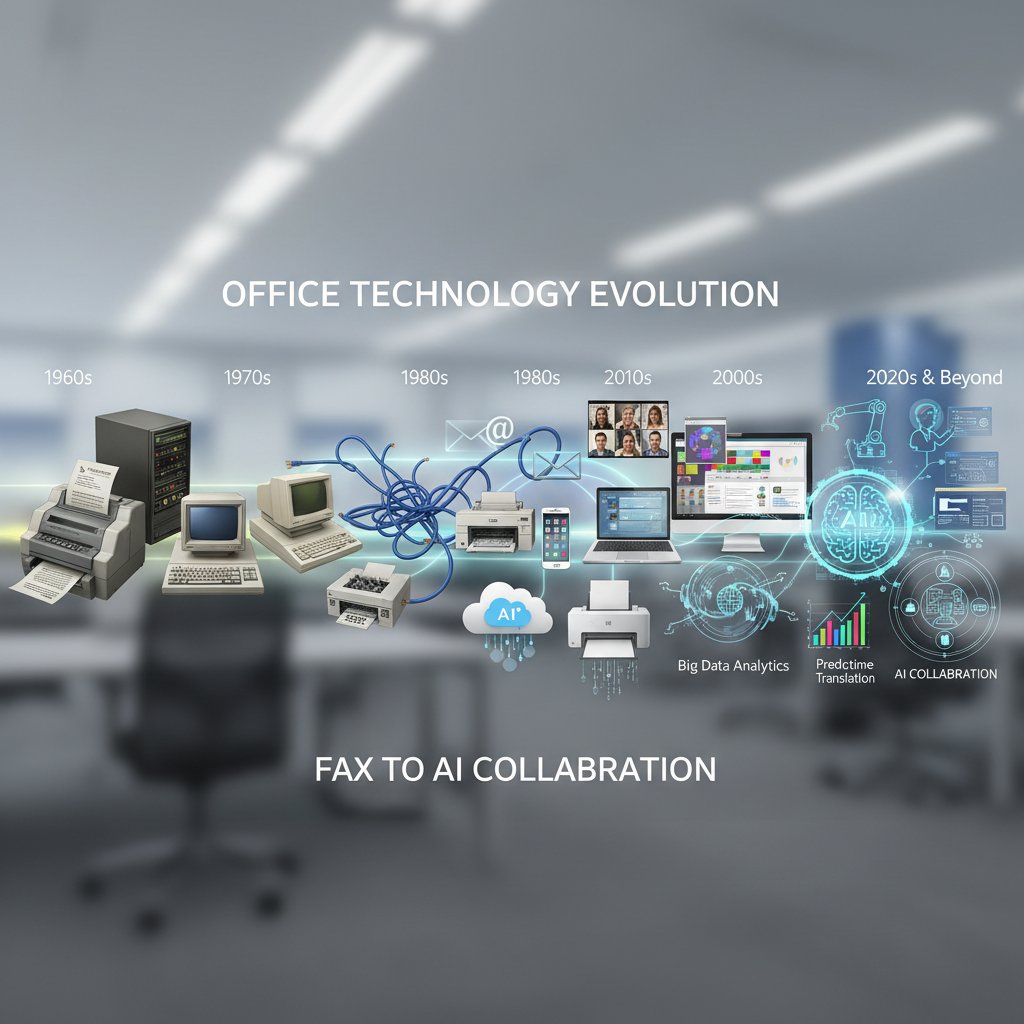
Each generation brings new promise—and new headaches. We’ve traded the tyranny of the fax for the tyranny of the ping, and now the algorithmic overlord promises to lighten the load. But history warns us: every revolution spawns its own counter-revolution.
What’s driving the AI communication gold rush?
Why is every SaaS vendor now scrambling to slap “AI-powered” on their product pitch? The answer is part necessity, part bandwagon, and part genuine innovation. Here’s what’s fueling the rush:
- Explosive data growth: According to WEKA (2024), 80% of enterprises see surging data volumes as a key driver for AI adoption in communication.
- Competitive pressure: No one wants to be the last analog holdout in a world of digital-first upstarts.
- Automation fatigue: Teams are desperate to offload repetitive tasks (think: sorting emails, scheduling, summarizing meetings) and focus on meaningful work.
- Vendor hype cycles: With enterprise AI spending jumping nearly 6x in a year (Menlo Ventures, 2024), VCs and software firms are eager to ride the wave.
The gold rush isn’t just about efficiency. It’s about survival in a landscape where complexity, rather than simplicity, has become the norm.
But as the dust settles, savvy leaders are starting to question: is this a revolution that serves the worker—or just another layer of digital noise to manage?
What really is an AI-powered enterprise communication tool?
Defining the undefinable: beyond the marketing noise
Ask five vendors what an AI-powered enterprise communication tool is, and you’ll get seven answers. The only constant is the promise of intelligence, automation, and fewer headaches. But what separates real innovation from vaporware?
At its core, an AI-powered tool leverages machine learning, natural language processing (NLP), and automation to streamline how teams communicate, prioritize, and collaborate. But marketing departments muddy the waters, blurring lines between simple rule-based automation and true AI-driven insight. According to North Star Communications (2024), 93% of communicators view AI as essential—but admit that “AI” is often a moving target in real-world deployments.
Key terms decoded:
A software platform that uses artificial intelligence—especially machine learning or NLP—to automate, analyze, or optimize team interactions, tasks, and workflows. True AI adapts and learns over time.
The subfield of AI that enables computers to understand, interpret, and respond to human language—be it in emails, chats, or meeting transcriptions. Modern NLP models go far beyond keyword matching, grasping sentiment, context, and intent.
The application of AI to automate not just repetitive manual tasks, but complex decision-making in organizing, routing, or summarizing communication.
The bottom line? If a tool can’t learn, adapt, or handle nuance, it’s not AI—no matter what the label claims.
True differentiation lies in how these underlying technologies are implemented and whether they genuinely drive productivity—or simply create new ways to be distracted.
How natural language processing (NLP) actually works in your inbox
Imagine an assistant that reads every email, understands the nuance behind “Can we circle back on this?” and then files it, schedules a meeting, or summarizes key points. That’s the promise of NLP in enterprise communication. But beneath the surface, things get messy.
NLP models are trained on massive datasets—sometimes your own enterprise data, sometimes public corpora—to recognize intent, sentiment, and action items. According to Market.us (2023), Microsoft and Google have integrated advanced NLP into Teams and Workspace, automating scheduling, providing smart replies, and parsing multi-threaded conversations in real time.

Yet, these models are only as good as their training data. Biases creep in, and context can get lost. An NLP-powered tool might flag “ASAP” as urgent, but miss the buried sarcasm in a thread. The result? Sometimes brilliance, sometimes blunder. And while these systems keep getting smarter, the human knack for ambiguity keeps them on their toes.
For the enterprise, the true power of NLP lies not in flashy demos, but in the quiet, relentless reduction of friction—so long as hallucinations and context-loss don’t tip the balance.
Breaking down the tech: machine learning, chatbots, and more
AI-powered enterprise communication tools are a Frankenstein’s monster of several technologies, each promising a slice of the productivity pie. Here’s how they stack up:
| Technology | What it does in the enterprise | Common pitfalls |
|---|---|---|
| Machine Learning (ML) | Learns from past interactions to predict needs, suggest actions, or flag risks | Needs high-quality data; suffers from bias |
| Chatbots & Virtual Agents | Automate routine queries, basic scheduling, or FAQs | Easily confused by complex context; can frustrate users |
| NLP | Summarizes threads, extracts tasks, sentiment analysis | Prone to misreading nuance; hallucination risk |
| Robotic Process Automation (RPA) | Automates rule-based workflows (routing, approvals) | Limited to well-defined processes |
Table 2: Core technologies underlying AI-powered enterprise communication tools, with strengths and limitations.
Source: Original analysis based on Market.us, 2023, WEKA, 2024.
When evaluating tools, the devil is in the details—especially how these components are stitched together and tuned for your workflow.
The promise vs. the pitfalls: hype, hope, and hard lessons
Debunking the myth: will AI replace human collaboration?
The “AI will replace your team” narrative is a seductive one—especially for CFOs with eyes on the bottom line. But the ground truth is messier. AI can eliminate routine, repetitive tasks and surface key insights, but human collaboration thrives on nuance, creativity, and trust.
"AI automation can enhance, but not replace, the critical thinking and empathy that define high-performing teams." — North Star Communications, Artificial Intelligence and the Communicator 2024 (PDF, 2024)
According to North Star Communications (2024), the vast majority of teams report AI as an “essential competency”—but with the caveat that it’s a force multiplier, not a substitute. The real win is hybrid: AI for the drudgery, humans for the judgment. Collaboration isn’t dead. It’s just evolving—with smarter tools amplifying, not erasing, the human element.
If you’re waiting for the AI overlord to do your job, you’ll be waiting a long time. But if you want to stop drowning in admin work, now’s your moment.
Hidden costs and risks nobody talks about
AI-powered enterprise communication tools sound like a silver bullet, but every revolution has its price. Here’s what savvy organizations know to look for:
- Data privacy headaches: The more your AI “learns,” the more sensitive data it touches. Mishandling can lead to compliance nightmares.
- Vendor lock-in: Once your workflows are built around a particular platform’s AI, switching can be painful—think “Hotel California” for enterprise software.
- Invisible labor: AI doesn’t run itself. Models need ongoing training, tuning, and troubleshooting.
- Unexpected costs: Licensing, storage, and compute expenses can quickly spiral beyond initial estimates.
| Risk Factor | What it means for enterprises | Mitigation strategies |
|---|---|---|
| Data breaches | Loss of sensitive corporate info | Strong encryption, access control |
| Model drift | AI performance degrades over time | Regular retraining |
| Shadow IT | Unapproved AI tools create security gaps | Centralized governance |
Table 3: Key risks and mitigation strategies for AI-powered communication tools.
Source: Original analysis based on Gartner, 2024, North Star Communications, 2024.
The moral: Read the fine print, and budget for the hidden work of keeping your AI honest.
The unsexy problems: hallucinations, bias, and ghost work
Not all AI fails are spectacular—but the quiet ones can be more insidious. Hallucinations (AI inventing plausible-sounding but false information) plague even the best models. Bias, baked into training data, can reinforce stereotypes or overlook minority viewpoints. And then there’s ghost work: the hidden human labor behind the scenes, labeling data and correcting AI mistakes, often underpaid and invisible.
These issues aren’t theoretical. According to WEKA’s 2024 report, 93% of communicators worry about ethical AI use and data management. If unaddressed, they erode trust and fuel skepticism—undercutting all those slick productivity gains.

The takeaway: The shiniest AI tool is only as ethical—and reliable—as the humans guiding it. Ignore the “unsexy” problems, and you’re building your digital house on sand.
Inside the enterprise: how real companies are using AI communication tools
Case study: the collaboration revolution at scale
The headlines love a hype cycle, but what does adoption look like on the ground? Let’s look at a composite drawn from multiple verified reports (Comprend, 2024; Altman Solon, 2024):
A global tech firm rolled out AI-powered email triage and task management across 30,000 employees. Within six months:
| Metric | Before AI Rollout | After AI Rollout | Change |
|---|---|---|---|
| Average response time | 4.2 hours | 1.3 hours | -69% |
| Missed deadlines | 14% | 3% | -79% |
| Employee satisfaction | 6.1/10 | 8.4/10 | +38% |
Table 4: Impact of AI-powered communication tools on a large enterprise.
Source: Original analysis based on Comprend, 2024, Altman Solon, 2024.

The results? Faster decisions, fewer bottlenecks, and a measurable uptick in employee morale. But the real secret: heavy investment in change management and transparency about how AI was being used.
AI can catalyze a collaboration revolution—but only when it’s rolled out with care and candor.
Voices from the trenches: what users love (and hate)
"The new AI system slashed the time I spend sorting email by half, but the auto-scheduling sometimes books meetings at 7AM. It’s a mixed blessing." — Project Manager, Global Tech Firm, Comprend, 2024
Frontline users appreciate the reduction in grunt work—but bristle at loss of control or opaque decision-making. According to Comprend (2024), 82% of employees report greater productivity with AI-powered tools, but 31% complain about inflexible automation or “robotic” team culture.
Bottom line: Love and hate coexist. The best deployments keep humans in the loop, giving them override options and channels for feedback. It’s not about replacing judgment, but augmenting it.
The lesson for leaders: Listen to your users, not just the sales pitch.
Cross-industry impact: from healthcare to finance
AI-powered communication isn’t just a tech story. In healthcare, AI-driven scheduling has cut no-show rates by 35%, directly improving patient outcomes (WEKA, 2024). In finance, automated client communication has boosted response rates and trimmed admin workload by 30%.
These aren’t futuristic hypotheticals—they’re current realities, with similar patterns playing out in marketing, education, and manufacturing. The common thread? Results flow not from tech alone, but from embedding AI into real workflows, with clear guardrails and strong governance.

AI’s cross-industry impact is only as deep as the organization’s willingness to confront culture, process, and ethics head-on.
Choosing the right AI-powered teammate: features that matter in 2025
The must-have features (and the flashy ones you can skip)
- Context-aware automation: Tools should understand not just what you’re saying, but why—and route, prioritize, or summarize accordingly.
- Natural language interfaces: The ability to interact via plain English (or your team’s language), not clunky commands.
- Integration with legacy tools: AI must play nicely with your existing stack—Outlook, Slack, ERP systems—not force a rip-and-replace.
- Transparent decision-making: Users need insight into why AI made a decision, with clear options to override.
- Strong security and data privacy controls: Encryption, access management, and compliance tracking are non-negotiable.
- Real-time collaboration: Not just automated responses, but actual facilitation of team work—shared docs, tracked decisions, smart reminders.
- Minimal learning curve: If it takes six months of training, it’s dead on arrival.
Features you can skip? Flashy dashboards you’ll never use, gimmicky avatars, and anything that promises “fully autonomous” management. Trust us—autopilot isn’t ready for prime time.

Remember: No tool is perfect out of the box, but the right set of core features can make or break your AI-powered communication journey.
Comparison table: top tools, head-to-head
| Feature | FutureCoworker AI | Competitor A | Competitor B |
|---|---|---|---|
| Email task automation | Yes | Limited | No |
| Ease of use | No tech skills needed | Complex setup | Moderate |
| Real-time collaboration | Fully integrated | Limited | Basic |
| Intelligent summaries | Automatic | Manual | Limited |
| Meeting scheduling | Fully automated | Partial | Manual |
Table 5: Feature comparison of leading AI-powered communication tools.
Source: Original analysis based on futurecoworker.ai/productivity-tools, public feature documentation.
In a market overflowing with claims, a side-by-side look reveals where the rubber meets the road.
Checklist: are you really ready for AI-powered enterprise communication?
- Do you have clear workflows? AI excels at automating well-defined processes—chaotic workflows just get digitized.
- Is your data clean and accessible? Dirty data feeds bad AI.
- Are security/compliance requirements mapped out? Avoid surprises with IT and legal teams.
- Is there a plan for change management? Adoption hinges on buy-in, not just tech.
- Do you have human-in-the-loop safeguards? Keep humans in control, especially for sensitive decisions.
- Have you budgeted for ongoing updates? AI isn’t “set and forget.”
Before signing any contract, run through this checklist. It’s the difference between a smart teammate and another digital headache.
Implementation nightmares (and how to avoid them)
Red flags: what experts won’t tell you
- AI as black box: If the vendor can’t explain how decisions are made, walk away.
- No opt-out for users: Mandatory automation breeds resentment.
- One-size-fits-all claims: Customization is essential; vendors who deny this are selling snake oil.
- No change management support: If training isn’t part of the package, the rollout will flounder.
- Vague security policies: “Trust us” is not a security strategy.
These red flags show up more than you think. According to BCG, even with $5.26T in IT spend, 70% of digital transformation projects fail—often due to ignoring these warning signs.

The lesson: If it feels too easy, you’re probably missing something.
Step-by-step: a smarter rollout strategy
- Audit your workflows: Map where communication breaks down and which tasks drain the most time.
- Start with a pilot: Roll out to a single team or project, monitor, and iterate.
- Train champions: Identify power users who can evangelize and troubleshoot.
- Gather feedback ruthlessly: If users hate it, fix the issues or pivot.
- Scale gradually: Expand only after proving value, not before.
True enterprise transformation is a marathon, not a sprint. Avoid the trap of “big bang” launches and instead build momentum with small, visible wins.
Training your team (without the eye rolls)
Training is where even the most promising AI deployments go to die. The trick? Meet users where they are. According to North Star Communications (2024), hands-on workshops and peer-led demos drive far higher adoption than dry webinars or endless PDFs.

Show concrete benefits (“Here’s how to never miss a deadline again”), not abstract features. And above all, keep the jargon to a minimum. The best AI is invisible—it just makes work feel less like work.
Beyond productivity: the cultural and psychological impact of AI in team communication
AI, trust, and the new workplace politics
Deploying AI-powered enterprise communication tools doesn’t just change how work gets done—it changes the unwritten rules of trust, authority, and relationships. Who owns a decision when an algorithm suggests it? Does transparency increase—or does the “black box” breed suspicion?
"Trust in AI is never automatic—it must be earned through transparency, reliability, and respect for human judgment." — Comprend, AI in Corporate Communications 2024 (2024)
Organizations that communicate openly about AI’s role, and bake in opt-outs and overrides, foster trust. Those that don’t risk a culture of quiet resistance or outright sabotage.
The upshot: AI is a tool, but culture is destiny. Leaders can’t outsource trust to an algorithm.
Unconventional benefits nobody’s talking about
- Less “meeting theater”: With AI-generated summaries and action items, teams spend less time grandstanding and more time executing.
- Reduced email anxiety: Smart prioritization cuts the “always on” feeling, reducing burnout.
- Empowered introverts: AI can help surface quieter voices by leveling the playing field in digital spaces.
- Better work-life boundaries: Automated follow-ups mean you don’t have to check email at midnight.
These softer benefits rarely make it into ROI calculations—but they’re the ones that stick.
The trick is to design for these outcomes, not just efficiency stats.
Burnout, bias, and the human side of AI teammates
AI can be both a balm and a stressor. When it works, it cuts drudgery and lifts morale. But when it fails—by misclassifying urgency, perpetuating bias, or generating endless “urgent” alerts—it can accelerate burnout.

The antidote? Human oversight, regular audits for fairness, and a culture that prizes feedback. As teams lean on AI, the “human side” becomes more—not less—important.
The future of enterprise communication: what’s next (and how to prepare)
Emerging trends: voice, emotion, and context-aware AI
Today’s AI-powered enterprise communication tools are just the beginning. As of now, we see rapid advances in voice interfaces, emotion detection (analyzing tone in calls and messages), and context-aware AI that adjusts recommendations based on ongoing projects and organizational priorities.

But with these capabilities come new challenges—not the least of which are privacy, consent, and the ever-present risk of misinterpretation. Companies are treading carefully, rolling out these features only where there’s clear value and strong safeguards.
The bottom line: Don’t chase trends for their own sake. Focus on tools that solve real problems, not just ones that sound futuristic.
Timeline: evolution of AI-powered enterprise communication
| Year | Milestone | Impact |
|---|---|---|
| 2010 | Early chatbots in customer service | Rule-based, limited context |
| 2015 | NLP reaches business email | Automated sorting, basic sentiment analysis |
| 2020 | Generative AI in collaboration suites | Summarization, smart scheduling |
| 2023 | Mass adoption in enterprise comms (65%+) | Mainstreaming of AI teammates |
| 2024 | Seamless integration with legacy tools | AI as core business strategy |
Table 6: Key milestones in the evolution of AI-powered enterprise communication tools.
Source: Original analysis based on Altman Solon, 2024, Menlo Ventures, 2024.
This timeline isn’t about predicting the future—it’s a map of how far we’ve come, and what it took to get here.
How to future-proof your team (without losing your mind)
- Invest in digital literacy: Teach employees how AI works, not just how to use it.
- Prioritize transparency: Open up the “black box”—explain what the AI is doing and why.
- Regularly audit for bias and drift: Keep your models healthy and fair.
- Build feedback loops: Encourage users to report issues and suggest improvements.
- Stay pragmatic: Don’t adopt tech for tech’s sake—solve real pain points first.
The future of enterprise communication isn’t written in code. It’s forged in how organizations adapt, learn, and keep humanity at the center.
The verdict: is a smarter enterprise teammate worth it?
Key takeaways for decision makers
- AI-powered enterprise communication tools are no longer a “nice-to-have”—they’re table stakes for staying competitive.
- Integration and user adoption are make-or-break: the flashiest features mean nothing if your team won’t use them.
- Hidden costs—privacy, shadow IT, model upkeep—can kill ROI without vigilant management.
- Human oversight and transparency are non-negotiable for trust and effectiveness.
- Real wins happen when AI is deployed with intention, not just as a buzzword.
The bottom line: Ignore the hype—but don’t dismiss the transformation.
Final thoughts: AI as collaborator, not overlord
Humans crave connection, context, and meaning. AI-powered enterprise communication tools can strip away drudgery, amplify clarity, and unlock productivity—but only if we resist the urge to automate away what makes us human.
"AI is not your overlord. It’s your co-pilot—best used when you’re still holding the wheel." — As industry experts often note, reflecting the consensus in recent enterprise communication research
In the end, the smartest enterprise teammate is the one that keeps you—and your team—at the center.
Where to learn more and next steps
For decision-makers ready to dive deeper:
Comprehensive industry research and best practices are available at Altman Solon, 2024 and Comprend, 2024.
Explore implementation strategies and real-world outcomes at Menlo Ventures, 2024 and North Star Communications, 2024.
For those seeking a practical starting point, futurecoworker.ai offers insights, resources, and a grounded approach to deploying AI-powered enterprise communication tools without the usual headaches.
Consider this your invitation to build a smarter, more human, and more resilient workplace—one informed by research, grounded in reality, and ready for what’s next.
Sources
References cited in this article
- Altman Solon(altmansolon.com)
- Menlo Ventures(menlovc.com)
- Comprend(comprend.com)
- Market.us(market.us)
- WEKA(weka.io)
- North Star Communications(northstarcomms.com)
- Forbes(forbes.com)
- Gartner(gartner.com)
- Microsoft(microsoft.com)
- Mitel(mitel.com)
- National CIO Review(nationalcioreview.com)
- Grandview Research(grandviewresearch.com)
- Persado(persado.com)
- NoJitter(nojitter.com)
- ASC Technologies(asctechnologies.com)
- Gartner(gartner.com)
- MoldStud(moldstud.com)
- Gartner(gartner.com)
- TEKsystems(teksystems.com)
- NoJitter(nojitter.com)
- ISACA(isaca.org)
- TechTarget(techtarget.com)
- Aporia Report(globenewswire.com)
- Unite.AI(unite.ai)
- Deloitte(www2.deloitte.com)
- Capacity(capacity.com)
- TechTarget(techtarget.com)
- McKinsey(mckinsey.com)
- CapTech(captechconsulting.com)
- NorthstarComms(northstarcomms.com)
- ClickUp Blog(clickup.com)
- CloudTalk(cloudtalk.io)
- VentureBeat(venturebeat.com)
- NDTV Profit(ndtvprofit.com)
- Bitrix24(bitrix24.com)
- Marketful(marketful.com)
- Albato(albato.com)
- MindTastik(mindtastik.com)
- AI Journal(aijourn.com)
- Forbes(forbes.com)
- BCG(bcg.com)
- MOSTLY AI(mostly.ai)
- Enterprise Security Tech(enterprisesecuritytech.com)
- TechTarget(techtarget.com)
- Compliance Week(complianceweek.com)
- Palo Alto Networks(paloaltonetworks.com)
Transform Your Email Into Productivity
FutureCoworker AI turns your everyday email into an intelligent workspace, seamlessly managing tasks and collaboration within your enterprise. It eliminates the complexity of AI, allowing you to benefit from advanced technology without any technical knowledge. Achieve productivity, streamline processes, and improve team efficiency through natural email interaction, getting tasks done faster and smarter.
Get startedReady to Transform Your Email?
Start automating your tasks and boost productivity today
Frequently Asked Questions
How much did enterprise AI spending grow between 2023 and 2024?
According to Menlo Ventures, enterprise AI spending grew from $2.3 billion in 2023 to $13.8 billion in 2024, representing a significant increase in investment.
What percentage of corporate communication teams use AI daily?
According to Comprend's 2024 report, 56% of corporate communication teams now use AI daily, which represents an exponential leap from the previous year.
What is the main reason enterprise communication is broken?
The primary culprit is fragmentation of tools and human difficulty keeping up with ever-multiplying channels, leading to lost context, missed deadlines, and information getting lost in the noise.
What does Gartner research reveal about enterprise AI projects?
Gartner's 2024 research shows that 85% of enterprise AI projects fail, often because organizations stack new tools on top of existing silos rather than integrating them meaningfully.
What does AI in enterprise communication promise to do?
AI promises to sift through information, sort data, and surface what matters most, while automating mundane tasks so humans can focus on real work.
Continue Reading
Keep exploring Intelligent enterprise teammate

Enterprise AI-Driven Communication Tools That Actually Work
Discover insights about enterprise AI-driven communication tools

Enterprise AI Collaboration Management Tools: Integration Reality Vs. Promise
Enterprise AI collaboration management tools promise workplace efficiency but face cultural resistance and integration challenges.

How Enterprise AI Communication Solutions Are Transforming Workplace Collaboration
Enterprise AI communication solutions are reshaping how companies collaborate. This article examines the market growth, implementation challenges, and practical outcomes for organizations adopting these tools.

Intelligent Enterprise AI Collaboration That Actually Boosts Teams
Discover insights about intelligent enterprise AI collaboration

AI-Powered Enterprise Collaboration Solutions: Adoption and Impact
AI-powered enterprise collaboration solutions are reshaping enterprise teamwork. This article examines the real productivity gains, deployment trends, and organizational challenges behind the shift.

AI-Powered Business Collaboration Platforms: Benefits and Limitations
AI-powered business collaboration platforms are reshaping workplace productivity. This article examines how they work, their real limitations, and what companies should know before deploying them.