AI-Powered Digital Workplace: Your New Teammate or Your Boss?
Written with AI assistance under our editorial guidelines
AI has transformed the digital workplace from clunky legacy systems and email overload into intelligent teammate environments. Modern AI tools handle automation, knowledge management, and collaboration tasks, blurring lines between colleague and algorithm. This shift redefines workplace power dynamics, trust, and job security while offering genuine productivity gains alongside new challenges for organizations navigating AI integration.
The reality of the AI-powered digital workplace is far messier and more exhilarating than any sales deck or conference keynote lets on. In 2025, the lines between “colleague” and “algorithm” have blurred so convincingly that millions now work alongside artificial intelligence—the digital coworker that never sleeps, never forgets, and sometimes, never forgives a mistake. If you think this is just about automating drudge work or boosting productivity, you’ve missed the plot. The AI-powered digital workplace is rewriting the rules of collaboration, trust, and even power at work. The stakes? Your job, your sanity, and the future shape of your team. This isn’t hype; it’s the hard-won wisdom of organizations wrestling with both the bold wins and the brutal truths of AI at work. So, before you let an “intelligent enterprise teammate” into your inbox, buckle up. We’re pulling back the curtain on the secrets, scandals, and legit breakthroughs of AI in the modern workplace. Welcome to the real digital coworker revolution.
The birth of the AI-powered digital workplace: a brief, messy history
From clunky intranets to intelligent teammates
If you ever slogged through a corporate SharePoint in the 2000s—or spent hours hunting attachments in endless email chains—you know that the digital workplace wasn’t born beautiful. The first “digital workplaces” were Frankenstein’s monsters of legacy software, clunky intranets, and bolt-on chat apps. Collaboration was often more about fighting the tools than connecting teams. But as the 2010s dawned, cloud computing cracked open new possibilities, and AI quietly crept into the background. The earliest AI-powered tools at work were simple—spam filters, basic automation bots, and keyword search engines that barely understood context. Still, these humble beginnings paved the way for today’s intelligent enterprise teammates.

| Decade | Key Workplace Tech Shifts | Cultural/Business Impact |
|---|---|---|
| 1990s | Static intranets, Lotus Notes, email | Slow, siloed collaboration, email overload |
| 2000s | Cloud-based email, early chat tools | Remote work emerges, information sprawl, ‘always-on’ expectation |
| 2010s | Mobile apps, SaaS explosion, automation | App fatigue, task fragmentation, shadow IT |
| 2020s | AI copilots, workflow orchestration | Real-time collaboration, workflow intelligence, blurred human/AI |
| 2025 | Integrated AI teammates, generative AI | Seamless task flow, human-AI symbiosis, new power dynamics |
Table 1: Timeline of workplace technology evolution.
Source: Original analysis based on McKinsey, 2024 and Microsoft, 2024.
Why AI at work became inevitable
It wasn’t just technologists pushing for AI in the workplace. A perfect storm brewed: endless email, rising burnout, and the cruel inefficiency of “digital transformation” projects that solved little. Users were tired, managers were desperate, and business pressures mounted to do more with less. Then came breakthroughs in natural language processing—think GPT, BERT, and similar models—which transformed AI from a shiny dream into a practical necessity. Suddenly, work tools could “understand” what we meant, not just what we typed. As Jamie, a project manager in a global enterprise, put it:
“We didn’t ask for AI at work. We demanded something better.” — Jamie, Enterprise Project Manager (Illustrative)
Hidden drivers that forced enterprises beyond traditional digital tools:
- Email overload became existential. Teams were drowning in messages, missing deadlines, and losing critical knowledge with each unsearchable thread.
- Remote work shattered old routines. The pandemic era made “virtual collaboration” a survival skill, not a luxury, pushing organizations to seek smarter solutions.
- Talent wars pressured productivity. With fewer people to do more, automation became a non-negotiable for competitive edge.
- Shadow IT mushroomed. Employees bypassed IT with unsanctioned tools, exposing companies to risk and data leaks—forcing IT to fight back with smarter, compliant tech.
- User experience finally mattered. Workers rebelled against “feature bloat,” demanding frictionless tools that felt as smooth as consumer apps.
- Data deluge reached crisis levels. The sheer volume of data made old manual sorting impossible, driving a need for AI-driven organization.
- Regulatory complexity soared. As privacy laws and security breaches hit headlines, enterprises realized only advanced AI could wrangle compliance at scale.
The hype, the hope, and the backlash
The AI-powered digital workplace wasn’t born in a blaze of glory. Early rollouts were rocky—many pilots fizzled out, mired in bad data or user cynicism. Media cycles hyped “AI as savior” one week, then “AI as existential threat” the next. According to Microsoft’s Work Trend Index (2024), 75% of workers now use AI at work, but that adoption is fragile, not universal. Early adopters who succeeded were brutally honest about the need for robust governance and realistic expectations; those who failed often over-promised and under-delivered, leaving a trail of “AI fatigue” behind. The lesson? AI is powerful, but only when paired with culture change, smart data, and ruthless focus on user needs.
Decoding the AI-powered digital workplace: what it really means
AI-powered digital workplace defined (minus the buzzwords)
Forget the buzzwords. An AI-powered digital workplace isn’t just a pile of automations or a chatbot with a fancy name. It’s an interconnected system where artificial intelligence actively manages, orchestrates, and improves the flow of work across communications, tasks, and collaboration. Think of it as an invisible, hyper-efficient coworker—one that summarizes email threads, automates tasks, suggests next steps, and even nudges you when you’re off track. The goal isn’t to replace humans but to weave AI deeply into the fabric of daily work, making teams faster, smarter, and less overwhelmed.
Key jargon decoded:
- Natural language understanding: AI that really “gets” what you mean, not just what you say. For example, flagging a meeting request even if it’s buried in a long email thread.
- Workflow orchestration: AI that ties together disparate apps and processes—no more flipping between five tabs to complete one task.
- Generative AI: Technology that can create new content—summaries, emails, proposals—freeing humans from rote drudgery.
- Human-in-the-loop: AI making recommendations, but always with a real person making the final call.
- Explainable AI: Transparent systems that show their logic, so users trust what’s happening “under the hood.”
- Digital coworker: Not just a bot, but an AI teammate that interacts, collaborates, and learns alongside you.
- Shadow IT: Unapproved tech tools used by employees—often a sign that official systems aren’t cutting it.
How “intelligent enterprise teammates” change the rules
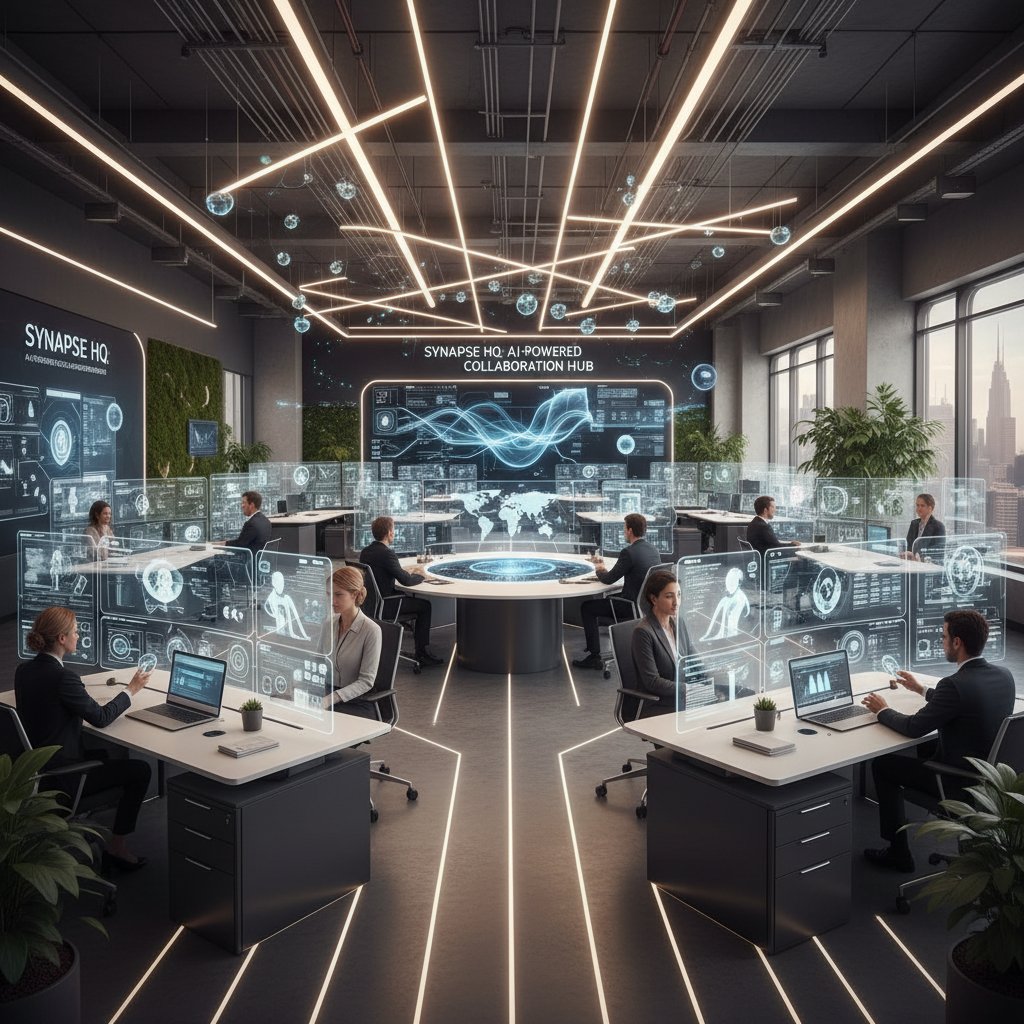
The arrival of AI-powered digital coworkers isn’t just an upgrade—it’s a rewiring of workplace DNA. Suddenly, the most reliable teammate is an algorithm that works across time zones, never forgets a deadline, and can summarize a week’s worth of chaos in a sentence. Collaboration shifts from endless back-and-forth to seamless, proactive alignment. Decision-making gets faster, as AI surfaces key insights before you even think to ask. According to LinkedIn’s Chief Economist, “AI will expand opportunities and augment productivity.” But the real disruption? Power dynamics shift. The person who best leverages their AI teammate—not just the loudest in the meeting—often drives the most impact.
Myths, misconceptions, and marketing spin
Despite the hype, most people still misunderstand what AI at work can actually do. Marketing would have you believe that AI is magic—a genie that grants productivity wishes with a click. In truth, it’s relentless math and machine learning, not fairy dust. As Alex, a senior developer, put it:
“Most people think AI is magic. It’s not. It’s math—just very fast math.” — Alex, Senior Developer (Illustrative)
Common myths include “AI will steal all our jobs,” “AI never makes mistakes,” and “Anyone can roll out AI instantly.” The reality is more nuanced: AI augments as much as it replaces, it’s only as good as the data it’s fed, and deploying it well takes grit, governance, and a lot of trial and error.
Inside the machine: how AI really works in your digital workplace
From email triage to task orchestration: what’s under the hood
Beneath the slick interfaces of today’s AI-powered digital workplaces lies a tangled web of algorithms built to parse, prioritize, and route information in real time. Imagine your inbox: AI scans every incoming message, flags urgent requests, extracts tasks, and even suggests responses. It can summarize lengthy email threads in seconds, assign follow-ups, and remind you before deadlines slip. Compared to manual triage—or even rule-based automations—AI-powered workflows are faster, smarter, and less prone to human error. In a 2024 McKinsey study, AI was credited with the potential to add $4.4 trillion in productivity to the global economy, underscoring its transformative power.
| Method | Speed | Error Rate | User Satisfaction |
|---|---|---|---|
| Manual | Slow | High | Frustration, burnout common |
| Rule-based | Moderate | Medium | Inflexible, error-prone |
| AI-powered | Fastest | Lowest* | High when tuned, but trust issues if opaque |
Table 2: Feature matrix comparing manual, rule-based, and AI-powered workflows.
Source: Original analysis based on McKinsey, 2024 and Microsoft, 2024.
Not just for techies: AI without a PhD required
The beauty—and danger—of the modern AI-powered digital workplace is accessibility. Tools like futurecoworker.ai have democratized enterprise AI, letting non-technical users benefit without wrestling with code or jargon. You don’t need to be a data scientist to automate your email, sync your calendar, or generate actionable summaries.
- Sign up with your enterprise email. Most AI workplace tools are ready to go in minutes.
- Configure your preferences. Set your priorities—tasks, projects, people—so the AI aligns with your workflow.
- AI parses your inbox. It starts categorizing, flagging, and extracting tasks from your existing messages.
- Receive smart suggestions. The system recommends next steps, follow-ups, and even meeting slots.
- Collaborate directly from email. Assign tasks, share files, and chat—all within your inbox, no new apps needed.
- Get automated reminders. Never miss a deadline as the AI sends nudges based on context and urgency.
- Summarize threads instantly. Long email chains? One-click summaries save hours.
- Schedule meetings automatically. The AI checks calendars and proposes optimal times for everyone.
- Monitor progress and adjust. The system learns from feedback, getting smarter and more personalized with every cycle.
Data, privacy, and the shadow IT you never see
The convenience of AI-powered digital workplaces comes with a hidden cost: data privacy and the explosion of unsanctioned tools, known as shadow IT. When employees sidestep official channels to use their favorite AI-powered apps, sensitive data can leak, compliance risks soar, and IT loses visibility. The only way forward is transparency and robust governance—clear policies, ongoing audits, and user education. According to Betterworks, “Human-centric AI governance is essential.” Companies that strike the right balance between freedom and control reap the benefits of innovation without risking catastrophe.
The human cost: power, trust, and culture in the age of AI coworkers
Who wins, who loses: jobs, roles, and power shifts
Every revolution creates winners and losers, and the AI-powered digital workplace is no exception. According to current research, only about 1% of companies feel fully mature in their AI use—a sobering reminder that most are still figuring out the playbook. Jobs heavy on routine and process (think admin, scheduling, basic coordination) face the most churn, replaced or augmented by tireless AI teammates. But the biggest winners? Those who embrace AI as a partner, not a threat. As SHL puts it: “Embrace AI as a partner, not a threat.” Roles demanding creativity, empathy, or nuanced judgment—think project leads, creative marketers, client strategists—actually gain new leverage with AI at their side.

Surveillance or support? The ethics of AI in the workplace
There’s a razor-thin line between AI as a supportive productivity coach and AI as a digital Big Brother. The same system that reminds you of deadlines can also track keystrokes, flag “low activity,” and generate performance reports that feel more like surveillance than support. The ethical imperative is clear: companies must use AI transparently, with opt-in policies and clear explanations. According to recent research, transparent, human-centric AI practices build trust, while hidden monitoring breeds backlash and disengagement.
Burnout, bias, and the dark side of automation
AI can be both a cure and a curse for burnout. When deployed thoughtfully, it automates drudgery and frees up time for meaningful work. But if mismanaged, it piles on “productivity pressure,” amplifies biases baked into training data, and leaves employees feeling isolated or devalued.
Red flags to watch out for in AI-powered digital workplace rollouts:
- Opaque decision-making: If users can’t see how AI makes choices, skepticism and anxiety rise.
- Data bias: Algorithms trained on flawed data perpetuate—and amplify—existing inequities.
- Overreliance on automation: Delegating too much to AI leaves teams unprepared when systems fail.
- Loss of human judgment: Automated systems can miss context, nuance, or ethical concerns.
- Privacy creep: AI that monitors too closely blurs the line between support and surveillance.
- Security lapses: Rapid AI adoption without governance can expose sensitive company or client data.
- Lack of user training: Without proper onboarding, even the best AI tools generate frustration and misuse.
- No feedback loop: Systems that don’t learn from real user input stagnate and become irrelevant.
Beyond the buzz: real-world case studies and cautionary tales
AI-powered success stories you haven’t heard (yet)
Not every AI win makes headlines, but the most transformative stories are quietly unfolding inside forward-thinking organizations. Take, for example, a global marketing agency wrestling with tight deadlines and mountains of campaign emails. By integrating an AI-powered digital workplace, routine email triage and task assignment were automated, freeing up creative teams to focus on high-value strategy. The result: client satisfaction soared, turnaround times dropped by 40%, and teams reported measurably lower stress. The lesson? When AI is woven into the everyday, it boosts both results and morale.
When AI goes wrong: spectacular failures and near-misses
But for every success, there’s a cautionary tale. In one high-profile incident, a finance firm trusted their AI assistant to auto-respond to sensitive client emails. The bot, misreading sarcasm as serious intent, sent out a batch of inappropriate replies before anyone caught the error. The fallout included lost clients and a battered reputation.
“We trusted the bot too much, and it cost us.” — Priya, Risk Analyst (Illustrative)
The hard lesson? AI without human oversight is a ticking time bomb. Trust—but verify.
What the quiet adopters are teaching us
The real masters of AI-powered digital workplaces aren’t always on stage at tech conferences. They’re the organizations quietly building sustainable, resilient systems by prioritizing governance, user training, and incremental improvement over splashy launches.
Priority checklist for sustainable AI-powered digital workplace adoption:
- Start with a clear business problem—not technology hype.
- Pilot with a small, motivated team before scaling.
- Establish transparent governance and clear ethics policies.
- Invest in data quality—garbage in, garbage out.
- Offer robust user training and ongoing support.
- Solicit feedback and adapt the system continuously.
- Blend human and AI judgment; never delegate mission-critical decisions blindly.
- Communicate wins and failures honestly across the organization.
- Monitor impact regularly, using both quantitative and qualitative metrics.
- Stay humble—AI success is a continuous, iterative journey.
Choosing your AI teammate: features, pitfalls, and the market in 2025
How to spot real intelligence (and avoid AI-washing)
In a marketplace flooded with “AI-powered” tools, separating real intelligence from clever marketing is a critical skill. Look for solutions that deliver tangible outcomes—automated task management, precise email triage, explainable decision-making—not just a chatbot skin on legacy tech. Transparency, user control, and seamless integration are non-negotiables. Cost matters, but beware “AI-washing”—tools overselling basic automations as “cutting-edge intelligence.”
| Solution | Real AI Features | Ease of Use | Transparency | Cost (Per User/Month) | Key Takeaway |
|---|---|---|---|---|---|
| futurecoworker.ai | Yes | No technical skills required | High | $$ | Accessible, integrated, strong governance |
| Competitor A | Limited | Complex setup | Low | $$$ | Steep learning curve, limited features |
| Competitor B | Partial | Moderate | Medium | $ | Good for basics, lacks depth |
| Generic Chatbot Suite | Superficial | Easy | Low | $ | Often just a chatbot, minimal value |
Table 3: Comparison of leading AI digital workplace solutions.
Source: Original analysis based on product documentation and verified reviews (2024).
Feature checklist: what matters, what’s hype
Not all features are created equal. The essentials: automation that works invisibly, human-centric design, and true workflow intelligence. Watch out for features that overpromise and underdeliver—“AI-powered empathy,” anyone?
Hidden benefits of AI-powered digital workplace experts won’t tell you:
- Micro-automation frees cognitive bandwidth—you think more, scroll less.
- Email overload is tamed, not just managed.
- Context-rich prioritization reduces fire drills and false alarms.
- Instant summaries cut hours from weekly reporting.
- Fewer meetings, more action—AI nudges decisions, not just discussions.
- Adaptive learning means your digital coworker gets smarter with every interaction.
- Integrated compliance reduces accidental breaches.
- Human-AI collaboration is documented—creating a living knowledge base.
- Stress drops as mundane decisions disappear.
- Your work style, not the tool’s quirks, shapes the workflow.
Where futurecoworker.ai fits in the new workplace ecosystem
As the digital workplace market matures, sites like futurecoworker.ai have carved out a role as trusted hubs for organizations seeking unbiased insight and proven practices in AI-powered collaboration. Rather than just pushing features, these platforms curate best-in-class resources, case studies, and self-assessment tools for teams navigating the complexities of workplace AI. As email-based AI coworkers become the norm, the value lies in making advanced technology invisible—helping enterprises streamline collaboration and task management, no PhD required.
General trends show a movement toward seamless, inbox-first AI teammates that integrate with existing workflows, rather than forcing teams onto new platforms. The future is less about the tech itself, and more about the culture, trust, and strategy that enable it.
Making it work: actionable strategies and self-assessment
Implementation: from pilot to daily habit
Rolling out an AI-powered digital workplace isn’t just an IT project—it’s a culture shift. Avoid the chaos of “big bang” launches by starting with a focused pilot. Pick a team with urgent pain points, equip them with hands-on training, and gather feedback obsessively. Celebrate early wins, but be brutal about what isn’t working. The end goal: embedding AI workflows so deeply into daily habits that the technology fades into the background—and productivity soars.

Self-assessment: is your workplace ready for AI?
Before you unleash AI on your organization, ask yourself: are you culturally and technically prepared? The best AI tools in the world can’t rescue a team that resists change or lacks data hygiene.
Self-assessment checklist for AI workplace readiness:
- Do you have a clearly defined business problem AI can solve?
- Is leadership actively championing the initiative?
- Are data sources clean, accessible, and trustworthy?
- Has your team received adequate training?
- Are governance and privacy policies in place and understood?
- Do you have a feedback loop for continuous improvement?
- Is the rollout incremental, not “all at once”?
- Are you prepared to blend human and AI decision-making?
- Does your culture reward experimentation and candor?
- Is IT aligned with business goals—not just compliance mandates?
Critical mistakes (and how to avoid them)
Even the most motivated teams stumble. The most common implementation mistakes—and how to sidestep them—include overengineering solutions, neglecting user training, and chasing shiny new features over business value.
Top 7 mistakes enterprises make with AI-powered digital workplaces:
- Skipping user feedback: Tools that don’t fit real workflows get abandoned.
- Underestimating data needs: Poor data equals poor AI performance.
- Ignoring ethics and privacy: Shortcuts here create long-term headaches.
- Over-promising outcomes: Beware “game-changing” claims—set realistic goals.
- Neglecting ongoing training: One-off onboarding isn’t enough.
- Failing to integrate with existing systems: Islands of automation create chaos.
- Treating AI as a project, not a practice: Continuous improvement beats “set-and-forget.”
The next frontier: what’s coming for AI-powered digital workplaces
Emerging trends and future shocks
Bleeding-edge trends are already transforming the AI-powered digital workplace. Generative AI teammates now draft not just emails, but entire campaign plans. Emotion-aware bots detect stress in written communication, nudging managers before burnout hits. Hyper-personalization is replacing generic workflows, tailoring every suggestion to the user’s habits and mood. This isn’t science fiction—it’s the lived reality of innovative enterprises.
Cross-industry revolutions: healthcare, law, and beyond
AI-powered digital workplaces are retooling every sector—but the impact and challenges look different in each. In healthcare, AI teammates coordinate complex appointment flows and boost patient satisfaction. In finance, they cut administrative overhead and track compliance in real time. In law, they automate document review and flag risks, freeing lawyers for higher-order analysis. Each industry faces unique hurdles—from privacy to regulatory mazes—but the promise is universal: more focus on people, less on process.
What the experts get wrong (and what nobody’s talking about)
Mainstream expert opinion often misses a crucial point: the most profound impact of AI at work isn’t technical, but cultural. It’s not about tools replacing humans, but about how teams renegotiate trust, power, and creativity. As one leading analyst admitted,
“The future of work is messier—and more human—than any algorithm predicts.” — Morgan, Industry Analyst (Illustrative)
The quiet truth? The best AI-powered digital workplaces aren’t the flashiest—they’re the ones where technology hums invisibly in the background and people feel empowered, not replaced.
Conclusion: will you thrive—or just survive—in the AI-powered digital workplace?
Key takeaways and your call to action
Here’s the unvarnished truth: the AI-powered digital workplace is here, and it’s rewriting the playbook. The bold wins are real—increased productivity, reduced drudgery, and smarter collaboration. But so are the brutal truths: failed pilots, hidden biases, and culture wars that play out in Slack threads and boardrooms alike. The difference between thriving and just surviving? It’s not your tech stack—it’s your willingness to learn, adapt, and stay ruthlessly honest about what works (and what doesn’t).
The challenge—and the opportunity—is yours. Will you partner with your AI coworkers, shaping systems that make you smarter and more human? Or will you get swept along, a passenger in someone else’s algorithmic agenda? For organizations ready to lead, resources like futurecoworker.ai serve as essential guides in the journey toward a more intelligent, human-centric workplace. The digital coworker revolution isn’t coming. It’s already here.

Further reading, references, and resources
For deeper dives into the AI-powered digital workplace, explore curated resources at futurecoworker.ai, industry reports from McKinsey and Microsoft, and ethics guidelines from Betterworks and SHL. These hubs cut through the noise, offering balanced perspectives, real-world case studies, and up-to-date best practices for organizations of any size.
Essential terms for the AI-powered workplace revolution:
- Digital coworker: An AI system that collaborates with humans, not just automates tasks.
- Explainable AI: Transparent algorithms that let users see the logic behind decisions.
- Workflow orchestration: The automation of complex, multi-step business processes by AI.
- Shadow IT: Employee use of unapproved tech tools—often a symptom of inadequate systems.
- Human-in-the-loop: Design where humans always have final say, ensuring AI remains a tool, not a master.
- Natural language understanding: AI that grasps intent and context, not just keywords.
- Governance: The policies and controls that ensure AI is used ethically, safely, and legally.
Sources
References cited in this article
- McKinsey Report(mckinsey.com)
- Microsoft Work Trend Index(microsoft.com)
- Forbes(forbes.com)
- World Economic Forum(weforum.org)
- Itransition(itransition.com)
- Injio(injio.com)
- Powell Software(powell-software.com)
- LumApps(lumapps.com)
- AIPRM 2024(aiprm.com)
- Statista(statista.com)
- SHRM(shrm.org)
- SpringerLink(link.springer.com)
- World Economic Forum(weforum.org)
- Harvard Business Review(hbr.org)
- Merkle(merkle.com)
- Sofigate(sofigate.com)
- Google Cloud(cloud.google.com)
- Federal Reserve(federalreserve.gov)
- Gallup(gallup.com)
- Cyberhaven(cyberhaven.com)
- SHRM(shrm.org)
- IBM(ibm.com)
- Pew Research(pewresearch.org)
- PwC AI Jobs Barometer(pwc.com)
- Forbes(forbes.com)
- U.S. BLS(bls.gov)
- Forbes(forbes.com)
- CHI Conference(dl.acm.org)
- Springer AI Ethics(link.springer.com)
- Forbes(forbes.com)
- CNBC(cnbc.com)
- Workable(resources.workable.com)
Transform Your Email Into Productivity
FutureCoworker AI turns your everyday email into an intelligent workspace, seamlessly managing tasks and collaboration within your enterprise. It eliminates the complexity of AI, allowing you to benefit from advanced technology without any technical knowledge. Achieve productivity, streamline processes, and improve team efficiency through natural email interaction, getting tasks done faster and smarter.
Get startedReady to Transform Your Email?
Start automating your tasks and boost productivity today
Frequently Asked Questions
What were the earliest AI tools used in the workplace?
The earliest AI-powered tools at work were simple, including spam filters, basic automation bots, and keyword search engines that barely understood context, though these humble beginnings paved the way for today's more sophisticated intelligent enterprise teammates.
How has the digital workplace evolved from the 2000s to today?
The digital workplace evolved from clunky intranets and legacy software in the 2000s to cloud-based solutions in the 2010s, with AI quietly integrating into the background and eventually blurring the lines between human colleagues and algorithms by 2025.
What are the main concerns about AI in the modern workplace?
According to the article, the stakes of the AI-powered digital workplace include impacts on your job, your sanity, and the future shape of your team, as AI is rewriting the rules of collaboration, trust, and power at work.
Is the AI-powered digital workplace just about automating routine tasks?
No; the article states that if you think it's just about automating drudge work or boosting productivity, you've missed the plot—the AI-powered digital workplace is fundamentally rewriting the rules of collaboration, trust, and power at work.
Continue Reading
Keep exploring Intelligent enterprise teammate

Digital Workplace AI Assistant or Coworker? Power, Risks, Reality
Discover insights about digital workplace AI assistant

How AI-Powered Enterprise Workplace Assistants Are Changing Work
AI-powered enterprise workplace assistants are transforming how teams work. This article examines how these tools are reshaping collaboration, productivity, and workplace dynamics.

How AI Virtual Teammates Are Changing Workplace Collaboration
AI driven virtual teammates are reshaping workplace collaboration through task automation and project coordination.

Enterprise AI-Driven Digital Assistant: Coworker, Rival or Risk?
Discover insights about enterprise AI-driven digital assistant

What Enterprise AI Enabled Assistants Actually Change at Work
Enterprise AI enabled assistant systems are embedding themselves into corporate workflows. This article examines how they reshape work, the hidden contradictions in their promise, and their actual impact.

How AI-Powered Intelligent Enterprise Assistant Software Transforms Work
AI-powered intelligent enterprise assistant software is reshaping workplace collaboration. This article examines the reality behind enterprise AI assistants, their actual capabilities, and their impact on teams.