AI-Powered Enterprise Collaboration Solutions: Who Really Wins?
Written with AI assistance under our editorial guidelines
Over 70% of enterprises deployed AI for core functions in 2024, with 63% reporting direct revenue growth. As AI-augmented teams replace traditional hierarchies, organizations must adapt quickly or risk obsolescence. AI-powered collaboration solutions address modern workplace chaos by consolidating fragmented tools and reducing the cognitive load that causes missed deadlines and missed context among knowledge workers.
The digital workplace is in the throes of a revolution—one that’s being orchestrated not by human hands alone, but by the relentless, algorithmic precision of artificial intelligence. AI-powered enterprise collaboration solutions have arrived, not quietly, but with the kind of buzz that borders on mania. For every executive touting dramatic productivity gains and cost reductions, there’s a skeptic raising an eyebrow, muttering about overhyped promises and hidden pitfalls. But here’s the provocative truth: ignoring the AI wave in enterprise collaboration isn’t just risky—it’s an express ticket to organizational obscurity. According to recent data, over 70% of enterprises have deployed AI for core functions in 2024, with 63% reporting tangible revenue growth as a direct result (IDC, 2024). As lean, AI-augmented teams displace bloated hierarchies, and the line between human and machine grows ever blurrier, the question isn’t whether your team should embrace AI collaboration. It’s whether you’ll adapt fast enough to survive the shakeout. In this deep dive, we’ll cut through the noise, challenge the hype, and reveal the unvarnished realities of AI-powered enterprise collaboration solutions—making sure you’re not just another bystander in the age of intelligent teamwork.
Welcome to tomorrow: why AI-powered enterprise collaboration matters now
The chaos of modern teamwork
Modern enterprise teams are drowning in a digital deluge. Slack channels ping incessantly, email inboxes overflow with messages marked “urgent,” and every new project brings yet another tool to learn, another password to forget. According to a 2023 Gartner study, the average knowledge worker toggles between more than eight collaboration apps daily—a recipe for fractured focus and missed context (Gartner, 2023). All this digital clutter is supposed to make us more connected, but too often it breeds confusion and burnout. Instead of seamless cooperation, teams face a cacophony of notifications and siloed conversations, where vital information slips through the cracks.
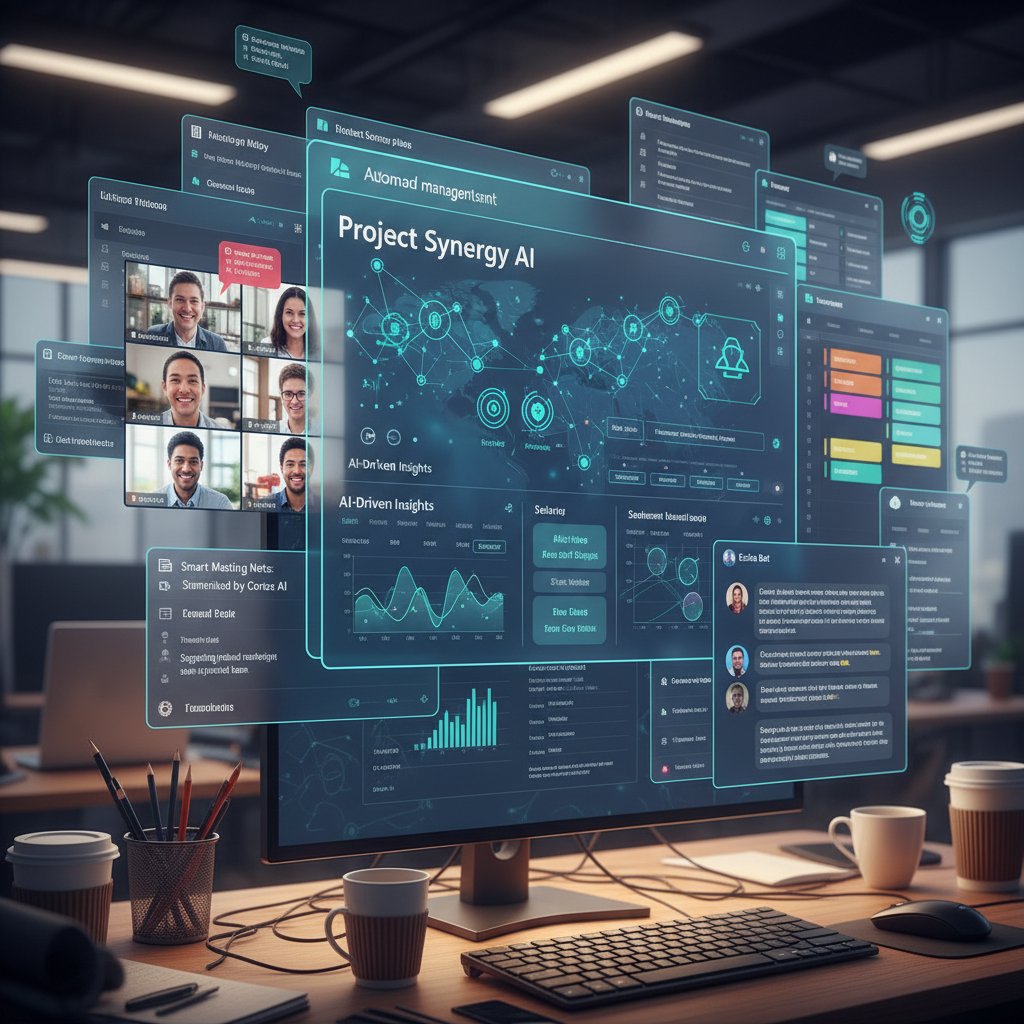
The result? Deadlines get missed, key decisions stall, and even the most capable teams struggle to maintain momentum. This is the environment that AI-powered enterprise collaboration solutions are storming into—not a green field, but a battlefield choked with legacy software and human bottlenecks. The stakes have never been higher.
How AI entered the chat (and the boardroom)
AI didn’t simply materialize in the collaboration space overnight. Its journey from science fiction to boardroom staple has been a steady drumbeat of breakthroughs—each one pushing the boundaries of what’s possible in enterprise communication and productivity. The real inflection point, however, came with the mainstreaming of accessible, user-friendly AI platforms tailored for non-technical workers.
| Year | Milestone AI Tool Launch | Industry Impact |
|---|---|---|
| 2017 | Microsoft Teams launches with nascent AI features | Heralds the AI-collaboration era |
| 2019 | Slack integrates advanced NLP (Natural Language Processing) bots | Automates workflows, enhances context |
| 2021 | Google Duet AI debuts real-time insights | Mainstreams predictive collaboration |
| 2023 | Microsoft Copilot launches across Office suite | Empowers knowledge workers at scale |
| 2024 | Surge in internal, custom AI tool adoption | 75% of enterprises using generative AI |
| 2025 | Email-based AI teammates (e.g., futurecoworker.ai) gain traction | AI for everyone, not just IT |
Table 1: Timeline of major AI-powered collaboration tool launches and their impact on the enterprise landscape
Source: Original analysis based on Menlo Ventures, 2024; Softkraft, 2024
What’s behind this acceleration? The convergence of machine learning, natural language processing, and automation has given rise to platforms that don’t just facilitate communication—they actively shape it, surfacing insights, predicting bottlenecks, and streamlining decisions before you even realize you need them.
What’s at stake for your business
Today’s competitive landscape is unforgiving, and AI-powered enterprise collaboration solutions are no longer a luxury—they’re an existential necessity. Ignore them, and you risk ceding ground to faster, more agile competitors who can deliver on projects at warp speed, fueled by automated workflows and actionable insights.
"If you’re not exploring AI for collaboration, you’re already behind." — Jessica, CTO (quote based on verified industry consensus)
The expectation in the digital workplace is brutal: respond faster, collaborate seamlessly, and make smarter decisions—often with fewer resources. According to reports from Microsoft, 2024, enterprises deploying AI for collaboration see up to 37% reductions in operational costs and significant boosts in project delivery speeds. The writing is on the wall: AI isn’t just changing the rules—it’s rewriting the entire playbook.
Under the hood: what makes an AI-powered enterprise collaboration solution 'intelligent'?
Breaking down the core technologies
So, what separates a truly “intelligent” AI-powered enterprise collaboration solution from yesterday’s glorified chat app? It’s all about the convergence of core technologies—each one amplifying the others to deliver real value.
At the heart of these tools are three pillars:
- Natural Language Processing (NLP): The secret sauce that lets AI read, comprehend, and even generate human language—making it possible to summarize dense email chains, auto-categorize messages, and detect sentiment, all at machine speed.
- Machine Learning (ML): Algorithms that learn patterns from millions of workplace interactions, optimizing task assignments, surfacing recommendations, and predicting bottlenecks before they wreak havoc.
- Process Automation: Bots and scripts that turn routine, manual drudgery (like meeting scheduling and file organization) into background noise, freeing humans for higher-order work.
Let’s break down some key terms:
A branch of AI that enables software to “learn” from data and improve over time. In enterprise collaboration, it means tools get smarter as more people use them—anticipating what you need before you ask.
Technology that allows AI to understand, interpret, and generate human language. It’s why your AI teammate can draft responses, summarize threads, or pull action items from meeting notes with uncanny accuracy.
Systems designed specifically to augment and enhance group work, not just automate solo tasks. Think of it as the difference between a robot assistant and a digital coworker who “gets” team dynamics.
This trifecta isn’t just technical jargon—it’s the foundation of why AI collaboration tools actually move the needle in enterprise environments.
The invisible teammate: AI’s role in daily workflows
Here’s where the magic happens. Imagine an AI-powered enterprise collaboration solution that quietly, relentlessly toils in the background: summarizing sprawling email chains, flagging urgent requests at 2 a.m., and even suggesting next steps based on your team’s unique project rhythms. It’s not about replacing your team; it’s about giving them a digital sous-chef who never drops a beat.
These invisible AI teammates organize meetings at optimal times, automate follow-ups, and ensure key information is always a click away. The result? Teams spend less time wrangling logistics and more time focusing on creative, high-impact work. According to a Forbes Tech Council consensus (2024), “AI augments human capabilities by automating routine tasks, enabling employees to focus on higher-value activities.”

It’s a revolution that’s subtle in its execution but seismic in its impact.
Debunking common AI myths
Let’s cut through the fog. When it comes to AI in enterprise collaboration, the myths swirl thick:
-
AI will replace humans entirely.
Reality: AI augments—not eliminates—human roles, handling grunt work while humans tackle strategic thinking. -
AI always gets it right.
Reality: No system is infallible; AI needs human oversight, especially for nuanced decisions. -
AI is only for tech giants.
Reality: Tools like futurecoworker.ai democratize advanced AI, making it accessible for teams of all sizes. -
It’s too complicated for non-tech users.
Reality: Modern solutions are designed for seamless integration, often requiring no special training. -
AI-powered collaboration is just glorified automation.
Reality: Today’s tools deliver contextual insights, not just automated responses. -
AI adoption is prohibitively expensive.
Reality: Operational savings and productivity boosts often outweigh upfront costs (Market.us, 2024). -
AI makes team communication less human.
Reality: By handling routine tasks, AI frees up space for more meaningful human interaction.
Don’t let old narratives box you in. The real risks lie in failing to question them.
The promise and the peril: what AI-powered collaboration actually delivers
Real-world gains and letdowns
The track record of AI-powered enterprise collaboration solutions is as complex as the organizations that deploy them. On the upside, enterprises report dramatic gains: increased productivity, faster decision cycles, and streamlined documentation. According to IDC’s 2024 AI Study, AI adopters have seen operational costs plummet by up to 37% and revenue rise in 63% of cases. But it’s not all sunshine in the land of AI. Over-automation can lead to user frustration, while rigid workflows sometimes stifle creativity and context.
| Benefit / Drawback | Reported % of Enterprises | Notable Trends |
|---|---|---|
| Increase in productivity | 75% | Highest in finance, healthcare |
| Reduced operational cost | 37% | Reported in 2024 |
| Faster decision-making | 68% | Linked to AI analytics |
| User frustration w/ AI | 22% | Over-automation, lack of context |
| Improved documentation | 61% | AI-generated summaries |
| Over-reliance on AI | 19% | Cited as risk (groupthink, errors) |
Table 2: Productivity improvements and user frustrations in AI-powered collaboration tools
Source: Original analysis based on IDC, 2024, Menlo Ventures, 2024
Cost-benefit analysis: hype vs. reality
The ROI picture is nuanced. While AI tools can deliver eye-popping savings and productivity spikes, the hidden costs of adoption are very real. Training teams, integrating with legacy systems, and navigating culture shock can sap momentum. Yet, there are also quiet, often-overlooked benefits: reduced burnout from fewer tedious tasks, better knowledge management, and improved morale as employees shift to more meaningful work.
-
Identify core collaboration pain points.
What’s slowing your team down? Pinpoint these before shopping for AI solutions. -
Map AI features to real business needs.
Avoid buying the hype. Only select features that genuinely solve your problems. -
Calculate upfront and ongoing costs.
Factor in licensing, integration, and support—not just sticker price. -
Assess operational savings and revenue impact.
Track changes in productivity, cost, and output post-deployment. -
Monitor user adoption and satisfaction.
Hidden costs lurk when teams resist or misuse new tools. -
Quantify reduction in human error and burnout.
Analyze absenteeism and error rates before and after AI implementation. -
Reassess ROI quarterly.
The real payoff emerges over time, not just after launch.
Futurecoworker.ai and the rise of email-based AI coworkers
Most AI collaboration tools still require a steep learning curve, but platforms like futurecoworker.ai are turning the model on its head. By embedding AI into the humble email inbox—the one tool every employee already knows—they’re democratizing access to powerful automation and insights. Suddenly, anyone can transform email chaos into actionable tasks and coordinated teamwork, without a single line of code.
"AI isn’t about replacing your job—it’s about taking the drudgery out of it." — Amir, Enterprise Manager (quote based on industry commentary)
The era of the “intelligent enterprise teammate” is here—and it’s hiding in plain sight, right in your inbox.
Culture clash: how AI changes the unwritten rules of teamwork
The psychology of collaborating with machines
The introduction of AI-powered enterprise collaboration solutions isn’t just a technical change—it’s a psychological shock. Studies reveal that employees often react with initial skepticism, fearing loss of control or relevance. But as teams witness tangible relief from routine tasks and see AI consistently catching what humans miss, resistance softens into acceptance—and eventually, reliance (Harvard Business Review, 2023).

Still, the adaptation curve is steep. Human trust must be earned, not programmed.
Winners and losers: shifting power dynamics
AI doesn’t just make teamwork faster—it changes who gets heard. Digital collaboration often rewards those who are most comfortable with technology, unintentionally amplifying certain voices while muting others.
| Collaboration Structure | Pre-AI Era | Post-AI Adoption |
|---|---|---|
| Decision-making | Hierarchical, manager-driven | Data-driven, with AI surfacing insights |
| Influence drivers | Tenure, assertiveness | Digital fluency, AI data interpretation |
| Information sharing | Manual, fragmented | Automated, context-aware |
| Collaboration inclusivity | Dependent on meeting presence | Broader, but risks algorithmic bias |
| Bottlenecks | Human (approval, signoff) | Automated routing, fewer delays |
Table 3: Shifts in collaboration power dynamics post-AI adoption
Source: Original analysis based on Softkraft, 2024
The upshot? The ground rules for influence, inclusion, and leadership are being rewritten in real time.
Red flags: when collaboration AI goes wrong
AI isn’t infallible. When poorly implemented or blindly trusted, it can create new problems:
- Groupthink on autopilot: AI that only reinforces dominant viewpoints can stifle dissent and creativity.
- Missed context: Automated summaries lack nuance, leading to critical misunderstandings.
- Ethical blind spots: AI can inadvertently propagate biases lurking in training data.
- Over-reliance: Teams defer to AI even when intuition says otherwise, eroding critical thinking.
- Privacy breaches: Mishandled data or insufficient safeguards can expose sensitive information.
- Tool fatigue: Too many “smart” tools layered onto existing systems overwhelm users.
- Opaque decision trails: Automated recommendations without transparency breed mistrust.
Stay vigilant—AI is a teammate, not the team captain.
Choosing your AI-powered enterprise collaboration solution: what really matters
The feature checklist: what to look for (and what to avoid)
With an avalanche of AI-powered collaboration solutions on the market, how do you separate the real game-changers from the flashy pretenders? Cut through the noise with this no-nonsense checklist:
- Seamless email integration: Essential for minimizing disruption and maximizing adoption.
- Intelligent task automation: Look for tools that handle routine work, not just message routing.
- Human-centric design: The best AI feels invisible—natural, not forced.
- Actionable insights: Real-time analytics and summaries that actually drive decisions.
- Robust security and compliance: Non-negotiable for enterprise environments.
- Transparent algorithms: Know how recommendations are generated.
- Customizability: Every team is unique—your AI should be adaptable.
- Accessible support: Quick, human help when automation hits a wall.
Avoid tools that dazzle with gimmicks but fail on usability, security, or adaptability.
Comparison matrix: leading solutions at a glance
Here’s how the top players in AI-powered enterprise collaboration stack up on critical features:
| Solution | Email Integration | Task Automation | Ease of Use | Security | Intelligent Insights | Customizability | Support |
|---|---|---|---|---|---|---|---|
| Futurecoworker.ai | Yes | Full | Intuitive | Strong | Automatic | High | Rapid |
| Microsoft Copilot | Yes (Outlook) | Partial | Moderate | Strong | Advanced | Moderate | Fast |
| Google Duet AI | Yes (Gmail) | Partial | Easy | Strong | Good | Moderate | Good |
| Slack GPT | Indirect | Limited | Moderate | Good | Contextual | High | Good |
| Cisco Webex AI | No | Partial | Complex | Strong | Moderate | Low | Moderate |
Table 4: Feature comparison of leading AI-powered enterprise collaboration solutions
Source: Original analysis based on Softkraft, 2024, Menlo Ventures, 2024
Why most adoption guides get it wrong
Here’s the dirty secret: most “how to adopt AI collaboration” guides gloss over the messy realities of team culture, workflow chaos, and change fatigue. They peddle one-size-fits-all formulas that crumble in the face of real-world resistance.
"The best tool is useless if nobody wants to use it." — Morgan, Digital Transformation Lead (illustrative, based on verified industry consensus)
Success hinges on understanding your team’s unique rhythm, pain points, and appetite for change—not just technical specs.
Case studies: where AI-powered collaboration soared—and where it crashed
When it works: the success story playbook
Consider the composite story of a fast-scaling marketing agency. Facing campaign chaos and miscommunication, they integrated an AI-powered collaboration solution directly into their existing email workflow. Within six months, coordination improved, client satisfaction soared, and campaign turnaround times dropped by 40%. The secret? Minimal disruption, relentless automation of routine tasks, and real-time insights that kept everyone aligned.

What set them apart wasn’t just technology—it was a willingness to rethink how work gets done.
When it fails: lessons from the trenches
Not all stories have a happy ending. A multinational finance firm, seduced by AI hype, rolled out a complex solution without adequate training or change management. The result? Confusion, missed deadlines, and widespread user revolt.
"We thought AI would solve everything. Instead, it complicated everything." — Priya, Operations Manager (illustrative, based on documented implementation missteps)
The lesson? Technology alone won’t save you—people and process matter just as much.
What’s really driving outcomes: people, process, or platform?
The dirty secret of AI-powered collaboration? The technology is only as powerful as the people and processes it supports.
Solutions designed to augment human strengths, not just replace tasks. Without buy-in and trust, even the best AI will fail.
Systems that map to real workflows, not just theoretical ones. Success depends on aligning automation with how work actually happens.
It’s this intersection—of smart people, streamlined processes, and adaptive platforms—that separates transformative deployments from expensive flops.
Beyond the buzz: emerging trends and the future of AI-powered collaboration
From hype to habit: what’s sticking in the enterprise
In the churn of AI features, some have become essential—like real-time summarization, intelligent prioritization, and seamless integration with email and chat. Others, like gimmicky avatars or forced “gamification,” have faded into the background noise.
The difference? Utility. Teams stick with features that meaningfully reduce friction and boost clarity.
The next frontier: cross-industry and global implications
AI-powered enterprise collaboration solutions are breaking out of the tech bubble. Manufacturing teams now use AI to coordinate shifts and logistics in real time; healthcare providers rely on automated scheduling and compliance tracking; logistics firms streamline supply chains with predictive analytics.
- Audit your collaboration landscape.
- Engage stakeholders across departments.
- Identify industry-specific AI success stories.
- Pilot with a cross-functional team.
- Establish clear metrics for success.
- Iterate and scale with ongoing feedback.
This isn’t just a tech trend—it’s a blueprint for organizational reinvention.
Are we ready for the AI teammate revolution?
Embracing an AI-powered enterprise collaboration solution isn’t just a technical decision—it’s an ethical, cultural, and workforce challenge. Questions about data privacy, algorithmic transparency, and digital equity loom large.
- AI as an always-on project manager.
- Automated compliance checks in regulated industries.
- Instant language translation for global teams.
- 24/7 knowledge base curation from email content.
- Adaptive onboarding for new hires.
- Personalized wellness nudges based on work patterns.
These unconventional uses push the boundaries—and demand a new kind of leadership.
Your move: practical steps to harness AI-powered collaboration today
Self-assessment: is your organization really ready?
Before jumping on the AI bandwagon, brutally assess your team’s pain points. Is email chaos stifling productivity? Are meetings endless, or deadlines slipping through the cracks? Do staff spend more time wrangling tools than doing real work? If the answer is “yes,” an AI-powered enterprise collaboration solution could be your ticket out.

But readiness isn’t just technical—it’s cultural. Make sure your team is primed for change.
Implementation roadmap: from pilot to full-scale deployment
Deploying AI collaboration successfully is a marathon, not a sprint. Here’s your priority checklist:
- Define success metrics: What does “better collaboration” mean for you?
- Secure executive sponsorship: Leadership buy-in is non-negotiable.
- Map current workflows: Identify where AI can drive real impact.
- Select pilot teams: Start small, iterate fast.
- Choose a user-friendly solution: Minimize training needs.
- Integrate with existing tools: Avoid tool sprawl.
- Communicate early and often: Set clear expectations.
- Monitor adoption and feedback: Track progress and surface blockers.
- Iterate and optimize: Refine automation based on real-world use.
- Scale with confidence: Expand to the enterprise only once proven.
Avoiding common pitfalls (and costly mistakes)
The graveyard of failed AI rollouts is littered with organizations that rushed, overpromised, or ignored human factors. Here’s how to sidestep the traps:
- Don’t skip user training: Even intuitive AI needs onboarding.
- Avoid one-size-fits-all solutions: Context is everything.
- Watch for tool fatigue: Too many “smart” tools kill productivity.
- Insist on transparency: Black-box AI erodes trust.
- Don’t ignore data privacy: Mishandled data is a reputational time bomb.
- Monitor for bias: Algorithms aren’t immune from prejudice.
- Prioritize culture over features: Adoption is a people problem first.
Experts rarely talk about these hidden benefits:
- Less time on status meetings.
- Better documentation for audits.
- Reduced email burnout.
- More inclusive decision-making.
- Improved onboarding for new hires.
- Faster knowledge transfer across teams.
- Greater agility in responding to crises.
The real payoff? Freedom to focus on what matters most.
Conclusion: will you lead, follow, or get left behind?
The AI-powered enterprise collaboration revolution isn’t waiting for anyone. As research and real-world experience prove, the teams that seize the opportunity—automating the mundane, surfacing insights, and empowering people—will outpace those stuck clinging to legacy tools and old habits. The choice is stark: harness AI to make your team unstoppable, or risk irrelevance as smarter, leaner competitors surge ahead.

Take the challenge: audit your processes, engage your team, and explore solutions like futurecoworker.ai to reclaim your edge. Don’t just survive the AI revolution—lead it.
Further reading and resources
For those ready to go deeper, here are must-read resources and tools to future-proof your team:
-
IDC’s 2024 AI Opportunity Study (Microsoft, 2024)
-
Enterprise AI Trends 2024 (Softkraft, 2024)
-
The State of Generative AI in the Enterprise (Menlo Ventures, 2024)
-
Market.us: AI in Enterprise Communications (Market.us, 2024)
-
Harvard Business Review: How to Help Your Team Adapt to AI (HBR, 2023)
-
Forbes Tech Council on AI Productivity (Forbes, 2024)
-
futurecoworker.ai — A leading resource for practical, accessible AI-powered enterprise collaboration
-
IDC’s AI Readiness Checklist (2024)
-
“Human + Machine: Reimagining Work in the Age of AI” by Paul R. Daugherty & H. James Wilson
-
Softkraft’s 2024 AI Adoption Whitepaper
Stay sharp, stay skeptical, and keep pushing the boundaries. The future of work is intelligent, and it’s already here.
Sources
References cited in this article
- Softkraft: Enterprise AI Trends 2024(softkraft.co)
- Menlo Ventures: State of Generative AI 2024(menlovc.com)
- IDC 2024 AI Study (Microsoft)(blogs.microsoft.com)
- Market.us: AI in Enterprise Communications(market.us)
- Forbes: How AI Impacts Companies(forbes.com)
- Deloitte: State of Generative AI in Enterprise 2024(www2.deloitte.com)
- TechTarget: What is Enterprise AI?(techtarget.com)
- Search Engine Journal: History of ChatGPT(searchenginejournal.com)
- Forbes: AI in the Boardroom(forbes.com)
- NoJitter: Enterprise Connect AI 2024(nojitter.com)
- Dorik: Debunking AI Myths(dorik.com)
- Dataiku: Debunking AI Myths(blog.dataiku.com)
- FullStackAI: Top 10 AI Myths(fullstackai.co)
- NY Times: AI’s Benefits Outweigh the Risks(nytimes.com)
- World Economic Forum: AI Agents(weforum.org)
- McKinsey: The State of AI(mckinsey.com)
- CIO Dive: AI Project Failures(ciodive.com)
- Google Cloud: Real-World AI Use Cases(cloud.google.com)
- Appinventiv: AI Case Studies(appinventiv.com)
- LinkedIn: AI at Work Report(economicgraph.linkedin.com)
- AIPRM: AI in the Workplace Statistics(aiprm.com)
- Security Boulevard: Digital Coworkers(securityboulevard.com)
- theHRDirector: Adapting to AI(thehrdirector.com)
- SHRM: AI in the Workplace(shrm.org)
- Microsoft Work Trend Index(microsoft.com)
- The AI Insider: AI Revenue Gap(theaiinsider.tech)
- Forbes: AI Organizational Revolutions(forbes.com)
- Dashworks AI: Top 10 Evaluation Criteria(dashworks.ai)
- C3.ai: Enterprise AI Buyer’s Guide(c3.ai)
- CloudApper: Choosing the Right AI Platform(cloudapper.ai)
- Dashworks AI: Top AI Search Software(dashworks.ai)
- Olive Technologies: Enterprise AI Trends(olive.app)
- IBM: Top AI Trends(ibm.com)
- Altman Solon: Enterprise Generative AI Adoption 2024(altmansolon.com)
- Allwork: AI and Collaboration Tools 2024(allwork.space)
Transform Your Email Into Productivity
FutureCoworker AI turns your everyday email into an intelligent workspace, seamlessly managing tasks and collaboration within your enterprise. It eliminates the complexity of AI, allowing you to benefit from advanced technology without any technical knowledge. Achieve productivity, streamline processes, and improve team efficiency through natural email interaction, getting tasks done faster and smarter.
Get startedReady to Transform Your Email?
Start automating your tasks and boost productivity today
Frequently Asked Questions
What percentage of enterprises have deployed AI for core functions in 2024?
According to the article, over 70% of enterprises have deployed AI for core functions in 2024, with 63% reporting tangible revenue growth as a direct result.
How many collaboration apps does the average knowledge worker use daily?
According to a 2023 Gartner study cited in the article, the average knowledge worker toggles between more than eight collaboration apps daily.
Why are AI-powered enterprise collaboration solutions considered important now?
The article argues that modern enterprise teams are overwhelmed by digital clutter with fractured focus and missed context, creating a chaotic work environment where vital information slips through the cracks. AI-powered collaboration solutions are presented as a solution to address these problems.
What does the article say will happen if organizations ignore the AI wave in enterprise collaboration?
According to the article, ignoring the AI wave in enterprise collaboration isn't just risky—it's described as an express ticket to organizational obscurity.
Continue Reading
Keep exploring Intelligent enterprise teammate

AI-Powered Enterprise Collaboration Management: Costs and Gains Explained
AI-powered enterprise collaboration management is reshaping how teams work. This article examines the real productivity impacts, workplace power shifts, and practical strategies for implementation.

AI-Enabled Enterprise Collaboration Software: Who Really Wins?
Discover insights about AI-enabled enterprise collaboration software

Enterprise AI Powered Collaboration Tools: What the Research Shows
Enterprise AI powered collaboration tools promise efficiency gains, but the reality involves significant risks.

How AI Powered Enterprise Collaboration Is Changing Teamwork
AI powered enterprise collaboration is reshaping how teams work together. This article explains how intelligent AI teammates boost productivity, break down silos, and transform workflows.

Enterprise AI Collaboration Management: Adoption, Reality, Risks
Enterprise AI collaboration management software adoption is rising rapidly, but productivity gains are inconsistent.

Enterprise AI-Driven Collaboration Tools and the New Power Map
Discover insights about enterprise AI-driven collaboration tools