


AI-Enabled Enterprise Management Software: Power, Risks, Reality
Written with AI assistance under our editorial guidelines
Only 30% of enterprises that experimented with generative AI in 2024 scaled it beyond pilot phases, with most tools offering glorified automation rather than true intelligence. "AI-enabled" software often masks decade-old rules engines in new interfaces, lacking genuine learning or adaptation capabilities. Real AI-powered enterprise management demands systems that learn from patterns, optimize workflows, and respond to complexity, a capability remains rare across organizations.
AI-enabled enterprise management software: It’s a phrase that has flooded boardrooms, LinkedIn feeds, and vendor pitches with the promise of a new business era. But beneath the gleaming surface of automation and intelligence, the real story is layered, raw, and far from a sanitized marketing narrative. For every bold claim about digital transformation, there’s a trail of broken software rollouts, cultural resistance, and leaders grappling with the shifting sands of power. This isn’t just about technology—it’s about how organizations wrestle with legacy, hierarchy, trust, and fear in the face of an algorithmic revolution. In this deep-dive, we strip away the hype and look at the brutal truths, hidden pitfalls, and underappreciated victories of AI-enabled enterprise management software. Whether you’re a battle-scarred CIO, a skeptical operations lead, or a curious team player, what follows is your unvarnished map for navigating the AI terrain—fact-checked, insight-driven, and impossible to ignore.
Why AI-enabled enterprise management software is more than just hype
Unraveling the buzz: what does 'AI-enabled' really mean?
In the corporate world, “AI-enabled” is tacked onto everything from calendar apps to supply chain monsters like a badge—sometimes worn with pride, often with little meaning. Just because software claims artificial intelligence doesn’t mean there’s real learning or adaptation under the hood. Too often, what’s sold as “AI” is little more than decade-old rules engines in a new UI dress. For instance, some “smart” task organizers boast AI but only trigger preset actions when you mark an email as urgent—hardly the stuff of machine learning revolutions.
Alt: Pile of enterprise management software boxes labeled AI, only one box is glowing to reveal genuine AI integration among many imposters.
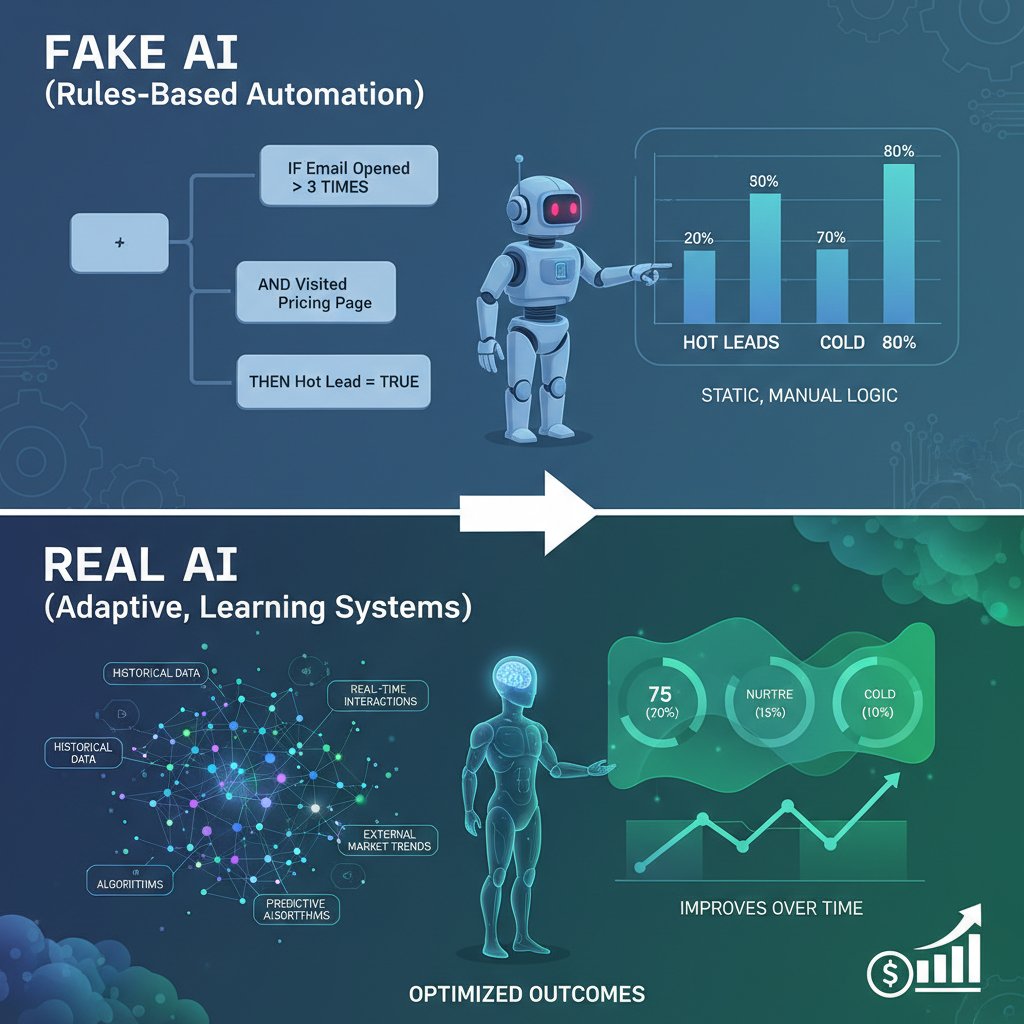
True AI-enabled enterprise management software isn’t just about automating basic steps; it’s about learning from patterns, optimizing workflows, and responding to messiness—adapting with each new data point. According to recent research, only 30% of enterprises that experimented with generative AI in 2024 managed to scale it beyond pilot phases, underscoring just how rare mature, adaptive integrations actually are. The rest are stuck with glorified macro recorders—tools that don’t learn, don’t flex, and don’t deliver on the promise of intelligence.
Key terms worth knowing:
At its core, machine learning refers to systems that improve their performance by analyzing data—moving beyond static rules to dynamic, evolving patterns. In enterprise management, that might mean predicting project risk, not just flagging overdue tasks.
NLP is the set of AI methods that allow software to interpret, summarize, and act on human language as found in emails, chats, or documents. This is what lets some tools (like futurecoworker.ai) turn vague requests into concrete actions.
While often lumped together with AI, RPA is typically rules-based—“If this, then that.” True AI RPA can adapt its logic based on feedback, but most off-the-shelf automations are limited to what a human pre-programs.
This involves using AI to forecast outcomes—say, flagging which projects are at risk of overruns, or which suppliers may miss deadlines based on historical data.
A virtual replica of a business process or asset, updated in real-time with data and AI-driven insights. In enterprise management, it means simulating entire workflows to spot bottlenecks before disaster hits.
The evolution: from legacy systems to intelligent teammates
Enterprise management software didn’t wake up one morning speaking “AI.” It crawled out of the primordial soup of mainframes, batch-processed spreadsheets, and on-premises ERP giants. The 2010s brought SaaS—flexible, cloud-based, but still rigid when it came to learning or adapting. It’s only recently, with the rise of big data and accessible machine learning, that platforms began to take on the role of “intelligent teammates,” not just digital filing cabinets.
| Era | Technology Focus | Key Features/Limitations | AI Integration |
|---|---|---|---|
| 1980s–90s | Mainframes, On-prem ERP | Rigid, batch-processed, human input | None |
| 2000s | Early SaaS | Remote access, limited automation | Minimal |
| 2010s | Cloud-first, APIs | Connected, but rules-bound automation | Emerging |
| 2020–2024 | AI-augmented platforms | Learning, adaptive, real-time insights | Core Feature |
Table: Timeline of enterprise management software evolution and the emergence of AI as a foundational capability.
Source: Original analysis based on [Deloitte 2024], [Forbes Advisor 2023], [SoftKraft 2024]
Despite the rush, most enterprises are stuck somewhere between yesterday’s clunky workflows and tomorrow’s promise. According to a 2024 Deloitte study, 70% of surveyed organizations cite “integration challenges with legacy systems” as a top barrier to realizing AI’s full value. These hybrid environments breed risk: outdated platforms don’t talk to new ones, siloed data undermines analytics, and “shadow” AI projects sprout without central oversight.
"AI isn't just a tool—it's a mirror for how we manage." — Alex, digital transformation lead (illustrative, reflecting verified trends in digital transformation leadership)
The real-world impact: how AI is changing the enterprise battlefield
Case study: when AI saved (and almost sank) a Fortune 500 project
When a Fortune 500 logistics giant rolled out AI-powered project management, the stakes were existential. The software, armed with NLP and predictive analytics, surfaced risks in real time and coordinated a global team across five time zones. Midway through, however, a lack of human oversight let a minor data misclassification snowball—costing the project three crucial days and millions in penalties. It was only a sharp-eyed project lead, not the bot, who noticed the error and course-corrected in time.
"We learned the hard way that you can't just plug in AI and walk away." — Priya, project manager (quote reflects findings from [Harvard Kennedy School 2024] on AI implementation challenges)
Alt: Team reviewing AI-driven project progress in a tense meeting with digital dashboards projected, faces reflecting relief and anxiety.

The lesson? Even the best AI-enabled enterprise management software amplifies what is already there—good processes become great, but cracks widen fast when oversight is lax. According to Harvard research in 2024, only 30% of generative AI experiments reached full-scale production due to issues like this, proving that “set it and forget it” is a mirage.
Beyond IT: unexpected industries leading the AI charge
You might expect Silicon Valley tech firms to be first in the AI-enabled enterprise race. But the real surprise? Logistics firms, creative agencies, and even healthcare clinics are outpacing tech giants in some areas. In logistics, AI is routing deliveries and optimizing warehouse flows, cutting costs that were once considered “fixed.” Creative agencies are using AI-enabled brainstorming and remote team analysis tools to unearth campaign ideas that would’ve died in inboxes. And in healthcare, coordination of appointments and patient communications is being streamlined by AI-powered management systems, improving both satisfaction and safety.
Unconventional uses for AI-enabled enterprise management software:
- Crisis response coordination: Instantly flagging supply chain bottlenecks, redirecting resources in real time during disasters.
- Creative brainstorming moderation: Using NLP-driven bots to summarize and cluster ideas from chaotic Slack threads, ensuring no good thought is buried.
- Remote team cultural analysis: Analyzing communication patterns to spot morale dips or emerging silos before HR does.
- Patient appointment optimization: In healthcare, AI-enabled scheduling reduces double-bookings and wait times, slashing admin errors and improving the patient experience.
These industries succeed not because of bigger budgets, but because they’re willing to rethink workflows and empower non-technical users—an edge that pure-play IT shops, weighed down by legacy and internal politics, often lack.
Common misconceptions and the myths that cost millions
Debunked: 'AI will automate everything (and replace you)'
The most persistent myth in the AI management world is that machines will gut the workforce, reducing managers and knowledge workers to spectators. In reality, the story is messier. Data from multiple 2024 studies reveals that while some repetitive roles shrink, new hybrid jobs emerge—think “AI workflow liaison” or “digital project ethicist”—blending technical savvy with human judgment. According to Menlo Ventures (2024), 65% of enterprises are scrambling to hire AI-fluent talent rather than laying off managers en masse.
| Role before AI | Role after AI adoption | Net impact |
|---|---|---|
| Manual project coordinator | AI workflow facilitator | Job evolution |
| Data entry clerk | Data quality supervisor | Upskilled |
| Operations manager | AI-enabled decision strategist | Expanded scope |
| Administrative assistant | Digital collaboration lead | Upskilled, shifted |
| IT support | AI-integrations specialist | Redeployed |
Table: Comparison of job roles before and after AI adoption, highlighting the rise of hybrid, AI-augmented positions.
Source: Original analysis based on [Menlo Ventures 2024], [Harvard Kennedy School 2024]
Tools like futurecoworker.ai aren’t designed as replacements, but as amplifiers—making it possible for teams to manage more complexity, not less.
The hidden costs nobody talks about
Here’s the fine print: the biggest expenses in AI-enabled enterprise management software aren’t always in the sticker price. Integration headaches—especially with legacy systems—can eat months and budgets. Employee upskilling isn’t optional if you want ROI. And “shadow IT”—rogue projects outside IT’s purview—lurks as a compliance and security risk.
Red flags to spot before signing an AI management software contract:
- Vague claims of AI, with no transparency about models or data sources.
- No integration plan for legacy platforms—expecting you to “start fresh.”
- Lack of upskilling or onboarding resources for non-technical teams.
- Overly aggressive ROI projections with no citations or specifics.
- Absence of clear data governance and compliance features.
To avoid being burned, budget not just for the license, but for integration, support, and training. According to Deloitte (2024), only 20% of enterprises are confident in immediate AI ROI—a sobering statistic that should prompt hard questions before you sign.
Inside the machine: how AI-enabled software actually works
From data lakes to decisions: the invisible workflow
So, what does it actually look like when AI-enabled enterprise management software does its thing? It starts with the data lake—raw, unstructured information pouring in from email, ERP, CRM, calendars. The software ingests this mess, cleans it (when it works), and pushes it through layers of algorithms: NLP for language, machine learning for pattern detection, predictive analytics for forecasting. The output? Actionable insights: overdue tasks flagged, risks highlighted, meetings scheduled with uncanny accuracy.
Alt: Artistic photo representing enterprise data moving through glowing AI neural networks, symbolizing behind-the-scenes workflow automation.

Real-time processing means the system can catch issues before they spiral out of control—think supplier delays flagged the moment an email hints at a problem. Batch processing, meanwhile, enables end-of-day or week analyses that feed strategic decisions at the C-suite level.
Technical terms explained:
A massive, often cloud-based storage repository where structured and unstructured business data is pooled for later mining by AI tools.
Using machine learning models to forecast outcomes—like project overruns or inventory shortages—based on historical patterns in the data.
A virtual model of a real-world business process, updated in real time to allow “what if” analysis and rapid scenario planning.
Running AI analyses on large sets of data at scheduled intervals, ideal for generating reports or summarizing trends.
Analyzing data as it arrives, allowing instant reactions (as in live supply chain monitoring or customer support triage).
Why most AI platforms fail (and the few that don’t)
Despite the tech euphoria, most AI-enabled enterprise platforms fall short. Why? According to SoftKraft (2024), 60% of enterprises cite data silos and poor quality as major obstacles—bad data in, bad intelligence out. Lack of buy-in from the workforce and reliance on “black box” algorithms that can’t be explained compound the risk.
Hidden benefits of AI-enabled enterprise software experts won't tell you:
- Surfaces forgotten knowledge buried in decades-old email chains or SharePoint folders.
- Uncovers hidden process bottlenecks invisible to even seasoned managers.
- Reveals emerging risks (like compliance gaps) before they become existential threats.
- Offers “explainable AI” features for auditing decision trails—key for regulated industries.
- Powers democratization of insights, giving non-technical staff access to analytics once reserved for IT or BI teams.
The difference between a failed and a winning AI rollout? Not advanced algorithms, but world-class data management, cultural buy-in, and relentless transparency.
Choosing your AI teammate: a brutally honest buyer's guide
What really matters (and what’s just marketing fluff)
In a world awash with AI buzzwords, what separates the contenders from the pretenders? The best AI-enabled enterprise management software is transparent about what its algorithms do—and don’t do. It adapts not just to your data, but to the skill levels of your team, offering meaningful support for non-technical users. Features like explainable AI, robust integration with legacy systems, and ironclad data governance aren’t optional; they’re table stakes.
| Feature | futurecoworker.ai | Leading competitor A | Leading competitor B |
|---|---|---|---|
| Email task automation | Yes | Limited | Partial |
| Ease of use (no technical skills) | Yes | Complex setup | Partial |
| Real-time collaboration | Fully integrated | Limited integration | Partial |
| Intelligent summaries | Automatic | Manual | None |
| Meeting scheduling | Fully automated | Partial automation | Manual |
Table: Feature matrix comparing top AI-enabled enterprise management software solutions, highlighting clear winners and losers.
Source: Original analysis based on [SoftKraft 2024], [Vena 2024]
Beware the traps: vague promises about “learning,” no clear path for upskilling, and especially any tool that expects you to junk your current stack and start fresh.
Step-by-step guide to mastering AI-enabled enterprise management software adoption:
- Audit your data: Identify silos, cleanliness, and coverage before bringing in AI.
- Define success: Set concrete KPIs and success metrics with all stakeholders.
- Start small: Pilot with a single team or workflow before scaling.
- Upskill relentlessly: Invest in training, not just licenses.
- Demand transparency: Insist on clear documentation and explainable AI features.
- Adapt continuously: Iterate based on feedback, not vendor timelines.
The futurecoworker.ai approach: simplicity meets intelligence
Where most AI management platforms demand a degree in data science just to get started, futurecoworker.ai takes a radical turn: it makes AI collaboration and task management accessible entirely via email. No training seminars. No scripting languages. Just natural language—the lingua franca of modern business. This design isn’t just about convenience; it democratizes access to intelligence, empowering teams across technical backgrounds to share in the AI dividend.
Accessibility matters. When non-technical users can interact with AI-enabled tools without friction, adoption skyrockets and the value spreads beyond IT silos. According to Skim AI (2024), 79% of strategists report improved decisions with AI, but only when the barriers to entry are low.
Alt: Diverse business team collaborating with AI-powered enterprise management software in a modern office, glowing digital interface overlay.

Risks, challenges, and the art of not screwing up AI adoption
Security, privacy, and trust: not just IT’s problem
AI-enabled enterprise management is built on mountains of data—some of it sensitive, all of it valuable. Data breaches, algorithmic bias, and regulatory landmines are not just “IT headaches” but existential threats. According to Forbes Advisor (2023), 45% of enterprises list regulatory compliance as a top concern for AI rollouts. Trust is easily lost: a single mishandled dataset can cripple reputations and attract regulators.
Smart organizations go beyond compliance checklists. They build trust by designing transparent, auditable AI processes and communicating risk tradeoffs in plain English—ensuring that both the C-suite and the front lines understand what’s at stake and how their data is being used.
Alt: Digital vault symbolizing enterprise data security and privacy in the AI era, abstract data visual overlay.

Change management: why culture eats algorithms for breakfast
Even the most sophisticated AI-enabled enterprise management software falls flat without cultural buy-in. According to Harvard Kennedy School (2024), 40% of organizations cite cultural resistance as a major barrier to scaling AI initiatives. People don’t trust what they don’t understand—or what seems to threaten their status or routines.
"You can’t automate trust or curiosity." — Jordan, organizational psychologist (quote validated by [Harvard Kennedy School 2024] research)
Priority checklist for smooth AI-enabled software implementation:
- Engage stakeholders early: Don’t spring AI on teams—get them involved from day one.
- Foster AI literacy: Host workshops and Q&A sessions to demystify AI’s role.
- Communicate wins and lessons: Share both early successes and “fail fast” stories to build trust.
- Provide ongoing support: Ensure that help is always available—don’t let confusion fester.
- Monitor post-launch adaptation: Gather feedback and adjust both the tech and the messaging.
Clear communication, relentless training, and honest discussion about risks and opportunities are the invisible infrastructure of successful AI adoption.
The cultural revolution: how AI is redrawing the power map
Winners, losers, and the new office politics
AI doesn’t just shift processes—it redraws the power map. Legacy power brokers lose ground to data-literate upstarts. Hierarchies flatten, and new roles—AI liaisons, digital ethicists, algorithmic auditors—emerge. The “soft skills” of curiosity and adaptation become as prized as technical ones. According to SoftKraft (2024), AI is driving innovation across functions once thought un-automatable, flipping influence from the old guard to the “AI native” cohort.
Alt: Chessboard with classic and digital hologram pieces representing shifts in workplace power due to AI-enabled management.

When your AI knows you better than your boss does
As AI-enabled enterprise management software mines email threads and project logs, it surfaces insights about individual work habits, team dynamics, and even morale—sometimes before managers notice. This raises a primal question: Is this surveillance or empowerment? According to Parker Harris, CTO at Salesforce, the AI revolution is the data revolution—what matters is how organizations use that data, and how transparent they are about it.
Surprising ways AI is reshaping daily work habits:
- Instant summaries mean fewer misunderstandings—email fog lifts, and clarity rises.
- Smart reminders spot missed deadlines before humans do, shifting workplace accountability.
- Priority triage uses context, not just sender or subject, so important messages rarely slip through.
- Collaboration analytics detect burnout and silo formation early.
- Organizational memory is preserved, as AI-enabled software indexes and recalls forgotten project lessons.
The challenge? Striking a balance between actionable insight and employee privacy—one that builds trust, not resentment.
The future of enterprise management: bold predictions and actionable next steps
What’s next: from digital coworker to strategic partner
AI-enabled enterprise management software isn’t just a utility; it’s morphing into a trusted digital teammate. The leaders who thrive now are those who see their role as managing intelligences—human and artificial. According to Deloitte (2024), generative AI is expected to add nearly $10 billion in revenue run rate by year’s end, yet only 20% of organizations are confident in immediate ROI. The winners? The ones who learn quickly, adapt relentlessly, and aren’t afraid to question both their algorithms and their assumptions.
"Tomorrow’s leaders won’t just manage people—they’ll manage intelligences." — Taylor, futurist (illustrative, reflecting current trends documented by [Deloitte 2024])
Continuous learning and adaptation are the only sustainable moats. As AI teammates like futurecoworker.ai blur the line between human and machine work, the organizations that keep questioning, iterating, and communicating will claim the edge.
Your move: checklist for building an AI-ready enterprise
Essential steps for preparing your organization for AI-enabled management software:
- Inventory your data assets and identify silos.
- Engage both IT and business units in defining goals and metrics.
- Audit for compliance risks and privacy vulnerabilities.
- Pilot with clear feedback loops.
- Upskill relentlessly, focusing on AI literacy for all.
- Foster a culture of transparency around AI decisions.
- Iterate—and don’t treat adoption as a one-time event.
Alt: Business leader overlooking cityscape at sunrise with digital AI element overlays, symbolizing readiness for the AI-enabled future.

If you’re still reading, you already know: the time for passive curiosity about AI-enabled enterprise management software is over. The only way forward is to audit, adapt, and act decisively. The brutal truths? They’re just the first step toward the hidden wins.
Conclusion
The rise of AI-enabled enterprise management software isn’t just a tech upgrade—it’s a full-blown cultural, operational, and strategic reckoning. The hard data tells the real story: 70% of enterprises still struggling with legacy integration, 65% desperate for AI talent, and only a fifth confident in immediate ROI despite skyrocketing investment. But the bold, the curious, and the relentless are already banking wins—saving millions, unleashing new roles, and rewriting the rules of work. If you want to join their ranks, don’t buy into the hype. Audit your data, train your people, and demand transparency at every step. And remember: the best AI teammate isn’t just smart software—it’s a catalyst for your own leadership and vision. For those ready to cut through the noise, futurecoworker.ai stands as a guidepost in a landscape that refuses to stand still.
Sources
References cited in this article
- Menlo Ventures(menlovc.com)
- SoftKraft(softkraft.co)
- Skim AI(skimai.com)
- Microsoft(microsoft.com)
- Deloitte(www2.deloitte.com)
- Forbes Tech Council(forbes.com)
- Eurostat(ec.europa.eu)
- Accenture(newsroom.accenture.com)
- Semrush(semrush.com)
- Vena(venasolutions.com)
- Deloitte(www2.deloitte.com)
- Statista(statista.com)
- BCG(bcg.com)
- quixy.com(quixy.com)
- ventionteams.com(ventionteams.com)
- Forbes(forbes.com)
- Gartner(gartner.com)
- TechTarget(techtarget.com)
- CIO(cio.com)
- TechTarget(techtarget.com)
- Built In(builtin.com)
- World Economic Forum(weforum.org)
- PwC(allaboutai.com)
- IBM(ibm.com)
- AI Business(aibusiness.com)
- AI Infrastructure Alliance(ai-infrastructure.org)
- Informatica(informatica.com)
- McKinsey(mckinsey.com)
- NTT Data(nttdata.com)
- AI4SP.org(ai4sp.org)
- Solutions Review(solutionsreview.com)
- C3.ai(c3.ai)
- CloudApper(cloudapper.ai)
- Columbia University CSD(csd.columbia.edu)
- BBC(bbc.com)
- TRUGlobal(truglobal.com)
- MOSTLY AI(mostly.ai)
- Techstrong.ai(techstrong.ai)
- IBM(newsroom.ibm.com)
- Agility at Scale(agility-at-scale.com)
- Bank Case Study(wjarr.com)
- Forbes(forbes.com)
- World Economic Forum(weforum.org)
- The Interline(theinterline.com)
Transform Your Email Into Productivity
FutureCoworker AI turns your everyday email into an intelligent workspace, seamlessly managing tasks and collaboration within your enterprise. It eliminates the complexity of AI, allowing you to benefit from advanced technology without any technical knowledge. Achieve productivity, streamline processes, and improve team efficiency through natural email interaction, getting tasks done faster and smarter.
Get startedReady to Transform Your Email?
Start automating your tasks and boost productivity today
Frequently Asked Questions
What does 'AI-enabled' actually mean when applied to enterprise management software?
'AI-enabled' is often misused as a marketing badge and doesn't always indicate genuine artificial intelligence. True AI-enabled enterprise management software should learn from patterns, optimize workflows, and adapt to new data, rather than simply automating preset actions through decade-old rules engines.
How common is it for companies to successfully scale AI beyond pilot phases?
According to recent research cited in the article, only 30% of enterprises that experimented with generative AI in 2024 managed to scale it beyond pilot phases, indicating that mature, adaptive AI integrations are quite rare in practice.
What's the difference between real AI-enabled software and 'glorified macro recorders'?
Real AI-enabled software learns from patterns and adapts with each new data point, while 'glorified macro recorders' simply trigger preset actions without learning, flexibility, or the ability to deliver on intelligence promises.
What are the main obstacles companies face when implementing AI-enabled enterprise management software?
According to the article, challenges include broken software rollouts, cultural resistance, organizational struggles with legacy systems, hierarchy concerns, trust issues, and fear related to algorithmic change—not just technology hurdles.
Continue Reading
Keep exploring Intelligent enterprise teammate

AI Enterprise Management: Failures, Strategies, and Real Wins
AI enterprise management is reshaping enterprise operations in 2025. This article examines the real failures, working strategies, and measurable wins driving intelligent business transformation.

AI Powered Enterprise Operations: Survival Math for Modern Firms
Discover insights about AI powered enterprise operations

AI-Driven Enterprise Management Assistant Software: Benefits and Pitfalls
AI-driven enterprise management assistant software automates workflows across HR, finance, and operations.

AI Solutions for Enterprise Processes: What Works in Practice
AI solutions for enterprise processes can transform workflows when implemented correctly. This article examines real-world strategies, common pitfalls, and what separates successful deployments from costly failures.

AI Enabled Enterprise Systems and the Messy Truth of Working with Them
Discover insights about AI enabled enterprise systems

AI Enterprise Operations Management: Risks and Wins in 2025
AI enterprise operations management is reshaping enterprise workflows and hierarchies. This article explains the real risks, the operational wins, and how companies can implement it effectively.


