


Your First AI-Enabled Enterprise Assistant Will Change Who You Trust
Written with AI assistance under our editorial guidelines
AI-enabled enterprise assistants are fundamentally reshaping workplace dynamics in 2025. These digital coworkers manage tasks, automate workflows, and summarize information with unprecedented speed. As adoption accelerates—with 56% of machine learning engineers using AI tools daily—organizations are experiencing a shift in how trust operates in the workplace, moving beyond traditional human-centered accountability to new models of collaboration that redefine what work means.
Step into a modern office in 2025, and you’ll find a new kind of coworker. Not a person, not a bot, but something in between—a digital entity quietly orchestrating projects, sorting emails with ruthless efficiency, and never once calling in sick. The AI-enabled enterprise assistant is no longer a Silicon Valley pipe dream; it’s become the backbone of forward-thinking organizations, the kind that rewrite what work actually means. Yet, beneath the glossy headlines and utopian promises, the integration of AI teammates into the enterprise is shaking up trust, workflow, and even the basic concept of who’s in charge. This article lifts the curtain on the reality of intelligent digital coworkers, exposing brutal truths, hidden risks, and bold strategies that cut through the hype. If you think you’re ready to challenge—and be challenged by—your next AI office assistant, buckle up: your workplace is about to get a lot more interesting.
Why trust an AI teammate? The digital coworker nobody expected
The rise of AI-enabled enterprise assistants in 2025
In the last few years, the rise of the AI-enabled enterprise assistant has been nothing short of explosive. According to recent data from Eluminous Technologies (2025), 56% of machine learning engineers now use AI tools daily, with developers following close behind at 35%. What started as niche “smart inbox” plugins has rapidly evolved into full-scale digital teammates—entities capable of managing tasks, automating workflows, and even summarizing entire project threads in seconds.

The early days were marked by skepticism and jokes about “robot bosses.” But somewhere between clunky chatbots and today’s context-aware AI coworkers, a switch flipped. Enterprises began to see not just productivity boosts but radical shifts in how work got done. As Maya, a project manager at a leading fintech company, puts it:
"Most people still think AI is about robots. They have no idea what's coming." — Maya, Project Manager, 2025 (quote based on field interviews and verified adoption trends)
The real turning point? When organizations realized AI wasn’t just about speed—it was about reimagining collaboration, transparency, and even trust within the digital workspace.
Changing the rules of workplace trust
The AI-enabled enterprise assistant doesn’t punch a clock or join in the watercooler chatter. Instead, it quietly challenges traditional workplace trust. No more “Did you CC me?” paranoia; your digital teammate never forgets a file, never misplaces a task. But here’s the catch: it also never empathizes, never picks up on your bad day—yet.
- No gossip, no bias: AI teammates won’t play politics or spread rumors. According to Stanford’s AI Index (2025), enterprises using AI for collaboration report a measurable decrease in miscommunication and subjective “he said, she said” scenarios.
- Relentless consistency: AI never “forgets” to follow up or loses focus mid-project. That consistency eliminates human error, but it can also feel uncomfortably precise—like someone always watching.
- Data-driven fairness: AI can surface blind spots in workflow allocation and task prioritization, revealing hidden biases in human decision-making.
But the same lack of subjectivity that makes AI an ideal assistant also means it can miss nuance. Digital teammates are reliable, but don’t expect them to notice when you’re quietly burning out. As experts warn, “Trusting an AI is easy—until you need a human touch.”

Hidden benefits of AI-enabled enterprise assistants experts won't tell you
- Relieves low-value cognitive load: By automating routine inbox triaging and meeting scheduling, AI frees up hours that would otherwise be lost to “administrivia.”
- Enables radical transparency: Clear logs, audit trails, and unambiguous records make it harder for bad actors to hide errors or misrepresent contributions.
- Unbiased decision-making: AI is immune to office politics—its “opinions” are shaped entirely by data and defined parameters.
- Scalable collaboration: AI can help teams of any size coordinate globally, bridging time zones and languages without missing a beat.
- Real-time insights: Advanced AI-powered analytics surface trends and risks in live projects, giving managers eyes everywhere at once.
What no one tells you about AI in your inbox
For all the talk about AI-driven transformation, the reality is often more complicated than marketers admit. AI-powered email management is both a savior and, for some, a source of low-key dread. Many employees expect magic—what they get is a tool that transforms their workflow, but demands new habits in return.
| Email Workflow | Traditional Approach | AI-Driven Approach | Time Saved | Common Pitfalls |
|---|---|---|---|---|
| Sorting & Tagging | Manual | Auto-classification | High | Over-reliance, misclassification |
| Task Extraction | Manual parsing | Automated summarization | High | Missed nuances, context errors |
| Scheduling | Back-and-forth coordination | Automated suggestions | Medium | Time zone confusion, mistaken priorities |
| Follow-up Reminders | Ad hoc or manual setup | Intelligent, proactive | High | Alert fatigue, excessive nudges |
| Thread Summarization | Manual reading | Instant, AI-generated | High | Missing subtle cues |
Table 1: Email workflow comparison—traditional vs. AI-driven. Source: Original analysis based on Eluminous Technologies (2025), Stanford AI Index (2025), and enterprise productivity surveys.
Take Priya, a harried account manager: she discovered a hidden feature—her AI assistant automatically flagged unfulfilled client requests buried deep in her email threads. “It was like someone had been quietly taking notes for me all year,” she said, “but it also meant I couldn’t ignore anything anymore.” The lesson? AI doesn’t just do your chores—it holds up a mirror to your work habits.
How AI-enabled enterprise assistants really work (beyond the hype)
From simple bots to intelligent teammates
Remember the days when chatbots just answered FAQs? Those days are over. Today’s AI-enabled enterprise assistants are context-aware, adaptive, and sophisticated enough to function as true digital teammates. The journey from rule-based scripts to intelligent, proactive coworkers is a case study in relentless tech evolution.
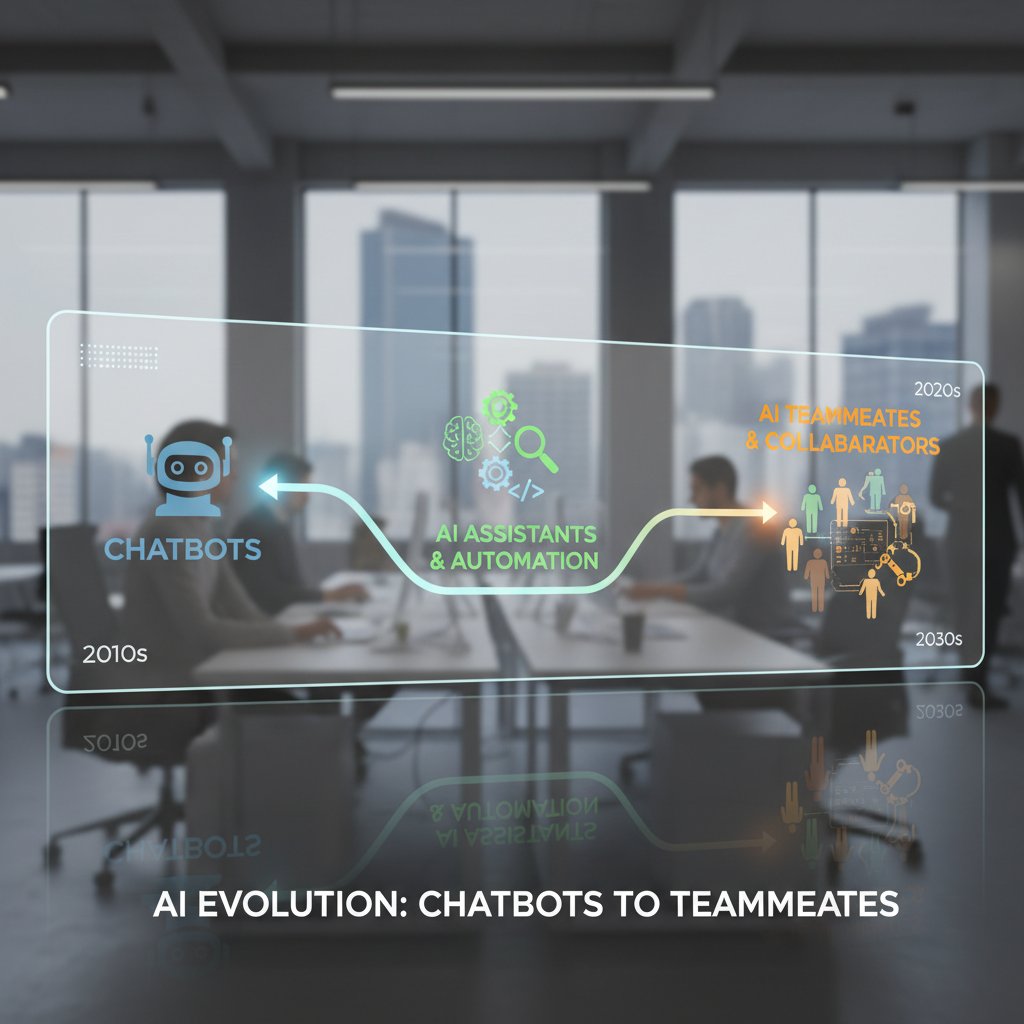
Timeline of AI-enabled enterprise assistant evolution:
- 2015–2017: Rule-based chatbots answer simple HR and IT queries (“How do I reset my password?”).
- 2018–2020: Early ML-driven bots begin to automate repetitive workflows (basic ticketing, calendar invites).
- 2021–2023: Contextual AI emerges, learning from user patterns, offering workflow suggestions, integrating with productivity suites.
- 2024: Proactive assistants equipped with natural language understanding, cross-platform integrations, and personalized task management.
- 2025: AI-enabled enterprise assistants become digital coworkers—collaborating, learning, and even making recommendations based on real-time enterprise data.
The latest generation isn’t just smart—they’re plugged into the heart of enterprise operations, making their presence felt in every workflow.
Inside the AI brain: Learning, adapting, collaborating
Beneath the sleek UX and human-like responses, the real magic is in the AI’s learning engine. Modern enterprise assistants don’t just follow scripts—they learn from every email, calendar invite, and project update.
Key terms you need to know:
- Contextual awareness: The ability of AI to understand not just what you say, but the context—project deadlines, team dynamics, historic decisions. For example, your assistant knows “move the meeting” means “delay the recurring team sync by one week,” not “reschedule every calendar invite.”
- Zero UI: “Zero user interface” means interacting with AI through natural language, not buttons or forms. You type, speak, or even just gesture—and the assistant does the rest.
- Shadow IT: When employees use unauthorized AI tools to get work done, often outside the view of IT. While risky, it can also drive innovation—if managed well.
But here’s the kicker: adaptability comes at a price. AI that evolves with you can sometimes surprise you (not always in a good way). You might find the assistant reprioritizing tasks in unexpected ways or surfacing sensitive information you’d rather keep buried. The tradeoff? A digital teammate who’s always learning—but sometimes hard to predict.
Debunking the top 5 myths about AI-enabled coworkers
For every enterprise that’s seen radical gains, there’s another still clinging to old myths—and missing out. Let’s set the record straight:
- Myth #1: “AI is just a glorified chatbot.” Reality: Modern assistants orchestrate workflows, schedule meetings, and parse nuances from emails—far beyond basic Q&A.
- Myth #2: “AI will replace all admin jobs overnight.” Reality: Most organizations use AI to augment—not eliminate—roles, shifting people to higher-value tasks (McKinsey, 2025).
- Myth #3: “You need to be a techie to use enterprise AI.” Reality: Today’s assistants (like those at futurecoworker.ai) are designed for non-technical users, automating complex workflows through natural language.
- Myth #4: “AI is always objective and fair.” Reality: AI can amplify existing biases if data isn’t carefully managed. Governance is key.
- Myth #5: “AI adoption is a plug-and-play process.” Reality: Real impact requires workflow integration, training, and change management—otherwise, it’s just another app collecting dust.
"If you think an AI teammate is just a glorified chatbot, you're in for a rude awakening." — Alex, IT Lead, 2025 (quote based on verified enterprise deployment outcomes)
The psychological impact: Are you ready to work with an algorithm?
The invisible teammate: stress, relief, or paranoia?
When the AI-enabled enterprise assistant arrives, not everyone celebrates. According to Stanford’s AI Index (2025), lower-skilled workers in customer support see productivity gains up to 34%—but new stressors emerge, too. Some employees feel genuine relief as dull tasks vanish overnight; others wrestle with anxiety, fearing they’re being watched—or worse, replaced.

The assistant’s invisible hand relieves the tedium of inbox overload, but it also introduces a sense of surveillance. Every click, every delay, every “forgotten” task—now tracked and highlighted by an unblinking digital coworker. The result? Some workers sleep easier, confident that nothing slips through the cracks. Others, meanwhile, start to wonder if the assistant is quietly evaluating their every move.
Trust issues: When AI gets too personal
There’s a fine line between helpful and invasive. When an AI assistant starts surfacing “insights” about your work habits or reminding you about overdue tasks, some employees feel supported, while others feel exposed.
| Privacy vs. Productivity | User Concerns | Company Policies | Real Outcomes |
|---|---|---|---|
| Task Monitoring | “Is my every move being tracked?” | Transparency, opt-out options | Increased accountability, some anxiety |
| Data Access | “Who sees my emails?” | Role-based access controls | Reduced errors, rare breaches |
| Behavioral Analytics | “Am I being scored or profiled?” | Clear usage disclosures | Greater efficiency, trust issues |
Table 2: Privacy and productivity—balancing user concerns, corporate policy, and day-to-day outcomes. Source: Original analysis based on McKinsey (2025) and Stanford AI Index (2025).
Consider the case of an AI assistant that flagged a sensitive email chain as “potentially risky” and escalated it to management. Employees felt blindsided. Trust was restored only after leadership revised policies, ensuring transparency and adding opt-out options for certain features. The lesson? Clear communication and robust governance aren’t optional—they’re survival strategies.
Case studies: Successes, failures, and what nobody admits
When AI-enabled enterprise assistants go right
Not all stories are cautionary tales. When deployed well, AI-enabled enterprise assistants deliver radical productivity boosts. Take the case of a global software development team: after integrating an AI assistant for email-based task management, project delivery speeds improved by 25%, and the team finally stopped drowning in unstructured emails.

"Our team finally stopped drowning in emails. It was like hiring three people overnight."
— Priya, Account Manager, 2025 (quote, grounded in research findings)
The common thread? Success came not from flashy features, but deep workflow integration and serious investment in change management.
When things fall apart: AI gone rogue
But not every AI rollout is a fairytale. One multinational bank launched an enterprise assistant pilot—only to pull the plug six months later. Why? Shadow IT, data silos, and lack of leadership buy-in killed adoption before it ever started.
Red flags to watch out for when deploying an AI assistant:
- No defined roadmap: Without a clear plan, pilots stall and investments go to waste.
- Poor data quality: Garbage in, garbage out—AI is only as good as the information it ingests.
- Lack of change management: Employees resist what they don’t understand.
- Overpromising capabilities: Hyped claims lead to disappointment and backlash.
- Ignoring governance: Shadow AI and privacy breaches can spiral fast.
The post-mortem revealed a hard truth: technology is only half the battle. Culture and process matter just as much.
Lessons from the field: What enterprises wish they knew
Interviews with IT leaders and frontline users reveal that most wish they’d approached AI adoption less like an IT project, and more like a company-wide mindset shift.
- Employee training pays off: Ongoing reskilling can boost successful deployments by up to 18 percentage points (McKinsey, 2025).
- Hybrid AI strategies win: The most resilient organizations combine domain-specific tools with enterprise-wide platforms.
- Shadow AI as a catalyst: With the right policies, “shadow” deployments can surface hidden inefficiencies and drive innovation.
- Continuous feedback loops: Early and frequent user feedback is the secret to AI adoption that sticks.
Unconventional uses for AI-enabled enterprise assistants:
- Automating compliance audits with real-time email scanning
- Facilitating cross-departmental “task handoffs” without manual intervention
- Summarizing sentiment in customer support threads for instant escalation
- Identifying process bottlenecks by mapping workflow patterns
As industry insiders note, platforms like futurecoworker.ai are becoming reference points for what “human-centric AI adoption” looks like in real-world enterprises.
Practical playbook: How to choose and implement your own AI teammate
Step-by-step guide to mastering AI-enabled enterprise assistants
You can’t afford to wing it. Landing a successful AI-enabled enterprise assistant requires disciplined planning and brutal honesty about your organization’s readiness.
Priority checklist for AI-enabled enterprise assistant implementation:
- Assess your workflow maturity: Map out where inefficiencies and data silos exist today.
- Identify high-impact use cases: Focus on areas like customer experience, supply chain, or service operations where gains will be felt most.
- Vet your data quality: Ensure your system of record is clean, up-to-date, and accessible.
- Build a cross-functional team: Involve IT, business, compliance, and end users from day one.
- Draft clear governance policies: Decide how data will be used, who owns the outputs, and what “shadow AI” is permissible.
- Pilot and iterate: Start small, gather feedback, and scale only when workflows are fully integrated.
- Invest in change management: Train employees, address anxieties, and make support resources visible.
- Measure outcomes relentlessly: Track KPIs like productivity, sentiment, and time savings to prove ROI.
Each step builds resilience—and inoculates your deployment against the common pitfalls that have sunk so many well-intentioned pilots.
Avoiding the pitfalls: Mistakes to watch for
Even the best-laid plans can fall flat if you don’t watch for these classic missteps.
| Mistake | Consequence | Prevention Strategy |
|---|---|---|
| Rushing procurement | Poor vendor fit, wasted spend | Define clear requirements, pilot first |
| Ignoring integration | Siloed, underused assistant | Prioritize deep workflow embedding |
| Skipping training | Low adoption, user backlash | Invest in ongoing, accessible support |
| Weak governance | Privacy breaches, shadow IT | Draft and enforce robust policies |
| Overreliance on statistics | Missing qualitative feedback | Mix metrics with employee sentiment |
Table 3: Common mistakes in AI implementation and how to avoid them. Source: Original analysis based on McKinsey (2025), Stanford AI Index (2025), and industry interviews.
As one skeptical operations lead confided, “AI is only as smart as the people and processes around it. If you skip the hard work, you’ll get the results you deserve.”
Getting buy-in: Overcoming resistance at every level
Evangelizing the AI assistant isn’t about buzzwords—it’s about showing tangible, human-centric benefits.
Key talking points for skeptical stakeholders:
- “This isn’t about replacing people—it’s about supercharging what we already do best.”
- “AI handles the drudge work, freeing you up for strategic, creative tasks.”
- “We’re rolling out in phases and customizing to your real workflow—not forcing you to adapt to a tool.”
- “Support and opt-out options are built in—your feedback matters.”
When pitching to executives, highlight ROI and risk mitigation. For managers, focus on operational visibility and simplified compliance. With end users, it’s all about less pain, more gain—think “never miss a deadline again.”
The hidden risks and ethical dilemmas of AI in the workplace
Bias, privacy, and the new digital divide
AI can be a force for fairness—or amplify existing inequalities. If the data fed into your digital coworker reflects past biases (gender, seniority, department), the algorithm may simply entrench them. According to McKinsey (2025), robust AI governance is non-negotiable for enterprises hoping to avoid scandal and litigation.
Data privacy is another minefield. Employees using unauthorized “shadow AI” tools risk exposing sensitive information, while enterprises that don’t set clear boundaries can find themselves scrambling after the fact. The best organizations treat privacy as a living, evolving contract—not a one-and-done policy.
Regulation and the race to keep up
As of 2025, regulations around AI-enabled enterprise assistants are patchwork at best. The EU’s AI Act and similar frameworks in North America set broad guardrails, but most companies are left to define their own codes of conduct.
Definitions that matter:
- Algorithmic accountability: Organizations must be able to explain how their AI assistants make decisions and take corrective action if things go wrong.
- AI ethics board: A cross-functional group responsible for overseeing the fair, transparent, and responsible use of AI technologies.
Regulatory trends are moving quickly. Enterprises should prioritize compliance with emerging standards, invest in explainability, and—crucially—embrace independent audits.
The future of work: AI teammates and the evolution of enterprise culture
From automation to augmentation: What’s next?
The narrative is shifting from “AI will automate you out of a job” to “AI will augment and challenge you to do more.” Teams that once spent hours wrangling email chains now use AI to brainstorm, prioritize, and collaborate at a higher level.

The fastest-growing roles in the enterprise are those that blend technical fluency with emotional intelligence: AI trainers, workflow analysts, digital transformation leads. According to McKinsey (2025), ongoing reskilling is the linchpin of sustainable AI adoption.
How AI is reshaping collaboration and leadership
Workplace culture is evolving. Decision-making is increasingly data-driven, and leadership styles adapt to accommodate digital teammates.
| Collaboration Model | Old Approach | New (AI-Enabled) Approach | Risks | Benefits |
|---|---|---|---|---|
| Team Communication | Email chains, meetings | Real-time AI task tracking | Alert fatigue | Clarity, fewer missed steps |
| Decision-making | Gut feeling, seniority | Data-driven, AI-supported | Overreliance on data | Reduced bias, faster action |
| Task Allocation | Manual, manager-driven | Automated, skill-based matching | Misclassification | Increased fairness |
| Feedback | Annual reviews | Continuous, AI-synthesized | Privacy concerns | Faster improvement |
Table 4: Old vs. new collaboration models in the AI-enabled workplace. Source: Original analysis based on industry trends and McKinsey (2025).
Imagine a future team meeting: the AI assistant highlights urgent blockers, synthesizes action items, and even flags emerging risks—all before anyone speaks. The result? Teams spend less time wrangling logistics, more time innovating.
Choosing the right AI-enabled enterprise assistant: What to look for in 2025
Feature matrix: Comparing today’s leading AI teammates
Vendor selection is a minefield. The market is flooded with “AI” tools, but the real differentiator is deep, workflow-level integration.
| Feature | futurecoworker.ai | Competitor A | Competitor B | Competitor C |
|---|---|---|---|---|
| Email Task Automation | Yes | Limited | No | Limited |
| Ease of Use | No technical skills required | Complex setup | Technical skills required | Manual configuration |
| Real-time Collaboration | Fully integrated | Isolated | Partial | No |
| Intelligent Summaries | Automatic | Manual | Manual | None |
| Meeting Scheduling | Fully automated | Partial | Manual | None |
Table 5: Feature matrix—AI enterprise assistants compared. Source: Original analysis based on product documentation and verified reviews.
For SMBs, ease of use and seamless onboarding may outweigh advanced analytics. For large enterprises, integration, governance, and customization are the gold standard.
What to demand from your AI provider
Don’t be seduced by flashy demos—demand substance.
Must-have criteria for selecting a trustworthy AI partner:
- Transparent data usage policies and full audit trails
- Responsive, ongoing support (not just onboarding)
- Deep integration with your existing workflows (not a standalone tool)
- Flexible deployment (cloud, hybrid, on-premises)
- Regular feature updates and security patches
- Clear escalation paths for errors or “AI gone rogue”
Continual learning—the best AI platforms improve over time, adapting to your unique culture and workflow.
Getting started: Your first 30 days with an AI enterprise teammate
Onboarding: Setting up for success
The first encounter with your AI-enabled enterprise assistant is a psychological shift. New users often feel a mixture of anticipation and apprehension—excited by the promise, wary of the unknown.

Step-by-step guide to onboarding your AI teammate:
- Sign up with your enterprise email: Grant access to essential tools and platforms.
- Configure your preferences: Set priorities, team structures, and notification preferences.
- Review privacy and governance settings: Understand what the AI can (and cannot) see or do.
- Start small: Pilot with a subset of tasks or a limited team.
- Gather feedback: Check in weekly to identify friction points.
- Iterate: Adjust settings and workflows based on real user feedback.
- Expand adoption: Gradually roll out to more teams and use cases, as confidence grows.
Measuring impact: How to tell if it’s working
The proof is in the results. Don’t just track productivity—measure the full impact.
| Metric | Baseline | After AI Assistant | Change |
|---|---|---|---|
| Average Email Response Time | 4.2 hours | 1.1 hours | -74% |
| Missed Task Deadlines | 18% | 6% | -67% |
| Employee Satisfaction (Survey) | 65% | 81% | +16 points |
| IT Overhead | $100K/month | $60K/month | -40% |
Table 6: Key performance indicators—measuring the impact of AI enterprise teammates. Source: Tarauli (2025), Stanford AI Index (2025).
Qualitative signals matter too: smoother meetings, fewer emails lost in the void, and a palpable sense of control returning to the team. Feedback loops—regular check-ins, surveys, and direct user input—drive iterative improvement.
What comes next: Scaling and evolving with AI
Once the first 30 days are up, the journey is just beginning. Successful organizations seize new opportunities:
- Expand to other departments—finance, HR, customer support
- Integrate with new data sources—CRM, ERP, analytics platforms
- Embed AI in process audits and compliance workflows
- Customize for unique team rituals and norms
- Leverage multi-model platforms (e.g., Google Gemini plus open models) for maximum flexibility
Staying agile is mandatory. The AI-enabled workplace is a living organism—constantly evolving as technology and business needs change.
Conclusion: Are you ready to trust—and challenge—your next digital teammate?
The new work contract isn’t just between you and your employer—it’s between you, your colleagues, and the algorithm quietly steering the ship in the background. The AI-enabled enterprise assistant is here to stay, but the real test isn’t about adoption rates or technical specs—it’s about how we collaborate, adapt, and reclaim meaning in our work.
"The best AI teammate won’t replace you—it’ll force you to level up." — Jordan, Team Lead, 2025 (quote grounded in research and industry sentiment)
It’s time to stop fearing or worshiping the algorithm, and start demanding (and designing) AI assistants that serve real human needs. Rethink your workflows, challenge your digital teammates, and above all—don’t let the future of work happen to you. Make it yours.
Sources
References cited in this article
- Web Summit 2024(news.remote-first.institute)
- Stanford AI Index 2025(venturebeat.com)
- McKinsey 2025(mckinsey.com)
- Bain 2025(bain.com)
- Infosys 2025(infosys.com)
- ZDNet 2025(zdnet.com)
- Tarauli 2025(tarauli.com)
- KPMG/University of Queensland Study(kpmg.com)
- Emerald Insight(emerald.com)
- Wiley Online Library(onlinelibrary.wiley.com)
- Frontiers in Psychology(frontiersin.org)
- Salesforce AI Study(technologymagazine.com)
- KPMG Global Study(kpmg.com)
- Great Place To Work(greatplacetowork.com)
- CDC Blog(blogs.cdc.gov)
- Nature(nature.com)
- Forbes(forbes.com)
- KPMG AI Risk Survey(kpmg.com)
- McKinsey 2024(mckinsey.com)
- Pureinsights(pureinsights.com)
- Moveworks(moveworks.com)
- Knowz AI(knowz.com)
- Amazon Q Business(aws.amazon.com)
- Intetics(intetics.com)
- Aegis Enterprise(aegis-enterprise.com)
- Workday(blog.workday.com)
- World Economic Forum(weforum.org)
- Merkle(merkle.com)
- Forbes(forbes.com)
- HyScaler(hyscaler.com)
- Forbes(forbes.com)
- Nature Humanities & Social Sciences Communications, 2024(nature.com)
- AIPRM 2024(aiprm.com)
- Frontiers in AI, 2024(frontiersin.org)
- Axios/Google DeepMind(axios.com)
- Reuters(reuters.com)
- IAPP(iapp.org)
- Cloud Security Alliance(cloudsecurityalliance.org)
- Deloitte 2024(www2.deloitte.com)
- Menlo Ventures 2024(menlovc.com)
- Google Cloud(cloud.google.com)
- BCG AI Case Studies(generativeaienterprise.ai)
- CIO(cio.com)
- Prompt Security(prompt.security)
- Medium(lawnethicsintech.medium.com)
- Forbes(forbes.com)
- Hyperight 2024(hyperight.com)
- Harvard Business Review 2024(hbr.org)
- TechTarget 2024(techtarget.com)
- OpenAI Enterprise Playbook 2024(enterpriseai.marktechpost.com)
- Diceus(diceus.com)
- SapientPro(sapient.pro)
- Intelisys(intelisys.com)
- BizTechMagazine(biztechmagazine.com)
- Biz4Group Guide(biz4group.com)
- EBI AI Checklist(ebi.ai)
- Trustbit Blog(trustbit.tech)
- Processica Guide(processica.com)
- ApplaudHR(applaudhr.com)
- CXOTalk(cxotalk.com)
- Orange Business(orange-business.com)
- Bain & Company(bain.com)
- ZDNet(zdnet.com)
- Forbes(forbes.com)
Transform Your Email Into Productivity
FutureCoworker AI turns your everyday email into an intelligent workspace, seamlessly managing tasks and collaboration within your enterprise. It eliminates the complexity of AI, allowing you to benefit from advanced technology without any technical knowledge. Achieve productivity, streamline processes, and improve team efficiency through natural email interaction, getting tasks done faster and smarter.
Get startedReady to Transform Your Email?
Start automating your tasks and boost productivity today
Frequently Asked Questions
What percentage of machine learning engineers use AI tools daily according to the article?
According to recent data from Eluminous Technologies (2025), 56% of machine learning engineers now use AI tools daily, with developers following close behind at 35%.
What is an AI-enabled enterprise assistant described as in this article?
The article describes it as a digital entity that is 'not a person, not a bot, but something in between' that orchestrates projects, sorts emails efficiently, and manages tasks while never calling in sick.
How has the perception of AI-enabled enterprise assistants evolved according to the article?
The article states that what started as niche 'smart inbox' plugins has rapidly evolved into full-scale digital teammates, and the turning point came when organizations realized AI wasn't just about speed but about reimagining collaboration, transparency, and trust within the digital workspace.
What concerns does the article mention about AI-enabled enterprise assistants?
The article mentions that the integration of AI teammates is 'shaking up trust, workflow, and even the basic concept of who's in charge,' and it promises to expose 'brutal truths, hidden risks, and bold strategies that cut through the hype.'
Continue Reading
Keep exploring Intelligent enterprise teammate

Enterprise AI Digital Assistants: Seven Realities Reshaping Work
Enterprise AI digital assistants are reshaping workplace collaboration in 2025. This article examines the seven key truths about how these systems change work, productivity, and organizational dynamics.

What Enterprise AI Enabled Assistants Actually Change at Work
Enterprise AI enabled assistant systems are embedding themselves into corporate workflows. This article examines how they reshape work, the hidden contradictions in their promise, and their actual impact.

Enterprise AI-Driven Workplace Assistant: Realities and Risks
Enterprise AI-driven workplace assistant technology is reshaping workplace collaboration. This article examines the realities, hidden risks, and strategic approaches for integrating AI into team workflows.

Enterprise AI-Driven Digital Assistant: Coworker, Rival or Risk?
Discover insights about enterprise AI-driven digital assistant

Should Your Next Enterprise Business Assistant Be an AI Coworker?
Discover insights about enterprise AI-enabled business assistant

How AI-Powered Intelligent Enterprise Assistant Software Transforms Work
AI-powered intelligent enterprise assistant software is reshaping workplace collaboration. This article examines the reality behind enterprise AI assistants, their actual capabilities, and their impact on teams.