


AI-Driven Enterprise Virtual Workplace Assistant: Teammate, Not Tool
Written with AI assistance under our editorial guidelines
Modern enterprise AI workplace assistants address chronic collaboration chaos where knowledge workers spend nearly three hours daily managing email overload across fragmented platforms. These digital teammates promise to restore productivity by filtering distractions and maintaining project context, moving beyond traditional tools toward intelligent, adaptive support that understands workplace dynamics more comprehensively than inbox automation.
It’s 2025. You walk into a glass-walled office, sunlight ricocheting off steel and glass. Inside, young professionals lock horns over strategy. But now, in the thick of it, a glowing digital avatar hovers above the conference table—your new AI-driven enterprise virtual workplace assistant. This is not another Silicon Valley fever dream. It’s a new reality, where the line between “colleague” and “code” blurs. While the hype promises liberation from drudgery, real stories emerging from the trenches are more complicated—and more revealing—than any product pitch. What’s really happening as these digital coworkers move from inbox bots to trusted enterprise teammates? Here are seven hard-hitting revelations about how AI-driven assistants are transforming, and in some cases upending, the way we work—right now.
A nightmare of modern work: why we needed a new kind of teammate
The collaboration chaos: email overload and lost productivity
Picture the daily ritual: you open your inbox, greeted by hundreds of unread emails—CCs from distant teams, cryptic subject lines, missed deadlines swimming in a digital sea of noise. For enterprise workers, this “collaboration chaos” isn’t just a nuisance—it’s a productivity killer. According to recent research, the average knowledge worker spends nearly three hours a day sorting through email, with critical tasks slipping through the cracks and project threads fragmenting across platforms. Lost context means lost momentum. The result? A workforce buried alive in digital messages, where genuine collaboration drowns beneath a relentless flood of notifications.

The consequences are more than psychological. As hybrid and remote workforces sprawl, the cracks widen: miscommunication, duplicated efforts, and missed opportunities. These aren’t abstract problems—they’re the daily grind for millions, and they demand a new kind of solution, one that moves beyond patchwork tools to something more intelligent, adaptive, and (perhaps) empathetic.
The promise (and peril) of enterprise AI
Into this storm steps the AI-driven enterprise virtual workplace assistant, wielding promises of clarity, efficiency, and relentless support. But for many employees, the arrival of AI teammates is met with skepticism, if not outright cynicism. Who really trusts a digital “colleague” to manage high-stakes collaboration, let alone understand the nuanced dance of human communication? It’s easy to dismiss these tools as the latest in a long line of overhyped tech fads.
“I was convinced AI assistants were just another gimmick—until it changed the way my team worked.” — Priya
Yet, a growing body of evidence suggests that, when thoughtfully integrated, AI-driven virtual workplace assistants can actually cut through the noise. They do more than automate—they orchestrate, prioritizing urgent messages, surfacing actionable insights, and freeing up humans for higher-level problem-solving. According to Yarooms, 2025, 32.6 million Americans now work remotely, with AI assistants central to hybrid enterprise workflows—a sharp signal that these tools are rapidly becoming the nervous system of modern organizations.
Why old solutions failed: the limitations of legacy tools
Legacy project management platforms, inflexible automation scripts, and basic workflow bots have been the duct tape holding enterprise collaboration together for years. But they were never designed for the complexity, speed, or diversity of today’s digital workplaces. Why do these old solutions fall short? Three words: context, integration, adaptability. Traditional tools are siloed, requiring constant toggling and manual updates. They lack the contextual intelligence to interpret conversation or predict bottlenecks. Most damning of all—they force humans to adapt to the tool, not the other way around.
| Feature | Legacy Tools | AI-driven Assistants |
|---|---|---|
| User Satisfaction | Moderate | High |
| Productivity Gains | Incremental | Transformational |
| Integration Ease | Siloed | Seamless |
| Adaptability | Low | Continuous Learning |
Table 1: Comparison of legacy collaboration tools vs. AI-driven virtual workplace assistants in enterprise environments.
Source: Original analysis based on World Economic Forum, 2025, BizTech Magazine, 2025
What makes a workplace assistant truly AI-driven (and why it matters)
Decoding the jargon: AI-driven vs. automated vs. digital coworker
Let’s cut through the buzzwords. Not every workplace “assistant” is truly AI-driven, and not every automation bot deserves to be called a digital coworker. Here’s what sets them apart:
Built on machine learning, natural language processing, and data context. Learns, adapts, and offers nuanced, predictive support in real time. Example: An assistant that not only reads your emails but understands priorities and suggests actions based on evolving team dynamics.
Rule-based scripts or workflows. Follows pre-set instructions, triggers, or templates—no learning, no nuance. Example: An email filter that moves all “project” messages to a folder, regardless of urgency or context.
The next step—an AI assistant that collaborates, learns team preferences, and interacts with humans as a peer. The best of these transcend mere automation, serving as active teammates embedded in daily workstreams.
Making these distinctions isn’t just semantics—it’s strategic. Enterprise buyers who confuse “automation” with “AI-driven collaboration” risk investing in tools that simply amplify old inefficiencies. Seek out genuine “digital coworkers” if you want to transform—not just streamline—enterprise workflows.
Under the hood: how AI enterprise assistants actually work
Advanced AI-driven virtual workplace assistants are powered by a blend of technologies: natural language processing (NLP) for parsing messy, human communication; machine learning (ML) to detect patterns, preferences, and anomalies; contextual engines that integrate with your entire digital ecosystem—email, chat, project tools, calendars—creating a single pane of (intelligent) glass.
These assistants don’t operate in isolation. They continuously learn from every interaction, building “institutional memory” that makes future recommendations smarter—predicting needs, surfacing key actions, and even flagging potential conflicts before they explode into full-blown crises.
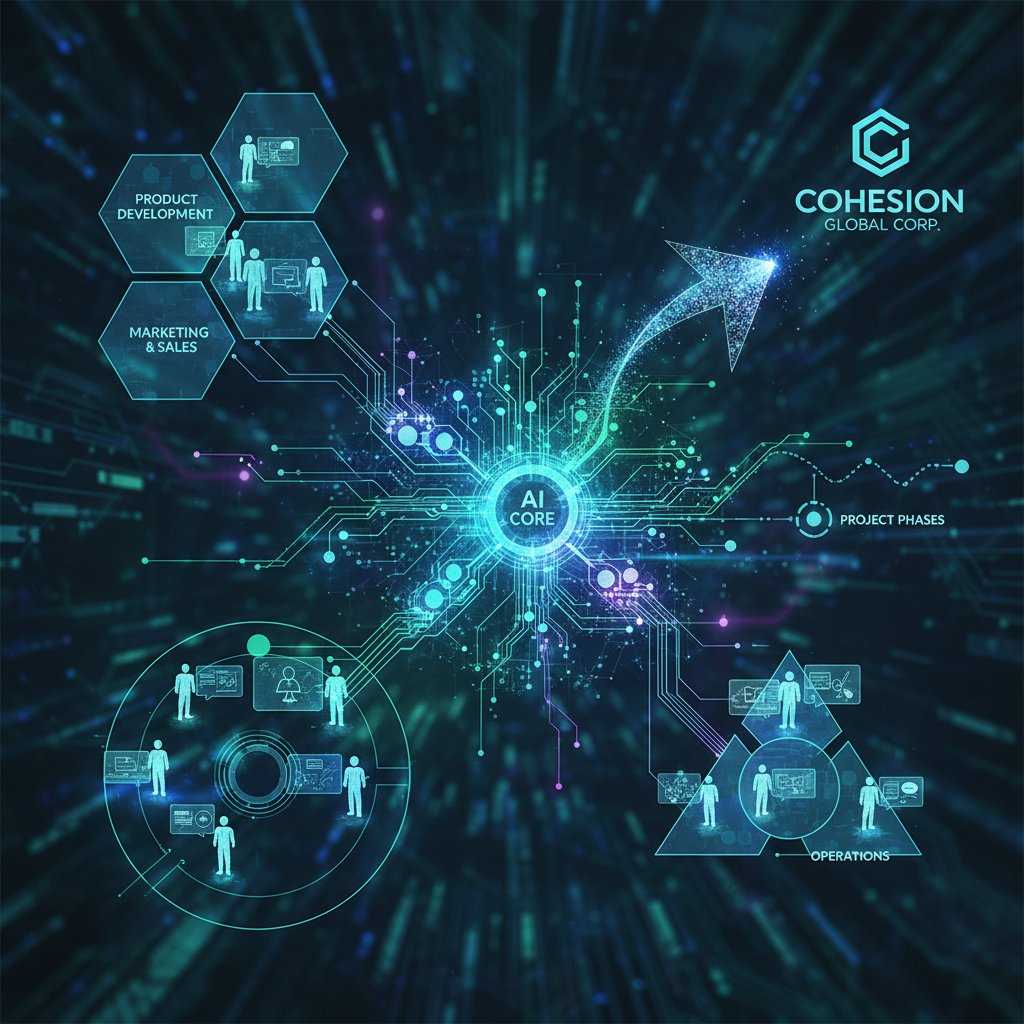
The genius lies in real-time synthesis: summarizing sprawling email threads, translating jargon, automating follow-ups, and nudging toward deadlines, all while respecting security and privacy protocols. According to BizTech Magazine, 2025, these core capabilities are why AI assistants are rapidly becoming indispensable in the age of digital overload.
Beyond chatbots: the evolution of virtual workplace assistants
Forget the clunky chatbots of the 2010s. Today’s AI coworkers are proactive, personalized, and deeply integrated with enterprise processes. This evolution wasn’t overnight:
| Year | Milestone | Impact |
|---|---|---|
| 2010-2015 | Rise of basic chatbots | Simple Q&A, limited scope |
| 2016-2019 | Workflow automation scripts | Process streamlining, but rigid |
| 2020-2022 | Enterprise integration and NLP advancements | Smarter bots, cross-platform reach |
| 2023 | AI teammates with contextual understanding | Personalized support, real collaboration |
| 2024-2025 | AI-driven digital coworkers as workflow partners | Autonomous, adaptive, human-like collaboration |
Table 2: Major milestones in the evolution of enterprise virtual assistants.
Source: Original analysis based on SoftKraft, 2025, World Economic Forum, 2025
The leap from reactive bots to “AI teammates” is not just about more powerful algorithms—it’s about embedding intelligence where work actually happens, closing the gap between digital chaos and seamless collaboration.
Seven untold truths about AI-driven enterprise virtual workplace assistants
AI teammates don’t replace jobs—they reinvent them
The anxiety is real: will AI-driven workplace assistants automate humans out of a job? The reality, backed by both World Economic Forum data, 2025 and enterprise case studies, is more nuanced. Instead of erasing roles, these assistants often shift work to higher-value activities—strategy, creative problem-solving, relationship-building.
“Since adopting an AI assistant, my team’s roles have shifted—but no one got left behind.” — Marcus
What’s actually happening: entire job descriptions are being rewritten. Administrative professionals spend less time triaging email, more time on stakeholder management. Project leads automate status checks, focusing energy on innovation. According to the World Economic Forum, 78% of business leaders plan to hire for new AI-specific roles, indicating a transition—not a reduction—in workforce value.
The hidden ROI: benefits (and costs) nobody tells you about
AI-driven workplace assistants claim extraordinary productivity gains, but the full financial story is more layered. Yes, you can expect faster turnaround, fewer missed deadlines, and measurable reductions in administrative overhead. But there are also costs: customization, training, and change management can eat into short-term ROI, while benefits accrue over time as teams adapt and the AI learns.
| Metric | Reported ROI | Hidden Costs | Productivity Boost |
|---|---|---|---|
| Email Task Automation | 25-45% reduction | Training, integration | 20-30% |
| Task Management | 30% time saved | Workflow mapping | 25% |
| Collaboration Efficiency | 40% faster cycles | User resistance, adaptation | 35% |
| Integration | Seamless (after 2-3 weeks) | Upfront configuration | 28% |
Table 3: ROI and hidden costs of AI-driven enterprise virtual workplace assistants.
Source: Original analysis based on SoftKraft, 2025, SmartDev, 2025
The bottom line: the real winners are organizations that treat integration as a marathon, not a sprint, investing in both people and technology.
Culture shock: how AI changes workplace dynamics
Introducing an AI teammate doesn’t just change workflows—it rewires the cultural DNA of the enterprise. Suddenly, the “loudest voice” in the room is joined by a digital presence that’s always on, always tracking, always suggesting. This can heighten trust issues, spark turf wars, or even foster new alliances as teams learn to navigate a workplace where algorithms have a seat at the table.

On the upside, research from World Economic Forum, 2025 highlights that AI teammates can break down silos, bridge communication gaps, and promote “collaborative intelligence”—the unique synergy between human intuition and machine precision. But don’t underestimate the psychological impact: employees need time and support to trust, adapt, and thrive alongside their digital colleagues.
The myth of the ‘plug-and-play’ AI solution
Vendors love to sell the dream of instant AI transformation—just install, and watch the magic happen. Reality check: deploying a truly AI-driven enterprise virtual workplace assistant is a process, not a product. Companies that skip user training, ignore workflow customization, or underinvest in change management set themselves up for disappointment—or outright failure.
- Overpromising “instant value”: If it sounds too good to be true, it probably is. Real AI assistants require onboarding and adaptation.
- Lack of customization: One-size-fits-all solutions rarely deliver; seek platforms that are configurable to your workflows.
- No user training: Teams need to understand not just how to use, but how to collaborate with, their digital coworker.
- Unclear data privacy: If the vendor can’t explain how your data is handled, walk away.
In short: the best results come from treating AI adoption as a partnership, not a plug-in.
How to choose and implement your AI teammate: a practical guide
Checklist: is your workplace ready for an AI-driven assistant?
- Assess your data hygiene: Ensure your enterprise data is accurate, de-duplicated, and securely stored. Garbage in, garbage out.
- Map your workflows: Identify high-friction processes ripe for automation or augmentation.
- Secure stakeholder buy-in: From IT to end-users, everyone needs to understand the vision—and their role in it.
- Review compliance requirements: Data privacy, security standards, and industry regulations must be addressed up front.
- Pilot and iterate: Start small, gather feedback, and refine before scaling across the organization.
This readiness checklist separates hype-chasers from real innovators and lays the groundwork for an AI teammate that actually delivers.
The integration process: what nobody tells you
Rolling out an AI workplace assistant isn’t just a matter of budget and bandwidth—it’s a social experiment. Early days can be rocky: IT teams wrestle with integrations, users hesitate or rebel, and initial results may be mixed as the AI gets its bearings. But unexpected wins often surface—a rogue project suddenly running smoother, a chronically overloaded manager finally gaining breathing room, a team rediscovering the joy of “real work” without email drudgery.

The most successful deployments treat the integration process as ongoing—not a one-and-done event. Regular check-ins, open feedback loops, and visible leadership support all help transform bumps into breakthroughs.
Avoiding common pitfalls: lessons from failed deployments
Even the best AI can stumble in a hostile environment. Here’s how to sidestep the most common traps:
- Rushing adoption: Gradual, phased rollouts allow teams to acclimate, surface issues, and build trust in the AI.
- Ignoring internal champions: Empower early adopters to advocate and drive cultural change from within.
- Neglecting feedback: Continuous input from users ensures the assistant evolves alongside changing needs.
- Skipping documentation: Clear guidelines and playbooks are crucial for sustained success.
Hidden benefits of slow, phased AI adoption:
- Encourages organic user buy-in and reduces resistance.
- Allows for customized refinements based on real-world usage.
- Surfaces unexpected edge cases before they become major headaches.
- Builds institutional knowledge and confidence in the technology.
Inside the machine: a week with an AI enterprise teammate
Day 1: onboarding and first impressions
Monday morning. The team gathers, half excited, half wary. The new AI “teammate” slides quietly into each inbox, offering to set up meetings, summarize email threads, and prioritize urgent requests. Initial reactions are skeptical: Will this bot just create more work? Will it get in the way? But by noon, even hardened skeptics are intrigued—the assistant has already flagged an overlooked deadline and consolidated a week’s worth of project updates into a single, crisp summary.
Day 3: workflow transformation
Midweek, old habits begin to shift. The AI assistant is now auto-categorizing emails, surfacing follow-ups, and suggesting actionable tasks—directly in the team’s existing workflows. Meetings are scheduled with uncanny efficiency, and a few team members quietly admit they’re spending less time context-switching, more time focusing on creative work. Of course, not everything is perfect: a few miscategorized threads and awkward AI suggestions remind everyone that learning is a two-way street.
Day 7: real results and lingering questions
By Friday, the results are undeniable. Projects move faster, email volume drops, and no one has missed a deadline all week. There’s a new rhythm in the office—a sense of collaboration, not chaos. Yet questions linger: How much does the AI “know”? Where does all this data go? Will the next update change everything again?
“I didn’t expect to trust a digital teammate, but by Friday, I was hooked.” — Jamie
It’s a work in progress. But for this team, the “future of work” is no longer just a buzzword—it’s embedded, messy, and, for the first time in a long time, maybe even fun.
Controversies and tough questions: the ethics of AI in the workplace
Who owns the data? Privacy and trust in AI collaboration
With great power comes great responsibility. As AI-driven workplace assistants worm their way into the heart of enterprise communication, privacy concerns skyrocket. Sensitive client information, HR records, internal strategy—who has access, and how is it protected? The best platforms offer end-to-end encryption, user-level data controls, and transparent audit trails.
| Platform | Data Privacy Features | Transparency Rating | User Control |
|---|---|---|---|
| FutureCoworker AI | End-to-end encryption, customizable consent | High | Full |
| Competitor A | Basic encryption, unclear consent | Moderate | Limited |
| Competitor B | Opt-in privacy settings | High | Partial |
Table 4: Feature matrix comparing leading AI workplace assistants on privacy, transparency, and control.
Source: Original analysis based on BizTech Magazine, 2025, World Economic Forum, 2025
If your vendor can’t articulate clear, enforceable privacy standards, it’s time to look elsewhere.
Bias, transparency, and the illusion of neutrality
No algorithm is truly neutral. As AI-driven workplace assistants become more involved in team dynamics—suggesting actions, prioritizing projects, even mediating disputes—the risk of algorithmic bias grows. Models trained on historical data may reinforce old inequities, marginalize minority voices, or make decisions that lack context.

Responsible vendors address these risks by making training data, decision logic, and audit trails transparent. According to World Economic Forum, 2025, the future of ethical AI in the workplace rests on a foundation of explainability and continuous oversight—not blind trust in the “machine.”
Expert and user perspectives: what really works in 2025
What the experts say: must-haves and deal-breakers
Ask ten experts about the ideal AI workplace assistant, and you’ll get ten nuanced opinions. But a few themes stand out: seamless integration, user-centric design, robust privacy protections, and ongoing learning. The deal-breakers? Opaque data policies, inflexible workflows, and lack of support for change management.
“Don’t believe anyone who says you don’t need a transition plan.” — Alex
Leading analysts stress the importance of iterative deployment—pilots, feedback loops, and incremental scaling—as the only way to drive sustainable ROI and avoid culture clashes.
User voices: unfiltered stories from the field
It’s not all theory. Across industries, users tell unvarnished stories of AI-driven transformation: overworked managers rediscovering work-life balance, teams automating away tedium, and—yes—occasional frustration when the “assistant” gets it wrong. The best stories aren’t about magic—they’re about partnership. Users who invest time in training and provide honest feedback see the biggest gains.

In interviews, workers repeatedly cite one unexpected benefit: AI-driven assistants make collaboration more human by removing noise and freeing people to focus on creativity, empathy, and strategy. As one user put it: “The bot never takes a sick day, but it also never judges.”
The future is now: trends and predictions for AI workplace assistants
Where the market is heading: beyond 2025
The adoption of AI-driven workplace assistants is not just a trend—it’s a tectonic shift. According to World Economic Forum, 2025, the market is exploding, with hyper-personalization, voice-first interfaces, and collaborative intelligence leading the charge.
| Year | Adoption Rate | Projected Growth | Anticipated Features |
|---|---|---|---|
| 2023 | 28% | — | Task automation, summaries |
| 2024 | 40% | +43% YoY | Contextual insights, meeting mgmt |
| 2025 | 56% (est.) | +40% YoY | Voice-first, team dynamics, deep learning |
Table 5: Market analysis of AI-driven enterprise virtual workplace assistant adoption and feature evolution.
Source: Original analysis based on World Economic Forum, 2025, BizTech Magazine, 2025
The cutting edge? Assistants that not only manage tasks but actively build collaborative bridges, making hybrid and distributed work not just possible, but frictionless.
How to stay ahead: ongoing learning and adaptation
Stagnation is the enemy. Enterprises that thrive with AI-driven assistants adopt a mindset of continuous improvement:
- Schedule regular training sessions: Keep teams updated on new features and best practices.
- Solicit ongoing feedback: User input is gold for both IT teams and vendors.
- Review analytics and adjust workflows: Track what’s working, and pivot quickly when it’s not.
- Update privacy and compliance protocols: Stay ahead of evolving standards and regulations.
- Celebrate wins, document learnings: Recognizing progress builds momentum for further innovation.
Treat your AI “teammate” as a learning partner, not just a tool, and the rewards compound over time.
Resources and next steps: where to go from here
Ready to dive deeper? Staying informed is half the battle. Trusted resources like futurecoworker.ai regularly publish expert perspectives, real-world case studies, and best practices for integrating AI into enterprise collaboration. Whether you’re an enterprise manager, IT lead, or frontline employee, investing in learning and experimentation is the best way to future-proof your team.

The question isn’t whether AI-driven enterprise virtual workplace assistants are coming—they’re already here. The real challenge is how you, and your organization, will leverage their power to redefine what work means in a world where the next great teammate might not be human at all.
Sources
References cited in this article
- BizTech Magazine(biztechmagazine.com)
- SoftKraft(softkraft.co)
- World Economic Forum(weforum.org)
- SmartDev(smartdev.com)
- World Economic Forum(weforum.org)
- GeekWire(geekwire.com)
- Chat Whisperer(chatwhisperer.ai)
- Moveworks(qatalog.com)
- Slack(slack.com)
- The Conversation(theconversation.com)
- Salesforce(salesforce.com)
- Workgrid(workgrid.com)
- Intellias(intellias.com)
- LinkedIn(linkedin.com)
- Workgrid(workgrid.com)
- Haptik(haptik.ai)
- Leena AI(leena.ai)
- Atlassian(atlassian.com)
- WWT(wwt.com)
- Forbes(forbes.com)
- agpt.co(agpt.co)
- Workgrid(workgrid.com)
- Netguru(netguru.com)
- PRNewswire(prnewswire.com)
- NVIDIA(blogs.nvidia.com)
- Espressive(espressive.com)
- Deel(deel.com)
- ServiceNow(servicenow.com)
- RoboticsBiz(roboticsbiz.com)
- Service Desk Institute(servicedeskinstitute.com)
- Harvard Business Review(hbr.org)
- McKinsey(mckinsey.com)
- Stewart Townsend(stewarttownsend.com)
- SHRM(shrm.org)
- Built In(builtin.com)
- Forbes(forbes.com)
- Simular AI(simular.ai)
- Simpplr(simpplr.com)
- Microsoft 365(microsoft.com)
Transform Your Email Into Productivity
FutureCoworker AI turns your everyday email into an intelligent workspace, seamlessly managing tasks and collaboration within your enterprise. It eliminates the complexity of AI, allowing you to benefit from advanced technology without any technical knowledge. Achieve productivity, streamline processes, and improve team efficiency through natural email interaction, getting tasks done faster and smarter.
Get startedReady to Transform Your Email?
Start automating your tasks and boost productivity today
Frequently Asked Questions
What is an AI-driven enterprise virtual workplace assistant?
It is a digital avatar designed to function as a teammate in enterprise settings, helping with collaboration, email management, and other workplace tasks. According to the article, it represents a shift from traditional inbox bots to trusted enterprise teammates that blur the line between 'colleague' and 'code.'
What workplace problems does the AI assistant aim to solve?
The assistant addresses 'collaboration chaos' caused by email overload and lost productivity. The article notes that the average knowledge worker spends nearly three hours a day sorting through email, with critical tasks slipping through the cracks and project threads fragmenting across platforms.
What challenges arise from hybrid and remote workforces according to the article?
The article states that as hybrid and remote workforces sprawl, miscommunication, duplicated efforts, and missed opportunities increase. Lost context across fragmented platforms leads to lost momentum in collaboration.
How do employees typically react to AI workplace assistants?
According to the article, many employees greet the arrival of AI teammates with skepticism, if not outright cynicism, questioning whether they can truly be trusted to manage high-stakes collaboration and understand nuanced human communication.
Continue Reading
Keep exploring Intelligent enterprise teammate

Virtual Enterprise Productivity Assistants: Real Impact on Work
Virtual enterprise productivity assistants reshape how teams work by automating email, task management, and scheduling.

AI-Driven Virtual Assistants in Enterprise: What Actually Works
AI-driven virtual assistant enterprise tools help organizations manage email overload and task complexity.

How AI Virtual Teammates Are Changing Workplace Collaboration
AI driven virtual teammates are reshaping workplace collaboration through task automation and project coordination.
Enterprise AI Virtual Assistants: Benefits, Risks, and ROI Explained
Enterprise AI powered virtual assistants streamline operations and boost productivity, but introduce hidden tradeoffs.

What Enterprise AI Enabled Assistants Actually Change at Work
Enterprise AI enabled assistant systems are embedding themselves into corporate workflows. This article examines how they reshape work, the hidden contradictions in their promise, and their actual impact.

Enterprise AI-Driven Workplace Assistant: Realities and Risks
Enterprise AI-driven workplace assistant technology is reshaping workplace collaboration. This article examines the realities, hidden risks, and strategic approaches for integrating AI into team workflows.


