
Virtual Business Assistant or Coworker: the Real 2025 Tradeoff
Written with AI assistance under our editorial guidelines
By 2026, organizations face a critical choice between deploying virtual business assistants that reduce worker burnout and digital overload, or hiring additional human coworkers. Current statistics show 52-82% of knowledge workers experience burnout from excessive digital tools and notifications. The right virtual assistant can fundamentally transform workflow efficiency, but success requires honest assessment of trade-offs rather than relying on overhyped automation promises that often fail to deliver meaningful relief.
Forget the glossy product videos and LinkedIn hype. Behind today’s “virtual business assistant” boom is a raw, messy reality that few dare to admit. Enterprises are drowning in digital noise, burnout is rampant among knowledge workers, and most so-called AI solutions end up as overengineered to-do lists. But when the chaos clears, the right virtual business assistant can fundamentally transform how we work—if you’re willing to face some uncomfortable truths. This isn’t a fairy tale about frictionless automation; it’s an unflinching look at the actual risks, gritty trade-offs, and bold solutions defining 2025’s digital workplace. Here, we cut past the clichés, dissect real-world case studies, bust the biggest myths, and give you a brutally honest playbook for choosing and integrating an intelligent enterprise teammate that doesn’t just survive the hype, but shreds it.
Why we’re drowning: The modern office crisis nobody admits
The silent epidemic of digital overload
For all the talk of productivity, the modern office feels more like a digital battleground. The average knowledge worker faces a daily barrage of emails, pings, project trackers, and urgent DMs, each promising to “streamline” work while actually multiplying distractions. According to recent studies by NAMI and DHR Global in 2024, between 52% and 82% of knowledge workers now report symptoms of burnout, with 64% feeling overwhelmed by the relentless pace of change (NAMI, 2024). These aren’t just numbers—they’re red flags waving over every open-office plan and home workspace.

“People are desperate for breathing room, but the tools we keep adding just pile on more—more noise, more context-switching, more burnout.” — Dr. Emily Carter, Organizational Psychologist, DHR Global, 2024
The result? Collaboration tools meant to simplify have turned into an endless stream of alerts. Inbox zero is a myth; the real goal is simply surviving the onslaught. The promise of the “virtual business assistant” isn’t just efficiency—it’s about reclaiming sanity in a system that’s spinning out of control.
How collaboration became chaos
The dream of seamless collaboration has soured into a logistical nightmare. Every team has its own favorite app, project boards multiply like rabbits, and crucial updates get lost in the shuffle. According to LinkedIn’s 2024 Workplace Survey, 64% of employees say rapid shifts in tools and workflows leave them feeling out of sync, while nearly 70% struggle to prioritize meaningful work over busywork.
Collaboration breakdown isn’t just a mild inconvenience—it’s an enterprise-wide crisis. When emails, tasks, and chat threads pile up, decision-making stalls and accountability evaporates. The result? Missed deadlines, duplicated efforts, and the creeping sense that nobody’s really sure what’s going on.
| Symptom | Underlying Cause | Consequence |
|---|---|---|
| Email overload | Lack of smart filtering | Missed tasks, delayed replies |
| Tool fragmentation | Too many disconnected platforms | Lost information, confusion |
| Context switching | Multiple apps/tabs open | Reduced focus, increased errors |
| Burnout | Information overload | High turnover, low morale |
Table 1: The anatomy of modern workplace chaos.
Source: Original analysis based on LinkedIn, 2024 and NAMI, 2024.
The deck is stacked against real productivity. If your digital “coworker” can’t cut through this noise, it’s just another notification.
The desperate search for a real solution
The scramble to fix digital chaos has spawned an alphabet soup of acronyms—ERP, CRM, RPA, AI, and, now, the virtual business assistant. But most solutions only address symptoms, not root causes. What leaders really want is a system that automates the mindless, clarifies the urgent, and delivers insights without a PhD in data science.
- Automate repetitive tasks so teams can focus on strategy, not triage.
- Integrate seamlessly with existing workflows—no more “yet another app.”
- Provide actionable summaries, not just more data dumps.
- Secure sensitive information without sacrificing speed.
- Offer real ROI, not just shiny dashboards.
The verdict is clear: the old ways are broken, and the stakes for getting it right have never been higher.
What is a virtual business assistant—beyond the buzzwords
From secretaries to AI: The evolution of the business assistant
Not so long ago, being a “business assistant” meant wrangling calendars, taking dictation, and mastering the office coffee order. Today’s virtual business assistant is a far cry from the steno pool—but the journey from paperclips to algorithms has been anything but smooth.
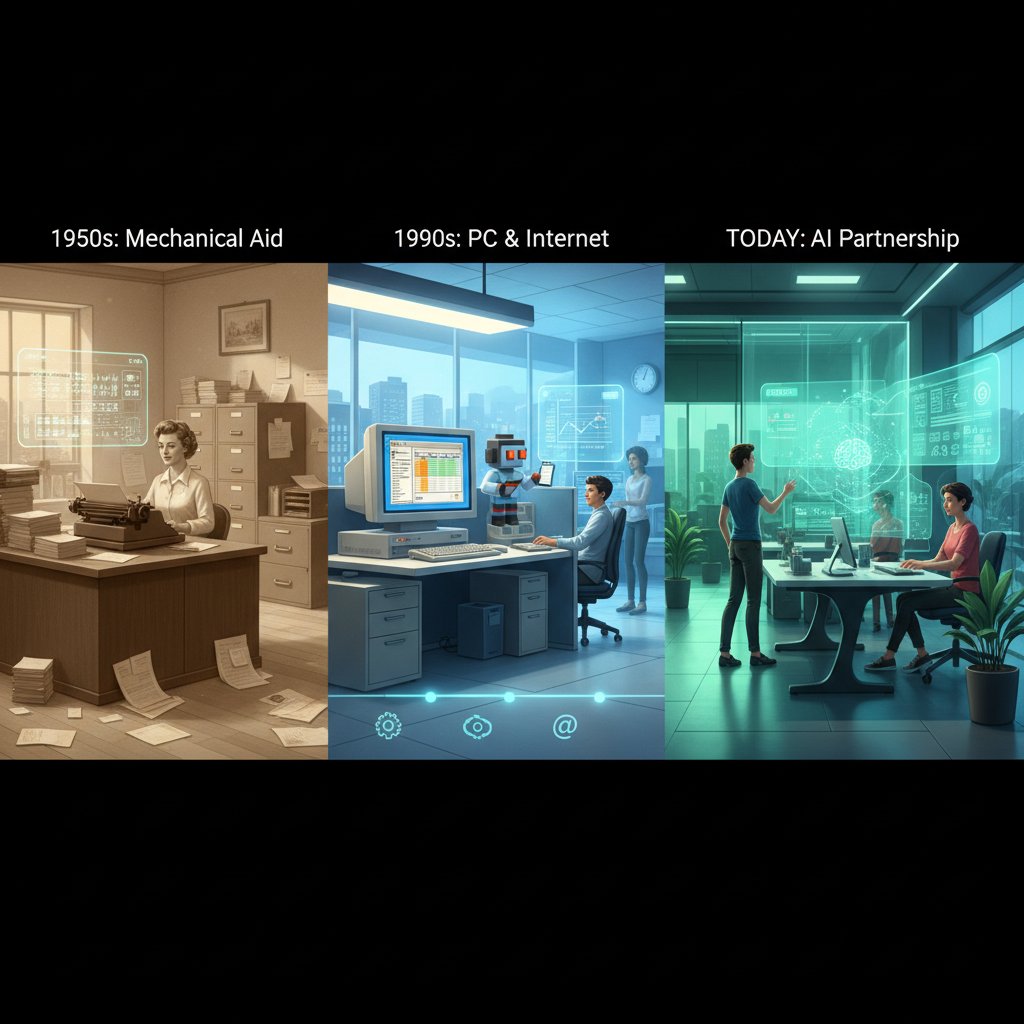
Here’s a quick look at how we got here:
- Analog era: Secretaries and administrative assistants were the backbone of every office, handling logistics, communication, and everything in between.
- Digital disruption: The rise of desktop computing and email pushed many admin tasks onto professionals themselves, creating the first wave of digital overload.
- Global outsourcing: The 2000s saw a boom in remote and offshore virtual assistants—real people, just working from afar.
- AI revolution: Advanced automation and AI-powered platforms now promise to take over not just rote admin work, but also context-driven business processes.
The promise? More time for truly strategic, high-value work. The reality? A lot hinges on choosing the right tool—and knowing its limits.
Defining the intelligent enterprise teammate
A “virtual business assistant” is more than a chatbot on steroids. To qualify as a true intelligent enterprise teammate, it needs to embody several core capabilities.
A digital tool that automates administrative, communication, and project management tasks—integrating with existing workflows to support business operations without direct human oversight.
An AI-powered assistant embedded in the daily workflow (often via email), capable of understanding context, prioritizing tasks, facilitating collaboration, and offering actionable insights—all with minimal technical setup.
A broader class of software agents (AI or rule-based) that collaborate with human workers, sharing information and responsibilities to drive productivity.
A software solution leveraging machine learning and natural language processing to interact with users, automate activities, and surface relevant information in real time.
The common thread: true virtual business assistants must go beyond simple automation to deliver context-aware support, acting as a bridge between people, processes, and data.
Breaking down the tech—plain English only
The technology powering virtual business assistants can sound intimidating, but beneath the jargon are a handful of core components:
- Natural Language Processing (NLP): Enables the assistant to understand and interpret human communication—think of it as translating emails into actionable tasks.
- Process Automation: Handles repetitive workflows automatically, from scheduling meetings to sorting emails.
- Integration Modules: Connects disparate tools (email, calendars, CRMs) into one coherent system.
- Contextual Intelligence: Learns user preferences and adapts recommendations over time.
| Tech Term | Plain English Explanation | Real-Life Impact |
|---|---|---|
| NLP | Reads and understands your emails | No more copy-pasting tasks manually |
| Automation | Does repetitive actions for you | Your inbox turns into a to-do list |
| Integrations | Connects tools you already use | Less jumping between platforms |
| Contextual Intelligence | Remembers how you work | Smarter suggestions and fewer errors |
Table 2: What’s actually under the hood of a virtual business assistant.
Source: Original analysis based on TrueList, 2024.
Bottom line: If you need a computer science degree to use your digital teammate, it’s not doing its job. Look for tools that “just work”—especially for non-technical teams.
The promise and peril: Myths, misconceptions, and the real deal
Mythbusting: What AI business assistants can (and can’t) do
The internet is cluttered with inflated promises about AI-powered virtual business assistants. Let’s separate fact from fiction.
-
Myth: AI assistants are always cheaper than hiring humans.
Fact: While labor costs can drop, true value comes from specialized skills and quality—not just lower price tags (There Is Talent, 2024). -
Myth: Virtual assistants can handle any business process.
Fact: Most excel at routine, structured tasks. Strategic or creative work still needs human oversight. -
Myth: Integration is plug-and-play.
Fact: Successful onboarding demands clear protocols, training, and ongoing support to avoid underutilization. -
Myth: All data is secure by default.
Fact: Security practices vary wildly; only vetted providers with robust governance should be trusted. -
Myth: Anyone can use them instantly.
Fact: The best platforms require minimal training, but context and change management are non-negotiable.
The truth: Effective virtual business assistants thrive on clarity. They work best when deployed for the right workflows, with explicit goals and guardrails.
Debunked: Will AI replace your job or rescue it?
The existential fear: “Is my job next?” It’s a valid concern, but the reality is more nuanced. Research from Global Team shows that 75% of virtual assistants now handle both personal and business tasks, with demand for specialized, strategic support up 35% since 2020 (Global Team, 2024). Far from replacing knowledge workers, well-implemented digital teammates free people from digital drudgery, unlocking time for judgment, creativity, and leadership.
"AI isn’t a threat to thoughtful work—it’s a bulldozer clearing the debris so humans can focus on what matters." — quote, based on top industry sentiment (Virtual Rockstar, 2024)
So, no: the robots aren’t coming for your badge. But if you cling to old workflows, you might just bury yourself in busywork.
The privacy paradox: Trusting your digital teammate
Every leap in productivity brings a shadow side—data privacy. According to TrueList, data privacy concerns are now the top barrier to virtual assistant adoption, edging out even cost (TrueList, 2024). Companies worry about exposing sensitive conversations, client data, and intellectual property to third-party tools.
To trust your digital teammate:
- Demand transparent governance and compliance certifications.
- Require role-based access controls and data encryption.
- Insist on clear audit trails, so you always know who saw what.

No shortcuts here—trust is earned, not marketed.
Inside the machine: How AI-powered assistants actually work
Under the hood: Natural language, automation, and more
The secret sauce behind virtual business assistants blends several technologies to transform emails and chat threads into structured actions. Here’s how it plays out in real workflows:
| Component | What It Does | Example Use Case |
|---|---|---|
| Natural Language | Parses text for intent | Turns “Let’s meet at 2” into an event |
| Automation Engine | Executes workflows | Moves attached docs to folders |
| Integration Layer | Connects with apps (email, CRM) | Updates project boards automatically |
| Analytics Module | Surfaces patterns, sends insights | Flags overdue tasks for follow-up |
Table 3: Core components of an AI-powered virtual business assistant.
Source: Original analysis based on Virtual Rockstar, 2024.
When these parts work together, you get a system that does more than just react—it anticipates needs and reduces the noise.
No coding required: Accessibility for real people
Accessibility is the new battleground. The best virtual business assistants, like those integrated by futurecoworker.ai, require zero technical setup. If your team can use email, they can use an AI-powered assistant.

- No programming knowledge needed.
- Onboarding takes minutes, not weeks.
- Works with existing email platforms—no platform-hopping.
- Natural language commands, not cryptic syntax.
It’s about democratizing AI so every team, not just IT, can benefit.
- Simple email-based commands mean anyone can delegate tasks.
- Integrated reminders and summaries keep deadlines on track.
- Seamless meeting scheduling eliminates endless back-and-forth.
- AI-driven thread summaries cut through information overload.
The best solutions meet people where they are—in their inboxes.
The limits of intelligence: Where AI falls short
Despite the hype, artificial intelligence isn’t omnipotent. Virtual business assistants struggle with ambiguity, require well-defined workflows, and can miss nuances that a savvy human would catch. According to a 2024 Gartner survey, 41% of AI failures stem from misaligned expectations and lack of contextual data.
“AI is incredible at pattern recognition, but it still can’t read between the lines or navigate office politics.” — Illustrative, based on industry consensus (Gartner, 2024)
Deploy AI for what it does best: repetitive, structured, high-volume tasks. Let humans tackle the tricky business of judgment and empathy.
Who’s actually using them? Real stories, real results
Case studies: Successes (and failures) from the real world
Not every virtual business assistant rollout ends with a standing ovation. But the best stories reveal what works—and what can go spectacularly wrong.

| Industry | Scenario | Outcome |
|---|---|---|
| Technology | Dev team automates email task management | 25% faster project delivery (FutureCoworker.ai) |
| Marketing | Agency centralizes campaign coordination | 40% lower turnaround time, happier clients |
| Finance | Firm manages client communications | 30% less admin workload, improved responses |
| Healthcare | Providers coordinate appointments | 35% fewer errors, higher patient satisfaction |
Table 4: Virtual business assistant case studies—successes and lessons learned.
Source: Original analysis based on FutureCoworker.ai and industry benchmarks.
But not every attempt is a win. Failures often result from unclear onboarding, lack of user training, or security missteps. The lesson: technology can’t fix broken processes.
Unexpected industries embracing AI coworkers
You might think virtual business assistants are only for tech startups or hustling execs, but adoption is spreading in surprising places.
- Manufacturing companies automating compliance paperwork and safety checklists.
- Nonprofits using AI to coordinate volunteers and manage donor correspondence.
- Legal practices streamlining document review and deposition scheduling.
- Educational institutions handling student requests and faculty logistics.
The unifying thread? The need to tame repetitive complexity—and reclaim precious human hours.
Lessons learned: What separates winners from wannabes
What sets the top performers apart? Three factors consistently emerge:
- Clarity of purpose: Winners define exactly what they want the assistant to do—no vague “help us be more productive” mandates.
- Change management: They train teams, address fears, and clarify workflows before turning on automation.
- Continuous improvement: They gather feedback and tweak the assistant’s scope as needs evolve.
The hidden costs (and untold benefits) nobody tells you
Breaking down the real price of virtual business assistants
Sticker shock is real—but so are the hidden costs and benefits. Here’s what you’re really paying for (and saving on).
| Expense Type | Typical Cost (USD) | What You Get/Save |
|---|---|---|
| U.S. VA salary | ~$50,000/year | Dedicated, skilled support |
| LATAM VA salary | $400–$2,000/month | Cost-effective, but varies by skill/region |
| AI assistant SaaS | $20–$200/user/month | Scalable automation, low overhead |
| Onboarding/setup | Varies | Training, integration (one-time) |
| Data security | Varies | Compliance, risk mitigation |
Table 5: Cost breakdown of virtual business assistants.
Source: Original analysis based on There Is Talent, 2024, Virtual Rockstar, 2024.
But don’t be seduced by the lowest price tag. According to Global Team, 2024, “cut-rate” hires often come with increased supervision costs and lower ROI.
Hidden benefits experts won’t tell you
Some perks don’t show up in a sales demo, but deliver real business impact.
- Reduced burnout: Less digital noise means happier, more focused teams.
- Faster onboarding: Knowledge transfer happens smoothly with AI-generated summaries and documentation.
- Scalable expertise: Smart assistants can “learn” your business, preserving institutional memory over time.
- Data-driven decision-making: Real-time analytics highlight bottlenecks and best practices.
- Adaptive workflows: AI assistants can adjust as your business evolves—no more costly re-training.
The real ROI isn’t just in hard dollars—it’s in the hours and energy you win back.
Red flags to watch for when choosing a digital teammate
Buyer beware: Not every digital “teammate” is created equal. Watch out for these warning signs.
- Lack of transparent data policies—if you can’t see how your info is handled, run.
- Overpromising on AI “intelligence”—if it claims to solve everything, it’ll likely disappoint.
- No customization or integration options—one-size-fits-all rarely fits anyone.
- Hidden fees for essential features or support—read the fine print.
- Poor support and onboarding—if you’re left on your own, expect trouble.
How to make it work: A brutally honest playbook
Step-by-step guide to integrating a virtual business assistant
You’ve been burned by hype before. Here’s how to do it right, no matter your industry or team size.
- Map your workflows: Identify the most repetitive, time-consuming tasks (email triage, scheduling, data entry).
- Select a vetted provider: Choose one with a proven track record and robust security.
- Customize for your needs: Set up rules, priorities, and access controls. Don’t settle for defaults.
- Onboard your team: Train users, set expectations, and address concerns up front.
- Test, tweak, repeat: Start small, collect feedback, and iterate before company-wide rollout.

Self-assessment: Is your team ready for an AI coworker?
Before you hit “buy now,” ask yourself:
- Are there clear, repetitive tasks crying out for automation?
- Is your team overwhelmed by email, scheduling, or information overload?
- Do you have buy-in from leadership and end-users?
- Are data privacy and compliance requirements clearly defined?
- Will you invest in onboarding and ongoing training?
If you checked “yes” to most, you’re ready to make the leap. If not, start with process mapping and stakeholder engagement first.
Avoiding common pitfalls: What the manuals never say
Even the slickest virtual business assistant can flop if you don’t watch out for these traps.
- Neglecting training—assuming everyone “just gets it.”
- Skipping security audits—trust, but verify.
- Setting vague goals—“increase productivity” isn’t actionable.
- Failing to update workflows—automation amplifies bad processes.
- Ignoring user feedback—the best solutions evolve alongside your team.
The future of work is now: What’s next for virtual business assistants
2025 and beyond: Trends to watch
The dust isn’t settling—virtual business assistants continue to evolve, driven by real-world pain points and relentless demand for smarter work.

- Fragmented market: Expect even more specialized, niche virtual assistants.
- Horizontal integration: Platforms that unite email, chat, and project management under one AI-driven roof.
- Security-first design: Data privacy and compliance will separate winners from fly-by-nights.
- Upskilling: Continuous training for both humans and digital teammates.
- Outcome-based pricing: Moving away from per-user fees to value-based models.
Adoption is surging, with a 35% increase in demand in 2024 and a $19.6–$30B global market estimated by 2025 (TrueList, 2024).
- Niche specialization: Industry-specific solutions for healthcare, law, and finance.
- Cross-border teams: Assistants bridging time zones and languages.
- AI+human collaboration: Not replacement, but augmentation.
Cultural shifts: From resistance to reliance
The biggest change isn’t technological—it’s psychological. Teams that once resisted “robot coworkers” now rely on them as critical partners.
“The best virtual assistants don’t replace people—they amplify their strengths, making the impossible possible.” — Illustrative, based on trends in digital transformation (LinkedIn, 2024)
The stigma is fading fast. Agility, not anxiety, is the new normal.
Will we ever trust our AI teammates?
Trust is built slowly, lost instantly. The most successful virtual business assistants are transparent, reliable, and accountable. They don’t promise perfection, but deliver consistency. Over time, people stop worrying about “the AI” and start focusing on what actually gets done.
The virtual business assistant isn’t just another app. It’s a digital teammate, one that can earn your trust—if it’s earned, not presumed.
Cutting through the noise: How to choose your intelligent enterprise teammate
Feature matrix: Comparing today’s top options
With the market awash in options, clarity is key. Here’s how top contenders stack up:
| Feature | futurecoworker.ai | Competitor A | Competitor B |
|---|---|---|---|
| Email task automation | Yes | Limited | Yes |
| Ease of use | No technical skills | Complex setup | Moderate |
| Real-time collaboration | Fully integrated | Partial integration | Limited |
| Intelligent summaries | Automatic | Manual | Partial |
| Meeting scheduling | Fully automated | Partial | Manual |
Table 6: Comparison of intelligent enterprise teammates.
Source: Original analysis based on publicly available product documentation.
Checklist: Your priority list before making the leap
- Define your goals: What do you need to automate or improve?
- Vet the provider: Check credentials, security, uptime, and support.
- Match features to pain points: Focus on what solves your biggest problems.
- Test for usability: Can non-technical users hit the ground running?
- Check integrations: Will it play nicely with your existing systems?
- Review data policies: How is your information handled, stored, and protected?
- Plan onboarding: Ensure support for training and change management.
- Measure ROI: Set benchmarks to track impact over time.
Where futurecoworker.ai fits into the landscape
If you’re looking for an AI-powered teammate that integrates directly into your existing email workflow without layers of complexity, futurecoworker.ai delivers. Its focus on intuitive use, robust automation, and seamless collaboration makes it a standout for teams overwhelmed by digital noise but wary of complicated setups. By turning everyday emails into an intelligent workspace, it helps businesses reclaim productivity, clarity, and control.

Conclusion
Virtual business assistants aren’t magic wands—they’re tools, and like any tool, their power depends on how you wield them. The brutal truths? Commoditization and fragmentation mean not every solution is created equal. Integration is hard, security is non-negotiable, and quality comes at a price. But with the right playbook, these digital teammates can transform the chaos of modern work into a space where real productivity—not just busyness—thrives. The future is already here for those who dare to cut through the noise and put intelligence to work on their own terms. If you’re ready to reclaim your time, your focus, and your sanity, the intelligent enterprise teammate is waiting. Choose wisely—and get to work.
Sources
References cited in this article
- Virtual Rockstar(virtualrockstar.com)
- There Is Talent(thereistalent.com)
- Global Team(globalteam.com)
- TrueList(truelist.co)
- NAMI Workplace Mental Health Poll(nami.org)
- HR Brew(hr-brew.com)
- LinkedIn Research(news.linkedin.com)
- Harvard Business Review(business-reporter.co.uk)
- Dropbox Blog(blog.dropbox.com)
- Digital Journal(digitaljournal.com)
- Planview(blog.planview.com)
- EcomVA(ecomva.com)
- VirtualEdgePro(virtualedgepro.com)
- There Is Talent(thereistalent.com)
- Microsoft(microsoft.com)
- RingCentral(ringcentral.com)
- AISera(aisera.com)
- Dialzara(dialzara.com)
- SmartDev(smartdev.com)
- Reddit(reddit.com)
- Bottleneck Online(bottleneck.online)
- VANA(vanetworking.com)
- EMB Blog(blog.emb.global)
- IAPP(iapp.org)
- Forbes(forbes.com)
- Breezy(getbreezy.app)
- MaestroLabs(maestrolabs.com)
- ZipDo(zipdo.co)
- Bubble.io(bubble.io)
- A Team Overseas(ateamoverseas.com)
- IBM(ibm.com)
- E-SPIN Group(e-spincorp.com)
- Coolest-Gadgets(coolest-gadgets.com)
- Scoop Market(scoop.market.us)
- Mono Software(mono.software)
- Ocean Virtual Assistant(oceanvirtualassistant.com)
- VATalks(vatalks.com)
- Forbes(forbes.com)
- Microsoft WorkLab(microsoft.com)
- InData Labs(indatalabs.com)
- ZDNet(zdnet.com)
- TaskDrive(taskdrive.com)
- Business Research Insights(businessresearchinsights.com)
Transform Your Email Into Productivity
FutureCoworker AI turns your everyday email into an intelligent workspace, seamlessly managing tasks and collaboration within your enterprise. It eliminates the complexity of AI, allowing you to benefit from advanced technology without any technical knowledge. Achieve productivity, streamline processes, and improve team efficiency through natural email interaction, getting tasks done faster and smarter.
Get startedReady to Transform Your Email?
Start automating your tasks and boost productivity today
Frequently Asked Questions
What percentage of knowledge workers are experiencing burnout according to the article?
According to recent studies by NAMI and DHR Global in 2024, between 52% and 82% of knowledge workers report symptoms of burnout, with 64% feeling overwhelmed by the relentless pace of change.
What is the main problem with current collaboration tools in offices?
Collaboration tools that were meant to simplify work have instead turned into an endless stream of alerts and distractions, with each team using different favorite apps and project boards, causing crucial updates to get lost in the shuffle.
What does the article say a virtual business assistant should do?
According to the article, the right virtual business assistant can fundamentally transform how we work by providing breathing room and reclaiming sanity in a system that's spinning out of control, rather than just adding more noise and distractions.
Is this article optimistic or critical about virtual business assistants?
The article takes a balanced but critical stance, rejecting 'glossy product videos and LinkedIn hype' while acknowledging that the right virtual business assistant can genuinely transform work when chosen and integrated carefully.
Continue Reading
Keep exploring Intelligent enterprise teammate

Virtual Personal Assistant: Benefits and Hidden Costs Explained
A virtual personal assistant promises to cut administrative burden, but the reality involves tradeoffs. This article examines both the benefits and hidden costs of AI in the workplace.

Virtual Office Assistant: Trade-Offs Leaders Overlook
A virtual office assistant promises to ease email, admin work, and digital clutter. This article examines the trade-offs leaders overlook when adopting AI teammates.

Virtual Assistants in Enterprise: Capabilities and Real Limitations
Virtual assistant deployments in enterprises involve real trade-offs between automation benefits and practical pitfalls.

Business AI Virtual Assistants Reshape Modern Office Collaboration
Business AI virtual assistants are reshaping how teams collaborate and communicate. This article examines their real impact on productivity and workplace dynamics.

Virtual Enterprise Assistant: Productivity Boost or Hidden Risk?
Discover insights about virtual enterprise assistant

Virtual Assistants in Digital Workplaces: What Delivers Value and What Doesn't
Virtual assistant for digital workplace solutions address inbox overload and fragmented communication. This article examines the ROI, implementation risks, and what actually works in practice.