
AI-Driven Enterprise Systems: From Failed Hype to Real Coworker
Written with AI assistance under our editorial guidelines
Enterprise AI spending surged from $2.3 billion to $13.8 billion in 2024, marking a fundamental shift in how businesses operate. AI-driven enterprise systems now integrate automation, analytics, and adaptive intelligence into workflows, enabling organizations to move beyond static rules and manual processes to systems that learn and adapt in real time.
AI-driven enterprise systems have become the headline act in the boardrooms of 2025. The promises are intoxicating: limitless efficiency, supercharged productivity, and a workplace transformed by digital intelligence. But beneath the marketing gloss, the reality is messier—and far more revealing. Some companies are doubling down, others are licking their wounds after costly failures. The surge in AI enterprise spending, the migration from cloud back to on-premises, and the spike in project failures each tell a story much darker—and, frankly, more fascinating—than the hype. This in-depth guide rips the mask off AI-driven enterprise systems, exposing the brutal truths, the real risks, and the hard-won victories that are reshaping business right now. Whether you’re a skeptic, a true believer, or just trying to keep your team afloat, consider this your uncompromising field guide to the new world of intelligent automation, digital transformation, and the future of work.
What really is an AI-driven enterprise system?
Beyond the buzzwords: defining AI in the enterprise
The corporate world has always been obsessed with efficiency, but the shift from basic scripting and automation to AI-driven enterprise systems marks a seismic leap. Traditional tools could only do what you told them; today’s AI doesn’t just follow orders—it adapts, learns, and sometimes surprises its human colleagues. In 2024, enterprise AI spending exploded from $2.3 billion to $13.8 billion, a sixfold increase according to Menlo Ventures. This isn’t just another tech cycle—it’s a reordering of how business actually gets done. AI-driven enterprise systems integrate automation, analytics, and adaptive intelligence into workflows once governed by static rules and manual interventions, delivering not just speed, but a whole new kind of organizational awareness.

Definition list:
An integrated platform using machine learning, natural language processing, and automation to manage, optimize, and adapt enterprise workflows. Unlike legacy automation, these systems proactively learn from data and user interaction to enhance decision-making and outcomes.
The use of AI and advanced automation tools to replace or augment manual tasks, allowing for real-time adjustments and continuous process improvement.
The orchestration and monitoring of complex organizational workflows, now often augmented by AI to deliver insights, flag inefficiencies, and adapt to changing business needs.
The impact? Companies that get it right are reporting double-digit productivity gains and, according to Accenture’s 2024 research, up to 2.5x revenue growth when AI leads their processes.
The anatomy of AI-driven systems: components and workflows
At the heart of every AI-driven enterprise system are several critical, interlocking components. Data ingestion engines vacuum up information from emails, databases, and IoT sensors. Processing modules include data cleaning, enrichment, and analysis—crucial, as even minor errors can sabotage results. Decision engines operate at the core, combining machine learning models and business logic to trigger actions or recommendations. Above all this is the human interaction layer: dashboards, chatbots, or even email-based interfaces like those championed by futurecoworker.ai, turning complex intelligence into actionable, everyday decisions.
| Feature | Traditional Enterprise Automation | Next-Gen AI-driven Systems |
|---|---|---|
| Data handling | Batch, static | Real-time, adaptive |
| Decision-making | Rule-based, manual | Data-driven, predictive |
| User interaction | Forms, legacy dashboards | Conversational, contextual |
| Adaptability | Low (static rules) | High (self-learning) |
| Integration complexity | High, siloed | Modular, API-driven |
| Error handling | Manual review | Automated anomaly detection |
| Personalization | Minimal | Dynamic, user-specific |
Table 1: Comparative analysis of traditional vs. AI-driven enterprise systems, illustrating key distinctions in adaptability, decision-making, and user experience.
Source: Original analysis based on Menlo Ventures, 2024, Accenture, 2024.
The leap from process-centric to data-centric, from manual to proactive automation, is not just technical—it’s cultural. It requires organizations to trust digital teammates as much as human ones, a shift that’s as psychological as it is operational.
Why enterprises are obsessed—and why some regret it
The AI gold rush is driven by a trio of motivations: insatiable hunger for efficiency, relentless cost-cutting, and the unending search for competitive edge. Companies are desperate to outpace rivals and eliminate drudgery—yet many find themselves staring down regret after the initial buzz fades. According to CIO Dive, AI project failure rates spiked from 17% in 2023 to a brutal 42% in 2024. The aftermath? Disillusionment, burnt budgets, and “shadow IT” projects that quietly vanish.
“AI was supposed to make everything smoother, but it exposed every flaw in our processes.” — Jamie, enterprise IT manager
The emotional arc is familiar: excitement, hope, frustration, and—sometimes—renewed skepticism. For every headline about AI-driven victories, there’s a quieter story of hard lessons, staff burnout, and the realization that digital transformation isn’t a silver bullet. As one team leader confided, “We wish we’d spent half as much on change management as we did on the software.”
The myth vs. reality gap: what most guides get wrong
Common misconceptions debunked
Every technology cycle breeds its myths, but AI-driven enterprise systems are a magnet for magical thinking. Three illusions top the list. First, the instant ROI myth—expecting a system to pay for itself in weeks, when real value may take months (or longer) to materialize. Second, the plug-and-play fallacy—believing complex automation can be dropped into legacy environments with no friction. Third, the job elimination inevitability—assuming robots will replace workers wholesale, when most evidence points to roles being augmented, not erased.
- Hidden benefits of AI-driven enterprise systems experts won’t tell you:
- Surfacing hidden expertise: AI can pinpoint subject matter experts within your org by analyzing communication patterns—making invisible talent visible.
- Improving morale: Automating repetitive tasks frees up headspace for creative, meaningful work, which can actually boost job satisfaction.
- Revealing toxic workflows: Process mining reveals inefficiencies and bottlenecks that were previously ignored or hidden.
- Enhancing compliance: AI-driven audit trails reduce manual reporting errors and help spot policy violations faster.
- Enabling micro-automation: Small, targeted automations—like email-based task assignment via futurecoworker.ai—unlock quick wins with outsized impact.
- Supporting rapid experimentation: A/B testing and continuous learning become easier, as AI suggests tweaks and improvements based on real-time data.
- Strengthening knowledge sharing: Intelligent search and summarization tools ensure institutional wisdom isn’t lost in email overload.
Why most AI-driven systems underdeliver
So why do so many AI-driven enterprise systems fail to ignite the transformation they promise? According to a 2024 National CIO Review report, persistent data quality problems (36% of enterprises) and messy legacy integrations (29%) are to blame. AI systems amplify good data—and catastrophic errors—at scale. Unrealistic expectations only add to the carnage, as leaders chase “moonshot” outcomes without investing in staff training or change management.

The urge to automate everything now often creates more pain than progress. Many enterprises are finding that without a robust foundation—clean data, clear processes, and buy-in from end users—even the best AI platform will grind to a halt.
The real risks no one talks about
The risks of AI-driven enterprise systems go far beyond headlines about bias and privacy. Algorithmic bias isn’t just a legal liability—it can erode trust, alienate users, and reinforce existing inequalities. Morale fallout is real, as staff resent “black box” systems making calls without context. Vendor lock-in is a growing nightmare, with 81% of the market dominated by closed-source AI, making it nearly impossible to swap providers without starting over. And the loss of human context—subtle cues, exceptions, and tacit knowledge—is often irreversible.
| Year | Failure Rate (%) | Top Causes | Impact Metrics |
|---|---|---|---|
| 2023 | 17 | Data issues, unrealistic goals | Budget overruns, low adoption |
| 2024 | 42 | Integration, talent shortages, bias | Project cancellations, churn |
| 2025* | *Estimated 40+ | Same as above, plus cloud repatriation | Escalating costs, delays |
Table 2: Statistical summary of failed enterprise AI projects and causes, 2023-2025.
Source: CIO Dive, 2024, National CIO Review, 2024.
From fairy tale to field test: real-world AI enterprise stories
Case study: when AI became the teammate (and when it didn’t)
Consider a marketing agency that rolled out an AI-driven workflow assistant to triage client requests, generate campaign briefs, and automate reporting. Within six months, client satisfaction soared, campaign turnaround time dropped by 40%, and staff reported less burnout. The secret? The system was deployed iteratively, with constant user feedback and clear communication about what the AI could (and couldn’t) do.
Contrast this with a finance firm that bought into the “plug-and-play” myth, deploying a one-size-fits-all AI solution to handle client communications. The result: mangled messages, missed deadlines, and a 30% spike in complaints. The firm ultimately reverted to manual processes, chalking up the experiment as an expensive lesson in overpromising and underdelivering.

Voices from the trenches: user testimonials
“I thought AI would replace me, but it freed me up for the work that actually matters.” — Alex, operations specialist
On the ground, the impact is raw and transformative. Instead of automating people away, AI-driven enterprise systems are revealing the true value of human judgment—surfacing what only people can see: intuition, empathy, and nuanced decision-making. Enterprise staff now spend less time buried in repetitive admin and more time engaging in work that truly moves the needle. But not all experiences are rosy—some describe “algorithm fatigue,” where too many alerts and recommendations become digital noise. The lesson? Successful teams define clear boundaries between what AI should automate and where humans must stay in the loop.
The quiet revolution: industries you wouldn’t expect
AI-driven systems are quietly rewriting the rules in sectors that once seemed immune to digital disruption.
- Legal: Automated document review and contract drafting are slashing billable hours and boosting accuracy.
- Logistics: Real-time route optimization and predictive maintenance are reducing costs and lowering emissions.
- Creative industries: Generative AI tools help produce marketing copy, video scripts, and design drafts at scale.
- Healthcare: Appointment scheduling and patient communications are streamlined, with a 35% drop in administrative errors reported by some clinics.
- HR and recruiting: AI-powered screening surfaces hidden talent while minimizing unconscious bias.
- Construction: Intelligent scheduling and risk modeling enhance site safety and project delivery.
- Nonprofits: Resource allocation and donor communication are automated to maximize impact with minimal staff.
Inside the machine: how AI-driven systems actually work
Data: the fuel and the poison
Data is both the lifeblood and Achilles’ heel of every AI-driven enterprise system. Clean, diverse, and timely data enables accurate predictions and actionable insights. But as revealed by National CIO Review in 2024, 36% of enterprises cite data quality as their top challenge. Ingesting “dirty” data—duplicates, outdated records, or biased samples—doesn’t just deliver bad results; it amplifies errors at enterprise scale. This is why the best AI-driven systems combine aggressive data cleaning with ongoing validation, often working in tight loops with human experts.

Decision engines: logic, learning, and limits
At the heart of these systems are decision engines—a volatile mix of business logic, machine learning, and statistical inference. Unlike basic automation, which follows fixed rules, AI-driven enterprise systems continuously learn from real-world outcomes, adjusting their behavior to optimize results.
Definition list:
A machine learning paradigm where models are trained on labeled datasets to predict outcomes based on historical examples. In the enterprise, this powers tools like email classification and customer sentiment analysis.
Algorithms uncover hidden patterns in unlabeled data. This is crucial for segmenting customers, detecting fraud, or surfacing unusual workflow bottlenecks.
Systems “learn by doing,” receiving feedback and adjusting actions to maximize rewards. In enterprise contexts, this is used for dynamic scheduling, real-time recommendations, and process optimization.
The interplay of these methods makes modern AI-driven systems capable of context-aware decisions—but only when the underlying data and rules are sound.
The human-AI handshake: collaboration in action
For all the headlines about human replacement, the workplace revolution is actually about collaboration. AI-driven enterprise systems interact with users via dashboards, chatbots, and increasingly, through natural interfaces like email (as seen with futurecoworker.ai). This “human-AI handshake” is a two-way street: the system adapts to user feedback, while users learn to trust (and challenge) the algorithm’s judgment.
“Our AI doesn’t replace people—it’s like a brutally honest teammate.” — Morgan, senior project manager
By embedding intelligent systems into familiar workflows, companies bridge the gap between innovation and adoption. The best teams treat AI as a peer, not a dictator—leveraging its strengths while guarding against its blind spots.
The integration nightmare: what can go wrong (and how to survive it)
Why most enterprise AI integrations fail
Integration is where even the most promising AI-driven enterprise systems go to die. Technical obstacles abound: legacy platforms, incompatible APIs, and siloed data. Organizational inertia and lack of cross-team communication compound the pain. According to CIO Dive, talent shortages are acute, with AI architects commanding 2-3x the average enterprise salary and one-third of firms reporting a lack of qualified staff.
- Step-by-step guide to mastering AI-driven enterprise systems integration:
- Define clear objectives: Know exactly what success looks like before you write a single line of code.
- Map your current processes: Document every workflow the AI system will touch—warts and all.
- Clean your data: Invest in serious data cleaning and enrichment before integration.
- Select modular, open platforms: Avoid closed ecosystems—prioritize interoperability.
- Engage end users early: Solicit feedback and concerns from the start.
- Pilot before you scale: Run small, focused pilots to expose hidden issues.
- Invest in change management: Train your people as much as your machines.
- Monitor and iterate: Set up real-time monitoring for errors and anomalies.
- Review and adapt: Treat integration as an ongoing process, not a one-and-done project.
Red flags in vendor promises
AI vendors have mastered the art of overpromising. Beware the warning signs: vague claims about ROI, refusal to share benchmarks, or a lack of transparency about data usage. Closed ecosystems lock you in, making future changes expensive (or impossible). As analyst reports show, the dominance of closed-source AI (81% market share) is a growing concern for CIOs everywhere.
- Red flags to watch out for when evaluating AI enterprise vendors:
- Vague ROI promises: If they can’t give specifics, run.
- Proprietary “black box” models: No explainability, no accountability.
- No user training or support: Expect chaos if your team isn’t onboarded properly.
- Lack of integration documentation: Hidden costs and delays lurk here.
- Aggressive upselling: If “essential” features are always extra, it’s a trap.
- No case studies from similar industries: If you’re the guinea pig, be wary.
- Opaque data privacy policies: Your sensitive data could be at risk.
- All-or-nothing contracts: Flexibility today means resilience tomorrow.
Futureproofing your enterprise for the next AI wave
The relentless pace of AI innovation means today’s breakthroughs are tomorrow’s baseline. The key to resilience? Modular system design, continuous learning (for staff and machines), and a commitment to open standards. Companies that invest in their people, not just their tech, adapt fastest when the next wave hits. Maintain a “pilot mentality”—always be testing, always be learning.

The cost—and value—of AI-driven systems: a reality check
What the price tags don’t show
The sticker price of an AI-driven enterprise system is just the beginning. Hidden costs lurk everywhere: data cleaning, staff retraining, ongoing model tuning, and the cultural cost of change. Maintenance isn’t optional; algorithms degrade without regular oversight. And don’t underestimate the human toll—resistance, confusion, and even outright sabotage from staff left out of the loop.
| Cost Type | Up-front Cost | Ongoing Cost | Indirect Cost | Value Delivered |
|---|---|---|---|---|
| Software/license | High | Moderate | - | Core automation, analytics |
| Integration | High | Low | Delays | Seamless workflow, data sync |
| Training | Moderate | Moderate | Change resistance | Faster adoption, staff enablement |
| Data cleaning | Moderate | High | Process disruption | Improved decision accuracy |
| Maintenance | Low | High | Technical debt | Continued performance, compliance |
| Human adaptation | - | Moderate | Morale, turnover | Stronger team, better retention |
Table 3: Cost-benefit analysis for AI-driven enterprise system deployment.
Source: Original analysis based on Menlo Ventures, 2024, Accenture, 2024.
ROI: measuring what actually matters
Forget generic ROI calculators. The real question is: are your teams working smarter, faster, and with greater satisfaction? Speed of decision-making, adaptability to market shifts, and employee morale are all mission-critical metrics that traditional ROI misses.
- Priority checklist for AI-driven enterprise systems ROI measurement:
- Baseline assessment: Capture “before” snapshots of process speed, quality, and cost.
- Define qualitative goals: What does success look like for users, not just IT?
- Track productivity gains: Measure time saved on repetitive tasks.
- Monitor error reduction: Fewer mistakes mean real savings.
- Quantify morale shifts: Survey teams regularly about workload and satisfaction.
- Calculate new business opportunities: Track revenue from faster launches or new services.
- Solicit continuous feedback: ROI isn’t static—keep refining your metrics.
The hidden opportunity cost of doing nothing
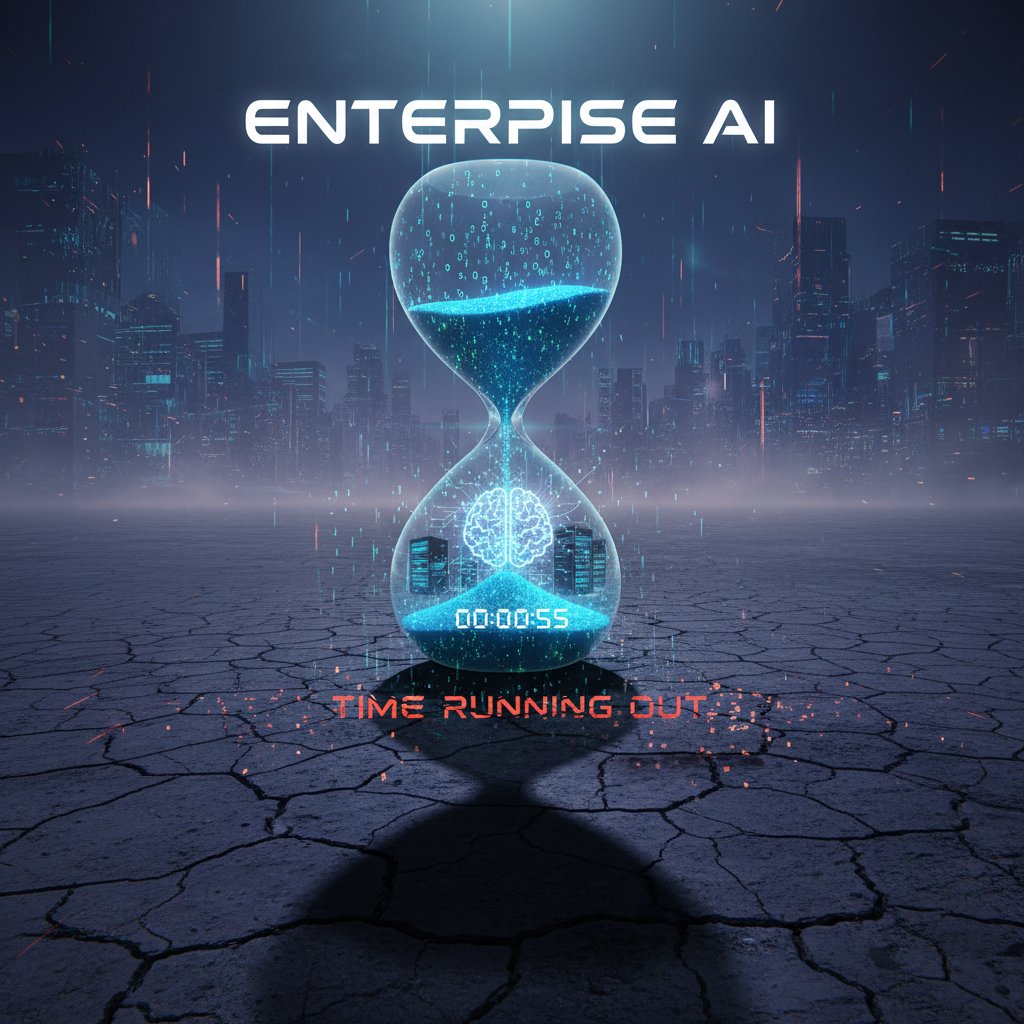
There’s a risk lurking that leaders rarely discuss: standing still. As more companies embrace AI-driven enterprise systems, those who sit on the sidelines risk obsolescence, losing their best talent, and missing out on new revenue streams. The clock isn’t just ticking—it’s screaming.
The new coworker: AI as a teammate, not a tool
Moving beyond automation: the paradigm shift
The most profound change in enterprise AI isn’t technical—it’s cultural. Treating AI as a tool keeps organizations stuck in the past. Seeing AI as a teammate means welcoming brutal honesty, fresh perspectives, and a partner in innovation. Platforms like futurecoworker.ai are pioneering email-based, AI-powered collaboration that meets users where they already work—no technical knowledge required. The result: less friction, more insight, and teams empowered to focus on what matters most.
Culture shock: changing team dynamics
Introducing AI-driven enterprise systems isn’t a gentle nudge—it’s a cultural earthquake. Power shifts, communication flows evolve, and workplace morale can swing wildly. Some employees see opportunity, others fear redundancy, and many simply feel overwhelmed.

Leaders must navigate this minefield with empathy and transparency, making space for fear, skepticism, and ultimately, buy-in. The organizations that thrive are those that foster open dialogue about the limits and strengths of their new digital teammates.
Ethics, bias, and the human factor
Every AI system brings ethical baggage. Unchecked algorithms can reinforce bias, make opaque decisions, or prioritize speed over fairness. Responsible adoption requires more than compliance checklists; it demands values-driven leadership and ongoing scrutiny.
Definition list:
Systematic and repeatable errors in AI outputs resulting from prejudiced training data or flawed model design. Mitigated by diverse data and transparent review.
AI systems designed to provide clear, understandable reasoning for their decisions. Essential for building user trust and regulatory compliance.
A holistic approach to AI adoption that prioritizes fairness, transparency, and accountability—embedding ethical principles into design, deployment, and governance.
The next frontier: what’s coming for AI-driven enterprise systems
2025 trends and predictions
The present is already wild, but the horizon crackles with new possibilities. Self-improving systems, generative AI in business workflows, strong AI governance models, and zero-UI interfaces are not sci-fi—they’re already reshaping the landscape.
- Timeline of AI-driven enterprise systems evolution:
- 2010: Basic workflow automation enters mainstream.
- 2015: Cloud-based analytics and predictive modeling gain traction.
- 2018: Conversational AI and chatbots hit enterprise scale.
- 2020: Generative AI emerges for content and workflow automation.
- 2023: AI-led processes double in adoption, driving 2.5x revenue growth.
- 2024: On-premises AI resurgence, “Services-as-Software” business models take root.
- 2025: Ubiquitous AI teammates, adaptive workflows, and democratized data access.
Cross-industry breakthroughs: who’s leading the charge?
It’s not just the usual suspects. While tech firms sprint ahead, unexpected leaders are changing the game in manufacturing, healthcare, and logistics. Legal and creative sectors, once thought immune, are embracing AI-driven systems for everything from document review to campaign ideation.
| Sector | State of AI-driven Adoption | Leaders | Laggards | Disruptors |
|---|---|---|---|---|
| Technology | High | Software dev, SaaS firms | Hardware vendors | Startup consultancies |
| Finance | Moderate | Fintech, retail banks | Insurers | AI-led trading desks |
| Healthcare | Growing fast | Telehealth, clinics | Hospitals | Patient engagement apps |
| Legal | Increasing | BigLaw, contract platforms | Small practices | AI legal startups |
| Logistics | Rapid uptake | 3PLs, fleet operators | Warehousing | Route optimization SaaS |
| Creative | Accelerating | Agencies, studios | Traditional media | AI content shops |
Table 4: Industry analysis—AI-driven enterprise system adoption by sector, with leaders, laggards, and disruptors.
Source: Original analysis based on Menlo Ventures, 2024, Accenture, 2024.
How to keep your edge: continuous learning and adaptation
The lesson from the frontlines is clear: upskilling is non-negotiable. Successful enterprises invest in ongoing education, partnerships, and pilot programs. They view failure as a necessary ingredient in the recipe for innovation. When it comes to enterprise collaboration and knowledge sharing, resources like futurecoworker.ai help teams stay informed and connected to the pulse of AI evolution.
Your playbook: actionable steps, resources, and next moves
Self-assessment: is your enterprise ready?
Before you rush into the next AI-driven system pilot, pause for an unflinching self-assessment. Honest answers now avert disaster later.

10-point self-assessment for enterprise AI readiness:
- Do we have clearly defined goals for AI adoption?
- Is our data clean, complete, and accessible?
- Have we mapped our current workflows for potential automation?
- Is leadership aligned on expectations and resource allocation?
- Are end users engaged and open to change?
- Do we have internal AI literacy or access to external expertise?
- Have we evaluated ethical, legal, and compliance implications?
- Are our IT systems modular and integration-friendly?
- Is there a process for continuous monitoring and improvement?
- Do we have a plan for measuring and communicating ROI?
Quick reference: resources and further reading
Diving deeper is non-negotiable for anyone serious about AI-driven enterprise systems. The landscape evolves too quickly for passive learning.
- Menlo Ventures 2024 State of Generative AI — Data-packed report on enterprise AI trends and market share.
- Accenture AI-led Processes Research — Insights into productivity and revenue gains from AI process adoption.
- National CIO Review — Regularly updated stats on AI integration, failures, and organizational challenges.
- CIO Dive — Critical news and analysis on enterprise AI project outcomes and lessons learned.
- Stanford HAI — In-depth research on ethical AI and enterprise governance.
- OpenAI Cookbook — Practical, code-first guides for deploying generative AI in business.
- Arxiv.org (AI in Business) — Peer-reviewed papers on automation, workflows, and AI impact studies.
- futurecoworker.ai/blog — Ongoing commentary, resources, and real-world case studies on AI-powered collaboration and productivity.
Final reflection: are you ready for the AI teammate era?
Embracing AI-driven enterprise systems means relinquishing the illusion of certainty. The lessons are sharp-edged: expect discomfort, challenge the status quo, and learn to thrive in ambiguity. The most decisive leaders are those who run toward the unknown—not away from it.
“The future won’t wait for us to feel ready. It’s already here.” — Taylor
Sources
References cited in this article
- Menlo Ventures, 2024(menlovc.com)
- National CIO Review, 2024(nationalcioreview.com)
- Spiceworks, 2024(spiceworks.com)
- CIO Dive, 2024(ciodive.com)
- Accenture, 2024(newsroom.accenture.com)
- PYMNTS, 2024(pymnts.com)
- TechTarget, 2024(techtarget.com)
- Nomios Group, 2024(nomios.com)
- IT Pro, 2024(itpro.com)
- EY, 2024(ey.com)
- TechTarget, 2024(techtarget.com)
- SAS AI Predictions 2024(azbigmedia.com)
- McKinsey, 2024(mckinsey.com)
- Forbes, 2024(forbes.com)
- Deloitte, 2024(www2.deloitte.com)
- Risk & Insurance, 2024(riskandinsurance.com)
- NY DFS, 2024(dfs.ny.gov)
- Medium, 2024(medium.com)
- diginomica.com(diginomica.com)
- aibusiness.com(aibusiness.com)
- McKinsey Digital, 2024(mckinsey.com)
- Forbes, 2023(forbes.com)
- Cential, 2024(cential.co)
- TalkThinkDo, 2024(talkthinkdo.com)
- INFORMS, 2024(pubsonline.informs.org)
- Forbes, 2025(forbes.com)
- Drive StarCIO, 2024(drive.starcio.com)
- Deloitte, 2024(agility-at-scale.com)
- CIO Dive, 2024(ciodive.com)
- TechStack, 2024(tech-stack.com)
- DataCamp, 2024(datacamp.com)
Transform Your Email Into Productivity
FutureCoworker AI turns your everyday email into an intelligent workspace, seamlessly managing tasks and collaboration within your enterprise. It eliminates the complexity of AI, allowing you to benefit from advanced technology without any technical knowledge. Achieve productivity, streamline processes, and improve team efficiency through natural email interaction, getting tasks done faster and smarter.
Get startedReady to Transform Your Email?
Start automating your tasks and boost productivity today
Frequently Asked Questions
What is the main difference between traditional enterprise automation and AI-driven enterprise systems?
Traditional tools only do what you tell them, while AI-driven enterprise systems adapt, learn, and can surprise their human colleagues. AI-driven systems integrate automation, analytics, and adaptive intelligence into workflows, proactively learning from data and user interaction to enhance decision-making, whereas legacy automation was governed by static rules and manual interventions.
How much did enterprise AI spending grow in 2024?
According to Menlo Ventures, enterprise AI spending exploded from $2.3 billion to $13.8 billion in 2024, representing a sixfold increase.
Are all companies finding success with AI-driven enterprise systems?
No, the article indicates that while some companies are doubling down on AI investments, others are experiencing costly failures. The spike in project failures suggests that the reality is messier than the marketing hype suggests.
What does the article suggest about the trend of companies moving away from cloud solutions?
The article mentions a migration from cloud back to on-premises infrastructure as one of the trends occurring alongside increased AI enterprise spending and project failures, though it does not provide detailed explanation of this shift.
Continue Reading
Keep exploring Intelligent enterprise teammate

AI Enterprise Management: Failures, Strategies, and Real Wins
AI enterprise management is reshaping enterprise operations in 2025. This article examines the real failures, working strategies, and measurable wins driving intelligent business transformation.
Intelligent Enterprise AI-Driven Assistants: Results, Risks, Reality
Discover insights about intelligent enterprise AI-driven virtual assistant software

AI-Driven Enterprise Management Assistant Software: Benefits and Pitfalls
AI-driven enterprise management assistant software automates workflows across HR, finance, and operations.

Smart Enterprise Systems: Separating Hype From Reality
Smart enterprise systems promise transformation but carry hidden risks. This article examines real-world failures, actual benefits, and the economics driving enterprise AI adoption.

Enterprise AI-Powered Management Platforms: Hype, Risk, Reward
Discover insights about enterprise AI-powered management platforms

AI-Enabled Smart Enterprise Assistant Software: Hype Vs Reality
Discover insights about AI-enabled smart enterprise assistant software