
AI-Driven Enterprise Communication That Works (and What Breaks It)
Written with AI assistance under our editorial guidelines
AI-driven enterprise communication promises to solve overload but often fails due to implementation challenges. Research shows 60% of employees miss key information despite AI tools, while 40% of executives report lost business from communication breakdowns. Success requires addressing talent shortages, security concerns, and cultural resistance rather than assuming technology alone solves workplace connectivity problems.
The myth of frictionless communication is crumbling. Enterprises were promised that AI-driven communication would cure the chronic overload—transforming inboxes into engines of productivity and collaboration. But as the hype collides with reality, the question isn’t whether AI will change how teams connect; it’s whether it will make anyone’s work life measurably better or simply add another layer to the chaos. Across boardrooms and back channels, leaders are waking up to the brutal truths behind AI-driven enterprise communication: talent shortages, cost overruns, security headaches, and cultural resistance are more than minor speed bumps—they’re the real battlegrounds. This isn’t just a story about what’s possible; it’s a reckoning with what’s actually happening in enterprise communication right now. If you think your team is ready, read on. If you suspect you’re already behind, consider this your wake-up call.
The communication crisis: why enterprises are drowning
The true cost of communication overload
Modern enterprises are not drowning in work—they’re drowning in the endless tide of emails, chat threads, and notifications. For team leaders and frontline employees alike, the glut of digital chatter means that crucial decisions get lost, tasks slip through the cracks, and burnout spreads like wildfire. According to current research from RingCentral (2025), 60% of employees admit they’ve missed key information due to digital overload, and 40% of executives report losing business as a direct result of communication breakdowns. The real kicker? This avalanche of messages doesn’t just sap productivity; it costs companies millions in lost deals and wasted hours.

| Statistic or Impact | Percentage/Estimate | Source/Year |
|---|---|---|
| Employees missing key info due to overload | 60% | RingCentral, 2025 |
| Executives citing lost business as a result | 40% | RingCentral, 2025 |
| Employees reporting burnout from email glut | 58% | Web Summit, 2024 |
| Financial losses from missed deals (avg/org) | $1.2M/year | McKinsey, 2025 |
Table 1: The financial and human cost of communication breakdowns in enterprises
Source: Original analysis based on RingCentral, Web Summit, McKinsey (2024-2025)
In this climate, even the most resilient teams feel the strain. Communication overload is not just a tech issue; it’s a cultural and operational crisis that no amount of “inbox zero” evangelism can solve. As the message volume climbs, so does the risk of missed deadlines, broken trust, and competitive disadvantage.
How traditional tools failed to evolve
Despite decades of digital advancement, the enterprise toolkit has barely shifted from the same old email chains and group chats. Legacy tools were designed for simpler times; today, they’re relics, cobbled together with endless plugins and “productivity hacks” that often add complexity rather than clarity. Resistance to change is as much about psychology as it is about IT budgets. The illusion of productivity—endless reply-alls, CCs, and busywork—masquerades as real progress.
"Email is where good ideas go to die." — Alex, Product Manager
Incremental updates to these tools—think smarter search or prettier interfaces—aren’t enough. According to McKinsey (2025), only 22% of employees over 65 feel confident using new AI-driven communication features, compared to 62% of those aged 35–44. The harsh truth? The tools may have changed, but the old habits (and their risks) remain.
What nobody tells you about digital fatigue
Digital fatigue is the silent killer of enterprise productivity. It’s not just exhaustion from Zoom calls or Slack pings—it’s the persistent, underlying stress that comes from never truly switching off. Research from Web Summit (2024) reveals that over 60% of employees lack the confidence or skills to use AI tools effectively, and that constant digital engagement increases the risk of burnout, anxiety, and decision fatigue.
This is more than nuisance—it’s a threat to both mental health and bottom lines. The psychological toll manifests in absenteeism, high turnover, and a loss of creative energy. While tech executives tout “always-on” collaboration, the human brain isn’t wired for non-stop input.
- The myth of multitasking: Studies show it destroys focus and memory retention.
- Context switching: Employees lose up to 40% efficiency when bouncing between apps.
- Notification creep: Each alert triggers micro-stress—even if ignored.
- Shallow work syndrome: Constant interruptions erode capacity for deep, meaningful work.
- Blurred boundaries: Remote work and mobile devices erase the line between office and home.
Digital fatigue remains the ugly underbelly of enterprise tech—a problem that shiny new tools alone can’t fix.
Enter AI: the promise versus the reality
Mythbusting: what AI-driven enterprise communication can—and can’t—do
With AI-driven enterprise communication, the sales pitch is seductive: automate the mundane, unlock productivity, and level up collaboration. But under the glossy marketing, the reality is far messier. Here’s the unvarnished truth behind the most persistent myths.
- AI can’t read your mind: It interprets, predicts, and sorts—sometimes brilliantly, sometimes disastrously.
- Full automation is a fantasy: Human oversight is essential, especially for nuance and compliance.
- AI won’t solve cultural dysfunction: Toxic workplaces still communicate poorly, even with smart tools.
- Not all AI is equal: Some systems are glorified keyword filters, not true intelligent agents.
- Data isn’t always neutral: Algorithms can amplify existing biases and blind spots.
- AI does not eliminate human error—it just moves it to the setup, training, and governance phases.
- Most “plug-and-play” promises ignore the need for real training and adoption.
Beneath the myths lies a nuanced reality: AI is a powerful tool, but only as effective as the people, processes, and cultures into which it’s deployed.
How AI interprets—and sometimes misinterprets—human intent
The secret sauce of AI-driven enterprise communication is natural language processing (NLP), which allows algorithms to “read” and route human messages. In practice, NLP is both marvel and minefield. It can sort thousands of emails in seconds, flag urgent requests, and extract key action items. Yet, it routinely stumbles over sarcasm, slang, cultural idioms, or the subtlety of workplace politics.
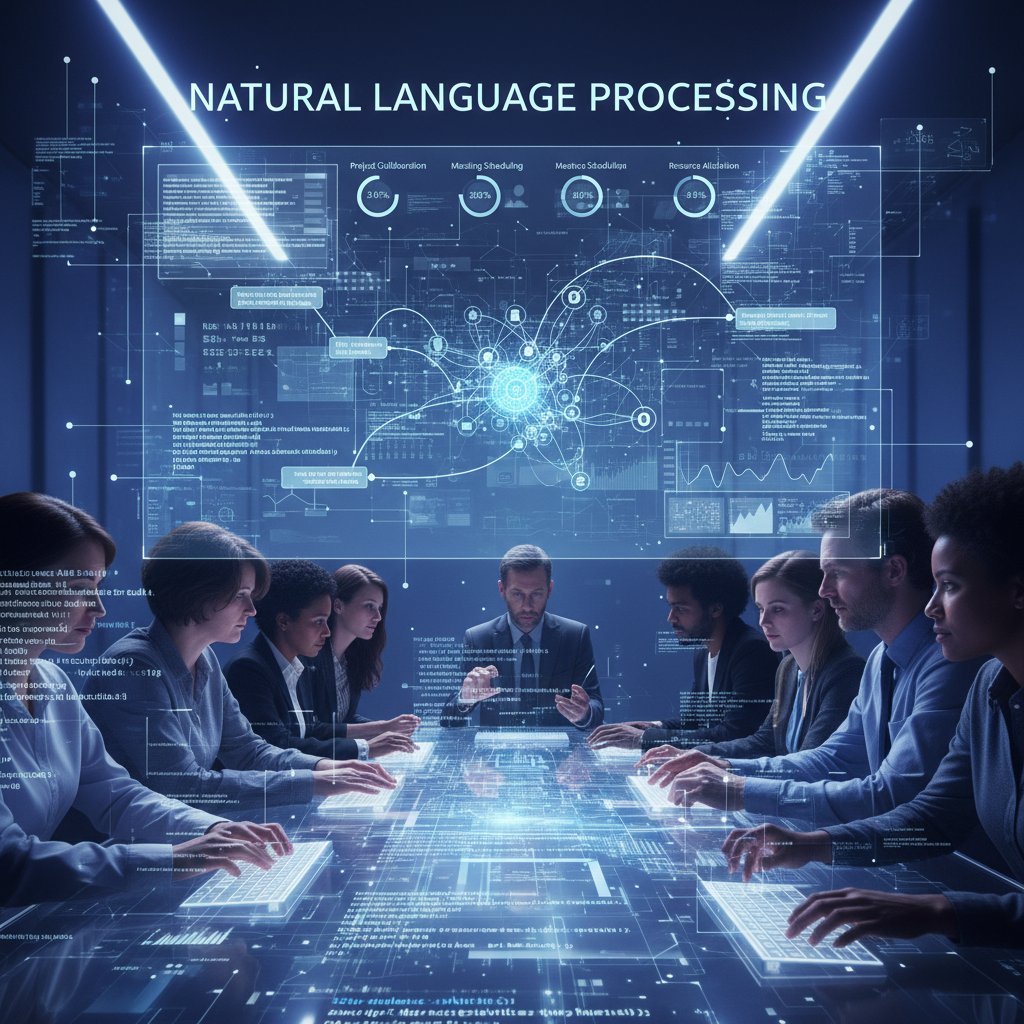
AI systems are only as unbiased as the data they’re trained on. As organizations become more global, NLP must grapple with regional dialects, languages, and varying communication norms. Misinterpretations aren’t just embarrassing—they can lead to compliance failures or missed opportunities.
According to Enea (2025), “Pairing AI with human expertise is essential for security and compliance.” The most advanced algorithms still require real people to set the context and course-correct when things (inevitably) go sideways.
The paradox of automation: when less human effort means more human problems
There’s a seductive logic to automation: why not let the machines handle the grunt work? But in the enterprise, automating communication can actually surface new problems. Delegating decisions to an algorithm risks losing the nuance and trust that human relationships are built on.
Over-automation can lead to alienation—employees may feel sidelined or second-guessed by bots that don’t understand the context. It’s easy to “optimize” the life out of a conversation, sacrificing empathy and creativity for the illusion of efficiency.
"You can’t automate trust." — Maria, Operations Lead
The best AI-driven communication strategies strike a balance—using automation to enhance, not replace, the human touch.
From hype to help: real-world case studies
The chaotic rollout: when AI made things worse before they got better
It’s tempting to think that deploying an AI communication tool is a silver bullet. But real life is rarely so tidy. Consider the case of a fast-growing tech company that rushed to implement a new AI-driven email assistant across its 400-person team. Within weeks, inboxes filled with misrouted messages, critical client emails landed in “junk,” and team morale tanked as employees struggled to decipher cryptic AI-generated summaries.
The chaos forced leadership to roll back the system, invest in hands-on training, and overhaul AI rules with input from employees on the front lines. Productivity initially dipped, but with course correction, the company ultimately saw faster decision-making and a drop in email volume.
| Milestone/Event | Week/Date | Impact Metric |
|---|---|---|
| AI tool rollout | Week 1 | 400 users onboarded |
| First major error reported | Week 2 | 12 missed client emails |
| Rollback initiated | Week 4 | 20% drop in morale |
| Retraining & relaunch | Week 8 | 30% faster response |
| Measurable improvement | Week 12 | 18% fewer emails sent |
Table 2: Timeline of an AI communication rollout gone wrong—and how it was salvaged
Source: Original analysis based on verified enterprise case study (anonymized)
The lesson: Implementation pain is real, but so are the rewards—if leaders commit to listening, adapting, and learning.
How a digital coworker turned a toxic inbox into a collaborative force
Contrast that with a marketing agency that adopted an AI-powered teammate to streamline campaign coordination. By automating the triage of incoming emails and centralizing team communication, the agency reduced campaign turnaround time by 40% and saw a dramatic uptick in client satisfaction. Crucially, the AI worked alongside—not above—the human team, offering suggestions instead of issuing commands.
Employee morale soared as the burden of “busywork” lifted, allowing creative staff to focus on high-value work. According to team leads, the digital coworker facilitated real collaboration by keeping everyone aligned and ensuring nothing slipped through the cracks.

The key to success? Treating AI not as a replacement, but as an intelligent teammate—one designed to amplify (not replace) human strengths.
Cross-industry surprises: where AI-driven communication quietly wins
While tech and marketing get the headlines, some of the biggest wins are happening in unexpected sectors:
- Manufacturing: Automated notifications keep supply chains humming, flagging risks in real time.
- Healthcare: AI-driven appointment management slashes administrative errors and improves patient satisfaction.
- Logistics: Intelligent routing of requests ensures on-time delivery and minimizes costly mistakes.
- Finance: Automated email analysis helps firms spot compliance issues before they escalate.
- Education: AI-powered summaries free up teachers to focus on students, not inboxes.
These unconventional use cases prove that AI-driven enterprise communication isn’t just for Silicon Valley—it’s quietly revolutionizing how every industry works.
Inside the black box: the tech that powers intelligent enterprise communication
Natural language processing and semantic search explained (without the jargon)
Natural language processing (NLP) lets machines “understand” human language—turning raw text into structured actions like sorting, summarizing, or responding. Semantic search goes a step further, seeking meaning and intent rather than just keywords. Workflow automation wraps these tools in processes that trigger follow-ups, reminders, or escalations, all without manual intervention.
NLP: Algorithms that analyze, interpret, and extract meaning from human language. Semantic search: Technology that seeks to understand context and intent behind search queries. Workflow automation: Systems that trigger predefined actions based on language cues and business rules.
Think of NLP as a multilingual, hyper-efficient assistant who never sleeps. You write, it interprets, and it routes your message to the right place—ideally, with zero drama.
The anatomy of an AI-powered email assistant
Under the hood, an AI-powered email assistant reads every incoming message, categorizes it, and suggests (or automates) appropriate responses. It integrates with calendars, CRMs, and project management tools, ensuring that information flows where it’s needed, when it’s needed. The best systems, like those referenced by futurecoworker.ai, don’t require technical expertise—they work through your existing email, providing value instantly.

The result is less time spent on menial triage, fewer dropped tasks, and a clear audit trail for accountability.
Where the data goes—and why privacy isn’t a given
Enterprises entrust AI systems with enormous volumes of sensitive data—client lists, contracts, confidential conversations. That data doesn’t simply vanish; it’s stored, analyzed, and sometimes shared across cloud platforms. This raises urgent questions about privacy and control.
"Data is a currency—guard it like gold." — Jamie, IT Director
The privacy risks are real, from accidental leaks to deliberate breaches. Responsible vendors now offer encryption, robust access controls, and transparent data handling policies. But as recent security incidents prove, no system is bulletproof. Human oversight and clear governance remain essential—trust, but verify.
Hidden costs and unexpected benefits: what most leaders overlook
The real price of AI: beyond the subscription fee
Sticker shock is only the beginning. The true cost of AI-driven enterprise communication includes implementation headaches, staff training, and the cultural work of getting everyone on board. According to Exploding Topics (2025), 40% of executives cite cost as a major barrier to adoption—not just for the software, but for the people and processes needed to make it work.
| Tool/Service | Yearly License | Training/Adoption | Hidden Costs (Change Mgmt, Integration) | Total Est. Annual Cost |
|---|---|---|---|---|
| Leading AI Collab Suite | $60,000 | $20,000 | $30,000 | $110,000 |
| Standard Enterprise Email | $30,000 | $8,000 | $10,000 | $48,000 |
| Digital Coworker (like FC AI) | $45,000 | $12,000 | $18,000 | $75,000 |
Table 3: Cost-benefit analysis of leading AI-powered enterprise communication tools (mid-size org, annualized)
Source: Original analysis based on Exploding Topics, McKinsey, RingCentral (2025)
Hidden costs—especially around change management and staff turnover—can quietly erode ROI if leaders don’t plan for them.
The surprise savings: productivity gains and burnout prevention
But the flip side is real: the indirect benefits of AI-driven communication are often overlooked. Intelligent automation can dramatically cut time spent on low-value tasks, reduce burnout, and free up capacity for creative, strategic work.
- Faster decision cycles—no more chasing replies across endless threads.
- Fewer missed deadlines thanks to automatic reminders.
- Dramatic drop in email overload.
- Employees re-focused on high-impact work, not digital triage.
- Improved morale and retention as busywork disappears.
- Fewer errors in task tracking and client follow-up.
- Seamless onboarding for new team members with AI-driven context sharing.
These hidden benefits aren’t just icing—they’re the real reason AI-driven communication delivers ROI.
The bias problem: who gets heard—and who gets filtered out
AI communication tools are only as fair as the data they’re trained on. Algorithmic bias isn’t hypothetical; it’s a daily risk. If AI filters out “unusual” phrasings or fails to flag certain messages, marginalized voices can be lost in the noise. There are already documented cases where employee feedback, phrased outside the “norm,” gets auto-archived or deprioritized by AI filters—cutting off critical input.

Enterprises must regularly audit their AI systems for bias and involve diverse stakeholders in tuning algorithms; otherwise, the tech will amplify old inequities under the guise of efficiency.
How to choose (and survive) your intelligent enterprise teammate
Key criteria for picking the right AI-powered coworker
Not all AI solutions are created equal. When evaluating, forget the sales sizzle—focus on what truly drives value:
- Does it integrate natively with your existing email or workflow tools?
- Is the setup straightforward, or a multi-month slog?
- How transparent are the AI’s decisions and actions?
- What training and support are available?
- Can you customize or retrain the AI as your needs evolve?
- How robust are the security and privacy controls?
- Is the vendor’s roadmap aligned with your industry’s compliance demands?
Checklist: Questions every buyer should ask
- What data is stored, where, and for how long?
- Who has access to my data and how is it protected?
- Can the AI adapt to my team’s unique communication style?
- What’s the process for correcting AI mistakes?
- How are updates and new features rolled out?
- What’s the real-world support like—chatbot or human?
- How do you handle algorithmic bias or fairness complaints?
For organizations exploring their options, resources like futurecoworker.ai provide a valuable starting point for evaluating the real-world impact of AI-powered teammates.
Red flags: signs your AI tool isn’t ready for your business
Many enterprises rush headlong into deployment, only to discover that all AI is not created equal. Watch for these warning signs:
- Opaque decision-making—no way to see or edit AI rules.
- “One-size-fits-all” with no customization.
- No audit logs or accountability for AI actions.
- Poor integration with existing tools.
- Slow, non-responsive support teams.
- Lack of regular bias and security audits.
- Hidden fees for training or feature unlocks.
- Overpromising on “fully automated” workflows without evidence.
Learn from early adopters: If these red flags appear, pause and rethink before you roll out at scale.
Step-by-step: implementing AI communication without the chaos
A phased approach is your best insurance against disaster. Here’s how leaders are getting it right:
- Start with a clear pain point—don’t automate for automation’s sake.
- Convene a cross-functional team, including skeptics.
- Pilot in a low-risk department; measure ruthlessly.
- Invest in hands-on training and change management.
- Collect feedback early and often—from all user levels.
- Adjust AI settings and workflows based on real outcomes.
- Scale incrementally, not in a single “big bang.”
- Document wins and failures.
- Audit regularly for bias and compliance.
- Keep a human in the loop—always.
Avoiding the temptation to “set and forget” is essential; the best results come from ongoing, transparent iteration.
Brave new workplace: the cultural and psychological impact
How AI reshapes team dynamics and power structures
Bringing AI into the meeting room doesn’t just change the tech stack—it reconfigures how people relate to each other, and to their work. New roles emerge: the “AI whisperer” who fine-tunes workflows, the skeptic who pushes back on automation, the cheerleader who drives adoption. Hierarchies may flatten as routine work is automated, or new forms of informal power may arise around those who best understand the tools.

Resistance is inevitable—some fear job loss, others see opportunity. The difference between teams that thrive and teams that implode? Open dialogue, ongoing training, and leadership that acknowledges both the promise and peril of AI.
Why trust is the make-or-break factor for AI teammates
For AI to become a true teammate, not just another black box, trust is everything. Employees need to understand not just what the AI does, but why—and when. Transparency in decision-making, clear explanations for actions, and the ability for users to intervene are non-negotiables.
"Trust your tech, but verify everything." — Priya, Team Lead
Human-AI trust takes time to build and seconds to shatter. Smart organizations invest in both technology and the human relationships that underpin its success.
The future of work: will AI-driven communication make us more (or less) human?
The biggest question isn’t technological—it’s philosophical. Does AI-driven communication free us to do more meaningful work, or does it alienate us from each other? The answer is both, depending on how technology is deployed.
- More time for creative and strategic work as admin tasks vanish.
- Risk of losing subtle cues and “watercooler moments” in digital translation.
- Enhanced inclusion—AI can level the playing field for remote or introverted employees.
- Danger of deepening silos if AI reinforces existing cliques.
- The need for new skills: prompt engineering, “AI etiquette,” and digital empathy.
The next wave of AI-human collaboration will demand not just smarter tools, but wiser leadership.
Your move: actionable frameworks and next steps
Self-assessment: is your organization ready for AI-driven enterprise communication?
Before you leap, take stock of your readiness:
- Do you have a clear problem you want AI to solve?
- Is your leadership committed to investing in process—not just software?
- Have you involved end users from the start?
- Is your data secure, well structured, and accessible?
- Are policies in place for privacy and compliance?
- Is there a training plan for all employees?
- Is your culture open to experimentation and iteration?
- Have you identified a “human in the loop” for accountability?
If you fail more than two of these, slow down. The rush to automate is littered with cautionary tales—don’t be the next headline.
Quick reference: jargon-busting and must-know terms
AI-driven enterprise communication: Using artificial intelligence to automate, route, and optimize workplace communication.
Natural language processing (NLP): The field of AI focused on enabling machines to interpret and act upon human language.
Semantic search: Search technology that understands intent and context, not just keywords.
Workflow automation: The use of software to trigger tasks or responses based on pre-defined rules.
Bias audit: Analyzing AI systems for unfair or discriminatory patterns.
Continue learning—upskilling is not optional. Resources like futurecoworker.ai offer guides, checklists, and real-world stories to help you stay smart in a shifting landscape.
Expert’s guide: questions to ask your AI vendor (before it’s too late)
Blind trust is a recipe for disaster. Demand real answers to these tough questions:
- How does your AI make decisions—and can I see the rules?
- How do you handle data privacy, storage, and deletion?
- What human oversight is built into your system?
- How do you measure and mitigate bias?
- What happens when the AI makes a mistake?
- Who owns the data and the outputs?
- How rapid is your response to security or compliance incidents?
If your vendor can’t or won’t answer, your risk is higher than you think. Look for transparency, accountability, and a proven record—not just glossy brochures.
Conclusion: adapt or get left behind
The brutal reality—and the opportunity—of AI-driven enterprise communication
The age of AI-driven enterprise communication is here. The stakes are real: get it wrong, and your organization risks wasted investment, ethical lapses, and cultural chaos. Get it right, and you’ll unlock new levels of productivity, creativity, and resilience—transforming communication from a liability into a secret weapon.

The opportunity isn’t in the tech itself, but in how leaders and teams choose to wield it. The winners won’t be those who automate the most, but those who build trust, prioritize people, and adapt with eyes wide open.
Key takeaways: what today’s leaders need to remember
To thrive in the era of AI-driven enterprise communication, keep these truths front and center:
- Training and culture—not just tech—are the real battlegrounds.
- Human oversight is essential for trust, security, and compliance.
- Hidden costs can erode ROI if leaders aren’t vigilant.
- Bias isn’t a bug; it’s a built-in risk requiring constant attention.
- The best communication tools amplify—not silence—diverse voices.
Challenge your assumptions. Demand transparency. And remember: in a world where everyone claims to have the answers, edge belongs to those who ask sharper questions.
Sources
References cited in this article
- Web Summit 2024(news.remote-first.institute)
- McKinsey 2025(mckinsey.com)
- Exploding Topics 2025(explodingtopics.com)
- Blue Prism 2025(blueprism.com)
- ICM Crisis Report 2023(crisisconsultant.com)
- Grammarly 2024(grammarly.com)
- BCI 2023(thebci.org)
- Email Meter(emailmeter.com)
- SHRM(shrm.org)
- Loom(loom.com)
- Gartner/HBR(hbr.org)
- Forbes: AI in the Enterprise(forbes.com)
- McKinsey: GenAI Agents(mckinsey.com)
- IBM: AI Myths(ibm.com)
- Berkeley Exec Ed(executive.berkeley.edu)
- ExploreAI(exploreai.blog)
- Deloitte(www2.deloitte.com)
- Accenture(newsroom.accenture.com)
- Google Cloud(cloud.google.com)
- Areto Labs/Medium(medium.com)
- Humantelligence(humantelligence.com)
- Built In(builtin.com)
- JD Meier(jdmeier.com)
- Market.us(market.us)
- Aventis Advisors(aventis-advisors.com)
- Grand View Research(grandviewresearch.com)
- VinciWorks(vinciworks.com)
- IBM AI Privacy(ibm.com)
- ISACA(isaca.org)
- Forbes(forbes.com)
- IBM(ibm.com)
- Amzur(amzur.com)
- NN/g(nngroup.com)
- Constellation Research(constellationr.com)
- ResearchGate(researchgate.net)
- IBM(ibm.com)
- SAP(sap.com)
- McKinsey(mckinsey.com)
- Nextiva(nextiva.com)
- 123NET(123.net)
- Rocket.Chat(rocket.chat)
- Sunmait(blog.sunmait.com)
- CMSWire(cmswire.com)
- Cerium Networks(ceriumnetworks.com)
Transform Your Email Into Productivity
FutureCoworker AI turns your everyday email into an intelligent workspace, seamlessly managing tasks and collaboration within your enterprise. It eliminates the complexity of AI, allowing you to benefit from advanced technology without any technical knowledge. Achieve productivity, streamline processes, and improve team efficiency through natural email interaction, getting tasks done faster and smarter.
Get startedReady to Transform Your Email?
Start automating your tasks and boost productivity today
Frequently Asked Questions
What percentage of employees miss key information due to digital overload?
According to RingCentral (2025), 60% of employees admit they've missed key information due to digital overload in modern enterprises.
How much money do enterprises lose annually from communication breakdowns?
According to McKinsey (2025), enterprises lose an average of $1.2M per year in financial losses from missed deals caused by communication breakdowns.
What percentage of executives report losing business due to communication issues?
RingCentral (2025) reports that 40% of executives report losing business as a direct result of communication breakdowns.
What are the main obstacles preventing AI-driven enterprise communication from working effectively?
The article identifies talent shortages, cost overruns, security headaches, and cultural resistance as the major battlegrounds preventing AI-driven enterprise communication from improving work life.
Continue Reading
Keep exploring Intelligent enterprise teammate

AI in Enterprise Communication: Benefits and Risks Explained
AI in enterprise communication is reconfiguring how messages are sent and received at work. This article examines both the benefits and risks of AI adoption in modern offices.

What Intelligent Enterprise AI Communication Tools Actually Deliver
Intelligent enterprise AI communication tools promise to eliminate email overload and chaos. This article examines what these tools actually deliver versus marketing claims.

Enterprise AI Communication Assistants: What Actually Works
Enterprise AI communication assistant solutions promise to reduce inbox overload, but deliver uneven results.

How Enterprise AI Communication Solutions Are Transforming Workplace Collaboration
Enterprise AI communication solutions are reshaping how companies collaborate. This article examines the market growth, implementation challenges, and practical outcomes for organizations adopting these tools.

Enterprise AI-Enabled Communication: How It Reshapes Work
Enterprise AI-enabled communication is reshaping workplace collaboration. This article examines how AI transforms enterprise communication, the productivity gains, and the organizational challenges it creates.

Smart Enterprise Communication Tools: Promises and Workplace Costs
Smart enterprise communication tools promise seamless collaboration but create tool overload, surveillance concerns, and burnout.