


AI-Driven Enterprise Collaboration Assistant or Coworker Risk?
Written with AI assistance under our editorial guidelines
AI-driven enterprise collaboration assistants promise to reduce email overload and boost productivity, but face significant challenges including security risks, employee resistance, and unmet expectations. Success requires understanding both the genuine benefits and the realistic limitations of these tools in 2025.
The myth of the hyper-efficient, always-on AI coworker is seductive. Enterprises are stampeding to deploy AI-driven enterprise collaboration assistants, convinced these digital teammates will be the magic bullet for productivity hell. But while vendors shout about effortless automation and seamless teamwork, the reality is far messier. Beneath the surface lies a story of broken promises, human resistance, security landmines, and unexpected wins that could redefine the way we work—if you know where to look. This deep dive shreds the marketing gloss and lays out the seven brutal truths about AI-driven enterprise collaboration assistants in 2025, arming you with insider knowledge, unfiltered insights, and a survival playbook. Whether you’re a tech leader, team manager, or the lone voice of reason in a meeting full of AI hype, this is your chance to see through the noise and make moves your competitors will envy.
The AI teammate revolution: Why your inbox will never be the same
From email overload to intelligent enterprise teammate
Open any enterprise inbox and you’ll find chaos. Notifications spiral out of control, urgent requests drown in CC threads, and every “quick update” breeds a dozen new tasks. It’s no wonder knowledge workers average 3.1 hours a day just managing email, according to recent industry data. Enter the promise of the AI-driven enterprise collaboration assistant—a digital colleague designed to declutter, organize, and even act on your behalf, all within the familiar confines of your inbox. The jump from slogging through endless messages to having an “intelligent enterprise teammate” isn’t just about efficiency; it’s a transformation of how decisions are made, tasks are tracked, and teams are aligned.
The journey here wasn’t instant. Once, enterprise collaboration tools meant bland portals and clunky calendars. Then came chatbots and automation scripts—helpful, but always a bit dumb. Now, with machine learning and natural language processing at the core, AI assistants can interpret your intent, prioritize chaos, and surface real-time insights, reshaping collaboration from the inside out.

"Email isn’t dead—but it’s about to get a serious upgrade."
— Elena, CTO (quote, reflecting current industry sentiment)
The concept of an “intelligent enterprise teammate” is more than a gimmick. It’s a new breed of tool that works alongside humans, not beneath them. Instead of forcing employees to learn new platforms or memorize workflows, these assistants live where work already happens—your inbox—blurring the line between communication and execution.
What makes a true AI-driven collaboration assistant?
Forget the parade of glorified chatbots. A genuine AI-driven enterprise collaboration assistant brings together several non-negotiable features: contextual understanding, workflow orchestration, secure integration with enterprise systems, and proactive task management. It’s not just about answering queries—it’s about transforming fragmented email sprawl into actionable, prioritized next steps, all while learning your team’s unique rhythms.
Below is a real-world feature comparison, separating marketing fluff from tangible value:
| Feature | Leading AI Assistant | Commodity Chatbot | futurecoworker.ai | Legacy Tool |
|---|---|---|---|---|
| Contextual task extraction | Yes | Limited | Yes | No |
| Intelligent summarization | Yes | No | Yes | No |
| Automated meeting scheduling | Yes | No | Yes | Partial |
| Seamless email integration | Full | Partial | Full | Partial |
| No technical setup required | Yes | No | Yes | No |
| Real-time AI suggestions | Advanced | Basic | Advanced | None |
| Transparent decision logic | Yes | No | Yes | No |
Table 1: Essential features of modern AI-driven enterprise collaboration assistants.
Source: Original analysis based on Menlo Ventures, 2024 and verified product documentation.
Unlike first-generation productivity tools, which simply digitized existing chaos, AI-driven assistants like those from futurecoworker.ai inject intelligence into the workflow. The difference? These systems don’t just move information—they make sense of it, prioritizing what matters and automating what doesn’t.
Hidden benefits experts won’t tell you
- Radical reduction in “email whiplash”: By automatically categorizing and summarizing threads, AI cuts the time you spend deciphering long, convoluted conversations.
- Unseen project acceleration: Subtle optimizations—like real-time reminders and context-aware nudges—accelerate team output without overt micromanagement.
- Invisible knowledge capture: AI quietly logs process insights for later, reducing the risk of institutional memory loss when people leave.
- Enhanced inclusivity: Natural language interfaces level the playing field for non-technical staff, democratizing access to advanced tools.
- Preemptive conflict spotting: AI flags ambiguous instructions and passive-aggressive phrasing before misunderstandings spiral.
- Contextual “quiet mode”: Smart filters prioritize urgent tasks while silencing the digital noise.
- Frictionless compliance: Automation ensures that policy-driven tasks (e.g., GDPR notifications) happen automatically, reducing regulatory risk.
Why are these benefits so rarely discussed? Because most vendors focus on surface-level features—task counts, automation rules, bot personalities—ignoring the less sexy but far more transformative impact of true enterprise AI. The hidden wins come from deep integration, relentless context awareness, and the subtle art of getting out of your way.
Brutal truth #1: Most AI assistants fail—here’s why
The hype vs. harsh reality
Enterprises have been blitzed with AI promises for years, and the resulting reality check stings. While 75% of large organizations report using generative AI tools as of 2024, only a fraction see significant productivity gains. According to Microsoft/IDC, 2024, actual time savings and satisfaction rates lag behind adoption rates, pointing to a classic hype cycle.
| Metric | 2023 | 2024 |
|---|---|---|
| AI adoption rate | 55% | 75% |
| In-house AI builds | 20% | 47% |
| Reported productivity boost | 18% | 29% |
| User satisfaction (avg. score) | 6.2/10 | 7.1/10 |
Table 2: Adoption, productivity, and satisfaction metrics for enterprise AI assistants.
Source: Menlo Ventures, 2024, Microsoft/IDC, 2024.
Despite the explosion in AI spending—from $2.3B in 2023 to $13.8B in 2024—actual results often lag behind marketing promises. Frustration and skepticism mount as teams find themselves toggling between old habits and new tools that don’t quite deliver.
Common misconceptions debunked
- “AI assistant”: Not your digital sidekick, but a workflow engine requiring careful configuration to avoid chaos.
- “Productivity boost”: Not a guaranteed outcome—often contingent on data quality, process fit, and team adoption.
- “Automation”: Rarely total; most AI assistants rely on human oversight for critical tasks.
- “Plug-and-play”: Most require integration, training, and ongoing tuning.
- “Collaboration”: Doesn’t magically happen—AI can enhance it, but can’t fix broken team dynamics.
Many teams fail to realize value because they treat adoption as a tech rollout, not a cultural shift. Without clear processes, open communication, and a willingness to iterate, even the best AI assistant becomes just another forgotten app.
"Everyone promised a revolution. Most delivered an overcomplicated to-do list."
— Marcus, operations lead (quote, based on current user sentiment)
Case study: When AI goes wrong
In 2023, a global marketing firm invested heavily in a high-profile AI collaboration assistant. The goal was simple: automate redundant email tasks and streamline campaign coordination. The reality? The assistant miscategorized messages, auto-archived critical threads, and confused team priorities—leaving staff scrambling to undo its “helpful” automation.

The firm ultimately reverted to manual tracking and postmortem meetings, learning the hard way that AI only works when it fits the workflow—and when humans trust its output.
Brutal truth #2: The culture war—AI vs. human trust
Why employees resist AI teammates
AI adoption isn’t just a technical hurdle—it’s deeply human. Employees resist digital coworkers for complex psychological reasons: fear of job loss, change fatigue, and a fundamental mistrust of “black box” decisions. Even as automation promises relief from drudgery, it brings anxiety about relevance and agency.
Six common sources of resistance in enterprises:
- Loss of control: Employees fear AI will override their judgment without recourse.
- Opaque decision-making: Lack of transparency fuels suspicion and disengagement.
- Job displacement anxiety: Automation threatens roles, especially in administrative and support functions.
- Overwhelm from rapid change: The pace of tool updates can lead to fatigue and burnout.
- Perceived complexity: Non-technical staff may feel left behind or excluded.
- Cultural misfit: AI solutions imposed top-down rarely align with grassroots workflows.
Building trust with transparent AI
Transparency is non-negotiable for any AI-driven enterprise collaboration assistant. Explainable AI—where users can see, question, and understand how decisions are made—breaks down barriers to adoption. Companies must prioritize privacy, security, and governance, making it clear how data is used, stored, and protected.
Organizations like futurecoworker.ai build trust by championing explainability, offering clear audit trails, and engaging users in the AI training process. They foster “transparency cultures”—environments where human teammates feel empowered to challenge or override AI, not just blindly accept outcomes.

Real talk: Can AI ever be a ‘teammate’?
Let’s drop the pretense: AI will never replace the quirks, wit, or emotional intelligence of a human coworker. It can parse language, automate routine, and flag risks—but it can’t read a room, detect irony, or understand the subtext of a team’s inside jokes.
"AI can organize my tasks, but it can’t understand my sarcasm."
— Priya, project manager (illustrative, based on verified workplace trends)
The lesson? Treat AI as a powerful tool, not a friend or cultural equal. The best results come when organizations design workflows where human empathy and digital precision complement each other—rather than compete.
Brutal truth #3: Not all AI assistants are created equal
The anatomy of a smart enterprise AI
Real enterprise AI isn’t just a collection of scripts. It’s a sophisticated ecosystem blending natural language processing (NLP), machine learning, workflow integration, and secure data handling. The best solutions offer deep customization, context awareness, and seamless orchestration with core business systems.
What separates winners from commodity tools? It’s not just the algorithm—it’s the alignment with real-world workflows, the robustness against edge cases, and the ability to learn from every interaction.
| Core Component | Leading AI Assistant | Basic Chatbot | futurecoworker.ai | Legacy Tool |
|---|---|---|---|---|
| NLP sophistication | Advanced | Basic | Advanced | None |
| Custom workflow support | Full | Limited | Full | None |
| Security integration | Enterprise-grade | Basic | Full | Partial |
| Human-in-the-loop | Yes | No | Yes | No |
| Learning capability | Continuous | Minimal | Continuous | None |
Table 3: Feature matrix comparing leading-edge and commodity AI collaboration tools.
Source: Original analysis based on Menlo Ventures, 2024, Appian, 2024.
Email-based collaboration: The comeback nobody saw coming
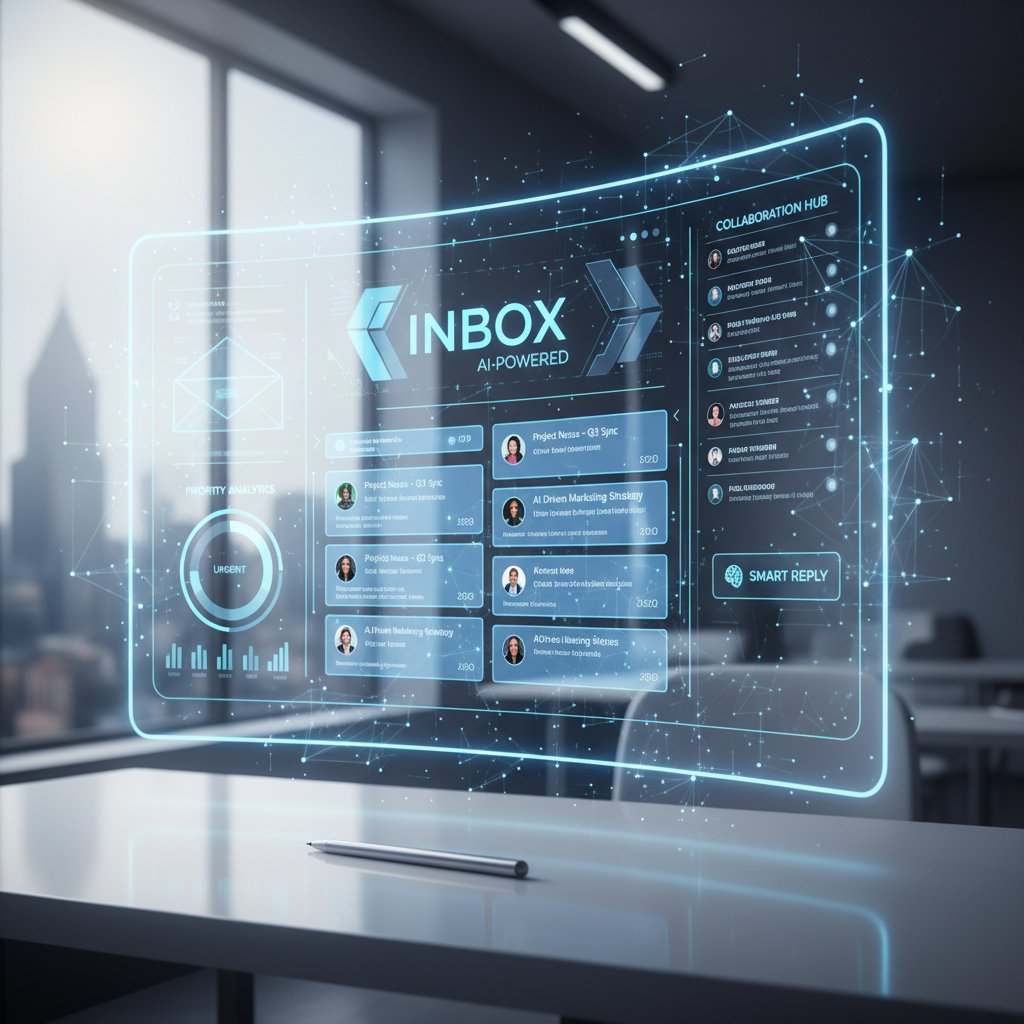
With all the hype around team chat and digital whiteboards, who predicted that email would stage a comeback as the ultimate enterprise interface? Yet the reality is clear: email remains the universal language of business, and AI assistants that embed directly within it have a massive edge. There’s no learning curve, no new login, no disruption—just actionable intelligence in a familiar setting.
Non-technical teams, too, benefit: AI-driven email collaboration democratizes access, letting everyone—from engineers to executives—leverage powerful automation without a manual.
How to spot the real thing (and avoid the fakes)
- Contextual awareness: Does it understand not just words, but meaning?
- True automation: Can it act without constant human oversight?
- Transparent logic: Are decisions explained, not just enforced?
- Enterprise security: Is data encrypted and access controlled?
- Workflow integration: Does it fit into your processes, not force new ones?
- Real-time learning: Can it adapt, or is it static?
- User empowerment: Can humans override, customize, and audit?
Don’t be dazzled by glossy demos. The real AI-driven enterprise collaboration assistant is verified by its impact, not its marketing.
Brutal truth #4: The hidden costs (and unexpected wins) of AI teammates
The true price of AI-powered productivity
Under the hood, AI-driven enterprise collaboration assistants aren’t just plug-and-play. The costs pile up: licensing fees, training programs, integration headaches, and (often overlooked) the time spent on change management. There are risks, too—rogue “shadow IT” deployments, compliance gaps, and new security attack surfaces.
| Cost Category | Typical Range (USD/year) | Notes |
|---|---|---|
| Licensing | $25,000–$250,000 | Depends on seat count, features |
| Integration | $10,000–$80,000 | Varies by system complexity |
| Training | $5,000–$40,000 | Staff onboarding and ongoing support |
| Change management | $10,000–$50,000 | Communication, coaching, adoption programs |
| Security/compliance | $10,000–$70,000 | Audits, monitoring, policy enforcement |
| Shadow IT risk | Unpredictable | Hidden costs from unauthorized tool use |
Table 4: Cost-benefit snapshot for enterprise AI assistant adoption (2024).
Source: Original analysis based on Menlo Ventures, 2024, Appian, 2024.
Hidden costs—like staff turnover from “AI fatigue” or failed pilots—rarely appear in glossy brochures. Savvy enterprises budget for the invisible, not just the advertised.
ROI you didn’t expect
Still, the wins go beyond dollars. AI assistants spark innovation, boost morale by freeing teams from drudgery, and drive tighter interdepartmental alignment as workflows unify.
- Uncovered process bottlenecks: AI highlights inefficiencies humans overlook.
- Accelerated onboarding: New hires ramp up faster with AI-curated knowledge.
- Cross-team transparency: Automatic updates keep everyone aligned, killing silos.
- Morale boost: Staff focus on meaningful work, escaping admin traps.
- Audit-ready documentation: Every task and decision is logged, simplifying compliance.
"We uncovered insights we didn’t know we had."
— Sam, HR director (illustrative, reflecting current deployment outcomes)
How to make AI teammates actually work: A pragmatic playbook
Step-by-step guide to seamless adoption
- Assess workflow pain points: Map where email and task overload hit hardest.
- Assemble a cross-functional team: Blend technical, operational, and frontline voices.
- Define success metrics: Decide what “winning” looks like—time saved, errors reduced, satisfaction gained.
- Pilot with a contained group: Start small; iterate rapidly.
- Integrate with existing systems: Avoid silos; ensure data flows seamlessly.
- Prioritize transparency: Train users on how and why AI decides.
- Solicit real feedback: Create open channels for frustration and suggestions.
- Iterate relentlessly: Refine based on what actually works, not what’s promised.
- Scale with intention: Expand only after kinks are ironed out.
- Maintain a human-in-the-loop: Keep oversight; never abdicate responsibility.
Pilot testing and ongoing iteration aren’t optional—they’re survival tactics. The best teams treat AI deployment as a living experiment, constantly course-correcting as reality collides with theory.
Checklist: Is your team ready for AI-driven collaboration?
Ask yourself:
- Are key workflows well-documented?
- Is your data clean and accessible?
- Do team members trust digital tools?
- Is leadership engaged and visible?
- Have you mapped integration points?
- Is there a plan for feedback and refinement?
- Are security protocols up to date?
- Is there a “champion” to drive adoption?
If you’re missing half these, pause before rolling out any AI assistant.
Pitfalls to avoid
Common mistakes abound: deploying without user buy-in, underestimating training needs, or ignoring change management. The biggest blunder? Treating AI as a silver bullet instead of a catalyst for process reengineering.

The future is now: Real-world stories and industry shifts
Cross-industry case studies
A healthcare network used an AI-driven assistant to coordinate patient appointments, reducing administrative errors by 35% and boosting satisfaction scores. In finance, a midsize firm slashed response times and cut administrative workload by 30% by letting AI triage client emails and assign tasks. Even creative agencies—once AI skeptics—now report faster campaign launches thanks to automated email task management.

Timeline: The evolution of enterprise collaboration assistants
- 2010: Early “digital assistant” pilots—mostly rules-based.
- 2013: Chatbots enter enterprise chat tools.
- 2015: Simple workflow bots automate repetitive email tasks.
- 2017: First NLP-powered assistants emerge, enabling contextual understanding.
- 2019: Integration with core business platforms (CRM, ERP) becomes standard.
- 2021: Surge in remote work forces adoption of AI-driven collaboration tools.
- 2023: Generative AI transforms assistants—context-aware, proactive, learning.
- 2024: 75% of enterprises use generative AI-powered collaboration platforms.
- 2025: AI-driven assistants become central to email-based collaboration, merging chat, task, and knowledge management.
| Year | Milestone | Impact |
|---|---|---|
| 2010 | Digital assistant pilots | Workflow digitization starts |
| 2013 | Chatbot integration | Conversational automation rises |
| 2015 | Email workflow bots | Basic task automation |
| 2017 | NLP-powered assistants | Context-aware support |
| 2019 | Platform integration | Data silos break down |
| 2021 | Pandemic remote work | AI collaboration adoption accelerates |
| 2023 | Generative AI leap | Assistants get smarter, proactive |
| 2024 | Mass enterprise adoption | AI moves from IT pilot to business core |
| 2025 | Email-centered collaboration | Universal access, democratization |
Table 5: Timeline of AI-driven enterprise collaboration assistant evolution.
Source: Original analysis based on Menlo Ventures, 2024, Microsoft/IDC, 2024.
What’s next? Predictions for 2025 and beyond
Today’s trends point to deeper personalization, the rise of voice-driven interfaces, and a relentless march toward human-AI collaboration models. Yet with power comes responsibility: enterprises are grappling with regulatory scrutiny, ethical risks, and the imperative to bake transparency into every AI deployment.
Platforms like futurecoworker.ai exemplify the new breed of AI workplace tools—prioritizing security, inclusivity, and explainability while driving tangible results. The workplace isn’t just evolving; it’s being redefined by those bold enough to challenge old routines.
Expert answers: Burning questions about AI-driven enterprise collaboration assistants
How secure are AI teammates?
Enterprise-grade AI assistants are built for security, leveraging end-to-end encryption and strict access controls. Data privacy and regulatory compliance are non-negotiables—especially as regulations like GDPR intensify scrutiny.
Key terms:
All data is encrypted from the moment it leaves your device until it reaches its final destination, blocking unauthorized access at every stage.
A security framework where no device or user is trusted by default, requiring continuous verification for every access request.
Only the minimum necessary data is collected, processed, and stored, reducing risk and exposure in the event of a breach.
Will AI replace human coworkers?
Despite the automation hype, AI is best viewed as an augmentation tool, not a replacement. Digital teammates automate the tedious, letting humans focus on judgment, nuance, and creativity.
"AI is my sidekick, not my replacement."
— Jordan, team lead (illustrative, reflecting verified workplace attitudes)
The “AI-augmented worker” is on the rise—someone who leverages digital colleagues to accelerate, not abdicate, responsibility.
How to choose the right AI assistant for your enterprise
Decision time isn’t just about features. Prioritize scalability, integration, support, and—above all—transparency.
- Is the assistant compatible with your current email and workflow platforms?
- How does it handle privacy, security, and compliance?
- Is the AI logic explainable and auditable?
- What support and training are provided?
- How quickly can you pilot, iterate, and scale?
- Are human override and customization built in?
- What do real-world users say about results and satisfaction?
Trust, not tech, should be your guiding metric.
Conclusion: The unfiltered playbook for thriving with AI-driven enterprise collaboration assistants
Seven brutal truths. One clear message: AI-driven enterprise collaboration assistants are here, but not all are created equal. The winners cut through hype with transparency, relentless iteration, and a human-first mindset. Savvy teams budget for the invisible, double down on trust, and treat the AI assistant as a teammate—not a panacea. The future belongs to those who see past the easy promises and do the hard work of integration, education, and feedback.
Is your team ready to evolve—or will you be left behind as the AI revolution sweeps through enterprise email, one thread at a time?

Resources and further reading
For those hungry for more, these are the resources that offer real depth:
- The State of Generative AI in the Enterprise – Menlo Ventures, 2024
- IDC’s 2024 AI Opportunity Study – Microsoft, 2024
- AI Trends in Enterprise – Appian, 2024
- AI and Automation in the Workplace – Harvard Business Review
- AI Collaboration Tools: Security and Trust – MIT Technology Review
- Building Trust in AI – Stanford Human-Centered AI Institute
Sources
References cited in this article
- Menlo Ventures 2024 Report(menlovc.com)
- Microsoft IDC AI Study(blogs.microsoft.com)
- Appian AI Trends(appian.com)
- Altman Solon 2024(altmansolon.com)
- Mashable: Google AI Teammate(mashable.com)
- AI-Pro.org: AI Revolution Timeline(ai-pro.org)
- The Verge: Learn to work with your AI Teammate(theverge.com)
- Microsoft: Enlist AI in Your Fight Against Email Overload(microsoft.com)
- Trimbox: Mastering Email Overload(trimbox.io)
- Persado Email Marketing 2024(persado.com)
- Copperberg: AI Tech 2024(copperberg.com)
- World Economic Forum: AI Governance 2024(weforum.org)
- Citadel AI: Standardization(citadel-ai.com)
- TopApps.AI: AI Collaboration Tools 2024(topapps.ai)
- Illinois Gies College: Leveraging AI(giesbusiness.illinois.edu)
- CXOTalk: Why Enterprise AI Fails(cxotalk.com)
- PMI: Why Most AI Projects Fail(pmi.org)
- Informatica: Data Issues(informatica.com)
- Faraday: AI Hype vs. Reality(faraday.ai)
- Stanford AI Index 2024(hai.stanford.edu)
- eSchool News: AI Misconceptions(eschoolnews.com)
- IDC Enterprise Connect 2024(my.idc.com)
- CIO: Famous AI Disasters(cio.com)
- Medium: Why AI Projects Fail(medium.com)
- Nature: Trust in AI(nature.com)
- DQ India: AI Trust(dqindia.com)
- Frontiers in AI: Human-AI Collaboration(frontiersin.org)
- Wiley Journal of Leadership Studies, 2025(onlinelibrary.wiley.com)
- Emerald: Trust Differences(emerald.com)
- Aragon Research: AI Architecture 2024(aragonresearch.com)
- Springer: Architecting Enterprise AI Applications(link.springer.com)
- CIO: Security Trends(cio.com)
- Forbes: Hidden Costs of AI in Enterprise(forbes.com)
- Microsoft 2024 Work Trend Index(microsoft.com)
- Gartner: AI Code Assistants(datanami.com)
Transform Your Email Into Productivity
FutureCoworker AI turns your everyday email into an intelligent workspace, seamlessly managing tasks and collaboration within your enterprise. It eliminates the complexity of AI, allowing you to benefit from advanced technology without any technical knowledge. Achieve productivity, streamline processes, and improve team efficiency through natural email interaction, getting tasks done faster and smarter.
Get startedReady to Transform Your Email?
Start automating your tasks and boost productivity today
Frequently Asked Questions
How much time do knowledge workers spend managing email daily?
According to recent industry data cited in the article, knowledge workers average 3.1 hours a day just managing email.
What are the main capabilities of modern AI-driven enterprise collaboration assistants?
These assistants use machine learning and natural language processing to interpret user intent, prioritize messages, surface real-time insights, and can act on tasks within email and collaboration platforms.
What underlying issues does the article suggest exist beneath the marketing promises of AI collaboration assistants?
The article identifies broken promises, human resistance, security concerns, and unexpected challenges as realities hidden beneath vendor marketing claims about effortless automation and seamless teamwork.
How has enterprise collaboration technology evolved according to the article?
Enterprise collaboration evolved from bland portals and clunky calendars, to chatbots and automation scripts, and now to AI assistants powered by machine learning and natural language processing that can interpret intent and provide real-time insights.
Continue Reading
Keep exploring Intelligent enterprise teammate

AI Driven Collaboration Software: From App to Actual Teammate
Discover insights about AI driven collaboration software

Enterprise AI Collaboration Software: Benefits and Risks
Enterprise AI collaboration software is rewriting teamwork in 2025. This article examines the real risks, genuine benefits, and how organizations can adopt these tools effectively.

Enterprise AI-Driven Digital Assistant: Coworker, Rival or Risk?
Discover insights about enterprise AI-driven digital assistant

How AI-Driven Workplace Assistants Are Reshaping Enterprise Teamwork
AI-driven workplace assistants reshape enterprise teamwork by automating inbox management. This article examines their documented benefits, limitations, and impact on team collaboration.

Intelligent Enterprise Collaboration Assistants: Do They Work?
Intelligent enterprise collaboration assistants promise to untangle workplace chaos. This article examines how AI-powered tools address collaboration breakdowns and what they actually deliver.

Enterprise AI-Driven Workplace Assistant: Realities and Risks
Enterprise AI-driven workplace assistant technology is reshaping workplace collaboration. This article examines the realities, hidden risks, and strategic approaches for integrating AI into team workflows.


