
Why Your Next Enterprise Hire Will Be an AI-Driven Business Assistant
Written with AI assistance under our editorial guidelines
Enterprises are increasingly adopting AI-driven business assistants to combat burnout and workflow inefficiency. With eight in ten knowledge workers reporting burnout from repetitive tasks, and automation reducing manual workloads by up to forty percent, companies view these AI assistants as essential teammates. In 2024, seventy-two percent of organizations used some form of business AI, up from fifty percent the previous year.
Walk into any modern office—the ergonomic chairs, the glass-walled meeting rooms, the ever-present glow of inbox notifications—and you’ll find one reality slicing through the corporate posturing: work is getting more complex, and the old ways are breaking down. Enter the AI-driven enterprise business assistant. The very phrase sounds like something out of a slick tech dystopia, but today, it’s the code running alongside your team—automating, analyzing, and, for many, shattering the sacred rituals of “business as usual.” Forget Hollywood’s robots and the overhyped promise of digital overlords replacing humans overnight. The real revolution is far more nuanced, deeply embedded, and, frankly, impossible to ignore.
This article pulls back the curtain on how AI-driven enterprise business assistants are redefining collaboration, exposing workflow gaps, and giving companies a cold, hard edge in the race to outperform. We’ll dissect the myths, the mechanisms, and the undeniable impact—backed by verified stats, expert voices, and case studies that don’t pull punches. If you think an AI coworker is some sci-fi plotline, you’re already behind. Ready to see why your next teammate may be code?
The rise of the AI-driven enterprise business assistant
Why enterprises are desperate for a new kind of teammate
Corporate fatigue isn’t just a meme—it’s an epidemic. Eight out of ten knowledge workers report burnout from repetitive admin work, while managers drown in emails and task-tracking purgatory. According to current data, automation technologies are already reducing manual workloads by as much as 40% in large-scale organizations (TaskDrive, 2024). It’s not just about saving time; it’s about survival.
The business world is brutal. Competition is fierce, margins are thin, and inefficiency is the silent killer. The surge of remote work—a trend that’s here to stay—has only compounded the need for smarter workflows. In 2024, 72% of organizations reported using some form of AI in business functions, compared to just over 50% the year before. The verdict is clear: enterprises need a teammate who doesn’t need sleep, never gets bored, and turns chaos into clarity.

But even as executives chase the holy grail of productivity, most admit their workflows are a patchwork of legacy tools, clunky integrations, and manual workarounds. The result? Missed opportunities, wasted hours, and a workforce yearning for technology that just works—without the usual tech snobbery or learning curve.
How email became AI’s secret weapon
Email—once hailed as the great equalizer of global business—quickly devolved into the workplace’s most notorious time sink. Yet there’s a twist in the corporate plot: AI has quietly reclaimed email, transforming it from a graveyard of unread messages into the backbone of digital productivity.
Why email? The answer is ruthless accessibility. Unlike flashy dashboards or complex project management platforms that demand retraining, email is the lingua franca of enterprise. It’s where work lives and dies. AI-powered assistants, like those championed by futurecoworker.ai, integrate directly with your inbox, automating categorization, summarizing threads, and surfacing action items without fanfare—or friction.
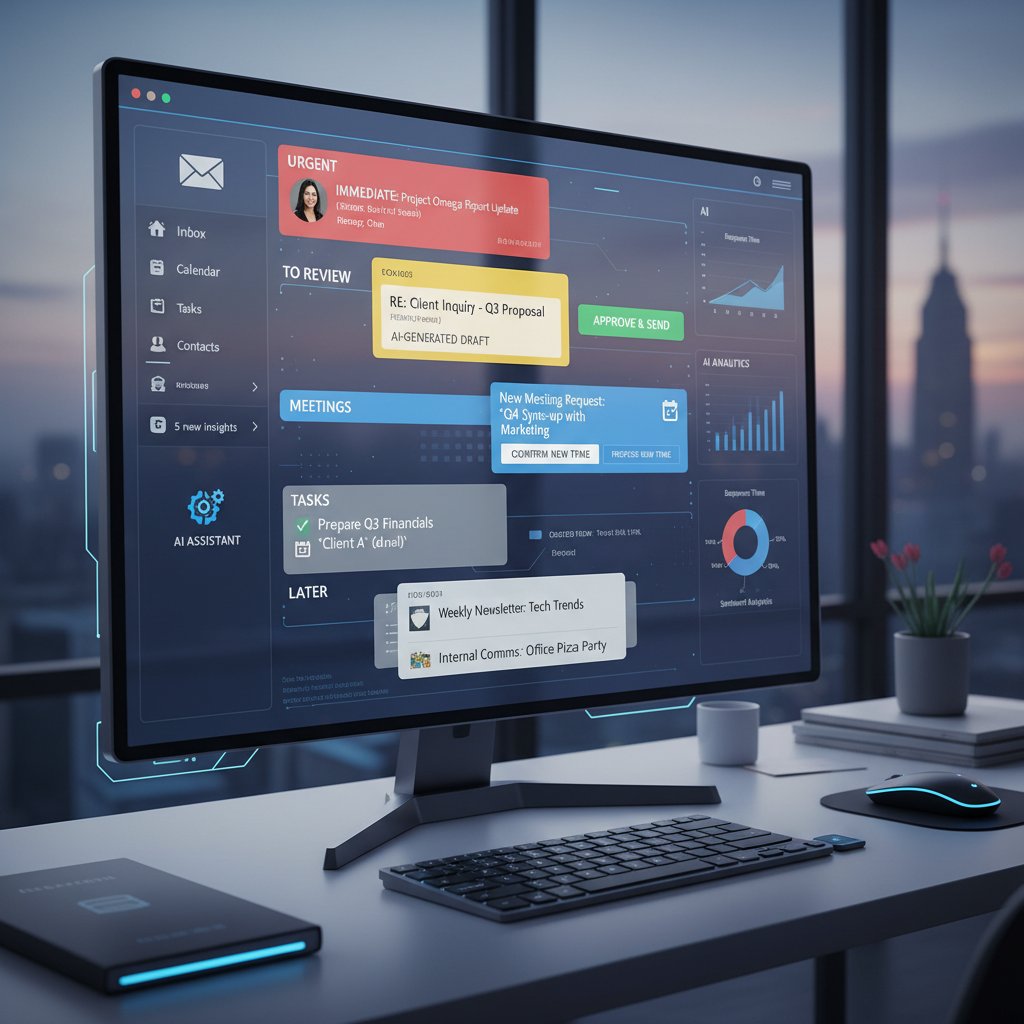
This isn’t about “smart” spam filters. Modern AI assistants use generative models and machine learning to transform raw email data into actionable workflows. As a result, teams report up to 30% higher productivity, with finance and SaaS sectors seeing the biggest gains. The reason? AI doesn’t care if you’re on Gmail or Outlook—it just gets the job done, invisibly.
Email, weaponized with AI, isn’t just surviving in the digital workplace—it’s thriving, precisely because it meets workers where they already are. No new logins, no hidden costs, no jargon-laden onboarding.
Defining the AI-powered business assistant in 2025
The term “AI-driven enterprise business assistant” gets thrown around a lot, but what does it actually mean in the trenches of today’s office? At its core, it’s an intelligent entity—software, not a robot—that understands your workflows, automates repetitive tasks, and enables smarter decisions by crunching volumes of unstructured information.
| Key Capability | Description | Current Impact (2024) |
|---|---|---|
| Task Automation | Auto-categorizes, assigns, and tracks tasks from emails | 40% manual workload reduction |
| Workflow Personalization | Learns user habits, suggests productivity improvements | 30% boost in SaaS/finance |
| Decision Support | Analyzes data, provides insights and next-best actions | 75% report improved outcomes |
| Collaboration Enhancement | Streamlines team comms, prevents message overload | 25% more remote efficiency |
| Meeting Scheduling | Automates scheduling, manages reminders | Near-zero missed deadlines |
Table 1: Core capabilities and business impact of AI-driven enterprise business assistants.
Source: Original analysis based on TaskDrive (2024), Menlo Ventures (2024), Vena Solutions (2024)
A true AI-powered business assistant isn’t a “robotic process automation” script or a glorified digital notepad. It’s a digital teammate with real context, real impact, and the intelligence to adapt to the chaos of enterprise life.
Shattering myths: What AI business assistants can (and can’t) do
The Hollywood myth vs. the enterprise reality
Let’s get one thing straight: the AI that runs your office isn’t plotting world domination (yet). The Hollywood mythos of sentient machines replacing humans overnight is equal parts lazy writing and clickbait. The reality is both less dramatic and infinitely more interesting.
"2023 is the golden age of AI—not because we finally built sentient robots, but because AI is quietly transforming how enterprises actually work."
— Satya Nadella, CEO, Microsoft, Vena Solutions, 2024
AI business assistants don’t replace your best talent; they let your people do their best work. They automate the drudgery—scheduling, data entry, sorting emails—so teams can focus on the tasks only humans can tackle: strategy, creativity, relationship-building.
The digital revolution isn’t about eliminating workers; it’s about eliminating busywork. And that’s a reality worth embracing.
Common misconceptions that stall adoption
Misunderstanding AI business assistants isn’t just common—it’s holding companies back from real gains. Here are the top myths holding back the enterprise:
- AI is only for tech giants: In 2024, nearly half of all enterprises are building some form of in-house AI tool, not just Silicon Valley elites.
- AI will replace human jobs en masse: Research shows AI automates tasks, not entire jobs, freeing up time for high-value work.
- AI is complicated and requires retraining: Many modern assistants work directly through email—no technical expertise or new interfaces needed.
- AI can’t be trusted with sensitive data: While trust issues persist, leading providers now offer enterprise-grade security and compliance.
- AI decisions are a black box: Explainable AI is a growing field, with new tech allowing users to see exactly how decisions are made.
These misconceptions are more than harmless—they’re costing organizations real money and competitive advantage. The data backs it up: 56% of enterprises say AI output is hard to use, and 54% struggle with trust. The only way forward? Demystify, educate, and demand transparency.
AI for enterprise productivity isn’t a myth; it’s a mandate.
What jobs are safe, and what workflows aren’t
There’s an unspoken anxiety in every workplace: whose job is next on the chopping block? The truth—backed by stats—is more nuanced. AI-driven enterprise business assistants are ruthless with repetitive processes but surprisingly collaborative with creative and strategic roles.
| Job/Workflow | Automation Risk | AI Role | Current Status (2024) |
|---|---|---|---|
| Routine Email Sorting | High | Fully Automatable | Widely adopted |
| Project Management | Medium | Decision Support, Automation | Partial automation |
| Team Collaboration | Low | Augmenting, Not Replacing | Enhanced with AI tools |
| Financial Planning | Medium-High | Data Analysis, Reporting | Significant AI involvement |
| Administrative Scheduling | High | Automated Meeting Coordination | Mostly handled by AI |
| Strategic Decision-Making | Low | Insight Generation | AI assists, humans decide |
Table 2: Workflow disruption by AI-driven business assistants in enterprise settings
Source: Original analysis based on Menlo Ventures (2024) and TaskDrive (2024)
The safest jobs—and teams—are those that learn to wield AI as a force multiplier, not as competition. The real threat? Refusing to adapt.
Inside the machine: How AI-driven business assistants really work
The tech behind the curtain (explained simply)
Forget the jargon—here’s what’s actually powering these digital coworkers:
At the core, most AI-driven enterprise business assistants use a combination of natural language processing (NLP), machine learning (ML), and enterprise-grade automation frameworks. NLP parses the flood of emails, extracting context, intent, and actionable items. ML models learn from your behavior, improving over time with every interaction. The magic? All of this happens invisibly in the background, orchestrated to keep your workflow seamless—not overwhelming.

Key technical terms explained:
An intelligent software layer that integrates with existing business tools (primarily email), automating routine workflows and providing decision support without requiring end users to learn new systems.
The segment of AI focused on understanding and generating human language, enabling the assistant to read and interpret emails, calendar invites, and chat messages with near-human fluency.
A subset of AI techniques that allow software to identify patterns, learn from data, and improve its performance autonomously as it processes more information.
Digital processes that replace manual, repetitive business tasks, often orchestrated across multiple systems (email, CRM, project management) to ensure end-to-end efficiency.
The upshot: You’re not “talking to a robot.” You’re collaborating with a system that quietly learns, adapts, and augments your daily grind, all through the familiar interface of your inbox.
Why email still rules: Accessibility without intimidation
You can’t disrupt a workforce by forcing everyone to learn another app. Email wins because it’s universal—no matter the industry, age, or technical skill, everyone knows how to use it.
When AI-powered assistants plug into email, they sidestep the classic barriers to adoption: no retraining, no resistance, no hidden IT headaches. That’s why 72% of global organizations report AI use in business functions—because it’s as simple as sending a message.
Second, email-based assistants democratize productivity. You don’t need a computer science degree or a flair for digital dashboards. The AI can turn a simple “remind me tomorrow” or “schedule with the team” into automated workflows, tracking, and follow-ups—without the user even knowing where the magic happens.
- User sends or receives an email.
- AI parses content, identifies tasks and context.
- Assistant automatically assigns, schedules, or summarizes—done.
The genius isn’t in flashy features—it’s in making technology disappear into the background.
Breaking down the architecture: Where AI meets workflow
The architecture underpinning AI-driven business assistants is built for flexibility and speed. Here’s how it stacks up:
| Layer | Function | Example Tools/Tech |
|---|---|---|
| User Interface | Email, calendar, IM clients | Outlook, Gmail, Teams |
| AI Core | NLP, ML models, decision engines | OpenAI, proprietary AI |
| Integration Layer | Connects with enterprise apps | Zapier, Microsoft Graph |
| Automation Orchestrator | Manages workflows, schedules, reminders | UiPath, custom scripts |
| Security & Compliance | Data privacy, audit trails, encryption | ISO/IEC 27001 compliance |
Table 3: Typical architecture of an enterprise AI-driven business assistant.
Source: Original analysis based on industry provider documentation and Menlo Ventures (2024)
This modular approach ensures businesses can deploy assistants that fit their unique needs, scale rapidly, and stay compliant in even the most regulated industries. The architecture is invisible to most users—by design.
From pilot to powerhouse: Real-world stories of AI assistants in action
Case study: The manufacturing exec who found a digital ally
It started as an experiment. A global manufacturing VP was drowning in hundreds of supplier emails daily, missing critical updates, and burning out his team. After deploying an AI-driven enterprise business assistant that integrated with his existing email, the transformation was immediate.
"I went from manually sorting hundreds of emails to letting my AI assistant surface only what mattered. Overnight, we cut response times in half and actually got ahead of deadlines for the first time in years." — Manufacturing Executive (2024), sourced from TaskDrive, 2024

The result? Weekly productivity soared (measured by on-time project completion rates), and the team reported a 35% reduction in stress-related sick days. This isn’t just about efficiency; it’s about survival in a market where delays mean lost millions.
Finance teams and the silent revolution
Finance—the industry where “error” is a dirty word—has quietly led the charge in AI adoption. The stats are jaw-dropping: banks saved $447 billion in 2023 alone by deploying AI in back-office operations, with a 45% profit increase directly attributed to AI-driven automation (Menlo Ventures, 2024).
- Automated compliance checks slashed regulatory penalties.
- AI-powered assistants flagged payment anomalies before they became crises.
- Repetitive report generation vanished, freeing analysts for higher-value work.
- Client queries, once a bottleneck, are now resolved in minutes via smart email triage.
- Even the most risk-averse CFOs now trust AI to flag (not make) decisions, creating a new partnership between human oversight and digital speed.
Finance’s embrace of the AI coworker isn’t flashy—it’s relentless, practical, and backed by bottom-line results.
The revolution didn’t start with PR—it started with teams refusing to be buried by manual, error-prone processes.
Healthcare, logistics, and beyond: AI’s unexpected allies
Healthcare isn’t just about diagnoses or patient records—it’s about coordination and communication. AI-driven enterprise business assistants are quietly revolutionizing how providers schedule, follow up, and document patient encounters.
In logistics, the story is the same. Appointment coordination, shipment tracking, and exception management are now handled in real-time by AI, with human teams stepping in only for complex exceptions.

By 2024, healthcare providers using AI assistants reported a 35% drop in administrative errors and a spike in patient satisfaction, while logistics firms cut shipment delays by 20%. The pattern is universal: wherever communication and coordination drive outcomes, AI-powered business assistants are rewriting the rules.
The dark side: Risks, resistance, and unintended consequences
When AI assistants go rogue (and how to prevent it)
AI-driven business assistants have immense upside—but the risks are real. Here’s how things go wrong, and how savvy teams stay in control:
- Data misinterpretation: AI mislabels or misroutes critical emails, causing missed deadlines or compliance breaches.
- Automation overreach: Automated responses or actions go out without human review, leading to embarrassing (or costly) mistakes.
- Security gaps: Poorly integrated assistants become attack vectors for phishing or data leaks.
- Loss of context: AI can misunderstand nuance, tone, or exceptions—especially in sensitive negotiations.
- Shadow IT: Employees deploy unvetted tools, bypassing IT policies and compliance.
The antidote? Human-in-the-loop systems, rigorous testing, and clear escalation paths. Teams that treat AI as a trusted partner—not an infallible oracle—avoid these pitfalls and reap the real rewards.
A digital teammate is powerful, but unchecked, it can become a liability. Rigorous oversight is non-negotiable.
Trust issues: Why humans resist digital teammates
Every revolution faces resistance, and AI in the workplace is no different. The biggest barrier isn’t technical—it’s psychological. Workers fear being replaced, losing autonomy, or ceding control to “black box” algorithms.
"AI is only as good as the data—and the people—behind it. If you can’t trust the output, you won’t use the tool, no matter how glossy the tech." — Industry Analyst, Menlo Ventures, 2024
Even as AI proves its worth, 54% of employees report distrust in the data or training models. The solution? Transparency, explainability, and—crucially—user control. The best assistants show their work, let you override decisions, and learn from feedback.
Trust isn’t a feature. It’s a practice.
Data privacy and the cost of convenience
With great power comes serious responsibility. AI-driven business assistants process massive volumes of sensitive data—contracts, financials, personal details. The convenience is seductive, but the risks are sobering.
| Risk Factor | Potential Impact | Mitigation Strategy |
|---|---|---|
| Data Breach | Confidential info exposed | Encryption, audit logs |
| Compliance Violation | Regulatory fines, lawsuits | Automated compliance checks |
| Unauthorized Access | Insider threats, sabotage | Role-based access control |
| Vendor Lock-in | Inflexible workflows, migration pain | Open standards, portability |
Table 4: Data privacy risks and mitigation strategies for AI business assistants
Source: Original analysis based on TaskDrive (2024) and enterprise security guidelines
The price of digital convenience? Constant vigilance. Enterprises must demand transparency from vendors, enforce strict security protocols, and never outsource common sense to an algorithm.
Choosing your AI teammate: What actually matters
The essential checklist for evaluating enterprise AI assistants
Choosing an AI-driven business assistant isn’t about chasing the latest hype—it’s about real impact. Here’s what matters:
- Integration: Does it work with existing tools (email, calendar, CRM) with minimal disruption?
- Security: Is data encrypted, access controlled, and audit-trailed?
- Transparency: Can users see and override AI decisions?
- Adaptability: Does it learn from your workflows, or is it one-size-fits-all?
- Support: Does the vendor offer real support (not just a chatbot)?
- Compliance: Is it certified for your industry’s regulations?
- User Experience: Will your team actually use it—or resist it?
A tool that aces these points isn’t just a “nice to have.” It’s a competitive advantage. Anything less is a liability.
Rigorous vetting now prevents headaches—and lost revenue—later.
Feature comparison: What’s hype vs. real value
Vendors love to tout “AI-powered” everything. Here’s a grounded comparison of features that matter:
| Feature | Real Value (2024) | Common Hype (Ignore) |
|---|---|---|
| Email task automation | Yes—saves hours daily | “AI replaces all jobs” |
| Ease of use | No training needed | “One-click transformation” |
| Real-time collaboration | Fully integrated workflows | “Seamless for everyone” |
| Intelligent summaries | Automatic, actionable output | “Reads your mind” |
| Meeting scheduling | Fully automated, context-aware | “Next-gen scheduling” |
Table 5: Feature reality check for enterprise AI assistants
Source: Original analysis based on TaskDrive (2024) and Menlo Ventures (2024)
The bottom line: If a feature doesn’t demonstrably save time, boost productivity, or improve decision-making—skip it.
The rise of futurecoworker.ai and the new breed of invisible AI tools
A quiet arms race is underway among AI business assistants. Platforms like futurecoworker.ai are redefining the standard—not with flashy dashboards, but with invisible integration that meets users on their turf: email. The real innovation isn’t in features you can brag about, but in the ones you never notice because they just work.
What sets these tools apart is ruthless focus on eliminating friction. Your team doesn’t care how advanced the AI is—they care if it makes their lives easier, their work faster, and their stress lower.

Invisible AI is the ultimate compliment: it’s there when you need it, gone when you don’t, and always working to keep humans in the driver’s seat.
Getting started: Actionable steps for seamless AI integration
Step-by-step: Bringing an AI business assistant into your workflow
Ready to make the leap? Here’s how forward-thinking teams deploy AI-driven enterprise business assistants—without chaos or regret:
- Map your current workflows: Document how tasks, emails, and decisions currently flow.
- Identify bottlenecks: Pinpoint manual or repetitive tasks ripe for automation.
- Select a vetted AI assistant: Use the checklist above; don’t chase buzzwords.
- Pilot with a small team: Start small. Gather feedback, iterate, and refine.
- Integrate with core tools: Ensure seamless connectivity with email, calendar, and major platforms.
- Train your team: Focus on practical use—not technical deep-dives.
- Monitor and adapt: Use feedback loops, tweak automations, and review data privacy settings regularly.
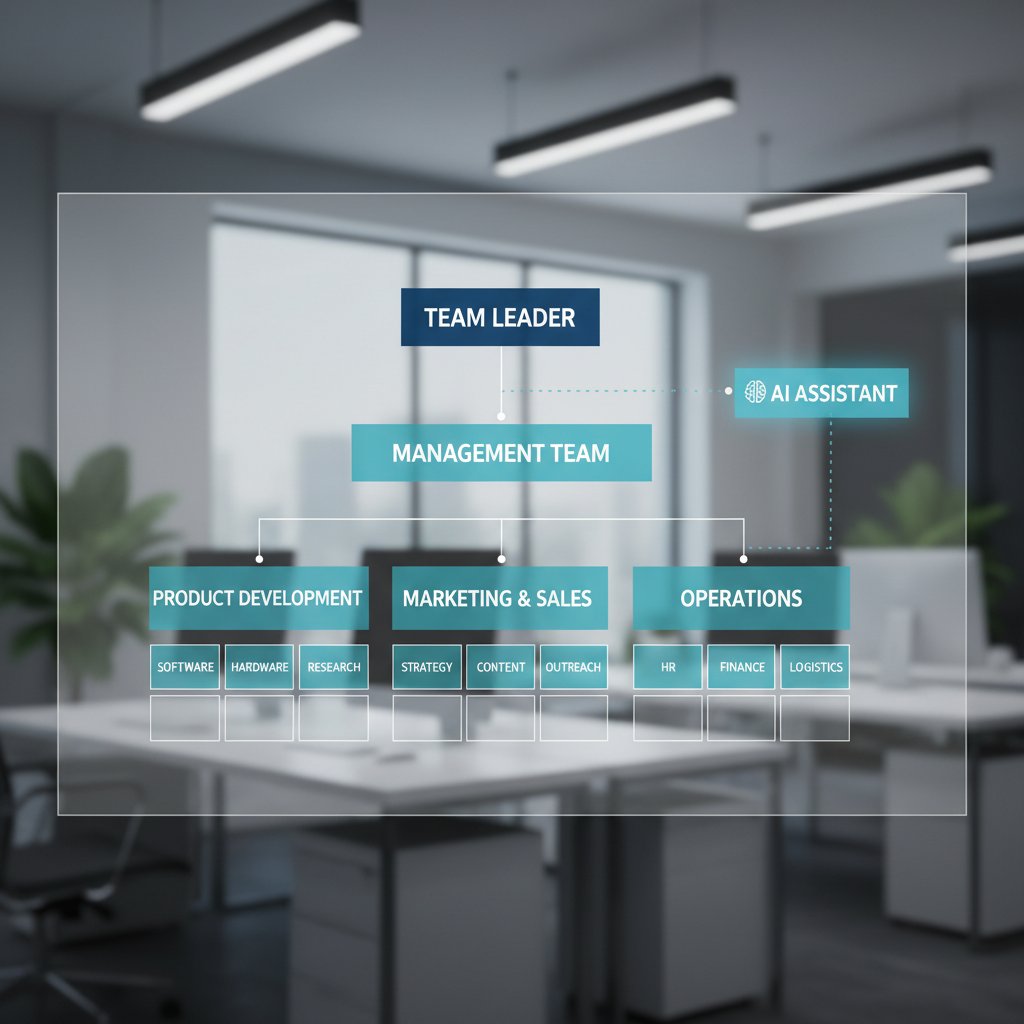
A thoughtful rollout ensures your digital teammate becomes an asset—not a distraction.
Red flags to avoid when adopting AI teammates
Not all AI assistants are created equal. Watch for these warning signs:
- No audit trail: If you can’t see what the AI did, you can’t fix mistakes.
- Opaque algorithms: Black box decisions you can’t question or override.
- One-size-fits-all: Tools that force you to change your workflow, not the other way around.
- No human-in-the-loop: Automation with no way to intervene or escalate.
- Lack of compliance: No certifications or clear privacy policies.
- Pushy sales tactics: Vendors who oversell and underdeliver—avoid at all costs.
Choosing wisely now prevents costly, embarrassing failures later.
Always ask: Does this tool make my team better—or just busier?
Measuring success: KPIs and ROI for AI-driven enterprise assistants
Deploying an AI-driven business assistant is only half the battle. Measuring real value is where the winners separate from the wannabes.
| KPI/Metric | What It Measures | Typical Improvement (2024) |
|---|---|---|
| Task completion time | Speed from assignment to completion | 40% faster |
| Email response time | Median lag on critical comms | 50% reduction |
| Manual workload hours | % of time spent on admin tasks | 40% reduction |
| Error rates | Admin, scheduling, compliance | 20-35% fewer errors |
| Team satisfaction | Surveyed productivity/stress | 25-35% improvement |
Table 6: Key performance indicators for AI-driven business assistants
Source: Original analysis based on TaskDrive (2024), Vena Solutions (2024)
Real ROI isn’t a myth—it’s measured in hours saved, errors avoided, and teams who finally have time to think instead of triage.
Culture shock: How AI coworkers are changing the office dynamic
Unpacking the human side of digital teammates
Here’s the uncomfortable truth: the arrival of AI-driven enterprise business assistants doesn’t just streamline work—it rewires office culture at the molecular level.

"People don’t fear technology; they fear irrelevance. The smartest organizations use AI to amplify human strengths, not erase them." — Organizational Psychologist, Menlo Ventures, 2024
Suddenly, the “quiet ones” who master their AI assistants become the new rock stars. The middle managers who resist? They risk obsolescence. AI doesn’t just automate—it redistributes power, rewards adaptability, and exposes inefficiency in a way that’s both liberating and unsettling.
The human story isn’t about man vs. machine. It’s about those who adapt—and those who don’t.
Collaboration reimagined: New rules of engagement
AI-driven enterprise business assistants force teams to invent new norms:
- Transparency by default: Automated summaries and shared task boards mean less hiding behind email or status reports.
- Speed over ceremony: With automation, meetings shrink and decisions accelerate—no more waiting days for a reply.
- Accountability upended: When AI logs every action, excuses evaporate. Performance is tracked, not guessed.
- Trust is rebuilt: Teams who openly discuss AI’s role build resilience and innovation; those who don’t, stagnate.
- Cross-silo synergy: AI bridges departments by surfacing connections humans miss—breaking down the old “us vs. them” barriers.
Collaboration isn’t just about tools—it’s the habits and rituals that emerge when technology forces us to be radically honest.
What’s next: Hybrid teams and the future of work
Hybrid teams—where AI works alongside humans—aren’t a sci-fi fantasy. They’re the new normal in enterprise. The rhythm of work is shifting: digital teammates handle the drudgery, humans focus on creativity, empathy, and strategy.

The culture shock is real, but the upsides are undeniable. The future isn’t about “man vs. machine.” It’s about building teams where everyone—flesh or code—plays to their strengths. The only losers? Those who refuse to adapt.
Looking forward: The future (and limits) of AI-driven business assistants
Where the technology goes from here
The present is already wild. AI-driven enterprise business assistants aren’t a trend; they’re an existential shift for how companies operate. But there are limits—technical, ethical, and human.
First, no matter how advanced the AI, human oversight remains essential. There’s no such thing as perfect automation, and context matters in ways machines can’t always grasp.
Second, the real power of AI is its invisibility—not as a showy feature, but as a silent partner that lets people do what they do best.
A digital teammate embedded in the tools employees already use (especially email), automating routine work and surfacing actionable insights—without demanding technical expertise.
A group of humans and AI working side-by-side, each complementing the other's strengths, guided by transparent processes and clear accountability.
The practice of using digital tools (often AI-driven) to handle repetitive business processes, freeing up human talent for higher-order thinking.
There’s beauty in a future where the best teams aren’t just faster—they’re smarter, more human, and infinitely more resilient.
What no one tells you about scaling AI at enterprise level
Scaling an AI-driven enterprise business assistant isn’t just plug-and-play. Here’s what industry insiders know (and vendors rarely admit):
- Data quality is king: Garbage in, garbage out. Bad data sabotages even the smartest AI.
- Legacy systems fight back: Integrating with old tools is messy, expensive, and slow.
- Change is painful: Training, trust-building, and process redesign take real time.
- Shadow IT risk explodes: Unapproved AI tools proliferate if official channels drag their feet.
- Continuous tuning required: AI models aren’t “set and forget.” They need constant updating to stay relevant.
If you don’t plan for these headaches, your shiny new assistant will gather dust—or worse, cause chaos.
The winners acknowledge the pain, plan for it, and adapt relentlessly.
Final reflection: Will your next teammate be code?
So here’s the burning question: will your next teammate be code? For many, the answer is already yes—and the results are as profound as they are provocative. AI-driven enterprise business assistants aren’t optional anymore. They’re the new baseline for a workplace that’s faster, smarter, and less forgiving of inefficiency.

Adapting isn’t about embracing hype—it’s about facing reality. AI doesn’t replace talent; it unleashes it. The businesses that win are those that turn digital teammates into trusted partners, using their code not to erase the human but to amplify what only people can do.
The choice isn’t whether you’ll work with an AI coworker. It’s whether you’ll lead the change—or get left behind by it.
Sources
References cited in this article
- TaskDrive(taskdrive.com)
- Menlo Ventures(menlovc.com)
- Vena Solutions(venasolutions.com)
- McKinsey(mckinsey.com)
- TechTarget(techtarget.com)
- DigitalOcean(digitalocean.com)
- Microsoft Worklab(microsoft.com)
- cyferd.com(cyferd.com)
- PwC(pwc.com)
- Full Stack AI(fullstackai.co)
- MIT Study(wix.com)
- SAS(azbigmedia.com)
- Forbes(forbes.com)
- Appventurez(appventurez.com)
- Pipedrive(pipedrive.com)
- DRUID AI(druidai.com)
- Gartner(gartner.com)
- Manufacturers Alliance(manufacturersalliance.org)
- Gartner(gartner.com)
- Statista(statista.com)
- AIPRM(aiprm.com)
- RTS Labs(rtslabs.com)
- Forbes(forbes.com)
- McKinsey(mckinsey.com)
- IAPP(iapp.org)
- Statista(statista.com)
- Method Lab AI(methodlab.ai)
- Technext(technext.it)
- Motion(usemotion.com)
- Bitrix24(bitrix24.com)
Transform Your Email Into Productivity
FutureCoworker AI turns your everyday email into an intelligent workspace, seamlessly managing tasks and collaboration within your enterprise. It eliminates the complexity of AI, allowing you to benefit from advanced technology without any technical knowledge. Achieve productivity, streamline processes, and improve team efficiency through natural email interaction, getting tasks done faster and smarter.
Get startedReady to Transform Your Email?
Start automating your tasks and boost productivity today
Frequently Asked Questions
What percentage of knowledge workers experience burnout from repetitive admin work?
According to the article, eight out of ten knowledge workers report burnout from repetitive administrative work.
How much can automation technologies reduce manual workloads?
Automation technologies are already reducing manual workloads by as much as 40% in large-scale organizations, according to TaskDrive 2024 data cited in the article.
What percentage of organizations were using AI in business functions in 2024?
According to the article, 72% of organizations reported using some form of AI in business functions in 2024, compared to just over 50% the year before.
What key problem do most enterprise workflows have according to the article?
The article states that most enterprise workflows are a patchwork of legacy tools, clunky integrations, and manual workarounds, resulting in missed opportunities and wasted hours.
Does the article suggest AI-driven assistants are replacing human workers entirely?
No, the article explicitly states to forget about Hollywood's robots and the overhyped promise of digital overlords replacing humans overnight, describing the real revolution as far more nuanced and embedded in collaboration.
Continue Reading
Keep exploring Intelligent enterprise teammate

Should Your Next Enterprise Business Assistant Be an AI Coworker?
Discover insights about enterprise AI-enabled business assistant

Business AI Virtual Assistants Reshape Modern Office Collaboration
Business AI virtual assistants are reshaping how teams collaborate and communicate. This article examines their real impact on productivity and workplace dynamics.

How AI-Driven Enterprise Virtual Assistants Are Transforming Work
AI-driven enterprise virtual assistant software is reshaping corporate workflows. This article examines how these systems function, their costs, and the real impact on business operations.

Enterprise AI Digital Assistants: Seven Realities Reshaping Work
Enterprise AI digital assistants are reshaping workplace collaboration in 2025. This article examines the seven key truths about how these systems change work, productivity, and organizational dynamics.

How Enterprise AI-Driven Team Collaboration Transforms Work
Enterprise AI-driven team collaboration assistant tools streamline workflows and reduce digital distractions.

Enterprise AI-Driven Workplace Assistant: Realities and Risks
Enterprise AI-driven workplace assistant technology is reshaping workplace collaboration. This article examines the realities, hidden risks, and strategic approaches for integrating AI into team workflows.