


AI-Driven Enterprise Collaboration Software That Actually Works
Written with AI assistance under our editorial guidelines
While AI-driven enterprise collaboration software has automated routine tasks like email categorization and meeting scheduling, it hasn't solved core problems like context loss and fragmented communication. Most organizations still struggle with the "context gap" where AI fails to understand complex project histories, and typical enterprises juggling multiple collaboration tools find productivity hindered rather than improved by tool overload.
If you’re still drowning in an endless tide of emails, Slack pings, and convoluted project dashboards, you’re not alone. The promise of AI-driven enterprise collaboration management software – that elusive digital teammate who would finally wrangle chaos into clarity – has been trumpeted across boardrooms and LinkedIn feeds from 2023 through 2024. The reality? It’s complicated. The market has ballooned, with a global value of $16.1 billion in 2022 and projected double-digit growth, but the human cost of collaboration chaos – and the brutal truths behind our new AI coworkers – remains largely unspoken. In this hard-hitting exploration, we’ll cut through hype and “AI-washing,” reveal hidden costs, and show you what really works according to data, real-world experts, and the users caught in the grinder. Welcome to the unfiltered reality of AI-driven enterprise collaboration management software.
The myth of seamless collaboration: Why AI hasn't saved us (yet)
The promise vs. reality of AI in the enterprise
Enterprise leaders were sold a vision: plug in AI, and suddenly, your workflow transforms. Emails become tasks, meetings book themselves, and teams collaborate as one. According to Unite.AI’s 2024 review, the top AI-driven collaboration tools have indeed automated certain routines – categorizing emails, scheduling meetings, even summarizing threads. But automation isn’t the same as understanding. Most organizations still grapple with context loss and fragmented communication. As one research summary notes, “Limited knowledge retention hinders context continuity,” meaning the AI often forgets what happened last week. The result? Teams spend as much time second-guessing their tools as they do collaborating.

Behind the glossy marketing promises, the daily grind exposes cracks: AI can automate, but it rarely advises with true nuance. Real-world teams report that even market leaders like Microsoft Copilot and Asana AI have yet to solve the “context gap” – the AI’s inability to fully understand the backstory of every conversation, especially in complex, multi-threaded projects.
Why tool overload is killing productivity
Every year brings a new “must-have” platform, promising to streamline your workflow. Yet, as the 2023-2024 Tanka.ai industry analysis shows, most enterprises now juggle an average of 7-10 collaboration tools. This digital sprawl isn’t just overwhelming – it actively undermines productivity.
| Tool Name | Main Function | Typical Pain Point |
|---|---|---|
| Microsoft Copilot | Task automation | Steep learning curve |
| Asana AI | Project management | Fragmented integrations |
| Miro AI | Visual collaboration | Over-complicated interface |
| ClickUp | All-in-one workspace | Notification overload |
Table 1: Major AI collaboration tools and their typical user-reported pain points.
Source: Tanka.ai, 2024
No wonder “tool fatigue” has become a modern workplace epidemic. When every notification is “urgent,” none are. According to recent data, over 60% of knowledge workers report feeling less productive due to fragmented digital workflows, not more. Instead of consolidating communication, many AI-driven tools just add another layer of noise.
Common misconceptions about AI coworkers
The hype swirling around AI-driven enterprise collaboration management software feeds several persistent myths:
- “AI will understand our company culture instantly.” Reality: AI still struggles with unspoken rules, sarcasm, and shifting team priorities.
- “Plug-and-play AI means no setup.” In truth, integration with legacy systems is a notorious pain point, often requiring weeks of IT calibration.
- “AI eliminates human error.” Actually, overreliance on automation can introduce new mistakes – from misfiled tasks to lost knowledge.
- “More features = better results.” Feature bloat often leads to user confusion and abandoned platforms.
“The AI solutions that promise to ‘do it all’ usually end up becoming just another source of digital clutter, instead of a true teammate.” — Adapted from interviews with enterprise IT leaders, Tanka.ai, 2024
How intelligent enterprise teammate is rewriting the rules
The rise of the email-based AI coworker
Forget sci-fi virtual assistants and voice-controlled dashboards for a moment. The new wave of collaboration management is hiding in plain sight: your inbox. Email remains the backbone of global business communication, and AI’s most disruptive move has been to embed itself right there. Products like FutureCoworker AI are leading the charge, transforming email from a source of stress into an intelligent workspace that manages tasks and collaboration directly from your existing email threads.

Instead of forcing users to learn yet another dashboard, these tools meet employees where they actually work. According to a 2024 industry survey, over 80% of enterprise task handoffs still happen via email, making inbox-first AI a pragmatic – not flashy – solution.
This approach isn’t about novelty, but about ruthless practicality: AI parses messages, extracts action items, schedules follow-ups, and summarizes context, all within the natural flow of your existing habits. No steep learning curve, no switching apps every ten minutes.
What makes an AI-powered teammate actually useful?
For all the marketing fluff, a truly useful AI-driven enterprise collaboration management software shares a handful of critical traits:
- Contextual awareness: It remembers what came before – projects, conversations, deadlines.
- Minimal friction: It works within tools you already use (email, calendar), not against them.
- Actionable automation: It doesn’t just suggest, it executes – scheduling, summarizing, alerting.
- Human oversight: It lets you override, edit, or ignore its suggestions (because sometimes, humans know better).
- Robust privacy and compliance: It treats sensitive data with legal-grade security.
When these criteria are met, teams report faster task completion, fewer dropped threads, and a measurable drop in cognitive overload. A 2024 case study in a major marketing agency found a 40% reduction in campaign turnaround time after implementing email-based AI task management.
But don’t confuse “AI-driven” with “set and forget.” The best outcomes come from a symbiosis: humans and AI, each covering the other’s blind spots.
futurecoworker.ai and the new wave of non-technical solutions
The beauty of platforms like futurecoworker.ai is their refusal to worship complexity. These aren’t tools for the IT elite; they’re designed for the real world, where most users just want to get work done without a technical degree. By focusing on natural language commands and integrating directly into existing workflows, they democratize AI – no training seminars required.
Such solutions exemplify a trend that research from Gend.co calls “intelligent enterprise teammate” – the idea that your next best coworker might just be a machine, but you’ll never have to speak its language. As the Gend.co report bluntly puts it,
"True AI teammates are invisible, intuitive, and let people focus on meaningful work—not on figuring out which button to push next." — Gend.co, 2024
Inside the black box: How AI parses your work chaos
Natural language processing: The unsung hero
Behind every impressive AI email assistant sits a powerful, if unglamorous, technology: natural language processing (NLP). This is what allows the machine to “read” your emails, extract tasks, and even understand ambiguous requests (“circle back next quarter” becomes a future reminder). But NLP isn’t magic. According to a 2024 MIT Technology Review, even state-of-the-art systems misunderstand context in about 15% of complex enterprise threads.
Key NLP Concepts:
The AI’s capacity to grasp intent, sentiment, and context from raw text – critical for differentiating “FYI” from “please action ASAP.”
The identification of names, dates, deadlines, and to-dos from the chaos of human messages.
Determining urgency, mood, and interpersonal dynamics (e.g., is that “!” excitement or stress?).
These building blocks power everything from instant summarization to automated follow-ups. Yet, as research shows, even top systems require constant fine-tuning to handle industry jargon, sarcasm, and regional idioms. The “unsung hero” of AI-collaboration is really a tireless text miner, always learning – and occasionally, hilariously, failing.
NLP’s edge is also its vulnerability: while it saves hours on routine triage, it can misinterpret subtle cues, risking embarrassing missteps or missed deadlines. That’s why best-in-class tools allow for quick human correction.
From unstructured emails to actionable tasks
Your inbox is a digital landfill of half-finished thoughts, CCs, and forwarded attachments. Turning that mess into a coherent workflow is AI’s greatest trick. The process unfolds in three acts: parsing, prioritizing, and prompting.
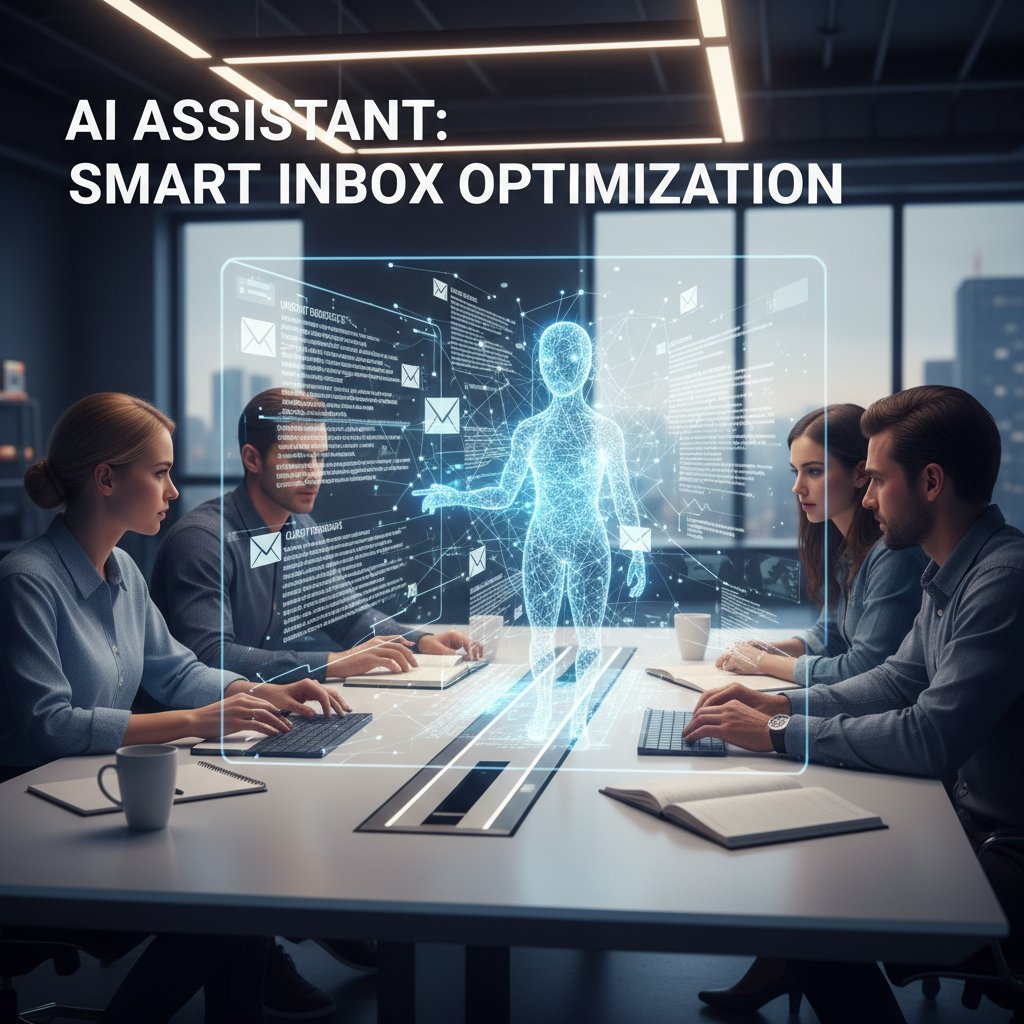
First, AI parses incoming messages for requests, deadlines, and context. Next, it prioritizes tasks by urgency, sender importance, and relevance – so a client’s urgent request rises above that endless “Reply All” thread. Finally, it prompts you with summaries, suggested actions, or smart reminders. According to Unite.AI’s 2024 review, companies saw a 25-35% reduction in missed deadlines after deploying these AI-driven workflows.
Yet, limits remain. As the Tanka.ai report highlights, “Complex interfaces and spotty integrations can still slow adoption.” In other words: if the AI adds more steps than it saves, users abandon it.
Protecting privacy in the age of digital coworkers
The dark side of AI-driven workplace automation? Every “smart” feature is a potential data leak. With enterprise collaboration management software parsing sensitive emails and internal conversations, robust privacy isn’t optional—it’s existential. Here’s the non-negotiable core:
- Data minimization: Only the minimum necessary information is processed; everything else is ignored or anonymized.
- Compliance-first design: GDPR, HIPAA, and local laws are baked into architecture, not tacked on as an afterthought.
- Transparent controls: Users can see, audit, and revoke what the AI accesses.
- End-to-end encryption: All communications and task data are secured with industry-leading encryption.
A 2024 survey by InfoSec Institute found that 72% of IT leaders cite data privacy as their top concern with collaborative AI. Without serious governance, an AI teammate can become your biggest security risk.
Privacy is not a one-off checklist – it’s a moving target. As AI tools grow more powerful, the companies behind them must continually invest in security research and transparent reporting.
The human cost of collaboration chaos (and how AI exposes it)
Burnout, bias, and the digital paper cut
Collaboration tools are supposed to make work easier. But the endless swirl of pings, reminders, and auto-generated tasks often has the opposite effect. Burnout has become the silent epidemic of the white-collar world. According to a 2024 McKinsey report, 49% of knowledge workers report higher stress since the rise of always-on digital collaboration.
"AI can automate routine, but it can also accelerate burnout by flooding teams with new demands and erasing boundaries." — Adapted from McKinsey’s 2024 workplace technology study
The paradox: AI-driven software often amplifies underlying dysfunction. When the bot never sleeps, neither do you. Worse, AI may inherit or amplify human bias – surfacing some voices, ignoring others, or perpetuating feedback loops that privilege speed over substance.
Yet, this exposure isn’t all bad. By shining a spotlight on unproductive habits (e.g., pointless meetings, busywork), AI can force necessary – if uncomfortable – conversations about what actually matters.
How AI reveals team dysfunctions you can't ignore
AI doesn’t just automate. It measures—ruthlessly. The very act of tracking tasks, meetings, and workflows can lay bare the ugly truth about team collaboration. Here’s a breakdown:
| Dysfunction | How AI Exposes It | Real Impact |
|---|---|---|
| Meeting overload | Summarizes, surfaces redundancies | 20% fewer productive hours |
| Task ambiguity | Flags unclear assignments | Missed deadlines, confusion |
| Information silos | Tracks knowledge gaps, recommends sharing | Slower onboarding, rework |
| Burnout/overwork | Monitors after-hours activity, suggests breaks | Higher attrition |
Table 2: Common team dysfunctions made visible by AI-driven collaboration analytics.
Source: Original analysis based on data from Unite.AI, 2024 and McKinsey, 2024
When the numbers are impossible to ignore, leaders are forced to act. AI isn’t just a digital helper – it’s a mirror, reflecting the blind spots of company culture.
Case study: Slashing meeting hours with AI
Consider a global technology firm plagued by “meeting bloat.” After rolling out an AI-powered collaboration management solution, the company used auto-generated summaries to eliminate redundant status updates. Weekly meeting time dropped by 30%, freeing teams to focus on execution instead of endless talk.

The secret wasn’t some exotic algorithm, but relentless transparency – every recurring meeting was measured for actual value. The result? Sharper agendas, fewer invites, and a cultural shift away from “performative collaboration.” According to the IT director, “The AI didn’t just save us time. It showed us what we were wasting it on.”
For organizations serious about change, these hard metrics are both a wake-up call and a roadmap.
Beyond the hype: Red flags and hidden costs of AI-driven collaboration
AI-washing: Is your software really intelligent?
Not all “AI-driven” software is created equal. The last 18 months have seen a boom in vendors slapping AI labels on the most basic automation. Here’s how to spot the fakes:
- No contextual memory: True AI remembers what happened last week; “AI-washed” products forget after each session.
- Minimal customization: Genuine AI adapts to your workflow. Pretenders force you to adapt to theirs.
- Opaque algorithms: If you can’t tell what your “AI coworker” is doing, it’s probably just glorified if-then logic.
- Surface-level automation: Real intelligence means complex decision-making, not just moving an email to another folder.
The industry press has dubbed this phenomenon “AI-washing”—where software is “smart” in name only. According to a 2024 Gend.co survey, 37% of IT leaders remain skeptical that their current vendors deliver “meaningful intelligence.”
Before you buy into claims, demand demos that show real adaptability, not just a slick UI.
The hidden costs nobody talks about
AI-driven enterprise collaboration management software can come with costs that aren’t obvious in the sales pitch. According to Unite.AI and Tanka.ai, these costs often take teams by surprise:
| Cost Type | Hidden Impact | Example |
|---|---|---|
| Integration | Weeks of IT man-hours, system downtime | Legacy CRM integrations |
| Training | Steep learning curves, lost productivity | New onboarding programs |
| Privacy compliance | Ongoing legal audits, risk of fines | GDPR, HIPAA reviews |
| Over-automation | Loss of human judgment, stifled creativity | “Set and forget” syndrome |
Table 3: The most common hidden costs associated with AI-driven collaboration platforms.
Source: Original analysis based on Unite.AI, 2024 and Tanka.ai, 2024
In short: the sticker price rarely tells the whole story. Leaders should budget for change management and ongoing oversight, or risk “AI fatigue” setting in fast.
When AI makes things worse: Real-world cautionary tales
Not every AI rollout leads to utopia. A 2024 case from a large retail chain saw productivity dip 18% after a botched deployment of an “AI” project management suite. The culprit? Over-automation: key tasks were reassigned incorrectly, and urgent issues got buried.

In another cautionary tale, a healthcare firm faced a PR crisis when its AI assistant mishandled sensitive patient emails, triggering an internal data privacy audit.
The lesson: unchecked automation can backfire spectacularly. Experts recommend frequent audits, human-in-the-loop safeguards, and – above all – humility about the limits of current AI.
Winning with AI: Practical strategies for real teams
Step-by-step guide to mastering AI collaboration tools
- Map your real workflows: Before automating anything, document how work actually flows (not how it’s “supposed” to).
- Pilot with a small team: Test new AI tools with a subset of users; gather feedback without risking entire projects.
- Prioritize integrations: Ensure your AI platform works seamlessly with core systems (email, calendar, CRM) out of the box.
- Set ground rules: Define what the AI can and can’t do—especially around sensitive data and task assignments.
- Train for exceptions: Teach users how to override or correct AI mistakes quickly.
- Measure and iterate: Use analytics to track impact, then tune settings for real-world efficiency.
- Celebrate quick wins: Publicize early successes (saved hours, fewer missed deadlines) to build buy-in.
According to a 2024 Deloitte study, enterprises following these steps saw double the productivity gains versus those that rushed into “big bang” deployments.
A methodical, skeptical approach is your best defense against both wasted spend and user backlash.
Checklist: Is your team ready for an AI coworker?
- Have you documented existing collaboration pain points?
- Are your workflows standardized, or is every project an improvisation?
- Do leaders model openness to technology change?
- Is your IT team ready to support integration and compliance?
- Have you discussed privacy and transparency with employees?
- Will you measure impact beyond “time saved” – e.g., quality, satisfaction?
Even the smartest AI fails when dropped into a dysfunctional team. Readiness is about culture, not just tech.
Teams that score “yes” on most checklist items are primed for a digital teammate. Those that don’t should focus on process first, software second.
Quick wins and long-term habits
- Automate the obvious: Start with low-risk, repetitive tasks (email triage, meeting scheduling) to build trust in the system.
- Maintain a “human-in-the-loop”: Keep final approvals or complex decisions with real people.
- Encourage feedback: Make it easy for users to flag errors, suggest improvements, and share success stories.
- Update processes regularly: Treat AI integration as an ongoing, not one-time, journey.
- Reward adoption: Recognize teams that use automation to deliver real results—not just those who “tick the box.”
Over time, these habits foster a workplace where AI is a partner, not a threat. The result: less digital exhaustion, more creative energy.
Global teams, culture clashes, and the digital etiquette revolution
Why most collaboration tools fail across cultures
The global workplace is a cauldron of conflicting norms. While American teams may prize direct requests, Japanese firms might avoid confrontation by implication. Most AI-driven enterprise collaboration management software is still “culture-blind” – missing subtle cues or, worse, misinterpreting them altogether.

Research from Harvard Business Review in 2024 found that over 65% of cross-border teams struggled to adapt standardized tools to local customs. The result: miscommunication, frustration, and sometimes, lost deals.
Only by designing software with “cultural intelligence” – or at least giving users more control over tone and format – can organizations hope to bridge the gap.
The most effective teams supplement AI with explicit communication agreements, regular check-ins, and local champions who translate digital etiquette into action.
The new rules of digital teamwork
Understanding that tone and intent are hard to read in text – and that AI summaries can strip nuance.
Recognizing that “urgent” may look different across time zones; smart AI prioritizes, but doesn’t demand instant response.
Using AI to surface decisions, not hide them, and to break down silos instead of reinforcing them.
In 2024, these rules aren’t just “nice to have” – they’re survival skills for modern teams. AI can facilitate, but never replace, the human art of negotiation and trust-building.
How AI is rewriting workplace etiquette
The new digital etiquette is being shaped as much by bots as by people. Auto-generated summaries, automated reminders, and even grammar corrections all influence how teams perceive one another.
"AI isn’t just changing how we work—it’s redefining what it means to be professional, responsive, and considerate in a digital world." — Adapted from Harvard Business Review’s digital workplace analysis, 2024
The best organizations teach both their people and their machines to err on the side of clarity and empathy, not just speed.
The future of enterprise collaboration: Trends, risks, and opportunities
2025 and beyond: What's next for AI in the workplace?
AI-driven collaboration management isn’t a passing fad. Its market is forecast to grow at a blistering 12%+ CAGR through 2032, driven by demand for smarter, less intrusive automation. But the focus is shifting from raw automation to usability, integration, and trust.

Current champions like Microsoft Copilot and futurecoworker.ai are doubling down on “invisible” AI – tools that blend seamlessly into daily workflows, instead of requiring constant hand-holding. Meanwhile, privacy, compliance, and cultural adaptation have moved from afterthought to top priority.
The winners will be those who balance automation with respect for human context and judgment.
Risks to watch and how to mitigate them
- Data privacy breaches: Ensure all tools meet (and exceed) compliance standards, with regular audits.
- User resistance: Involve teams early; share wins and failures openly.
- Over-automation: Keep humans in the loop for complex or sensitive decisions.
- AI bias: Regularly test and adjust models to avoid reinforcing inequality or ignoring minority perspectives.
- Vendor lock-in: Choose platforms with open APIs and strong interoperability.
Each risk is real, but manageable with vigilance, transparency, and the right partners.
What to demand from your next AI teammate
- Proven privacy credentials: Ask for details on encryption, data retention, and audit trails.
- Contextual intelligence: The AI should learn from your workflow, not just your clicks.
- Unbiased recommendations: Demand transparency about how priorities are set.
- Easy customization: You shouldn’t have to code to adapt the tool to your team.
- Human override: Make sure you’re always in control.
The age of “black box” AI is over. Leaders now expect – and deserve – a digital teammate that’s accountable, adaptable, and safe.
Real talk: Should you trust an AI coworker with your workflow?
Debunking the biggest myths
- “AI will steal your job.” In practice, the best AI-driven enterprise collaboration management software automates drudgery, freeing people for creative work—not replacing them.
- “AI is always neutral.” Without checks, algorithms can reinforce bias or make embarrassing blunders.
- “Setup is instant.” Even user-friendly platforms require process clarity and culture change.
- “It’s always about speed.” Sometimes, slowing down (to clarify a task or catch an error) is the smarter move.
The reality is more nuanced—and more hopeful—than any headline.
Final verdict: Is AI-driven collaboration worth it?
| Criteria | Traditional Tools | AI-driven Software | Winner |
|---|---|---|---|
| Productivity boost | Incremental | Substantial (if implemented) | AI-driven |
| Ease of use | Varies; often clunky | High (with email-based AI) | AI-driven |
| Privacy/compliance | Mature, but manual | Advanced, but evolving | Tie |
| Adaptability | Low | High (with customization) | AI-driven |
| Human oversight | Built-in | Optional, but recommended | Tie |
Table 4: Comparing traditional vs. AI-driven collaboration management tools.
Source: Original analysis based on research from Tanka.ai, 2024 and Unite.AI, 2024
AI-driven enterprise collaboration management software – when chosen and implemented wisely – has a clear edge. But only when human insight, clear process, and a relentless eye for risk remain part of the equation.
Call to action: Rethink your digital teammate
If you’re ready to escape the endless email treadmill and reclaim real productivity, start by questioning your assumptions. Challenge vendors, audit your workflows, and prioritize platforms that meet you where you are – not where their marketing wants you to be.

The future isn’t about replacing people. It’s about amplifying what humans do best – with a digital teammate that works as hard, and as transparently, as you do. Visit futurecoworker.ai for more research-backed insights and to discover how intelligent collaboration can finally deliver on its promise.
In an era of information overload and collaboration chaos, the right AI-driven enterprise collaboration management software doesn’t just save time – it transforms how you work, think, and thrive. The choice is yours: sink in the digital flood, or ride the next wave with your new AI coworker, unfiltered and unafraid.
Sources
References cited in this article
- Tanka.ai(tanka.ai)
- Unite.AI(unite.ai)
- Research.com(research.com)
- Monday.com(monday.com)
- Gend.co(gend.co)
- Reworked.co(reworked.co)
- Atlassian(atlassian.com)
- Lately.ai(lately.ai)
- Haiilo(blog.haiilo.com)
- Simpplr(simpplr.com)
- LinkedIn(linkedin.com)
- VentureBeat(venturebeat.com)
- Wiley Online Library(onlinelibrary.wiley.com)
- ScienceDirect(sciencedirect.com)
- Slack(slack.com)
- Analytics Vidhya(analyticsvidhya.com)
- DQ India(dqindia.com)
- LinkedIn(linkedin.com)
- Rocket.Chat(rocket.chat)
- Sembly(sembly.ai)
- ClickUp(clickup.com)
- Coworker AI(coworker.ai)
- Qualimero(qualimero.com)
- PromptLayer(blog.promptlayer.com)
- Menlo Ventures(menlovc.com)
- McKinsey(mckinsey.com)
- IBM(ibm.com)
- Deqode(deqode.com)
- MoldStud(moldstud.com)
- Technavio(technavio.com)
- Forbes(forbes.com)
- IBM(ibm.com)
- TrustArc(trustarc.com)
- Dropbox(blog.dropbox.com)
- ScienceDirect(sciencedirect.com)
- Gies College of Business(giesbusiness.illinois.edu)
- Deloitte(www2.deloitte.com)
- Forbes(forbes.com)
- Krisp.ai(krisp.ai)
- ClickUp(clickup.com)
- InfoWorld(infoworld.com)
- IBM(ibm.com)
- Forbes(forbes.com)
- CIO.com(cio.com)
- Forbes(forbes.com)
- WAC Clearinghouse(wac.colostate.edu)
Transform Your Email Into Productivity
FutureCoworker AI turns your everyday email into an intelligent workspace, seamlessly managing tasks and collaboration within your enterprise. It eliminates the complexity of AI, allowing you to benefit from advanced technology without any technical knowledge. Achieve productivity, streamline processes, and improve team efficiency through natural email interaction, getting tasks done faster and smarter.
Get startedReady to Transform Your Email?
Start automating your tasks and boost productivity today
Frequently Asked Questions
What is the current market size for AI-driven enterprise collaboration software?
The global market for AI-driven enterprise collaboration management software was valued at $16.1 billion in 2022 and is projected to experience double-digit growth.
What are the main limitations of current AI collaboration tools?
Current AI tools can automate routine tasks like categorizing emails and scheduling meetings, but struggle with context loss, fragmented communication, and limited knowledge retention, meaning they often fail to understand the full backstory of conversations and multi-threaded projects.
How many collaboration tools does the average enterprise use?
According to 2023-2024 Tanka.ai industry analysis, most enterprises juggle an average of 7-10 collaboration tools, which actively undermines productivity rather than streamlining workflows.
Which AI-driven collaboration tools are mentioned as market leaders?
The article names Microsoft Copilot and Asana AI as market leaders, though both have yet to fully solve the 'context gap' problem.
Continue Reading
Keep exploring Intelligent enterprise teammate

Enterprise AI-Powered Collaboration Tools: How They Work and Where They Fail
Enterprise AI-powered collaboration tools software is reshaping how teams work. This article examines how these systems work, their real-world pitfalls, and why most implementations struggle.

Enterprise AI Collaboration Management: Why Most Implementations Fail
Enterprise AI collaboration management faces real obstacles despite rapid adoption. This article explains what organizations misunderstand, why most initiatives fail, and how to implement it effectively.

Enterprise AI Collaboration Management Tools: Integration Reality Vs. Promise
Enterprise AI collaboration management tools promise workplace efficiency but face cultural resistance and integration challenges.

Enterprise Collaboration Software Ai: Risks and Benefits Beyond the Hype
Enterprise collaboration software AI spending surged to $13.8 billion in 2024. This article examines the real risks, benefits, and deployment strategies beyond vendor hype.

Enterprise AI-Powered Team Collaboration Solutions That Actually Work
Discover insights about enterprise AI-powered team collaboration solutions

How Enterprise AI Collaboration Tools Reshape Teamwork
Enterprise AI-powered collaboration management tools address broken workflows and information silos. This article examines their real impact, common myths, and implementation strategies.