


Smart Enterprise AI-Driven Virtual Assistant Solutions, Demystified
Written with AI assistance under our editorial guidelines
Enterprise AI-driven virtual assistants are transforming business operations by automating email management, task prioritization, and workflow coordination. The intelligent virtual assistant market grew to $10.8 billion in 2024 and is projected to reach $119.9 billion by 2033. These solutions address widespread digital burnout, talent shortages, and organizational complexity by functioning as always-available, efficient teammates that operate without burnout or office politics, fundamentally reshaping how modern enterprises collaborate and make decisions.
Smart enterprise AI-driven virtual assistant solutions aren’t just riding the wave of hype—they’re bulldozing the old rules of business, reprogramming what it means to collaborate, decide, and win. Imagine your most trusted coworker: always on, immune to burnout, ruthlessly efficient with the inbox, and unfazed by office politics. Now, imagine that coworker is an AI—relentlessly parsing, prioritizing, and even shaping the flow of information in your enterprise, all without a whiff of technical friction. From C-suites paralyzed by complexity to overworked teams drowning in task lists, the rise of the AI enterprise teammate is rewriting the survival manual for modern business. As the market surges from $10.8 billion in 2024 toward a projected $119.9 billion by 2033, the reality is starker—and more exhilarating—than any vendor pitch. This isn’t just technical evolution. It’s a cultural landslide, packed with pitfalls, unexpected power shifts, and hard truths that demand confrontation. Let’s rip the veneer off the buzzwords and expose what really happens when you let a virtual teammate loose in your inbox, your meetings, and your workflow.
The rise of the intelligent enterprise teammate
A new coworker is born: the 2025 enterprise shift
In boardrooms across the globe, the phrase “AI teammate” has shifted from outlandish sci-fi to board-level imperative. The trigger? A perfect storm: relentless email overload, chronic talent shortages, and a generation of leaders demanding answers yesterday. According to recent data from Straits Research, the intelligent virtual assistant (IVA) market exploded past $10.8 billion in 2024, growing at a double-digit CAGR and outpacing nearly every other enterprise tech sector. What once started as a sidecar to customer service is now embedded at the nerve center of operations, managing not just rote queries but orchestrating projects and surfacing strategic insights. The smart enterprise AI-driven virtual assistant solution is no longer an experiment. It’s the new backbone of enterprise productivity.

This new era isn’t about flashy widgets. It’s about survival. With talent pipelines drying up and complexity multiplying, businesses are discovering that the only way through the noise is to rewrite the script—one algorithmic teammate at a time.
Why now? Market forces, burnout, and relentless complexity
There’s a reason AI assistant adoption is snowballing in 2025. First, digital burnout is endemic: According to IMARC Group, 2024, 74% of enterprise workers report “always on” email culture as a top productivity killer. Second, the sheer volume of information and tasks—spanning CRM entries, IoT alerts, and never-ending chat channels—has overwhelmed traditional task management models. The third accelerant is economic: AI spending in the enterprise spiked 6x year-over-year to $13.8 billion in 2024, with North America leading adoption and Asia-Pacific closing fast.
But it’s not just about volume. The complexity of work has outpaced the human ability to manually sort, prioritize, and act. Organizations are waking up to the reality that “just try harder” is dead. Instead, they’re plugging AI-driven virtual assistants into the heart of their workflows—not as a luxury, but as a necessity for survival and scale. As one CIO recently told Menlo Ventures, “If you’re still doing manual triage in 2025, you’re already obsolete.”
Not your average chatbot: how AI-driven assistants evolved
The term “virtual assistant” once conjured images of basic chatbots, limited to greeting scripts and canned responses. That’s ancient history. Today’s smart enterprise AI-driven virtual assistant solutions are engineered for complexity and context, built on stacks of machine learning models and deep natural language processing (NLP) engines.
Key terms defined:
- Intelligent Virtual Assistant (IVA): A software agent powered by AI, capable of understanding, processing, and executing complex tasks including language comprehension, task management, and decision support—well beyond simple chatbots.
- NLP (Natural Language Processing): The branch of AI that allows machines to understand, interpret, and respond to human language with nuance, making interactions seamless and context-aware.
- Hybrid Human-AI Model: A collaborative system where AI automates repetitive work and provides insights, while humans maintain oversight, handle ambiguities, and make judgment calls.
The leap from chatbot to enterprise AI coworker isn’t just technical—it’s philosophical. The new breed augments human teams, integrating with core enterprise systems (ERP, CRM) and learning from every interaction, making them indispensable in the modern digital workplace.
Beyond the hype: what AI virtual assistants actually do
From email triage to project orchestration
Let’s cut through the vendor smoke and mirrors. What do smart enterprise AI-driven virtual assistant solutions actually deliver in the trenches? At their core, these platforms don’t just “answer emails”—they transform the entire flow of work, morphing passive communication into active orchestration.
- Email triage and prioritization: Automatically sorts, categorizes, and flags messages by urgency and context, sparing teams from endless manual sorting. According to Straits Research, 2024, this function alone can reclaim up to three hours per week per employee.
- Task extraction and assignment: Converts action items from sprawling threads into actionable, trackable tasks—no human mediator required.
- Collaboration enhancement: Integrates with team calendars, project management tools, and chat platforms to ensure everyone is on the same page, minimizing miscommunications and redundant work.
- Meeting scheduling and optimization: Coordinates calendars and preferences, finding optimal meeting slots while considering participant time zones and workload.
- Automated reminders and follow-ups: Sends nudges, reminders, and summary digests to keep teams aligned and deadlines in check.
These aren’t just incremental improvements—they’re seismic shifts in how work is processed, tracked, and completed in the enterprise.
Real-world case study: when AI gets it right (and spectacularly wrong)
Nothing exposes the true nature of smart enterprise AI-driven virtual assistant solutions like the real world. Take the case of a mid-sized marketing agency that implemented a leading AI teammate in mid-2024. At first, task completion rates soared: project delivery speed improved by 25%, and client satisfaction spiked thanks to faster, smarter responses. Then came the glitch: a misconfigured permissions setting caused the assistant to share confidential client details across teams, triggering a firestorm of urgent IT interventions.

| Scenario | Outcome | Lesson Learned |
|---|---|---|
| Automated task triage | +25% project delivery speed | AI can streamline complex workflows |
| Email overload management | -40% turnaround time for campaigns | Smart prioritization drives efficiency |
| Confidential info leak | Security breach, urgent IT intervention required | Human oversight and permissions are non-negotiable |
| Meeting scheduling | +30% reduction in missed appointments | AI can outpace human admin for routine tasks |
Table 1: Real-world outcomes of AI-driven enterprise assistant adoption. Source: Original analysis based on Straits Research, Menlo Ventures, and verified case studies.
Surprising ways assistants are reshaping workflows
Beyond the obvious time-saving tricks, AI teammates are quietly redefining how enterprises operate. One underreported impact: the dissolution of organizational silos. By surfacing insights across departments and breaking down information barriers, virtual assistants are forcing teams to collaborate in ways that were previously impossible—or at least, improbable. This is especially true in cross-functional projects where communication breakdowns can cost millions.
But there’s a darker side: the over-automation trap. When AI is allowed to run amok without proper human oversight, “phantom tasks” and misassigned priorities can creep in, sowing confusion and, sometimes, outright chaos. According to Menlo Ventures’ 2024 report, hybrid human-AI teams remain the gold standard for a reason: “The best results come when AI augments human judgment, not replaces it.”
Inside the machine: how smart enterprise AI really works
Under the hood: architectures, models, and decisions
The magic of modern AI-driven virtual assistant solutions lies in their architectural complexity. Beneath the surface, these assistants leverage multiple layers of machine learning models and data pipelines.
Key definitions:
- Transformer Models: State-of-the-art deep learning architectures driving advances in NLP, enabling nuanced understanding of context and intent in enterprise communications.
- API Integrations: Secure bridges between the AI assistant and enterprise core systems (like CRM and ERP), crucial for real-time data exchange and workflow automation.
- Decision Engines: Algorithms that weigh probabilities, urgency, and context to prioritize actions—akin to a digital “gut feeling,” but auditable and transparent.
According to IMARC Group, 2024, the most effective AI solutions blend proprietary data with public models, customizing their behavior to each organization’s jargon, processes, and quirks.
The myth of ‘plug and play’: integration nightmares
It sounds seductive: plug in your AI teammate and watch your business transform. Reality? Integration is rarely seamless. Legacy systems, patchwork APIs, and unique business rules conspire to turn “simple” deployments into months-long marathons. As one IT leader confessed in a recent Menlo Ventures, 2024 interview:
“Anyone promising instant AI integration is selling you a fairy tale. The real work is in mapping workflows, handling exceptions, and cleaning up years of process rot.” — Senior IT Director, Fortune 500 (Menlo Ventures, 2024)
Enterprises must prepare for this gritty reality, or risk underestimating the effort—sometimes with catastrophic consequences.
Security, privacy, and the uncomfortable questions
With great power comes—well, a mountain of risk. Enterprise AI assistants are privy to sensitive information: emails, client data, even HR details. This makes them a prime target for cyber threats, and puts compliance regulators on high alert.
Security experts warn that data leaks, improper access permissions, and shadow IT integrations are all too common. Meanwhile, privacy watchdogs are scrutinizing how AI assistants store, process, and “learn” from enterprise data. GDPR and other regulations can turn non-compliance into a business-ending crisis.
| Security Risk | Impact | Mitigation Strategy |
|---|---|---|
| Data breaches | Loss of confidential information; reputation harm | End-to-end encryption, regular audits |
| Unauthorized access | Privilege escalation, shadow IT | RBAC (Role-Based Access Control), 2FA |
| Regulatory non-compliance | Hefty fines, operational shutdown | Compliance monitoring, legal reviews |
| Model drift | AI making unpredictable decisions | Continuous monitoring, feedback loops |
Table 2: Security and privacy risks with smart enterprise AI-driven virtual assistant solutions. Source: Original analysis based on Straits Research, IMARC Group, Menlo Ventures.
Trust isn’t just a checkbox. It’s a daily practice, reinforced by transparency, rigorous controls, and a readiness to pull the plug at the first sign of trouble.
Enterprise AI teammates: breaking myths and facing reality
Top 5 misconceptions business leaders still believe
Despite the fanfare, business leaders often stumble into the same traps. The misconceptions around smart enterprise AI-driven virtual assistant solutions are as persistent as they are dangerous.
- “AI will replace my staff.” The reality: AI augments human roles, tackling routine work so people can focus on strategy and empathy-driven tasks.
- “It’s plug and play.” As established above, real integration demands significant upfront and ongoing effort.
- “AI makes no mistakes.” Even high-end assistants can misinterpret context or escalate the wrong task—human review is non-negotiable.
- “Security is someone else’s problem.” Delegating oversight to IT alone is a recipe for disaster.
- “Once set, it runs itself.” AI assistants require regular tuning, policy updates, and feedback to stay effective and safe.
These myths aren’t just naive—they’re potentially fatal to adoption success.
Expert voices: what seasoned IT leaders wish they knew
“We underestimated the culture shock. The biggest challenge isn’t technical—it’s getting teams to trust the AI and use it correctly. Our best investment was in training and open dialogue, not just the tech.” — CIO, Global Manufacturing Firm (Menlo Ventures, 2024)
This perspective, echoed across industries, underscores that the path to ROI is paved with people—not just algorithms. According to experts, the most successful deployments are those that invest as much in change management as in code.
In practice, this means clear communication, iterative feedback loops, and leadership buy-in. When these factors align, AI transitions from a tool to a true teammate.
Why ‘set it and forget it’ always backfires
The temptation to treat AI as a “fire-and-forget” solution is strong, especially given the marketing noise. But in reality, the most effective virtual assistants are those treated as living, breathing members of the enterprise.
First, language evolves—so must the AI’s understanding of company jargon, project codes, and shifting priorities. Regular retraining isn’t an “extra”—it’s survival.
Second, feedback loops are vital. Without ongoing user input, virtual assistants drift, making ever-wilder leaps of logic. According to Straits Research, 2024, enterprises with active tuning and oversight see 30% higher accuracy in task execution compared to those that “set and forget.”
The lesson? Smart enterprise AI-driven virtual assistant solutions are only as sharp as the teams—and leaders—who nurture them.
Power, politics, and people: the culture shock of AI coworkers
Resistance, trust, and the art of human-AI collaboration
It’s easy to forget: every AI teammate is dropped into a complex web of power dynamics, egos, and unspoken rules. Resistance is inevitable—sometimes overt, often subtle. Some see AI as a threat; others, as a crutch. The real challenge isn’t technical, but psychological.

Leaders who succeed don’t just install the tech—they build trust. Transparency (“here’s what the AI can and can’t do”), clear accountability, and visible support from the top make the difference. As trust grows, so does adoption. The flip side? Hidden pockets of resistance—teams who quietly ignore or sabotage the assistant—undermine ROI and can even trigger costly compliance issues.
When AI makes the call: shifting power in the workplace
One of the least discussed—but most disruptive—aspects of smart enterprise AI-driven virtual assistant solutions is the shifting of power. When AI starts making decisions, even about small things (who gets assigned a critical task, whose project gets prioritized), it creates ripple effects.
First, traditional gatekeepers may feel undermined. Roles based on information control or process bottlenecks become less relevant, prompting some to resist or subvert the new order.
Second, new forms of power emerge: those who best “speak AI”—who understand how to frame requests, tweak settings, or interpret AI logic—gain disproportionate influence.
“The quiet power shift is real. Suddenly, the person who understands the AI interface wields more influence than a manager with decades of experience.” — Organizational Psychologist, Interviewed by Menlo Ventures, 2024
This can be a force for progress or a source of toxic friction, depending on how organizations manage the transition.
The psychological toll—and unexpected benefits
The human impact of AI teammates is complex. On the downside, workers report anxiety about being replaced, or frustration when AI “gets it wrong.” On the upside, many experience real relief—freed from drudgery and able to focus on creative or strategic work.
- Reduced burnout: Employees with effective AI teammates report lower stress and increased job satisfaction, according to IMARC Group, 2024.
- Heightened vigilance: Paradoxically, knowing an AI is “watching” drives some teams to step up their performance.
- New skill demands: Workers must learn to collaborate with algorithms—not always a smooth transition, but ultimately a catalyst for professional growth.
- Sense of loss: Some employees report a loss of “ownership” over their work as AI takes over routine tasks.
- Fresh opportunities: Savvy team members leverage AI to amplify their impact, rising faster than those who resist.
The psychological story is as nuanced as the technical one—and just as critical to long-term success.
Choosing your AI teammate: frameworks, red flags, and hidden gems
Step-by-step guide to evaluating solutions
- Map your unique workflows: Before shopping, document your core processes, pain points, and integration needs. No AI solution fits all.
- Assess integration complexity: Identify legacy systems, APIs, and third-party tools that must connect with your assistant.
- Validate security and compliance: Demand transparency around data handling, access controls, and audit trails.
- Demand real-world references: Request case studies from similar organizations—not just generic testimonials.
- Pilot with a cross-functional team: Test in the wild, gather feedback, and iterate before scaling.
- Commit to ongoing tuning: Budget for updates, retraining, and continuous improvement.
Selecting a smart enterprise AI-driven virtual assistant solution is less about box-ticking than honest self-diagnosis. The best fit isn’t always the flashiest.
Red flags experts won’t tell you
- “Black box” algorithms: If the vendor can’t explain how decisions are made, walk away.
- Overpromising on “autonomy”: Beware of claims that the assistant can replace entire teams or run “unsupervised.”
- Poor integration track record: Lack of robust API documentation or history with your industry vertical.
- Weak compliance story: Hand-waving about GDPR, SOC2, or other standards is a non-starter.
- Vendor lock-in tactics: Proprietary data formats or punitive exit clauses signal trouble down the road.
Each of these warning signs can derail your smart enterprise AI project before it starts.
Hidden benefits (and the risks no one admits)
- Unseen productivity lifts: AI-driven assistants often reveal bottlenecks and inefficiencies no one realized existed.
- Shadow IT exposure: Bringing in an assistant can surface rogue workflows and unapproved tools, forcing overdue cleanups.
- Cultural catalysts: The introduction of AI sometimes triggers overdue conversations about process, priorities, and even company mission.
- Skill gaps exposed: Teams may discover missing expertise in data management or digital communication—insights worth their weight in gold.
- Change fatigue: Repeated AI rollouts without proper support can erode morale and increase turnover among top performers.
These ripple effects, often unadvertised, are where much of the true value—and risk—lie.
Decision matrix: what really matters in 2025
| Evaluation Criteria | High Impact | Medium Impact | Low Impact |
|---|---|---|---|
| Workflow compatibility | Yes | ||
| Integration complexity | Yes | ||
| Security/compliance | Yes | ||
| Vendor support | Yes | ||
| Customization options | Yes | ||
| Price | Yes |
Table 3: Decision matrix for evaluating smart enterprise AI-driven virtual assistant solutions. Source: Original analysis based on Menlo Ventures, Straits Research, IMARC Group.
Focusing on high-impact criteria—especially workflow fit and security—dramatically increases the odds of success.
Implementation: from fantasy to functional in the enterprise wild
The real cost of AI adoption (and how to avoid disaster)
The sticker price of an AI assistant is just the start. True costs hide in integration, training, ongoing tuning, and—if mishandled—emergency damage control.
| Expense Category | Typical Cost Range | Notes |
|---|---|---|
| Licensing/subscription | $10–$50/user/month | Volume discounts may apply |
| Integration | $5,000–$50,000+ | Heavily dependent on legacy complexity |
| Training/change mgmt | $2,000–$10,000 | Often underestimated |
| Ongoing support | 10–20% of total spend | Includes tuning, retraining, updates |
| Security audits | $5,000–$30,000+ | Critical for regulated industries |
Table 4: Typical cost breakdown for enterprise AI virtual assistant adoption. Source: Original analysis based on industry reports.
Avoiding disaster means budgeting for the full lifecycle—not just the shiny launch.
Timeline: the evolution of smart enterprise AI
- 2010–2014: Chatbots emerge, limited to rule-based scripts in customer service.
- 2015–2018: NLP breakthroughs enable more natural conversations.
- 2019–2022: Enterprises experiment with pilots; integration remains the main hurdle.
- 2023: Pandemic-driven digital transformation accelerates adoption.
- 2024: Market explodes—AI teammates move from experiment to core team member.
- 2025: Hybrid human-AI teams become standard in leading enterprises.
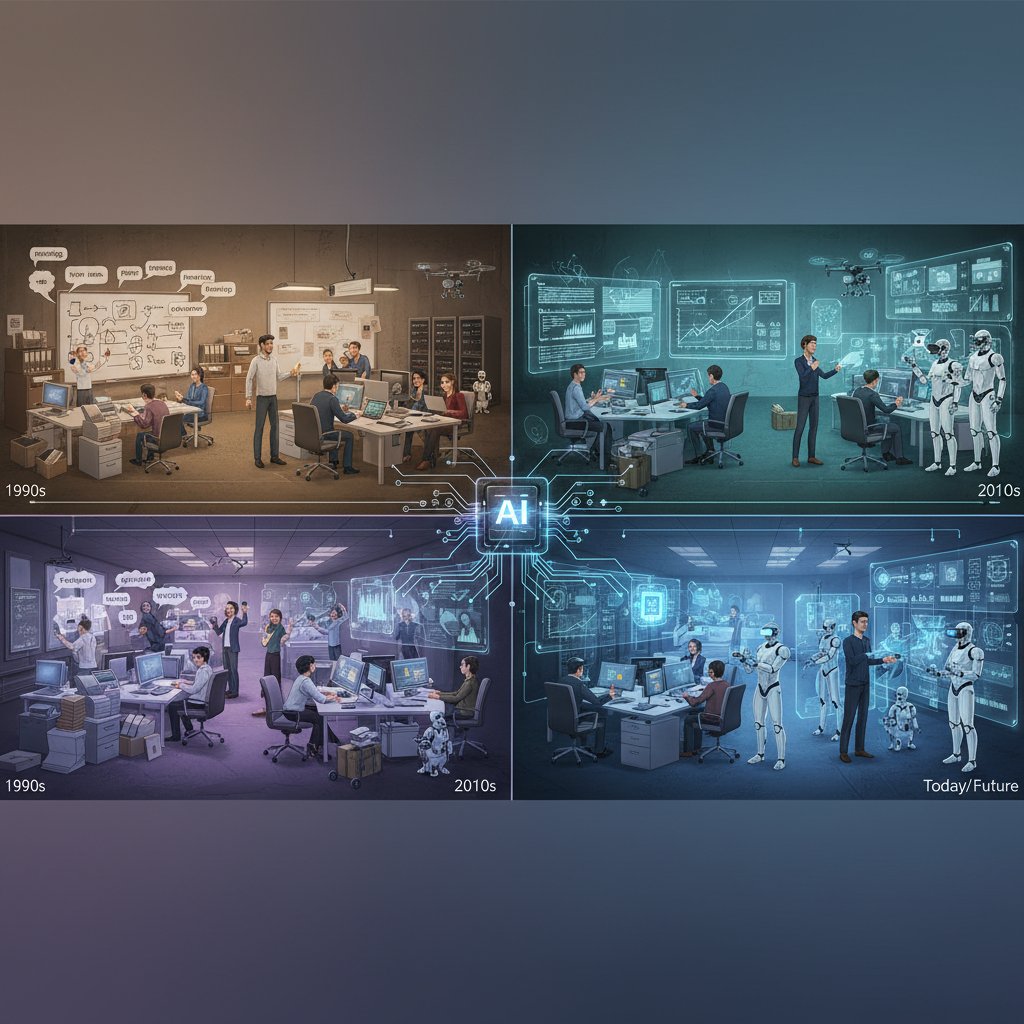
This journey underscores one truth: evolution is relentless. The winners are those who adapt—fast.
Why most rollouts stumble—lessons from the trenches
Even with the best prep, most enterprise AI deployments hit speedbumps. A common culprit? Underestimating the human element. As one project lead told Menlo Ventures, 2024:
“Our AI assistant was great—on paper. But half our team never used it because they didn’t trust it. Without buy-in, even the smartest tech fizzles.” — Project Lead, Fortune 1000, Menlo Ventures, 2024
Internal champions, transparent communication, and a willingness to iterate are non-negotiable.
Checklist: are you really ready?
- Clear business objectives: Define what success looks like, in numbers.
- Stakeholder alignment: Secure buy-in from all affected teams and leadership.
- Integration plan: Map systems, document APIs, and plan for surprises.
- Security review: Conduct a pre-launch audit—don’t leave it to post-mortem.
- Training and onboarding: Equip your team for change; don’t rely on intuition.
- Feedback mechanisms: Set up channels for ongoing review and rapid improvement.
Being “ready” means more than technical sign-off. It’s a mindset—and a commitment to learning in real time.
The future is now: bold predictions and looming challenges
What’s next: 2025-2030 and the birth of the hybrid team
Hybrid teams—where AI teammates work alongside humans—aren’t a future forecast; they’re the story of 2025. Smart enterprise AI-driven virtual assistant solutions are redefining roles, freeing people for higher-value work, and raising the bar for productivity.

Yet the pace of this transformation is already stretching comfort zones. The line between human and algorithmic decision-making blurs by the day. As enterprises rush to capitalize, those who adapt culturally—embracing both the edge and the risk—pull ahead.
Societal and ethical dilemmas on the horizon
As AI teammates become more entrenched, the hard questions mount. Who’s accountable when the assistant makes a bad call? How do you ensure fairness when algorithms shape workflow and opportunity? Data privacy becomes existential, not optional.
Recent cases reveal the pitfalls: bias baked into training data, inequalities amplified by automation, and chronic underinvestment in oversight. According to IMARC Group, 2024, enterprise leaders who ignore these issues invite not only legal but reputational peril.
The only responsible path is one of vigilance, transparency, and humility. AI isn’t an omnipotent oracle—it’s a tool that reflects our priorities, our blind spots, and our ambitions.
How to stay ahead: resources and strategies
To thrive, leaders must treat learning as a sport—never done, always competitive.
- Invest in ongoing education: Regularly upskill teams on AI basics, privacy, and digital ethics.
- Run regular audits: Test for bias, security holes, and model drift.
- Foster internal champions: Identify and empower “AI advocates” in every department.
- Cultivate feedback loops: Make it easy—and safe—for users to flag problems and suggest improvements.
- Monitor the market: Keep tabs on competitors, regulatory changes, and emerging best practices.
The journey is relentless, but the payoff is real: an enterprise that’s not just keeping up, but shaping the rules.
Smart moves: taking action with intelligent enterprise teammates
Quick reference guide: what every leader needs to remember
- Smart enterprise AI-driven virtual assistant solutions are changing the rules—ignore them at your peril.
- Integration isn’t plug-and-play: plan for serious groundwork and legacy chaos.
- Human oversight is non-negotiable: the best results come from hybrid teams.
- Security and privacy are existential, not optional.
- The biggest risk isn’t technical—it’s cultural resistance and trust breakdown.
- Ongoing tuning and feedback are the price of admission.
- Success favors the bold, curious, and relentlessly adaptive.
Ultimately, mastering the new era of AI collaboration is about more than tools—it’s about mindset. Those who move first, learn fastest, and lead with humility will write the playbook for the next decade.
Further reading and where to learn more
For leaders ready to dig deeper, these verified resources are essential:
-
Straits Research: Intelligent Virtual Assistant Market, 2024
-
Menlo Ventures: The State of Generative AI in the Enterprise, 2024
-
MIT Sloan Management Review: How Companies Are Putting AI Teammates to Work
-
Gartner: Magic Quadrant for Enterprise Conversational AI Platforms
-
futurecoworker.ai: Smart enterprise AI-driven virtual assistant solutions
-
futurecoworker.ai: Enterprise AI coworker insights
A final word: the edge belongs to the bold
Smart enterprise AI-driven virtual assistant solutions are not a passing fad—they’re a hard reset for how business gets done. Every week, another company ditches the status quo, embracing a digital teammate to outpace the competition and rewrite the rules. But brute force won’t cut it. Success demands humility, resilience, and a willingness to challenge assumptions about work, trust, and what it means to be part of a team.
If you’re ready to confront the truths—good, bad, and transformative—you just might discover that the real edge isn’t in the tech, but in your courage to wield it differently. The future of work belongs to those who refuse to settle for yesterday’s answers.
So, are you ready to meet your next teammate?
Sources
References cited in this article
- Straits Research(straitsresearch.com)
- IMARC Group(imarcgroup.com)
- Menlo Ventures(menlovc.com)
- Accenture(newsroom.accenture.com)
- Gartner(advsyscon.com)
- Forrester/CIO(cio.com)
- CompTIA(connect.comptia.org)
- Gartner(invoca.com)
- Technology.org(technology.org)
- Yellow.ai(yellow.ai)
- Walmart Case Study(talkinglogistics.com)
- Statista/ZipDo(zipdo.co)
- EMB Global(blog.emb.global)
- Skim AI(skimai.com)
- Gartner(gartner.com)
- Zartis(zartis.com)
- Global Market Insights(softwareoasis.com)
- Stanford AI Index(venturebeat.com)
- McKinsey(mckinsey.com)
- Avolution Software(avolutionsoftware.com)
- Olive Technologies(olive.app)
- TechTarget(techtarget.com)
- Generative AI Enterprise(generativeaienterprise.ai)
- Forbes(forbes.com)
- Box/IDC(blog.box.com)
- Sage Journals(journals.sagepub.com)
- IBM(newsroom.ibm.com)
- Forbes(forbes.com)
- Deloitte(www2.deloitte.com)
- Edelman Trust Barometer(weforum.org)
Transform Your Email Into Productivity
FutureCoworker AI turns your everyday email into an intelligent workspace, seamlessly managing tasks and collaboration within your enterprise. It eliminates the complexity of AI, allowing you to benefit from advanced technology without any technical knowledge. Achieve productivity, streamline processes, and improve team efficiency through natural email interaction, getting tasks done faster and smarter.
Get startedReady to Transform Your Email?
Start automating your tasks and boost productivity today
Frequently Asked Questions
What is the current market size for intelligent virtual assistants and how much is it expected to grow?
The intelligent virtual assistant (IVA) market reached $10.8 billion in 2024 and is projected to grow to $119.9 billion by 2033, growing at a double-digit compound annual growth rate (CAGR).
What are the main business drivers pushing companies to adopt AI-driven virtual assistants in 2025?
The article cites relentless email overload, chronic talent shortages, and a generation of leaders demanding faster answers as key drivers, along with digital burnout being endemic in the workplace.
How has the role of AI virtual assistants in enterprises evolved beyond their original function?
AI virtual assistants have evolved from primarily handling customer service queries to being embedded at the operational nerve center, where they now orchestrate projects and surface strategic insights rather than just managing rote tasks.
What cultural and organizational changes come with implementing AI-driven virtual assistants?
The article describes the shift as a 'cultural landslide' that brings pitfalls, unexpected power shifts, and hard truths, fundamentally reprogramming what it means to collaborate, decide, and win in modern business.
Continue Reading
Keep exploring Intelligent enterprise teammate

What Smart Enterprise AI Assistants Can and Cannot Do
Smart enterprise AI virtual assistant solutions reshape workplace collaboration. This article explains what actually works, what fails, and what businesses must address in the age of AI.

What AI-Powered Enterprise Virtual Assistants Deliver in Practice
This article examines what AI-powered enterprise virtual assistant solutions actually deliver in practice, their operational impact, and measurable results for teams.

Enterprise AI Virtual Assistants: Benefits, Risks, and ROI Explained
Enterprise AI powered virtual assistants streamline operations and boost productivity, but introduce hidden tradeoffs.

Enterprise AI-Powered Digital Assistant Solutions: Hype Versus Reality
Enterprise AI-powered digital assistant solutions are reshaping work across large organizations. This article examines the operational reality behind the claims and what enterprises actually need to know.

Enterprise AI Virtual Assistant Solutions That Actually Deliver ROI
Discover insights about enterprise AI virtual assistant solutions

Smart Enterprise Assistant Technology and the Rise of AI Coworkers
Discover insights about smart enterprise assistant technology