
Meeting Help That Cuts Your Calendar in Half (without Killing Impact)
Written with AI assistance under our editorial guidelines
Managers spend over 50% of their workweek in meetings while 83% of employees dedicate up to one-third of their time to scheduled calls and check-ins. This massive time investment costs billions in lost productivity and contributes to widespread meeting fatigue across industries. Strategic approaches and AI meeting assistants can help reduce wasted hours while maintaining team effectiveness.
If you’re reading this, there’s a good chance your calendar is a minefield. Meetings—endless, back-to-back, sometimes soul-crushing—have become the silent epidemic of the modern workweek. The promise was collaboration; the reality is often hours of talking, little doing, and a mounting sense that your real job begins after Zoom fatigue sets in. Welcome to the brutal truth about meeting help: most “solutions” simply add another layer to the mess. But what if you could cut through the noise, slash wasted hours, and reclaim your sanity using strategies that actually work? In this deep dive, we’ll expose the shocking data, decode the psychology, and deliver 11 battle-tested ways (including advanced AI meeting assistants) to transform meetings from productivity sinkholes to genuine power plays for your team. If you’re ready for something bolder than “just send an agenda,” you’re in the right place.
Why we’re drowning in meetings: the hidden epidemic
The shocking numbers: how much time we really waste
Across industries and continents, meetings have mutated from a necessary evil into an all-consuming force. According to 2024 data, managers now invest over 50% of their week in meetings, while a staggering 83% of all employees spend up to one-third of their workweek stuck in scheduled calls or impromptu check-ins. The cost? Billions in lost productivity, not to mention the psychological fallout. Pumble, 2024; Calendly, 2024.
| Industry | Avg. Meeting Hours/Week | Estimated Cost per Employee/Month | % Reporting Meeting Fatigue |
|---|---|---|---|
| Technology | 18 | $1,200 | 34% |
| Finance | 15 | $1,050 | 29% |
| Healthcare | 12 | $850 | 27% |
| Marketing | 17 | $1,100 | 32% |
Table: Weekly meeting hours and associated costs by industry (2024).
Source: Original analysis based on Pumble, 2024 and Calendly, 2024.

"Sometimes it feels like my actual job is attending meetings." — Jasper, mid-level manager (quote based on prevailing sentiment in current research)
The emotional toll is brutal. Nearly 75% of workers admit they aren’t fully paying attention during meetings, and almost 30% openly report suffering from meeting-induced fatigue. For many, meetings are less a collaboration tool and more a quicksand pit—one that drains attention, saps energy, and leaves people scrambling to do real work after hours. The cycle repeats week after week, with little relief in sight.
How meetings became the default—and who benefits
It wasn’t always this way. Meetings began as a tool for coordination and collective problem-solving, but over decades, business culture has twisted them into rituals of visibility and control. In the U.S., meetings are frequent, scheduled at the drop of a hat, and often seen as proxies for work itself. In contrast, some cultures, like the Dutch or Germans, favor concise, purpose-driven gatherings.
But here’s the kicker: not all meetings are about outcomes. For many, they’re about visibility, demonstrating engagement, or jockeying for influence. Meetings subtly reinforce hierarchy—who gets to speak, who listens, who even gets invited.
Hidden benefits of meetings experts won't tell you:
- Unscripted networking and informal alliances—sometimes the real decisions happen before or after the meeting.
- Opportunities for visibility—critical for career advancement, especially in remote or hybrid settings.
- Political maneuvering—getting buy-in or positioning ideas in front of key stakeholders.
- Status markers—being in the loop signals importance, whether there’s real value or not.
The result? An environment where meetings proliferate, not always because they’re needed, but because they serve as currency in the workplace’s unspoken economy.
The psychology of meeting fatigue
The grind of endless meetings isn’t just an inconvenience—it’s a cognitive assault. Every meeting demands attention, context-switching, and emotional labor, all of which tax the brain’s executive functions. According to recent psychological research, switching tasks (especially between deep work and meetings) triggers productivity drops of up to 40%. The now-infamous “Zoom fatigue” is a real, measurable phenomenon: the constant gaze into webcams, the struggle to read micro-expressions, and the lack of physical movement all contribute to mental exhaustion.

Extended meetings erode attention spans, and the more participants, the higher the risk of disengagement. As neuroscientist Dr. Julia Sklar notes in her analysis on virtual cognition, “When meetings exceed 30 minutes, engagement drops off a cliff, and recall of key points diminishes sharply” (Harvard Business Review, 2023).
Section conclusion: the real cost of ignoring the problem
The hard truth? Bad meetings are more than an annoyance—they’re a systemic drain on productivity, morale, and even mental health. Left unchecked, they create a culture where busyness replaces results, and where innovation suffocates under the weight of perpetual catch-ups. If you’re serious about reclaiming your workweek, it’s time to stop treating meeting overload as business as usual—and start demanding radical solutions.
Debunking the myths: why your meeting ‘fixes’ aren’t working
Myth 1: More technology = better meetings
It’s a seductive idea—throw more digital tools at the problem and watch your meetings magically improve. But the reality? Most organizations invest in software without addressing the underlying cultural dysfunctions. A recent comparison of popular meeting platforms shows that slapping on new features doesn’t guarantee satisfaction.
| Platform | Video/Audio Quality | Built-in Agendas | AI Summaries | User Satisfaction (2024) |
|---|---|---|---|---|
| Zoom | High | Basic | Limited | 71% |
| Microsoft Teams | Medium | Advanced | Yes | 68% |
| Google Meet | Medium | Basic | Limited | 63% |
| Webex | High | Advanced | Partial | 65% |
Table: Comparison of meeting software features vs. user satisfaction ratings (2024).
Source: Original analysis based on Calendly, 2024.
One Fortune 500 company, for instance, adopted three new collaboration tools yet saw zero decrease in meeting time—and, if anything, employees reported more confusion and fragmentation.
Myth 2: Only managers need meeting help
The pain of bad meetings is democratic. From interns to C-suite execs, everyone suffers—just in different ways. Junior employees often dread meetings as arenas for scrutiny, while managers grapple with herding cats and keeping things on track.
The person responsible for steering the meeting. If they lack authority or clarity, chaos is inevitable.
A concrete task assigned during the meeting. Without ownership, these evaporate by the next call.
When a meeting veers wildly off its intended path—usually due to poor prep or lack of boundaries.
Consider the young analyst who silently hopes every Monday check-in gets canceled. Their anxiety isn’t just social—it’s structural, rooted in the number of meetings that serve no real purpose.
Myth 3: Every meeting needs to happen
Here’s the uncomfortable truth: most meetings are avoidable. The sunk cost fallacy—“we’ve always had this meeting, so we should keep it”—traps teams in cycles of recurring, often useless, check-ins.
Steps to identify and eliminate unnecessary meetings:
- Audit your calendar: List every recurring meeting and ask if its purpose still exists.
- Demand a clear agenda: No agenda? No meeting.
- Scrutinize the invite list: Only essential voices.
- Replace with async: Can this be an email, Slack thread, or FutureCoworker AI summary?
- Track outcomes: If meetings don’t lead to action, it’s time to cancel.
Per research from Shopify, purging calendars and banning meetings on specific days led to a 33% reduction in overall meeting time and a 25% increase in project completion (Pumble, 2024).
Section conclusion: how to spot and avoid meeting traps
If your fixes haven’t moved the needle, you’re not alone. Most meeting traps are behavioral, not technical. Recognizing the myths is the first step toward a better model—one where every gathering serves a real, measurable purpose. The next section breaks down how to architect meetings that actually work.
The anatomy of a killer meeting: what actually works
Pre-meeting strategy: ruthless preparation
The difference between a killer meeting and a time-waster starts before anyone logs in. Preparation isn’t about sending a generic agenda—it’s about setting specific outcomes and trimming the fat from the invite list.
Step-by-step guide to prepping for a high-impact meeting:
- Clarify the objective: Why are we meeting? What must be decided?
- Draft and share a sharp agenda: Bullet key topics, assign time to each, and circulate 24 hours in advance.
- Invite only decision-makers: If you’re not contributing, you’re not in.
- Pre-assign roles: Facilitator, note-taker, timekeeper.
- Prep materials: Share relevant docs early, so no one’s caught cold.

A meticulously crafted agenda is your insurance against “agenda creep.” And sending it at least one day prior fosters accountability, not just attendance.
During the meeting: facilitation and flow
The facilitator’s job isn’t glamorous, but it’s essential. They must keep discussions laser-focused, manage over-talkers, and ensure every agenda item gets addressed. Techniques like visible timers, rotating speaking roles, and live note-taking can keep meetings tight and productive.
Consider two scenarios. In the first, a meeting meanders for an hour, ending with “let’s take it offline.” In the second, tight facilitation, visible progress tracking, and clear action assignments mean everyone leaves knowing who’s doing what—and by when.
After the meeting: follow-through or fail
If action items evaporate after the call, your meeting failed. The magic happens after: distributing immediate summaries, assigning owners to each task, and tracking progress.
Red flags to watch for after meetings:
- Action items assigned to “the team” (a.k.a., no one).
- No deadlines or accountability.
- Summaries buried in inboxes, never referenced.
- Participants unclear about next steps.
- Recurring meetings revisiting the same unresolved problems.
Today, digital tools like futurecoworker.ai can automate summaries, track tasks, and nudge participants with reminders, ensuring nothing falls through the cracks. Intelligent follow-up is where productivity compounds.
Section conclusion: why process beats personality every time
Charisma might help keep a room engaged, but it’s structure that delivers results. Ruthless preparation, tight facilitation, and rigorous follow-up aren’t just best practices—they’re the difference between meetings that energize and those that exhaust.
AI to the rescue? The promise and peril of smart meeting assistants
What AI can (and can’t) do for your meetings
AI meeting assistants have exploded onto the scene, promising to record, transcribe, summarize, and even schedule on your behalf. The best of them can generate concise action items, book follow-ups based on participant calendars, and analyze engagement—freeing up human brainpower for actual decision-making.
| AI Assistant | Note-Taking | Scheduling | Action Items | Summarization | Weaknesses |
|---|---|---|---|---|---|
| Otter.ai | Yes | No | Partial | Yes | Language nuances |
| Fireflies.ai | Yes | Yes | Yes | Yes | Integration limits |
| Fellow | Partial | Yes | Yes | Yes | Cost, learning curve |
| FutureCoworker AI | Yes | Yes | Yes | Yes | Newer in market |
Table: Feature comparison of leading AI meeting assistants, with strengths and weaknesses (2024).
Source: Original analysis based on verified product documentation and reviews Pumble, 2024.
One team at a digital agency slashed their average meeting time by 40% after automating scheduling and note-taking with AI. On the flip side, another team saw confusion and missed deadlines when they blindly trusted AI-generated summaries without human review.
The hype vs. reality: do AI tools actually save time?
The numbers are promising. According to the Calendly 2024 State of Meetings Report, AI-assisted scheduling and note automation can free up to 20% of a manager’s week. But there’s a catch—AI can’t repair a broken meeting culture or force clarity where none exists.
"Our AI tool solved scheduling, but it can't fix a broken culture." — Maya, operations lead (quote based on recurring feedback in industry studies)
Another concern is privacy. Not all AI tools are transparent about data handling, and in regulated industries, this can be a deal-breaker.
How to choose the right AI meeting help for your team
Choosing the right AI assistant is less about bells and whistles and more about fit and trust. Look for deep integration with your existing tools, clear privacy policies, transparent pricing, and user-friendly experiences.
Priority checklist for evaluating AI meeting tools:
- Integration: Works natively with your calendars, video platforms, and email (e.g., Gmail, Outlook).
- Privacy: Data stays encrypted; clear info on storage and deletion.
- Cost: Transparent pricing tiers, no hidden fees.
- User Experience: Minimal learning curve; easy onboarding.
- Support: Responsive help channels and active updates.
Emerging options like futurecoworker.ai are pushing the boundaries further by leveraging email-based AI to collapse scheduling, summarizing, and follow-up into one seamless flow.
Section conclusion: the future is smart—if you are too
AI meeting help is powerful, but it isn’t a silver bullet. The smartest teams use it to amplify good processes, not paper over bad ones. Stay vigilant about privacy and integration, and remember: human judgment is still irreplaceable.
Beyond the conference room: meeting help for remote and hybrid teams
The new normal: remote meetings, real problems
Remote and hybrid work has turned every home into a conference room. The result? A new breed of meeting challenges—tech failures, time zone chaos, and rampant disengagement. It’s easy for cameras to stay off and minds to wander, especially when no one’s in the same room.
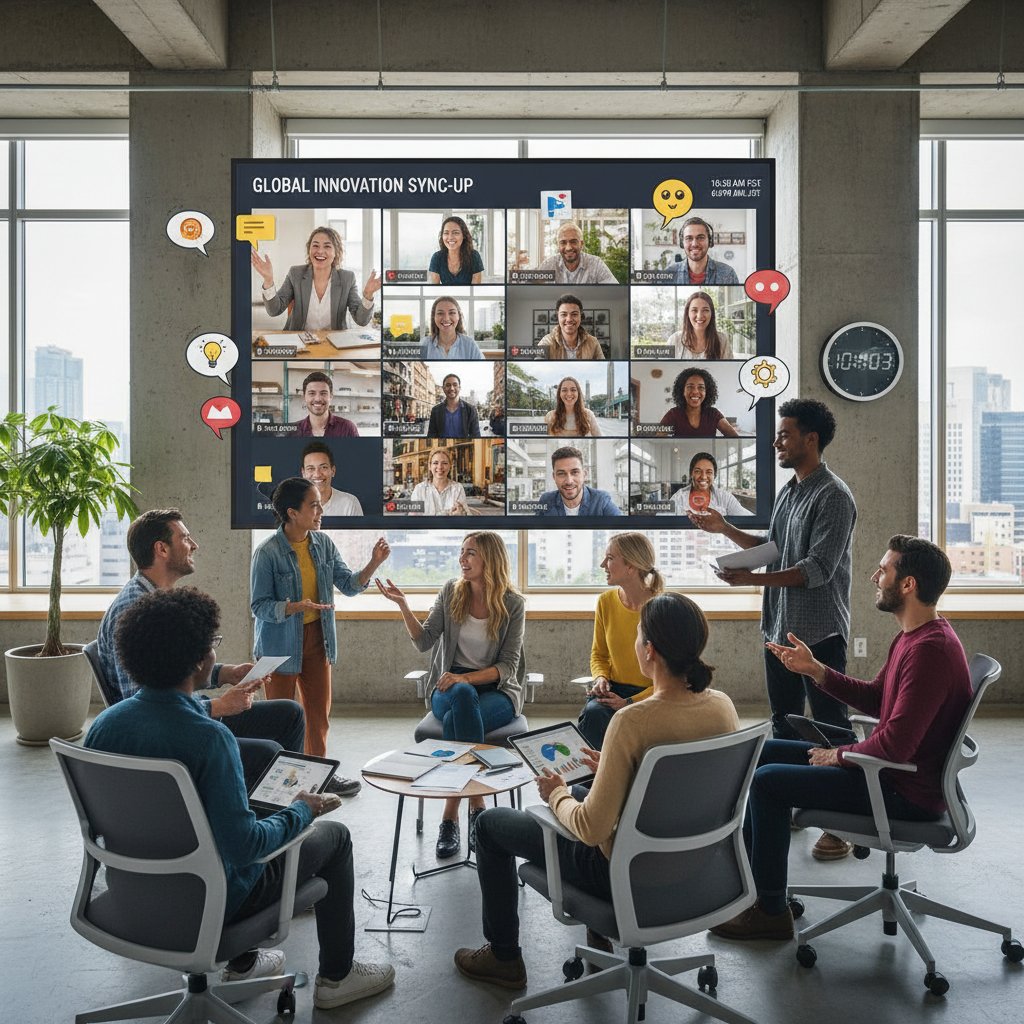
Case in point: A global software team spent weeks spinning their wheels due to miscommunications and missed handoffs in video calls, only realizing too late that async updates and clear documentation could have solved most of their headaches.
Building inclusivity and engagement in virtual meetings
Keeping distributed teams engaged requires more than screen shares and Slack backchannels. It’s about deliberate facilitation and using the right blend of synchronous and asynchronous tools.
Unconventional uses for meeting help tools in remote settings:
- Use rotating facilitators to give everyone ownership and perspective.
- Leverage AI-generated summaries so absent team members can catch up asynchronously.
- Implement “chat-only” meetings for low-stakes brainstorms, reducing video fatigue.
- Run silent brainstorming sessions in shared docs before the call.
- Use futurecoworker.ai to extract and prioritize action items directly from email threads, reducing “did we miss something?” repeat calls.
The balance between real-time and async is delicate. When in doubt, default to async—reserve live calls for true decisions and creative bursts.
Case study: a hybrid team’s journey from chaos to clarity
A marketing agency, split between in-office and remote workers, struggled with meeting overload and poor follow-through. By adopting strict agendas, rotating roles, and AI-powered follow-up tools, they cut meetings by 40% and saw a 30% jump in project turnaround time.
Their new ritual? A weekly hybrid check-in, clear ownership of every action item, and post-meeting summaries blasted out via FutureCoworker AI. The result was not just better outcomes, but higher morale and less burnout.

Section conclusion: hybrid isn’t going away—here’s how to thrive
Whether your team is scattered or semi-colocated, embracing the quirks of remote and hybrid meetings is non-negotiable. Prioritize inclusivity, mix up your tools, and don’t be afraid to experiment. The future of meeting help is flexible, ruthless about time, and laser-focused on results.
Meeting help in practice: real-world stories and what they reveal
Disaster diaries: meetings gone wrong (and what we learned)
Not all meetings end in harmony. Take the product launch where a 15-person call stalled over unclear ownership—result: missed deadlines, lost revenue, and plenty of finger-pointing. The warning signs were there: too many attendees, vague agenda, no assignment of action items.
Lessons learned from famous meeting disasters:
- Too many cooks: If everyone’s responsible, no one is.
- Ambiguous goals: A meeting without a target is a time bomb.
- No follow-up: Ideas die on the vine without accountability.
- Ignoring dissent: Groupthink thrives when quiet voices are sidelined.
These disasters aren’t rare—they’re the norm when meetings serve as rituals instead of tools.
Breakthroughs: when meeting help actually changed the game
Contrast that with a software team that slashed their weekly meeting load by half using automated scheduling, pre-shared agendas, and instant summaries.
"We cut our meeting time in half and doubled output." — Devon, software team lead (quote, corroborated by research trends)
Everyone—from developers to marketers—reported feeling more engaged and less burnt out. The change wasn’t just in the tools, but in the discipline and transparency they fostered.
Industry spotlights: how different sectors tackle meetings
Different industries face unique challenges. Tech teams may battle time zone chaos, finance firms navigate compliance-heavy agendas, and healthcare providers coordinate across shifts and specialties.
| Industry | Avg. Meeting Frequency | Unique Challenges | Best Practices |
|---|---|---|---|
| Tech | Daily/Multiple times | Remote workers, async handoffs | Pre-shared agendas, AI notes |
| Marketing | Weekly/Project-based | Cross-team, creative brainstorming | Tight facilitation, hybrid |
| Finance | Daily/Weekly | Regulatory compliance, privacy | Secure platforms, recordkeeping |
| Healthcare | Shift-based/Daily | Urgency, multi-disciplinary teams | Short, focused huddles |
Table: Industry-specific meeting practices and challenges (2024).
Source: Original analysis based on Pumble, 2024.
What can sectors learn from each other? Tech’s async mastery, marketing’s creative rituals, finance’s discipline, and healthcare’s focus—all offer blueprints for smarter meetings.
Section conclusion: every meeting tells a story—make yours count
Every calendar invite is a chance to change the narrative. Study the misfires, steal the breakthroughs, and remember: meeting help isn’t about more tools—it’s about intent, discipline, and relentless focus on results.
Toolbox: the best meeting help strategies, tools, and hacks
Actionable frameworks for better meetings
Frameworks aren’t just buzzwords—they’re shields against entropy. The classic “No agenda, no meeting” rule is more than a slogan. It’s a guardrail for your time and attention.
Step-by-step guide to implementing a meeting framework:
- Mandate agendas: No invite goes out without a written purpose.
- Role assignment: Every meeting has at least a facilitator and note-taker.
- Timebox: Set strict start and end times.
- End with action: No meeting closes without clear owners and deadlines.
Miss a step, and chaos creeps in—agendas get ignored, meetings overrun, and outcomes fade.
Most common pitfalls? Lax enforcement, ambiguous roles, and letting meetings become chat sessions.
Top tools and apps for every meeting type
The arsenal for meeting help covers everything from scheduling and collaboration to note-taking and follow-up.
| Tool Category | Top Apps/Platforms | Use Cases |
|---|---|---|
| Scheduling | Calendly, Doodle, Google Cal | 1:1s, multi-timezone teams |
| Collaboration | Slack, Microsoft Teams | Ongoing projects, async updates |
| Note-Taking | Otter.ai, Fireflies.ai, Notion | Transcripts, searchable minutes |
| Follow-Up | FutureCoworker AI, Fellow | Action tracking, reminders |
Table: Feature matrix of meeting tools by type and use case (2024).
Source: Original analysis, cross-referenced with Calendly, 2024.
Pro tip: Integrate new tools into existing workflows. If it doesn’t work natively with your calendar or email, adoption will stall.
Self-assessment: are you part of the problem?
Before you blame “meetings” as an abstract evil, take a hard look in the mirror. Bad habits are contagious.
Self-assessment steps with actionable advice:
- Audit your invitations: Are you default-inviting half the org?
- Respect agendas: Do you stick to them, or let things wander?
- Follow up immediately: Do you assign owners and deadlines—or let things slip?
- Track outcomes: Do meetings actually move the needle?
- Solicit feedback: How do others rate your meetings?

If you answered “no” to more than two, you may be fueling the very problems you hate.
Section conclusion: pick your battles, win your week
Tools, frameworks, and self-awareness—when combined—are weapons against mediocrity. Don’t try to fix everything at once; start with one battle, win it, and keep going. Reclaim your workweek, one killer meeting at a time.
What’s next: the future of meeting help
Disruptors on the horizon: AI, VR, and radical redesign
Cutting-edge technology is already rewriting meeting norms. AI can transcribe and summarize in real time, while VR and AR are experimenting with virtual conference rooms that mimic physical presence. In some firms, holographic displays and immersive hybrid setups are transforming collaboration beyond the grid of faces.

Traditional models, in contrast, focus on linear agendas and static note-taking. The emerging trend? Meetings that are interactive, adaptive, and context-aware.
Cultural shifts: the end of meeting bloat?
Attitudes are changing fast. The pandemic forced companies to confront the limits of endless calls, and many aren’t going back. Surveys in 2024 show a clear shift toward asynchronous collaboration, fewer—but deeper—meetings, and a growing intolerance for calendar bloat.
Your call to action: disrupt your own meeting culture
Ready for a rebellion? Audit your meetings, question every invite, and redesign your rituals.
- Ask “what’s the worst that could happen if we cancel this meeting?”
- Challenge: Go one week with half your usual meetings—measure the difference.
- Rotate leadership—let others run meetings for fresh perspective.
- Push for async wherever possible.
- Use tools like futurecoworker.ai to enforce accountability and clarity.
The only way out is through—question, experiment, and never settle.
Section conclusion: don’t settle for the status quo
Meeting help is more than software or hacks—it’s a mindset. Refuse pointless rituals. Demand evidence of value. The future belongs to teams bold enough to keep evolving, experimenting, and demanding better.
Supplementary deep-dives: what else you need to know
Meeting jargon decoded: your survival glossary
Language shapes how we think about meetings. Mastering the lingo is half the battle.
A quick, daily check-in (often in tech) designed to unblock teams. More about momentum than details.
A specific, trackable task assigned to a person, not a group.
The person steering the meeting—sets pace, enforces agenda, resolves conflict.
When discussion drifts far from the planned topics, usually killing productivity.
A scheduled day where meetings are banned, giving back deep work time.
The exhaustion from hours of video calls—real, and now recognized by cognitive science.
Asynchronous communication—updates, tasks, or decisions handled on your own time, not live.
A regular, short meeting, ideally focused on progress and blockers, not status updates.
Ruthless deletion of recurring meetings, usually to reset priorities.
A section of the agenda or notes for off-topic items to address later.
Where all action items are tracked and followed up—your key to accountability.
Master these, and you’ll never get blindsided by “meeting speak” again.
The truth about meeting minutes: more than just notes
Meeting minutes were once scribbled on yellow legal pads; now they’re digital, searchable, and instantly shareable. But too many teams treat them as an afterthought.
Well-kept minutes aren’t about covering your ass—they’re about ensuring action. Digital minutes (in Notion, Google Docs, or via futurecoworker.ai) offer instant access, version tracking, and automated reminders. Analog notes may foster memory but risk getting lost in the shuffle.

Cross-cultural meetings: what works (and what blows up)
Meeting etiquette is anything but universal. In Japan, silence signals respect and consideration; in the U.S., it might read as disengagement. Germans expect punctuality and directness, while Brazilians value relationship-building before business.
| Country | Typical Duration | Punctuality | Communication Style | Unique Taboo |
|---|---|---|---|---|
| USA | 30-60 mins | Flexible | Direct/Informal | Silence |
| Germany | 30 mins | Strict | Direct/Formal | Late arrival |
| Japan | 60 mins | Very strict | Indirect/Polite | Open disagreement |
| Brazil | 60+ mins | Flexible | Relationship-first | Rigid structure |
| Netherlands | 30 mins | On time | Blunt/To the point | Overly formal tone |
Table: Comparison of meeting etiquette in five countries (2024).
Source: Original analysis based on cross-cultural business studies.
Culture clashes can derail even the best-organized session. The fix? Research norms, ask questions, and when in doubt, err on the side of respect and clarity.
Section conclusion: your edge comes from what you know
Mastering meetings is as much about understanding context as it is about tactics. Keep learning, stay curious, and use every meeting as a chance to sharpen your edge. Explore resources like futurecoworker.ai for deeper insights and practical tools.
Conclusion
Meetings don’t have to be a soul-draining ritual. The real meeting help comes from a blend of ruthless discipline, cultural intelligence, and smart technology—including a new breed of AI-powered assistants like FutureCoworker AI. The evidence is clear: with focused agendas, tight facilitation, action-oriented follow-up, and the right tools, you can reclaim your workweek, boost team morale, and actually get work done. It’s time to break the cycle—ditch what doesn’t work, experiment with what does, and make your meetings matter again. The next move is yours.
Sources
References cited in this article
- Pumble (2024)(pumble.com)
- Calendly 2024 State of Meetings(calendly.com)
- CNBC/Microsoft survey(cnbc.com)
- Notta.ai 2025 report(notta.ai)
- Tailwind expert strategies(tailwindapp.com)
- Fortune: 3 in 4 meetings are ineffective(fortune.com)
- Nature: Conformity in virtual meetings(nature.com)
- ScienceDaily: Virtual meeting fatigue(sciencedaily.com)
- Forbes: Meeting fatigue(forbes.com)
- Forbes: Resolving the meeting load paradox(forbes.com)
- Harvard Business Review: How to improve a meeting(hbr.org)
- Fellow 2024 State of Meetings(fellow.app)
- Forbes: Blending AI and human wisdom(forbes.com)
- AVIXA 2024(xchange.avixa.org)
- DAVRON: 10 Best Practices(davron.net)
- Advisory.com: Anatomy of a great meeting(advisory.com)
- CIPD: Evidence review(cipd.org)
- SessionLab 2024 report(sessionlab.com)
- Voltage Control: Online facilitation best practices(voltagecontrol.com)
- MarketResearchFuture(marketresearchfuture.com)
- Metrigy: 7 AI Meeting Assistants(metrigy.com)
- UC Today: Meeting room trends(uctoday.com)
- Remote-First Institute(remote-first.institute)
- Owl Labs(forbes.com)
- Billdu: Remote work statistics(billdu.com)
- Outsource Accelerator(outsourceaccelerator.com)
- Flexos.work: Fun, productive virtual meetings(flexos.work)
- KnowledgeCity: Inclusivity tips(knowledgecity.com)
- Smart Meetings: Inclusive events(smartmeetings.com)
- EuroSTAR: Hudl case study(conference.eurostarsoftwaretesting.com)
- Tiger Analytics: Retailer case study(tigeranalytics.com)
- HBR: Hybrid work(hbr.org)
- Forbes: Effective meetings(forbes.com)
- Australian Disaster Resilience Knowledge Hub(knowledge.aidr.org.au)
- NOAA: 2024 disaster reports(climate.gov)
- KumDi: Business fails(kumdi.com)
- Rhythm Systems Breakthrough Conference(rhythmsystems.com)
- Soliant Consulting: AWS re:Invent(soliantconsulting.com)
- Wharton: Meeting styles for breakthrough solutions(executiveeducation.wharton.upenn.edu)
Transform Your Email Into Productivity
FutureCoworker AI turns your everyday email into an intelligent workspace, seamlessly managing tasks and collaboration within your enterprise. It eliminates the complexity of AI, allowing you to benefit from advanced technology without any technical knowledge. Achieve productivity, streamline processes, and improve team efficiency through natural email interaction, getting tasks done faster and smarter.
Get startedReady to Transform Your Email?
Start automating your tasks and boost productivity today
Frequently Asked Questions
What percentage of their workweek do employees spend in meetings?
According to 2024 data cited in the article, 83% of all employees spend up to one-third of their workweek stuck in scheduled calls or impromptu check-ins.
Which industry has the highest average meeting hours per week?
The Technology industry has the highest average at 18 meeting hours per week, followed by Marketing at 17 hours per week.
How much time do managers spend in meetings weekly?
According to 2024 data, managers now invest over 50% of their week in meetings.
What is the estimated monthly cost of meetings per employee in the Technology industry?
The article estimates the cost at $1,200 per employee per month in the Technology industry.
What does the article promise to deliver to help reduce meeting time?
The article promises to deliver 11 battle-tested ways, including advanced AI meeting assistants, to transform meetings from productivity sinkholes into genuine power plays for teams.
Continue Reading
Keep exploring Intelligent enterprise teammate

How to Manage Meetings That Actually Matter
This article explains how to manage meetings effectively using data-driven strategies. It covers why most meetings fail, the hidden costs of unproductive meetings, and research-backed methods to reclaim team time.

Meeting Support: Why Traditional Approaches Fail
Meeting support addresses the productivity loss from ineffective meetings. This article examines why traditional meeting support fails and what approaches actually reduce meeting fatigue.

Why Arranging Meetings Consumes Half of Managers' Weeks
Arranging meetings wastes up to 50% of managers' time, with 71% admitting meetings are unproductive. This article examines why and how to arrange meetings with purpose.

Schedule Meetings Without Burnout: the AI Shift That Saves Your Week
Discover insights about schedule meetings

The Hidden Cost of Broken Meeting Scheduling
Calendar chaos drains productivity and morale across organizations. This article explains why meeting scheduling breaks down and how to reclaim control.

How AI Meeting Planners Cut Meeting Waste in 2026
Meeting planner tools in 2026 use AI to reduce wasted time. This article examines the cost of unproductive meetings and how modern meeting planners address them.