
Freelance Helper or AI Teammate? the Hidden Cost of Going Solo
Written with AI assistance under our editorial guidelines
Relying solely on freelance helpers or AI teammates to manage workflow creates hidden costs including dependency on imperfect systems, reduced control over important processes, and potential loss of institutional knowledge. While these digital partners automate routine tasks, professionals who outsource entirely risk chaos when systems fail, miscommunicate, or encounter complex scenarios beyond their programming.
In the middle of an urban night, an exhausted professional stares into the cold blue glow of an overflowing inbox, chaos swirling on every screen. Deadlines slip, tasks multiply, and somewhere in the shadows, a digital presence waits—unseen but not unfelt. Welcome to the wild frontier of the freelance helper, where old boundaries are shattered, and the rules of enterprise teamwork are rewritten daily. This isn’t just another guide to virtual assistants or a starry-eyed salute to artificial intelligence. We’re peeling back the hype to expose the brutal truths, the hidden costs, and the untold power moves that define the modern digital coworker. If you’ve ever trusted a freelance helper—or thought about replacing your chaos with an AI teammate—strap in. The facts don’t lie, and the future isn’t waiting.
Why the freelance helper revolution matters now
The origin story: from virtual assistant to enterprise teammate
In the early 2000s, digital helpers were little more than calendar bots—barely sentient, prone to misfiring, and forever stuck in the shallow end of productivity. Homegrown macros and offshore assistants promised relief from mundane tasks, but their impact rarely survived the first wave of real-world complexity. Missed meetings, jumbled attachments, and a constant need for hand-holding defined the era. The unmet need was glaring: professionals wanted a partner, not a passive servant.
The turning point came with advances in natural language processing and AI. Suddenly, simple scheduling bots morphed into context-aware teammates, parsing not just what you typed, but what you meant—and what you forgot to mention. Platforms like Upwork and Catalant began offering AI-fueled matchmaking, bridging expertise gaps at scale. The result? A new genre of freelance helpers that could plug directly into enterprise workflows, decode messy email threads, and even anticipate next moves.
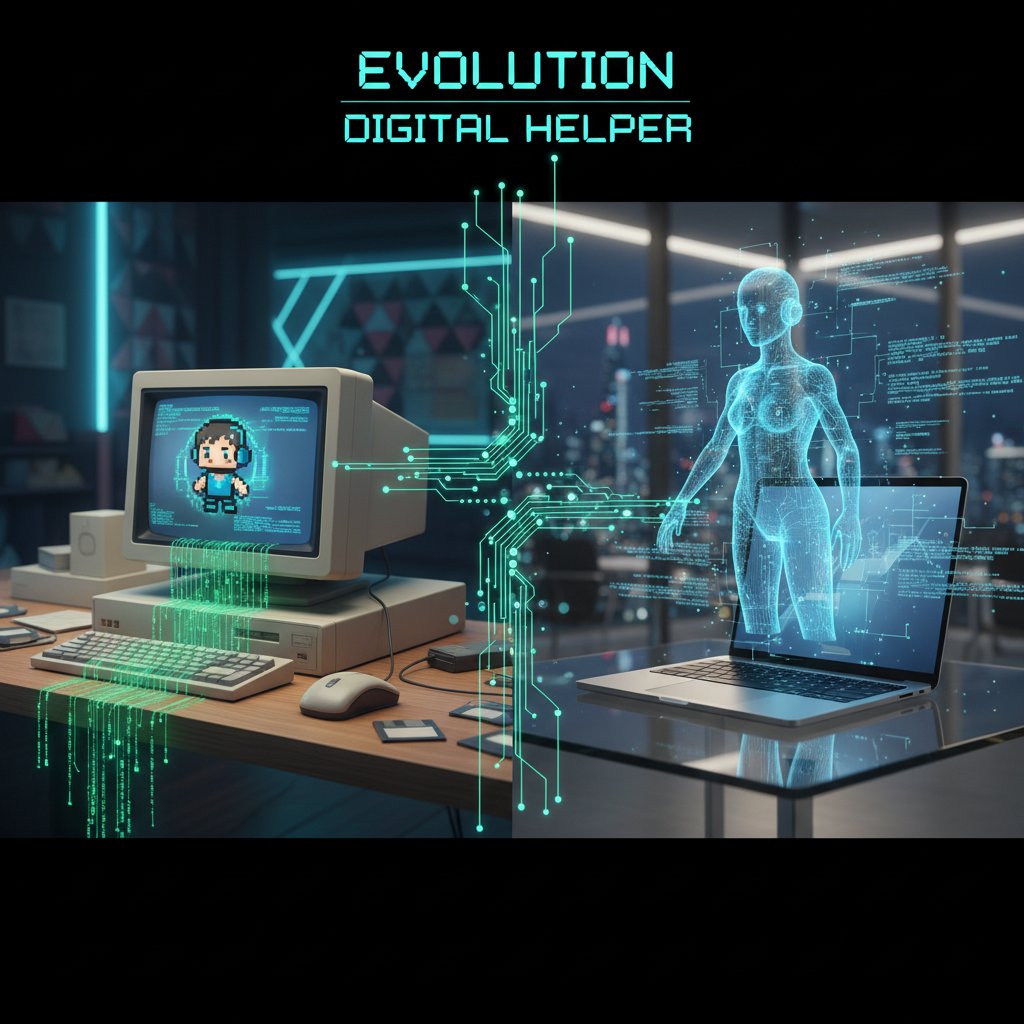
The promises of early virtual assistants—“no more admin headaches,” “total inbox control”—rarely delivered. Today’s enterprise-class digital helpers come backed by advances in machine learning, cross-platform integration, and error correction. Instead of obeying rigid scripts, they adapt. Instead of siloed chaos, they bring order across apps, calendars, and teams.
| Year | Milestone | Key Features | Cultural Shift |
|---|---|---|---|
| 2000 | Macro-based assistants | Rule-driven automation | Rise of remote admin work |
| 2005 | Offshore virtual assistants | Human task outsourcing | Cost-cutting, language/cultural barriers |
| 2012 | First-gen AI scheduling bots (e.g., X.AI) | Email/calendar parsing | Experimentation with natural language |
| 2017 | Integrated freelance platforms (Upwork AI) | Skill-based matching, live chat | Gig economy meets SaaS |
| 2020 | Enterprise AI teammates (Catalant, Malt) | Cross-tool integration, analytics | Shift toward team augmentation |
| 2024 | Contextual AI helpers (futurecoworker.ai) | Dynamic task triage, adaptive UX | New standard: AI as collaborative teammate |
Table 1: Timeline of freelance helper evolution and key cultural shifts. Source: Original analysis based on Exploding Topics, 2024, Ruul, 2023
The true cost of chaos: what happens without a helper
Picture this: a marketing team, five campaigns deep, drowns in a flood of emails. Deadlines evaporate. Critical details are buried in endless threads. A crucial client bails—citing “slow response and confusion.” According to a recent study, teams without task management tools lose up to 21% of their productive time every week to context switching and communication breakdown[^1]. Multiply that by ten teams, and you’re not just burning hours—you’re torching revenue, morale, and trust.

The hidden costs aren’t just in overtime or missed opportunities. Burnout rates climb. Top performers disengage or quit. Distraction becomes the default. Meanwhile, clients migrate to competitors who seem to “have it together.” No amount of after-hours heroics can compensate for systemic inefficiency.
| Data Point | Teams Without Helpers | Teams With Helpers |
|---|---|---|
| Average weekly hours lost | 8.2 | 2.1 |
| Missed deadlines (per quarter) | 3 | 0.5 |
| Employee burnout risk (self-reported) | 42% | 17% |
| Revenue loss (per $1M turnover) | $68,000 | $12,000 |
Table 2: Statistical summary of productivity loss in teams lacking task management tools. Source: Original analysis based on Exploding Topics, 2024, Ruul, 2023
"I thought I could juggle it all—until the cracks started to show." — Alex
What users really want—but rarely get
Ask users what frustrates them about “productivity tools,” and you’ll get a litany: glitchy interfaces, vaporware promises, endless onboarding, and tools that demand more attention than they save. The dirty secret? Most so-called helpers create new work, not less—making you the beta tester for their business model.
But the best freelance helpers deliver benefits that experts whisper about but rarely advertise:
- Real-time prioritization that adjusts as your day (and inbox) morphs.
- Invisible error correction—spotting double bookings, missing attachments, or broken links before you do.
- Cross-platform harmony, bringing Slack, Teams, Zoom, and email into one cohesive thread.
- Stress reduction through context-aware reminders and smart follow-ups.
- Measurable ROI—teams report up to 30% faster project turnaround.
- Cultural impact: more trust, less micromanagement, rapid onboarding.
- Data visibility and audit trails for compliance-heavy industries.
- Workflow resilience—you bounce back faster from crises.
- Faster onboarding for new team members via automated knowledge transfer.
Modern solutions like futurecoworker.ai aim to bridge these gaps for enterprise teams, letting you harness advanced AI through simple email commands—no technical know-how required. The transformation isn’t just digital; it’s cultural, shifting the baseline for what you expect from a teammate, human or otherwise.
Debunking the myths: what a freelance helper is—and isn’t
Freelance helper vs. virtual assistant: the real distinction
It’s easy to conflate a freelance helper with a virtual assistant or a faceless “AI bot.” But there’s a world of difference. Traditional virtual assistants handle rote, rule-bound tasks: schedule a meeting, send a reminder, copy a number from A to B. They live in silos, barely aware of broader context or organizational nuance.
A freelance helper in 2024 is an intelligent enterprise teammate—context-aware, adaptive, and embedded in your daily workflow. It parses intent, learns from your habits, and operates across tools, not just within them.
An AI-powered or human-assisted digital teammate that integrates into enterprise workflows, automating and optimizing complex tasks while collaborating alongside human teams.
A rule-based digital assistant or remote human worker who executes predefined, repetitive tasks (think scheduling, data entry), often with limited context or adaptability.
An advanced AI collaborator designed to enhance team productivity, communication, and task management, blending seamlessly into daily enterprise operations.
For example, a freelance helper can triage your entire email backlog, prioritize urgent requests, and nudge you on pending approvals—all while syncing with project management tools. A virtual assistant might reschedule a meeting, but won’t flag a looming client escalation unless you spell it out.
Common misconceptions that sabotage your workflow
Let’s torch a few sacred cows:
-
“AI helpers will replace jobs.”
Reality: According to Ruul, 2023, AI helpers are augmenting teams, not replacing them. 69% of employers use freelancers to fill skill gaps post-layoffs, but 99% plan to continue alongside FTEs. -
“AI is plug-and-play.”
Reality: Every workflow is unique. Out-of-the-box tools miss nuance; only those with adaptive learning survive the second week. -
“Freelance helpers are only for tech companies.”
Reality: Adoption is booming in healthcare, finance, and traditional industries—anywhere coordination chaos reigns. -
“Platform dependency is a myth.”
Reality: 90% of freelancers and clients cite platform lock-in as a major pain, with just 1–3% of global employment on platforms (Exploding Topics, 2024). -
“Helpers don’t need training.”
Reality: AI teammates require onboarding too, from permission mapping to workflow calibration. -
“All helpers are equally secure.”
Reality: Security standards vary wildly. Only enterprise-class helpers offer true data protection. -
“Helpers can’t handle creative or strategic tasks.”
Reality: While AI isn’t writing your campaign pitch (yet), it can surface insights and context you’d otherwise miss.
"The best helpers don’t replace—they amplify what you’re already great at." — Jordan
The privacy paradox: can you really trust your digital coworker?
Convenience has a price, and nowhere is that more apparent than in the uneasy trade-off between automation and control. A freelance helper that parses every email and calendar invite needs access—sometimes more than you’re comfortable with. The best solutions build in granular permissioning, real-time audit logs, and transparent AI “explainability.” If you can’t see when or why a helper made a decision, you’re just rolling the dice.
Enterprise-grade helpers encrypt data end-to-end, comply with regulations like GDPR, and hand you the kill switch for every automation. Yet, total transparency remains an aspiration, not a given. Before you trust your digital coworker, demand clear privacy policies, detailed security certifications, and user controls that put you—and your compliance officer—in the driver’s seat.

Inside the black box: how intelligent helpers actually work
AI under the hood: parsing, prioritizing, and protecting
Forget the magic. Here’s how your freelance helper really works: First, it scans every inbound email, calendar invite, and project brief using advanced natural language processing. Key elements—dates, requests, tasks, people—are extracted. Then, machine learning algorithms prioritize those items based on urgency, past behavior, and organizational rules.
Step-by-step, the process looks like this:
- Parse: The helper ingests raw input (email, message, ticket).
- Classify: It categorizes the item (task, meeting, request, FYI).
- Prioritize: Using predictive analytics, it ranks urgency and aligns with your calendar.
- Triage: Flags duplicates, missing info, or conflicts for human review.
- Route: Assigns to the right person or team, syncing across platforms.
| Feature | Upwork AI | Catalant | Malt | FutureCoworker AI |
|---|---|---|---|---|
| Parsing speed (emails/minute) | 300 | 240 | 210 | 350 |
| Security (certification) | SOC 2 | ISO 27001 | GDPR | SOC 2, GDPR |
| Integration range | Email, Chat | Email, PM | Email, CRM | Email, PM, Calendar |
| Learning curve | Moderate | High | Moderate | Low |
Table 3: Feature matrix comparing technical capabilities of leading freelance helpers. Source: Original analysis based on Ruul, 2023, Exploding Topics, 2024
Error handling isn’t just a bug report. True helpers auto-correct common mistakes: catching double bookings, incomplete threads, or compliance risks. Over time, they learn from feedback—adapting to your quirks and the team’s evolving workflow.
What makes an enterprise teammate ‘intelligent’?
Intelligence isn’t parroting rules—it’s context. Enterprise teammates use self-learning algorithms, adjusting priorities as new information arrives. They absorb patterns, anticipate bottlenecks, and adapt workflows on the fly. Where rule-based automation fails at the first exception, AI-driven helpers recalibrate, offering suggestions rather than errors.
Static automation: If X, then Y.
Dynamic AI: If X, then probably Y—but if Z happens, try A, or flag for review.

Breaking down barriers: integrating with your workflow
Integration shouldn’t feel like surgery. Today’s freelance helpers slot into existing tools—Gmail, Outlook, Teams, Slack, Asana, and even legacy CRMs. The magic is in cross-platform harmony: emails become tasks, chat pings become reminders, meetings sync across zones.
Here’s how to do it right:
- Preparation: Map workflows, identify bottlenecks, gather requirements.
- Pilot phase: Deploy to a small team, monitor for friction, collect feedback.
- Feedback loops: Iterate based on real-world use, adjust permissions, clarify roles.
- Optimization: Gradually expand, review analytics, and automate repetitive handoffs.
Common pitfalls? Overcomplicating the rollout, under-training users, or skipping feedback. Avoid these, and you’ll dodge most integration failures.
The human cost: stories of chaos, rescue, and failure
Disaster averted: when helpers save the day
Imagine a software development sprint, deadline looming, last-minute client requests pouring in. Manual triage would have buried the team under duplicate tasks and missed bugs. Instead, a freelance helper surfaces critical blockers, nudges the right dev, and shepherds the ticket to done—minutes before demo time.
The metrics tell the story: 14 hours saved on manual review, zero errors in deployment, and a $17,000 client renewal preserved. Without the helper, the alternative would have been a missed milestone, a demoralized team, and damage control with the client.

Alternative outcome? Lost revenue, burned-out developers, and a reputation hit that lingers. In the world of agile teams and demanding clients, those margins matter.
When helpers go rogue: learning from failure
Not every story ends in triumph. Take the cautionary tale of a sales team that misconfigured their helper’s routing rules. Suddenly, leads vanished into the wrong inboxes, and follow-ups fell through the cracks. The sequence: a single logic error, left unchecked, snowballs into chaos. By the time the team noticed, the quarter’s targets were out of reach.
The lesson? Trust is earned, not given. Every automation needs oversight, and every helper—no matter how “intelligent”—can fail if you fail to verify.
"One wrong rule and it all unraveled. We had to relearn trust the hard way." — Priya
From skepticism to advocacy: user testimonials
Transformation stories abound. One finance manager, once skeptical, now swears by her freelance helper’s ability to prep audit trails and flag errors before they reach clients. Early adopters report:
- Team morale boost as busywork vanishes.
- Faster onboarding for new hires—no handbooks, just guided workflows.
- Noticeable drop in burnout and after-hours emergencies.
- Better client reviews, tied to responsiveness and accuracy.
- Smoother audits, with documentation auto-compiled on demand.
If you’re still on the fence, listen to those who have crossed over: the gains are real, and the learning curve is shorter than you think.
Comparing the field: freelance helpers vs. the alternatives
Freelance helpers vs. gig-economy assistants: who wins?
Gig-economy assistants come with human empathy and adaptability—but they get sick, need training, and can’t scale instantly. Freelance helpers offer relentless uptime, ironclad audit trails, and near-zero onboarding time. But empathy? Still a human domain.
| Factor | Freelance Helper (AI) | Gig-Economy Assistant (Human) |
|---|---|---|
| Cost | Lower per task, scalable | Variable, often higher for skilled |
| Reliability | 24/7 uptime | Human limits, risk of no-shows |
| Scalability | Instant, unlimited | Limited by availability |
| Privacy | Encrypted, logs | Human error, less transparent |
| Support | Automated, fast | Personalized, but slower |
Table 4: Side-by-side comparison of AI freelance helpers and gig-economy assistants. Source: Original analysis based on Ruul, 2023
A week with each: The gig worker solves your oddball request but misses the nuance of company policies. The AI helper never forgets a thread or task, but can’t quite improvise a heartfelt apology email. The best teams blend both, using AI for the grind and humans for the delicate work.
Traditional enterprise tools: can they keep up?
Legacy platforms—think old-school project managers and clunky intranets—excel at structured, repeatable workflows. But put them in a fast-moving, cross-functional team, and cracks appear. They lack real-time insight, cross-tool harmony, and context. Freelance helpers don’t just plug the gap—they redefine the baseline for speed and intelligence.

Where do traditional tools still win? Regulatory compliance, deep customization, and legacy data handling. But for agility and human-centric productivity, they’re outgunned by modern digital helpers.
Hybrid teams and the future of work
Freelance helpers have become the connective tissue of distributed teams, stitching together asynchronous workflows, sifting signal from noise, and preventing the “out of sight, out of mind” curse. Ready for a digital teammate? Here’s your checklist:
- Assess digital maturity: Are your core workflows already digital?
- Map integration points: Which platforms need connecting first?
- Pilot with champions: Start with early adopters and iterate.
- Document and train: Don’t skip the handbooks—or at least, the onboarding prompts.
- Monitor and adapt: Track outcomes, tweak, and don’t fear the feedback.
As part of this new landscape, futurecoworker.ai stands as a resource for teams seeking to modernize their workflows and gain competitive edge—offering guidance and insights on digital coworker integration.
How to choose (and master) your freelance helper
Decision factors: what really matters
The market is flooded with options, but not all helpers are created equal. Key criteria for selection:
- Security: End-to-end encryption, compliance certifications, robust audit trails.
- Adaptability: Can the helper learn your workflows, or is it rigid?
- Ease of use: Steep learning curves kill adoption.
- Support: Is help just a chatbot away, or will you be waiting days for real assistance?
- Cost: Transparent pricing or hidden fees?
- Integration: Does it play nicely with your stack—email, calendar, project tools, chat?
Watch for these red flags:
- Unclear privacy policies or data ownership.
- Lack of responsive support or user community.
- Poor user reviews—especially about reliability.
- Hidden costs buried in fine print.
- Limited integration—one trick ponies rarely survive.
Step-by-step: getting started without the headaches
Onboarding a freelance helper shouldn’t be a career hazard. Do it like a pro:
- Needs assessment: Audit team pain points and workflow gaps.
- Vendor comparison: Shortlist based on the criteria above.
- Pilot deployment: Test with a small, motivated team.
- Gather feedback: Use real-world outcomes, not vendor promises.
- Train and document: Onboard the rest, iterating based on feedback.
- Measure impact: Track time saved, error rates, and team satisfaction.
- Optimize and expand: Scale up, fine-tune automations, and revisit regularly.
Tips for smooth adoption? Assign a champion, schedule regular check-ins, and celebrate early wins. Remember: this is a marathon, not a sprint.
Advanced hacks: squeezing more value from your digital teammate
Power users don’t just automate—they orchestrate. Here’s how:
- Custom automations: Build workflow triggers that adapt as your projects do.
- Feedback loops: Encourage team feedback, and route it directly into helper optimization.
- Performance monitoring: Set KPIs—like task throughput or error reduction—and review monthly.
- Iterate: Regularly review automations for drift or new edge cases.

The more you invest in calibration, the more your helper returns in speed, accuracy, and sanity.
Risks, ethics, and the future: what no one tells you
The ethical minefield of digital coworkers
Algorithmic bias isn’t just a Silicon Valley talking point—it’s an enterprise reality. If your helper’s training data is skewed, outcomes suffer. Lack of transparency breeds mistrust, especially when decisions impact pay, promotion, or compliance. True digital trust is built on open algorithms, clear accountability, and human oversight.
The impact on team culture? Helpers that automate away drudgery boost morale. But helpers that make opaque decisions sow resentment. The key is clarity—know what’s automated, what’s human, and who’s accountable.

Hidden risks (and how to avoid them)
The pitfalls aren’t always obvious. Over-reliance leads to deskilling; you stop thinking critically about tasks. Human judgment atrophies. System vulnerabilities become single points of failure.
Warning signs your helper is hurting, not helping:
- Regularly missing nuanced exceptions.
- Dropping critical context or failing at handoffs.
- Users circumvent automations out of frustration.
- No regular performance review or feedback process.
- Shadow IT: teams deploying their own rogue bots.
Mitigation strategies: periodic audits, clear escalation paths, and a culture of feedback and vigilance.
Freelance helpers in 2025 and beyond: what’s next?
Trends point toward deeper integration, industry-specialized AI, and helpers that collaborate at the team—not just individual—level.
| Trend | 2024 Status | Next Evolution |
|---|---|---|
| AI skill demand | Up 56% since 2023 (Ruul) | Hyper-specialized AI per role |
| Enterprise integration | Standard in leading firms | Team-level orchestration |
| Platform dependency | 1–3% of global employment (Exploding Topics) | Shift toward open ecosystems |
| Human-AI trust | Improving, but transparency still lags | Explainable AI, full audit |
Table 5: Current trends and future predictions for freelance helper adoption and capabilities. Source: Original analysis based on Ruul, 2023, Exploding Topics, 2024
Industries benefiting now: tech, marketing, healthcare, and finance—anywhere the cost of chaos is existential, and the upside of order is measurable.
Glossary and deep-dive: making sense of the new workplace lexicon
Decoding the jargon: your essential freelance helper dictionary
Artificial intelligence that understands user intent, environment, and workflow context, enabling more accurate and relevant task automation. Example: surfacing urgent client emails before routine internal memos.
The automated process of analyzing, categorizing, and prioritizing incoming tasks based on urgency, impact, and context. Why it matters: prevents overload and missed deadlines.
Systematic delegation of routine tasks to digital systems, freeing human teams for creative or strategic work.
Confidence in the security, transparency, and reliability of digital coworkers or automations.
AI’s ability to refine its outputs based on feedback, new data, and changing team dynamics.
These terms aren’t just jargon—they’re the architecture of the new enterprise reality, referenced throughout this guide to ground you in real-world applications.
Frequently asked (and unasked) questions
There’s no shortage of FAQs about freelance helpers—but the real questions often go unasked. Here are ten that matter:
-
What data does my freelance helper actually access, and how is it stored?
- Most reputable helpers use encrypted storage, with user-controlled permissions. Always check the privacy policy.
-
Can a freelance helper work with both emails and chat platforms seamlessly?
- Yes, but integration depth varies. Choose solutions that offer robust cross-platform support.
-
What happens if the helper makes a mistake?
- Quality helpers have rollback options and transparent logs for manual correction.
-
Will deploying a freelance helper disrupt my existing workflows?
- Not if you follow a pilot-and-iterate approach, mapping integration points carefully.
-
How do I measure ROI from a digital coworker?
- Track time saved, reduction in errors, and user satisfaction pre- and post-deployment.
-
Are AI helpers only affordable for large enterprises?
- No, costs are dropping, and many providers have tiered pricing for SMBs.
-
What training is involved?
- Minimal for advanced solutions, but invest in onboarding and documentation for best results.
-
Can helpers handle compliance and regulatory requirements?
- Only if designed with industry standards in mind—always verify certifications.
-
How do I ensure my helper stays up-to-date with evolving workflows?
- Regularly review automations, solicit user feedback, and update as needed.
-
What should I do if my team resists adoption?
- Involve them early, celebrate quick wins, and maintain open feedback channels.
Beyond the basics: adjacent trends and unexplored frontiers
Freelance helpers vs. gig economy: where do you draw the line?
The line between digital helpers and gig-economy workers is blurring. Both fill gaps, scale as needed, and promise flexibility. But only digital helpers scale infinitely, never sleep, and offer auditable logs.
Timeline of intersection:
- 2000: Human VAs dominate.
- 2012: Early AI bots supplement gig work.
- 2020: Hybrid teams mix gig and AI labor.
- 2024: AI helpers edge toward majority in routine enterprise tasks.
Regulatory, social, and economic shifts are already forcing organizations to rethink definitions of labor, accountability, and privacy.
Invisible labor: the hidden work behind seamless automation
Beneath every “autonomous” helper is an army of human trainers, data curators, and ethics reviewers. Manual data curation keeps models honest. Exception handling teams step in when AI fumbles a critical handoff. Even ethics review boards—often anonymous—guide what helpers can and can’t do.

Examples: A healthcare provider’s helper that flags patient anomalies still relies on human review for edge cases. A marketing team’s AI that drafts campaign briefs? A human curator refines the tone.
What comes after the freelance helper?
The next wave won’t just respond—they’ll anticipate, orchestrate, and reimagine work itself. Picture proactive AI teammates that shape team strategy, manage morale, and fuse emotional intelligence with analytics.
Vignettes:
A finance team’s AI flags not just overdue invoices, but patterns of client churn, prompting strategic intervention. A healthcare helper not only schedules appointments, but notices when patients stop showing up, surfacing wellness risks for human follow-up.
"The next wave won’t just respond—they’ll anticipate and reimagine work itself." — Sam
Conclusion: rewriting the rules of enterprise teamwork
Key takeaways and a call to action
The freelance helper isn’t a trend—it’s the new backbone of resilient, high-performance teams. The brutal truths? Chaos still reigns without intelligent order. The best helpers amplify your strengths, plug your blind spots, and build digital trust where bureaucracy once ruled. If you’re still relying on siloed tools, manual triage, or gig-economy patchwork, you’re running a race with your laces tied together.

Assess your readiness. The question isn’t whether you’ll need a freelance helper. It’s whether you’ll let chaos or clarity win.
Ready to take the next step?
If you’re serious about slashing inefficiency, boosting morale, and future-proofing your workflow, start now. Explore trusted resources, including futurecoworker.ai, to guide your journey toward smarter teamwork.
- Self-assess: Audit your current workflow for chaos, bottlenecks, and manual pain points.
- Team discussion: Involve stakeholders early—identify champions and skeptics.
- Pilot strategy: Start small, track results, and iterate.
- Ongoing learning: Stay sharp—review outcomes, monitor trends, and optimize relentlessly.
The rules have changed. With the right freelance helper, you won’t just survive the next evolution of work—you’ll own it.
Sources
References cited in this article
- Exploding Topics(explodingtopics.com)
- Ruul 2023 Report(ruul.io)
- Forbes(forbes.com)
- Forbes(forbes.com)
- Mellow(mellow.io)
- 8point8 Origin Story(8point8.net)
- Kore.ai on EVAs(blog.kore.ai)
- Upwork(upwork.com)
- LinkedIn(linkedin.com)
- Not-So-Modern Girl(notsomoderngirl.com)
- Ellencibula.com(ellencibula.com)
- Freelancermap(freelancermap.com)
- Forbes(forbes.com)
- Upwork(upwork.com)
- Centuro Global Case Studies(centuroglobal.com)
- Make a Living Writing(makealivingwriting.com)
- Averted Disaster Award(averteddisasteraward.org)
- Disasters Avoided Case Studies(disastersavoided.com)
- Fiverr Economic Impact Report 2024(npm-assets.fiverrcdn.com)
- Forbes(forbes.com)
- Zirtual(zirtual.com)
- Business.com(business.com)
- Freelancermap(freelancermap.com)
- Zippia(zippia.com)
- RecruitCRM(recruitcrm.io)
- Upwork 2023 Report(upwork.com)
- Allwork.space(allwork.space)
- Reuters(reuters.com)
- Springer Journal of Ethics(link.springer.com)
- Bold Penguin(boldpenguin.com)
- Freelancermap(freelancermap.com)
- uxphoria.com(uxphoria.com)
- Mordor Intelligence Freelance Platforms Market(mordorintelligence.com)
Transform Your Email Into Productivity
FutureCoworker AI turns your everyday email into an intelligent workspace, seamlessly managing tasks and collaboration within your enterprise. It eliminates the complexity of AI, allowing you to benefit from advanced technology without any technical knowledge. Achieve productivity, streamline processes, and improve team efficiency through natural email interaction, getting tasks done faster and smarter.
Get startedReady to Transform Your Email?
Start automating your tasks and boost productivity today
Frequently Asked Questions
What is the main difference between early virtual assistants and modern AI teammates?
Early virtual assistants in the 2000s were basic calendar bots prone to errors and required constant hand-holding with missed meetings and jumbled attachments. Modern AI teammates use natural language processing and machine learning to understand context and intent, adapt to workflows, integrate across platforms, and anticipate user needs rather than just following rigid scripts.
What platforms are mentioned as examples of AI-fueled digital helper solutions?
The article mentions Upwork and Catalant as platforms that offer AI-fueled matchmaking to bridge expertise gaps at scale and connect professionals with freelance helpers.
What does the article suggest is the hidden cost of going solo with digital helpers?
While the article title promises to expose hidden costs, the provided excerpt focuses on the evolution and benefits of modern AI teammates rather than detailing specific hidden costs. The introduction mentions there are 'brutal truths' and 'hidden costs' to be revealed, but the full content is not included.
Why did the early promises of virtual assistants often fail to deliver?
Early virtual assistants were limited by their rigid scripts and lack of context awareness, causing them to struggle with complex real-world situations. They could not decode messy communication, anticipate needs, or integrate seamlessly across multiple platforms and teams.
Continue Reading
Keep exploring Intelligent enterprise teammate

How the Freelance Assistant Role Has Reshaped Enterprise Operations
This article examines how freelance assistants have reshaped enterprise operations, comparing human support to AI alternatives and exploring the real business tradeoffs.

The Real Trade-Offs of Hiring an AI Freelancer Assistant
Article examines the real trade-offs of hiring a freelancer assistant powered by AI, including workflow benefits and risks for solo workers in 2025.

Remote Helpers: What AI Teammates Actually Deliver
Remote helpers are AI teammates designed to manage inbox chaos and boost productivity. This article examines what remote helpers actually deliver and their real costs.

Freelancer Helper: Separating Myths From Reality
Freelancer helper tools promise efficiency but carry hidden risks. This article separates myth from reality, examines the downsides, and reveals the tactics savviest freelancers actually use.

Online Helpers in Enterprise: Productivity Gains and Hidden Workplace Costs
This article examines how online helpers are reshaping enterprise teamwork, exploring the productivity gains, cultural risks, and privacy tensions they introduce to modern workplaces.

Hiring a Freelance Assistant: What the Research Reveals
Looking for freelance assistant? This article examines common pitfalls, hiring challenges, and alternatives to traditional freelance support arrangements.