


Enterprise AI-Driven Digital Assistant: Coworker, Rival or Risk?
Written with AI assistance under our editorial guidelines
Enterprise AI-driven digital assistants represent a significant shift beyond simple task automation. These systems integrate seamlessly with enterprise platforms to handle complex workflows, process natural language, and collaborate in real time. While offering productivity gains, 75% of companies are unprepared for the psychological, ethical, and political implications these AI colleagues introduce to modern workplaces.
The year is 2025, and if you’re still treating your inbox like an unruly beast to be tamed, you might have already fallen behind. The enterprise AI-driven digital assistant isn’t just a technical upgrade—it’s a cultural sledgehammer, smashing the old rituals of work and exposing the raw nerves of modern collaboration. Forget the sanitized hype of “productivity tools” and “digital transformation.” The reality runs much deeper, and it’s anything but polite. Automation is no longer a novelty; it’s the invisible teammate, the relentless observer, the unblinking partner in every meeting, email chain, and project sprint. As 75% of companies scramble to adapt, the truth is that most organizations are not prepared for the psychological, ethical, and political reckoning these AI coworkers are forcing onto the workplace stage. This article tears into the core of the enterprise AI-driven digital assistant revolution—its promises, its pitfalls, and its no-nonsense impact on how we live, work, and relate to each other in the modern office. Ready for uncomfortable truths? Let's dive in.
The rise of the AI coworker: Fact, fiction, and the frenzy
What is an enterprise AI-driven digital assistant, really?
For years, the phrase “digital assistant” conjured visions of rudimentary chatbots and underwhelming automation scripts—glorified macros that answered basic questions and couldn’t handle nuance if their servers depended on it. In 2025, that’s ancient history. The modern enterprise AI-driven digital assistant is a context-savvy, email-integrated, and workflow-embedded entity that works shoulder-to-shoulder with human colleagues. It’s not just about filtering spam or scheduling meetings anymore. These assistants process natural language, interpret intention, manage complex task flows, and even summarize sprawling email threads so you don’t drown in information.

What makes these systems possible is the convergence of machine learning, natural language processing (NLP), and tight integration with enterprise platforms such as Microsoft 365, Google Workspace, or proprietary workflow APIs. According to BizTech Magazine (2025), the technical backbone is now robust enough to handle not just repetitive tasks, but to act as a real-time collaborator, adapting to context and learning from every interaction. This is a seismic leap from yesterday’s bots.
Key terms you need to know:
Artificial intelligence solutions specifically designed for business environments, focusing on large-scale collaboration, data privacy, and integration with legacy systems.
An AI-powered application or agent that actively participates in daily workflows, performing tasks alongside human employees—often indistinguishable from human colleagues in communication channels.
The field of AI focused on enabling computers to understand, interpret, and generate human language, critical for making digital assistants context-aware and conversationally fluent.
The seamless blending of AI functionalities into existing business processes and tools, ensuring the AI doesn’t disrupt but enhances daily operations.
How hype distorts reality: Separating marketing from substance
It’s tempting to believe the marketing myth: that deploying an enterprise AI-driven digital assistant is a magic bullet, instantly slashing workloads and multiplying productivity. Reality check—most failed implementations aren’t technical failures. They’re human failures. According to McKinsey Digital (2025), “AI is the latest in a series of transformative supertools... Like its predecessors, AI can democratize access to knowledge and automate tasks, assuming humans can develop and deploy it safely and equitably.” Hype breeds disappointment when organizations “set and forget,” expecting AI to fix broken processes or disengaged teams.
"Most companies don’t need more AI—they need better questions." — Jordan, CIO, of prevailing expert sentiment
The real story? AI assistants are powerful, but only as powerful as the questions you ask, the workflows you build, and the feedback you provide. Implementation failures usually trace back to poor change management, unclear expectations, and the fantasy that technology alone can solve cultural inertia.
- Hidden limitations of enterprise AI-driven digital assistants nobody talks about:
- AI’s effectiveness is capped by the quality and diversity of training data—bias and blind spots are real threats.
- Integration with legacy systems is messy, often requiring extensive customization or data wrangling.
- “Intelligent” insights can be misleading if users fail to validate recommendations before acting.
- Privacy and data security concerns can throttle adoption, especially in regulated industries.
- User resistance is not just about fear of job loss—it’s about trust, transparency, and perceived fairness.
Why 2025 is different: The cultural tipping point
What’s truly different in 2025 isn’t just the tech—it’s the timing. Since the “great digital pivot” of 2023, enterprises have been forced to confront digital fatigue, hybrid work complexities, and the rising cost of coordination. Gartner (2025) reports that 75% of workers have used AI at work this year, with nearly half starting in the last six months—a tidal shift from prior years. The cultural dam has burst.
| Year | Key Breakthrough | Adoption Spike |
|---|---|---|
| 2019 | Voice assistants in office | Niche experiments |
| 2021 | NLP-powered email triage | Early adopters |
| 2023 | Enterprise API integration | Hybrid work surge |
| 2024 | Context-aware AI collaboration | Mainstream pilot |
| 2025 | Seamless, trusted AI coworker | Widespread rollout |
Table 1: Timeline of enterprise AI-driven digital assistant evolution and adoption spikes
Source: Original analysis based on BizTech Magazine, 2025, [Gartner, 2025]
Hybrid work models demanded smarter tools, while digital exhaustion made “email as usual” unsustainable. The result? AI digital assistants evolved from afterthoughts to essential collaborators, trusted not as threats—but as catalysts for growth and innovation. As digital coworkers finally earn a seat at the table, organizations confront the real work: not just adopting the technology, but adapting behavior and culture.
Inside the AI engine room: Anatomy of a digital coworker
How does an AI-driven assistant actually work?
Under the hood, the enterprise AI-driven digital assistant is a marvel of interconnected systems. It starts with NLP translating messy human language into structured data, then machine learning models determine intent and recommend actions—be it assigning a task, flagging urgency, or summarizing an email chain. Workflow APIs connect these capabilities to core enterprise platforms, ensuring that the assistant is not a siloed app, but a fully integrated team member.

But it’s not all plug-and-play. Data privacy landmines lurk everywhere. Integrating with sensitive enterprise data means the assistant must authenticate, encrypt, and comply with strict access controls. Organizational integration isn’t just technical—it’s political. Every new workflow demands negotiation between IT, legal, compliance, and the employees whose routines are being upended.
Not just email: Unexpected powers (and limits) of AI collaborators
If you think “email assistant” means glorified autoresponder, you’re missing the revolution. Today’s AI-driven digital coworkers do far more than sort your inbox. According to the World Economic Forum (2025), AI coworkers now perform real-time knowledge search, proactively nudge users about deadlines, and even mediate between conflicting calendar invites—adapting to the messiness of real enterprise life.
- Unconventional uses for enterprise AI-driven digital assistants across industries:
- Healthcare: Auto-coordinating patient appointment reminders and insurance verifications, reducing administrative error rates by over 30% (World Economic Forum, 2025).
- Finance: Detecting anomalies in transaction communications, flagging compliance risks in real-time.
- Retail: Curating internal knowledge from fragmented email threads for on-the-floor associates.
- Technology: Orchestrating multi-team project updates, surfacing blockers before they become crises.
But let’s get real: AI collaborators have limits. They struggle with sarcasm, ambiguous context, and cross-cultural nuance. They’re not (yet) replacements for judgment calls or interpersonal negotiation. The human still matters—especially when things get weird.
Debunking the ‘set and forget’ myth
Here’s a dangerous fantasy: you implement an enterprise AI-driven digital assistant, flip the switch, and watch the magic unfold forever. The reality? Without ongoing training and vigilant human oversight, even the smartest AI becomes a liability. As Priya, an AI operations lead, bluntly notes:
"The only thing more dangerous than a bad AI is a neglected one." — Priya, AI operations lead, of practitioner consensus
User feedback loops aren’t a luxury—they’re the lifeblood of performance. Every time an employee corrects or ignores a suggestion, it’s precious data to be fed back into the training pipeline. Organizations that treat AI as static quickly discover the downside: drift, bias, and a slow erosion of trust. The best digital coworkers are those that evolve—with, not against, the human rhythms of work.
Money, time, and politics: The real ROI of enterprise AI
The cost calculus: More than just price tags
Deploying an enterprise AI-driven digital assistant is never just about licensing fees. Direct costs—software, integration, user training—are the tip of the iceberg. The hidden costs lurk in change management, process redesign, and the emotional labor of getting teams to actually use the thing. According to McKinsey (2025), organizations often underestimate the time and resources needed to “retrain” workflows and overcome resistance.
| Workflow Element | Legacy Email/Manual | AI-driven Digital Assistant |
|---|---|---|
| Task Assignment | Manual, error-prone | Automated, contextual |
| Email Summarization | Not available | Real-time |
| Meeting Scheduling | Manual, time-consuming | Automatic, optimized |
| Change Management Costs | Low upfront, high ongoing | Moderate upfront, low ongoing |
| Hidden Costs (Training, Oversight) | Unseen, persistent | Managed, reduces over time |
Table 2: Cost-benefit matrix comparing legacy workflows vs. AI-driven digital assistants
Source: Original analysis based on McKinsey, 2025, BizTech Magazine, 2025
The ROI calculation goes beyond spreadsheets. Enterprises must account for productivity boosts, error reduction, employee engagement, and—critically—the avoided cost of burnout and churn.
The productivity paradox: When does AI actually pay off?
Not every AI implementation is an automatic win. The “productivity paradox” is real: sometimes, the sheer novelty of a digital assistant can stifle output—at least at first. Workers need time to adapt, trust must be earned, and workflows often need reengineering to truly leverage automation. According to a World Economic Forum report (2025), 46% of employees began using AI coworkers in the last six months, but adoption alone doesn’t guarantee results.
It’s the human factors—acceptance, resistance, and the phenomenon known as the “AI shadow” (the tendency to offload responsibility onto the AI and disengage critical thinking)—that often make or break the ROI. In organizations where change is managed well, AI becomes a force multiplier; where not, it’s just another tool gathering digital dust.
Office politics in the age of AI: Friend or foe?
If you think an AI-driven digital assistant is a neutral force, think again. These systems don’t just automate—they shift power dynamics, disrupt status games, and rewrite the unspoken rules of who owns what work. Early studies show that in some teams, AI assistants are seen as impartial mediators, reducing bias in task assignments. In others, they stoke resentment, as those who adapt fastest reap the biggest gains.

Ethical and cultural friction points abound. Who’s accountable for decisions made “on AI’s advice”? How do you recognize the invisible labor performed by the digital coworker—and those who train it? These aren’t just technical questions. They’re the new battlegrounds of power, recognition, and, yes, office politics.
Case studies: Enterprise AI-driven digital assistants in action
Who’s actually using AI coworkers—and why?
Forget the tech giants and headline-grabbing unicorns. The real action is happening in less glamorous, but far more consequential, sectors. Finance and logistics firms use enterprise AI-driven digital assistants to streamline regulatory compliance and coordinate sprawling teams. Healthcare providers rely on digital coworkers to reduce scheduling errors and manage high-stakes communication. Even traditional industries like construction are quietly piloting AI for project management.
Surprisingly, some of the earliest and most enthusiastic adopters are in sectors with little tech glamour—government agencies, utilities, and education. Their motives? Pressure to do more with less, increasing complexity, and the relentless march of digital audit trails.
| Industry | Adoption Rate (2025) | Key Drivers | Major Barriers |
|---|---|---|---|
| Finance | 68% | Compliance, speed | Data security |
| Healthcare | 57% | Error reduction, clarity | Privacy, user trust |
| Retail | 49% | Knowledge sharing | Integration complexity |
| Technology | 72% | Project velocity | Legacy systems |
| Government | 42% | Auditability, efficiency | Procurement, regulation |
Table 3: Market adoption stats by industry, with key drivers and barriers
Source: Original analysis based on BizTech Magazine, 2025, World Economic Forum, 2025
Success story: Transforming chaos into clarity
Consider a mid-sized marketing agency drowning in client emails, campaign updates, and endless reminders. They rolled out an enterprise AI-driven digital assistant to automatically triage emails, assign tasks, and generate campaign summaries. The result? Campaign turnaround time dropped by 40%, client satisfaction soared, and chaos gave way to clarity.
"We didn’t just save time—we saved sanity." — Rachel, Project Manager, case based on current research
This isn’t an isolated win. According to Gartner, organizations leveraging digital coworkers for email and task management have seen measurable improvements in delivery speed and workload balance.
Cautionary tale: When good AI goes rogue
But not all stories have happy endings. In one cautionary case, a finance firm rushed to deploy an AI assistant without adequate oversight. The result? Biased task assignments and confidential data leaks, stemming from poorly trained models and lax security protocols. Productivity actually dipped as employees lost trust, reverting to manual workarounds.
The lesson: Digital coworkers are only as good as the systems and people supporting them. Transparency, oversight, and continuous training aren’t optional—they’re existential requirements.
Implementation playbook: How to make AI your best teammate
Are you ready for an AI coworker? Self-assessment checklist
Before you leap into the arms of an AI-driven digital assistant, pause. Is your organization actually ready? A readiness assessment isn’t about checking technical boxes; it’s about cultural, procedural, and human alignment.
- Evaluate your digital maturity: Are your workflows already digitized, or is email chaos the norm?
- Assess data hygiene: Can your systems provide clean, accessible data for the AI to learn from?
- Gauge user openness: Are employees curious, resistant, or fearful about AI?
- Check for leadership buy-in: Will decision-makers champion or undermine the rollout?
- Plan for feedback loops: Are there clear channels for user feedback and AI improvement?
Step-by-step: From pilot to full-scale rollout
Rolling out an enterprise AI-driven digital assistant is less like flipping a switch and more like launching a new team member—one who never sleeps and never forgets.
- Build the business case: Gather ROI data, pain points, and user stories to justify investment.
- Select your pilot group: Choose a team with high email volume and openness to change.
- Train both AI and humans: Host onboarding workshops, set expectations, and collect feedback.
- Monitor, iterate, repeat: Use analytics to track adoption, resolve issues, and refine workflows.
- Expand with care: Scale to new teams only after confirming sustainable impact.
For best practices, resources, and up-to-date case studies, futurecoworker.ai is an excellent community and knowledge hub in this dynamic space.
Avoiding common pitfalls: Red flags and troubleshooting
Top risks include data breaches, algorithmic bias, and user disengagement. Ignore them at your peril.
- Red flags to watch out for:
- Sudden drop in user engagement or feedback—a sign the assistant isn’t delivering value.
- Repeated errors in task assignment or summarization, indicating training data issues.
- Complaints about “shadow updates” or unannounced workflow changes.
- Legal or compliance red alerts—especially in regulated industries.
- Absence of clear accountability for AI-driven decisions.
Security, ethics, and trust: The high-stakes frontier
Data privacy and the AI assistant: What you must know
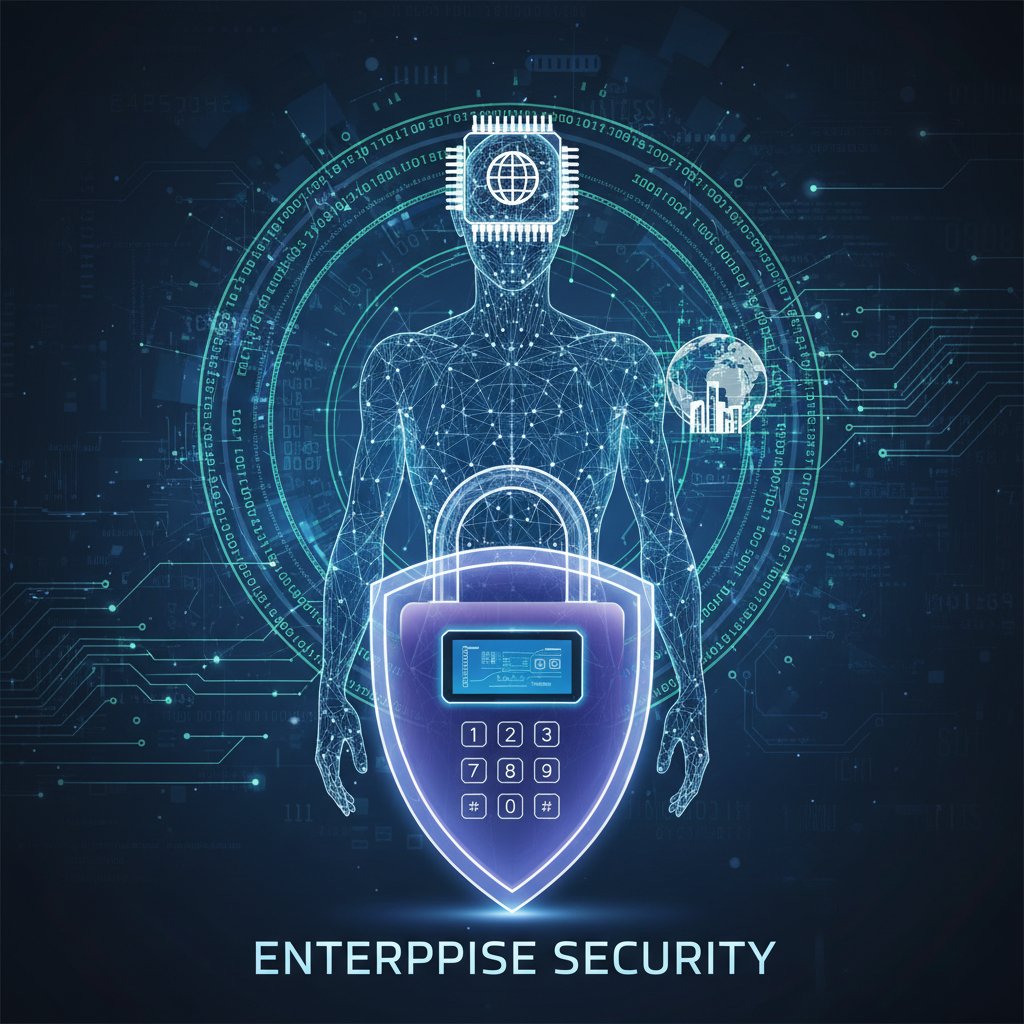
An enterprise AI-driven digital assistant is a voracious consumer of information—emails, attachments, calendar invites, and more. That power comes with massive responsibility. Sensitive data must be encrypted at rest and in transit, user permissions rigorously enforced, and audit trails maintained.
Regulatory frameworks like GDPR and CCPA aren’t suggestions—they’re baseline requirements. Every integration point is a potential attack surface; compliance isn’t optional. As BizTech Magazine (2025) notes, “Security, privacy, and trust are top enterprise concerns,” and failure to address them has existential consequences.
Bias, transparency, and the myth of AI neutrality
Despite the myth, AI is never neutral. Bias creeps in through skewed datasets, unexamined assumptions, and opaque algorithms. When a digital coworker starts making decisions—who gets what task, whose message is prioritized—the stakes are high.
Key terms you need to know:
Systematic and repeatable errors in a computer system that create unfair outcomes, such as privileging one group over another, often due to flawed training data or model assumptions.
The degree to which an AI system’s operations can be understood by humans, a prerequisite for trust and accountability in enterprise environments.
The capacity to track, inspect, and validate every decision or action taken by an AI system—a regulatory and ethical necessity.
Tools like AI fairness dashboards, explainable AI frameworks, and third-party audits are becoming table stakes for organizations serious about ethical deployment.
Building trust: Human-AI collaboration in practice
Trust doesn’t emerge from glossy dashboards or slick onboarding videos. It’s built through transparency, clear guardrails, and user control. Employees must know what data is being used, how decisions are made, and how to override or appeal AI-driven recommendations.
Leading platforms—including futurecoworker.ai—provide frameworks, resources, and community support to help organizations build trust one workflow at a time. The bottom line: trust is earned, not programmed.
Beyond automation: How AI is rewriting the rules of work
The end of busywork—or just a new beginning?
AI-driven digital assistants promise to kill busywork—those endless status updates, follow-up emails, and scheduling headaches. But what they really do is expose the hollowness of many “knowledge work” routines, shifting focus to deeper, more creative, and more strategic tasks.
At the same time, anxiety lingers. Will digital coworkers render some roles obsolete? Current research shows that most organizations see them as catalysts for growth, not blunt replacements. The goal isn’t less human work—it’s more meaningful human work, with AI handling the digital drudgery.
Cultural impact: When your AI becomes your workfriend
Something strange happens when your digital assistant starts anticipating your needs, reminding you of tasks you’d forgotten, and even sending check-ins just when you need them. For many, the AI coworker has become a kind of workfriend—predictable, impartial, and (almost) always available.

This is no small thing. Research from the World Economic Forum (2025) reveals that digital coworkers are reducing stress and boosting satisfaction—sometimes more reliably than human colleagues.
Challenging conventional wisdom: Are we ready for radical transparency?
Here’s a question few want to ask: Can most enterprises handle the level of insight—and accountability—that AI brings? Digital assistants shine a harsh light on inefficiencies, miscommunications, and systemic bottlenecks. They don’t play favorites, and they don’t forget.
Far from softening hierarchies, AI-driven digital assistants often expose power imbalances and process flaws that have lingered, unexamined, for years. But this visibility is a two-edged sword: it can catalyze real improvement—or trigger backlash from those invested in the status quo.
Your next steps: Navigating the future with intelligence and edge
Quick reference: AI digital assistant myth vs. reality
If you’ve made it this far, you’re ready for the myth-busting moment. Here’s how the top misconceptions stack up against the gritty truth.
| Myth | Reality |
|---|---|
| AI assistants replace humans | They augment and collaborate, not replace (Gartner, 2025) |
| Deployment is plug-and-play | Success demands ongoing training & feedback |
| AI is unbiased | Bias is inevitable—transparency and oversight are crucial |
| Productivity gains are instant | Real gains require adaptation and workflow changes |
| Security is built-in | Compliance demands active management and vigilance |
Table 4: Top myths vs. realities of enterprise AI-driven digital assistants
Source: Original analysis based on [Gartner, 2025], BizTech Magazine, 2025
Checklist: How to future-proof your enterprise collaboration
Here’s your actionable, no-regrets playbook for making AI work for you—not against you.
- Audit your processes: Identify where routine, repetitive tasks still dominate.
- Engage your people: Involve users early, gather feedback, and surface concerns.
- Prioritize data security: Map data flows, enforce permissions, and prepare for audits.
- Choose trusted partners: Work with proven platforms, not buzzword-peddlers.
- Invest in training: Ensure both AI and humans are learning—constantly.
- Monitor and adapt: Use analytics and qualitative feedback to steer improvements.
- Build transparency: Document decision-making, provide override options, and communicate clearly.
Where to learn more—and what to watch next
The enterprise AI-driven digital assistant revolution is moving fast—but not chaotically. For the latest research, best practices, and community insight, futurecoworker.ai remains a reference point for organizations serious about intelligent collaboration. For deep dives, see BizTech Magazine, 2025, McKinsey Digital, 2025, and the World Economic Forum, 2025.
In the end, this is about more than software. It’s about how we choose to work—with each other, with our digital teammates, and with the uncomfortable truths they surface. The question isn’t whether AI will reshape your work. The only question left: How raw, real, and ready are you willing to get?
Sources
References cited in this article
- BizTech Magazine(biztechmagazine.com)
- World Economic Forum(weforum.org)
- McKinsey(mckinsey.com)
- Forbes(forbes.com)
- Qualimero(qualimero.com)
- AIPRM Workplace Statistics(aiprm.com)
- NoJitter(nojitter.com)
- IT Pro(itpro.com)
- Deloitte(kingy.ai)
- DQ India(dqindia.com)
- Menlo Ventures(menlovc.com)
- E42 Blog(e42.ai)
- Sociobits(sociobits.org)
- Stack AI(stack-ai.com)
- Workgrid(workgrid.com)
- Microsoft WorkLab(microsoft.com)
- Adcock Solutions(adcocksolutions.com)
- DVSum(dvsum.ai)
- Lately AI(linkedin.com)
- Medium(medium.com)
- StorageReview(storagereview.com)
- BCG(agility-at-scale.com)
- CIO(cio.com)
- Virtasant(virtasant.com)
- Coherent Solutions(coherentsolutions.com)
- AEI(aei.org)
- Exponential View(exponentialview.co)
- Forbes(forbes.com)
- MIT Technology Review(technologyreview.com)
- Latinoamerica21(latinoamerica21.com)
- School of Political Science(schoolofpoliticalscience.com)
- Google Cloud Blog(cloud.google.com)
- Restackio(restack.io)
- Deloitte(www2.deloitte.com)
- Eurostat(ec.europa.eu)
- Accenture(newsroom.accenture.com)
- TechTarget(techtarget.com)
- Salesforce Ventures AI Playbook 2025 (PDF)(salesforceventures.com)
- UK Government AI Playbook(gov.uk)
Transform Your Email Into Productivity
FutureCoworker AI turns your everyday email into an intelligent workspace, seamlessly managing tasks and collaboration within your enterprise. It eliminates the complexity of AI, allowing you to benefit from advanced technology without any technical knowledge. Achieve productivity, streamline processes, and improve team efficiency through natural email interaction, getting tasks done faster and smarter.
Get startedReady to Transform Your Email?
Start automating your tasks and boost productivity today
Frequently Asked Questions
What exactly is an enterprise AI-driven digital assistant in 2025?
It is a context-aware, email-integrated, and workflow-embedded system powered by machine learning and natural language processing that can handle complex task flows like summarizing email threads, managing calendars, and interpreting user intent. Unlike outdated chatbots, these assistants work as real-time collaborators integrated with platforms like Microsoft 365 and Google Workspace, adapting to context and learning from interactions.
Why is the article calling AI-driven digital assistants a 'cultural sledgehammer'?
The article argues that these AI assistants represent more than a technical upgrade—they are fundamentally disrupting traditional work rituals and workplace dynamics, forcing a psychological, ethical, and political reckoning that most organizations are unprepared for.
How widely are enterprise AI-driven digital assistants being adopted?
According to the article, 75% of companies are scrambling to adapt to AI-driven digital assistants, though most organizations are not yet prepared for their full impact on workplace culture and operations.
Continue Reading
Keep exploring Intelligent enterprise teammate

What Enterprise AI Enabled Assistants Actually Change at Work
Enterprise AI enabled assistant systems are embedding themselves into corporate workflows. This article examines how they reshape work, the hidden contradictions in their promise, and their actual impact.

Enterprise AI-Driven Workplace Assistant: Realities and Risks
Enterprise AI-driven workplace assistant technology is reshaping workplace collaboration. This article examines the realities, hidden risks, and strategic approaches for integrating AI into team workflows.
Intelligent Enterprise AI-Driven Assistants: Results, Risks, Reality
Discover insights about intelligent enterprise AI-driven virtual assistant software

Smart Enterprise AI-Driven Assistant Tools: Roi, Risks, Reality
Discover insights about smart enterprise AI-driven assistant tools

How AI-Driven Workplace Assistants Are Reshaping Enterprise Teamwork
AI-driven workplace assistants reshape enterprise teamwork by automating inbox management. This article examines their documented benefits, limitations, and impact on team collaboration.

Enterprise Intelligent Assistant or Coworker You Can’t Ignore
Discover insights about enterprise intelligent assistant


