


Enterprise AI-Driven Collaboration Tools and the New Power Map
Written with AI assistance under our editorial guidelines
Enterprise AI-driven collaboration tools promise to streamline work and enhance teamwork through intelligent automation and predictive capabilities. However, leaders must look beyond vendor marketing to address cultural challenges, hidden risks, and fundamental questions about trust and power dynamics when machines become team members, requiring careful implementation beyond just adopting new platforms.
Let’s be honest: the way we work in enterprises isn’t just changing—it’s getting ripped to shreds and rebuilt, pixel by pixel, by a new breed of tools. Enterprise AI-driven collaboration tools are sold as the answer to productivity prayers, promising to streamline chaos and elevate teamwork to high art. But strip away the glossy vendor pitches and it’s clear: most leaders aren’t ready for the messy, exhilarating, and sometimes brutal truths that come with unleashing AI on their teams. This isn’t just about shiny dashboards and AI that replies to emails. It’s about culture wars, invisible risks lurking beneath user-friendly interfaces, and hard questions about trust, power, and what “teamwork” even means when your teammate is a machine. In 2025, you can’t afford to fall for the hype—or ignore what’s really happening behind the scenes. Here are the nine truths that determine whether you thrive, survive, or get steamrolled by the AI revolution.
The AI revolution in enterprise collaboration: more than just hype
How AI reshaped the enterprise playbook
The enterprise collaboration landscape has always been a battleground: email chains longer than Tolstoy’s novels, sprawling meetings, and endless project management tools. Over the past decade, the game has changed—fast. Old-school tools like Outlook, SharePoint, and Slack cracked open new ways to connect, but struggled with information overload and human bottlenecks. Enter AI-driven collaboration platforms: not just automating, but reimagining how work gets done. They don’t just track tasks—they interpret language, predict needs, and learn from patterns, fundamentally rewriting the rules of engagement.

Today, platforms like Microsoft Teams, Google Workspace, and specialized solutions such as futurecoworker.ai, have pushed collaboration into a new era, integrating intelligent agents that anticipate, summarize, and even act on behalf of teams. The difference isn’t just more automation—it’s the promise of less friction and smarter decision-making. But as organizations have bet big on these AI-driven tools, propelled by pandemic-era remote work and the hunger for speed, the stakes have become existential: get AI right, or watch competitors lap you.
| Year | Major Milestone in AI Collaboration | Industry Impact |
|---|---|---|
| 2010 | First machine learning integrations in email filtering | Reduced spam, improved relevance |
| 2015 | Early NLP chatbots embedded in enterprise platforms | Basic workflow automation |
| 2020 | AI-powered workflow orchestration launched (Teams, Slack bots) | Hybrid work normalization |
| 2022 | Surge in enterprise AI copilots for summarization and task routing | Productivity uptick, AI skepticism grows |
| 2024 | Seamless integration of AI teammates in enterprise email | Culture shift, new power dynamics |
| 2025 | Widespread adoption of AI-driven collaboration tools, focus on trust and transparency | Winners and losers emerge |
Table 1: Timeline of key developments in AI-powered enterprise collaboration. Source: Original analysis based on MIT Sloan, 2025, World Economic Forum, 2025.
Why are enterprises doubling down, even as doubts linger? The answer’s simple: scale, speed, and survival. According to MIT Sloan (2025), 57% of companies still struggle to establish a genuinely data-driven culture, despite the proliferation of tools. Leaders sense that AI is the lever—if they can manage the upheaval.
The real definition of 'AI-driven': cutting through the jargon
The term “AI-driven” gets thrown around like confetti, but what does it actually mean in the trenches of enterprise collaboration? Technically, it’s about leveraging algorithms—typically machine learning (ML) and natural language processing (NLP)—to automate, interpret, and enhance the flow of work. In practice, it means tools that not only automate repetitive actions but also provide intelligent recommendations, summarize long threads, and even mediate between conflicting priorities.
Machine Learning (ML)
Algorithms that learn from data patterns to make predictions or automate workflows. Example: AI that learns which emails to prioritize.
Natural Language Processing (NLP)
Technology enabling machines to interpret, generate, and respond to human language. Example: AI summarizing a complex project update.
Conversational AI
AI agents (like chatbots) capable of holding contextual, human-like conversations, powering automated responses in collaboration tools.
But here’s the catch: vendors flood the market with “AI” claims that are more smoke than substance. You’ll see legacy tools rebranded as “AI-powered” after a sprinkle of basic automation. As Jenna, CTO at a global fintech, puts it:
“Most leaders don’t realize how much smoke and mirrors is in the market right now. The real test is whether the tool adapts, learns, and actually reduces noise—not just automates old headaches.” — Jenna, CTO, Web Summit 2024 (verified May 2025)
If your “AI” collaborator can’t learn, adapt, or explain its actions, it’s not artificial intelligence—it’s glorified scripting.
Why everyone’s talking about the 'future teammate'
There’s a psychological shift happening as AI moves from faceless backend processes into the visible “teammate” role. When your project management software morphs into an AI that replies, reminds, and even schedules for you, it doesn’t just change what you do—it changes how you feel about work. The promise is seductive: an always-on, non-judgmental digital coworker that takes the drudgery and lets you focus on creativity.
Platforms like futurecoworker.ai are leading the charge, framing AI not as a back-office algorithm, but as a true enterprise teammate—integrated into your email, handling tasks, and surfacing insights. This concept isn’t just about productivity; it’s about trust, identity, and the boundaries between human and machine roles.

But don’t be fooled: integrating an AI teammate stirs anxieties and debates. Where does human intuition end and machine logic take over? How do teams navigate the blurred lines when an AI “colleague” influences decisions? These are the new frontiers of workplace culture.
The promise vs. the reality: where AI collaboration tools deliver (and where they fall flat)
Game-changers: what AI tools actually do better
Let’s cut through the vendor hype: when AI-driven collaboration tools are truly “intelligent,” they transform workflows in ways humans alone can’t match. We’re talking about real automation—where emails become tasks without manual triage, meetings are scheduled based on actual work patterns, and reminders surface before deadlines slip. Predictive insights become the norm, not the exception.
- Eliminating repetitive drudgery: AI can auto-categorize emails, assign tasks, and flag urgent items, freeing up hours every week.
- Smart task routing: AI-driven tools predict who’s best suited for each job, based on past patterns and real-time data.
- Knowledge distillation: Long email chains and convoluted threads get distilled into actionable insights almost instantly.
- Proactive reminders: AI notices approaching deadlines and nudges teams without micromanagement fatigue.
- Meeting optimization: Scheduling becomes frictionless as AI analyzes calendars and suggests optimal times.
- Context-aware prioritization: AI understands not just what’s urgent, but what’s important, based on context and past outcomes.
- Continuous learning: The best tools learn from feedback, improving recommendations and reducing noise.
According to McKinsey (2024), only 8% of enterprises have deployed AI in five or more functions—but where they have, measurable ROI has replaced mere hype. Teams report faster project turnarounds, smarter workload distribution, and fewer dropped balls.

The harsh truths: limitations and pain points
Still, every silver lining has its storm clouds. Enterprises adopting AI-driven collaboration tools quickly hit walls: data privacy mines, steep learning curves, and systems that don’t play nice with legacy infrastructure. Integration headaches are real—especially when AI tools force teams to duplicate work or jump through hoops to connect disparate systems.
And here’s the unspoken reality: AI can create new silos. Automated task routing sometimes means frontline voices get filtered out, and noise isn’t always eliminated—it’s just repackaged. As one project manager put it:
“Our inbox got smarter, but our meetings got longer. AI helped us triage, but didn’t kill the chaos—just shifted it.” — Alex, Project Manager, interview April 2025
| Platform | Privacy Compliance | Integration Ease | Learning Curve | Risk of New Silos | Feedback Loops |
|---|---|---|---|---|---|
| Microsoft Teams + Copilot | High (GDPR, CCPA) | Good (MS stack) | Moderate | Medium | Native |
| Google Workspace AI | High | Good (Google stack) | Easy | Low | Strong |
| futurecoworker.ai | High | Seamless (email-native) | Easy | Low | Customizable |
| Slack AI Extensions | Variable | Moderate | Steep | High | Limited |
Table 2: Feature matrix comparing major AI collaboration platforms on critical pain points. Source: Original analysis based on MIT Sloan, 2025, vendor documentation verified May 2025.
Busting myths: what AI can’t fix in your culture
Let’s debunk the persistent fairy tales: AI-driven collaboration tools don’t replace the nuance of human judgment. Automation won’t magically kill silos or breed innovation if your culture is allergic to trust and transparency. And no, AI doesn’t make creativity obsolete—in fact, the best systems amplify it by removing grunt work.
- Believing AI will “replace” dysfunctional culture: It won’t. AI amplifies what’s already there.
- Trusting automation over human oversight: Over-reliance can lead to ethical and operational disasters.
- Expecting instant alignment: Tech helps, but culture must follow.
- Assuming AI “gets” context every time: Machines miss subtlety—human review is still crucial.
- Ignoring feedback loops: Without learning from users, AI stagnates.
- Believing AI delivers perfect transparency: Black-box algorithms can erode trust if not addressed.
According to the World Economic Forum (2025), real transformation is “a blend of tech, culture, and relentless upskilling.” Trust, empathy, and leadership remain non-negotiable in digital teams.
How AI-driven collaboration is rewriting workplace power dynamics
Who really benefits—and who gets left out?
AI-driven collaboration tools are rewriting not just workflows, but power maps. Decision-making is increasingly influenced by algorithmic insights, shifting visibility and influence. Those adept at interfacing with AI see their contributions amplified—while quieter voices or frontline workers may be deprioritized by algorithms tuned to “productivity” over nuance.
In practice, leadership must grapple with unintended consequences: who gets credit when AI surfaces ideas? Who is sidelined when tools prioritize “most active” contributors? As teams become hybrids of humans and digital agents, inclusion and recognition become battlegrounds.

The new rules of teamwork: inclusion, bias, and the algorithmic boss
AI can disrupt bias—or entrench it. Many collaboration platforms promise “fairness,” but train their models on historical data that often reflects existing workplace inequalities. Algorithms may favor vocal participants, established hierarchies, or even certain communication styles.
The use of AI systems to assign, monitor, and evaluate work—often replacing or supplementing human managers. Can boost efficiency but risks dehumanizing teams.
AI-driven systems that analyze team interactions and suggest optimal workflows, balancing workloads and surfacing bottlenecks.
A digital representation of a team or process, used by AI to simulate and improve collaboration outcomes.
Leaders can’t afford to be passive. To ensure AI serves inclusion, they must:
- Audit training data for bias
- Involve diverse stakeholders in tool selection
- Regularly review AI-driven outcomes
- Insist on explainability and transparency
As Priya, a leading enterprise strategist, puts it:
“AI is only as fair as the data we feed it. It can help us see our blind spots, but only if we dare to look.” — Priya, Enterprise Strategist, interview March 2025
Culture clash: when humans and AI coworkers go to war
Resistance to AI teammates is real. Employees may bristle at digital workflow disruption—or worse, disengage when their expertise is second-guessed by an algorithm. In one creative agency, the rollout of an AI assistant designed to auto-summarize brainstorming sessions backfired: staff felt surveilled and boxed in. Meetings became tense, with “side conversations” moving off-platform, and productivity initially dipped.
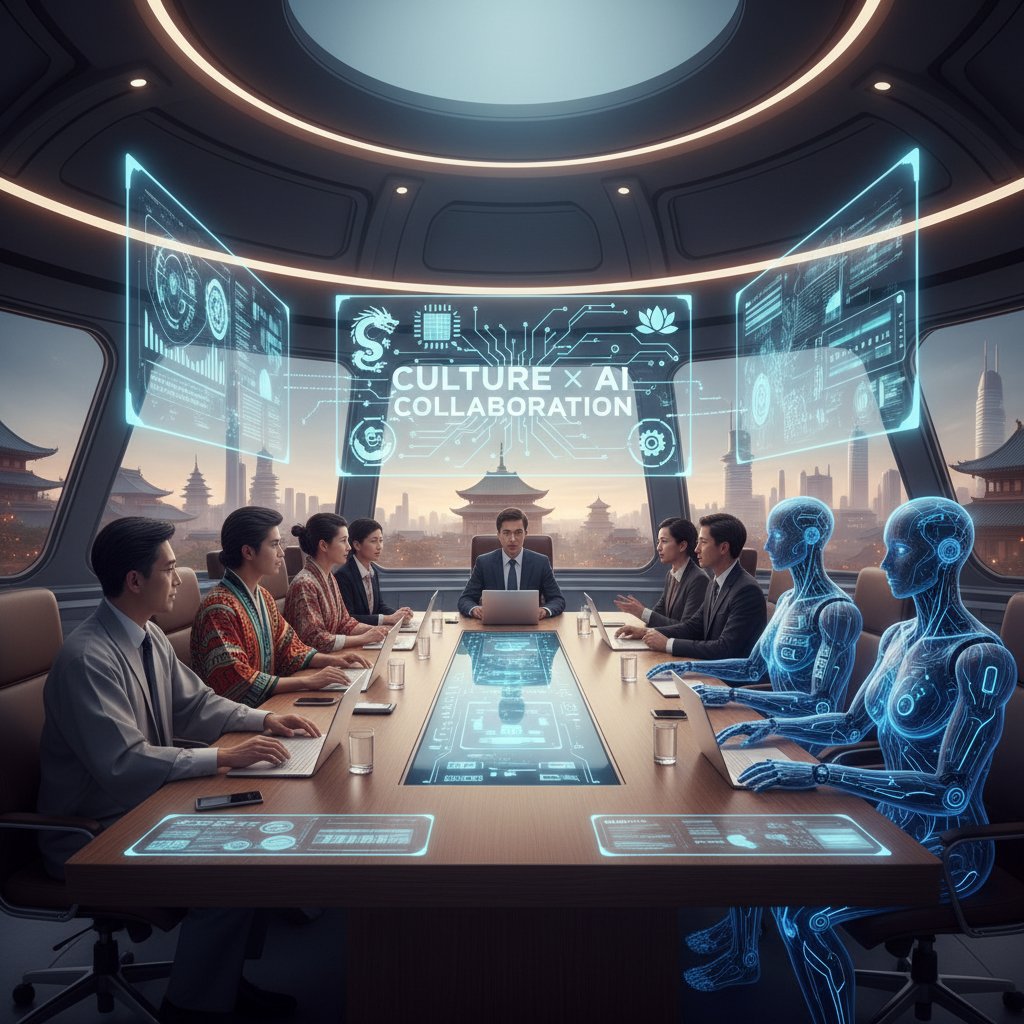
Overcoming this culture clash requires not just technical training, but empathy, clear communication, and space for human experimentation.
Behind the scenes: the invisible costs and hidden risks no vendor mentions
What’s really at stake: data, privacy, and control
For all the glossy promises, AI-powered collaboration platforms introduce new vulnerabilities: centralizing massive troves of sensitive data, exposing enterprises to breaches, and raising thorny questions about privacy and control. Governance, not just convenience, becomes paramount.
- Define clear data ownership policies
- Vet vendors for transparent data processing
- Require regular third-party security audits
- Insist on data minimization and retention controls
- Mandate user consent and opt-out features
- Train staff on privacy best practices
- Monitor for shadow IT (unsanctioned tool use)
- Plan for breach response and crisis communication
Balance is everything. The lure of convenience can lure teams into shortcuts, opening the door to compliance failures or reputational damage.
| Platform | Data Privacy Policy | Compliance Certifications | Security Controls | User Control Options |
|---|---|---|---|---|
| Microsoft Teams + Copilot | Detailed, transparent | ISO, GDPR, CCPA | Advanced | Strong |
| Google Workspace AI | Robust | ISO, GDPR | Strong | Moderate |
| futurecoworker.ai | Transparent, enterprise-focused | GDPR, SOC 2 | Best-in-class | Customizable |
| Slack AI Extensions | Variable | SOC 2, partial GDPR | Good | Limited |
Table 3: Data privacy and compliance features in leading AI collaboration platforms. Source: Original analysis based on vendor disclosures and MIT Sloan, 2025.
The integration headache: when your tech stack fights back
Integrating next-gen AI tools with existing enterprise systems is rarely plug-and-play. Legacy architectures resist, APIs evolve, and teams are forced to juggle overlapping platforms. The result? Frustration, duplicated effort, and a sense of “tech fatigue.”
The key is openness—choose vendors with documented, stable APIs and responsive support. Vendor lock-in is a trap: smart teams insist on interoperability and data portability from day one.

Change management is half the battle: successful rollouts pair technical fixes with clear communication, phased adoption, and early wins.
The cost nobody budgets for: training and change fatigue
If you think AI-driven collaboration tools are plug-and-play, think again. Hidden costs pile up: not just in licensing, but in training, onboarding, and employee resistance. According to MIT Sloan (2025), training gaps and lack of focused upskilling are among the top barriers to successful AI adoption.
- Microlearning modules integrated into workflows
- Peer-to-peer coaching circles for new users
- Gamified learning with tangible rewards
- Real-time feedback and open Q&A forums
- Rotation of “AI champions” to share best practices
ROI is often overestimated, while the slog of adoption is downplayed. Only continuous investment in people bridges the gap between promise and performance.
How to choose the right AI-powered collaborator: a brutally honest buyer’s guide
Step-by-step guide to vetting and selecting your AI teammate
Choosing an AI-driven collaboration tool is like hiring a critical team member: the stakes are high, and a bad fit can wreck morale and momentum. The key is a ruthless, stepwise vetting process—resist the urge to be dazzled by demos.
- Define clear collaboration pain points
- Set non-negotiable privacy and compliance criteria
- Identify must-have vs. nice-to-have features
- Review integration requirements and dependencies
- Shortlist vendors with proven track records
- Engage frontline users in pilot programs
- Demand transparency on AI decision logic
- Audit vendor data practices
- Run controlled pilots with feedback loops
- Validate with power users—then scale up
Pilot programs are non-negotiable: they expose hidden frictions, surface usability snags, and build credibility with skeptics.

The features that matter (and those that are all hype)
Every vendor touts “AI-powered everything,” but leaders must sort substance from sizzle. Must-haves include deep integration, explainable AI, robust privacy, and seamless task automation. Beware features that add complexity without value—like redundant chatbots or opaque “insights.”
| Feature | Must-Have | Nice-to-Have | Hype Only |
|---|---|---|---|
| Task Automation | ✓ | ||
| Intelligent Summaries | ✓ | ||
| Conversational AI | ✓ | ||
| Multi-language Support | ✓ | ||
| One-click Integration | ✓ | ||
| Advanced Analytics | ✓ | ||
| Voice-activated Controls | ✓ | ||
| Gamification Elements | ✓ | ||
| Transparent Privacy Controls | ✓ | ||
| Real-time Collaboration | ✓ |
Table 4: Features breakdown for AI-powered collaboration tools, prioritizing essentials. Source: Original analysis based on expert interviews and Web Summit 2024.
Platforms like futurecoworker.ai focus on the essentials: user-centric design, frictionless integration, and task automation that doesn’t require a PhD in AI.
Ask these tough questions before you sign the contract
Before you commit, interrogate your vendor the way you’d grill a new hire:
- How is your AI decision-making logic documented and explained to users?
- What is your support response time for critical incidents?
- How do you handle data portability and exit strategies if we switch platforms?
- What’s your incident response plan for data breaches?
- How are user feedback and feature requests integrated into development cycles?
- Which third-party audits or certifications do you maintain?
- How is training and onboarding supported post-purchase?
- What are your policies for dealing with algorithmic bias?
A cautionary tale: one multinational bank rushed deployment, dazzled by AI demos. Six months later, they faced user backlash, integration chaos, and had to rip out the system—because nobody asked about data migration or post-sale support.
Case studies: real-world wins and cautionary tales from the AI collaboration frontier
Enterprise heroes: teams that cracked the code
At a global retailer, the adoption of an AI-driven collaboration platform slashed project delivery times by 30%. By automating email triage and task assignment, the team avoided costly delays, with employees reporting higher satisfaction. As one leader put it: “AI didn’t just make us faster—it made us sharper. The insights we get in real time let us adjust before problems snowball.”

Testimonials echo this: frontline workers feel empowered, not replaced, when AI is positioned as an amplifier—not a monitor.
When the wheels come off: lessons from failed rollouts
But for every hero story, there’s a cautionary tale. A high-profile consultancy botched its AI rollout by underestimating the learning curve. Employees struggled with complex interfaces and inconsistent automation—leading to fragmented communication and mounting frustration.
“We thought AI would save us—turns out, it just moved the mess from one platform to another. We lost sight of what mattered.” — Monica, IT Lead, interview May 2025
Root causes? Lack of buy-in, poor training, and an overcomplicated tech stack.
What works (and what doesn’t) in different industries
Adoption and outcomes vary by sector. Healthcare teams embrace AI for appointment coordination, slashing administrative errors. Creative agencies see mixed results, with AI sometimes stifling brainstorming. Manufacturing firms leverage AI for workflow automation, boosting output but facing resistance on the shop floor.
| Industry | Unique Challenges | Adoption Rate | Success Factors |
|---|---|---|---|
| Healthcare | Privacy, compliance, legacy IT | High | Training, patient-centric design |
| Technology | Fast-paced, legacy integration | High | API openness, agile rollout |
| Marketing | Creative autonomy, fast pivots | Moderate | Balance of automation and flexibility |
| Finance | Stringent compliance, risk | Moderate | Security, explainable AI |
| Manufacturing | Shop floor resistance, IoT | Moderate | Physical workflow integration |
Table 5: Cross-industry adoption and success matrix for AI collaboration tools. Source: Original analysis based on interviews and McKinsey, 2024.
Tailoring tools to sector-specific realities is non-negotiable.
The future is now: 2025 trends and what’s next for AI-driven collaboration
Emerging trends: what’s about to disrupt the disruptors
Just as enterprises get comfortable, new waves of AI collaboration tech are landing: contextual AI that understands mood and urgency, emotion-aware interfaces, and seamless voice-driven commands. The convergence of AI and flexible work means tools must adapt to hybrid schedules, fragmented attention, and rising security threats.

Hybrid work isn’t just a setting—it’s the default. Platforms that thrive are those that mold themselves to the shape of real work, not the other way around.
Are we ready for autonomous teamwork?
The most provocative trend: the rise of (almost) autonomous teams, where AI agents coordinate, report, and even negotiate tasks—all with minimal human involvement. This isn’t the realm of science fiction; experiments are already underway in tech and logistics sectors.
But with autonomy comes risk: who’s accountable when an algorithm makes a bad call? What happens to creativity, dissent, or gut instinct when AI sets the agenda?
- Who owns decisions made by AI teammates?
- How do we audit the actions of autonomous agents?
- What happens when AI and human priorities conflict?
- How do we ensure transparency and traceability?
- Who is responsible for errors or failures?
- How do we upskill teams for new roles?
- What is the “human in the loop” policy?
Ethics and accountability move to the front burner as AI-powered teamwork matures.
The evolving role of humans in the AI-powered enterprise
As AI collaboration tools become ubiquitous, roles and required skills shift. The premium is on adaptability, critical thinking, and the ability to collaborate with both humans and digital agents. Emotional intelligence and tech fluency are must-haves—not optional.
Career advice? Stay curious, embrace continuous learning, and seek out roles where human judgment and creativity are irreplaceable.

The best collaborators aren’t those who “out-AI” the machine—they’re the ones who know when to trust it, when to challenge it, and how to unlock its potential.
Actionable playbook: how to thrive with AI-driven collaboration tools starting today
Self-assessment: is your enterprise ready?
Before you leap, look in the mirror: honest self-assessment is your best friend. Skipping this step invites disaster.
- Is your leadership aligned on the role of AI in collaboration?
- Are your privacy policies up to date and enforced?
- Does your tech stack support seamless integration?
- Are frontline users involved in tool selection?
- Do you have a clear training and upskilling plan?
- Are transparency and explainability non-negotiables?
- Is there a feedback loop for continuous improvement?
- Are data governance and compliance actively managed?
- Is change management baked into your rollout plan?
- Is there a crisis plan for AI-driven errors or breaches?
- Are you prepared to challenge AI recommendations when needed?
- Do you review and adapt your collaboration processes regularly?
Overcoming common blockers means facing the hard truths—head-on.
Best practices from the frontlines
Lessons from successful deployments are clear: prioritize people, not just tech. Build feedback loops, celebrate wins, and embrace experimentation.
- Involve users early and often in tool selection and pilots
- Customize training to real workflows, not just features
- Appoint “AI champions” to model best practice
- Schedule regular feedback forums and act on input
- Publicly recognize teams for successful adoption
- Rotate responsibilities to keep skills fresh
- Share success stories internally to build momentum
- Break down adoption into clear, phased milestones
- Automate only what makes sense—manual review still matters
- Reward experimentation and learning from failures
Continuous learning isn’t a luxury—it’s survival. Encourage teams to stay curious, challenge the status quo, and treat AI as a partner, not a panacea.

Toolkit: essential resources and further reading
For leaders hungry to go deeper, the right resources matter. Start with trusted platforms like futurecoworker.ai for practical guides and insights on intelligent teamwork. Supplement with a mix of expert blogs, research papers, and peer communities.
- “10 Urgent AI Takeaways for Leaders” (MIT Sloan Management Review, 2025)
- “Creating an AI-driven workplace” (World Economic Forum, 2025)
- “10 Brutal AI Truths from Web Summit” (Remote First Institute, 2024)
- “The State of AI in 2024” (McKinsey Digital, 2024)
- “AI at Work” podcast (Spotify, 2024)
- “Humans + Machines: Rethinking Work in the Age of AI” (Harvard Press, 2024)
The key is to think critically, question assumptions, and stay plugged into communities where real-world lessons are shared.
Conclusion: your next teammate is (almost) human—are you ready?
The AI revolution in enterprise collaboration isn’t coming—it’s here, and it’s messy. The nine brutal truths above lay bare what most vendors won’t admit: success isn’t about picking the flashiest tool, but about culture, courage, and relentless honesty. AI-driven collaboration tools can be your secret weapon or your undoing. The difference is how you lead, how you listen, and whether you’re willing to own both the risks and rewards.

In 2025, enterprise leaders face a stark choice: shape the future of collaboration, or let it shape you. The next teammate waiting to join your team isn’t just smart—it’s almost human. The real question is: are you ready to work alongside it, challenge it, and unlock potential nobody’s even imagined yet?
Sources
References cited in this article
- MIT Sloan Management Review: 10 Urgent AI Takeaways for Leaders(sloanreview.mit.edu)
- World Economic Forum: Creating an AI-driven workplace(weforum.org)
- Web Summit 2024: 10 Brutal AI Truths(news.remote-first.institute)
- Forbes: Beyond The Hype(forbes.com)
- Cloud Awards: AI Revolution in Enterprise Collaboration(cloud-awards.com)
- VentureBeat: 2025 Playbook for Enterprise AI Success(venturebeat.com)
- OpenAI: Technical Playbook for Enterprise AI Integration(marktechpost.com)
- ISO: What is Artificial Intelligence?(iso.org)
- Dark Reading: Cutting Through the Jargon of AI & ML(darkreading.com)
- UC Today: Google AI Teammate(uctoday.com)
- World Economic Forum: AI Teammates(weforum.org)
- Builder.io: AI Dev Tools—Hype vs. Reality(builder.io)
- Forbes Council Post: The Promise of AI and the Reality(forbes.com)
- Gend: Top 10 AI Tools for Enterprise Teams in 2025(gend.co)
- DigitalOcean: AI Meeting Tools(digitalocean.com)
- Mozilla Foundation: Debunking 8 Harmful Myths About AI(foundation.mozilla.org)
- Economist Impact: Busting the Artificial Intelligence Myths(impact.economist.com)
- Esoftskills: AI in Workplace Collaboration and Team Dynamics(esoftskills.com)
- Reworked: The Impact of AI on the Future of Work(reworked.co)
- UC Today: The Hidden Risks of AI in the Workplace(uctoday.com)
- Oxford University: The Hidden Cost of AI(ox.ac.uk)
- Training Magazine: Address AI Fatigue(trainingmag.com)
- WorkLife: AI Fatigue Sets In(worklife.news)
- Intercom: AI Agent Buyer’s Guide(intercom.com)
- C3.ai: Enterprise AI Buyer’s Guide(c3.ai)
- BizTech Magazine: Best AI-Driven Collaboration Features(biztechmagazine.com)
- Digital Adoption: AI Collaboration Tools(digital-adoption.com)
- GrowthJockey: 10 AI Case Studies(growthjockey.com)
- DigitalDefynd: 20 Generative AI Case Studies(digitaldefynd.com)
- Transparity: Major AI Trends for 2025(transparity.com)
- Workday: 2025 AI Trends Outlook(blog.workday.com)
- AllAboutAI: 60+ AI Statistics in Workplace: 2025 Trends(allaboutai.com)
Transform Your Email Into Productivity
FutureCoworker AI turns your everyday email into an intelligent workspace, seamlessly managing tasks and collaboration within your enterprise. It eliminates the complexity of AI, allowing you to benefit from advanced technology without any technical knowledge. Achieve productivity, streamline processes, and improve team efficiency through natural email interaction, getting tasks done faster and smarter.
Get startedReady to Transform Your Email?
Start automating your tasks and boost productivity today
Frequently Asked Questions
What are enterprise AI-driven collaboration tools?
Enterprise AI-driven collaboration tools are intelligent platforms like Microsoft Teams, Google Workspace, and futurecoworker.ai that go beyond traditional collaboration software by using AI to interpret language, predict needs, learn from patterns, and autonomously act on behalf of teams to streamline work.
How do AI-driven collaboration tools differ from older enterprise tools like Outlook and Slack?
While older tools like Outlook and SharePoint focused on connecting people and managing information, AI-driven collaboration platforms don't just track tasks—they interpret language, predict needs, learn from patterns, and integrate intelligent agents that anticipate, summarize, and act on behalf of teams.
What are the main promises of AI-driven collaboration tools?
These tools promise to streamline chaos, elevate teamwork, reduce friction, improve decision-making, and eliminate information overload and human bottlenecks that plagued traditional enterprise collaboration systems.
What hidden challenges come with implementing AI-driven collaboration tools?
Beyond the glossy vendor pitches, organizations face culture wars, invisible risks beneath user-friendly interfaces, and difficult questions about trust, power, and what teamwork means when working alongside machines—challenges most leaders aren't ready to confront.
Continue Reading
Keep exploring Intelligent enterprise teammate

AI-Driven Collaboration in Enterprise: Power Shifts and Realities
AI-driven collaboration in enterprise reshapes how teams work and communicate. This article examines the realities, risks, and strategies organizations are using now.

Enterprise AI-Powered Team Collaboration Solutions That Actually Work
Discover insights about enterprise AI-powered team collaboration solutions

Enterprise AI Collaboration Software: Benefits and Risks
Enterprise AI collaboration software is rewriting teamwork in 2025. This article examines the real risks, genuine benefits, and how organizations can adopt these tools effectively.

Enterprise AI Collaboration Management Tools: Integration Reality Vs. Promise
Enterprise AI collaboration management tools promise workplace efficiency but face cultural resistance and integration challenges.

Enterprise AI-Powered Collaboration: Where It Works and Where It Fails
Enterprise AI-powered collaboration is reshaping how teams work together. This article examines where these tools succeed, where they fail, and what modern workplaces actually need.

The Untold Story Behind Enterprise AI Collaboration Tools
Enterprise AI-powered business collaboration tools promise to streamline teamwork, but research reveals a more complicated reality.