


Documentation Development Is Now Your Biggest AI Risk and Asset
Written with AI assistance under our editorial guidelines
Poor documentation costs enterprises significantly, with nearly half of employees struggling to find needed files and companies spending $954 per new hire partly due to unclear processes. High-quality documentation yields 25% better team performance, making it essential for innovation, collaboration, and competitive survival rather than a box to check during digital transformation.
If you think documentation development is just a box to check on your way to digital transformation, buckle up. In today’s enterprise landscape, “good enough” documentation is a silent assassin—choking innovation, costing millions, and draining teams in ways that rarely make the boardroom agenda. The rules have changed: documentation isn’t about manuals gathering dust or endless SharePoint folders nobody reads. It’s a living, breathing force that can make or break your organization’s ability to compete, collaborate, and survive. As of 2025, the stakes couldn’t be higher: research shows that high-quality documentation yields 25% better team performance, yet nearly half of employees struggle just to find the right files when they need them. If you’re ready to uncover the untold risks, radical new strategies, and expert tactics defining enterprise knowledge today, this is your guide to the 9 disruptive truths every leader must face—or risk being left in the chaos.
Why documentation development matters more than you think
The hidden costs of bad documentation
Poor documentation is an enterprise’s ticking time bomb. Every ambiguous instruction, missing process, or out-of-date reference bleeds time and money in ways that rarely surface in quarterly reports. According to the Adobe Acrobat Survey 2023, 48% of employees struggle to locate documents quickly, while 47% find existing filing systems downright confusing. The financial implications are staggering: enterprises spend an average of $954 per new hire on training, much of it wasted repeating unclear processes or filling knowledge gaps that good docs would eliminate. The hard truth? Most companies underestimate the price of confusion.

| Documentation Failure | Common Consequence | Estimated Annual Loss (per 1,000 employees) |
|---|---|---|
| Missing processes | Onboarding delays | $210,000 |
| Out-of-date docs | Compliance violations | $340,000 |
| Inaccessible files | Project overruns | $180,000 |
| Knowledge silos | Redundant work | $150,000 |
Table 1: Statistical summary of enterprise losses caused by documentation failures. Source: Original analysis based on Fluid Topics, 2023, [Adobe Acrobat Survey 2023], and [Broadcom DevOps Report 2023].
"Most companies underestimate the price of confusion." — Alex, enterprise knowledge consultant
The hidden toll stretches beyond wasted payroll. Projects stumble, customer satisfaction dips, and regulatory fines quietly pile up. Documentation development isn’t just about compliance or process; it’s about cold, hard cash and competitive survival.
When documentation becomes a strategic asset
Once relegated to the back burner, forward-thinking companies now use documentation development as a strategic lever. According to the Broadcom DevOps Report 2023, teams with high-quality documentation outperform counterparts by a striking 25%. This isn’t just theory—real-world firms have shaved weeks off onboarding time by building living, searchable knowledge bases accessible to every role, not just IT. The difference between chaos and clarity? A single source of truth that actually gets used.
- Comprehensive docs streamline onboarding, slashing ramp-up time for new hires and reducing the learning curve.
- Up-to-date knowledge bases break down silos, fostering cross-functional collaboration and faster innovation.
- Effective documentation development enhances compliance, reducing the risk of fines and reputational harm.
- Documentation empowers customer-facing teams to deliver consistent, accurate answers—shoring up trust and brand loyalty.
- Future-ready documentation is modular and AI-augmented, enabling organizations to pivot quickly during crises or transformation.
The secret? Treating documentation as a business asset, not a bureaucratic chore.
The psychological impact on teams
If you’ve ever watched a team unravel over conflicting instructions or cryptic process docs, you know the emotional cost of neglected knowledge. Frustration isn’t just an annoyance—it’s a productivity killer. High-performing teams trust their tools and each other, but outdated or ambiguous documentation seeds doubt, stress, and misalignment. According to the Broadcom DevOps Report 2023, underrepresented groups report 24% more burnout, partly due to documentation burdens. Morale drops, turnover rises, and resentment festers when no one can find the answers they need.

Psychological safety starts with clarity. When docs are up-to-date, accessible, and relevant, teams move faster and trust deeper—period.
Section conclusion: The new currency of enterprise survival
Documentation development is no longer invisible back-office noise. It’s the new currency of enterprise survival—fueling speed, trust, and adaptability in a landscape where ambiguity kills. As we peel back the layers, the next section will shatter the stubborn myths still holding organizations hostage.
Debunking the biggest myths in documentation development
Myth 1: Documentation is a one-and-done task
Let’s retire the myth that documentation is something you “finish.” In truth, it’s a living organism, evolving with every product update, team shift, and regulatory change. Static docs breed technical debt, confusion, and risk. The documentation lifecycle is cyclical: create, review, update, archive, repeat. Agile teams know that “done” is a mirage—real value comes from continuous evolution.
- Establish a documentation ownership model—assign accountable leaders.
- Schedule quarterly documentation reviews to root out obsolete or inaccurate content.
- Integrate documentation updates into your standard deployment or process change cycles.
- Collect feedback after every major project or incident, and update docs accordingly.
- Archive old content with clear version history, never deleting knowledge outright.
- Promote a culture of transparency: if it’s not documented, it doesn’t exist.
Myth 2: Only technical teams care about docs
Documentation development isn’t just IT’s headache. HR, sales, finance, and operations all live or die by the clarity of shared knowledge. According to Jamie, a cross-functional lead, “HR and sales live or die by the quality of our docs.” When knowledge is siloed, projects grind to a halt—and finger-pointing soars.

Every department benefits from a single source of truth. Customer support fields fewer escalations; HR accelerates onboarding; finance ensures compliance. Documentation isn’t a technical nice-to-have—it’s the backbone of cross-team execution.
Myth 3: AI will solve everything
AI is transforming documentation development—no doubt. But let’s get real: AI-only approaches are no silver bullet. According to Fluid Topics (2024), AI tools can augment, but not replace, expert knowledge. Automated systems may summarize, catalog, and even draft content, but they miss the nuance, context, and tacit insight only humans provide. Enterprises that rely solely on AI for documentation quickly discover gaps in compliance, cultural context, and process fidelity.
| Feature/Aspect | AI-generated Docs | Human-maintained Docs |
|---|---|---|
| Speed of initial drafting | Fast | Slower |
| Context sensitivity | Limited | High |
| Compliance accuracy | Variable | Consistent |
| Tacit knowledge representation | Poor | Strong |
| Continuous learning | Requires manual tuning | Natural through feedback |
Table 2: Comparison of AI-generated vs. human-maintained documentation development. Source: Original analysis based on Fluid Topics, 2024.
That’s why leading platforms like futurecoworker.ai advocate a hybrid approach: let AI handle the grunt work, but keep humans in the loop for accuracy, ethics, and expertise.
Section conclusion: Shifting the narrative
It’s time to bury the old myths. Documentation development isn’t a static chore for the IT crowd, nor is it a problem AI alone can solve. The new narrative is dynamic, collaborative, and demands constant vigilance. Let’s explore what the modern documentation ecosystem looks like.
Inside the modern documentation ecosystem
From wikis to living documentation
Gone are the days when a dusty wiki or PDF manual did the job. Today’s documentation development has evolved into dynamic, context-aware systems that adapt in real time. The shift to “living documentation” means your knowledge base isn’t just a reference—it’s part of the daily workflow, constantly updated and interwoven with business processes.
Documentation that is continuously updated, versioned, and integrated into day-to-day workflows, ensuring accuracy and relevance.
A centralized knowledge base where all teams access official documentation, eliminating conflicting versions and silos.
A structured repository encompassing procedures, FAQs, guides, and policies—curated for accessibility and searchability.
The anatomy of effective documentation
Effective documentation development rests on three pillars: structure, clarity, and accessibility. Without clear organization, even the most thorough docs become unusable. Clarity ensures information is understandable by its intended audience—no jargon, no ambiguity. Accessibility means docs are searchable, permissioned, and available on demand.
- Unclear ownership: No one knows who updates what, leading to outdated docs.
- Inconsistent structure: Docs vary in format, confusing users.
- No feedback loops: User suggestions are ignored, so errors persist.
- Lack of version control: Multiple conflicting versions circulate.
- Poor searchability: Employees waste hours hunting for info.

Spot these red flags early, and you’ll save your team a world of pain.
The rise of collaborative documentation tools
Platforms like Confluence, Notion, and SharePoint have shifted documentation from a one-way dump to a real-time, multi-user experience. Collaboration is king—but with it comes a new set of headaches: security risks, version conflicts, and the potential for knowledge chaos if governance isn’t enforced.
"Collaboration without chaos—that’s the dream." — Robin, enterprise documentation lead
The best tools balance openness with control, ensuring every edit is tracked and every contributor is accountable.
Section conclusion: The ecosystem’s new rules
Modern documentation development is about ecosystems, not silos. The best environments are dynamic, collaborative, and ruthlessly clear. Up next: advanced strategies that separate the leaders from the laggards.
Advanced strategies for documentation development in 2025
Integrating AI with human expertise
Hybrid documentation development is no longer optional—it’s essential. AI handles repetitive tasks: formatting, tagging, versioning, even initial drafting. But when it comes to nuance, compliance, or institutional memory, humans must lead. Platforms like futurecoworker.ai exemplify this blended approach, marrying automation with curated expertise to keep docs relevant and trustworthy.
| Feature | AI-assisted Workflow | Traditional Workflow |
|---|---|---|
| Automated indexing | Yes | No |
| Instant summarization | Yes | No |
| Contextual suggestions | Yes | No |
| Human oversight | Essential | Core |
| Feedback integration | Real-time | Periodic |
Table 3: Feature matrix comparing AI-assisted and traditional documentation workflows. Source: Original analysis based on adoption data from Fluid Topics, 2024, Broadcom DevOps, and enterprise user feedback.
Creating a feedback-driven documentation process
Continuous improvement isn’t just a buzzword—it’s survival. The best documentation development is feedback-driven, integrating user suggestions, error reports, and real-world use cases into every update. Effectiveness can be measured by metrics like access frequency, update cadence, and time-to-find.

Solicit feedback often, and close the loop by making improvements visible. Transparency breeds trust.
Automating the mundane, humanizing the critical
Not every documentation task deserves a human touch. Automate the repetitive—template creation, version control, tagging—while reserving human judgment for content that requires empathy, context, or legal clarity.
- Audit your documentation process—identify repeatable tasks.
- Select automation tools that integrate with existing workflows.
- Maintain human review for compliance-critical or customer-facing documentation.
- Track automation ROI—measure time saved and error reductions.
- Regularly retrain staff on new tools and process changes.
Section conclusion: Future-proofing your documentation
The leaders in documentation development blend speed with substance, automation with insight. These advanced strategies don’t just save money—they safeguard knowledge, culture, and competitive edge.
Real-world applications & failures: What case studies reveal
When documentation saved the day
Case in point: a Fortune 500 manufacturing company faced a major product recall. Thanks to a robust, up-to-date knowledge base, the crisis team accessed emergency protocols in minutes. Step-by-step, they:
- Identified the affected batch using real-time search.
- Deployed standardized response procedures—no guessing, no improvising.
- Informed all stakeholders with clear, pre-approved messaging.
- Documented each action, ensuring regulatory compliance.

Outcome: recall costs contained, regulatory penalties avoided, and customer trust preserved.
The anatomy of a documentation disaster
Contrast that with a high-profile tech firm that suffered a week-long outage. Investigations revealed missing or outdated runbooks and no clear escalation procedures. Here’s how the failure unfolded:
| Timeline Event | Action/Failure | Consequence |
|---|---|---|
| Incident detected | No clear owner | Delayed response |
| Runbook outdated | Wrong steps followed | Escalation failed |
| No single source of truth | Conflicting instructions | Siloed teams |
| No documentation audit | No lessons learned | Repeat failures |
Table 4: Timeline of events leading to a documentation-related catastrophe. Source: Original analysis based on public post-mortems and industry reports.
With clear, living documentation, this disaster could have been contained—or prevented entirely.
Lessons learned: Turning pain into process
The best organizations treat every documentation failure as tuition paid to the school of hard knocks.
- Ignoring feedback loops keeps problems festering.
- Siloed ownership means no one is accountable.
- Outdated templates breed confusion and legal exposure.
- Poor integration with daily workflows ensures docs are ignored.
Learn from others’ pain—turn every post-mortem into a blueprint for improvement.
Section conclusion: The stakes are higher than you think
If you’re betting your business on luck and tribal knowledge, you’re flirting with disaster. Documentation development isn’t just operational hygiene—it’s existential risk mitigation.
Documentation development as a cultural movement
How documentation shapes organizational culture
Let’s get something straight: documentation isn’t just process—it’s culture. Organizations that value transparency, learning, and trust make documentation everyone’s job. Instead of an afterthought, documentation becomes part of the brand, signaling maturity and shared ownership.
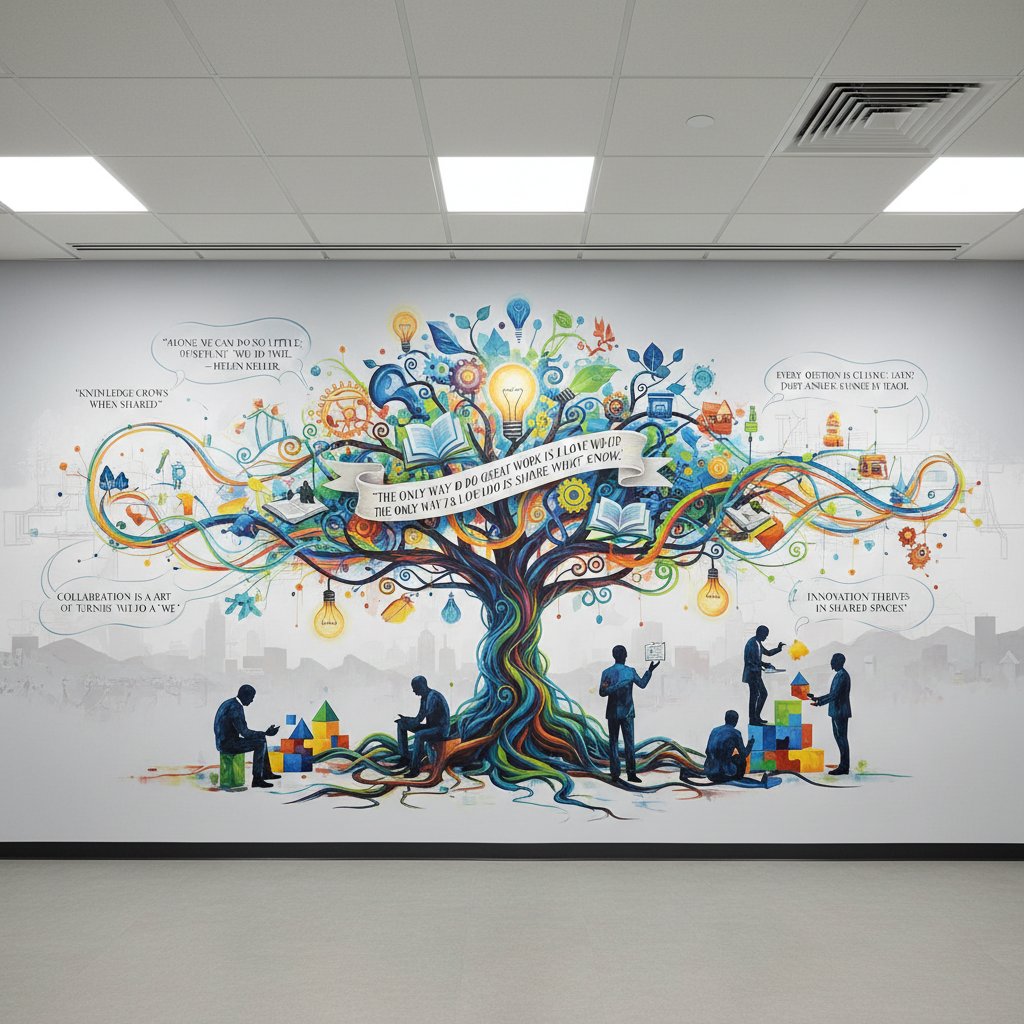
Walk into high-performing enterprises, and you’ll see knowledge-sharing celebrated, not hidden.
The invisible politics of information
Who controls the docs, controls the narrative. Power dynamics play out in documentation ownership—gatekeeping, information hoarding, and selective editing breed resentment and inefficiency. Flip the script by democratizing contribution and enforcing clear governance.
- Training manuals as onboarding accelerators
- Internal wikis for cross-departmental brainstorming
- Documentation as a platform for recognition and peer learning
- Community-maintained “gotcha” lists to capture institutional memory
Documentation development, done right, breaks down hierarchies and unleashes collective intelligence.
Breaking down silos with documentation
The fastest way to kill innovation? Siloed knowledge. Cross-departmental documentation development—shared templates, open feedback channels, accessible knowledge bases—unlocks collaboration at scale. Healthcare firms reduce medical error by sharing updated protocols. Finance teams cut compliance risk with a single source of truth. SaaS companies speed product releases by making all specs searchable and actionable.
Clear, shared documentation is the ultimate antidote to chaos.
Section conclusion: From paper trail to movement
Documentation development isn’t paperwork—it’s a movement. When knowledge is shared openly, organizations become smarter, faster, and more resilient. Culture, not code, is the foundation.
The future: Where documentation development goes next
AI, self-updating docs, and beyond
No, AI won’t write your documentation for you and walk away. Current reality: AI augments documentation by suggesting updates, auto-summarizing content, and flagging outdated references. But ethical issues lurk—AI can reinforce biases or miss critical context without human oversight.

Transparency and data stewardship are non-negotiable. The future is about AI as a powerful assistant—never the sole author.
The rise of intelligent enterprise teammates
The emergence of AI-powered coworkers—think futurecoworker.ai—signals a shift from passive documentation to proactive, context-aware systems. These tools don’t just store knowledge; they surface relevant information, prompt for updates, and facilitate collaboration, all from within daily workflows.
Suddenly, documentation development isn’t a background chore—it’s an active teammate.
Preparing for the unknown
If one thing’s certain, it’s uncertainty. Future-ready enterprises build documentation processes that adapt. Here’s how the field has evolved:
- Paper manuals and binders (pre-2000)
- Static wikis and PDFs (2000–2015)
- Collaborative cloud docs (2015–2020)
- AI-augmented living documentation (2020–2025)
- Feedback-driven, context-aware systems (present)
The lesson? Evolve or become obsolete.
Section conclusion: Document or die
This isn’t hyperbole. In the high-stakes world of enterprise, you document—or you disappear. Knowledge is power, but only if it’s documented, accessible, and alive.
Supplementary: Documentation in crisis, ethics, and innovation
The role of documentation in crisis management
When disaster strikes, documentation development separates order from chaos. Up-to-date incident response plans, cybersecurity protocols, and disaster recovery runbooks mean fewer mistakes and faster recoveries. In the wake of ransomware attacks, organizations with well-maintained documentation restore operations weeks faster than those relying on tribal knowledge alone.
Recent cybersecurity incidents have illustrated that access to clear, actionable documentation can be the difference between swift containment and catastrophic loss.
Ethical considerations in documentation development
Transparency and privacy sit at the heart of ethical documentation. Teams must balance openness with data protection, ensuring only those who need access, get access.
The practice of creating, updating, and sharing knowledge in ways that respect privacy, comply with regulations, and foster accountability.
The principled management, protection, and ethical use of organizational information.
Documentation as a platform for innovation
Innovation thrives on clarity. When documentation makes experiments repeatable and learnings shareable, teams move from gut-feel to data-driven. Google’s Site Reliability Engineering team famously shares their post-mortems company-wide, accelerating learning and preventing repeat mistakes. In healthcare and SaaS, clear protocols have sparked process breakthroughs and faster pivots.
Documented knowledge isn’t a drag—it’s the launchpad for rapid, safe experimentation.
Section conclusion: Expanding the horizons of documentation
Documentation development is more than compliance or crisis response; it’s the foundation for ethical governance, risk mitigation, and relentless innovation.
The ultimate documentation development playbook: Practical guides and checklists
Self-assessment: Is your documentation future-ready?
It’s time for brutal honesty. Is your documentation development process helping—or hurting—your enterprise? Use this checklist to find out.
- Do you have clear ownership for every major documentation area?
- Are your docs accessible, searchable, and up-to-date?
- Does your team review and update documentation quarterly?
- Is feedback from end users actively solicited and integrated?
- Are automation tools used for repetitive tasks?
- Is compliance content reviewed by subject matter experts?
- Do you have a documented audit trail for all critical procedures?
- Is documentation part of onboarding and ongoing training?
- Are docs versioned, archived, and never deleted outright?
- Does your documentation foster collaboration across teams?
If you can’t check most of these, you’re behind—and vulnerable.
Quick reference: Common documentation pitfalls and solutions
No two organizations fail in exactly the same way, but most repeat the same mistakes.
- Unclear or missing ownership—assign accountable leads to every section.
- Outdated content—schedule mandatory reviews and tie updates to business changes.
- Poor searchability—invest in a robust knowledge management platform.
- Siloed information—break down barriers with collaborative environments.
- Ignored feedback—build in real-time feedback loops and close the loop on suggestions.
- No audit trail—implement version control and track every change.
Recognize these red flags and act now, before they cost you more than just time.
Glossary: Key terms every documentation leader should know
A centralized repository that serves as the official, authoritative version of all organizational knowledge.
The accumulated cost caused by outdated, missing, or inaccessible knowledge; a drag on productivity and innovation.
The risk and inefficiency accrued from neglected, inaccurate, or incomplete documentation.
Continuously updated, versioned, and integrated knowledge that evolves with the organization’s needs.
Section conclusion: Your next move
If you’ve read this far, you know what’s at stake. Documentation development isn’t about checking boxes—it’s about building a culture, mitigating risk, and unlocking innovation. Audit your docs, break the silos, and let your knowledge live. The only thing more dangerous than bad documentation is pretending it doesn’t matter. The future belongs to the bold—so document like your enterprise depends on it.
Sources
References cited in this article
- Fluid Topics: Documentation Challenges(fluidtopics.com)
- Broadcom DevOps Report 2023(enterprise-software.broadcom.com)
- Business.com: Document Management Strategy(business.com)
- Chief Disruptor: 2024 Disruptive Trends(chiefdisruptor.com)
- Select Star: Why You Need Data Documentation in 2024(selectstar.com)
- PlatformOS DocsKit: 2023 Research(docskit.platformos.com)
- Computer.org: Software Documentation Trends 2024(computer.org)
- The Writing Sample: The Hidden Costs of Poor Documentation(thewritingsample.com)
- Formtek: Inefficient Document Management(formtek.com)
- Kaster.app: Cost of Missing Documentation(kaster.app)
- PLOS One: Team Psychological Safety(journals.plos.org)
- Gartner: Psychological Safety(gartner.com)
- Mental Health America: 2024 Workplace Wellness(mhanational.org)
- Fluidtopics: Technical Documentation Trends 2024(fluidtopics.com)
- ITBAC: Debunking Myths(itbac.eu)
- Daily.dev: Version Control Best Practices 2024(daily.dev)
- Documentations.ai: Best Practices(documentations.ai)
- PHPKB: How to Write Effective Technical Documentation(phpkb.com)
- JSB Market Research: Collaborative Documentation(jsbmarketresearch.com)
- Medium: Top 9 Document Collaboration Tools(medium.com)
- Fluidtopics: 2025 Technical Documentation Trends(fluidtopics.com)
- Archbee: 2025 Trends(archbee.com)
- Harvard RMF: Candello Report(rmf.harvard.edu)
- CIO: 8 Big IT Failures 2023(cio.com)
- Apollo Solutions: Audit Case Studies(apollo-solutions.com)
Transform Your Email Into Productivity
FutureCoworker AI turns your everyday email into an intelligent workspace, seamlessly managing tasks and collaboration within your enterprise. It eliminates the complexity of AI, allowing you to benefit from advanced technology without any technical knowledge. Achieve productivity, streamline processes, and improve team efficiency through natural email interaction, getting tasks done faster and smarter.
Get startedReady to Transform Your Email?
Start automating your tasks and boost productivity today
Frequently Asked Questions
What percentage of employees struggle to find documents quickly?
According to the Adobe Acrobat Survey 2023, 48% of employees struggle to locate documents quickly, while 47% find existing filing systems confusing.
How much does high-quality documentation improve team performance?
Research shows that high-quality documentation yields 25% better team performance.
What is the average training cost per new hire, and how much is wasted?
Enterprises spend an average of $954 per new hire on training, much of which is wasted repeating unclear processes or filling knowledge gaps that good documentation would eliminate.
What are the biggest financial losses caused by documentation failures?
According to the article's table, the largest estimated annual losses per 1,000 employees come from out-of-date documentation causing compliance violations ($340,000), missing processes causing onboarding delays ($210,000), inaccessible files causing project overruns ($180,000), and knowledge silos causing redundant work ($150,000).
Why is documentation now considered a major AI risk and asset?
The article states that in 2025, documentation is a 'living, breathing force' that directly impacts an organization's ability to compete, collaborate, and survive, making it critical in today's enterprise landscape where poor documentation silently drains teams and costs millions.
Continue Reading
Keep exploring Intelligent enterprise teammate

Documentation Generation: Why Enterprises Treat It As Competitive Advantage
Documentation generation is evolving with AI embedded in over 60% of enterprise workflows. This article examines how modern documentation practices improve productivity and competitive advantage.

Developing Documentation: Why It Matters for Team Performance
Developing documentation reduces knowledge loss and improves team efficiency. This article explains why documentation matters, exposes common misconceptions, and outlines strategies for creating effective documentation systems.

How Documentation Builder Failures Cascade Through Enterprises
A documentation builder's failure can cripple knowledge management across enterprises. This article examines why poor documentation systems create chaos and what the risks actually are.

Documentation Creator As Enterprise AI Coworker
Documentation creator tools reshape how enterprises manage knowledge. This article examines their role as AI coworkers and their impact on organizational efficiency and compliance.

Documentation Expertise: Why It Matters for Team Performance
Documentation expertise drives team agility and operational resilience. This article explains why effective documentation is critical and how it separates high-performing teams from struggling ones.

Create Documentation That Actually Gets Used
This article explains how to create documentation that teams will actually use. It covers the hidden costs of poor documentation, common pitfalls, and strategies for success.


