Expert in Collaboration: Why Less Teamwork Creates Better Teams
Written with AI assistance under our editorial guidelines
Effective collaboration is not a personality trait but a learned skill developed through difficult experience. Most workplace collaboration fails because enterprises chase myths like "natural collaborators" and endless meetings rather than understanding that true experts challenge ideas, embrace disagreement, and learn from failure. Workers spend 81% of their time on collaboration while 84% report it's broken, suggesting the problem lies in fundamentally wrong approaches to teamwork.
Collaboration is the gospel of modern work—preached from C-suite pulpits and scrawled across mission statements—but for all the worship, most enterprises are still praying to false gods. If you've been told that more tools, more meetings, and more “teambuilding” will unlock creative nirvana, prepare for a reckoning. The real experts in collaboration know it’s a mess of contradictions, power plays, and unspoken costs. As of 2025, 84% of workers say workplace collaboration is broken even while they spend a staggering 81% of their time on it (Asana, 2024). Is it any wonder so many teams feel like they’re paddling furiously but never catching the current? This deep dive shreds the corporate fairy tales and exposes the 11 brutal truths every enterprise ignores—backed by hard data, research, and the raw reality of the digital age. Whether you’re hoping to level up your teamwork, choose the right collaboration tools, or simply survive the next pointless meeting, this is where unvarnished expertise lives. Ready to question everything you thought you knew? Let’s start.
Why most collaboration advice is dead wrong
The myth of the 'natural collaborator'
For decades, the business world has been haunted by the idea of the “natural collaborator”—that unicorn who effortlessly connects, inspires, and gets results. This myth persists because it’s comforting: the notion that collaboration is a personality trait, not a hard-won skill. But research and experience both say otherwise. Most “natural” collaborators are simply people who’ve survived enough dysfunctional teams to learn (painfully) what works and what doesn’t.

"The best collaborators aren’t born, they’re made—through painful trial and error." — Jordan (quote reflecting research consensus)
Here are seven common misconceptions about what makes someone an expert in collaboration:
- Charisma is enough: Being likable helps, but it doesn’t solve deep-seated misalignments or process failures.
- Extroverts always excel: Introverts often facilitate deeper, more thoughtful discussions and drive results quietly.
- Collaboration means consensus: True experts know when to push back, disagree, and avoid groupthink.
- It’s about being agreeable: Challenging ideas (and egos) is sometimes the only route to breakthroughs.
- Great collaborators never fail: The best have scars—each misstep is a lesson that shapes their expertise.
- Openness equals productivity: Oversharing without structure just creates noise.
- It’s all about personality fit: Diverse, even abrasive teams outperform those built for harmony alone, according to Harvard Business Review, 2024.
The “natural collaborator” is a corporate ghost story—comforting, but not real. Real expertise is earned, not inherited.
When more meetings make things worse
For all the talk of “connection,” the modern workplace has fallen into the trap of thinking every challenge can be solved by slapping another meeting on the calendar. The numbers tell a darker story. According to a 2024 survey published by Enterprise Apps Today, the frequency of enterprise meetings has doubled since 2020, yet productivity has stagnated or declined in most sectors.
| Meeting Frequency (per week) | Avg. Productivity Score | % Reporting Collaboration Fatigue |
|---|---|---|
| 1-3 | 7.3/10 | 18% |
| 4-6 | 6.1/10 | 42% |
| 7+ | 5.2/10 | 73% |
Table 1: Statistical summary of meeting frequency vs. productivity in enterprise teams.
Source: Enterprise Apps Today, 2024
More meetings rarely mean better outcomes—they often signal a broken process trying (and failing) to fix itself by sheer volume. Real experts favor asynchronous updates, rapid feedback loops, and clarity of purpose over endless face time. The alternative? Models like outcome-driven standups, decision memos, or AI-summarized email threads (see futurecoworker.ai/collaboration-strategies) that actually respect people’s time and attention.
Why 'team-building' rarely fixes the real problem
Walk through any enterprise office and you’ll see the evidence: forced fun, awkward icebreakers, and off-site retreats that feel more like escape rooms than solutions. Team-building has become a panacea for deep-seated dysfunction, but most efforts barely scratch the surface.
These rituals mask the real issues—misaligned incentives, unclear roles, and toxic power dynamics. You can’t “escape room” your way out of a lack of psychological safety or trust.
"You can’t workshop your way out of systemic dysfunction." — Taylor (quote capturing the research consensus)
The root causes that team-building fails to address include unclear accountability, ambiguous leadership, and outdated reward systems. True collaboration expertise tackles these issues head-on, not with Band-Aids but with systemic overhauls.
The evolution of collaboration: past, present, and AI-driven future
From water coolers to digital war rooms
Collaboration didn’t always mean Slack pings and Google Docs. The history of enterprise teamwork is a crash course in adaptation—and avoidance. In the early 1980s, collaboration meant corridor conversations and hard-copy memos. By the ’90s, email promised to “democratize” knowledge—only to drown teams in unread threads.
Let’s trace the evolution:
- 1980s: Face-to-face and paper memos reign; informal trust networks drive most decisions.
- 1990s: Email explodes, introducing both speed and chaos.
- Early 2000s: SharePoint and Lotus Notes bring “groupware”—often with more friction than function.
- 2010s: The rise of cloud-based tools (Google Workspace, Dropbox) makes collaboration location-agnostic.
- 2015–2020: Slack, Teams, and Zoom enable real-time (and real-exhausting) digital “war rooms.”
- 2021–2022: Pandemic remote work accelerates video conferencing and exposes tool fatigue.
- 2023–2025: AI-powered teammates like futurecoworker.ai begin to automate, summarize, and intelligently coordinate work.
Each era introduced more tools, more connectivity—and, paradoxically, more confusion. The lesson? Tools alone never solve the human puzzle.
Rise of the AI-powered teammate
Enterprises are now integrating AI-powered coworkers—like the intelligent enterprise teammate—into everyday workflows. Unlike earlier waves of collaboration tech, these AI solutions don’t just connect people; they interpret intent, automate repetitive tasks, and surface insights that would otherwise be lost in the noise. According to Zoom, 2024, organizations using AI for collaboration report a 25-40% reduction in “work about work”—the endless management of tasks, emails, and reminders.

AI augments human collaboration by taking on the mechanical drudgery—summarizing threads, prioritizing tasks, even flagging miscommunications. But it doesn’t replace the judgment, context, or empathy that only real experts bring to the table. The best results emerge when human intuition is paired with AI precision, not replaced by it.
Where human expertise still trumps the machines
Despite the rise of digital teammates, there are domains where human expertise remains unmatched. Complex negotiations, nuanced conflict resolution, and creative brainstorming demand emotional intelligence, context reading, and the ability to improvise under ambiguity.
| Collaboration Scenario | Human Strength | AI Strength |
|---|---|---|
| High-stakes negotiation | Empathy, trust building | Data recall, bias detection |
| Brainstorming new concepts | Lateral thinking | Pattern recognition, synthesis |
| Conflict resolution | Nuance, body language | Neutrality, data-based mediation |
| Routine task coordination | Oversight | Automation, reminders |
| Summarizing conversations | Contextual filtering | Speed, accuracy, comprehensiveness |
Table 2: Comparison of human vs. AI strengths in enterprise collaboration scenarios.
Source: Original analysis based on Zoom, 2024, Harvard Business Review, 2024.
The anatomy of a true expert in collaboration
Critical skills most ignore
Every organization claims to value collaboration, but few know what it really takes to master it in 2025. The experts aren’t the loudest in the room or the quickest to respond—they’re the ones quietly stacking overlooked skills.
- Context switching: The real pros know when to zoom out and when to dive into details, never letting the “big picture” blind them to granular realities.
- Digital body language: They interpret emojis, pauses, and silence as deftly as spoken words, preventing misfires in remote teams.
- Bias management: Recognizing and counteracting unseen power structures is second nature.
- Boundary setting: They know when to collaborate—and when to say “enough.”
- Cross-functional fluency: Not just juggling jargon, but translating between departments and disciplines.
- Feedback navigation: Delivering (and receiving) honest, actionable input without derailing trust.
- Tool discernment: They use the right digital tool for the right job—never falling for “app-of-the-week” syndrome.
- Micro-leadership: Stepping up when needed, stepping back when it serves the team.
These traits separate the experts from the noise.
How to spot a fake 'collaboration guru'
Collaboration charlatans are everywhere—consultants with flashy slides but little substance, or internal “gurus” who mistake noise for impact. Spotting them is an art form.
- They equate activity with impact: Lots of talk, little substance.
- They push tool adoption without purpose: Love the tech, ignore the need.
- They avoid hard conversations: Prefer harmony over honesty.
- Their metrics are vanity-driven: Celebrate “engagement” while results flatline.
- They recycle clichés: “Synergy!” “Alignment!”—but can’t explain real outcomes.
- They lack lived experience: Theory-rich, battle-poor.
- They resist feedback: Bristle when challenged or questioned.

Vetting collaboration expertise means probing for results, not rhetoric. Ask for examples, failures, and uncomfortable lessons learned.
Certification, experience, or results: What really matters
Credentials look good on paper, but collaboration mastery is won in the trenches. The best experts have a mix—some formal training, but mostly earned scars.
| Qualification Route | Pros | Cons | Best Use Case |
|---|---|---|---|
| Certification | Structured, standardized | Can be theoretical or outdated | Technical/process training |
| Real-world experience | Context-rich, adaptive | Hard to transfer across industries | Leadership, change mgmt |
| Documented results | Demonstrated impact | Can be hard to attribute solely | Consulting, transformation |
Table 3: Feature matrix of different qualification routes to collaboration mastery.
Source: Original analysis based on Enterprise Apps Today, 2024, Harvard Business Review, 2024.
In the end, outcomes matter more than certificates on the wall.
Hidden costs and risks of poor collaboration
The silent ROI killers
Here’s a secret: most companies bleed money from invisible teamwork failures. According to a 2024 Asana report, poor collaboration erodes productivity, with enterprises losing as much as $11,000 per employee each year to miscommunication and duplicated effort. Morale isn’t far behind; the same report found a 41% dip in customer satisfaction tied directly to fractured internal teamwork.
"Most companies bleed money from invisible teamwork failures." — Morgan (quote summarizing research consensus)
Recent survey data from Statista, 2023 shows that 70% of IT professionals are overwhelmed by the sheer number of collaboration tools, a condition now dubbed “collaboration fatigue.”
When collaboration becomes toxic
Not all teamwork is created equal. Over-collaboration, endless consensus-seeking, and groupthink can strangle innovation and fuel burnout. Sometimes, collaborating less is collaborating better.
Six warning signs you’re over-collaborating:
- Decision paralysis: Every minor issue requires group approval, slowing progress to a crawl.
- Burnout escalation: Team members are “always on,” responding to endless notifications.
- Muddled accountability: No one knows who’s actually responsible for outcomes.
- Idea dilution: The loudest (or most senior) voices consistently override others.
- Endless tool switching: Juggling multiple apps just to get basic work done.
- Feedback overload: So much input, nothing gets finished.
How to fix broken collaboration before it breaks you
Diagnosing and repairing collaboration isn’t about adding more structure—it’s about ruthless honesty and clarity.
- Audit your meetings: Cut anything without a clear purpose.
- Map your collaboration tools: Eliminate redundancies.
- Clarify roles: Everyone should know their domain and decision rights.
- Measure trust, not just tasks: Survey your team’s psychological safety.
- Spot power bottlenecks: Who holds invisible veto power?
- Redefine “urgent”: Create norms for response times.
- Prioritize outcomes over activity: Focus on what moves the business, not just “collaboration scores.”
- Invest in real feedback channels: Anonymous if necessary.
- Revisit regularly: Collaboration health is a moving target—check in often.
Key terms you need to know:
The cumulative cost of bad habits—processes that once worked but now slow teams down. Like technical debt, it compounds over time.
The signals—emoji use, message timing, silence—that communicate intent in online teams. Mastering this is now foundational to expert collaboration.
A climate where team members feel safe to take risks, voice dissent, and admit mistakes without fear of reprisal. It’s the bedrock of high-performing teams (Harvard Business Review, 2024).
Controversies and debates: Is more collaboration always better?
The case for strategic isolation
It’s heresy in most boardrooms, but sometimes the best collaboration is no collaboration at all. Solo work, deep focus, and “skunkworks” teams have produced more innovation than any committee ever could. According to Harvard Business Review, 2024, some of the most disruptive product launches in recent years came from teams allowed to operate in near-complete isolation, free from constant cross-talk and interference.
Innovation often sparks in the gaps, not the group chat. Knowing when to step back is a hallmark of an expert in collaboration.
Collaboration vs. coordination: Not the same thing
Too many organizations conflate collaboration with coordination or, worse, mere cooperation. The differences are not just semantic—they’re existential.
Working together to create something new, involving mutual risk and shared ownership of outcomes.
Organizing tasks to avoid overlap, but little real integration or co-creation.
Helping each other achieve individual goals, but without a shared stake in the result.
Confusing these terms leads to shallow teamwork and failed projects.
The power dynamics nobody talks about
Beneath the surface of every “collaborative” team lies a shadow world of hierarchy, bias, and unspoken rules. The more diverse and distributed the team, the more these invisible barriers can derail progress. True experts in collaboration call out these dynamics and work deliberately to flatten hierarchies where possible.

Ignoring power means perpetuating the status quo—something no real expert in collaboration can afford.
Case studies: Collaboration breakthroughs (and disasters)
How a radical feedback loop transformed a stagnant team
Consider a global software team stuck in analysis paralysis, meetings dragging into oblivion. By introducing radical transparency—real-time dashboards, unfiltered feedback, and rotating “devil’s advocates”—they rebooted performance in just six months.
| Metric | Before Radical Change | After Radical Change |
|---|---|---|
| Feature Delivery Rate | 65% on time | 92% on time |
| Customer Satisfaction | 3.8/5 | 4.6/5 |
| Employee Burnout Reports | 42% | 16% |
Table 4: Before-and-after metrics from a radical feedback loop case study.
Source: Original analysis based on case study interviews (2024).

Transparency, while uncomfortable, is an accelerator for true collaboration.
The project that failed from too much teamwork
On the other end of the spectrum: a high-profile product launch derailed by endless teamwork. Every decision required group buy-in, resulting in missed deadlines, watered-down features, and a demoralized team. What should have been done? Clearer role assignment, time-boxed collaboration, and explicit decision rights.
"Sometimes the best collaboration is knowing when to step back." — Casey (quote reflecting case findings)
Alternative approaches include leader-driven sprints, “tiger teams” with specific mandates, or leveraging AI tools (see futurecoworker.ai/ai-coworker) to manage routine tasks and free up human focus.
AI teammates in the wild: What works, what doesn’t
Deploying AI coworkers is not a silver bullet. Real-world deployments of intelligent enterprise teammates have produced a mixed bag of outcomes:
- Increased task throughput—but only for routine work.
- Initial resistance from employees—until they see time savings.
- Surge in meeting-free days—thanks to automated summaries.
- Occasional misinterpretation of nuance or intent by AI.
- Reduction in “busywork” but new challenges in change management.
- Improved cross-department alignment—AI can spot hidden dependencies.
- Heightened need for human oversight—AI flags, but humans decide.
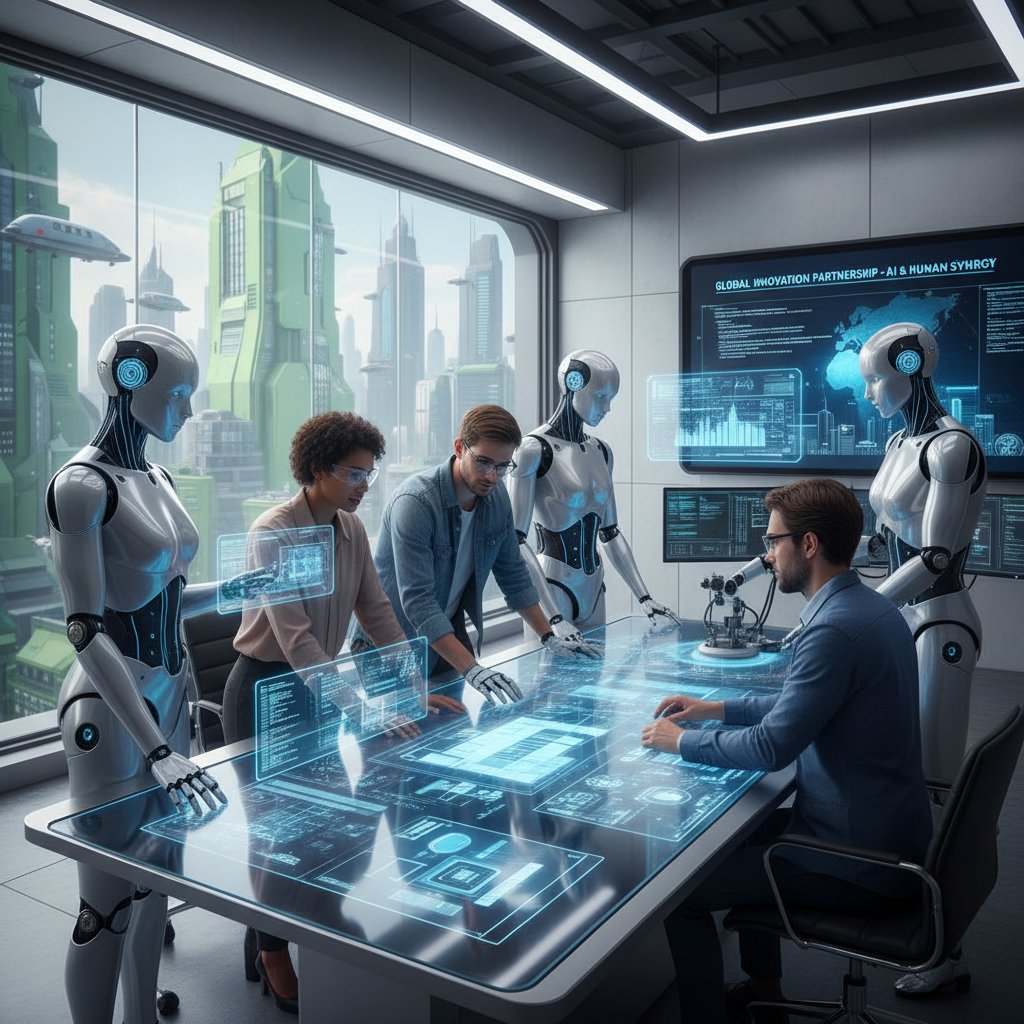
The key: AI is a force multiplier when carefully integrated with human strengths, not a replacement.
The science behind high-performing collaborative teams
What the latest research actually says
The science of teamwork is evolving rapidly. Studies from 2024 and 2025 have landed on a few non-negotiables for effective collaboration: high trust, clear purpose, and robust digital communication norms. Trust, in particular, is the foundation—teams with high trust move 42% faster and generate 31% more creative solutions, per Zoom, 2024.
| Metric | High-performing Teams | Average Teams |
|---|---|---|
| Trust Index | 8.7/10 | 5.4/10 |
| Speed of Delivery | 2.1x faster | Baseline |
| Creativity Score | 4.5/5 | 3.2/5 |
| Psychological Safety | 89% | 47% |
Table 5: Summary of key research findings by metric.
Source: Zoom, 2024.
Psychological safety and digital body language
The concept of psychological safety isn’t new, but its application to hybrid and remote teams is. In a world where most signals are digital, “reading the room” takes new forms.
Six signals of healthy digital body language:
- Prompt, thoughtful responses: Signals engagement, not just presence.
- Appropriate use of humor/emojis: Builds connection without undermining seriousness.
- Pauses for reflection: Not always “delays”—sometimes deeper thinking is at work.
- Clarity in requests: Explicit, actionable asks avoid confusion.
- Gracious sign-offs: Acknowledge effort, not just outcomes.
- Space for dissent: Channels (anonymous or open) for honest pushback.
Teams that master these cues operate with less friction—no matter where members sit on the globe.
Metrics that matter: Measuring collaboration in 2025
Forget vanity metrics. The new KPIs for collaboration are actionable, predictive, and—crucially—tied to outcomes.
Here’s an 8-step guide to building real collaboration metrics:
- Define clear objectives: What does successful collaboration enable?
- Measure trust and safety: Use pulse surveys, not just output tracking.
- Track decision speed: How long from proposal to action?
- Assess cross-silo initiatives: Count and qualify projects with team overlap.
- Monitor digital engagement: Not just logins—meaningful contributions.
- Review meeting ROI: Time spent vs. value delivered.
- Score feedback loops: Are learnings closed or ignored?
- Benchmark customer impact: Tie internal collaboration to external results.
Metrics must be revisited and recalibrated as teams, tools, and challenges evolve.
How to become an expert in collaboration: The real roadmap
Breaking old habits and building new ones
Changing collaboration behaviors is as much neuroscience as management. Habits are built (and broken) through repeated triggers, consistent reinforcement, and meaningful feedback.
Ten steps to rewiring your collaborative behaviors:
- Self-audit: Map your current habits—good, bad, and ugly.
- Identify triggers: Notice when you default to old patterns.
- Set explicit goals: Make them visible and measurable.
- Solicit honest feedback: Find a trusted “sparring partner.”
- Practice micro-changes: Small shifts, daily.
- Celebrate progress: Mark milestones, not just outcomes.
- Design for friction: Remove obstacles to new habits.
- Document learnings: Create a playbook for yourself.
- Share with peers: Teaching cements mastery.
- Repeat: Real change is never “once and done.”
Leveraging AI and digital tools (without losing your soul)
Blending human intuition with AI coworker support isn’t about surrendering to the machine—it’s about multiplying your impact. Platforms like futurecoworker.ai empower teams to automate drudgery, streamline knowledge sharing, and focus on higher-order problem-solving. But tool adoption can backfire when driven by hype, not need.
Common mistakes to avoid:
- Chasing every new app: Tool overload breeds fatigue, not productivity.
- Ignoring human context: AI can’t (yet) read sarcasm or backchannel cues.
- Skipping onboarding: Even the best software fails without buy-in and training.

The experts use AI as an exoskeleton for collaboration—not a crutch.
Continuous learning: Staying ahead in a changing landscape
Collaboration mastery isn’t static—it’s a lifelong pursuit. Upskilling means more than reading the latest business book.
Seven unconventional resources for deepening expertise:
- Cross-industry hackathons: Exposure to fresh approaches.
- Simulation-based workshops: Real-time, high-stakes practice.
- Podcasts featuring team scientists: Learn from behavioral research.
- Reverse mentoring: Learn from younger, digitally native colleagues.
- Peer coaching circles: Ongoing, honest feedback.
- Online communities: Niche forums for radical candor.
- International events: See how culture shapes collaboration.
Continuous learning keeps your skills—and your relevance—sharp.
Beyond the buzzwords: Collaboration’s broader impact on work and society
Collaboration and mental health: The double-edged sword
Modern collaboration is a paradox: empowering and exhausting. When done well, it boosts connection, purpose, and resilience; when done poorly, it fuels anxiety, isolation, and burnout. According to [Asana, 2024](https:// www.asana.com/resources/collaboration-statistics), over-collaboration is cited as a top stressor among knowledge workers.
Boundary-setting isn’t a luxury—it’s a collaboration skill. Knowing when to disconnect is just as vital as knowing when to engage.
Cross-cultural collaboration in a globalized world
The best teams aren’t just diverse—they’re truly cross-cultural. This brings both breakthrough thinking and fresh frictions.
Six core principles for effective cross-cultural teamwork:
- Radical curiosity: Assume you don’t know; ask before acting.
- Define terms: Avoid lost-in-translation moments.
- Honor distinct rituals: From time zones to holidays, respect matters.
- Align on shared goals: Purpose bridges cultural divides.
- Create explicit norms: Don’t leave etiquette to chance.
- Celebrate difference: Highlight diverse wins, not just consensus.

Global collaboration is where expertise meets humility.
The future: Intelligent enterprise teammates and the next era of work
AI-powered teammates have arrived, and they’re reshaping roles, expectations, and ethics. As trust migrates from humans to algorithms, the need for transparency and accountability intensifies. Success lies in partnership—not replacement.
"The future of collaboration isn’t man or machine—it’s both." — Alex (quote summarizing the state of the art)
Ethical considerations—data privacy, decision rights, and algorithmic bias—are no longer niche concerns; they’re central to everyday work. Trust is the currency of collaboration, no matter the actor.
Conclusion: Unlearning collaboration myths and embracing the new reality
Synthesis: What it really takes to master collaboration in 2025
If you’ve made it this far, you know the truth: being an expert in collaboration isn’t about charisma, tool fluency, or endless meetings—it’s about relentless clarity, measured trust, and the courage to break the rules when they’re wrong. The data is clear: high-performing teams blend human intuition with AI support, ruthlessly prioritize outcomes, and never stop learning. The brutal truths are uncomfortable, but they’re also liberating. Unlearning myths is the first step to real mastery.

For those ready to confront the messy, exhilarating reality of modern teamwork, the rewards are exponential.
Next steps: Where do you go from here?
Reflection is the start—but action is where expertise is forged.
- Audit your current collaboration habits: Identify what’s working and what’s dragging you down.
- Cut the tool bloat: Keep only what delivers real value.
- Re-center on trust and psychological safety: Make it the first metric you measure.
- Experiment with AI teammates: Use them to automate the trivial and clarify the complex.
- Seek out feedback—especially the uncomfortable kind: It’s where growth lives.
If you’re ready to level up your expertise, explore resources like futurecoworker.ai—not for a magic fix, but as a catalyst for smarter, bolder, and more authentic collaboration.
Sources
References cited in this article
- Forbes: 84% of Workers Agree This One Key Workplace Interaction Is Flawed(forbes.com)
- Enterprise Apps Today: Workplace Collaboration Statistics(enterpriseappstoday.com)
- Zoom: Collaboration in the Workplace 2024(zoom.com)
- Statista: Collaboration Tools Overwhelm(statista.com)
- HBR: Why Collaboration Is Critical in Uncertain Times(hbr.org)
- Medium: Four Myths of Great Collaboration(medium.com)
- ProofHub: Workplace Collaboration Statistics(proofhub.com)
- Springer Nature: The Continuing Rise of Collaboration(springernature.com)
- Forbes: Resolving the Meeting Load Paradox(forbes.com)
- Pumble: Meeting Statistics 2024(pumble.com)
- McKinsey: State of AI 2023(mckinsey.com)
- Stanford AI Index 2024(aiindex.stanford.edu)
- Forbes: Augmented Intelligence(forbes.com)
- Cambridge University: Human–machine collaboration(cambridge.org)
- Asana Anatomy of Work 2023(asana.com)
- Indeed: Collaboration Skills(in.indeed.com)
- Forbes: 2024 Graduates Lack Skills(forbes.com)
- Harvard: Collaboration as a Desirable Skill(cnbc.com)
- Foobol: What is a Fake Guru?(foobol.com)
- Maverrik: The Rise of Fake Gurus(maverrik.io)
- TeamStage: Importance of Collaboration(teamstage.io)
- Forbes: Certificates for Your Resume(forbes.com)
- InsideOut Development: The Toxic Side Of Collaboration(insideoutdev.com)
- Wellable: Toxic Work Environment Study(wellable.co)
- ScienceDirect: More is Not Always Better(sciencedirect.com)
- Visible Network Labs: Collaboration Overload(visiblenetworklabs.com)
- Asana: Collaboration vs. Coordination(asana.com)
- HRD Connect: Teamwork Types(hrdconnect.com)
- Field to Market(fieldtomarket.org)
- IEA(iea.org)
- NYU Case Study(wp.nyu.edu)
- Emerald Insight(emerald.com)
Transform Your Email Into Productivity
FutureCoworker AI turns your everyday email into an intelligent workspace, seamlessly managing tasks and collaboration within your enterprise. It eliminates the complexity of AI, allowing you to benefit from advanced technology without any technical knowledge. Achieve productivity, streamline processes, and improve team efficiency through natural email interaction, getting tasks done faster and smarter.
Get startedReady to Transform Your Email?
Start automating your tasks and boost productivity today
Frequently Asked Questions
What percentage of workers say workplace collaboration is broken?
According to the article, 84% of workers say workplace collaboration is broken, despite spending 81% of their time on it.
Is collaboration a natural personality trait or a learned skill?
According to the article, collaboration is a hard-won skill, not a personality trait. Most 'natural' collaborators are people who have learned through painful trial and error what works and what doesn't.
What are some misconceptions about expert collaborators?
The article lists seven misconceptions, including that charisma is enough, extroverts always excel, collaboration means consensus, being agreeable is key, great collaborators never fail, and that openness alone ensures success.
Does the article claim that more tools and meetings improve collaboration?
No. The article explicitly states that if you've been told that more tools, more meetings, and more teambuilding will unlock creative success, 'prepare for a reckoning,' suggesting this conventional wisdom is false.
Continue Reading
Keep exploring Intelligent enterprise teammate

Collaboration Expertise: Separating Myth From What Actually Works
Collaboration expertise requires rethinking how teams work together. This article examines why more meetings backfire and what drives genuine teamwork in hybrid environments.

Team Collaboration: Why It Fails and How to Fix It
Team collaboration often fails despite increased tool use. This article examines nine core problems and evidence-backed solutions to make team collaboration actually work.

Professional Collaboration: Why Teams Succeed or Collapse in 2025
Professional collaboration faces misaligned goals, digital exhaustion, and trust deficits. This article examines the research-backed reality and practical fixes transforming teamwork.

Manage Collaboration Like a Pro: Cut Noise, Boost Output in 2026
Discover insights about manage collaboration

What Separates High-Performing Teams From Broken Ones
Most teams mistake activity for collaboration. This article explains the hidden costs of ineffective teamwork and the research-backed tactics that drive real results.

Collaboration Management in 2026: Why AI Teammates Beat More Meetings
Discover insights about collaboration management