Assist with Teamwork by Fixing the Myths Breaking Your Teams
Written with AI assistance under our editorial guidelines
Modern teamwork fails because forced collaboration, communication breakdowns, and constant meetings drain productivity and morale. Research shows 97% of workers cite misalignment as project-sabotaging, while 66% resent teamwork itself. Real solutions require redefining collaboration, rebuilding trust, and using intelligent tools to cut through digital noise rather than amplify it.
Think you know what it means to assist with teamwork? Think again. In glossy annual reports and onboarding videos, “collaboration” is paraded as the golden ticket to organizational genius. But peer beneath the surface, and you’ll find a less Instagrammable reality: most teams are stuck in a cycle of broken communication, low trust, and digital overload, with productivity quietly bleeding out. According to TeamStage’s 2024 research, a staggering 97% of workers believe that a lack of alignment sabotages projects—while 66% resent “teamwork” altogether, blaming communication gaps and endless meetings for their misery. The real kicker? Over half admit they’ve left (or wanted to leave) jobs because they never truly belonged. The very systems designed to help teams collaborate now threaten to drown them in noise, fatigue, and fractured accountability.
Welcome to the brutal truths of modern teamwork, where the gap between aspiration and execution is wider than ever. But this isn’t a story of doom—it’s a roadmap out. In the age of AI-powered assistants and intelligent enterprise tools, radical solutions are emerging, challenging old myths and revealing bold fixes. If you’re ready to cut through the fluff and assist with teamwork in ways that actually move the needle, read on. Every section unpacks hard-won insights, real research, and actionable frameworks to help your team stop treading water and start getting results together.
Why teamwork is broken: the myths we never question
The cult of collaboration
Teamwork wasn’t always the untouchable idol of corporate life. Once a genuine means to harness collective skill, “collaboration” has been repackaged as a buzzword—plastered on office walls and inflated in job postings until its meaning dissolves. In today’s hyper-connected offices, the pressure to always work together is relentless, sometimes even weaponized. Real collaboration? Rare. More often, it’s a theater of forced smiles and “synergistic” jargon masking disengagement.
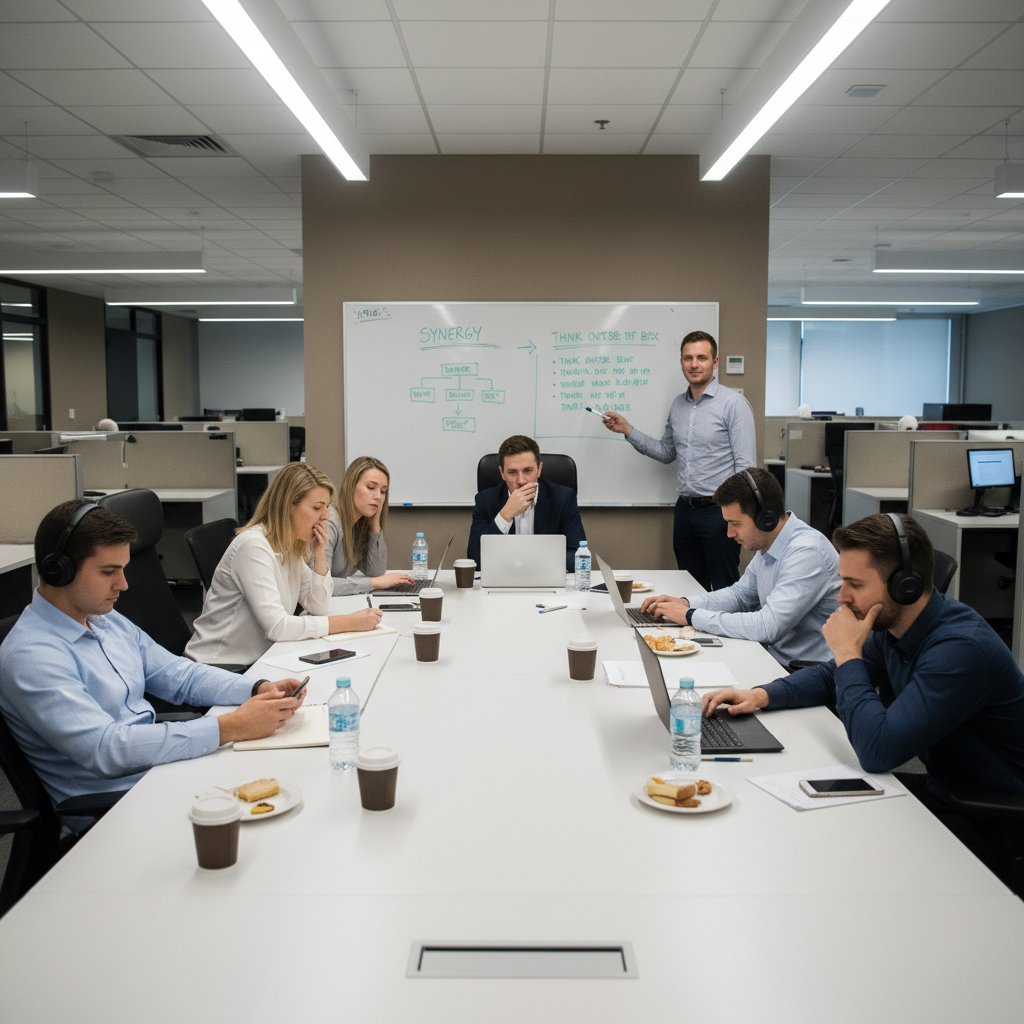
“Everyone talks about collaboration, but no one defines it.” — Maya
Hidden costs of forced teamwork include:
- Lost time: Endless alignment meetings that kill flow and stall execution.
- Diluted accountability: When everyone’s responsible, no one is.
- Groupthink: Dissent is stifled; innovation dies in the quest for harmony.
- Unseen disengagement: People go through the motions, checked out behind their screens.
- Burnout: The pressure to be “constantly available” erodes boundaries and well-being.
Mythbusting: more tools = better teamwork
Tech marketers promise salvation: another chat app, a new project board, a smarter calendar. Yet, according to current data, layering tools often leads to context-switching hell and digital exhaustion. The real-world impact? Diminishing returns and skyrocketing frustration, as teams scramble to keep up with complex, fragmented systems.
| Tool | Promised Benefit | Real-World Impact (2024) |
|---|---|---|
| Slack/MS Teams | Faster, flexible chat | Notification overload; context loss |
| Jira/Asana | Clearer task tracking | Steep learning curve; duplicative work |
| Zoom/Meet | Seamless video collaboration | Meeting fatigue; shallow engagement |
| Universal communication | Overload; missed priorities | |
| AI-based assistants | Smarter task management | Value depends on integration and adoption |
Table 1: Comparison of popular team tools and their productivity impact.
Source: Original analysis based on TeamStage, 2024, Mural, 2024
The stubborn myth is that tech alone can fix human problems. But without cultural change, more tools just magnify dysfunction. Real solutions require aligning processes, expectations, and—yes—human behavior.
The meeting trap: why talking isn’t working
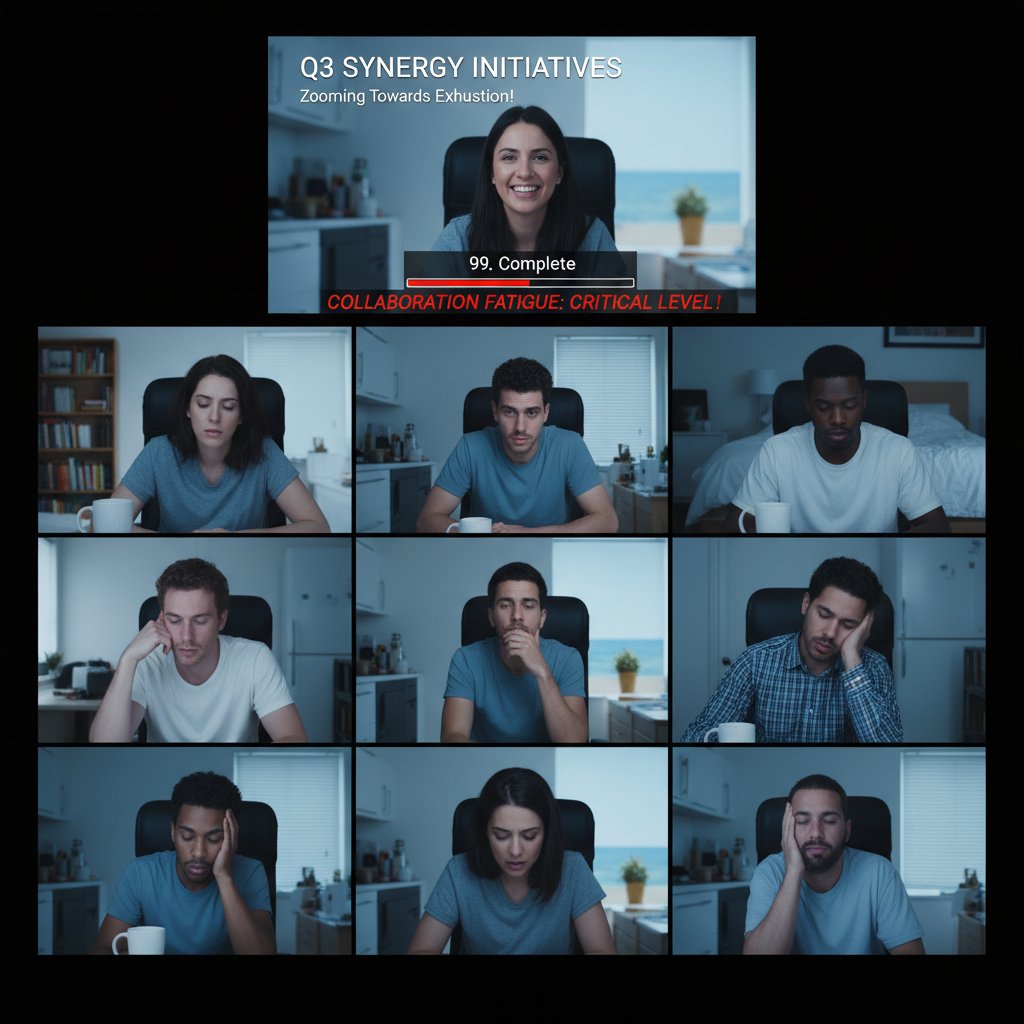
For many teams, meetings have become the performance art of teamwork. The Mural 2024 survey found that virtual meetings are predicted to replace 35% of in-person gatherings this year, but the net effect isn’t positive. Excessive meetings erode focus, foster resentment, and breed a culture where talking replaces doing.
How to audit and reduce unnecessary meetings:
- Track every meeting for two weeks: Who attends? What’s the agenda? What gets accomplished?
- Identify “update” meetings: Replace with async status reports or a shared dashboard.
- Kill recurring meetings with low engagement: If people multitask or skip, it’s a red flag.
- Set a default: no meeting over 25 minutes unless exceptional.
- Give everyone veto power: Allow team members to decline if their presence isn’t essential.
- Document all decisions and share asynchronously: Limit live sessions to brainstorming or conflict resolution.
- Review every month: Ruthlessly cull what doesn’t serve real collaboration.
The real barriers: inside the anatomy of dysfunctional teams
The trust deficit
Forget trust falls and awkward icebreakers—trust is the non-negotiable currency of effective teams. When it’s missing, even the most talented groups unravel. According to TeamStage’s 2024 data, teams with high trust outperform low-trust teams by over 100% on key project metrics. Psychological safety isn’t a buzzword: it’s the difference between creativity and compliance.
| Trust Level | Project Success Rate | Reported Engagement | Voluntary Turnover |
|---|---|---|---|
| High trust (top 25%) | 76% | 80% | 10% |
| Moderate trust | 54% | 57% | 22% |
| Low trust (bottom 25%) | 31% | 34% | 38% |
Table 2: Team performance by trust level.
Source: Gomada, 2023
Key definitions:
- Psychological safety: A team climate where members feel safe to take risks, admit mistakes, and challenge the status quo without fear of ridicule or retribution.
- Trust fallacy: The mistaken belief that “team-building” activities alone build trust—in reality, trust is earned through consistent action, transparency, and shared vulnerability.
Silos, secrets, and the illusion of transparency
Information hoarding is the silent killer of collaboration. In teams where knowledge is siloed, duplication, misalignment, and wasted effort become the norm. Surf Office’s recent report lists red flags for siloed teams:
- Duplicate work, especially in overlapping functions.
- Inconsistent goals or KPIs between departments.
- Secret Slack channels or back-channel emails.
- “Need-to-know” cultures, where vital information is rationed.
Remote work can turn silos into fortresses. Without intentional cross-team rituals, virtual teams drift into parallel universes—sharing less, trusting less, and losing sight of shared goals.
Burnout: the hidden cost of always-on teamwork
If “collaboration” is always on, so is the stress. The drive to be available, responsive, and “in the loop” creates conditions ripe for burnout. According to Mural’s 2024 findings, a majority of knowledge workers now associate teamwork with exhaustion, not empowerment. The worst part? Burnt-out employees disengage, quietly sabotaging team efforts.

“Sometimes teamwork means giving people space.” — Lucas
The AI teammate revolution: why the future isn’t human or machine—it’s both
From hype to reality: what AI can (and can’t) do for teams
AI in the enterprise isn’t some sci-fi pipe dream—it’s here, sifting through your inbox, triaging tasks, and flagging priorities while you sleep. But forget the hype cycles: AI doesn’t magically fix broken teams. It amplifies existing systems—for better or worse.
| Feature | Traditional Tools | AI-Powered Assistants |
|---|---|---|
| Task Automation | Manual | Automated, contextual |
| Collaboration Insights | Basic analytics | Real-time, adaptive |
| Meeting Scheduling | Calendar-based | Smart, availability-aware |
| Email Summarization | Manual, laborious | Instant, AI-driven |
| Onboarding/Training | Static documentation | Personalized, self-serve |
| Team Alignment | User-driven | Proactive, dynamic |
Table 3: Feature matrix—traditional vs. AI-powered assistants (e.g., Intelligent enterprise teammate).
Source: Original analysis based on Harvard Business Review, 2024 and futurecoworker.ai.
Current adoption rates are climbing steadily. According to Mural’s 2024 research, over 40% of enterprises have piloted some form of AI-backed collaboration, primarily for email management and meeting optimization. Emerging use cases include real-time insights, automated status updates, and context-based nudges that help humans focus on the work that matters.
What an AI teammate actually looks like in 2025
Picture this: your team’s day starts not with a barrage of emails, but with a single, digestible summary—urgent tasks, key decisions, and flagged risks. The AI assistant, seamlessly embedded in your workflow, routes questions to the right experts, schedules meetings only when truly needed, and quietly nudges team members to acknowledge updates or provide input. No more “reply-all” purgatory or missed handoffs.

Step-by-step guide to integrating an AI teammate:
- Audit your current tools and workflows: Identify pain points—where does communication break down? What gets lost?
- Choose an AI platform that integrates with existing systems: Look for tools like futurecoworker.ai that operate within email, not outside it.
- Customize preferences and permissions: Set boundaries—what should the AI handle? Where does human input remain essential?
- Onboard your team with scenario-based training: Show, don’t just tell. Use real examples to build trust.
- Monitor and measure impact: Track actual improvements—time saved, errors reduced, engagement increased.
- Iterate and refine: Regularly review workflows and update AI settings as team dynamics evolve.
The risks: where AI teamwork falls short (and how to avoid disaster)
The promise of AI is real—but so are the risks. Over-reliance can breed complacency, privacy concerns, and loss of human nuance. Teams that lean too hard on automation risk missing red flags and undermining interpersonal trust.
Common AI teamwork pitfalls:
- Blindly following AI suggestions without human oversight.
- Ignoring privacy and data security implications.
- Treating AI as a replacement, not an augmentation, for human judgment.
- Losing sight of empathy, context, and subtle cues.
“AI should empower, not replace, human judgment.” — Priya
Safeguards:
- Always keep a “human-in-the-loop” for critical decisions.
- Regularly audit AI outputs for bias and accuracy.
- Foster a culture where questioning the algorithm is encouraged.
- Balance automation with intentional human connection rituals.
Case studies: teamwork gone wrong (and how to fix it)
When too many cooks spoil the project
In a fast-growing marketing agency, a major campaign stalled. Why? Everyone owned the project—so no one did. Roles were fuzzy; deadlines slipped. Meetings devolved into finger-pointing.

Steps taken to recover:
- Clarified ownership for every deliverable.
- Defined escalation paths for roadblocks.
- Instituted brief, focused stand-ups with clear agendas.
- Used a single, AI-managed shared task list to eliminate duplicate work and surface bottlenecks.
Results: Delivery speed rebounded by 25%, client satisfaction shot up, and morale—once in freefall—recovered.
The ‘silent expert’ problem
In a global tech team, the quietest engineer held the answer to a major software bug, but her insight never surfaced in noisy video calls. Weeks wasted—until managers actively solicited input via anonymous surveys and async chat prompts.
Techniques to surface hidden expertise:
- Rotate meeting facilitators to break dominant voices.
- Use anonymous digital suggestion boxes.
- Implement “silent brainstorming”—everyone submits ideas before open discussion.
- Reward contributions—not just volume but depth and impact.
Outcome: After intervention, bug resolution times dropped sharply and engagement scores improved.
Building real collaboration: frameworks that actually work
Agile, holacracy, and beyond: which model fits your team?
From Agile stand-ups to Holacracy’s self-management, teamwork frameworks abound. Each brings strengths—and landmines.
| Model | Structure | Pros | Cons | Real-world Outcome |
|---|---|---|---|---|
| Agile | Iterative, roles | Flexibility, rapid iteration | Can become ritualistic | Widely adopted in tech |
| Holacracy | Distributed, circles | Empowers voices, decentralizes power | Confusing without discipline | Popular in startups |
| Traditional | Hierarchical | Clear lines of command | Can stifle initiative | Still common |
| Hybrid | Mix & match | Customizable, context-sensitive | Requires strong leadership | Growing in popularity |
Table 4: Comparison of teamwork models and outcomes.
Source: Original analysis based on Harvard Business Review, 2024
Unconventional models from other industries:
- Healthcare “code” teams: Rotating leadership based on crisis phase.
- Film crew hierarchies: Strong departmental lines, but rapid project-based assembly.
- Esports squads: Data-driven, hyper-adaptive, intense feedback loops.
Trust-building rituals for remote and hybrid teams
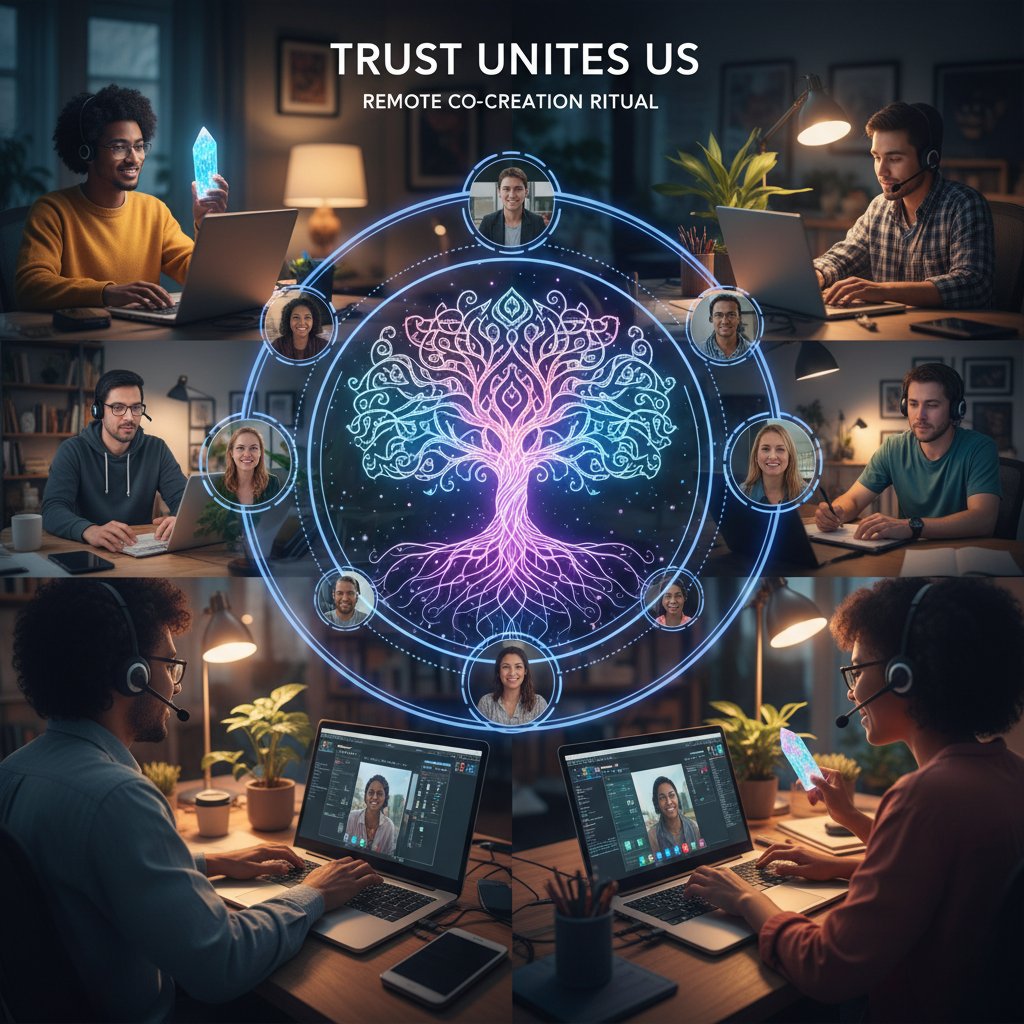
Building trust remotely isn’t magic—it’s method. Actionable rituals include:
- Virtual “show and tell” sessions: Personal stories, not just project wins.
- Regular kudos rounds: Publicly recognize small wins, not just home runs.
- “Failure Fridays”: Share mistakes and lessons learned, leadership included.
- Async coffee chats: Randomly pair team members for informal, agenda-free calls.
- Transparent goal dashboards: Everyone sees progress—and stalls.
- Rotating “well-being” check-ins: Normalize asking about workload and stress.
- End-of-week retrospectives: Focus on what worked, what didn’t, and honest feedback.
Practical toolkit: step-by-step fixes and actionable checklists
Quick reference: what great teams do differently
High-performing teams don’t just work hard—they work smart, with habits that drive real results.
- Relentless alignment: Constantly revisit and clarify priorities. No one is left guessing.
- Open feedback loops: Feedback isn’t a quarterly event—it’s daily, respectful, and expected.
- Psychological safety: Admitting mistakes is safe—and often rewarded.
- Smart tool adoption: Tech is chosen for fit, not trend-chasing.
- Meeting discipline: Every meeting has a purpose, owner, and outcome.
- Inclusive decision-making: Quiet voices are surfaced, dissent isn’t punished.
- Celebration of small wins: Progress is visible and acknowledged.
- Boundary-setting: Breaks and “do not disturb” time are respected.
Self-assessment checklist for team health:
- Do we have clear, shared goals?
- Is feedback frequent, two-way, and safe?
- Are tools serving us, or are we serving them?
- Does everyone know their role and how it connects to the whole?
- Do we recognize wins—big and small?
- Is it safe to challenge the status quo?
- Are meetings productive or perfunctory?
- Are we mindful of burnout and well-being?
How to spot and solve teamwork breakdowns—fast
When dysfunction rears its head, speed matters.
- Diagnose: Is the problem process, tool, or people-related? Get specific.
- Gather facts: Solicit anonymous input—patterns will emerge.
- Address openly: Bring issues to the team with candor, not blame.
- Assign action owners: Every fix gets a name and a deadline.
- Monitor and adjust: Track progress, revisit, and tweak as needed.

Debunked: teamwork myths holding your organization back
Collaboration is always good (and other dangerous lies)
Not all collaboration is created equal. The reality? Sometimes less is more.
- Myth: More meetings = more alignment.
Reality: Excess meetings reduce productivity and morale. - Myth: Everyone must have a say on everything.
Reality: Over-democratization kills progress. - Myth: Tools fix people problems.
Reality: Culture and clarity matter most. - Myth: Group brainstorming is always best.
Reality: It can silence introverts and breed conformity. - Myth: Trust comes from team-building games.
Reality: Trust grows from real work, shared risks, and feedback. - Myth: Good teams never fight.
Reality: Healthy conflict drives innovation.
“Sometimes the best teamwork is knowing when to work alone.” — Ben
The ‘natural born leader’ fallacy
Great teams don’t rely on a single star. True leadership emerges dynamically and is distributed.
Definitions:
- Leadership: The act of inspiring, aligning, and moving people toward shared goals. Not a title, but a behavior—one that can shift moment to moment.
- Followership: The often-overlooked skill of supporting, challenging, and executing on the team’s vision.
Distributed leadership means power and responsibility ebb and flow, ensuring resilience and adaptability.
Global teamwork: culture clashes, time zones, and the new rules
Cultural friction and synergy in international teams
When teams cross borders, culture isn’t just a backdrop—it’s an active force. Misread signals, unspoken norms, and conflicting assumptions can fracture even the most talented group—but handled well, diversity becomes a force multiplier for creativity and insight.

7 unconventional ways to leverage cultural diversity:
- Rotate leadership roles to expose hidden strengths.
- Celebrate national holidays—remotely and inclusively.
- Use “working agreements” to define shared communication norms.
- Swap “watercooler” moments with virtual culture exchanges.
- Solicit feedback on cultural norms and taboos.
- Mix teams by function, not just geography.
- Frame disagreements as learning opportunities, not threats.
Asynchronous collaboration: thriving across time zones
The pandemic mainstreamed async work, but too many teams still default to real-time meetings. The reality? Async enables deeper focus, broader participation, and work that travels the globe while you sleep.
Best practices for async teamwork:
- Standardize documentation: Every decision, every process, written and findable.
- Use clear subject lines and summaries: Don’t bury the lead.
- Set explicit response expectations: “Respond by EOD Friday.”
- Designate “deep work” hours: Respect offline time.
- Record live sessions, summarize, and share: No one is left behind.
- Ritualize check-ins: Async doesn’t mean disconnected.
- Embrace outcome metrics, not “butts in seats.”
Tools like shared docs, video messages, and email-based AI teammates (such as those from futurecoworker.ai) empower teams to stay connected, no matter the hour.
The future of teamwork: what’s next after AI teammates?
From digital coworkers to collective intelligence
The next frontier isn’t more tools—it’s seamless symbiosis. Teams are already experimenting with swarm intelligence, decentralized management, and AI-powered collectives that adapt in real time.
| Year | Teamwork Model | Key Feature | Outcome |
|---|---|---|---|
| 1990s | Hierarchical | Top-down command | Slow, stable |
| 2000s | Cross-functional | Matrixed teams | Innovation, confusion |
| 2010s | Agile/scrum | Iterative, adaptive | Speed, burnout |
| 2020s | Remote/hybrid + AI assistants | Automation, insights | Efficiency, risk of alienation |
| 2024 | Human-AI symbiosis | Contextual, collective intelligence | Adaptive, resilient |
Table 5: Timeline of teamwork evolution from hierarchy to AI-powered collectives.
Source: Original analysis based on current research and industry reports.
Where does it go from here? Teams that master collective intelligence—blending human judgment, AI precision, and adaptive frameworks—will dominate. But the heart of teamwork stays stubbornly human: trust, courage, and the ability to challenge the status quo.
Will we ever crack the code? Final thoughts
The story of teamwork is unfinished. For every breakthrough, there’s a new barrier. Yet, as this article reveals, the teams that thrive are those who never stop questioning—every tool, every ritual, every assumption.
To stay ahead, embrace adaptation, experimentation, and—above all—critical thinking. The AI revolution in teamwork isn’t about replacing humans, but unleashing what makes us powerful together: curiosity, resilience, and the audacity to change.
Supplement: real-world applications and adjacent topics
How industries outside tech master teamwork
Emergency medicine, film crews, and esports teach lessons corporate teams can’t afford to ignore. In ERs, roles are clear but flexible—leadership shifts on a dime. On film sets, every “crew call” is a study in rapid alignment and creative problem-solving. Esports? Relentless feedback, role fluidity, and data-driven iteration.
What corporate teams can steal:
- Dynamic leadership based on situation, not static hierarchy.
- Ritualized debriefs after every high-stakes project.
- Data-driven role allocation, not just title-based.
- A culture of visible, shared learning from mistakes.
Different fields, different pressures—but the same core lesson: real teamwork is forged in clarity, candor, and continuous feedback.
Teamwork gone viral: pop culture, sports, and media
Hollywood sells us the myth of the “ragtag team” coming together at the last second. In reality, high-stakes teamwork is messier, more nuanced, and less cinematic. Media portrayals shape our expectations—but the gap between fiction and fact is wide.

Next time you watch a heist movie or a championship game, remember: offscreen, teamwork is more grind than glory.
The role of services like futurecoworker.ai in the evolving teamwork landscape
Services that embed AI-powered teammates directly within email—quietly automating, summarizing, and connecting dots—are shifting how enterprises collaborate. Unlike standalone tools, AI that lives in your existing workflow removes friction, speeds up alignment, and makes collaboration less about process and more about outcomes.
Subtle ways AI services assist with teamwork:
- Auto-categorizing and prioritizing urgent emails.
- Surfacing key decisions and unresolved issues.
- Nudging teams to follow up on slack threads or overdue approvals.
- Generating summaries for long email chains, so no one gets left behind.
Understanding—and adopting—these options isn’t just a tech upgrade. It’s essential for any team wanting to stay relevant in the new world of work.
Conclusion
Assist with teamwork. It’s a simple phrase, but as we’ve seen, the reality is anything but. The modern team faces a dizzying array of barriers: broken trust, digital overload, tool fatigue, and cultural friction. Yet, data from TeamStage, Mural, and real-world case studies expose a path forward—one paved with brutal truths and bold, actionable fixes. The AI revolution isn’t about eliminating the human element, but about amplifying what teams can accomplish together, without the noise. Whether through trust-building rituals, smarter frameworks, or the quiet power of email-based AI teammates like those from futurecoworker.ai, the real story is this: teamwork isn’t dead—but the way we assist with teamwork must radically change.
If your team is stuck, don’t settle for platitudes. Reexamine your rituals. Challenge tired assumptions. Adopt tools that fit your culture, not the other way around. The future of collaboration isn’t about working harder or adding more—but about working smarter, building trust, and daring to do things differently. The time to act is now.
Sources
References cited in this article
- TeamStage(teamstage.io)
- Gomada(gomada.co)
- Harvard Business Review(hbr.org)
- Mural(mural.co)
- Surf Office(surfoffice.com)
- Mural(mural.co)
- Forbes(intheloop.io)
- Oxford Academic(academic.oup.com)
- Zoom Collaboration Statistics(zoom.com)
- MIT Technology Review(technologyreview.com)
- ANU Research Portal(researchportalplus.anu.edu.au)
- Harvard Business Review(hbr.org)
- ACHE(ache.org)
- ScienceDirect(sciencedirect.com)
- PwC Trust Survey(pwc.com)
- Forbes(forbes.com)
- Deloitte(www2.deloitte.com)
- P&G AI Collaboration(us.pg.com)
- World Economic Forum(weforum.org)
- Forbes(forbes.com)
- Gartner Hype Cycle 2024(insights.manageengine.com)
- Forbes(forbes.com)
- Lucidworks(lucidworks.com)
- Medium: AI Disasters 2024(medium.com)
- CIO(cio.com)
- CIO Dive(ciodive.com)
- Leadership Digital(leadershipdigital.com)
- ASI Central(asicentral.com)
- BuckleyPlanet(buckleyplanet.com)
- Wiley Meta-Analysis(onlinelibrary.wiley.com)
- KitchenFiftySeven(kitchenfiftyseven.com)
- Timeular(timeular.com)
- Whatfix(whatfix.com)
- SA Business School(sabusinessschool.com)
- Enterprise Agility Community(enterpriseagility.community)
- InfoQ(infoq.com)
- Deloitte(www2.deloitte.com)
- SlabLab Teamwork Toolkit(slablab.co)
- BetterCulture Team-Building Toolkit(betterculture.com)
- Venture Team Building(ventureteambuilding.co.uk)
- Forbes(forbes.com)
- Tivazo(tivazo.com)
- MAP Consulting(mapconsulting.com)
- ZenBusiness(zenbusiness.com)
- UNLEASH(unleash.ai)
Transform Your Email Into Productivity
FutureCoworker AI turns your everyday email into an intelligent workspace, seamlessly managing tasks and collaboration within your enterprise. It eliminates the complexity of AI, allowing you to benefit from advanced technology without any technical knowledge. Achieve productivity, streamline processes, and improve team efficiency through natural email interaction, getting tasks done faster and smarter.
Get startedReady to Transform Your Email?
Start automating your tasks and boost productivity today
Frequently Asked Questions
What does the article reveal about workers' attitudes toward teamwork?
According to TeamStage's 2024 research cited in the article, 66% of workers resent "teamwork" altogether, blaming communication gaps and endless meetings for their misery, and over half admit they've left or wanted to leave jobs because they never truly belonged.
What are the hidden costs of forced teamwork mentioned in the article?
The article lists five hidden costs: lost time from endless alignment meetings, diluted accountability when everyone is responsible, groupthink that stifles dissent and innovation, unseen disengagement where people go through the motions, and burnout from the pressure to be constantly available.
How has the concept of collaboration changed according to the article?
The article states that collaboration was once a genuine means to harness collective skill but has been repackaged as a buzzword plastered on office walls and job postings until its meaning dissolves, often serving as theater masking disengagement rather than authentic teamwork.
What percentage of workers believe lack of alignment sabotages projects?
According to TeamStage's 2024 research cited in the article, 97% of workers believe that a lack of alignment sabotages projects.
Continue Reading
Keep exploring Intelligent enterprise teammate

Why Collaboration Help Often Backfires in Remote Work
Collaboration help often creates fatigue rather than efficiency. This article examines why teamwork has become harder despite new tools and offers evidence-based solutions.

Why Teamwork Helpers Often Undermine Collaboration
More than 60% of employees find collaboration tools overwhelming. This article examines why teamwork helpers often undermine productivity and how to build genuine team trust.

Teamwork Assistance: Myths Versus Measurable Impact
Teamwork assistance reshapes how teams collaborate. This article examines the myths and real costs of AI teammates, collaboration tools, and what research reveals about effectiveness.

Why Collaboration Assistance Tools Fail Teams
Collaboration assistance tools often fall short of their promise. This article examines why existing approaches fail and how AI-powered solutions are reshaping how teams work.

Team Collaboration: Why It Fails and How to Fix It
Team collaboration often fails despite increased tool use. This article examines nine core problems and evidence-backed solutions to make team collaboration actually work.

Why Most Teamwork Advice Fails Organizations
Support teamwork by examining what actually blocks collaboration. This article identifies the myths organizations follow and explains why 66% of workers report poor teamwork quality.