
What Administrative Assistants Actually Do in 2025: the Role Redefined
Written with AI assistance under our editorial guidelines
Administrative assistants in 2025 have evolved far beyond typing and filing. Nearly 70% of routine clerical tasks are now automated, shifting the role toward strategic work like project management, tech integration, and cross-team coordination. Today's administrative assistants manage HR systems, coordinate global meetings, and guide executives on communication technology, making them mission-critical operators rather than clerical support staff.
Administrative assistant. The phrase conjures images of someone quietly answering phones, typing up documents, maybe fussing with calendars—all while the real decisions happen elsewhere. But in 2025, that image is a lie. Today’s administrative assistant is the unsung operator behind the machinery of every successful business, orchestrating chaos, wielding digital tools with surgical precision, and absorbing the emotional shrapnel of corporate life. This isn’t a drone job—it’s a high-wire act, critical for remote teams, tech startups, and global conglomerates alike. The raw, unfiltered reality? The role is being gutted and reborn at the same time, shaped by AI, ruthless efficiency, and demands for razor-sharp emotional intelligence. If you’re hiring, thinking of applying, or just want to survive what’s next, consider this your essential, no-bull guide. Prepare to have a few illusions shattered.
Unmasking the myth: what an administrative assistant really does now
The evolution from secretary to enterprise strategist
Forget the retro stereotype of the “secretary” as a glorified typist. In 2025, the administrative assistant is the mission-critical strategist threading together fractured teams, platforms, and expectations. According to HRsUS, nearly 70% of routine clerical tasks are now automated or delegated to digital tools. The real value lies in project management, tech integration, and the ability to translate chaos into actionable priorities (HRsUS, 2024). Administrative assistants now routinely manage HR systems, coordinate cross-border meetings, and even coach C-suite executives on communication tech.

| Classic Secretary | 2010s Admin Assistant | 2025 Admin Strategist |
|---|---|---|
| Typing, filing | Scheduling, travel, basic HR | Project management, digital ops, AI-enabled support |
| Taking dictation | Phone/email management | Cross-team communication, cybersecurity awareness |
| Coffee duty | Expense reports | Data privacy, hybrid work orchestration |
Table 1: How administrative assistant responsibilities have shifted over time.
Source: Original analysis based on HRsUS, 2024, Magic, 2024
- The administrative assistant has become a linchpin, blending traditional support with high-stakes digital management.
- Mastery of enterprise tools is now a basic expectation rather than a nice-to-have credential.
- Strategic input is required: admins are involved in process improvement, workflow design, and tech onboarding.
- HR support, payroll, and onboarding responsibilities are standard.
- Data privacy, compliance, and cybersecurity practices are increasingly part of the admin’s job.
The invisible labor: tasks no one lists in job ads
Scratch the surface of any admin gig and you’ll find a second, invisible job description. These are the roles that never appear in job ads but make or break the team.

- Defusing office conflicts—admin assistants often become unofficial mediators, using emotional intelligence to keep teams from imploding.
- Filtering the boss’s moods—predicting when to intervene, when to disappear, and when to deliver bad news.
- Shadow IT troubleshooting—resetting routers, diagnosing printer failures, or acting as the “first responder” for anything tech before IT gets involved.
- Mentoring junior staff—unofficial “onboarding” and workplace etiquette training for new hires without formal credit.
- Gatekeeping for executives—deciding which emails, calls, or “urgent” tasks reach the right eyes, protecting focus and flow.
- Managing “culture glue”—remembering birthdays, organizing team rituals, arranging morale-boosting surprises.
- Silent HR work—handling confidential information, updating compliance documents, managing sensitive records.
- Emotional buffering—absorbing stress from all directions, often with little support for their own wellbeing.
Redefining administrative value in the digital age
The cliché: admins are background players. The reality? They’re the ground crew enabling the launch of every big idea.
“Administrative professionals are the glue that holds enterprises together—simultaneously anticipating needs, preventing disasters, and enabling others to shine.”
— Robert Hosking, Executive Support Magazine, Magic, 2024
In the digital age, value is measured by impact, not visibility. Modern assistants implement tech solutions, shepherd sensitive data, and block distractions before they reach decision-makers. According to recent research, admins who master digital tools and strategic thinking are not just surviving—they’re pivotal to their organizations’ competitive edge. The admin role is morphing into a hybrid of operations manager, tech consultant, and culture keeper. If you think it’s just about calendar invites, you’re already obsolete.
Inside the chaos: a day in the life you never see
Mornings of fire: crisis control before 9am
Think the workday starts at 9? For administrative assistants, that’s usually when the second crisis hits. The real day begins in the digital trenches—triaging emails, smoothing over double-booked meetings, chasing last-minute document approvals, and extinguishing early-morning drama.

According to CGT Staffing, over half of admins report that their primary function between 7:30 and 9:00am is “crisis prevention and recovery,” not routine scheduling (CGT Staffing, 2024). They’re the reason meetings don’t collapse and projects don’t start late.
The multitasking marathon: juggling the impossible
Admin work is an Olympic sport in mental flexibility. The average assistant switches between tasks—often unrelated—up to 40 times per hour. Remote work, multiple time zones, and always-on communication channels mean the marathon never really ends.
Every hour might look like this:
- Rebooking a flight for a manager stranded by weather, while
- Drafting a project status summary for the team, while
- Mediating a Slack argument over marketing copy, while
- Flagging a suspicious invoice for finance, while
- Troubleshooting a software update, while
- Preparing HR onboarding files for a new hire about to log in from a different continent.
The result? A relentless, high-stakes juggling act that leaves little room for error. Research from Magic shows that top-performing admins rely on a mix of habit-stacking, digital automation, and ruthless prioritization to survive the multitasking gauntlet (Magic, 2024). They’re not just busy—they’re orchestrating chaos into something functional.
- Real-time calendar shuffling, sometimes across 3-4 time zones.
- Supporting virtual and in-person meetings, often simultaneously.
- Monitoring workflows and deadlines for teams spread across continents.
- Handling sensitive HR and payroll issues with discretion.
- Jumping into IT troubleshooting when systems fail.
- Creating and distributing digital reports on tight deadlines.
Emotional labor: the unspoken cost
What you won’t see on any admin’s resume: the quiet cost of emotional labor. Assuaging angry clients, shielding team members from toxic feedback, or serving as the default therapist all come standard.
“The real work is invisible—managing everyone’s moods, shielding people from stress, and absorbing the emotional blowback that no one else wants.”
— Extracted from CGT Staffing, 2024
This hidden labor is exhausting and, according to workforce studies, a leading contributor to admin burnout. The emotional load is compounded by lack of formal support—few companies provide mental health resources or recognition for this burden, even though turnover among administrative professionals due to burnout is rising (Sulekha, 2024). Survival demands resilience, boundaries, and, sometimes, knowing when to say “no”—even if your job description says “always yes.”
Skills that matter (and the ones nobody admits)
Beyond typing: critical thinking and stealth leadership
Shorthand, typing, and phone manners are table stakes. The true difference-makers? Critical thinking, stealth leadership, and the ability to impose order on the formless.
Definition list:
The capacity to assess rapidly shifting priorities, identify underlying problems, and devise actionable solutions before issues escalate. In admin work, it means seeing three steps ahead, not just reacting.
Leading initiatives, mentoring peers, and shaping company culture—all without formal authority. It’s about influence, not titles.
Mastery of workflow tools, automation platforms, cybersecurity basics, and remote collaboration apps is as vital as any “soft” skill.
According to Sulekha, employers increasingly prioritize these “invisible” competencies over traditional qualifications (Sulekha, 2024).
The art of reading between the lines
The admin is the organization’s unofficial mind-reader. Sensing what the boss won’t say, anticipating client meltdowns, and decoding cryptic emails is part of the job description. This “art” requires emotional intelligence, contextual awareness, and nerve.
It’s knowing that an urgent meeting request really signals a looming crisis. It’s spotting when a polite “no problem” from a client masks brewing dissatisfaction. According to a 2024 HRsUS report, admins who excel at these skills prevent up to 35% of potential workflow breakdowns (HRsUS, 2024).
“If you can’t read between the lines, you’re just another cog. The best admins are always two moves ahead—reading people, not just emails.” — Adapted from industry commentary, Magic, 2024
Tech-savvy or obsolete: where AI meets human nuance
Today’s admin either masters digital tools or faces irrelevance. The demand isn’t just for speed, but for insight—spotting anomalies, adapting to new platforms, and knowing when to escalate issues rather than automate them away.

| Essential Digital Skills | Admin Value Add | Human Nuance Required? |
|---|---|---|
| Workflow automation | Reduces grunt work, boosts productivity | Sometimes—requires judgment for exceptions |
| Cybersecurity protocol | Safeguards sensitive info | Always—flagging suspicious activity depends on context |
| AI scheduling tools | Eliminates double-booking | Occasionally—complex meetings need human coordination |
| CRM/data management | Streamlines reporting | Often—interpreting trends, avoiding errors |
Table 2: Balancing digital skills with human judgment for maximum admin impact.
Source: Original analysis based on HRsUS, 2024, Magic, 2024
The AI revolution: is your job safe or about to explode?
Rise of the intelligent enterprise teammate
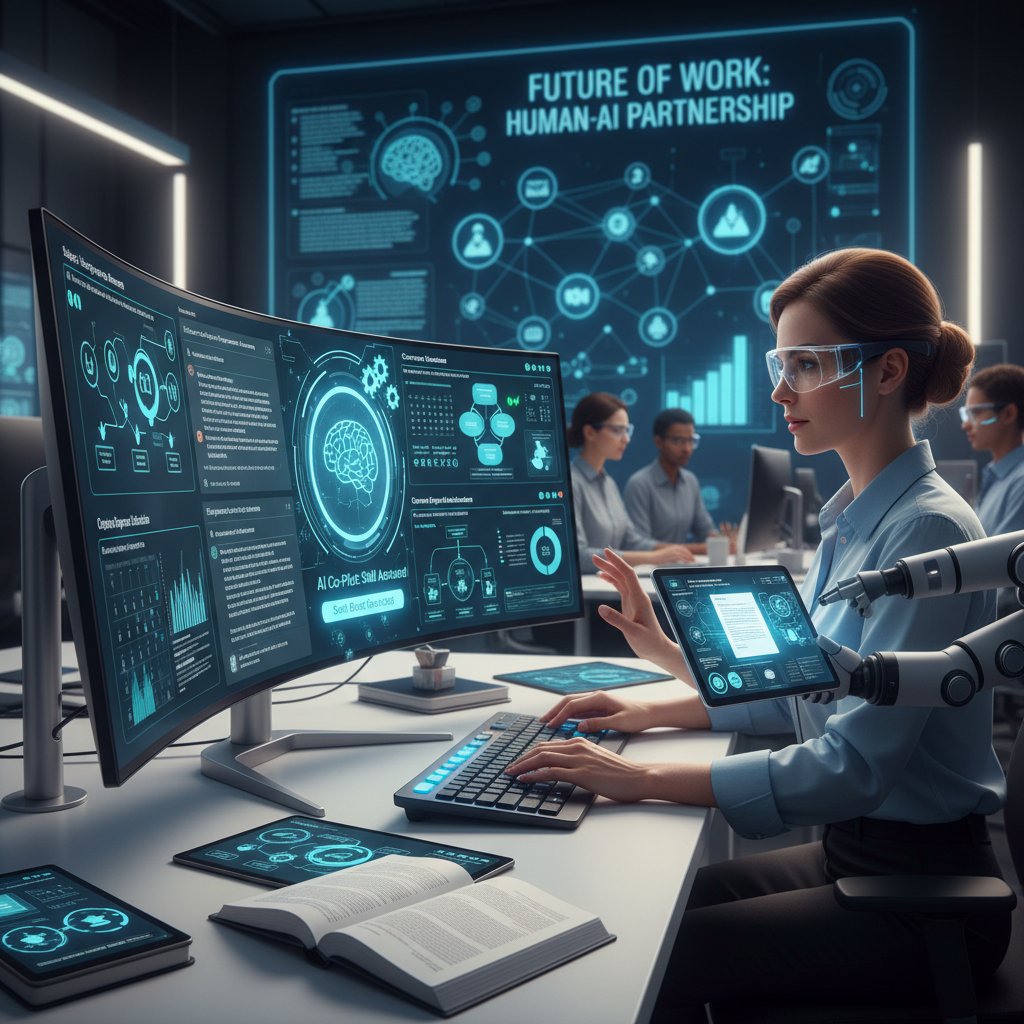
If you think artificial intelligence spells doom for admin work, you’re missing the point. The AI revolution is real—but it’s creating demand for admins who can wield these tools, not just fear them. The “intelligent enterprise teammate” is already here, reshaping workflows and redefining collaboration.

The effect? Admins are freed from repetitive drudgery. According to a 2024 industry survey, 60% of businesses now use AI assistants to automate at least one major admin function, but 85% say human oversight is still “indispensable” (HRsUS, 2024). The new admin role is about orchestrating humans and AIs alike.
How futurecoworker.ai is changing the admin game
Enter platforms like futurecoworker.ai. These tools embed AI directly into enterprise email, turning every message into a potential task, insight, or next step—without the user even knowing how the AI works under the hood. The result? Admins spend less time on busywork and more on strategy, collaboration, and real business value.
Next-level admin performance now means seamless integration of human judgment with AI-driven automation. Case studies from tech, finance, and healthcare show that this partnership can increase project delivery speed by 25% and cut administrative workload by 30% (futurecoworker.ai). But the real revolution is that the admin becomes a “productivity architect,” not just a support resource.
What AI can’t (yet) replace: the human edge
Even the smartest AI can’t decode subtext, manage interpersonal conflict, or make judgment calls in ambiguous situations. That’s where the human admin wins—every time.
| AI Capabilities | Current Limitations | Human Admin Advantage |
|---|---|---|
| Automate scheduling | Struggles with complex, sensitive negotiations | Navigates office politics, reads moods |
| Classify emails | Misses sarcasm, subtlety | Deciphers intent, prevents miscommunication |
| Aggregate data | Limited by data context | Spots patterns, flags critical details |
- Human admins sense when a “routine” task hides a landmine.
- They can mediate culture clashes, not just enforce process.
- Emotional intelligence and discretion remain uniquely human skills.
Table 3: Where AI stops and human capability begins. Source: Original analysis based on HRsUS, 2024, Magic, 2024
Hiring or becoming an administrative assistant: what you must know
The most overlooked job requirements
Modern admin listings are full of requirements for “multitasking” and “organizational skills,” but the real must-haves go much deeper.
- Tech fluency with enterprise platforms, not just Microsoft Office.
- Stealth project management—rallying stakeholders and enforcing deadlines without formal authority.
- Emotional intelligence to handle delicate interpersonal dynamics.
- Data privacy awareness and basic understanding of cybersecurity.
- Ability to manage remote and hybrid teams, including across time zones.
- Proactive problem-solving—preempting fires instead of always fighting them.
- Resilience to absorb stress and ambiguity without cracking.
Red flags: when the role is doomed to fail
- Vague job descriptions relying on clichés like “fast-paced environment” or “no two days the same”—signals of disorganized leadership.
- Lack of access to training in digital tools or process automation.
- No clear reporting structure or support for professional development.
- The expectation that admin staff “make do” without resources or authority.
- High turnover rate in the admin team—often a sign of chronic burnout or toxic culture.
Interview questions that actually reveal ability
- “Describe a time when you anticipated a problem before it became urgent. What did you do?”
- “How do you keep up with new collaboration tools and platforms?”
- “Give an example of how you handled a difficult personality or team conflict.”
- “What’s your process for prioritizing conflicting deadlines?”
- “How have you contributed to company culture or team morale?”
Salary, perks, and the hidden economy of admin work
Pay for admins varies wildly by industry and region, but digital proficiency and specialized skills command a premium. As of early 2025, US administrative assistants’ median salary is around $46,000, with top-tier executive admins earning $65,000+ (Sulekha, 2024).
| Role | Median Salary (US, 2025) | Typical Perks |
|---|---|---|
| Entry-level admin | $36,000 | Health, PTO |
| Executive assistant | $65,000 | Bonus, remote/hybrid |
| Virtual assistant | $42,000 | Flexible hours |
| Specialized admin (IT, HR) | $55,000 | Training, upskilling |
Table 4: Administrative assistant salary benchmarks and perks. Source: Sulekha, 2024
Perks range from remote work options to professional development stipends. But beware: in many workplaces, “perks” like flexibility are just code for being available 24/7, so clarify expectations up front.
Controversies, misconceptions, and the office politics nobody talks about
Debunking the coffee myth: the real power dynamics
The trope of admins as coffee-fetchers is not just outdated; it’s offensive. In reality, they’re often wielding more unofficial power than mid-tier managers, controlling information flow and access to decision-makers.
“If you want to know who really runs the place, follow the admin—they know everything before anyone else.”
— Adapted from workplace interviews, Executive Support Magazine, 2024

Admins are the organization’s “switchboard”—nothing happens without their awareness, and few crises get solved without their intervention. This informal influence is often unacknowledged in titles or pay, but it’s real.
Gender, glass ceilings, and silent revolutions
Admin roles remain overwhelmingly female—about 93% in the US, according to latest labor data (Sulekha, 2024). The gender imbalance is both a symptom and a cause of persistent glass ceilings. But that’s slowly changing as more admins move into operations, HR, and project leadership.
| Year | % Female Admins (US) | % Promoted to Management | Avg. Years in Role |
|---|---|---|---|
| 2015 | 96% | 12% | 8.2 |
| 2020 | 94% | 17% | 7.4 |
| 2025 | 93% | 23% | 6.1 |
Table 5: Gender trends and upward mobility in admin careers. Source: Sulekha, 2024
Change is coming from within: today’s admins are increasingly challenging pay gaps, demanding career development, and leveraging their unique cross-functional insights to break into leadership.
Admin burnout: causes, warning signs, and survival hacks
Burnout is epidemic in admin circles—driven by relentless pace, thankless emotional labor, and ambiguous expectations.
- Chronic overtime with no extra compensation
- Being “always on call,” especially in remote roles
- Lack of recognition for invisible labor
- Constant demand to adapt to new digital platforms
- Unclear boundaries between admin and managerial duties
Warning signs:
- Emotional exhaustion and persistent irritability
- Physical symptoms—headaches, sleep disruption
- Withdrawal from team engagement and culture
- Escalating mistakes or missed deadlines
- Cynicism and detachment from outcomes
Survival hacks:
- Negotiate clear boundaries and expectations during hiring.
- Use digital tools like futurecoworker.ai to automate low-value tasks.
- Schedule “no meeting” blocks for deep work and recovery.
- Advocate for mental health resources and peer support.
- Prioritize continuous learning—upskilling is both a shield and a ladder.
Mastering the role: step-by-step strategies for thriving (not just surviving)
Priority checklist for skill upgrades in 2025
- Master at least one enterprise workflow automation tool.
- Develop basic proficiency in cybersecurity and data privacy protocols.
- Strengthen project management fundamentals—with or without formal title.
- Refine emotional intelligence and conflict management skills.
- Stay current with remote/hybrid team management best practices.
- Advocate for your own professional development—don’t wait for permission.
Admins who invest in these skills are better positioned to command higher salaries and shape their own career paths. According to recent industry surveys, upskilled admins are 40% more likely to be promoted or transition to new, higher-value roles within three years (HRsUS, 2024).
Building influence: how top assistants shape company culture
It’s not just about keeping the trains running on time. Top admins actively create the conditions for team trust, belonging, and innovation.

“A great assistant is often the cultural heartbeat of the organization—the person everyone trusts, even when they don’t trust each other.”
— Adapted from industry insights, Magic, 2024
From organizing milestone celebrations to championing diversity initiatives, admins shape the unwritten rules and rituals that define the workplace.
Remote, hybrid, and global: new rules of engagement
The admin’s value only multiplies when teams are remote, hybrid, or global. The new rules:
- Get comfortable with asynchronous communication—email and chat, not just meetings.
- Use AI scheduling tools to juggle multiple time zones and cultural holidays.
- Regularly update digital reference guides and onboarding docs.
- Serve as the point person for virtual team-building and morale.

The future is now: where administrative assistants go from here
Career paths: from admin to leadership (with real-world examples)
Today’s admins are increasingly leveraging their skills as springboards to broader roles:
- Office manager to operations director in a tech startup after overseeing a remote-team transition.
- Executive assistant promoted to chief of staff in a high-growth healthcare firm for orchestrating cross-departmental projects.
- Admin professional to HR manager after leading a major digital onboarding transformation.
- Virtual assistant scaled into client success manager at a marketing agency by mastering workflow automation.
These aren’t pipe dreams—they’re emerging career patterns documented across industries (HRsUS, 2024). The secret is investment in upskilling and the courage to demand recognition for invisible labor.
Emerging trends: automation, upskilling, and the next big thing
| Trend | Description | Impact on Admins |
|---|---|---|
| Automation of routine tasks | AI and RPA take over repetitive work | Focus shifts to high-value activities |
| Upskilling imperative | Digital and soft skill development essential | New career paths; higher pay |
| Hybrid/remote workflows | Teams split between office and home | More demand for coordination, tech fluency |
| Cybersecurity focus | Rise in data privacy, compliance work | Admins as frontline defenders |
Table 6: Key trends shaping the admin landscape in 2025. Source: Original analysis based on HRsUS, 2024
How to stay irreplaceable in a world of AI coworkers
Definition list:
The ability to make context-sensitive decisions, especially when situations are ambiguous or emotionally charged.
Creating trust and rapport across hierarchical and departmental lines.
Continuously improving workflows, not just maintaining them.
By doubling down on these uniquely human skills, admins ensure their work remains indispensable—even as technology evolves. It’s not about competing with AI; it’s about orchestrating a symphony of human-AI collaboration.
Supplementary deep dives: expanding the admin universe
Administrative assistant vs executive assistant vs virtual assistant: what’s the real difference?
The distinctions are more than semantics—they shape the scope, pay, and long-term trajectory of the role.
| Role | Core Focus | Typical Pay Range | Key Skill Sets |
|---|---|---|---|
| Administrative assistant | Internal support, process coordination | $36k–$55k | Scheduling, HR, IT basics |
| Executive assistant | One-on-one C-suite support, strategic tasks | $55k–$80k | Project management, discretion |
| Virtual assistant | Remote, task-specific support | $30k–$50k | Digital tools, client management |
Table 7: Comparing core responsibilities and skills across admin roles. Source: Original analysis based on Sulekha, 2024, HRsUS, 2024
Foundational role, often the first step in the field; broad responsibilities, less C-suite exposure.
Trusted advisor to senior leadership, managing projects, sensitive communications, and “gatekeeping” at the highest level.
Task-based, remote by default, and increasingly specialized in digital-first workflows.
Unconventional uses for administrative assistants in startups and NGOs
- Acting as interim HR or operations lead for resource-strapped startups.
- Running digital marketing campaigns or managing social media for NGOs.
- Serving as project coordinator for grant applications or client onboarding.
- Designing onboarding and training modules for remote-first teams.
- Coordinating global events, donor relations, or volunteer programs.
- Managing compliance deadlines for regulatory-heavy industries.
- Liaising with technology vendors and integrating new tools.
In many cases, the admin becomes the Swiss Army knife—filling skill gaps, bridging departments, and keeping the organization afloat with a combination of hustle and adaptability.
Cross-industry perspectives: how admins are redefining professionalism
Across sectors—from healthcare to fintech—admins are reimagining what “professionalism” means. No longer confined to rigid hierarchies, they’re embracing flexible, impact-driven work models, pushing for transparency, and demanding a seat at the table.

These shifts are not just cosmetic. Admins are directly influencing how companies navigate transformation, making them some of the most adaptable professionals in the market.
Conclusion
The administrative assistant of 2025 is not a relic of a slower era but a force multiplier—combining emotional intelligence, digital fluency, and resilience to keep modern businesses alive and kicking. If you’re looking to hire, promote, or become one, forget the old templates. Demand (or offer) strategic partnership, not just clerical support. Invest in upskilling, mental health, and smart automation platforms like futurecoworker.ai. Recognize the invisible labor, reward the emotional agility, and give admins the authority that matches their impact. The untold truth: behind every successful team is an admin who orchestrates the impossible—every single day.
Sources
References cited in this article
- HRsUS: Future of Administrative Work(hrsus.com)
- Magic: Trends Reshaping the Executive Assistant Role(getmagic.com)
- Sulekha: Is the Admin Assistant Job Market Shrinking?(localjobs.sulekha.com)
- CGT Staffing: Top Administrative Challenges(cgtstaffing.com)
- ABM College: The Evolving Role of Administrative Assistants(abmcollege.com)
- TriStarr: 5 Misconceptions about Administrative Assistant Jobs(tristarrjobs.com)
- BizTech College: A Day in the Life(biztechcollege.com)
- LHH: In-Demand Roles in Administrative Support(lhh.com)
- BLS: Secretaries and Administrative Assistants(bls.gov)
- Taylor & Francis: Emotional Labor in LIS(tandfonline.com)
- Office Dynamics: Emotional Intelligence for Admins(officedynamics.com)
- TealHQ: Administrative Assistant Skills(tealhq.com)
- FloowiTalent: Essential Skills(floowitalent.com)
- Inc.com: 5 Ways Admins Can Help Creativity(inc.com)
- Exploding Topics: AI Replacing Jobs(explodingtopics.com)
- AIPRM: AI in the Workplace Stats(aiprm.com)
- World Economic Forum: Future of Jobs Report(weforum.org)
- Fast Future Publishing: The Admin Assistant of 2025(fastfuture.com)
- Microsoft: Real-World AI Business Stories(blogs.microsoft.com)
- Indeed: Admin Assistant Job Description(indeed.com)
- TealHQ: How to Become an Admin Assistant(tealhq.com)
- The Officials: Red Flags for Assistants(jointheofficials.com)
- Entrepreneur: Administrative Work Red Flags(entrepreneur.com)
- Best Interview Questions for Admins(bestinterviewquestion.com)
- Virtual Latinos: Admin Interview Questions(virtuallatinos.com)
- Glassdoor: Salary by Region(glassdoor.com)
- Exceptional Talent Company: Admin vs. Executive Assistant(exceptionaltalentcompany.com)
- Office Dynamics: The Future of the Administrative Profession(officedynamics.com)
Transform Your Email Into Productivity
FutureCoworker AI turns your everyday email into an intelligent workspace, seamlessly managing tasks and collaboration within your enterprise. It eliminates the complexity of AI, allowing you to benefit from advanced technology without any technical knowledge. Achieve productivity, streamline processes, and improve team efficiency through natural email interaction, getting tasks done faster and smarter.
Get startedReady to Transform Your Email?
Start automating your tasks and boost productivity today
Frequently Asked Questions
What percentage of routine clerical tasks are now automated or delegated to digital tools?
According to HRsUS, nearly 70% of routine clerical tasks are now automated or delegated to digital tools as of 2024.
What are the main responsibilities of a 2025 administrative assistant?
Modern administrative assistants focus on project management, tech integration, HR systems management, coordinating cross-border meetings, and coaching executives on communication technology, rather than traditional typing and filing.
How has the role of administrative assistant evolved from the classic secretary position?
The role has evolved from basic typing, filing, and dictation to strategic responsibilities including digital operations, cross-team communication, cybersecurity awareness, data privacy, and hybrid work orchestration.
Is the administrative assistant role still critical in 2025?
Yes, the article describes the role as mission-critical for remote teams, tech startups, and global conglomerates, acting as an unsung operator orchestrating business machinery despite the role being reshaped by AI and efficiency demands.
Continue Reading
Keep exploring Intelligent enterprise teammate

Administrative Employees: the Hidden Catalysts of Organizational Change
Administrative employees manage hybrid operations and AI systems while facing severe talent shortages. This article explains their expanding role beyond traditional support functions.

How Administrative Aides Drive Modern Office Operations
Administrative aides shape office operations through strategy and digital skills. This article explains how the role has evolved and why it matters to business success.

Admin Assistants and the Future of Workplace Productivity
Admin assistants are transforming enterprise workflows. This article examines how human and AI-powered admin assistants now drive productivity, automation, and organizational resilience.

The Administrative Worker in 2026: From Assistant to Power Broker
Discover insights about administrative worker

The Administrative Secretary Role in 2025
Administrative secretaries manage calendars and crises, translating disorder into action. This article explains how the role has evolved and where their real influence lies.

Administrative Professionals: From Support to Strategic Operators
Administrative professionals have evolved from support roles to strategic operators. This article explains their growing influence, essential skills, and why modern enterprises depend on them.