


Hiring Help in the Age of AI Coworkers — Avoid Costly Mistakes
Written with AI assistance under our editorial guidelines
Modern hiring faces unprecedented complexity as artificial intelligence becomes integrated into workforces. Traditional hiring practices are obsolete, with leaders risking costly mistakes by ignoring AI's role in teams. Successful hiring now requires understanding AI teammate dynamics, maintaining trust in teams experiencing high churn, and adapting to rapidly evolving workforce definitions and collaboration models.
Hiring help isn’t what it used to be. The playbook has changed—sometimes overnight. Today, where trust in teams is brittle, employee churn is rampant, and the very definition of “coworker” is under siege by the rise of algorithms, hiring help stands at the center of a high-stakes cultural and digital shift. Leaders still clinging to old scripts find themselves blindsided by hidden costs, unspoken risks, and the ruthless velocity of a workforce that refuses to settle. This isn’t just about filling a gap; it’s about rewiring how we collaborate, innovate, and survive. If you think hiring help is simply choosing the best résumé from the pile, you’re already ten steps behind—and your competitors know it. Dive in as we tear down the myths, expose the pitfalls, and uncover the next wave of intelligent enterprise teammates changing the face of modern work. What you learn here could decide whether your next hire is a breakthrough...or your biggest regret.
The evolution of hiring help: from want ads to AI teammates
A brief history of getting help at work
Long before digital chaos, hiring help was a handshake or a scribbled note on a neighborhood bulletin board. In the industrial era, the “Help Wanted” sign in a downtown window became a symbol of ambition and opportunity. Businesses grew, communities thrived, and hiring was deeply local—anchored in the trust of face-to-face reputation. As companies grew, informal networks gave way to more formal hiring practices—interviews, standardized job descriptions, and the emergence of the HR department. According to research from GoHire.io, 2024, the post-war boom drove corporations to scale up, making standardized hiring essential for managing risk and ensuring compliance.

The late 20th century detonated these boundaries. Globalization turned hiring help into a cross-border affair. Suddenly, “help” could mean a team in Mumbai, a specialist in Berlin, or a temp in São Paulo. Outsourcing trends reached fever pitch, and with them came new complexities: cultural clashes, legal landmines, and the relentless ticking clock of time zones. What once was local now became global, and companies scrambled to adapt or risk irrelevance.
| Year/Decade | Dominant Hiring Method | Signature Challenge | Key Skill Required |
|---|---|---|---|
| 1900s–1950s | Local referrals, want ads | Trust, reputation | Local networking |
| 1960s–1980s | Formal interviews, HR rise | Institutional bias | Paper credentials |
| 1990s–2000s | Outsourcing, agencies | Cultural fit, legal risk | Cross-cultural fluency |
| 2010s | Gig economy, remote work | Retention, speed | Digital communication |
| 2020s | AI teammates, automation | Integration, trust | Tech and human synergy |
Table 1: Timeline of hiring help evolution from local to global to digital teammates
Source: Original analysis based on GoHire.io, 2024; Talent Growth Partners, 2024
The digital revolution: why help looks different now
Fast-forward to today, and you’ll see that hiring help doesn’t always mean hiring a human. The rise of remote work, the gig economy, and digital transformation have cracked the model wide open. Now, teams often stretch across continents—and disciplines—held together as much by Slack pings and email threads as by any physical proximity. According to Gallup, 2023, more than half of employees are at least partially remote, and 51% are actively seeking new jobs, making the hiring landscape even more volatile.
Artificial intelligence has fundamentally changed the calculus. AI-powered coworkers are no longer the stuff of science fiction—they’re rapidly taking on frontline tasks, streamlining workflows, and stepping in as digital teammates. As one hiring expert put it:
“When we stopped thinking of help as just a person in the next cubicle, everything changed.” — Jordan, Talent Growth Partners, 2024
The staid, all-knowing office assistant of yesterday has been replaced—in many companies—by intelligent enterprise teammates like those from futurecoworker.ai, who automate, organize, and sometimes outthink their human counterparts. This isn’t about replacing people; it’s about unleashing new forms of collaboration and breaking the cycle of burnout.

What most leaders still get wrong about hiring help
Here’s the uncomfortable truth: too many leaders still treat hiring help as a box-ticking exercise. They see it as plugging a hole, not as a strategic decision that can reset the trajectory of a business. This short-term mindset leads to the same old story—rush to hire, regret later. According to Talent Growth Partners, 2024, “Quick recruitment fixes won’t solve long-term retention challenges.”
The hidden risks? Outdated hiring practices open the door to mismatched talent, erode team trust, and set off a domino effect of turnover and dysfunction. Worse, clinging to old ways signals to top talent—and clients—that your company doesn’t get it.
- Hidden benefits of hiring help experts won't tell you:
- Unlocks creative problem solving by introducing outside perspectives.
- Spurs process improvement as new hires challenge stagnant routines.
- Enables rapid scaling without permanent headcount bloat.
- Bridges generational skill gaps—critical as Boomers retire and Millennials take charge.
- Drives digital adoption as new hires bring tech fluency.
- Shields existing staff from burnout by distributing workload intelligently.
- Reveals blind spots in leadership thinking, catalyzing better decisions.
Why hiring help fails: the dark side no one talks about
The true cost of a bad hire (and how it spirals)
The wrong hire isn’t just a budget line—it’s a slow bleed on every front. Financially, the costs pile up: lost productivity, direct training spend, and the unquantifiable drag on team morale. According to Zety HR Statistics, 2024, the average cost of a bad hire is at least 30% of that employee’s first-year earnings. But that’s just the visible part of the iceberg. Emotional fallout—frustration, distrust, the sense that leadership is out of touch—can poison a team for months.
| Category | Average Cost (USD) | Consequence |
|---|---|---|
| Recruitment/training | $4,500–$15,000 | Lost investment, onboarding sunk costs |
| Lost productivity | $20,000+ | Delayed projects, missed deadlines |
| Team impact | Priceless | Burnout, increased turnover |
| Client loss | Varies | Damaged reputation, revenue decline |
Table 2: Statistical summary of average costs and consequences of bad hires in 2025
Source: Original analysis based on Zety HR Statistics, 2024; GoHire.io, 2024
Consider the case of a mid-sized marketing firm that rushed to fill a client manager role. Within three months, client complaints skyrocketed, deadlines slipped, and two high performers quit in frustration. The true cost? Not just the $30,000 lost in direct expenses, but long-term reputational damage and the erosion of team trust.
Morale is the silent casualty. One bad hire can trigger a chain reaction—negativity spreads, top talent walks, and the team is left wondering if leadership can actually spot quality.
Common hiring mistakes (and why we keep making them)
Why do smart people fall for the same pitfalls? Psychology plays a brutal trick: we overvalue first impressions, ignore red flags to avoid cognitive dissonance, and rush under pressure. Leaders cling to gut feelings, skip reference checks, or settle for “good enough” when they should push for excellence.
- Write a lazy job description: Vague, generic, or contradictory requirements doom you from the start.
- Copy-paste interview questions: Fails to test actual performance or mindset.
- Ignore onboarding: 76% of HR leaders say onboarding is underutilized (MyPerfectResume, 2024).
- Hire for culture fit, not contribution: Reinforces groupthink and limits innovation.
- Skip reference checks: Invite disaster by trusting unverified claims.
- Rush under pressure: Panic hiring rarely leads to lasting results.
- Overlook soft skills: Technical prowess can’t fix poor communication or attitude.
- Neglect ongoing support: Abandoned hires drift and underperform.
Bridge to modern solutions: The best antidote isn’t another eBook or online course—it’s brutal self-reflection and a willingness to blow up broken processes.
Red flags: how to spot trouble before you hire
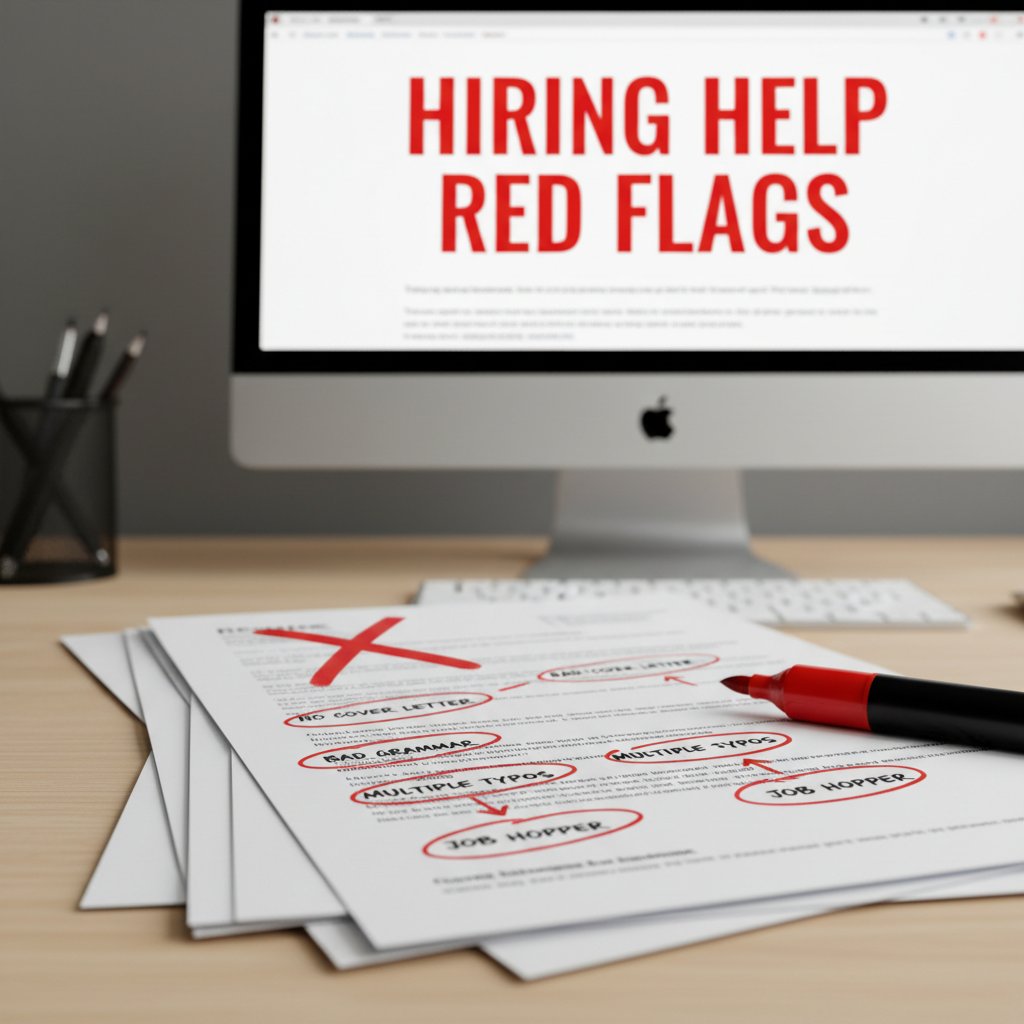
Some warning signs are obvious; others are cleverly disguised. Savvy leaders learn to recognize both.
- Red flags to watch out for when hiring help:
- Inconsistent work history or unexplained employment gaps.
- Overly polished answers—no genuine self-critique.
- Vague references, or reluctance to provide them.
- Poor communication—late, sloppy, or evasive emails.
- Unrealistic salary expectations not grounded in market data.
- “Yes man” syndrome—agreement with everything, no pushback.
- Lack of curiosity about the role or company.
- Discomfort with feedback or ambiguity.
Modern models of hiring help: from freelancers to intelligent enterprise teammates
Freelancers, agencies, and in-house: what’s changed?
Today’s leaders have a dizzying array of choices for hiring help—each with strengths, weaknesses, and situational sweet spots. Freelancers offer agility and cost savings, but risk inconsistency. Agencies provide scalability and specialist depth, but sometimes at the cost of cultural alignment. In-house staff may offer stability and loyalty, yet can overload budgets and slow adaptability. And now, AI-powered teammates enter the mix, automating the routine and amplifying human strengths.
| Model | Strengths | Weaknesses | Best Use Case |
|---|---|---|---|
| Freelancers | Flexibility, cost control | Potential unreliability | Short-term or project-based |
| Agencies | Specialized expertise | Cultural disconnect | Large-scale or niche projects |
| In-house | Loyalty, deep knowledge | Cost, slower to scale | Core business functions |
| AI teammates | Consistency, 24/7 speed | Integration challenges | Routine, high-volume tasks |
Table 3: Comparison of freelancers, agencies, in-house staff, and AI teammates
Source: Original analysis based on GoHire.io, 2024; MyPerfectResume, 2024
Example #1: A tech startup uses freelancers for urgent website fixes—speed is everything, loyalty less so.
Example #2: A healthcare provider partners with an agency for regulatory compliance, leveraging deep specialist knowledge.
Example #3: A finance team adopts an AI teammate for triaging routine emails and scheduling, freeing humans for analytical work.
Digital transformation: meet your new AI coworker
Enter the intelligent enterprise teammate—a category-defining shift. AI-powered platforms like futurecoworker.ai are automating not just rote tasks but the connective tissue of work: email management, task allocation, and even meeting organization. Unlike traditional software, these digital coworkers don’t demand technical prowess; they integrate seamlessly with existing workflows, turning chaos into clarity.

While these digital teammates excel at repetitive, high-volume tasks and can surface actionable insights in seconds, they’re not without limits. Integration headaches and trust issues abound—the best results come when humans and AI work side by side, each amplifying the other’s strengths.
When (and why) to mix human and digital help
The most resilient organizations blend the best of both worlds. Hybrid models—where digital teammates tackle volume and complexity, and humans deliver empathy and creativity—are now the gold standard. According to LinkedIn, 2024, cutting human flexibility or mismanaging the digital transition can tank a company’s reputation and make future hiring even harder.
Case Study #1: A software firm pairs AI scheduling with human project leads, slashing meeting coordination time by 60%.
Case Study #2: A marketing agency automates campaign reporting via AI, freeing strategists for creative work.
Case Study #3: A global team uses digital teammates for timezone management, but leans on humans for complex negotiations.
“The best teams know when to lean on algorithms—and when to trust gut instinct.” — Taylor, industry transformation consultant
The hiring process deconstructed: brutal honesty at every step
How to know when you actually need help
It’s easy to fall into the trap of hiring reflexively—mistaking busyness for growth. The real work starts with self-assessment: Are you seeking help to drive value, or just to offload stress? Leaders who skip this internal audit often end up with redundant roles or, worse, misaligned expectations that sabotage success.
- Priority checklist for hiring help implementation:
- Can the current team absorb more work without burnout?
- Is the task critical to business outcomes or peripheral?
- Are you hiring for growth, or just plugging a leak?
- Have you mapped out the skills actually required?
- Is there a process in place for onboarding and feedback?
- Can technology (e.g., an AI teammate) automate the task?
- Does the budget support long-term retention?
- Are you clear on success metrics?
- Will this hire free up core staff to focus on higher value?
- Have you considered the cultural impact of this hire?
Transition: Once you’ve answered these, you’re ready to move from impulse to intentionality—where hiring help becomes a strategic lever, not a panic button.
Defining the role: clarity or chaos
A poorly defined role is a ticking time bomb. Without absolute clarity, new hires wander, tasks fall through the cracks, and frustration metastasizes. The first step: articulate outcomes, not just activities. What does success look like? Where does this role fit in the larger mission?
Step-by-step, outline the need, the scope, and the boundaries of responsibility. Bulletproof your help description by including measurable outcomes, required skills (not just nice-to-haves), and how success will be evaluated.

Screening, testing, and interviewing: what really works in 2025?
Screening isn’t about ticking boxes—it’s about surfacing real capability, character, and culture add. The best practices now include AI-powered resume filtering, project-based tests, and deep reference checks. Old-school interviews? Only as a final filter, never the main event.
- Clarify the must-haves: Define non-negotiable skills in advance.
- Automate resume screening for objectivity and speed.
- Deploy skills tests that mirror real-world challenges.
- Use structured interviews—same questions, apples-to-apples comparison.
- Reference check deeply—don’t accept surface-level praise.
- Test for soft skills—collaboration, resilience, emotional intelligence.
- Simulate real work: Assign mini-projects or trial periods.
- Involve multiple team members to avoid bias.
- Document everything for future learning.
Skip a step and you risk the classic trap: a hire who looks great on paper but can’t deliver when the real work starts.
Negotiation and onboarding: where most deals go sour
Onboarding is where trust is built or broken—fast. Get this wrong, and even the best hire will disengage. The art is in blending clear expectations, early wins, and cultural immersion.
Example #1: A SaaS company assigns a mentor, sets up “quick wins,” and checks in weekly—result: 90% retention.
Example #2: Another dumps new hires into chaotic Slack channels with zero context—result: 60% quit in six months.
Example #3: A finance firm automates onboarding but neglects human connection—staff report feeling like “just another cog.”
“Onboarding is where trust is built or broken—fast.” — Morgan, HR strategist
The psychology of hiring help: trust, control, and letting go
Why leaders struggle to delegate (and what it really costs)
Delegation is the leadership skill we love to praise—and hate to practice. Cultural baggage (fear of losing control, ego, or perfectionism) often blocks leaders from letting go. The price? Burnout, bottlenecks, and an organization that can’t scale.
Consider the founder who insists on reviewing every email, or the team lead who micromanages projects into oblivion. In both cases, growth stalls—not because of a lack of help, but because leaders refuse to trust.
Delegation vs. abdication:
Assigning responsibility with clear expectations, support, and accountability. Example: “You own client onboarding, and here’s how we’ll measure success.”
Dumping a task with no guidance or follow-up. Example: “Just handle all the emails—I don’t care how.”
Building trust with human and digital teammates
Trust doesn’t happen by accident—it’s engineered through transparency, feedback, and shared wins. For hybrid teams, it means supporting human relationships while also integrating digital teammates (like futurecoworker.ai) with clear guidelines and measurable outcomes. Digital teammates earn trust when they perform reliably, respect privacy, and adapt to feedback. Lose that, and suspicion grows, stalling adoption.

Myths, misconceptions, and the new hiring reality
Debunking the biggest hiring help myths of our time
Some myths refuse to die. They linger in LinkedIn threads, echo in boardrooms, and sabotage progress.
- Top 7 hiring help myths busted:
- “Only humans can provide real help.” Digital teammates now outperform in routine tasks.
- “Faster hiring means better results.” Retention, not speed, is the goal.
- “Remote hires aren’t invested.” Engagement is a function of leadership, not location.
- “Culture fit trumps all.” Diversity of thought is a strategic advantage.
- “Outsourcing is always cheaper.” Hidden costs often balance out—or exceed—savings.
- “AI teammates will destroy jobs.” They free up capacity for higher-value work.
- “Once hired, help just works.” Ongoing support is vital for success.
Transition: Busting these myths isn’t just about being right—it’s about building teams that actually work.
What nobody tells you about the hidden costs and benefits
The opportunity cost of DIY approaches can dwarf any savings. Leaders who refuse to hire help often find themselves buried in admin or firefighting, while rivals outpace them using blended human/digital support.
| Approach | Direct Cost | Opportunity Cost | Surprising Benefit |
|---|---|---|---|
| DIY (no help) | $0 | Burnout, delays | Deep process knowledge (short-term) |
| Freelance/agency help | Med–High | Integration lag | Fresh perspective, fast scalability |
| In-house hire | Highest | Flexibility loss | Culture building, sustained expertise |
| Digital teammate | Low–Med | Training/setup | 24/7 support, instant scalability |
Table 4: Cost-benefit analysis of hiring help vs. DIY approaches
Source: Original analysis based on Zety, GoHire.io, MyPerfectResume, 2024
Three alternative approaches:
- Pairing in-house staff with AI for repetitive tasks—improves speed without sacrificing culture.
- Using freelancers for spikes in workload—avoids costly permanent hires.
- Cross-training existing staff—boosts resilience but can reach limits quickly.
The future of hiring help: what’s next?
AI, automation, and the coworker revolution
AI isn’t coming for your job—it’s coming for your monotony. Intelligent enterprise teammates, like those at futurecoworker.ai, are quietly transforming how teams manage email, tasks, and collaboration. Early adopters report 25%–40% improvements in project delivery speed, with morale getting a much-needed lift as humans focus on creative, strategic work.

How to future-proof your hiring strategy
Change is the only constant, but resilience is a choice. To build a hiring strategy that bends, not breaks, under pressure:
- Audit your current process—identify leaks and redundancies.
- Benchmark against competitors—don’t settle for industry average.
- Diversify your help portfolio—blend freelancers, in-house, agency, and digital teammates.
- Invest in onboarding—make it a living, breathing system.
- Prioritize retention over speed—slow is smooth, smooth is fast.
- Leverage technology—use AI for screening, scheduling, and summaries.
- Build feedback loops—learn from every hire, good or bad.
- Cultivate cross-functional teams—unlock creative collisions.
- Stay current on compliance and legal standards.
- Join hiring communities—tap collective intelligence.
Connect with resources like MyPerfectResume 2024 Workplace Trends for the latest talent strategies.
Case studies: real-world wins and disasters
Hiring help gone wrong: stories from the frontlines
In 2023, a retail chain tried to outsource its IT support to save costs. The provider overpromised, underdelivered, and security incidents spiked. Within months, the company faced a customer data leak and a PR nightmare. Post-mortem analysis highlighted the absence of clear SLAs, poor vetting, and cultural misfit. Alternative approaches?
- Piloting with a small project before full rollout.
- Assigning a hybrid team with internal oversight.
- Setting clear, measurable success criteria upfront.
From chaos to clarity: transformation through the right help
A midsized healthcare provider, drowning in email overload and scheduling chaos, implemented an intelligent enterprise teammate platform. Within weeks, administrative errors dropped by 35%, patient satisfaction rose, and high-value staff were redeployed to face-to-face care. What changed wasn’t just technology—it was a mindset shift: investing in the right help, at the right time, with clarity and support.

Measurable outcomes included a 25% reduction in missed appointments and a 30% improvement in response times. The lesson: strategic hiring—human or digital—can be the difference between chaos and clarity.
Supplementary insights: adjacent topics and next-level strategies
Outsourcing vs. in-house: the new debate
In 2025, the battle between outsourcing and in-house help continues to evolve. Outsourcing offers cost savings and flexibility, but risks losing control and cultural unity. In-house delivers stability and deep knowledge, but at a premium.
| Model | Trend (2023–2024) | Hiring Statistic |
|---|---|---|
| Outsourcing | Slight decline (-8%) | 42% of firms outsource |
| In-house | Stable, with focus on retention | 58% of hires are in-house |
Table 5: Current market trends and hiring statistics for outsourcing vs. in-house help
Source: Original analysis based on GoHire.io, MyPerfectResume, 2024
Example #1: Tech firm insourced call support for better customer experience.
Example #2: Consulting agency outsourced bookkeeping to cut overhead.
Example #3: SaaS company switched from agency to in-house marketing for control.
Example #4: Retailer reversed course, rehiring local staff after offshore support failed quality checks.
Cross-border hiring and cultural intelligence
Cross-border hiring unlocks global talent and creative diversity, but it’s not without landmines: time zones, communication mishaps, and legal complexity. Savvy leaders build cultural intelligence by training teams, setting clear norms, and celebrating differences.
- Cultural intelligence vs. cultural fit:
The ability to work effectively across cultural boundaries, adapting behavior and communication.
Alignment with existing values and norms—often a euphemism for “just like us,” which can choke innovation.
The rise of digital teammates: what you need to know
Intelligent enterprise teammate solutions are redefining what “help” means. Platforms like futurecoworker.ai are being used in ways their creators never imagined.
- Unconventional uses for hiring help:
- Automating compliance checklists for finance teams.
- Scheduling cross-border meetings without timezone headaches.
- Summarizing complex email threads for executive dashboards.
- Triaging incident reports in healthcare.
- Curating project updates for project managers.
- Filtering and prioritizing inbound sales leads.
Conclusion: the new rules of hiring help
Synthesis: what matters most when hiring help in 2025
In an era where every hire is a strategic lever, the rules have changed: clarity beats speed, integration trumps tradition, and trust—both human and digital—is the glue holding it all together. The most successful leaders treat hiring help not as a transaction, but as an opportunity to reboot how work gets done. If you’re still relying on outdated mindsets and processes, you’re not just behind—you’re at risk. The future of hiring help belongs to those brave enough to challenge their own assumptions and embrace intelligent teammates in all forms.
Key takeaways and your next move
Ready to turn insight into action? Here’s what the best leaders do before their next hire:
- Audit your real needs: Don’t hire out of habit—hire for value.
- Define the role with ruthless clarity: Set outcomes, not just duties.
- Blend human and digital help: Play to the strengths of both.
- Invest in onboarding and trust: Success starts on day one.
- Stay adaptive: Build feedback loops and never stop learning.
Rethink what “help” means in your organization. The next wave of hiring is here—will you ride it, or drown in old assumptions? The choice, as always, is yours.
Sources
References cited in this article
- Talent Growth Partners(talentgrowthpartners.com)
- MyPerfectResume 2024 Workplace Trends(myperfectresume.com)
- GoHire.io Hiring Statistics(gohire.io)
- Zety HR Statistics(zety.com)
- DemandSage AI Recruitment Stats(demandsage.com)
- SmartRecruiters 2024 AI in Recruitment(smartrecruiters.com)
- Workable AI Hiring Statistics(resources.workable.com)
- CIOHub: History of Employee Productivity(ciohub.org)
- BrightHire: Biggest Hiring Problems(brighthire.com)
- Raconteur: Skills-Based Hiring(raconteur.net)
- Forbes: What Leaders Get Wrong(forbes.com)
- Instill.ai: Why Hiring Fails(info.instill.ai)
- Blue Signal Search: Cost of Bad Hire(bluesignal.com)
- Zippia: Cost of a Bad Hire(zippia.com)
- Gallup: State of the Global Workplace 2023(lucasjamestalent.com)
- Staffing Advisors: Hiring Mistakes 2024(staffingadvisors.com)
- Business News Daily(businessnewsdaily.com)
- Employment Hero: Job Hunting Red Flags(smartmatch.employmenthero.com)
- Forbes: Interview Red Flags(forbes.com)
- Forbes: Future of Freelancers(forbes.com)
- Upwork Freelance Forward 2023(upwork.com)
- Broadridge 2024 Digital Transformation Study(broadridge.com)
- ExpertBeacon Digital Transformation Stats(expertbeacon.com)
- Microsoft 2024 Work Trend Index(trackmind.com)
- LinkedIn HR Best Practices 2024(linkedin.com)
- WHO Digital Health 2024(tandfonline.com)
- Forbes: Deception in Hiring(forbes.com)
- SHRM: Candidate Experience(shrm.org)
- Bankrate Financial Advice Survey(bankrate.com)
- Vox: Expert Advice 2023(vox.com)
- HR Acuity 2024 Guide(hracuity.com)
- FinancesOnline Hiring Statistics(financesonline.com)
- Forbes: Job Hunting Myths 2024(forbes.com)
- CareerPlug: Hiring Myths(careerplug.com)
- Recooty: Recruitment Myths(recooty.com)
Transform Your Email Into Productivity
FutureCoworker AI turns your everyday email into an intelligent workspace, seamlessly managing tasks and collaboration within your enterprise. It eliminates the complexity of AI, allowing you to benefit from advanced technology without any technical knowledge. Achieve productivity, streamline processes, and improve team efficiency through natural email interaction, getting tasks done faster and smarter.
Get startedReady to Transform Your Email?
Start automating your tasks and boost productivity today
Frequently Asked Questions
How has hiring help changed from the past to today?
Hiring help has evolved from local, informal methods like handshakes and neighborhood bulletin boards in the industrial era to formal hiring practices with standardized job descriptions and HR departments after the post-war boom, and then to global hiring across borders due to globalization in the late 20th century.
What are the main challenges modern companies face when hiring help?
Modern hiring challenges include brittle trust in teams, high employee churn, the integration of AI coworkers, cultural clashes from global hiring, legal complexities, and time zone management when sourcing help across borders.
Why is hiring help now considered more complex than simply choosing the best résumé?
The article states that hiring help now involves understanding a high-stakes cultural and digital shift driven by AI integration, evolving definitions of what a 'coworker' means, hidden costs, and unspoken risks that traditional résumé-based selection cannot address.
What role did globalization play in changing how companies hire help?
Globalization turned hiring help into a cross-border affair in the late 20th century, allowing companies to recruit teams from different countries like Mumbai, Berlin, or São Paulo, but introducing new complexities including cultural clashes, legal issues, and time zone challenges.
Continue Reading
Keep exploring Intelligent enterprise teammate

Hiring Help Nobody Talks About: 11 Brutal Lessons
Need help hiring? Discover 2026’s most brutal hiring truths, actionable AI tips, and expert strategies to outsmart the talent war—before your next bad hire costs you.

Rethinking Hiring: AI Coworkers As an Alternative to Need Employee
Need employee solutions? This article examines hiring alternatives, including AI integration, to reduce burnout and build sustainable teams without constant new hires.

How AI and Gig Platforms Are Redefining Staffing Help
Staffing help has shifted as AI teammates and gig platforms reshape hiring. This article examines how traditional recruitment methods compare to emerging workforce solutions.

Would You Dare Hire Someone This Way? the Unfiltered 2026 Guide
Hire someone smarter in 2026. Discover brutal hiring truths, expert tips, & real-world strategies to find the perfect enterprise teammate. Don't get left behind.

Need Person or AI Teammate? Rethink Who You Really Must Hire
Discover insights about need person

How to Find Employee Effectively in 2025
Finding the right employee requires understanding modern hiring challenges. This article examines what actually works when you find employee in today's market.