


Email Assistant for Enterprises: From Burnout Machine to AI Teammate
Written with AI assistance under our editorial guidelines
Email remains essential for enterprise communication due to its auditability and compliance requirements, yet it causes significant burnout with 347 billion daily messages overwhelming workers. AI-powered email assistants are emerging as solutions to reduce busywork and anxiety by automating tasks, helping enterprises address the chronic overload that traditional wellness programs cannot fix.
If you think email is a relic doomed to fade into corporate oblivion, you’re in for a harsh reality check. In 2025, email isn’t just alive—it’s the bloodstream of global enterprise, pulsing with 347 billion daily messages and quietly fueling every deal, decision, and disaster. But behind the slick promise of “inbox zero” lurks a silent epidemic: chronic overload, sleepless nights, and burnout on a scale HR wellness webinars can’t fix. Enter the AI-powered email assistant for enterprises—a digital coworker who doesn’t just fetch coffee, but rewrites the rules of workplace power, productivity, and culture. This article peels back the glossy marketing to reveal how these AI teammates are crushing busywork, flattening hierarchies, and forcing every enterprise to confront the new reality: In the war for attention, your next teammate might not even be human.
Why email is still the heartbeat of enterprise—and why it’s killing us
The myth of email’s demise
Every year, some tech pundit proclaims the “death of email.” The latest productivity app goes viral, promising to end your inbox addiction. And yet, step into any corporate skyscraper or open-plan startup, and you’ll find Slack channels cluttered, Teams chats pinging, but email still reigning supreme. The fantasy of a post-email world crumbles against one iron law: in regulated industries, sprawling organizations, and cross-border deals, nothing replaces the formality, auditability, and universality of email.

Despite the noise, research from Forbes, 2023 confirms that business email flows continue to rise. Enterprises outlast startups, and email outlasts every “killer app” because it’s the gold standard for traceable, asynchronous communication. Contracts, compliance, client relations—if it matters, it’s in your inbox.
The hidden cost of inbox overload
What doesn’t change is the cost. Email volume is the monster under every knowledge worker’s desk. According to Forbes, 2023, over 347 billion emails are sent and received every day. A recent survey by EmailTooltester reveals that 67% of employees lose sleep over work emails, while 81% of senior leaders experience persistent email anxiety (EmailTooltester, 2024). The numbers aren’t just big—they’re existential.
| Time spent/day | % Tasks delayed | Burnout risk index | Annual cost/employee |
|---|---|---|---|
| 2.6 hours | 36% | High | $9,240 |
| 3.4 hours | 48% | Very High | $12,800 |
| 1.9 hours | 22% | Moderate | $6,500 |
Table 1: The true cost of enterprise email overload in 2025 (Source: Original analysis based on Forbes, 2023, EmailTooltester, 2024)
"Email is the invisible anchor dragging productivity underwater." — Alex, enterprise IT lead
Burnout, anxiety, and the silent epidemic
Email isn’t just a productivity tax. It’s a public health crisis. The relentless drip of unread messages erodes mental health and sabotages strategic work. The research is unequivocal: workplace burnout has become a silent epidemic, and email is its most overlooked vector. Imagine an enterprise manager juggling conflicting priorities. Every decision is buried in a haystack of CC’d threads, missed deadlines, and passive-aggressive “per my last email” reminders. The cost isn’t just financial—it’s human. The emotional toll of email chaos is carving deep grooves of anxiety into the modern workforce, fueling attrition and creating a culture of constant firefighting.
From spam filter to intelligent teammate: The evolution of email assistants
A brief history of enterprise email tools
Enterprise email started as a blunt instrument—a digital version of the inbox tray, with filters acting as bouncers against spam. Then came the rise of rules, plugins, and “smart” sorting. But until recently, the leap to genuine intelligence remained a mirage.
| Year | Solution type | Impact | Notable failures |
|---|---|---|---|
| 2000 | Basic spam filters | Minor efficiency gains | Filters flagged real mail |
| 2010 | Rules & plugins | Siloed automation | Poor integration |
| 2018 | NLP sorting | Better relevance | Context missed |
| 2022 | Task add-ins | Some workflow linking | Steep user learning curve |
| 2024 | AI-powered assistant | Integrated workflows | Cultural resistance |
Table 2: Timeline of enterprise email automation (Source: Original analysis based on Menlo Ventures, 2024, SendGrid, 2023, Built In, 2024)
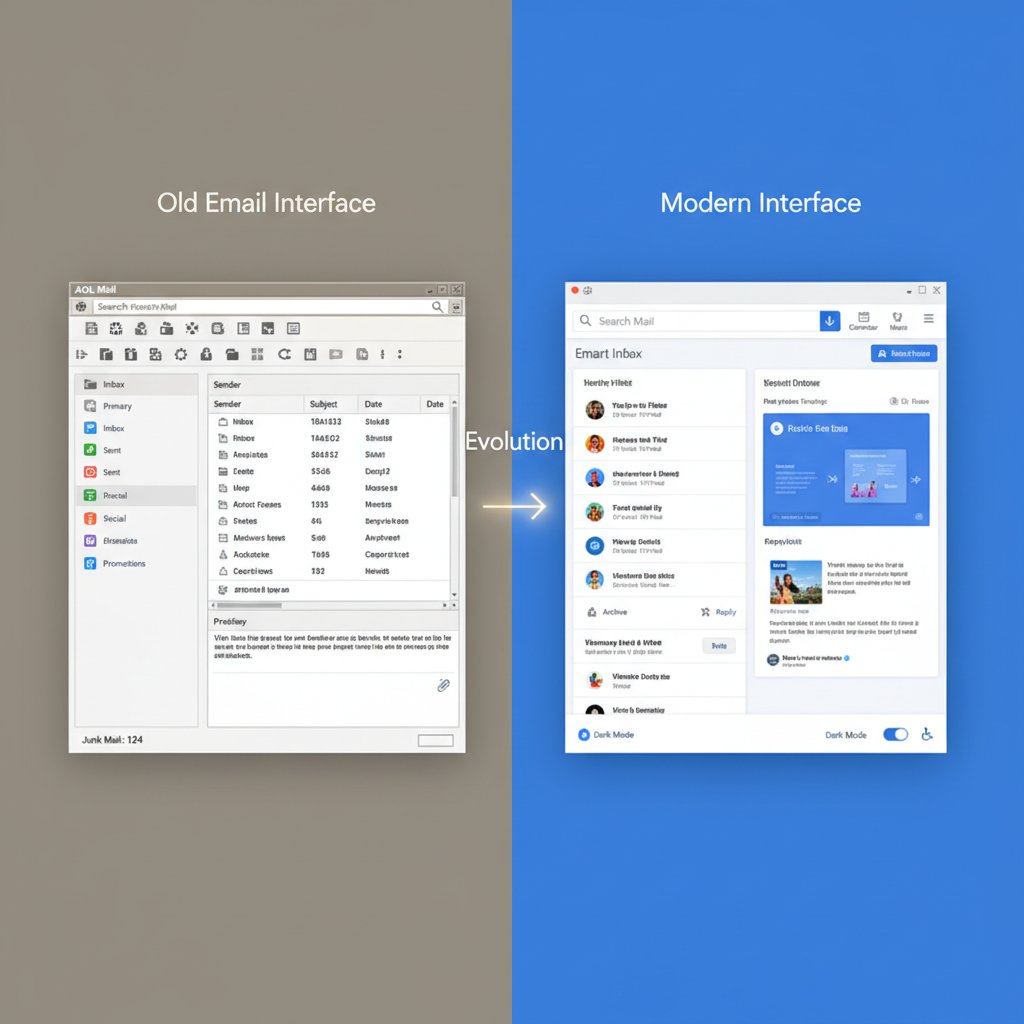
The shift from “better spam filters” to “AI teammates” is not just about technology—it’s about who has the power to get work done without drowning in digital drudgery.
What makes a true AI email assistant?
Let’s be clear: not every “smart” inbox add-on qualifies as an email assistant for enterprises. The crucial leap is from rigid, rule-based automation to adaptive, context-aware intelligence. A real AI email teammate brings together:
- Natural Language Processing (NLP): Deciphers the real intent behind ambiguous requests (“Can you loop in finance by Tuesday?”).
- Context engine: Tracks project history, relationships, and deadlines across time.
- Zero-UI: Operates seamlessly in the background—no clunky dashboards.
- Intent detection: Knows that “Sure, let’s do it” means scheduling, not just replying.
Consider the difference: old bots mindlessly forward emails based on sender/subject. Today’s AI-powered teammates summarize threads, suggest action items, and even nudge you when you’re about to miss a critical follow-up—changing your workflow without you even noticing.
Case study: A global company’s email transformation
Take the case of a multinational tech firm. Before adopting an enterprise AI email assistant, managers waded through 200+ daily emails, missing vital decisions buried in irrelevant messages. The initial rollout wasn’t smooth: employees feared surveillance, and some resisted having their workflows “optimized by a robot.” But by the third month, the results were impossible to ignore: project delivery times dropped by 25%, and internal satisfaction metrics soared.

Ultimately, the key challenge wasn’t technical—it was cultural. Success meant balancing automation with autonomy, making the AI teammate a trusted collaborator rather than a digital taskmaster.
The anatomy of an intelligent enterprise teammate: What’s under the hood?
How NLP and context engines make emails smarter
Modern AI email assistants don’t just read text. They read between the lines—parsing sentiment, urgency, and context from a tangled email chain. Advanced NLP models are trained on billions of enterprise messages, learning the subtle cues that turn a polite reply into a high-stakes escalation.
Picture this: a marketing manager writes, “Let’s wrap this up before the quarter closes.” The AI parses not just the words, but the intent (deadline approaching), the context (Q4 strategy), and the team dynamic (cross-functional urgency). The result? Action items generated, calendar blocks suggested, and relevant stakeholders notified—no manual triage required.
| Task type | Rule-based | AI-powered | Outcome difference |
|---|---|---|---|
| Scheduling | Basic triggers | Dynamic context | 3x faster meetings, fewer double-bookings |
| Task extraction | Keyword matching | Intent detection | 40% better accuracy on actionable items |
| Thread summarization | None | NLP + context | Saves 2+ hours/week per user |
| Follow-up reminders | Static delays | Adaptive nudges | 30% fewer missed deadlines |
Table 3: AI vs. rule-based: What your assistant can really do (Source: Original analysis based on SendGrid, 2023, MarkTechPost, 2024)
Data privacy, security, and trust
Any mention of AI email assistants triggers immediate skepticism: “Is my inbox now a surveillance tool?” The answer—backed by most reputable vendors—is no. Enterprise-grade assistants operate under strict data privacy, encryption, and access control protocols. Data is anonymized, usage is auditable, and employees can opt out of analytics dashboards.
The real myth? That AI email assistants are corporate spies. In practice, transparency and explainability have become the new currency of trust. As Priya, a leading tech ethicist, puts it:
"Transparency is the new currency of trust in AI." — Priya, tech ethicist
Integrating with the enterprise stack
A true email assistant for enterprises doesn’t just live in your inbox. It connects the dots—synching with calendars, project management tools, CRMs, and file stores. The challenge isn’t technical compatibility; it’s interoperability at scale. Legacy systems, custom integrations, and data silos all pose obstacles. The best tools are API-first, modular, and designed to play nice with the chaos of the modern enterprise stack.
Email assistant for enterprises in action: Real-world scenarios that matter
How AI teammates are crushing busywork
Let’s get concrete: The average knowledge worker spends up to 40% of their week on repetitive scheduling, reminders, and follow-ups. AI email assistants slash this by automating those low-value tasks. When FutureCoworker AI was deployed in a mid-sized marketing agency, campaign turnaround times dropped by 40%—not by replacing humans, but by freeing them to focus on creative collaboration and client strategy.
Recent research confirms that, post-implementation, manual email triage time fell by over 35% across industries (Built In, 2024). That’s not a marginal gain; it’s a seismic shift in what teams can accomplish.
- Hidden benefits of email assistant for enterprises experts won’t tell you:
- Reduces decision fatigue by flagging only what’s urgent.
- Increases fairness—junior staff aren’t buried by menial follow-ups.
- Creates a searchable memory of threaded decisions.
- Enables real-time collaboration even across time zones.
- Allows senior leaders to focus on strategy, not inbox firefighting.
- Surfaces unaddressed client concerns before they become crises.
- Democratizes access to institutional knowledge.
- Fosters a culture of accountability by tracking action items transparently.
When things go wrong: Lessons from enterprise failures
But it’s not all upside. Over-reliance on AI can lead to missed nuance—critical context lost in translation, or an important relationship damaged by a tone-deaf automated reply. Consider the cautionary tale of a finance firm that let AI auto-respond to sensitive client queries, resulting in a reputational hit and a scramble for damage control.
- Red flags to watch out for when deploying an enterprise email assistant:
- Lack of explainability in AI decisions.
- Poor integration with existing IT.
- Weak data privacy protocols.
- Over-automation of sensitive communications.
- Insufficient human oversight.
- Ignoring feedback from end-users.
- Vendor lock-in and hidden costs.
The lesson: AI should be an assistant, not a replacement for human judgment. Ensuring oversight, transparency, and a robust feedback loop is non-negotiable.
Cross-industry case studies: Surprises and setbacks
Let’s zoom out. In finance, firms report a 30% reduction in administrative workload—but only after strict controls on auto-response features. In healthcare, AI-powered meeting scheduling improved patient satisfaction scores by 35%, yet initial deployment faced pushback over privacy. Creative agencies see the sharpest gains in speed but caution that AI can stifle unique, “weird” ideas when overused.

The takeaway? There’s no one-size-fits-all solution. Each industry—and even each team—must calibrate the balance of automation and human touch to fit its unique context.
The cultural impact: How AI is reshaping enterprise power dynamics
From gatekeepers to collaborators: The new office politics
Email has always been a hidden battleground—who gets to see what, who controls the narrative, who hoards institutional knowledge. The rise of the AI email assistant for enterprises is upending that power structure. Junior staff can access real-time insights, while transparency becomes the norm. The old gatekeepers—executive assistants, information bottlenecks—are replaced by collaborative workflows.
"AI doesn’t just answer emails—it changes who gets to speak and be heard." — Jamie, operations manager
But the debate is far from settled. Does AI democratize power, or just replace old silos with new ones—those who understand and control the AI stack? The answer depends on how organizations implement, govern, and share access to these tools.
Transparency, surveillance, and privacy pushback
With every new AI tool comes a wave of employee concerns about surveillance, monitoring, and data misuse. Recent industry surveys show that while over 70% of employees recognize the productivity benefits, nearly half are worried about becoming “data points in a corporate dashboard.”
Expert insight points to best practices: clear communication about what data is collected, explainable AI models, and robust opt-out provisions. Organizations achieving buy-in aren’t just compliant—they’re transparent by design.
A business model that monetizes personal data, often raising ethical concerns in enterprise settings.
Systems whose decision-making processes can be understood and interrogated by humans—crucial for trust.
The principle of collecting only the data strictly necessary for a given purpose, reducing risk and increasing privacy.
Unintended consequences and the future of work
Even the best-designed AI email assistants carry risks: over-optimization can stifle creativity, and teams may become dependent on automation to the point of deskilling.
- Unconventional uses for email assistant for enterprises:
- Flagging cross-team political tension in thread sentiment analysis.
- Detecting early signs of team burnout from response patterns.
- Auto-generating onboarding guides from past project emails.
- Mapping informal influence networks by analyzing message flows.
- Surfacing hidden subject-matter experts based on reply quality.
- A/B testing internal communications for clarity and engagement.
The point is clear: every tool shapes the user—and your enterprise. The question is whether you’ll become a more efficient version of yourself, or just a servant to the algorithm.
How to choose the right email assistant for your enterprise (without regrets)
Checklist: Is your organization ready?
Before you sign that contract, step back. Are you ready for a digital teammate—or just chasing a buzzword? Here’s a self-assessment checklist for enterprise readiness:
- Leadership buy-in secured.
- Clear use-case(s) defined.
- IT infrastructure mapped.
- Data privacy and compliance reviewed.
- User training planned.
- Feedback loop established.
- Integration points scoped.
- Budget and ROI modelled.
- Cultural fit assessed.
- Vendor transparency verified.

What to ask vendors and what they won’t tell you
Don’t just nod along to the demo. Ask vendors the tough questions: How does your AI handle ambiguous requests? Can employees audit their own data? What’s your worst implementation horror story—and what did you learn? Push back on the sales pitch. Many vendors gloss over hidden costs—custom integrations, usage caps, and change management overhead.
For ongoing insights into the evolving landscape of AI email teammates, platforms like futurecoworker.ai provide expert guidance and up-to-date resources.
Cost, ROI, and hidden traps
Cost isn’t just the sticker price. It’s training, integration, and—most importantly—risk. Calculate soft benefits: less burnout, faster collaboration, higher retention. But always keep an eye on common traps: vendor lock-in, opaque pricing models, and the cost of failed adoption.
| Upfront cost | Time to ROI | Annual savings | Risk factors |
|---|---|---|---|
| $10,000 | 6 months | $40,000 | Data breach, low usage |
| $25,000 | 8 months | $90,000 | Integration failure |
| $5,000 | 3 months | $18,000 | User resistance |
Table 4: Cost-benefit breakdown: Email assistant for enterprises (Source: Original analysis based on Menlo Ventures, 2024, Forbes, 2023)
The antidote: document your needs, negotiate transparency, and run a pilot before full rollout.
Implementation playbook: Step-by-step to a smarter inbox
Preparing your team for the big shift
Change management is everything. Announce the shift with clarity, not hype. Address fears of job displacement and clarify that the AI assistant is there to augment, not replace, human talent.
- Build a cross-functional adoption team.
- Map key workflows for automation.
- Communicate the “why” behind the change.
- Choose a pilot group of early adopters.
- Train users on both technical and cultural changes.
- Launch in a controlled, feedback-driven environment.
- Iterate based on real user pain points.
- Celebrate wins and fix failures transparently.
Best practices: onboarding should be hands-on, with user champions embedded in every team. Avoid the “set it and forget it” trap—continuous learning and adaptation are non-negotiable.
Integration, testing, and iteration
Start with integration. Map all email touchpoints—calendar, CRM, project management, document storage. Build API bridges, test every workflow, and stress-test edge cases.
Pilot phase: Choose a diverse group and solicit brutally honest feedback. Iterate the configuration, tweak nudges, and kill features that create friction.
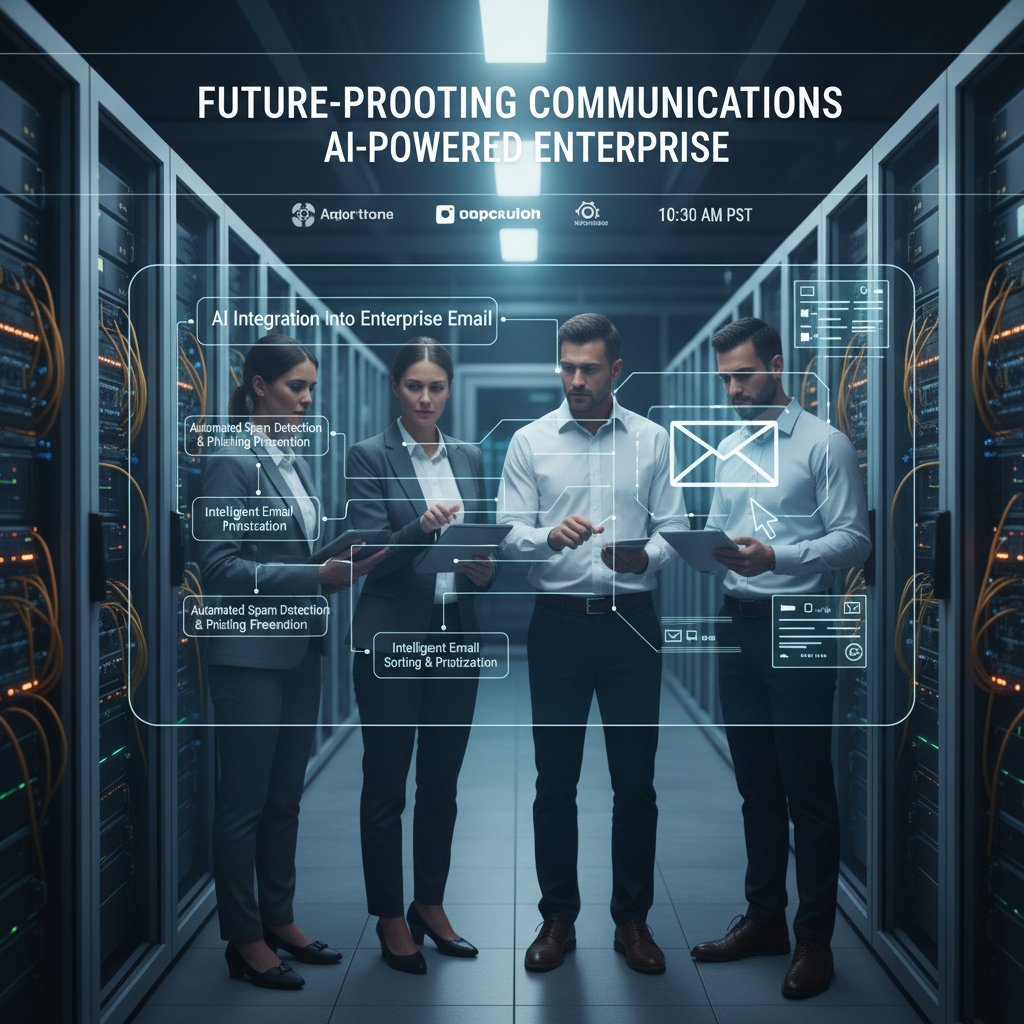
The final rollout is never “final”—continuous iteration separates success stories from cautionary tales.
Measuring success and optimizing over time
You can’t optimize what you can’t measure. Set KPIs from day one:
- Key success metrics for enterprise email assistant adoption:
- Percentage reduction in task turnaround time
- Decrease in email-induced burnout reports
- User satisfaction (survey-based)
- Accuracy of automated task extraction
- Rate of missed deadlines and follow-ups
Continually surface both wins and pain points. Analytics dashboards should be transparent, accessible, and actionable—informing not just IT, but every stakeholder.
The road ahead: Trends and predictions for enterprise email assistants
What’s next in AI-powered workplace communication?
The current wave of adoption is just the beginning. Experts point to the rise of multimodal AI (voice, video, and text), emotion detection for better workplace tone analysis, and cross-platform orchestration as the next frontiers. But alongside technical progress come new ethical and strategic challenges: ensuring explainability, maintaining human connection, and keeping bias in check.

Will humans and AI ever truly collaborate?
The philosophical debate rages on. Is AI a tool—or a teammate? True collaboration happens when trust and transparency are built into every interaction, not just the codebase.
"Collaboration with AI is less about the tech, more about trust." — Morgan, digital transformation leader
It’s not about replacing people, but empowering teams to reach new heights—if you’re willing to challenge old habits.
How to future-proof your enterprise for the AI teammate era
Stay ahead by investing in learning, adaptability, and cultural change—not just technology. Make ongoing assessments of AI’s impact part of your strategic planning.
- 2000: Basic spam filters emerge.
- 2010: Rule-based automation gains traction.
- 2018: NLP sorting improves email relevance.
- 2022: Task add-ins and integrations proliferate.
- 2024: AI teammates become mainstream in Fortune 500s.
- 2025: Widespread adoption in regulated and creative industries.
- Ongoing: Continuous improvement and adaptation driven by user feedback.
For resources and ongoing education, platforms like futurecoworker.ai offer valuable perspectives, best practices, and real-life case studies.
Conclusion: The new rules of work—and why your next teammate might be AI
The evidence is overwhelming: The email assistant for enterprises isn’t a passing trend—it’s a structural shift. AI email teammates are crushing the status quo of digital drudgery, flattening hierarchies, democratizing expertise, and forcing every organization to rethink not just how they work, but who holds the power. As burnout, anxiety, and email overload reach epidemic levels, the only way forward is to embrace intelligent automation—thoughtfully, transparently, and with eyes wide open.
For leaders and skeptics alike, the lesson isn’t to fear the rise of AI, but to harness it. Productivity in 2025 isn’t about working harder or replying faster—it’s about working smarter, with digital teammates that free you to do your best work. The cultural and organizational impact is profound, but the endgame is clear: in the new rules of work, your next teammate might just be an AI—and that might be the smartest move you ever make.
Sources
References cited in this article
- Menlo Ventures 2024 State of Generative AI in the Enterprise(menlovc.com)
- SendGrid: 7 AI Email Assistants for 2023(sendgrid.com)
- Built In: 3 Ways AI Will Change the Workplace in 2024(builtin.com)
- Forbes: AI Addressing Enterprise Email Overload(forbes.com)
- MarkTechPost: Top AI Email Assistants 2024(marktechpost.com)
- SHRM: Burnout in the Workplace 2024(shrm.org)
- TravelPerk: Remote Work Burnout Statistics 2024(travelperk.com)
- EmailTooltester: Work Communications Burnout(emailtooltester.com)
- HRD Connect: Digital Overload and Burnout(hrdconnect.com)
- SecureMailMerge: The Future of Email in 2024(securemailmerge.com)
- Forbes: Email Isn't Dead—It's Thriving(forbes.com)
- The Guardian: Is Instant Chat Replacing Email?(theguardian.com)
- Medium: The Silent Epidemic—Employee Burnout 2023(medium.com)
- Forbes: The Silent Burnout Epidemic(forbes.com)
- AIDE: Top 4 AI Email Assistants 2024(aideai.app)
- Market.us: AI-Powered Email Assistant Market(market.us)
- Lindy: 10 Best AI Email Assistants 2024(lindy.ai)
- McKinsey: Generative AI at Work (Morgan Stanley Example)(mckinsey.com)
- Analytics Insight: Top 10 AI Email Assistants 2023(analyticsinsight.net)
- DeepWiki: Email Assistant Architecture(deepwiki.com)
- EnterpriseBot: NLP in Email Automation(enterprisebot.ai)
- Medium: AI Explosion in Enterprise Software 2024(medium.com)
- JeffreyAI: Top 9 Email Assistants 2024(jeffreyai.com)
- Microsoft: Defender for Office 365(microsoft.com)
- Francesca Tabor: AI and Social/Cultural Implications(francescatabor.com)
- G2: Office Tools Trends 2025(research.g2.com)
- CanaryMail: Best AI Email Assistant(canarymail.io)
- CyberPanel: Top 10 AI Email Assistants(cyberpanel.net)
- DigitalOcean: Best AI Email Assistants 2025(digitalocean.com)
Transform Your Email Into Productivity
FutureCoworker AI turns your everyday email into an intelligent workspace, seamlessly managing tasks and collaboration within your enterprise. It eliminates the complexity of AI, allowing you to benefit from advanced technology without any technical knowledge. Achieve productivity, streamline processes, and improve team efficiency through natural email interaction, getting tasks done faster and smarter.
Get startedReady to Transform Your Email?
Start automating your tasks and boost productivity today
Frequently Asked Questions
How many emails are sent globally each day in 2025?
According to the article, 347 billion emails are sent and received every day globally in 2025.
Why hasn't email been replaced by other communication tools despite predictions of its demise?
Email remains essential because it provides formality, auditability, and universality that other tools cannot match, especially in regulated industries, sprawling organizations, and cross-border deals where traceable, asynchronous communication is critical for contracts, compliance, and client relations.
What percentage of employees lose sleep over work emails?
According to an EmailTooltester 2024 survey cited in the article, 67% of employees lose sleep over work emails, while 81% of senior leaders experience persistent email anxiety.
What is the main benefit of AI-powered email assistants for enterprises?
According to the article, AI-powered email assistants act as digital coworkers that crush busywork, flatten hierarchies, and help enterprises address chronic email overload and the resulting burnout and productivity issues.
Continue Reading
Keep exploring Intelligent enterprise teammate

Email Assistant in 2026: Digital Coworker or New Inbox Boss?
Discover insights about email assistant

How AI Email Assistance Is Reshaping Team Collaboration
Email assistance powered by AI transforms how teams manage inboxes and collaborate. This article explains the shift from traditional tools to AI teammates reshaping workplace communication.

Enterprise Email Productivity Is Broken — Meet Your AI Teammate
Discover insights about enterprise email productivity

Why Email Productivity Software Is Your Next Enterprise Hire
Discover insights about email productivity software enterprise app

AI Email Assistant: Benefits and Security Risks Examined
AI email assistants promise workplace efficiency but raise security concerns. This article examines the benefits and risks of intelligent email automation for enterprises.

Email Correspondence in 2025: Why It Dominates Work Life
Email correspondence remains central to modern work despite predictions of its decline. This article examines why professionals spend over 3 hours daily on email and how to manage it effectively.