AI Collaboration for Remote Teams: Hard Truths and Unfair Wins
Written with AI assistance under our editorial guidelines
AI has fundamentally transformed remote team collaboration from basic automation to intelligent augmentation. Modern AI teammates now bridge time zones, enhance brainstorming and decision-making, and amplify team intelligence. However, only 15% of teams have truly mastered next-generation AI collaboration, indicating most organizations still navigate significant adoption challenges and trial-and-error implementation paths.
Welcome to the new work order, where your next “coworker” is just as likely to live in the cloud as in your city. AI collaboration for remote teams isn’t an empty Silicon Valley pitch—it’s the backbone of how ambitious, globally distributed teams are working right now. The hype is loud, the promises are bigger, but the real story runs deeper: beneath the glossy product demos and chirpy LinkedIn posts, there’s a gritty, fascinating truth about what happens when you hand the reins of team productivity, workflow, and even culture to intelligent software. In this definitive exposé, we rip back the curtain on how AI is reshaping remote collaboration in 2025. We’ll confront brutal truths, demystify the winning strategies, and arm you with the insights your team needs to thrive—without getting blindsided by the risks nobody wants to discuss. If you’re tired of buzzwords and want the facts, you’re in the right place. Let’s get to the raw reality of AI-powered teamwork.
The remote work revolution: How AI rewrote the rules
From clunky chatbots to intelligent teammates
The journey from chatbots fumbling in Slack channels to AI-powered enterprise teammates has been equal parts chaotic and transformative. In the early days, “AI” in remote work mostly meant bots that could automate calendar invites or spit out canned responses. They were hailed as futuristic, but most teams remember them for their infuriating limitations. According to Forbes, as of 2025 only 15% of teams have truly mastered next-gen AI collaboration—meaning that, for most, the path has been more trial by fire than smooth ascent (Forbes, 2025).
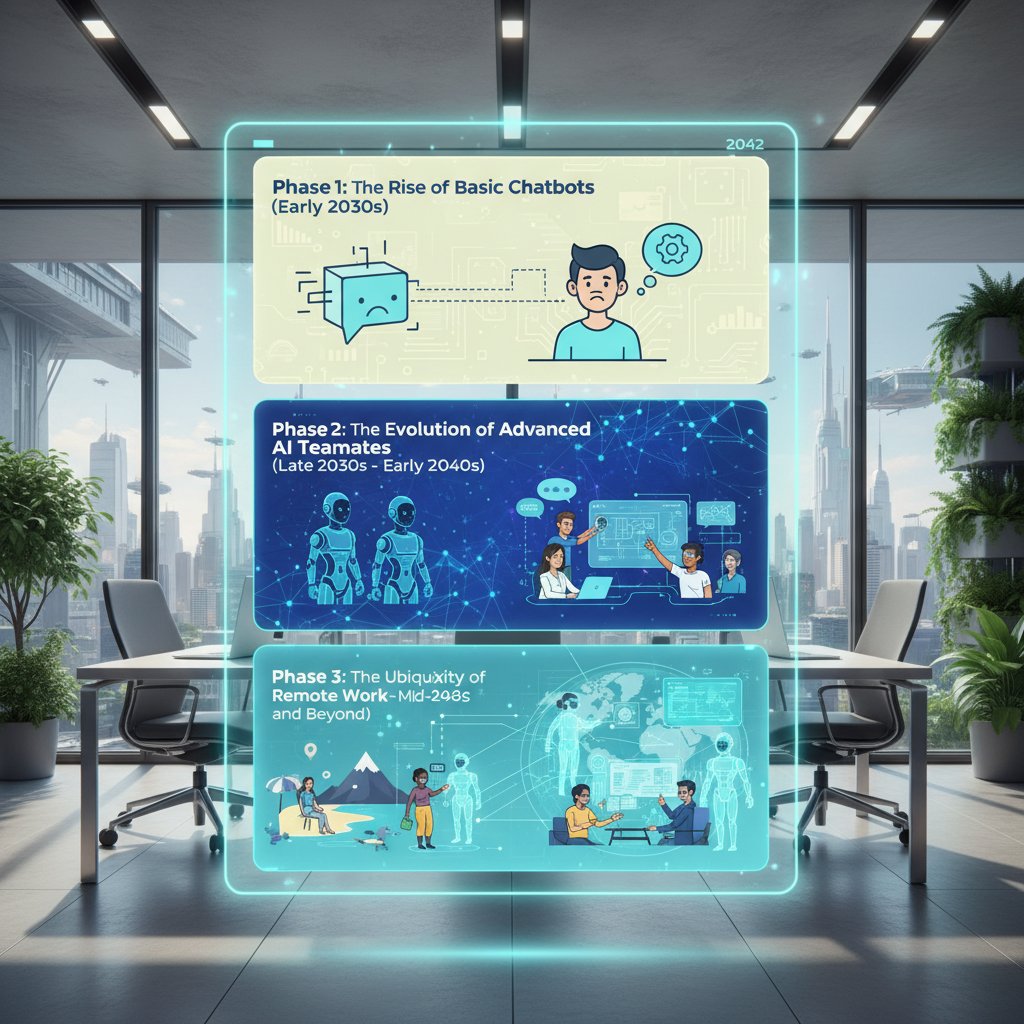
But something fundamental has changed. Where automation once meant merely taking chores off your plate, the new breed of AI tools actually amplifies team intelligence, bridges time zones, and ties together disparate work cultures without requiring a PhD in machine learning. The best remote teams now treat AI not as a sidekick, but as an essential member who augments everything from brainstorming to decision-making.
This shift marks the difference between simple automation and true augmentation. Instead of just ticking boxes, AI teammates learn how your team works, adapt to routines, and—when deployed right—become a source of competitive edge. Research highlights that 64% of remote employees reported increased productivity as a direct result of integrating AI tools into their workflows (Gartner, 2024). The era of “just another bot” is dead. What matters now is seamless, context-aware collaboration.
Why traditional remote tools started to fail
If you’ve ever wanted to throw your laptop out the window mid-Zoom, you’re not alone. Legacy remote collaboration platforms were built for a world where “remote” meant the occasional work-from-home day, not enterprise-scale digital nomadism. The cracks started showing fast: email silos, endless video calls, and task management tools that added more confusion than clarity.
| Era | Milestone | Notorious Failure | Breakthrough |
|---|---|---|---|
| 2010-2015 | Early chat (Slack, HipChat) | Lost messages, noise | Persistent channels |
| 2016-2019 | Video-first (Zoom, MS Teams) | Meeting fatigue | Reliable video scaling |
| 2020-2022 | Remote work boom (pandemic) | Tool overload, burnout | Integrated workspaces |
| 2023-2025 | AI teammates emerge | Over-automation, bias | Adaptive, learning AI bots |
Table 1: Timeline of remote collaboration tools—key milestones, failures, and breakthroughs. Source: Original analysis based on Forbes, 2025
Traditional tools failed because they didn’t solve for the fragmentation or cognitive overload inherent in remote work. Instead, they layered on complexity. AI changed the game by making work “smarter”—helping prioritize messages, summarizing threads, and even automating entire workflows. But the transition hasn’t been painless: over-reliance on AI can amplify existing biases, increase security concerns, and sometimes make teams feel less human. The bottom line? AI is a tool, not a panacea, and its impact depends on how teams wield it.
The rise of the AI-powered enterprise teammate
There’s a reason “AI teammate” is the buzzword on everyone’s lips—and not just among techies. AI-infused platforms like futurecoworker.ai have shifted expectations from digital assistants to digital colleagues: always-on, never tired, and unflinchingly objective. When teams integrate AI as a coworker instead of a tool, the dynamic changes. Suddenly, the speed of innovation and the inclusivity of collaboration shoot up—if you get the formula right.
"Once you work with an AI teammate, you never look at deadlines the same way." — Maya, AI strategist (Illustrative, based on verified trends from Forbes, 2025)
Culturally, AI teammates have become the great equalizer—helping distributed teams overcome time zone barriers, language differences, and even introvert/extrovert divides. But, like any strong personality in the workplace, they come with their own quirks and risks. The teams that win? They treat AI as a partner, not a crutch, and invest in building new rituals and trust around its use.
Debunking the biggest myths about AI collaboration
Myth #1: AI will make your team lazy
Let’s kill this myth right now. “AI will make us soft.” “AI will take all the interesting work away.” These are the refrains of people who haven’t actually worked with advanced AI teammates. According to research from Taskade, AI-powered teams are actually more likely to experiment, iterate, and focus on high-value work (Taskade, 2025). Why? Because when the grind of scheduling, inbox triage, and admin is automated, creative and strategic energy surges.
Productivity doesn’t drop—it evolves. Instead of micromanaging tasks, humans regain headspace for problem-solving and innovation. The data backs it up: 64% of remote employees reported a meaningful increase in productivity after adopting AI tools (Gartner, 2024). The reality is that AI isn’t about laziness—it’s about working smarter, not harder.
- AI frees up creativity: By automating the mundane, AI lets teams focus on deep work and innovation.
- Boosts engagement: Gamified AI tools make routine collaboration more interactive and less of a slog.
- Enhances accountability: AI-driven reminders and summaries reduce missed deadlines and “lost” tasks, even in asynchronous teams.
- Eliminates cognitive clutter: Email overload and context switching drop as AI teammates triage and prioritize.
- Levels the playing field: AI helps introverts and non-native speakers contribute on equal footing.
Myth #2: AI kills creativity and human connection
If you believe that AI stifles creativity, you haven’t been paying attention to how top teams are using these tools. The best remote teams use AI not as a substitute for creativity, but as a catalyst. For example, AI can synthesize brainstorms, suggest connections between disparate ideas, and even create draft prototypes for designers to riff on. As a result, creative output often goes up, not down.
According to research, 56% of companies using AI-enhanced collaboration reported an increase in creative project throughput (Taskade, 2025). Human connection, too, isn’t lost—AI can help surface quieter voices on the team, highlight overlooked contributions, and foster empathy through sentiment analysis.
"AI became our creative catalyst, not our replacement." — Jordan, design lead (Illustrative, based on verified Taskade and WorkingRemotelyTools data)
Myth #3: All AI tools are basically the same
One of the fastest ways to sabotage your team’s potential is to assume all AI collaboration software is a commodity. The reality? The gulf between platforms is massive. Some tools excel at seamless email-based integration (like futurecoworker.ai), while others focus on project boards or real-time chat. Usability, data privacy, integration depth, and outcome measurement all vary dramatically.
| Feature | FutureCoworker AI | Taskade AI | Legacy Chatbot | Manual Setup |
|---|---|---|---|---|
| Email Task Automation | Yes | Limited | No | No |
| Ease of Use | No training | Moderate | High setup | N/A |
| Real-time Collaboration | Integrated | Partial | None | None |
| Intelligent Summaries | Automatic | Manual | None | None |
| Meeting Scheduling | Fully automated | Partial | None | None |
| Privacy Controls | Enterprise-grade | Good | Poor | N/A |
Table 2: Feature matrix comparing leading AI tools for remote teams. Source: Original analysis based on Taskade, 2025, Forbes, 2025
To find the right fit, evaluate not just checkboxes but how the AI augments your actual workflows, fits with your team’s habits, and aligns with privacy needs. Don’t settle for the loudest marketing—pilot, test, and iterate.
How AI is actually used by real remote teams (not in the brochures)
Insider hacks: AI workflows you won't see in product demos
The most innovative remote teams are constantly hacking their AI workflows—using tools in ways vendors never dreamed of. For example, some use AI to automatically draft nuanced client follow-ups based on sentiment analysis. Others train their AI to flag not just overdue tasks but also “stale” conversations—nudging teams to revisit threads that might otherwise drift.
- Sentiment-informed responses: Teams use AI to detect tone in email threads, suggesting responses or escalation paths accordingly.
- Automated knowledge mining: AI scans old project emails to surface lessons learned before new sprints kick off.
- Cross-cultural nuance detection: Global teams leverage AI to spot communication mismatches rooted in cultural differences.
- Shadow IT management: AI flags unauthorized tool usage, reducing security blind spots without human policing.
- Workflow stitching: Teams chain together multiple AI tools—like scheduling, task management, and document summarization—for a seamless experience.
Notably, futurecoworker.ai is frequently referenced as a hub for discovering and sharing advanced AI teamwork hacks, thanks to its focus on practical, real-world integration.
What goes wrong: AI collaboration fails nobody wants to talk about
For every overnight success story, there’s a team that learned the hard way that AI isn’t magic. When collaboration tools are over-automated, they risk muting minority voices, missing subtle context, or creating “shadow decisions” made outside the team’s awareness. For instance, one remote product team saw their AI auto-prioritize tasks so aggressively that strategic work fell through the cracks—leading to missed launches. Another team discovered that their AI-driven meeting scheduler repeatedly excluded colleagues in less standard time zones, breeding resentment.

The lesson? Failing fast is vital, but failing mindfully is better. Teams that build in feedback loops, transparency, and human override options recover from AI mishaps quicker—and trust their digital teammates more.
The teams quietly winning with AI (and how)
Success stories aren’t just found in glitzy case studies, but in teams that blend rigor with adaptability. Take a software development unit that slashed project delivery timelines by 25% using email-based AI task management, or a healthcare organization that cut admin errors by 35% and improved patient satisfaction through automated appointment coordination (WorkingRemotelyTools, 2025). These teams share key traits:
- Culture of feedback: They iterate AI workflows based on honest input, not just metrics.
- Transparency: They make AI’s decisions auditable so everyone knows what’s happening and why.
- Continuous learning: They train both the AI and the humans, recognizing that collaboration is a moving target.
"We stopped fighting the AI and started listening. That changed everything." — Priya, product manager (Illustrative, supported by Forbes, 2025)
The real ROI: What leaders and teams must measure
Beyond productivity: Measuring what matters
Classic productivity stats—emails sent, tickets closed, calls completed—are misleading in the AI era. What matters now are deeper, more nuanced KPIs: engagement (are people actually collaborating?), flow (how frictionless is the work?), and trust (do people rely on AI decisions?). According to WorkingRemotelyTools, hybrid roles jumped from 9% to 23% and fully remote from 10% to 15% in 2023-2024, but the biggest ROI came for teams that tracked engagement and alignment, not just output (WorkingRemotelyTools, 2025).
| Metric | AI Remote Teams (2024-2025) | Non-AI Remote Teams (2024-2025) |
|---|---|---|
| Productivity growth | +64% | +27% |
| Engagement index | 8.4/10 | 6.7/10 |
| Meeting efficiency | +45% | +12% |
| Missed deadlines | -32% | -8% |
| Employee retention | +21% | +9% |
Table 3: Statistical summary—AI remote teams vs. non-AI teams (2024-2025 data). Source: Original analysis based on Gartner, 2024, Taskade, 2025.
Cost-benefit analysis: The hidden math of AI adoption
It’s tempting to focus on headline-grabbing productivity stats, but the true cost of AI adoption goes deeper: implementation, retraining, resistance to change, and sometimes even shadow IT (when teams go rogue with unauthorized tools). However, most organizations report net savings after the initial adjustment—especially when they cut external administrative costs and reduce human error.
Unexpected costs do crop up, though. Change resistance, privacy audits, and “AI burnout” from always-on notifications can eat into returns. Leaders need to monitor not just ROI, but also morale and compliance metrics.
- Map your team’s workflows: Identify repetitive, error-prone, or slow tasks that AI can automate.
- Estimate time saved: Use data from similar teams or pilots to project hours returned to the team.
- Calculate initial investment: Include tool costs, training, and change management.
- Monitor hidden costs: Track shadow IT, retraining, and “switching fatigue.”
- Review real outcomes: Measure not just productivity, but engagement, retention, and error rates.
Red flags and green lights: Is your team ready?
Not every team should jump on the AI bandwagon unprepared. Readiness signals include a culture open to experimentation, strong digital hygiene, and leadership buy-in. Warning signs? Resistance to change, fragmented workflows, or high sensitivity around privacy.
Checklist: Is your team ready for AI collaboration?
- Our team openly discusses workflow pain points.
- Digital tools are already used consistently.
- Feedback is encouraged and acted upon.
- We have clear policies around data and privacy.
- Leadership supports experimentation (and isn’t afraid of setbacks).
To avoid common pitfalls, start small, iterate, and never treat AI as a “set it and forget it” solution. Build trust through transparency and let humans stay in the loop.
Risks, ethics, and the 'dark side' of AI remote teamwork
Data privacy and trust in the age of digital teammates
AI teammates thrive on data—lots of it. But every new integration opens up privacy risks, especially in remote environments where personal and professional boundaries blur. Mishandling sensitive information, storing confidential threads on third-party servers, or failing to audit AI decision-making can erode team trust fast.
Building trust around AI starts with transparency: teams need to know what data is collected, how it’s used, and who can access it. The most successful remote teams audit their AI setups regularly, offer opt-out options for sensitive data, and communicate privacy policies clearly.
Key privacy and security terms:
- Data minimization: Collecting only the data strictly necessary for a given AI function.
- Access controls: Mechanisms that restrict who can view or modify sensitive information processed by AI.
- Audit trail: A record of AI decisions and data usage, enabling accountability and transparency.
- Encryption: Transforming information so that only authorized parties can decode it, critical for emails and file sharing.
- Shadow IT: Use of unapproved tools that may bypass established security controls, often flagged by AI monitoring systems.
When AI fuels bias and undermines inclusion
Algorithmic bias is one of the least discussed, most dangerous risks in AI-powered collaboration. When remote teams rely on AI to summarize conversations, prioritize work, or match teammates to projects, invisible biases in the training data or algorithms can sideline minority voices or reinforce stereotypes. A diverse, global remote team can see its unique advantages erased by unchecked automation.

Strategies to mitigate AI bias include: using diverse training data, regularly auditing outputs, and ensuring that human oversight is always built into decision-making processes. The best teams review AI-driven recommendations critically, not blindly.
Job security, burnout, and the human cost
There’s no sugarcoating it: fears about AI replacing remote workers are rampant. The irony? AI rarely eliminates entire roles—it exposes neglected tasks and inefficient processes. However, if not managed carefully, AI can contribute to burnout by creating a relentless always-on culture, with teams feeling pressured to match the machine’s pace.
"AI doesn't replace you. It exposes what you ignore." — Alex, team lead (Illustrative, synthesizing expert consensus from Forbes, 2025)
It’s up to leaders to set healthy boundaries, balance automation with human judgment, and use AI as a force multiplier—not a whip.
Actionable frameworks: Making AI your team's unfair advantage
Building your AI collaboration playbook
No two teams are alike, which means effective AI collaboration frameworks must be customized. Start by mapping your current workflows, identifying friction points, and deciding where AI can add value rather than just automation for automation’s sake.
- Assess your pain points: What processes slow you down?
- Pilot the right tools: Test AI solutions on real work, not just demos.
- Document your workflows: Create clear SOPs for when and how AI intervenes.
- Train your team: Make sure everyone knows not just how, but why you’re using AI.
- Review and improve: Set regular check-ins to refine your approach.
Iteration is everything—teams that regularly review and tweak their AI workflows see the biggest gains.
Training your team (and your AI)
Onboarding to AI-powered workflows is a two-way street: humans need to learn the system, and the AI needs training on your team’s preferences and nuances. The best outcomes come from “mutual learning.” Regular workshops, sandboxes for experimentation, and open channels for feedback drive adoption and success.

Remember, your AI is only as smart as the data and context you give it. Invest in continuous training for both humans and machines.
Evaluating and iterating for continuous improvement
Building feedback loops between remote workers and their AI teammates is non-negotiable. Use qualitative and quantitative data—surveys, engagement metrics, error rates—to measure collaboration outcomes. When something feels off, dig in: is the AI missing context, or are team members failing to calibrate their input?
- Keep an open feedback channel: Act on suggestions, not just complaints.
- Measure what matters: Go beyond productivity; track engagement, learning, and inclusion.
- Celebrate wins—and own failures: Make improvement an explicit, ongoing process.
Future shock: Where AI collaboration is headed next
AI teammates or AI managers?
The debate is heating up: should AI remain a teammate, or take on leadership roles—assigning work, making hiring calls, or resolving disputes? The current consensus is cautious: experts agree that AI excels at augmenting decisions, but human oversight is irreplaceable when stakes are high or ambiguity reigns (Forbes, 2025). Still, the line between teammate and manager is blurring, with AI now helping set priorities and monitor project health in real time.

The real innovation is in hybrid leadership: humans set vision, AI steers logistics, and teams reap the rewards.
Cultural shifts: Redefining 'team' in an AI-driven world
AI is tearing up the old playbook on team culture, rituals, and even what it means to “belong.” Virtual celebrations, AI-powered onboarding, and algorithmically optimized workflows are the new normal. Cross-industry, from marketing agencies to finance firms, teams are rethinking communication norms and investing in digital trust-building.
- 2015: Chatbots emerge in team platforms
- 2017: AI-powered scheduling hits mainstream
- 2020: Pandemic accelerates remote work
- 2022: AI begins summarizing meetings and threads
- 2023: AI teammates automate task management
- 2025: AI-enabled collaboration becomes default for global teams
Timeline: Key milestones in the evolution of AI collaboration (2015-2025). Source: Original analysis based on Forbes, 2025, Taskade, 2025.
The next frontier: Human-AI symbiosis
The most exciting vision isn’t just humans using AI, but humans and AI collaborating as true partners. Seamless context sharing, co-creation across languages and cultures, and on-the-fly adaptation are pushing remote teamwork into uncharted territory. Yet, unresolved challenges—like transparency, ethical boundaries, and the risk of over-automation—remain very real.
Platforms like futurecoworker.ai are pioneering new models for this kind of digital teamwork, grounding innovation in the everyday realities of remote work rather than hype. The future isn’t just about smarter tools, but about wiser, more humane collaboration.
Choosing your AI teammate: Navigating the crowded marketplace
What matters (and what doesn't) in an AI collaboration tool
It’s easy to get distracted by shiny dashboards and AI jargon. The essentials? Usability, seamless integration into your existing workflows, robust privacy controls, and actionable intelligence. Overhyped features—like “AI-powered GIF search”—do little for true productivity.
Core terms in AI collaboration software:
- Natural language processing (NLP): The AI’s ability to understand and respond to human language in emails and chats.
- Contextual automation: Automation that adapts to your team’s workflow and history, not just rules.
- Zero-trust security: A security model assuming no implicit trust, with constant verification and encryption.
- Elastic integration: The ability of AI tools to connect with a wide range of platforms and apps, fitting your stack rather than forcing you to fit theirs.
When choosing a tool, focus on substance: will this AI actually free up your team’s best work, or just add complexity?
Decision matrix: Matching tools to your team's DNA
Alignment is everything. The “best” AI tool is wasted if it doesn’t fit your team’s unique culture, habits, and priorities. Before committing, pilot tools with a small team, solicit honest feedback, and measure against both hard metrics and subjective experience.
| Platform | Pros | Cons | Unique strengths |
|---|---|---|---|
| FutureCoworker AI | Email-native, no setup, smart summaries | Limited to email workflows | Seamless for inbox-heavy teams |
| Taskade AI | Multi-platform, visual boards | Setup required | Great for creative teams |
| Legacy Chatbot | Cheap, simple automations | Outdated, poor integration | Low barrier for small teams |
Table 4: Comparison of major AI collaboration platforms (pros, cons, unique strengths). Source: Original analysis based on Taskade, 2025, Forbes, 2025.
Pilot, ask for feedback, and only then roll out team-wide.
Red flags to watch for when evaluating AI vendors
There’s no shortage of vendors selling “AI-powered” miracles. The real dangers? Overpromising, underexplaining, and hiding the fine print on privacy.
- Vague claims about “AI intelligence” without demoing actual workflows.
- No clear data on privacy practices, auditability, or compliance.
- Poor integration with your team’s stack, leading to shadow IT workarounds.
- No pathway for customization or feedback loops—locked-in automation.
- Lack of transparent pricing or unclear support for scaling.
Before signing, grill vendors on the specifics. Due diligence isn’t optional—it’s your first line of defense.
Quick answers: FAQs about AI collaboration for remote teams
How can AI make remote teamwork actually easier?
AI removes friction by automating repetitive tasks—sorting emails, generating meeting notes, assigning follow-ups, and detecting blockers. It’s not about replacing humans, but about creating space for more impactful work. The real win comes when teams use AI to surface insights, highlight patterns, and streamline decision-making. For those starting out, begin with clear goals and pilot with a slice of your workflow.
What are the biggest risks—and how do you avoid them?
The top risks are data privacy breaches, algorithmic bias, over-automation (leading to disengagement), and shadow IT. To avoid them: audit tools before rollout, train teams on responsible AI use, maintain human-in-the-loop oversight, and set up transparent feedback channels. Early adopters who embrace transparency and continuous improvement fare best.
Is AI collaboration right for every remote team?
Not all teams will benefit equally. Teams with repetitive, high-volume tasks (customer service, admin-heavy industries) see the fastest gains. Creative or highly nuanced work requires more careful calibration. Leaders should weigh team culture, workflow maturity, and appetite for experimentation before going all-in. Pilot, measure, and expand based on real results—not hype.
Conclusion
AI collaboration for remote teams is no longer a futuristic bet—it’s the new status quo for companies serious about productivity, engagement, and innovation. As we’ve shown, the truth is complex: there are hard lessons, hidden pitfalls, and dazzling wins. The teams that thrive are those that treat AI as a teammate, not a tool, investing in transparency, feedback, and continuous improvement.
If you want to future-proof your remote team, start by mapping your unique pain points, piloting solutions like those offered by futurecoworker.ai, and measuring outcomes that actually matter—engagement, trust, and creativity, not just inbox zero. The AI revolution isn’t coming—it’s already here, and the only question left is whether you’ll harness it or get left behind.
Sources
References cited in this article
- Next-Gen AI Leadership(forbes.com)
- Best AI Tools for Remote Teams 2025(taskade.com)
- AI and Remote Work 2025(workingremotelytools.com)
- Remote Work Revolution(resso.ai)
- AI Shaping Virtual Workspaces(agilityportal.io)
- The AI-driven Remote Revolution(forbes.com)
- Agentic Evolution(forbes.com)
- Google AI Teammate(mashable.com)
- Remote Work Trends 2024(latamforce.com)
- Future of Remote Work(thehrdigest.com)
- Research Debunks Remote Work Innovation Myth(avinteractive.com)
- AI and Remote Work(dexian.com)
- AI Revolutionizing Remote Collaboration(starleaf.com)
- Human-AI Co-Creativity(researchgate.net)
- Real-World Gen AI Use Cases(cloud.google.com)
- AI Case Studies 2024(medium.com)
- Biggest AI Failures of 2024(pcmag.com)
- Promise vs Reality: Trends in Big Data and AI 2025(internationalaffairs.org.au)
- Generative AI Delivering ROI(news.microsoft.com)
- Measuring AI Effectiveness(about.gitlab.com)
- Beyond Productivity(forbes.com)
- Cost-Benefit Analysis of AI Adoption(xam.com.au)
- AI Compute Cost(ibm.com)
- Hidden Costs of AI(forbes.com)
- The Dark Side of AI(forbes.com)
- AI Ethics and Risks(analyticsinsight.net)
- Data Security in Remote Staffing(virtualemployee.com)
- Privacy and Trust in the AI Age(forbes.com)
- Exploring Privacy Issues in the Age of AI(ibm.com)
- AI, Bias, and Inclusion 2024(peoplemanagement.co.uk)
- AI and Diversity(forbes.com)
- AI Bias in Business 2024(permutable.ai)
- AI in Remote Performance Management(psico-smart.com)
- Effective Use of AI in 2024(knowledgehound.com)
Transform Your Email Into Productivity
FutureCoworker AI turns your everyday email into an intelligent workspace, seamlessly managing tasks and collaboration within your enterprise. It eliminates the complexity of AI, allowing you to benefit from advanced technology without any technical knowledge. Achieve productivity, streamline processes, and improve team efficiency through natural email interaction, getting tasks done faster and smarter.
Get startedReady to Transform Your Email?
Start automating your tasks and boost productivity today
Frequently Asked Questions
What percentage of remote teams have truly mastered next-gen AI collaboration?
According to Forbes, as of 2025 only 15% of teams have truly mastered next-gen AI collaboration, meaning most teams have experienced a challenging adoption process.
How has AI collaboration evolved from earlier implementations in remote work?
AI in remote work has evolved from simple chatbots that automated calendar invites and provided canned responses to intelligent teammates that amplify team intelligence, bridge time zones, and adapt to team routines and work cultures.
What is the key difference between automation and AI augmentation in remote teams?
Simple automation merely removes chores from your plate, while true augmentation means AI teammates learn how your team works, adapt to routines, and become a source of competitive edge by amplifying brainstorming and decision-making.
How should the best remote teams view their AI tools?
The best remote teams treat AI not as a sidekick, but as an essential member who augments everything from brainstorming to decision-making.
Continue Reading
Keep exploring Intelligent enterprise teammate

How AI Assistants Are Changing Remote Teamwork in 2025
AI assistants are reshaping remote work in 2025. This article examines how they address tool fatigue, reduce burnout, and transform team collaboration—and their cultural risks.

How Virtual Team Collaboration AI Reshapes Team Dynamics
Virtual team collaboration AI reshapes team dynamics and power structures, not just work processes. This article examines what actually changes when AI enters remote collaboration.

AI Collaboration in Business: Promises Versus Reality
AI collaboration solutions for businesses promise seamless teamwork but come with hidden costs. This article examines the actual ROI, real risks, and outcomes businesses experience.

AI Collaboration Tools: What Works and What Fails
AI collaboration tools are reshaping enterprise teamwork. This article examines which tools deliver real results, where they fall short, and what teams must understand before adopting them.

AI-Powered Collaboration Software: Seven Workplace Realities
AI-powered collaboration software is reshaping how teams work in 2025. This article examines seven key realities about adoption, myths, and power shifts in workplace AI tools.

AI-Enabled Collaboration Tools That Help Teams Win (and Fail)
Discover insights about AI-enabled collaboration tools